A China sourcing agent helps international businesses find reliable suppliers, compare manufacturing costs, negotiate purchasing terms, manage product quality, and coordinate orders from China.
For importers, wholesalers, retailers, and e-commerce brands, the right sourcing partner can reduce operational complexity and make overseas procurement more predictable.
However, not every sourcing agent offers the same services. Some focus on finding manufacturers or purchasing products from wholesale markets.
Others operate as full-service China sourcing companies, handling supplier verification, product development, quality control, order consolidation, and international shipping coordination.
Choosing the wrong partner can lead to hidden charges, inconsistent product quality, delayed shipments, or problems with supplier accountability.
This guide explains how China sourcing agents work, what they charge, how to verify their reliability, and when hiring one makes financial sense. You will also learn how to compare sourcing options, manage smaller orders, and create a more reliable supply chain.
What Is a China Sourcing Agent?
A China sourcing agent is an individual or company that represents or assists buyers who want to purchase products from Chinese manufacturers, factories, wholesalers, or trading companies.
The agent acts as a local purchasing representative, helping overseas businesses navigate supplier discovery, quotation comparisons, language barriers, production coordination, and quality requirements.
For example, a US retailer planning to import home organization products may need to identify several manufacturers, confirm material specifications, negotiate minimum order quantities, inspect samples, and arrange shipping.
Instead of managing every task independently, the retailer can hire a sourcing agent in China to coordinate some or all of these activities.
The exact responsibilities depend on the agreed service scope.
China Sourcing Agent vs. China Sourcing Company
Although these terms are often used interchangeably, their business models can differ.
| Type | Primary role | Suitable buyers |
|---|---|---|
| Independent sourcing agent | Finds suppliers, communicates with factories, and assists with orders | Buyers with limited sourcing requirements |
| China sourcing company | Provides coordinated sourcing, purchasing, inspection, and logistics services | Small and medium-sized importers |
| Trading company | Purchases and resells products, often combining goods from different manufacturers | Buyers seeking convenient product purchasing |
| Procurement service provider | Manages purchasing programs, supplier performance, and supply chain operations | Retail chains, brands, wholesalers, and repeat importers |
A trading company is not automatically an inferior option. A capable trading business may offer useful product knowledge, smaller purchasing quantities, and dependable order management.
The important distinction is who is selling the goods, who is acting on your behalf, how each party earns money, and who is responsible when problems occur.
What Does a China Sourcing Agent Do?
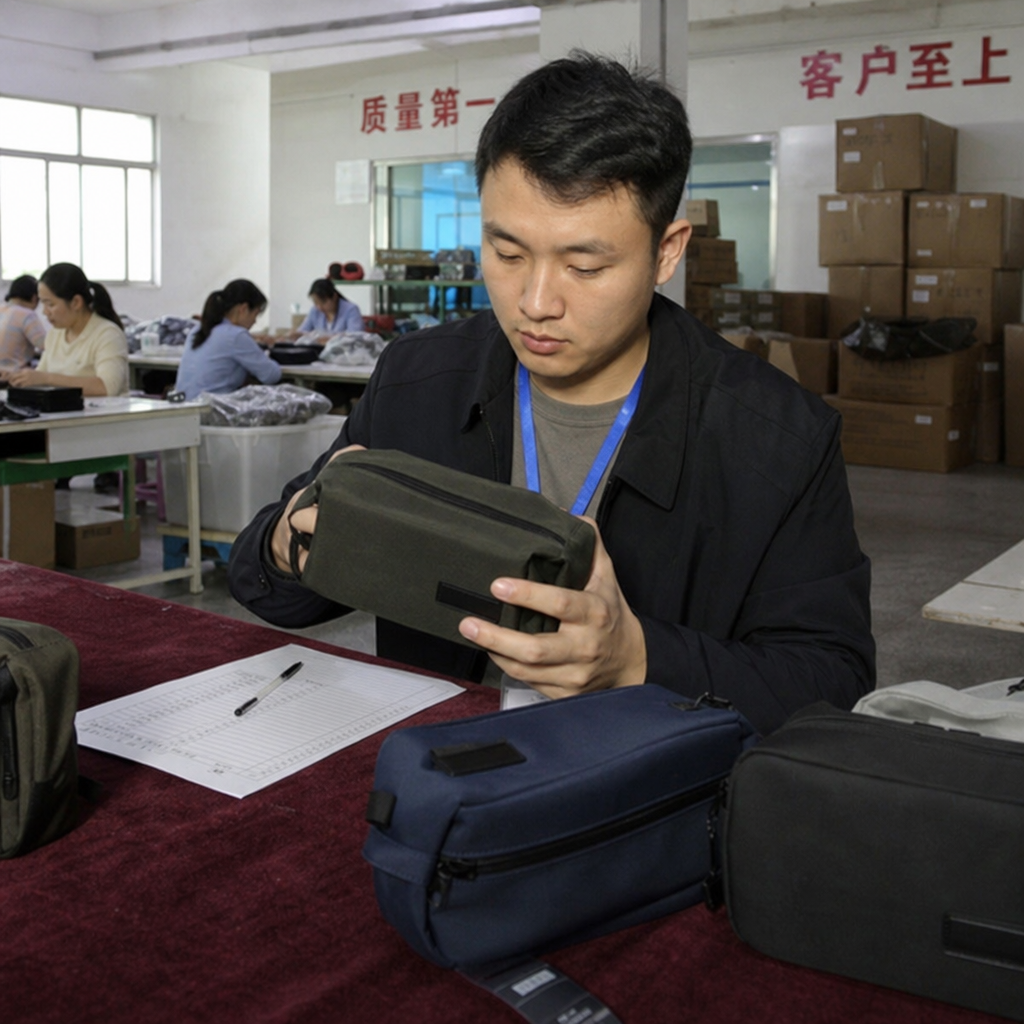
A professional China sourcing agent may support every stage of the purchasing process, from identifying suppliers to coordinating final shipment.
1. Product Sourcing and Supplier Identification
The sourcing process begins with understanding the buyer's requirements.
An agent reviews product specifications, materials, target quantities, price expectations, packaging, and destination-market requirements.
They may then identify potential suppliers through manufacturing networks, wholesale markets, industry exhibitions, online sourcing platforms, and direct factory contacts.
The objective is not simply to provide the largest supplier list. It is to identify manufacturers capable of producing the required goods consistently and at commercially reasonable prices.
2. Supplier Verification and Factory Evaluation
Finding a supplier does not prove that the supplier is reliable.
A sourcing agent can help check company registration information, confirm factory locations, review production capabilities, assess export experience, and coordinate independent factory audits.
For higher-value or technically complex orders, a physical factory assessment may be necessary.
3. Price Negotiation and MOQ Management
Chinese suppliers may quote different prices depending on the order quantity, product materials, production method, customization requirements, and payment terms.
An agent can compare quotations and negotiate pricing or minimum order quantities (MOQ).
A lower quotation is only useful if the materials, quality, packaging, and delivery terms meet the buyer's requirements.
4. Product Sampling and Customization
For custom products, samples provide an opportunity to confirm dimensions, colors, functionality, packaging, and branding before production.
A sourcing partner may coordinate sample requests, communicate revisions, and document the final approved specifications.
This is especially valuable for OEM, ODM, and private-label manufacturing projects.
5. Production Monitoring and Quality Control
After the order is confirmed, an agent may track production milestones, identify delays, coordinate quality checks, and verify that the supplier follows approved specifications.
Quality-control services can include pre-production checks, during-production inspections, and final inspections before shipment.
6. Warehousing, Consolidation, and Shipping
Buyers working with several factories often receive products at different times and locations.
A sourcing agent may arrange for goods to be collected, checked, stored, repacked, and consolidated into a larger shipment.
Depending on the contract, the agent may also coordinate freight forwarders, export paperwork, and shipment tracking.
Important: Ask which services are included in the basic sourcing fee and which require separate payment. Never assume every agent provides end-to-end procurement management.
How Much Does a China Sourcing Agent Cost?
One of the most common questions importers ask is: How much do sourcing agents charge in China?
There is no universal pricing structure. Fees depend on order value, product complexity, project duration, service scope, and the number of suppliers involved.
Common arrangements include percentage-based commissions, fixed project fees, monthly retainers, and margins incorporated into product quotations.
1. Percentage-Based Commission
Under a commission model, the agent charges an agreed percentage of the applicable purchasing value.
For example, if a product order is worth $10,000 and the agreed commission is 5%, the sourcing fee would be $500.
This is a calculation example, not a published EJET commission rate or a guaranteed market rate.
Always clarify the commission base. An agent may calculate fees on the factory invoice value, total purchasing value, or another contractual amount.
2. Fixed Sourcing Fee
Some sourcing companies charge a fixed amount for a clearly defined service.
Examples include:
- Finding and evaluating a specified number of suppliers.
- Conducting a factory visit or audit.
- Managing sample development.
- Coordinating a one-time purchasing project.
Fixed pricing can help buyers understand the cost before starting, provided the contract defines included deliverables and additional charges.
3. Monthly Retainer or Managed Procurement Fee
Businesses placing repeated orders may prefer an ongoing service agreement.
This can cover supplier communication, purchase-order coordination, production monitoring, reporting, and general purchasing support.
For a retailer managing dozens of products or multiple factories, an ongoing procurement arrangement may be more practical than negotiating every task separately.
4. Margin Included in the Product Price
Some suppliers and intermediaries provide an all-inclusive product quotation without charging a separately visible sourcing commission.
In these arrangements, the intermediary's compensation may be included in the unit price.
This model is not necessarily problematic, but buyers should establish whether the quotation includes inspections, packaging, freight, and other relevant services.
Comparison of China Sourcing Agent Fee Models
| Fee model | How it works | Main consideration |
|---|---|---|
| Percentage commission | Agreed percentage of purchasing value | Define the calculation base |
| Fixed project fee | One price for defined services | Clarify deliverables and exclusions |
| Monthly retainer | Ongoing payment for purchasing support | Check reporting and service commitments |
| Embedded margin | Compensation incorporated into product pricing | Compare total delivered costs |
| Hybrid model | Fixed fee plus variable or transaction charges | Avoid paying twice for the same service |
Example: The True Cost of Using a China Sourcing Agent
Suppose a US retailer orders 1,000 units of a household product.
The factory quotes $4 per unit, but the buyer must also account for sourcing, inspection, shipping, and import expenses.
| Cost component | Illustrative amount |
|---|---|
| Product cost: 1,000 × $4 | $4,000 |
| Sourcing fee: 5% of product cost | $200 |
| Product inspection | $180 |
| Domestic transportation and handling | $120 |
| International freight | $900 |
| Customs brokerage and destination handling | $220 |
| Cargo insurance | $80 |
| Assumed import duties and taxes | $600 |
| Total landed cost | $6,300 |
| Landed cost per unit | $6.30 |
This is a hypothetical budgeting example, not an actual freight quotation, tariff assessment, or EJET customer transaction. Actual duties, taxes, fees, and shipping costs depend on the products, import dates, transportation arrangements, and destination.
The factory unit price is $4, but the illustrative landed cost is $6.30 per unit.
This demonstrates why buyers should evaluate total landed cost instead of comparing supplier prices or sourcing commissions in isolation.
When requesting quotations, ask each sourcing company to provide the same level of cost detail.
When Should You Hire a China Sourcing Agent?
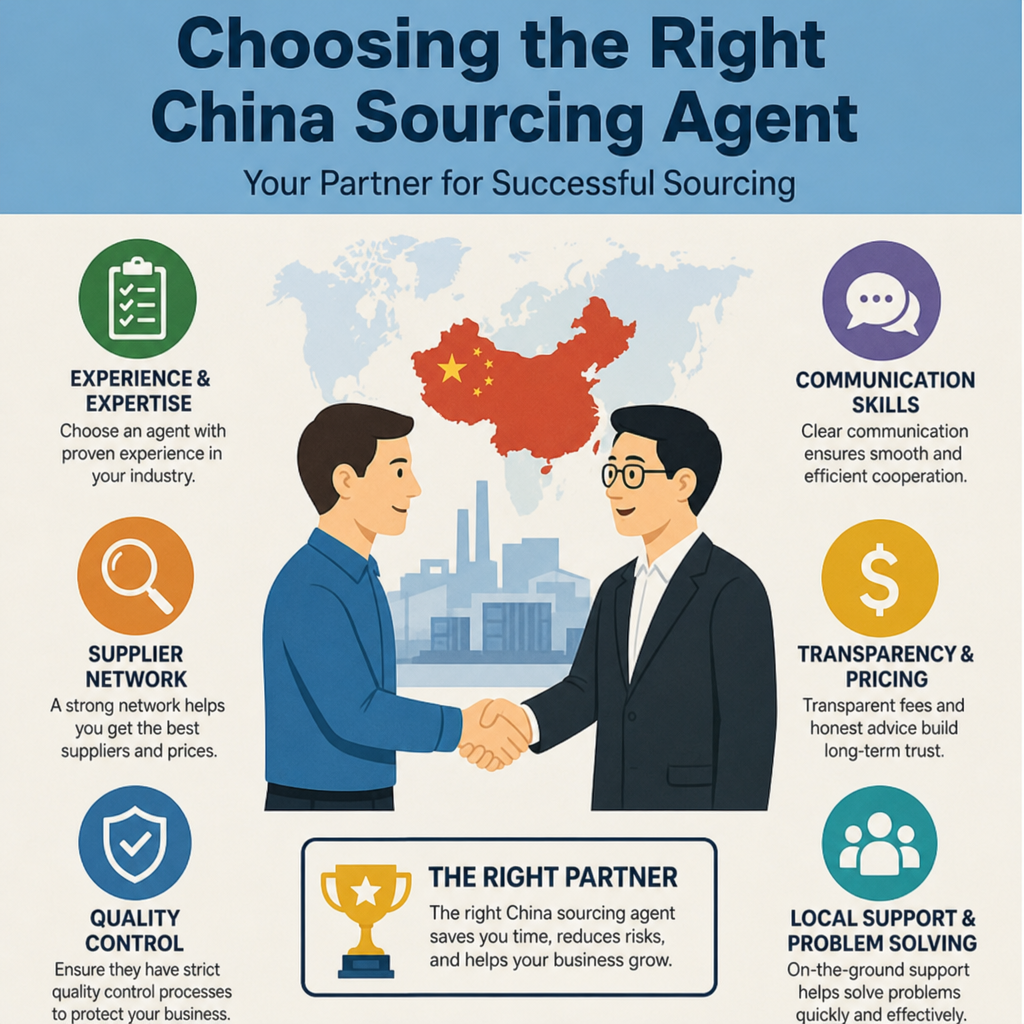
Not every importer needs a sourcing agent.
If you already have trusted manufacturers, purchasing personnel, established quality-control procedures, and reliable logistics partners, direct sourcing may be more efficient.
However, professional sourcing support becomes valuable when purchasing complexity exceeds your internal resources.
First-Time Importers
New importers may struggle with supplier verification, production terminology, sample approval, payment arrangements, and shipping documentation.
A sourcing agent can help organize these activities and explain how the process works.
Small Businesses and Startups
Small businesses often face limited purchasing budgets, smaller order volumes, and difficulty negotiating factory MOQs.
A China sourcing agent for small businesses may help identify flexible suppliers, coordinate trial orders, or combine products from different vendors.
However, the service fee must still make commercial sense relative to the order value.
E-Commerce and Amazon Sellers
Online sellers may need help with product sourcing, private labeling, barcode and packaging requirements, product inspections, and fulfillment preparation.
Marketplaces have their own operational requirements, so buyers should confirm which services the sourcing company actually provides.
Retailers, Importers, and Wholesalers
Businesses purchasing multiple product categories may benefit from centralized supplier communication, standardized packaging, order tracking, and consolidated shipping.
For repeated purchasing, a procurement partner may also support supplier-performance reviews and long-term cost control.
Brands Developing Customized Products
OEM and ODM manufacturing often require more coordination than purchasing ready-made products.
Material selection, prototypes, tooling, packaging design, production approvals, and testing may involve several revisions.
A sourcing partner familiar with the category can help manage these activities, but technical and regulatory decisions still require appropriately qualified specialists.
China Sourcing Agent vs. Alibaba vs. Buying Directly from a Factory
Should you hire a sourcing agent or find manufacturers independently?
The answer depends on your purchasing experience, available time, order complexity, and need for local support.
| Factor | Alibaba or 1688 | Direct factory sourcing | China sourcing agent |
|---|---|---|---|
| Supplier discovery | Search marketplace listings | Contact manufacturers directly | Agent researches and shortlists suppliers |
| Communication | Managed by buyer | Managed by buyer | Agent can coordinate communication |
| Factory verification | Buyer arranges checks | Buyer arranges checks | May be coordinated by agent |
| Price transparency | Depends on supplier quotation | Direct factory quotation | Depends on agent's pricing model |
| Sample management | Buyer coordinates | Buyer coordinates | May be coordinated by agent |
| Production monitoring | Buyer or independent inspector | Buyer or independent inspector | May be included or charged separately |
| Multiple suppliers | Buyer manages separately | Buyer manages separately | Agent may consolidate coordination |
| Service costs | Platform-related and purchasing costs | Internal management and inspection costs | Sourcing or procurement charges |
When Is Alibaba the Better Choice?
Alibaba.com is useful for discovering export-oriented suppliers, requesting quotations, and comparing available products.
Businesses with experienced purchasing teams can often manage straightforward orders without a sourcing agent.
However, supplier badges, listings, and positive reviews do not eliminate the need for due diligence.
When Is 1688 the Better Choice?
1688.com primarily serves China's domestic wholesale market.
It may provide access to product listings and pricing structures intended for Chinese buyers, but international purchasers can encounter language, payment, export, and logistics challenges.
A local purchasing partner may help with these practical issues.
Read our detailed comparison: 1688 vs. Alibaba: Which Is Better for Sourcing Products from China?
When Is a Sourcing Agent Worth the Cost?
Hiring an agent may be worthwhile if the support reduces purchasing errors, improves supplier coordination, saves management time, or makes multi-supplier orders easier to control.
The right question is not simply, “Can an agent find a cheaper factory?”
It is, “Will the sourcing service improve the total cost, quality, reliability, and efficiency of our purchasing operation?”
How to Find a Reliable China Sourcing Agent
Choosing a sourcing partner should involve structured research rather than selecting the first company appearing in a search result.
Step 1: Define Your Product Requirements
Before contacting an agent, prepare a product sourcing brief.
Include:
- Product name and intended use.
- Materials, specifications, dimensions, and features.
- Expected purchasing quantities.
- Target cost and budget.
- Branding and customization requirements.
- Packaging specifications.
- Destination country.
- Target delivery schedule.
- Required testing, certifications, or regulatory conditions.
For customized products, include technical drawings, reference photos, or approved samples where available.
The clearer the requirements, the easier it becomes to compare proposals.
Step 2: Find Several Candidate Agents
Potential sourcing partners can be identified through professional referrals, business networks, relevant sourcing websites, industry exhibitions, and supplier communities.
Compare several candidates before making a decision.
An agent that specializes in consumer electronics may not be the right partner for furniture, apparel, medical equipment, or construction materials.
Step 3: Verify the Agent's Business Identity
Ask for the company's full legal name, registered business details, operating address, and official contact information.
For substantial orders, verify these details independently and confirm who will sign the service agreement.
You should also determine whether the provider is an independent agent, a registered sourcing company, a trading business, or a procurement service provider.
Step 4: Evaluate Relevant Product Experience
Ask how the agent has managed products similar to yours.
Useful evidence may include anonymized sample reports, relevant process documentation, inspection checklists, and permitted customer references.
An agent should be able to explain practical product challenges, not merely claim access to thousands of factories.
Step 5: Compare Service Fees and Responsibilities
Request a written proposal showing:
- Services included in the price.
- Commission or management fees.
- Additional inspection or sampling charges.
- Payment schedules.
- Supplier disclosure arrangements.
- Reporting frequency.
- Responsibility for defects and delays.
- Cancellation and dispute procedures.
Ask whether the agent receives supplier rebates or other compensation that could influence recommendations.
Step 6: Test the Process Before Scaling
Where commercially practical, begin with a sample order, limited purchasing project, or smaller trial shipment.
Evaluate responsiveness, quotation quality, documentation, problem-solving, and final product quality.
A small, structured project provides more useful evidence than an impressive sales presentation.
China Sourcing Agent Evaluation Scorecard
You can use the following example scoring framework to compare shortlisted candidates.
| Evaluation criteria | Suggested weight |
|---|---|
| Relevant product-category expertise | 20 |
| Supplier verification and selection | 20 |
| Fee and supplier transparency | 15 |
| Quality-control capabilities | 15 |
| Communication and documentation | 10 |
| Production and logistics coordination | 10 |
| References and demonstrated results | 10 |
| Total | 100 |
Score each provider against documented evidence using the same criteria.
This is a suggested buyer evaluation tool, not an industry certification or standardized agent rating.
Price should influence the decision, but it should not replace supplier transparency, quality control, and accountability.
How to Verify Chinese Suppliers and Factories
Supplier verification is one of the most important parts of China sourcing.
An attractive product catalog or low quotation does not prove that the supplier can deliver consistent quality, meet production deadlines, or satisfy destination-market requirements.
Verify the Legal Business Entity
Request the supplier's Chinese registered legal name, business license, operating address, and other relevant company details.
Check that the legal entity corresponds with the proposed contract and payment beneficiary.
If bank account details change during a transaction, verify the change through a separately confirmed communication channel.
Confirm Whether the Supplier Is a Factory or Trading Company
Not every supplier on a B2B marketplace manufactures the products it sells.
A trading company may outsource production, work with several factories, or specialize in product aggregation.
This can be a legitimate purchasing model, but you should understand who makes the product and who controls quality.
Evaluate Manufacturing Capabilities
Depending on the product, request information about:
- Production equipment and processes.
- Manufacturing capacity.
- Material sourcing and subcontractors.
- Normal production lead times.
- Quality management procedures.
- Testing capabilities.
- Relevant product experience.
For critical components or significant orders, consider independent factory verification.
Request Samples and Relevant Test Documents
Examine samples against documented specifications.
Check dimensions, materials, performance, appearance, labels, and packaging.
Where necessary, commission appropriate independent testing.
A manufacturer's certificate or an old test report should not automatically be treated as evidence that the exact product being ordered meets every applicable regulation.
Use a Supplier Verification Checklist
| Verification item | What to confirm |
|---|---|
| Legal registration | Registered name, license, address |
| Manufacturing capability | Equipment, production process, output capacity |
| Product specifications | Materials, dimensions, functionality |
| Sample quality | Matches documented buyer requirements |
| Testing and compliance | Applicable standards and valid supporting documents |
| Payment security | Verified beneficiary and contractual terms |
| Quality systems | Inspection procedures and defect handling |
| Delivery reliability | Realistic lead times and production milestones |
Supplier verification reduces uncertainty but cannot eliminate every risk.
The buyer should preserve important documents and use independent specialists when the order's value or complexity justifies additional checks.
Quality Control When Sourcing Products from China
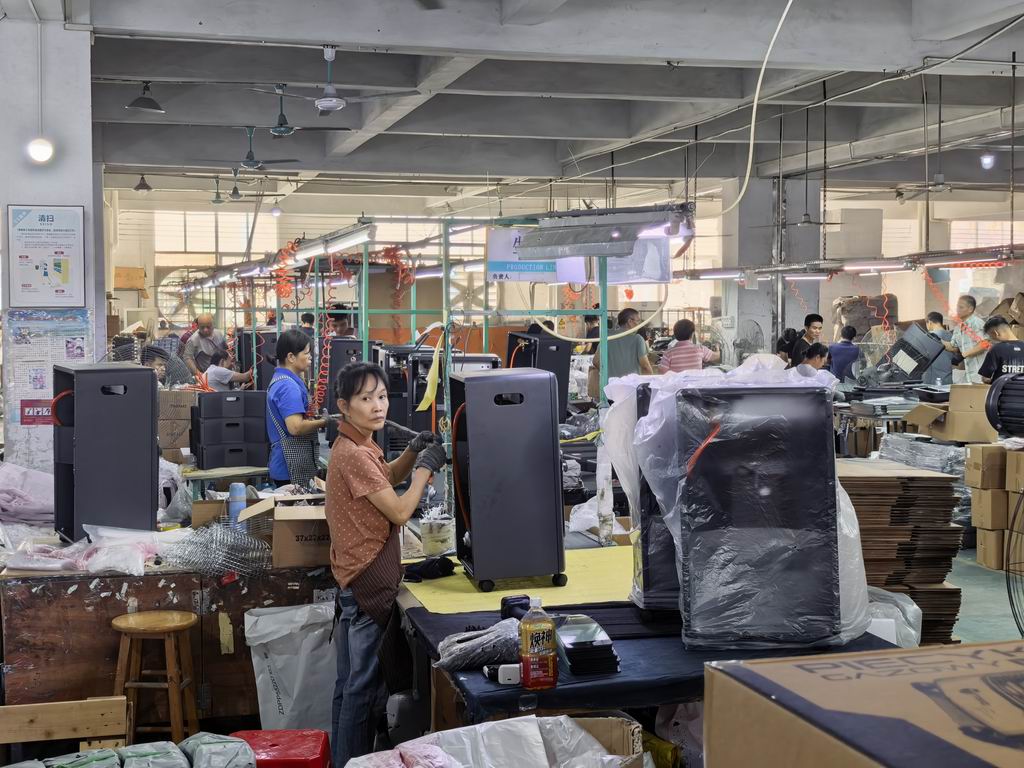
Even a capable manufacturer can produce defective products if specifications are unclear or production is not monitored appropriately.
Quality control should begin before manufacturing, not only when the products are ready for shipment.
Pre-Production Checks
Confirm that the supplier understands the approved materials, specifications, samples, packaging, and production requirements.
For custom goods, review tooling, components, labels, and other critical details before production begins.
During-Production Inspection
During-production inspections can identify problems while corrective action may still be possible.
These checks are particularly useful for large orders, complex products, or production runs involving several stages.
Pre-Shipment Inspection
A pre-shipment inspection evaluates completed goods against an agreed checklist before dispatch.
Checks may cover dimensions, workmanship, functionality, packing quantities, labeling, and visible defects.
Some inspections use Acceptance Quality Limit (AQL) sampling plans. Sampling can help assess batches, but it does not guarantee that every unit is defect-free.
Container Loading Inspection
For relevant shipments, a loading inspection may verify quantities, carton condition, loading arrangements, and shipment identification.
It can also help identify obvious discrepancies between physical cargo and the packing list.
Before approving shipment, agree on inspection criteria and the procedure for correcting defects.
For a more detailed process, see EJET's Quality Control Checklist.
Can a China Sourcing Agent Help With Low MOQ Orders?
MOQ stands for Minimum Order Quantity, the smallest number of units a supplier is willing to sell or manufacture under particular terms.
Small businesses often prefer lower quantities because they want to test products before investing in large amounts of inventory.
However, factory MOQs can be influenced by material purchasing, production setup, tooling, packaging, and manufacturing efficiency.
Practical Ways to Reduce MOQ
- Choose existing products. Standard products may require less manufacturing setup than fully customized designs.
- Reduce customization. Using standard materials, colors, and packaging may make smaller orders more feasible.
- Compare multiple suppliers. Different manufacturers and wholesalers may have different minimum quantities.
- Accept a reasonable unit-price premium. A smaller order sometimes becomes possible at a higher per-unit price.
- Negotiate a trial order. A supplier may agree to a smaller initial quantity if commercial terms are acceptable.
- Consolidate purchasing. A sourcing agent can sometimes coordinate several product purchases, although consolidation does not automatically reduce each factory's MOQ.
- When Low-MOQ Sourcing Makes Sense
Small-order sourcing can be useful for testing new retail products, launching an online store, introducing seasonal collections, or evaluating suppliers before larger purchases.
However, small orders may have higher unit prices and disproportionate inspection, freight, and administrative costs.
Always calculate whether the final landed cost allows a sustainable selling price.
For additional purchasing guidance, read How to Buy in Bulk from China.
Best Chinese Cities for Product Sourcing
China has many manufacturing and wholesale clusters, and the right location depends on the product category.
| Location | Common sourcing strengths | Suitable purchasing projects |
|---|---|---|
| Yiwu | General merchandise, gifts, accessories, small commodities | Mixed-category wholesale purchasing |
| Guangzhou | Apparel, fashion accessories, bags, wholesale trading | Fashion and lifestyle product sourcing |
| Shenzhen | Electronics, components, connected devices | Electronics and technology products |
| Foshan | Furniture, building materials, home furnishings | Furniture and interior-related procurement |
| Ningbo | Hardware, plastics, consumer goods, export manufacturing | Industrial and general consumer products |
These are broad industry associations, not exclusive manufacturing boundaries. Many products have suppliers across multiple Chinese provinces.
Yiwu Sourcing Agents
Yiwu is particularly relevant for buyers seeking gifts, toys, fashion accessories, household products, and other small consumer goods.
Importers purchasing from multiple Yiwu suppliers may need assistance with market visits, quotation comparisons, order tracking, warehousing, and consolidation.
A local Yiwu sourcing agent can provide support with market navigation and purchasing coordination.
Explore EJET's 15 Best Yiwu Sourcing Agents in China for a more detailed comparison.
Guangzhou Sourcing Agents
Guangzhou may be suitable for apparel, fashion accessories, handbags, and related wholesale categories.
A sourcing partner with category-specific market knowledge can help buyers compare product construction, fabrics, suppliers, packaging, and order terms.
Shenzhen Sourcing Agents
Shenzhen is an important location for electronics-related sourcing.
Buyers developing electronic products should pay attention to component selection, technical specifications, manufacturing capability, intellectual-property arrangements, product testing, and applicable destination-market regulations.
Foshan Sourcing Agents
Foshan is commonly associated with furniture, home furnishings, ceramics, and building materials.
For these categories, sourcing requirements may include finishes, dimensions, packaging protection, loading arrangements, and project-specific specifications.
Choose sourcing expertise based on the product and supplier network rather than assuming that one city is appropriate for every order.
OEM, ODM, and Private-Label Sourcing in China
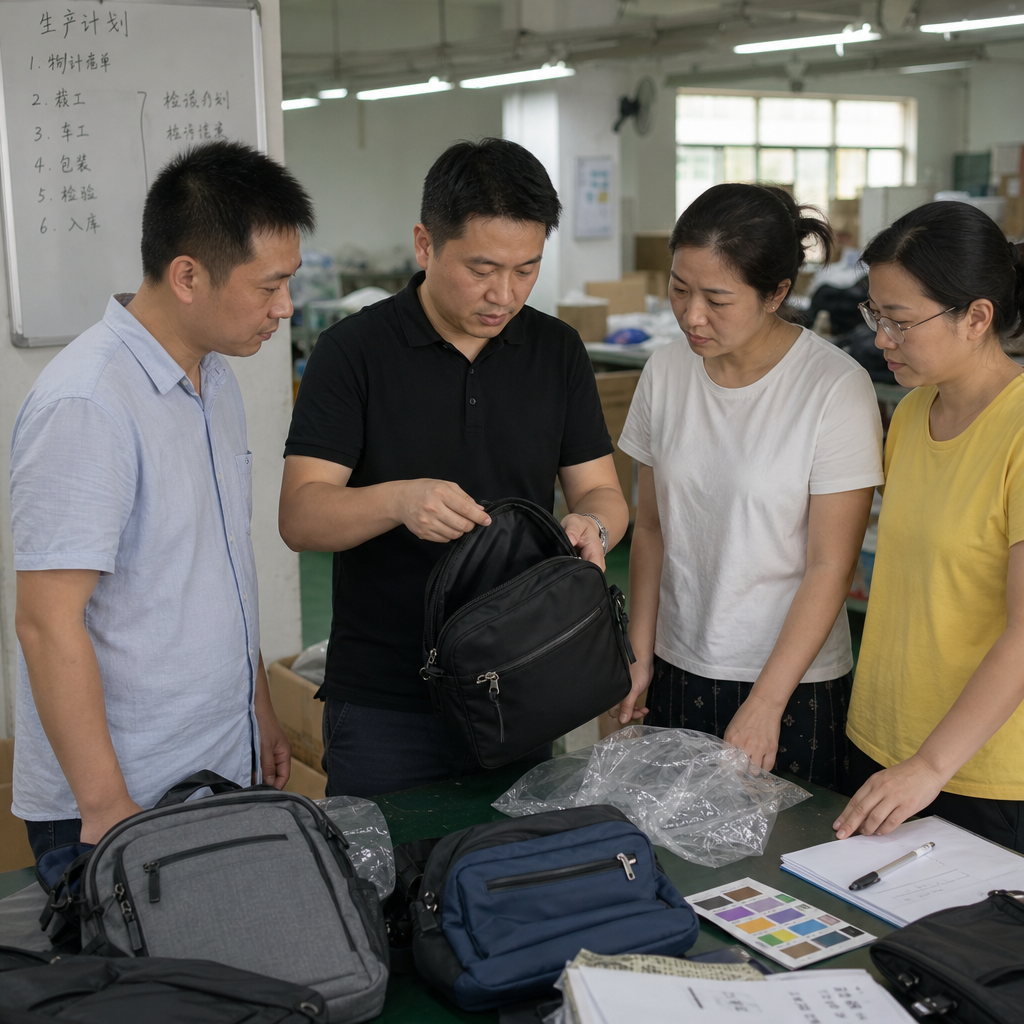
Many international brands work with Chinese manufacturers to develop customized products or adapt existing designs.
A sourcing agent can help coordinate the commercial and operational stages of these projects.
OEM Manufacturing
Original Equipment Manufacturing (OEM) commonly involves producing goods according to specifications, designs, or requirements provided by the buyer.
OEM sourcing can require detailed drawings, material specifications, prototypes, quality standards, and tooling agreements.
ODM Manufacturing
Original Design Manufacturing (ODM) generally involves selecting or adapting products based on a manufacturer's existing design capabilities.
ODM may provide a more practical development path when a buyer does not need a completely new product design.
Private-Label Manufacturing
Private-label sourcing involves selling products under the buyer's own brand.
Depending on the agreement, customization may include brand logos, packaging, labels, colors, materials, or product features.
Questions to Ask Before Starting a Custom Product Project
Before confirming production, establish:
- Who owns the product design and intellectual property?
- Who owns molds, tooling, and production files?
- What customization is included in the quoted price?
- How many prototype revisions are included?
- Which specifications and samples define acceptable production?
- What product testing and documentation are required?
- Who pays for defects, rework, or rejected batches?
- Can the manufacturer support repeat production?
Clear agreements help reduce disputes over design ownership, product quality, and future manufacturing arrangements.
Order Consolidation and Shipping From China
When buying from several suppliers, managing shipments can become complicated.
One manufacturer may complete production earlier than another. Products may require different packaging, labeling, or inspection procedures.
A sourcing agent may help coordinate these shipments before export.
What Is Order Consolidation?
Order consolidation means combining goods from multiple suppliers into a coordinated shipment.
For example, a retailer buying stationery, gift packaging, and home accessories from three manufacturers may arrange delivery to one warehouse in China.
After receipt and agreed checks, the products can be organized for shipment together.
Potential advantages include simpler cargo coordination, improved shipment visibility, and opportunities to optimize transport costs.
However, consolidation also introduces warehousing, handling, and scheduling requirements. It is not automatically cheaper in every situation.
FCL vs. LCL Shipping
For ocean freight, buyers may choose between Full Container Load (FCL) and Less than Container Load (LCL).
FCL generally involves reserving a container for one shipment, while LCL combines cargo from different shippers into shared container space.
The appropriate option depends on cargo volume, dimensions, destination, handling requirements, and total freight charges.
Understand Incoterms Before Confirming an Order
Incoterms are internationally recognized trade rules published by the International Chamber of Commerce (ICC).
They clarify specific delivery obligations, transportation costs, and the point at which risk transfers between buyer and seller.
Common terms include:
- EXW (Ex Works): Places extensive transport responsibilities on the buyer.
- FOB (Free on Board): Used for sea and inland waterway transport; the seller delivers goods on board the vessel at the named shipment port.
- CIF (Cost, Insurance and Freight): The seller pays specified freight and insurance to the named destination port, but risk transfers when the goods are on board at shipment.
- DAP (Delivered at Place): The seller arranges delivery to the named destination, while import clearance and duties are generally handled by the buyer.
- DDP (Delivered Duty Paid): Places extensive delivery, import-clearance, and duty responsibilities on the seller, subject to legally workable arrangements.
Always specify the named place and agreed version of the rules, such as Incoterms 2020.
For further details, see our DDP Delivered Duty Paid Guide and the International Chamber of Commerce's official Incoterms information.
Import Compliance: What US Buyers Must Check
For businesses importing products from China to the United States, sourcing support does not replace import compliance obligations.
Applicable requirements depend on product classification, country of origin, intended use, applicable trade measures, and the entry date.
Before production and shipping, buyers should verify:
- The appropriate tariff classification.
- Applicable customs duties and additional trade measures.
- Country-of-origin requirements.
- Product safety standards.
- Testing and certification obligations.
- Labeling and marking requirements.
- Applicable permits or agency restrictions.
- The identity and responsibilities of the importer of record.
A customs broker can assist with customs procedures, but the responsible importer must still ensure that its legal obligations are satisfied.
For example, children's products subject to US Consumer Product Safety Commission requirements may require applicable third-party testing and a Children's Product Certificate.
An agent's statement that a product is “certified” should not replace verification of the required product-specific documentation.
Consult official guidance from US Customs and Border Protection and the US Consumer Product Safety Commission before ordering regulated products.
For a broader importing workflow, see our Guide to Importing from China to the USA.
Example: Managing a Multi-Supplier Sourcing Project
Consider a hypothetical US retailer preparing a new home and lifestyle product collection.
The retailer wants to purchase storage accessories, decorative gift items, and stationery products from three Chinese suppliers.
Each supplier offers different order quantities, production schedules, and packaging arrangements.
Without centralized coordination, the retailer must manage multiple quotation discussions, samples, production updates, inspections, and shipping arrangements.
A structured sourcing process could work as follows.
| Stage | Sourcing activity | Expected deliverable |
|---|---|---|
| 1. Requirements | Define products, quantities, specifications, and deadlines | Approved sourcing brief |
| 2. Supplier selection | Compare suitable manufacturers | Supplier shortlist and quotation comparison |
| 3. Sampling | Evaluate materials, functionality, and packaging | Approved reference samples |
| 4. Purchasing | Confirm pricing, terms, and order details | Purchase orders and agreements |
| 5. Production | Track factory progress | Production updates |
| 6. Quality control | Conduct agreed inspections | Inspection reports and corrective actions |
| 7. Consolidation | Receive and organize goods | Consolidated packing records |
| 8. Shipping | Coordinate freight and required documents | Shipping documentation and delivery updates |
The benefit of this approach is greater visibility across the purchasing process.
Rather than handling three unrelated factory transactions, the buyer has a coordinated workflow with clearly defined responsibilities and approval points.
This is an illustrative scenario explaining the procurement process, not a claim about a completed EJET customer project.
Common China Sourcing Agent Mistakes to Avoid
Even experienced importers can encounter problems when selecting sourcing partners.
Choosing Based Only on Low Fees
An inexpensive sourcing service may offer limited supplier verification, weak reporting, or no inspection support.
Compare the scope of work and total purchasing cost instead of focusing solely on commission percentages.
Accepting Unclear Supplier Relationships
Ask whether the agent represents you, resells the products, or receives compensation from factories.
Hidden incentives can create conflicts of interest and make quotation comparisons difficult.
Skipping Samples
Product images and supplier descriptions are not substitutes for samples.
Approve product materials, dimensions, finishes, functionality, and packaging before substantial production commitments.
Ignoring Destination-Market Requirements
Products may require particular labels, tests, certifications, or documentation.
Do not assume that goods suitable for sale in China automatically meet the requirements of another country.
Sending Payments to Unverified Accounts
Confirm the contractual entity and payment beneficiary.
Unexpected changes to bank details should trigger additional verification rather than immediate payment.
Failing to Define Quality Requirements
Descriptions such as “high quality” or “premium finish” are insufficient for resolving manufacturing disputes.
Use measurable specifications and written inspection criteria.
Relying on Verbal Agreements
Document quotations, payment terms, supplier responsibilities, delivery schedules, inspection procedures, and defect remedies.
Written agreements create a clearer basis for decision-making if problems arise.
Why Consider EJET for China Sourcing and Procurement?
EJET is a China-based sourcing and supply chain company that supports businesses seeking products, suppliers, manufacturing coordination, and broader procurement solutions.
Through EJET Procurement, the company provides services covering supplier sourcing, purchasing, production follow-up, quality control, consolidation, and logistics coordination.
Its published service portfolio also includes wholesale market sourcing assistance, outsourced procurement, and OEM/ODM support.
EJET's broader business structure includes product discovery and development initiatives alongside sourcing and supply chain management.
For buyers managing multiple suppliers, recurring orders, or product customization, coordinated procurement support can help establish clearer workflows between sourcing and delivery.
The most suitable service arrangement depends on your product category, order volume, technical specifications, and required level of support.
What Should You Prepare Before Contacting EJET?
A useful initial sourcing inquiry should contain:
- Product name and specifications.
- Product images, drawings, or reference links.
- Estimated order quantity.
- Target purchasing budget.
- Required customization or branding.
- Destination country.
- Expected timeline.
- Specific support needed, such as supplier sourcing, QC, or consolidation.
These details help the procurement team evaluate your requirements and discuss an appropriate service scope.
Need help finding suppliers or managing purchasing in China?
Explore EJET Procurement's China Sourcing Services to learn more about sourcing, supplier coordination, quality control, and supply chain support.
Final Thoughts: Choosing the Right China Sourcing Agent
The best China sourcing agent is not necessarily the company offering the lowest commission or the largest supplier database.
A dependable sourcing partner should understand your product requirements, explain service costs clearly, evaluate suppliers carefully, and support a purchasing process built around quality, accountability, and predictable delivery.
For first-time importers, that may mean help with supplier discovery and sample approval. For small businesses, it may mean flexible purchasing and low-MOQ sourcing. For established retailers and wholesalers, it may involve managing suppliers, inspections, product development, consolidation, and ongoing procurement activities.
Before selecting a partner, define your requirements, compare written proposals, verify important business details, and establish clear quality and payment terms.
Successful sourcing from China is not simply about finding a supplier. It is about building a purchasing process that supports reliable products, sustainable costs, and long-term business growth.
If your business needs coordinated China sourcing and procurement support, contact EJET through its procurement services page to discuss your product requirements and purchasing goals.
Frequently Asked Questions About China Sourcing Agents
1. What is the difference between a China sourcing agent and a buying agent?
The terms often overlap. A buying agent may focus on purchasing identified products, while a sourcing agent may also research suppliers, compare quotations, arrange samples, and coordinate production. The exact distinction depends on the provider's contract and service scope.
2. How much does a China sourcing agent charge?
Agents may charge a percentage commission, fixed project fee, retainer, or margin included in product pricing. Costs depend on purchasing value, order complexity, number of suppliers, and required services. Request a written quotation before making commitments.
3. Can a China sourcing agent help small businesses?
Yes. Some agents work with startups, small retailers, and online sellers. They may assist with lower-MOQ suppliers, product samples, trial orders, and consolidated purchasing. Small businesses should compare the service cost against their overall order budget.
4. Is it cheaper to use a sourcing agent or buy directly from Alibaba?
Direct purchasing may involve lower intermediary charges, but the buyer must manage supplier verification, communication, quality control, and logistics. A sourcing agent introduces a service cost but may reduce management work and certain purchasing risks. Compare total landed cost and service value.
5. How can I verify that a China sourcing agent is legitimate?
Confirm the legal business entity, registered details, company address, relevant product experience, fee structure, and written service terms. Request suitable references or documented examples where available. For substantial transactions, conduct additional independent checks.
6. Do sourcing agents guarantee product quality?
No sourcing agent can guarantee that every manufactured unit will be free of defects. Reliable quality management requires approved specifications, supplier evaluation, appropriate inspection procedures, and clear remedies for nonconforming products.
7. Can sourcing agents negotiate lower MOQs?
Some agents can identify suppliers willing to accept smaller orders or negotiate changes to product specifications, packaging, and unit pricing. Whether a lower MOQ is possible depends on the manufacturer's production requirements and commercial terms.
8. Can a sourcing agent handle OEM and private-label manufacturing?
Many sourcing companies assist with OEM, ODM, and private-label projects, including supplier matching, prototyping, branding, packaging, and production coordination. Verify the provider's relevant expertise and define intellectual-property ownership and quality obligations in writing.
9. Can I source products from China without visiting the country?
Yes. Buyers can manage sourcing remotely using documented specifications, video communication, product samples, independent factory verification, inspections, and shipping records. Physical visits may still be beneficial for complex or high-value projects.
10. Is a China sourcing agent responsible for customs duties and import regulations?
Not automatically. A sourcing agent may coordinate logistics or documentation, but legal import responsibilities depend on the transaction, the importer-of-record arrangement, and applicable laws. Clarify responsibilities with the relevant customs professionals before shipping.
11. Should I hire a sourcing agent in Yiwu, Guangzhou, or Shenzhen?
Choose based on the product category, supplier network, and services required. Yiwu is useful for many small consumer goods; Guangzhou is relevant for numerous fashion and wholesale categories; Shenzhen is particularly associated with electronics sourcing. A strong agent's category expertise is more important than location alone.
12. How do I choose the best China sourcing agent for my business?
Compare relevant experience, supplier verification, transparent pricing, communication, quality-control support, contract terms, and the ability to manage your purchasing requirements. Begin with a well-defined project and evaluate actual performance before increasing order volume.