










Importing products from China to the United States offers significant opportunities for entrepreneurs, wholesalers, Amazon sellers, and established businesses seeking competitive manufacturing costs and a reliable supply chain.
However, successfully importing from China to the USA requires more than finding inexpensive products and arranging international shipping.
We must understand U.S. customs regulations, import duties, product compliance, supplier verification, freight forwarding, customs clearance, and total landed costs before placing an international order.
In this comprehensive guide, we explain how to import from China to the USA in 2026, covering everything from choosing profitable products and identifying legitimate Chinese manufacturers to calculating tariffs, preparing shipping documents, and clearing U.S. Customs and Border Protection (CBP).
Whether we are importing our first shipment or managing an established international sourcing operation, the following process helps us reduce risks, control expenses, and establish a sustainable import business.
1. How to Import from China to the USA: Step-by-Step Process
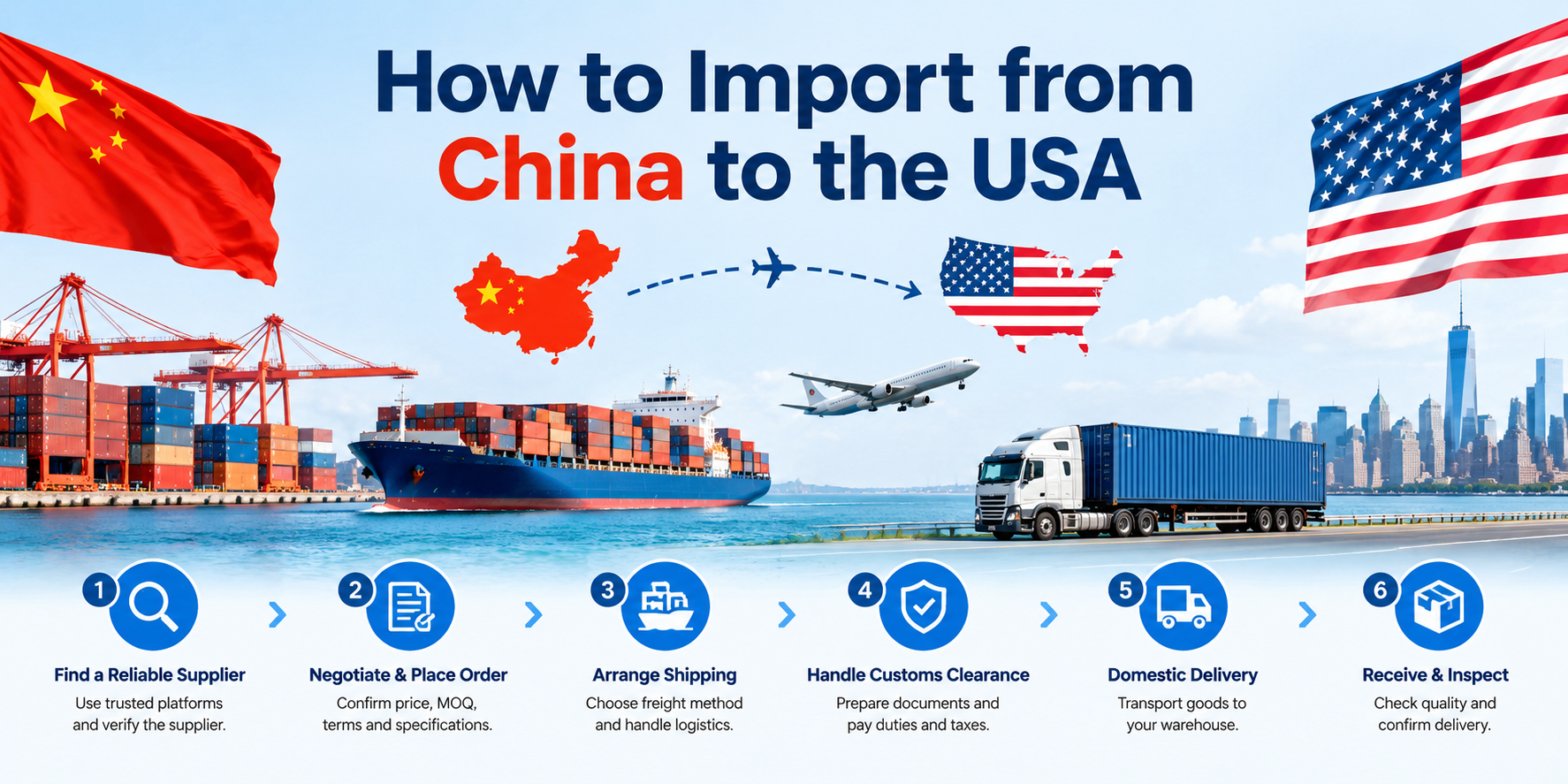
Importing goods from China involves several essential stages. Following a structured procedure allows us to avoid costly delays, unexpected customs charges, and supplier-related problems.
|
Step |
Import Process |
Main Objective |
|---|---|---|
|
1 |
Research products |
Identify commercially viable products |
|
2 |
Verify import regulations |
Confirm legality and compliance |
|
3 |
Find Chinese suppliers |
Identify reliable manufacturers |
|
4 |
Request quotations |
Compare prices and production terms |
|
5 |
Order product samples |
Verify quality and specifications |
|
6 |
Negotiate purchasing terms |
Establish pricing and responsibilities |
|
7 |
Arrange inspections |
Confirm production quality |
|
8 |
Select shipping methods |
Optimize delivery costs and transit times |
|
9 |
Prepare customs documentation |
Facilitate U.S. import clearance |
|
10 |
Pay applicable duties and fees |
Meet customs obligations |
|
11 |
Receive and inspect shipment |
Confirm quantity and condition |
|
12 |
Calculate profitability |
Evaluate actual landed costs |
Each stage affects the financial performance of our import operation. In particular, product classification, tariff calculations, supplier reliability, and shipping arrangements deserve careful attention before we commit substantial capital.
2. Choose the Right Products to Import from China
Selecting suitable products is the foundation of a successful importing business.
China manufactures an extensive range of products, including consumer electronics, clothing, furniture, industrial machinery, packaging materials, automotive components, home accessories, and household goods.
However, not every product is equally suitable for importing into the United States.
Research Product Demand in the U.S. Market
Before contacting suppliers, we should investigate whether our proposed products have sufficient demand and realistic profit potential.
Useful research methods include:
Markdown / Text Version:
Amazon Best Sellers: Identify established product categories and customer purchasing patterns.
Google Trends: Evaluate seasonal interest and long-term demand.
Walmart Marketplace: Compare competing products and retail prices.
Industry reports: Understand market size, growth, and purchasing behavior.
Competitor analysis: Examine product features, customer complaints, and pricing opportunities.
We should prioritize products with consistent demand, manageable competition, reasonable shipping costs, and clearly understood regulatory requirements.
Consider Product Size, Weight, and Import Restrictions
Small, lightweight products often offer more flexibility for new importers because international shipping expenses can be lower.
For example, importing compact kitchen accessories may be operationally simpler than importing oversized furniture or heavy industrial equipment.
We must also determine whether a product requires additional approvals or documentation from agencies such as the Food and Drug Administration (FDA), Consumer Product Safety Commission (CPSC), Federal Communications Commission (FCC), or U.S. Department of Agriculture (USDA).
Certain products may be restricted, prohibited, or subject to additional import requirements.
3. Find Reliable Manufacturers and Suppliers in China
Finding a trustworthy Chinese supplier is one of the most important steps when importing from China to the USA.
A dependable manufacturer should provide consistent quality, transparent pricing, reasonable production schedules, and accurate export documentation.
Where to Find Chinese Suppliers
Alibaba.com
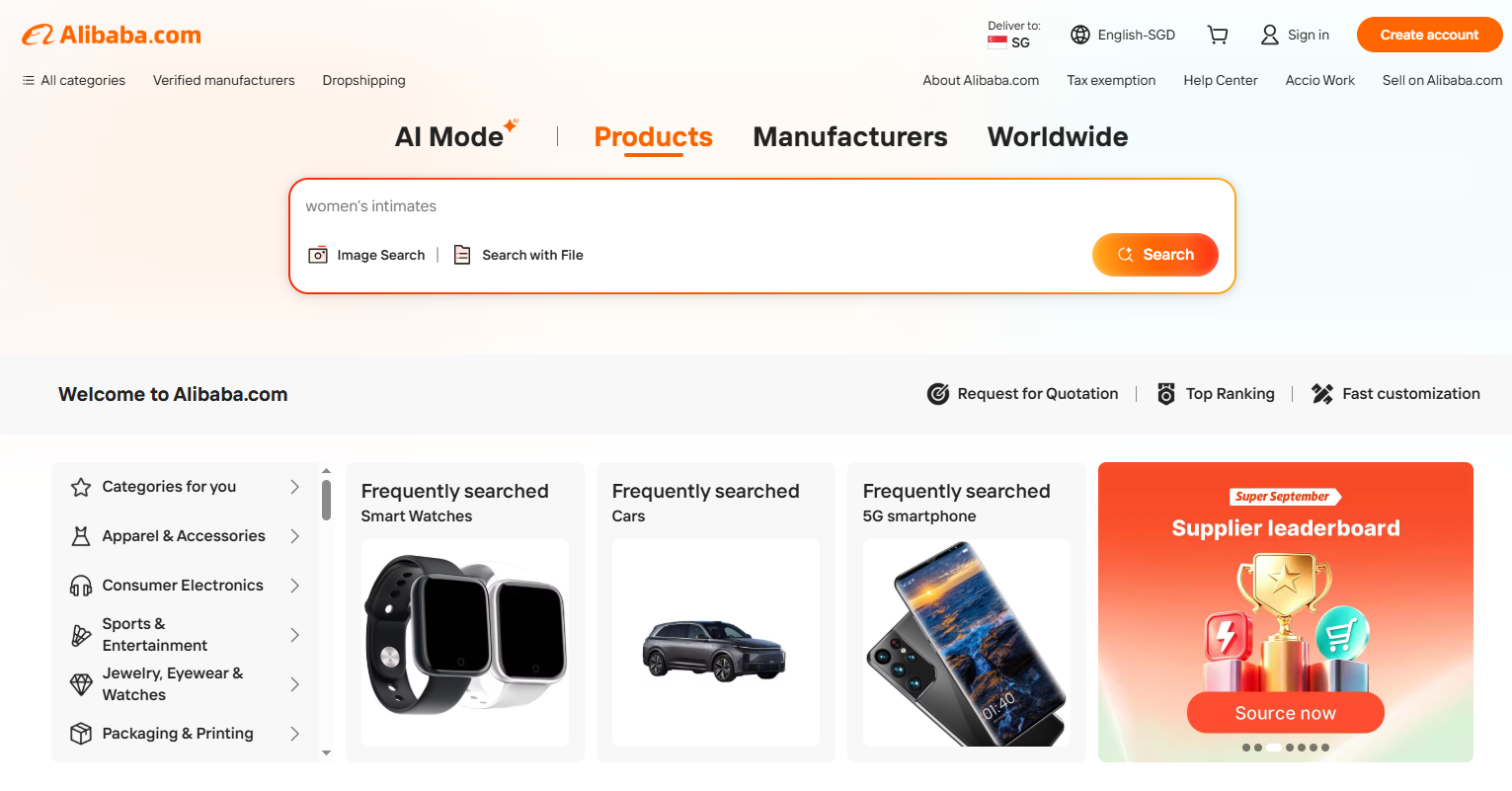
A major B2B sourcing marketplace connecting international buyers with Chinese manufacturers and trading companies. We can compare quotations, supplier profiles, production capabilities, and available buyer protections.
Made-in-China.com
A sourcing platform particularly useful for industrial equipment, machinery, manufacturing components, and factory-direct purchasing.
Global Sources
A supplier discovery platform offering product directories and sourcing exhibitions, especially for electronics, accessories, and consumer goods.
We can also identify manufacturers through industry trade shows, sourcing agents, professional referrals, and factory visits.
How to Verify a Chinese Supplier
Before transferring funds, we should perform supplier due diligence.
Our verification process should include checking the supplier's Chinese business registration, confirming the legal company name, examining production facilities, and requesting relevant product certifications.
We should also establish whether the company is a manufacturer or a trading intermediary.
Working directly with a manufacturer can offer greater production control, although reputable trading companies may provide valuable sourcing, coordination, and quality-management services.
Supplier verification checklist:
Markdown / Text Version:
Confirm the company's registered legal identity.
Verify its business license and operating address.
Request recent product samples.
Review relevant testing reports and certifications.
Confirm production capacity and lead times.
Ask for references where appropriate.
Arrange an independent factory audit for significant orders.
Ensure the payment beneficiary matches the verified contracting entity.
We should never rely exclusively on attractive prices or supplier claims.
4. Request Quotations and Negotiate with Chinese Suppliers
After identifying potential manufacturers, we should request detailed quotations from multiple suppliers.
A professional request for quotation (RFQ) should specify the product's materials, dimensions, technical requirements, packaging, labeling, order quantity, quality standards, and desired delivery terms.
Understand Minimum Order Quantity (MOQ)
The minimum order quantity (MOQ) is the smallest quantity a supplier is willing to manufacture or sell under the quoted conditions.
For example, a manufacturer might require an order of 500 units for a standard product or 2,000 units for a customized version.
We can sometimes negotiate lower MOQs by selecting existing product designs, accepting standard packaging, paying a higher unit price, or agreeing to future volume commitments.
Negotiate More Than the Unit Price
Effective supplier negotiations should address:
Markdown / Text Version:
Product specifications and tolerances.
Production schedules.
Packaging and labeling.
Defect acceptance criteria.
Replacement and refund procedures.
Payment milestones.
Inspection rights.
Shipping responsibilities.
Ownership of molds and tooling.
Intellectual property protections.
A slightly higher purchase price may provide better overall value when it includes reliable production, stronger quality assurance, and fewer unexpected expenses.
5. Order Samples Before Importing Products from China
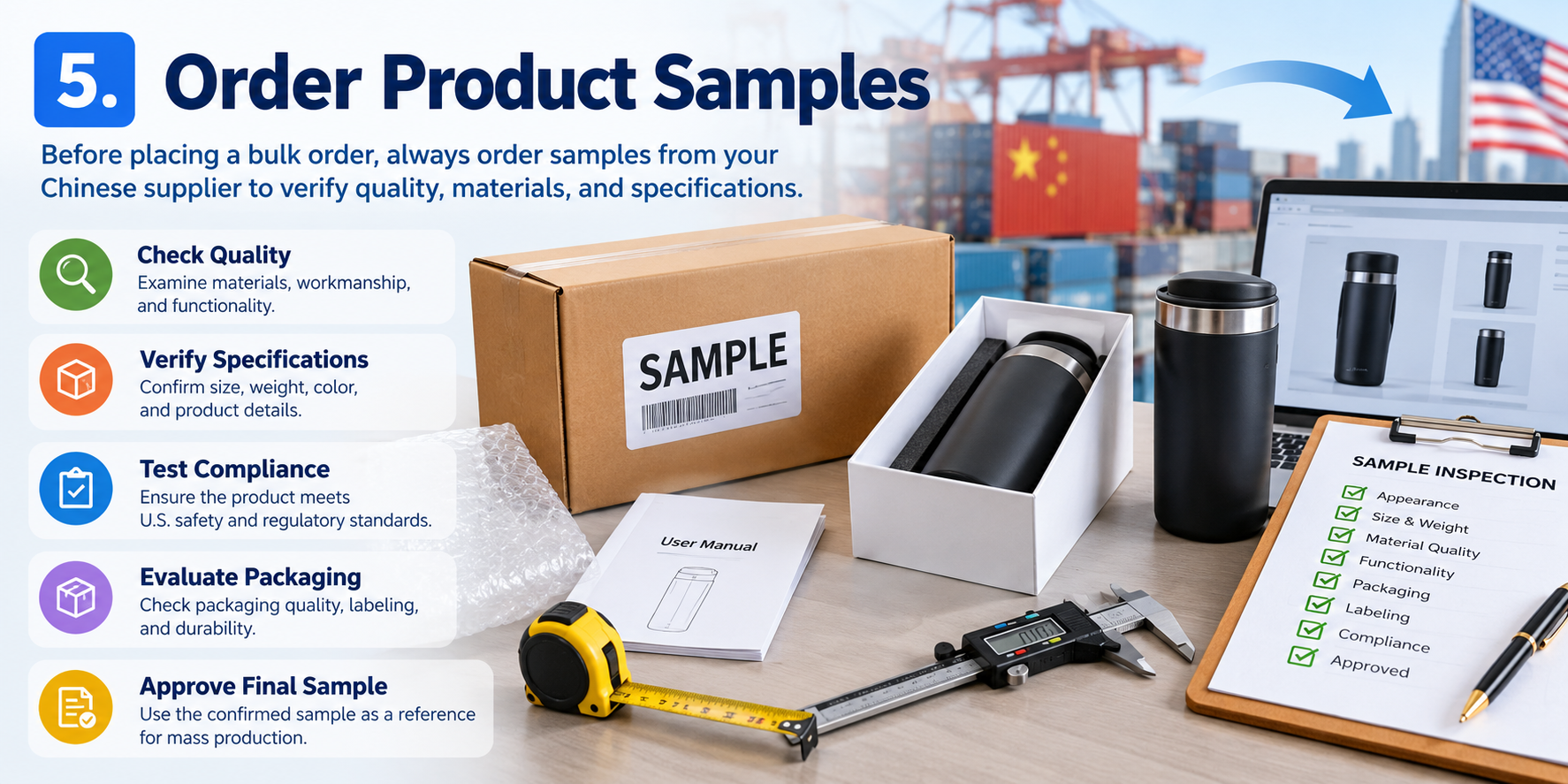
We should always evaluate representative samples before approving large production orders.
Samples help us assess product materials, workmanship, functionality, packaging, and consistency with our intended specifications.
For customized products, we should approve a final preproduction sample and preserve its specifications as a reference for manufacturing and inspection.
What Should We Check in Product Samples?
We should examine physical dimensions, weight, material composition, appearance, assembly quality, operational performance, labeling, and packaging durability.
When applicable, we should arrange independent laboratory testing to determine whether the product satisfies relevant U.S. requirements.
A sample that looks acceptable is not necessarily legally compliant. Required testing, certification, and documentation depend on the product and its intended use.
6. Understand U.S. Import Regulations and Customs Requirements
Before importing goods from China, we must understand the legal requirements governing entry into the United States.
The primary customs authority is U.S. Customs and Border Protection (CBP).
CBP oversees the entry of merchandise, assesses applicable duties, and enforces numerous import-related laws.
Do We Need an Import License to Buy from China?
The United States generally does not require a universal import license for ordinary commercial merchandise.
However, specific products may require permits, registrations, certifications, or approvals from relevant federal agencies.
Examples include:
|
Product Category |
Potential U.S. Regulatory Authority |
|---|---|
|
Food and dietary supplements |
FDA |
|
Cosmetics |
FDA |
|
Medical devices |
FDA |
|
Children's toys |
CPSC |
|
Radio-frequency electronic devices |
FCC |
|
Plants and certain agricultural products |
USDA |
|
Motor vehicles and automotive safety equipment |
DOT/NHTSA |
|
Certain chemicals |
EPA and other agencies |
The precise requirements depend on product characteristics, intended use, and applicable laws.
Do We Need an LLC to Import from China?
We do not necessarily need to establish a limited liability company solely to import merchandise into the United States.
Individuals and sole proprietors can import eligible goods, subject to applicable identification, customs, tax, and regulatory requirements.
Nevertheless, establishing a formal business entity may offer operational advantages, including separate business finances, commercial credibility, and a clearer contractual structure.
We should consult qualified legal and tax professionals when choosing a business structure.
7. Calculate Import Duties and Tariffs from China to the USA
One of the most important financial considerations when importing from China is the total amount of U.S. customs duties and additional tariffs.
Import duties depend on several factors, including product classification, customs value, country of origin, and applicable trade measures.
Understand Harmonized Tariff Schedule (HTS) Codes
Every imported product must be classified under the appropriate Harmonized Tariff Schedule of the United States (HTSUS) provision.
The classification determines the ordinary customs duty rate and helps identify other applicable trade measures.
We can consult the official U.S. Harmonized Tariff Schedule maintained by the United States International Trade Commission.
An incorrect HTS classification can result in underpayment, overpayment, customs delays, or penalties.
Understand Section 301 and Other China Tariffs
Certain products originating in China are subject to additional tariffs under Section 301 of the Trade Act of 1974.
Depending on the product and the measures in effect at the time of entry, additional duties or other import restrictions may also apply.
We must not assume that every Chinese product has the same tariff rate.
In 2026, tariff measures and exemptions remain especially important to verify because U.S. trade policies can change, and rates may depend on specific HTS classifications and effective dates.
Example: Calculating Import Duties
Suppose we purchase merchandise with a customs value of $10,000.
For illustration, assume the product has an ordinary duty rate of 5% and an applicable additional duty rate of 25%.
|
Cost Component |
Amount |
|---|---|
|
Customs value |
$10,000 |
|
Ordinary duty (5%) |
$500 |
|
Additional duty (25%) |
$2,500 |
|
Total illustrated duties |
$3,000 |
|
Value plus illustrated duties |
$13,000 |
This example assumes both rates apply to the same customs value. It excludes freight, insurance, merchandise processing fees, possible harbor maintenance fees, brokerage charges, and any other applicable duties or tariffs.
Actual rates must be confirmed for the specific merchandise and entry date.
Important: Before placing an order, we should confirm current tariff treatment using the product's precise HTS classification and country of origin. A supplier's general tariff estimate is not a substitute for customs classification.
8. Understand the 2026 De Minimis Rules for Imports from China
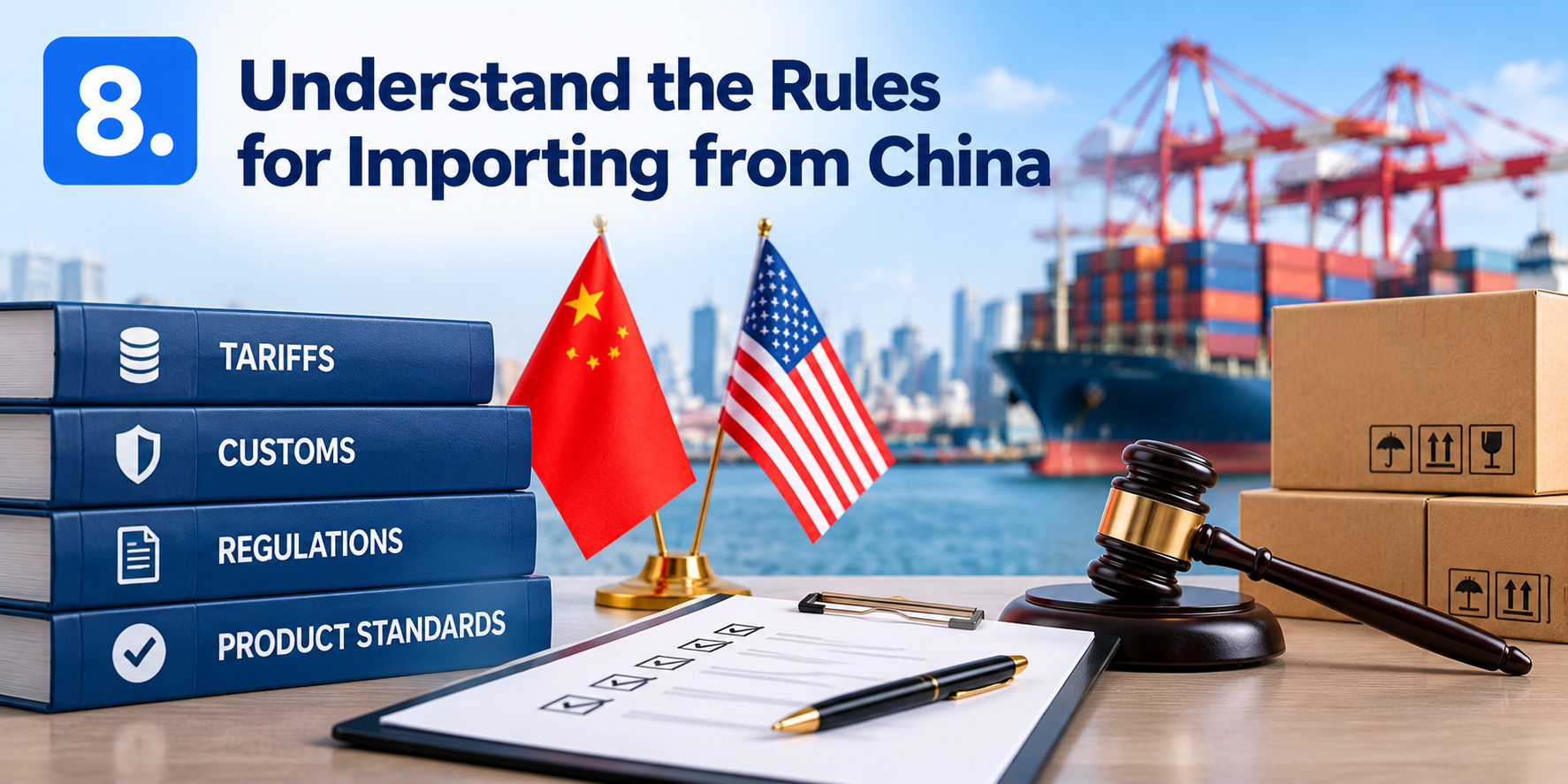
Previously, many low-value shipments entering the United States qualified for duty-free treatment under the $800 de minimis exemption.
However, this exemption has undergone significant changes.
Duty-free de minimis treatment for covered shipments from China was suspended beginning May 2, 2025. The suspension was subsequently extended to covered low-value shipments from all countries, effective August 29, 2025, and continued under measures issued in 2026.
Consequently, we should not assume that a shipment valued below $800 can enter the United States without duties.
Importers should determine the applicable entry procedure, duties, and processing requirements for each shipment, including goods delivered through international postal services or express couriers.
This change is especially important for dropshipping businesses, small e-commerce sellers, and companies importing low-value products directly from Chinese suppliers.
9. Choose the Best Shipping Method from China to the USA
Shipping expenses can substantially influence the profitability of imported merchandise.
We generally choose between sea freight, air freight, and international express shipping, depending on shipment size, product value, delivery deadlines, and budget.
Sea Freight from China to the USA
Ocean freight is commonly the most economical option for large commercial shipments.
We can choose between two principal container shipping arrangements.
Full Container Load (FCL): We reserve an entire shipping container for our merchandise. This option is generally suitable for larger shipments.
Less than Container Load (LCL): We share container space with other shippers and pay according to the applicable chargeable volume or weight.
Ocean freight is particularly suitable for furniture, construction materials, machinery, bulk consumer goods, and large wholesale orders.
Air Freight from China to the USA
Air freight offers faster transportation for time-sensitive merchandise.
We may prefer air freight for high-value electronics, lightweight commercial goods, urgent replacement inventory, and products with short sales cycles.
However, air freight rates depend on chargeable weight, which considers both actual weight and dimensional weight.
Express Shipping from China
International courier companies such as DHL, FedEx, and UPS offer integrated international shipping services.
Express delivery can be convenient for samples and smaller shipments, although charges can become expensive for bulky merchandise.
Compare Shipping Methods
|
Shipping Method |
Illustrative Transit Time |
Suitable For |
|---|---|---|
|
Express courier |
3–7 business days |
Samples and small urgent shipments |
|
Air freight |
5–12 days |
Time-sensitive commercial cargo |
|
Sea freight (FCL) |
15–40 days port-to-port |
Large-volume shipments |
|
Sea freight (LCL) |
20–45 days port-to-port |
Smaller consolidated cargo |
These are general planning estimates, not guaranteed delivery times. Customs clearance, consolidation, inland transport, port congestion, and seasonal demand may extend the overall delivery period.
10. Understand Incoterms When Importing from China
International Commercial Terms, commonly known as Incoterms, establish how sellers and buyers divide transportation responsibilities, costs, and risks.
We should specify the applicable Incoterms 2020 rule and named place or port in our purchase contract.
EXW (Ex Works)
Under EXW, the seller makes goods available at the agreed location, and the buyer assumes extensive transportation responsibilities.
This arrangement can be challenging for inexperienced importers, particularly when export clearance and local logistics require coordination in China.
FOB (Free on Board)
FOB is commonly used for containerized or bulk ocean trade quotations, although FCA may be more suitable for containerized cargo delivered to a terminal before vessel loading.
Under FOB, the seller delivers goods on board the nominated vessel at the specified port. Risk transfers when the goods are on board.
CIF (Cost, Insurance and Freight)
Under CIF, the seller arranges and pays for ocean freight and the required minimum insurance coverage to the named destination port.
However, risk generally transfers to the buyer when the goods are loaded on board the vessel at the shipment port.
We must distinguish between the party paying freight and the party bearing transportation risk.
DDP (Delivered Duty Paid)
Under DDP, the seller assumes extensive responsibilities, including import clearance and applicable duties, subject to the contract and legal ability to perform those obligations.
DDP can simplify purchasing, but we should verify who acts as the importer of record, how duties are declared, and whether all customs requirements are being satisfied.
For many new importers, FCA or FOB combined with a reliable freight forwarder can provide greater transparency over international shipping expenses.
11. Prepare the Documents Required to Import from China
Accurate documentation is essential for customs clearance.
We should confirm all required documents before the goods leave China.
Commercial Invoice
The commercial invoice normally identifies the seller, buyer, merchandise, quantities, unit prices, transaction value, currency, and other relevant commercial information.
Descriptions should be sufficiently detailed to support accurate customs classification.
Packing List
The packing list records the contents of the shipment, including package quantities, gross and net weights, dimensions, and carton identification.
Bill of Lading or Air Waybill
A bill of lading is commonly used for ocean freight, while an air waybill accompanies air cargo.
These documents provide essential transportation and shipment information.
Other Potential Import Documents
Depending on the merchandise and entry procedure, we may need additional records, including product testing reports, agency certifications, customs bond information, country-of-origin documentation, or special import permits.
We should maintain consistency across all shipping and customs documents.
12. Hire a Customs Broker for U.S. Import Clearance
A licensed U.S. customs broker can help us prepare entry filings, classify merchandise, calculate duties, and coordinate customs clearance.
Customs brokers are especially useful for first-time importers and businesses handling regulated products.
CBP explains that formal entries are generally required for merchandise valued at $2,500 or more, although particular merchandise can require formal entry at lower values.
Do We Need a Customs Bond?
Formal commercial entries generally require a customs bond or an accepted alternative security arrangement.
Two common options are:
-
Single-entry bond: Generally covers one import transaction.
-
Continuous bond: Covers qualifying import transactions over a 12-month period.
A continuous bond may be more economical for businesses importing regularly. Bond amounts depend on applicable CBP requirements and the importer's duty exposure.
File the Import Security Filing (ISF)
For applicable ocean shipments, an Importer Security Filing (ISF), also known as ISF 10+2, must be submitted to CBP.
Generally, the principal filing information must be provided at least 24 hours before the cargo is loaded aboard the vessel destined for the United States.
Late, inaccurate, or incomplete filings can result in penalties or liquidated damages.
We should coordinate the filing with our freight forwarder or customs broker well before the vessel's departure.
13. Calculate the Total Cost of Importing from China to the USA
The supplier's quoted unit price represents only one part of our import expenses.
To determine actual profitability, we must calculate the total landed cost.
Landed Cost Formula
|
Cost Component |
Example Cost |
|---|---|
|
Product Cost |
$5,000 |
|
International Freight |
$800 |
|
Insurance |
$100 |
|
Import Duties and Fees |
$600 |
|
Customs Brokerage |
$150 |
|
Domestic Transportation |
$250 |
|
Other Applicable Costs |
$100 |
|
Total Landed Cost |
$7,000 |
Example: If you purchase products worth $5,000 from a Chinese supplier, your actual landed cost may be $7,000 after adding freight, insurance, import duties, customs brokerage, domestic transportation, and other applicable expenses.
If you purchase 1,000 units, the landed cost would be:
$7,000 ÷ 1,000 = $7 per unit
Example: Importing 1,000 Products from China
Assume we purchase 1,000 units at $5 each.
|
Expense |
Estimated Cost |
|---|---|
|
Product purchase |
$5,000 |
|
International freight |
$1,200 |
|
Cargo insurance |
$100 |
|
Assumed customs duties |
$1,500 |
|
Customs brokerage and entry fees |
$250 |
|
Domestic delivery |
$450 |
|
Total landed cost |
$8,500 |
Our estimated landed cost per unit would be:
If we sell each product for $20, the difference between the selling price and landed cost is $11.50 per unit.
However, this amount is not net profit. We must still deduct selling commissions, marketing expenses, fulfillment fees, storage, returns, operating overhead, and applicable taxes.
Interactive Import Cost Calculator
We can use the following calculator to estimate the landed cost of an import shipment before committing to an order.
|
Cost Item |
Calculation / Details |
Amount |
|---|---|---|
|
Quantity |
Total units purchased |
1,000 units |
|
Product Cost |
Supplier price × quantity |
$5,000.00 |
|
International Freight |
Shipping from China to destination |
$1,200.00 |
|
Insurance |
Cargo insurance |
$100.00 |
|
Import Duties |
Customs duties and related fees |
$1,500.00 |
|
Other Costs |
Brokerage, local delivery, handling, etc. |
$700.00 |
|
Total Landed Cost |
Sum of all import costs |
$8,500.00 |
|
Landed Cost per Unit |
$8,500 ÷ 1,000 units |
$8.50 |
|
Gross Margin Before Selling Expenses |
Assuming a selling price of $20 per unit |
57.5% |
Example: If your landed cost is $8.50 per unit, you should use this figure—not just the supplier's product price—when calculating your selling price and expected profit.
14. Inspect Products Before Shipping from China
Quality control is essential when working with overseas manufacturers.
Once goods arrive in the United States, correcting defects can become expensive because of international return freight, storage expenses, and lengthy replacement production cycles.
We should establish an inspection plan before manufacturing begins.
Preproduction Inspection
This inspection evaluates raw materials, components, and production readiness.
During Production Inspection
Inspectors examine goods while manufacturing is underway, allowing us to identify defects before the entire order is completed.
Pre-Shipment Inspection
A pre-shipment inspection evaluates finished products against approved specifications.
We should verify product appearance, measurements, functionality, labeling, packaging, and shipment quantities.
For larger orders, we may engage an independent inspection company such as SGS or Intertek.
An inspection report helps us make an informed decision before authorizing final payment and shipment.
15. Avoid Common Mistakes When Importing from China
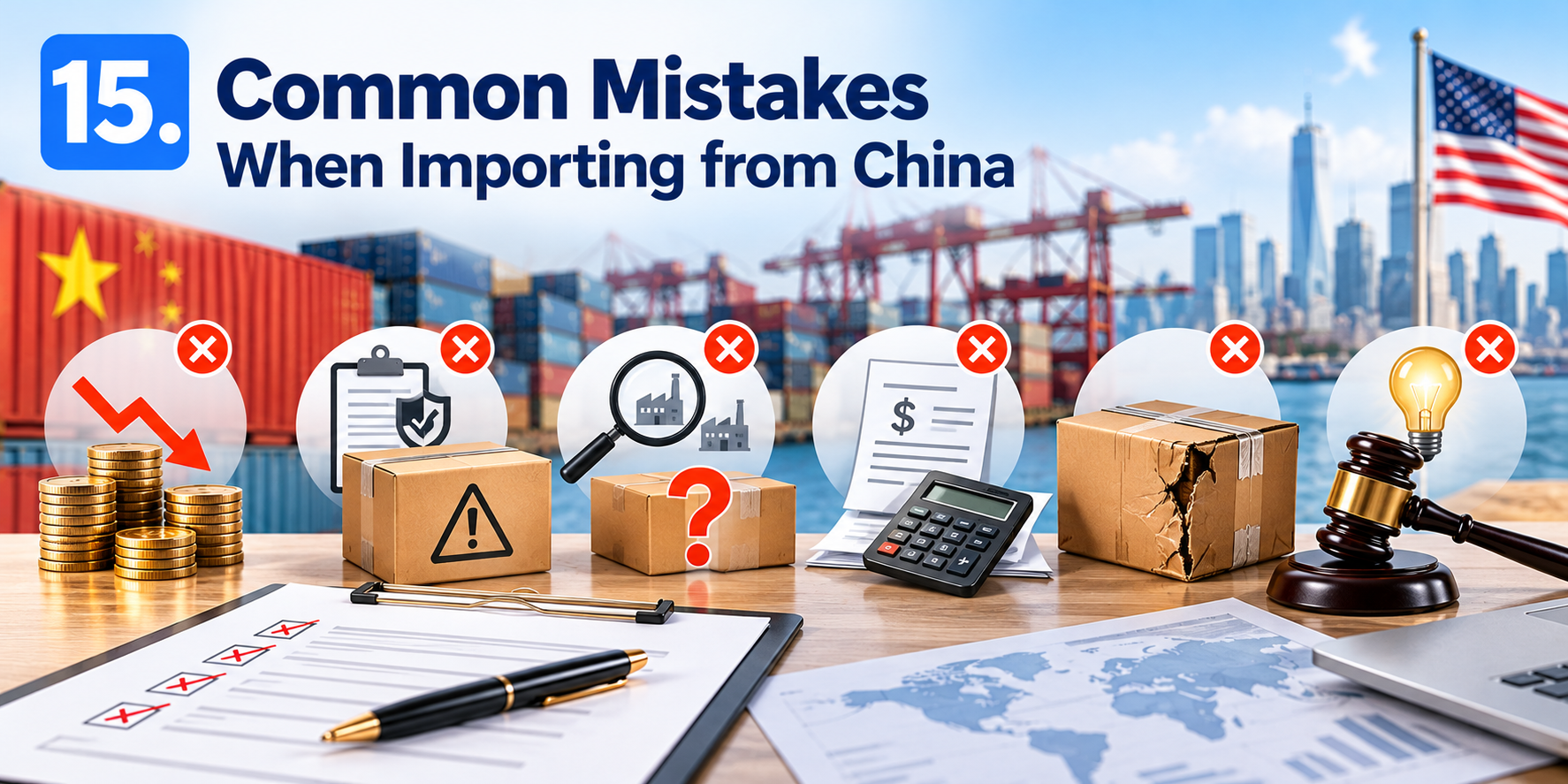
Importing becomes more manageable when we anticipate common operational and financial risks.
Choosing Suppliers Based Only on Price
The lowest quotation may involve inferior materials, inconsistent production, inadequate packaging, or hidden charges.
We should compare suppliers using total value, not simply the quoted unit cost.
Ignoring U.S. Product Compliance
Products that do not satisfy applicable U.S. requirements may be detained, refused entry, recalled, or subject to enforcement action.
We should establish regulatory requirements before production.
Underestimating Shipping and Customs Charges
Unexpected terminal handling, storage, examination, brokerage, and domestic transportation expenses can reduce profitability.
We should obtain detailed freight quotations and clarify which services are included.
Failing to Protect Intellectual Property
When importing private-label or custom-designed products, we should address trademarks, designs, molds, tooling, and confidential technical information in our contracts.
We may also need appropriate intellectual property registrations and enforceable agreements.
Making Unprotected Payments
We should verify supplier banking information and use payment methods appropriate to the transaction risk.
Common arrangements include staged bank transfers, letters of credit, and platform-supported payment protections.
For significant orders, we should consider linking the final payment milestone to satisfactory inspection results.
16. How to Import from China to Amazon FBA in the USA
Amazon sellers frequently source products from Chinese manufacturers and ship inventory to U.S. fulfillment facilities.
However, Amazon fulfillment requirements do not replace customs or product compliance obligations.
Prepare Amazon-Compliant Packaging
We should confirm the current requirements for product identifiers, carton labels, packaging, restricted products, and shipment creation.
Requirements may vary by product category and fulfillment arrangement.
Arrange Import Clearance Before Amazon Delivery
We should ensure that the designated importer of record and customs broker can complete the import entry.
Amazon generally should not be assumed to act as the importer of record or to pay import duties on our behalf.
Coordinate Delivery Appointments and Inventory Routing
After customs release, inventory may need to move through a freight forwarder's warehouse, preparation facility, or domestic carrier before delivery to the assigned fulfillment location.
We should account for additional handling, labeling, storage, and delivery expenses when calculating profitability.
17. How Long Does It Take to Import from China to the USA?
The total importing timeline includes more than international transportation.
We should account for supplier verification, sample approval, manufacturing, inspections, export handling, shipping, customs clearance, and domestic delivery.
A typical planning timeline may look like this:
|
Stage |
Illustrative Duration |
|---|---|
|
Supplier research and verification |
1–3 weeks |
|
Sample production and approval |
1–3 weeks |
|
Mass production |
2–6 weeks |
|
Quality inspection |
1–3 days |
|
International shipping |
3–45 days |
|
Customs clearance and final delivery |
Several days or longer |
These stages may overlap, and the actual schedule depends on product complexity, supplier capacity, transportation method, and customs processing.
For first-time imports, we should maintain additional inventory and scheduling buffers rather than planning around the fastest possible delivery date.
18. Frequently Asked Questions About Importing from China to the USA
How much does it cost to import goods from China to the USA?
The total cost depends on the merchandise, quantity, shipping method, customs classification, tariffs, and destination.
We should calculate product cost, international freight, insurance, customs duties, brokerage fees, and domestic delivery to determine the actual landed cost.
Can we import directly from China without a sourcing agent?
Yes. We can communicate directly with manufacturers, negotiate purchasing terms, arrange shipping, and coordinate customs clearance.
However, a reputable sourcing agent may be useful when we need factory verification, product development, supplier coordination, or local quality inspections.
Do we have to pay customs duties on products imported from China?
Many imports are subject to customs duties or additional tariffs. The applicable charges depend on classification, origin, value, entry date, and any relevant exclusions or special measures.
We should verify the current requirements before shipping.
Can we import from China without a customs broker?
In certain circumstances, importers can prepare and file their own customs entries.
However, commercial imports can involve complex classification, bond, agency, and filing requirements. We generally recommend using a licensed customs broker for unfamiliar or higher-risk shipments.
What is the cheapest way to ship products from China to the USA?
For substantial quantities of non-urgent merchandise, sea freight is frequently the most economical transportation method.
However, we should compare complete door-to-door quotations because consolidation fees, port charges, and domestic delivery can materially affect the final cost.
How can we avoid scams when buying products from China?
We should verify the supplier's registration, confirm banking information, request samples, use written contracts, arrange independent inspections, and avoid sending large payments to unverified accounts.
Can we import products from China and sell them under our own brand?
Yes, provided we comply with applicable intellectual property, product safety, labeling, customs, and marketplace requirements.
Private-label importing commonly involves customized packaging, branded products, and negotiated manufacturing specifications.
What is the best Incoterm for importing from China?
There is no universally best Incoterm. FCA and FOB may offer useful transportation control for certain commercial arrangements, while DDP may simplify delivery where the seller can legally and reliably fulfill all import responsibilities.
We should select the term according to the shipment method, contractual responsibilities, and our logistics capabilities.
Most importantly, we should treat every shipment as part of a structured supply chain rather than an isolated purchasing transaction. This approach helps us improve quality consistency, reduce avoidable costs, protect working capital, and build sustainable relationships with Chinese manufacturers.
For official guidance, we can consult U.S. Customs and Border Protection, the U.S. Harmonized Tariff Schedule, and International Trade Administration.