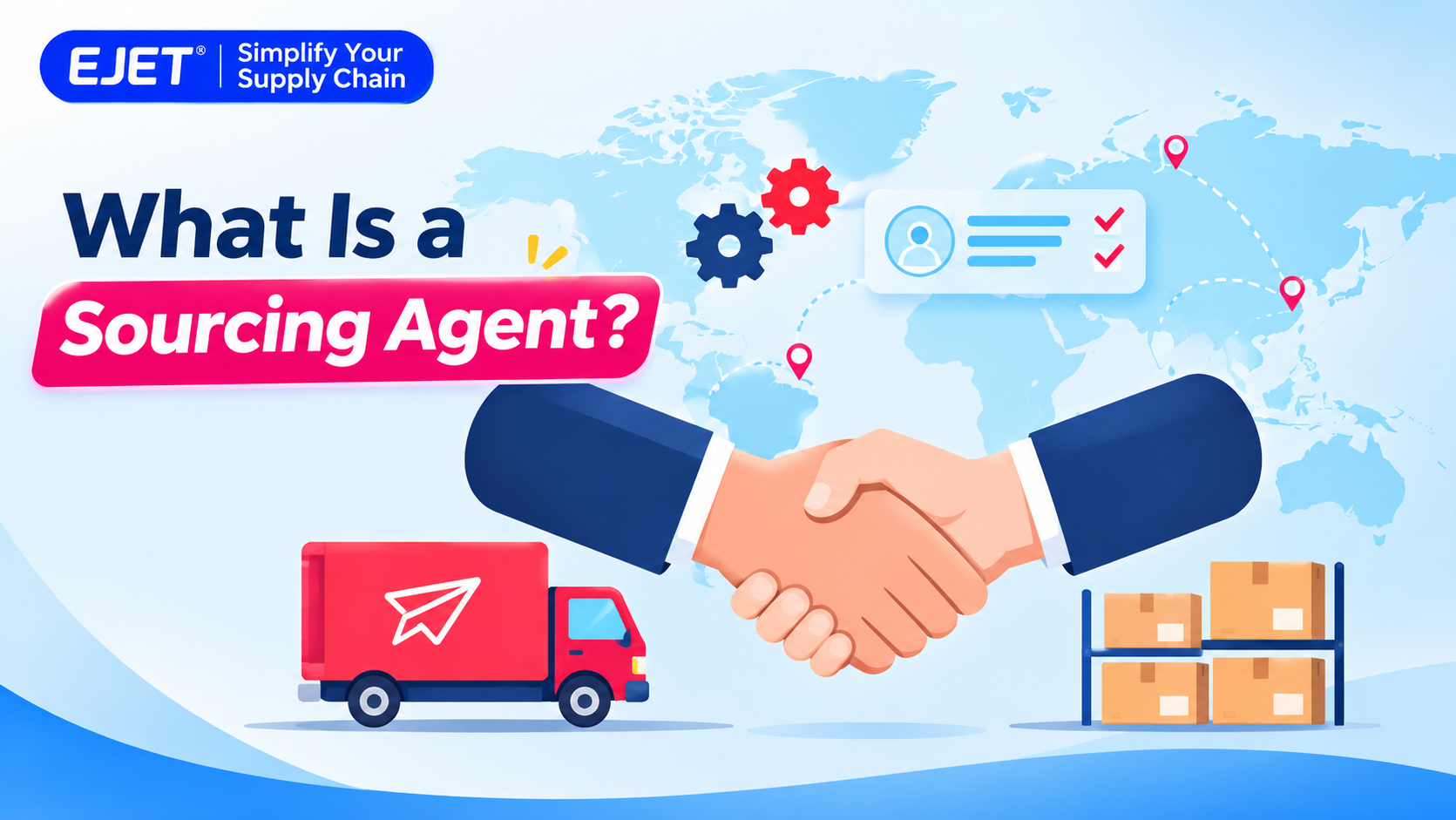
A sourcing agent helps a business find suppliers, compare offers, and coordinate purchasing activities on the buyer’s behalf. Depending on the agreement, that support can extend to samples, factory checks, production follow-up, and shipping coordination.
The value lies in getting practical help where your team lacks local access, product knowledge, or time—not simply finding the cheapest factory.
Before hiring one, understand exactly what you are buying: a supplier shortlist, a managed purchasing process, or ongoing support.
That distinction makes services and fees easier to compare.
What does a sourcing agent do?
A sourcing agent acts as a buyer’s representative when identifying and working with suppliers. Rather than manufacturing the product, the agent helps connect your requirements with suitable production capabilities and coordinates agreed tasks.
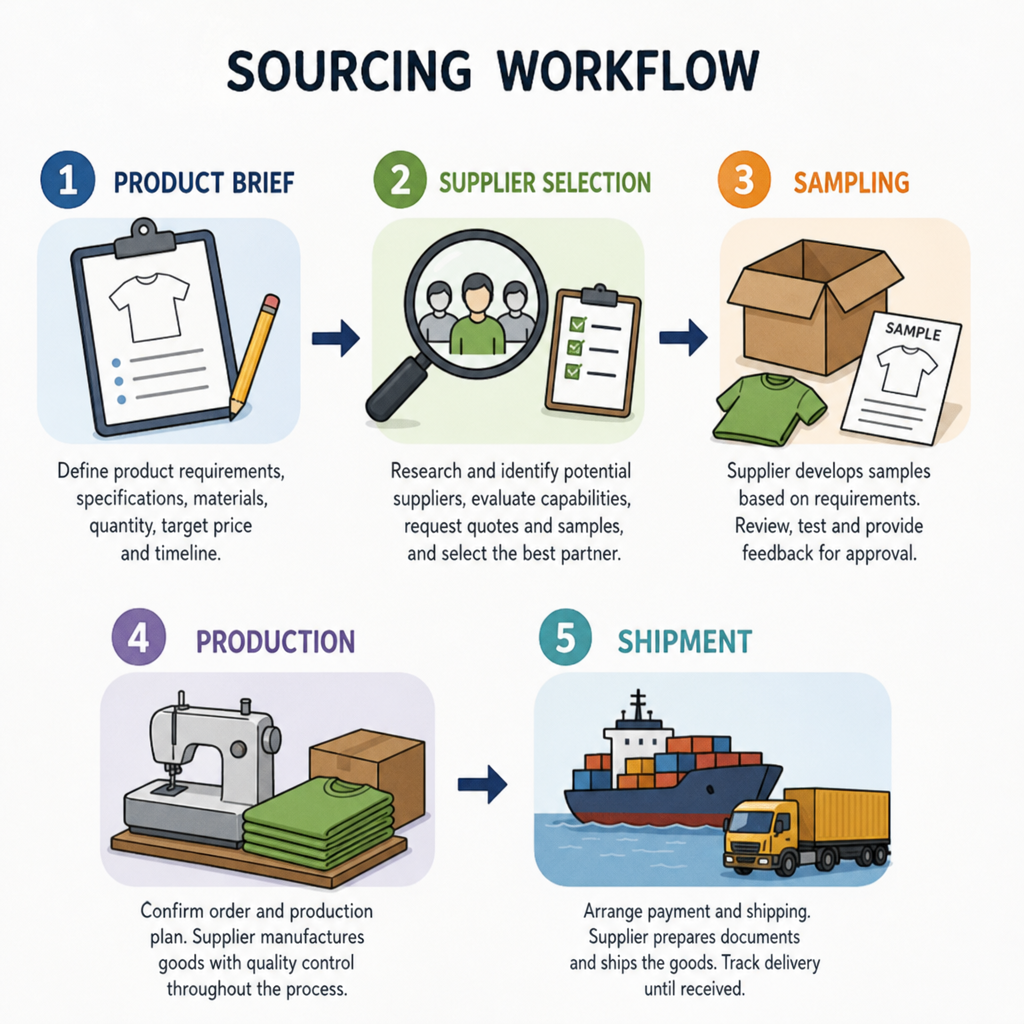
Some engagements stop after supplier selection; others continue through production and shipment.
Think of the role as an extension of your purchasing team, with boundaries you must define. Ask whether the assignment includes finding suppliers only, verifying their capabilities, negotiating terms, or monitoring an order. Avoid relying on a broad promise to “handle everything.”
Also clarify whether the provider is acting as an agent or selling goods to you. A trading company generally buys and resells products, while an agent provides purchasing support for a fee. Neither arrangement is automatically better, but the distinction affects pricing visibility and your relationship with the factory.
Core services to put in the scope
Sourcing support can encompass supplier identification, procurement, factory audits, inspections, and logistics or testing coordination. These are separate activities, so do not assume a quotation includes all of them.
Sofeast, for example, distinguishes supplier identification from broader supply-chain management and quality-assurance work.
Use the following service groups to build a scope that matches your project.
Supplier search and qualification
Ask for a shortlist with reasons behind each recommendation, not just company names. Useful evidence might include relevant manufacturing processes, willingness to accept your order quantity, and experience with comparable products. Specify which checks must be completed before you approve a supplier.
Treat an online background check as a starting point. The U.S. Commercial Service distinguishes preliminary checks that establish a company’s existence and identify warning signs from more substantial in-country due diligence.
Quotations, negotiation, and samples
Require comparable quotations against the same specification. Ask the agent to separate product price, packaging, tooling, sample charges, and delivery assumptions. Otherwise, the lowest quote may simply cover less.
For samples, agree on an approval record: photos, measurements, materials, finish, and any changes requested. Keep the approved reference accessible to both the supplier and whoever checks production. Your goal is to replace “make it like this” with requirements people can verify.
Production and quality coordination
Set expectations for production updates, escalation, and inspection arrangements. Ask who will inspect the goods, which checklist they will use, and when you will receive the report.
Keep factory audits, product inspections, and laboratory testing distinct. QIMA describes audits as assessments of sites and systems, inspections as assessments of production lots, and testing as evaluation of product characteristics. One activity should not be presented as a substitute for the others.
How much are sourcing agent fees?
Sourcing agent fees depend on the work involved and how the provider charges. Models include order-based commissions, fixed project fees, time-based billing, and ongoing retainers; providers may also combine structures.
There is no single price that meaningfully covers every product, order size, and service scope.
Instead of starting with “What percentage do you charge?”, start with “What deliverables does this price include?” A low headline fee is difficult to evaluate without knowing what you must arrange separately.
|
Fee model |
How to evaluate the proposal |
Detail to confirm |
|---|---|---|
|
Commission |
Calculate the fee against your expected order value |
Which charges form the commission base |
|
Fixed project fee |
Compare the price with defined outputs |
Supplier count, revisions, and completion criteria |
|
Hourly or daily billing |
Request an estimate and spending limit |
Reporting, travel time, and approval for extra work |
|
Monthly retainer |
Match available support to recurring workload |
Included tasks, capacity, and unused time |
|
Hybrid arrangement |
Add every component before comparing offers |
Potential overlap between separate charges |
For illustration only, a hypothetical 5% commission on a $20,000 goods order equals $1,000. That calculation says nothing about whether inspections, sample freight, or testing are included. Use the example to understand the mechanism, not as a market quotation.
Ask how repeat orders are treated, too. If the supplier search is complete, request an explanation of what ongoing fees cover. Production follow-up may still be valuable, but it should be identifiable work rather than an unexplained recurring charge.
Before accepting a proposal, request written disclosure of supplier-paid commissions, rebates, and other compensation. Ask whether factory quotations will be shared and whether you can communicate directly with shortlisted suppliers. These are useful checks recommended in Sofeast’s guide to qualifying an agent.
Budget for the total cost of sourcing
Build your budget around the complete purchasing project, not the agent’s invoice alone. Separate one-time setup expenses from costs that repeat with every order. This makes it easier to judge whether a first order remains workable and whether future orders improve the economics.
Create a worksheet with these categories:
- Product development: drawings, prototypes, tooling, and sample revisions where needed.
- Supplier verification: background checks, factory assessments, and specialist reviews you commission.
- Quality activities: inspections, testing, and any agreed reinspection work.
- Purchasing support: agent fees, approved travel, and administrative expenses.
- Delivery: freight, insurance, brokerage, duties, taxes, and destination handling estimates.
- Internal effort: time your team will spend approving samples, reviewing reports, and resolving issues.
For each line, record who supplies the estimate, who pays it, and whether it is included elsewhere. Leave uncertain figures visibly marked rather than treating them as zero.
For U.S. imports, do not assume outsourcing purchasing also outsources customs responsibility. CBP states that the importer of record remains ultimately responsible for entry documentation and applicable duties, taxes, and fees, even when using a broker. Obtain product-specific guidance before committing to an import plan.
When do you need a sourcing agent?
Consider a sourcing agent when the work requires capabilities or local follow-up your team cannot reliably provide. The strongest case is a specific operational gap: supplier qualification, sample coordination, production oversight, or managing several suppliers. Hire against that gap rather than assuming every overseas purchase needs an intermediary.
Use these situations to assess your needs:
- You are entering an unfamiliar market. Consider help with supplier communication and verification, while keeping selection decisions under your control.
- Your product has detailed requirements. Look for relevant technical experience and a clear method for translating specifications into supplier instructions.
- You cannot follow production closely. Define the updates, evidence, and escalation support you need before placing the order.
- Several suppliers must work together. Map responsibilities for components, packaging, delivery dates, and final assembly before choosing support.
- Your team is overloaded. Compare a limited outsourcing assignment with the workload and cost of managing it internally.
You may not need full-service support if you already have a capable supplier and a purchasing process you trust. Consider commissioning only the missing piece, such as a factory assessment or independent inspection. That keeps the engagement focused instead of paying for activities you can already manage.
Avoid hiring an agent to compensate for an undefined product. First establish what you want to buy, the quantities you can support, and the acceptance criteria. Otherwise, you will struggle to judge either the suppliers or the agent’s performance.
Choose for evidence, transparency, and control
Evaluate the agent as carefully as the supplier. The International Trade Administration recommends researching potential foreign partners and continuing due diligence as relationships develop. Apply that principle to anyone entrusted with supplier recommendations or purchasing coordination.
Request a walkthrough of a comparable assignment without asking for another client’s confidential information. Focus on the process: what the agent checked, how findings were documented, and how problems were escalated. A polished presentation is less useful than a clear explanation of actual deliverables.
Before signing, confirm:
- Relevant experience: Ask which materials, processes, and product categories the team understands.
- Supplier access: Establish whether you receive factory identities, contacts, and direct communication rights.
- Written outputs: Specify quotation comparisons, assessment reports, sample records, and production updates.
- Payment arrangements: Identify who invoices you, who receives supplier payments, and how changes are verified.
- Commercial incentives: Require disclosure of compensation from suppliers or other service providers.
- Quality independence: Decide when a separate inspector or laboratory should report directly to you.
- Exit arrangements: Agree how records, tooling information, and unfinished work will be handed over.
Treat resistance to these questions as a reason to investigate further, not as proof of wrongdoing. Ask for clarification before transferring money or sharing sensitive technical files. Have appropriate advisers review contractual, intellectual-property, and compliance issues when the project warrants it.
Start with a controlled first assignment
Begin with a bounded task you can evaluate, such as a documented supplier search. Set a budget, deadline, and acceptance criteria before expanding into ongoing order management. This gives both sides a chance to establish a working rhythm without making the entire supply chain dependent on an untested relationship.
Prepare a sourcing brief that includes:
- Product drawings, reference samples, or a clear functional description.
- Required materials, dimensions, finishes, and packaging.
- Initial quantities and realistic reorder expectations.
- Destination market and requirements needing specialist review.
- Target schedule, budget assumptions, and approval responsibilities.
Then set decision gates. Approve the shortlist before paying for extensive sampling; approve samples before authorizing production; and agree what evidence is needed before shipment. Make any exceptions explicit rather than allowing urgency to replace review.
Keep communication practical. Request updates that identify completed work, open questions, risks, responsible people, and the next decision required. Store specifications and approvals in a shared record so changes do not disappear into scattered messages.
Measure the assignment against agreed outputs rather than promises of savings alone. Review whether quotations were genuinely comparable, questions were answered promptly, and problems were raised early enough for you to act. Those observations give you a firmer basis for deciding whether to extend the relationship.
Buy defined support, not vague reassurance
Choose a sourcing agent by matching a concrete business need with a clearly priced scope. Keep supplier information, approvals, and spending authority visible throughout the engagement. The decision is not whether an agent sounds helpful; it is whether the proposed work addresses your actual purchasing gaps.
Start with your product brief, request comparable proposals, and calculate the full cost of sourcing. Then hire only the support you can define, monitor, and evaluate.
Frequently Asked Questions About Sourcing Agents
What is a sourcing agent and what services do they provide?
A sourcing agent acts as an intermediary between businesses and suppliers, helping to find, verify, and coordinate with suppliers. They provide services such as supplier identification, procurement, quality control, and logistics management.
How much do sourcing agents charge for their services?
Sourcing agent fees vary depending on several factors, including the services provided, the complexity of the project, and the fee structure (commission, fixed fees, hourly rates, etc.). It's essential to clarify deliverables and any additional costs before hiring a sourcing agent.
When should a business consider hiring a sourcing agent?
Businesses should consider hiring a sourcing agent when they lack local market knowledge, need assistance managing multiple suppliers, require specialized product oversight, or have limited resources to effectively manage procurement processes.
What should I look for when choosing a sourcing agent?
When selecting a sourcing agent, evaluate their relevant experience, transparency in operations, the capability to provide evidence of past work, and the clarity of their payment arrangements. It’s crucial to assess their understanding of your specific product requirements and industry.
Can a sourcing agent guarantee the lowest prices?
While sourcing agents aim to negotiate favorable terms and find competitive prices, they cannot guarantee the lowest prices. Their value lies in providing comprehensive support, ensuring quality, and managing the intricacies of international procurement rather than merely focusing on price.