









Buying products in bulk from China is one of the most effective ways to reduce procurement costs, improve profit margins, and expand a retail, wholesale, or e-commerce business.
China remains a major global manufacturing hub, offering an extensive selection of products, competitive factory pricing, established supply chains, and flexible manufacturing capabilities.
However, successfully buying in bulk from China requires more than finding inexpensive products.
We must identify reliable manufacturers, understand minimum order quantities, negotiate favorable prices, verify product quality, manage international shipping, and comply with import regulations.
In this comprehensive guide, we explain how to buy wholesale products from China, where to find trustworthy suppliers, how to avoid costly sourcing mistakes, and how to build a profitable international purchasing strategy.
1. Why Buy Products in Bulk from China?
China offers significant advantages for businesses seeking affordable wholesale products and dependable manufacturing partners.
Competitive Wholesale Prices
One of the primary reasons we source products from China is the opportunity to purchase goods at competitive manufacturing prices.
Chinese manufacturers benefit from extensive supplier networks, specialized industrial clusters, established production infrastructure, and economies of scale.
When we purchase larger quantities, factories can often distribute setup, production, and administrative costs across more units, resulting in lower per-unit prices.
For example, a product might have the following illustrative pricing structure:
|
Order Quantity |
Price per Unit |
Total Product Cost |
|---|---|---|
|
100 units |
$5.00 |
$500 |
|
500 units |
$3.80 |
$1,900 |
|
1,000 units |
$3.20 |
$3,200 |
|
5,000 units |
$2.70 |
$13,500 |
These figures demonstrate how volume purchasing can reduce unit costs. Actual prices depend on the product, manufacturer, specifications, raw materials, and negotiated terms.
Extensive Product Selection
Chinese suppliers manufacture products across thousands of categories, including:
-
Consumer electronics: Mobile accessories, headphones, chargers, and smart devices.
-
Clothing and textiles: T-shirts, jackets, sportswear, uniforms, and fabrics.
-
Home and kitchen products: Cookware, storage containers, furniture, and household accessories.
-
Beauty and personal care: Cosmetic packaging, brushes, skincare accessories, and grooming tools.
-
Industrial equipment: Machinery, components, tools, and manufacturing supplies.
-
Toys and gifts: Educational toys, promotional merchandise, and decorative products.
-
Automotive accessories: Interior accessories, replacement components, and maintenance tools.
This manufacturing diversity allows us to source multiple product categories while developing long-term relationships with Chinese suppliers.
Private Label and Custom Manufacturing
Many Chinese factories provide OEM (Original Equipment Manufacturer) and ODM (Original Design Manufacturer) services.
OEM arrangements allow us to manufacture products according to our specifications, while ODM arrangements generally involve adapting or branding products based on an existing manufacturer design.
Depending on the supplier, customization may include logos, packaging, materials, colors, dimensions, and product features.
These capabilities make China particularly attractive for businesses developing private-label brands.
2. Where to Buy Wholesale Products from China
Selecting the right sourcing platform is one of the most important steps in purchasing products in bulk.
Several established online marketplaces connect international buyers with Chinese manufacturers, wholesalers, and trading companies.
Alibaba: A Popular Platform for Bulk Purchasing
Alibaba is a widely used B2B marketplace for businesses purchasing wholesale products from Chinese suppliers and other international manufacturers.
Through Alibaba, we can search for products, compare quotations, communicate with suppliers, request samples, and negotiate bulk orders.
Key advantages include:
-
Access to a large supplier marketplace.
-
Product customization and private-label manufacturing.
-
Supplier verification information.
-
Request for Quotation (RFQ) functionality.
-
Trade Assurance protection for eligible transactions.
When purchasing through Alibaba, we should examine supplier credentials, transaction terms, production capabilities, and independent inspection results rather than relying exclusively on marketplace badges.
1688: China's Domestic Wholesale Marketplace
1688 is a domestic Chinese wholesale marketplace that connects buyers with manufacturers, distributors, and wholesale merchants.
We may find attractive domestic wholesale prices on 1688, particularly when purchasing standard products in substantial quantities.
However, international buyers may encounter challenges involving Chinese-language communication, domestic payment systems, export documentation, and shipping arrangements.
Working with a reputable sourcing agent can help overcome these obstacles.
Made-in-China: Industrial and Manufacturing Products
Made-in-China is particularly useful when sourcing machinery, industrial equipment, construction materials, electrical components, and manufacturing supplies.
The platform provides supplier directories, product catalogs, and manufacturer information that can support industrial procurement.
Global Sources: Electronics and Consumer Goods
Global Sources connects buyers with suppliers across electronics, lifestyle products, accessories, and other consumer categories.
Its online marketplace and trade exhibitions can be useful for identifying manufacturers and comparing products.
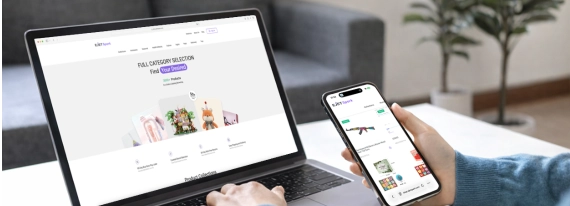
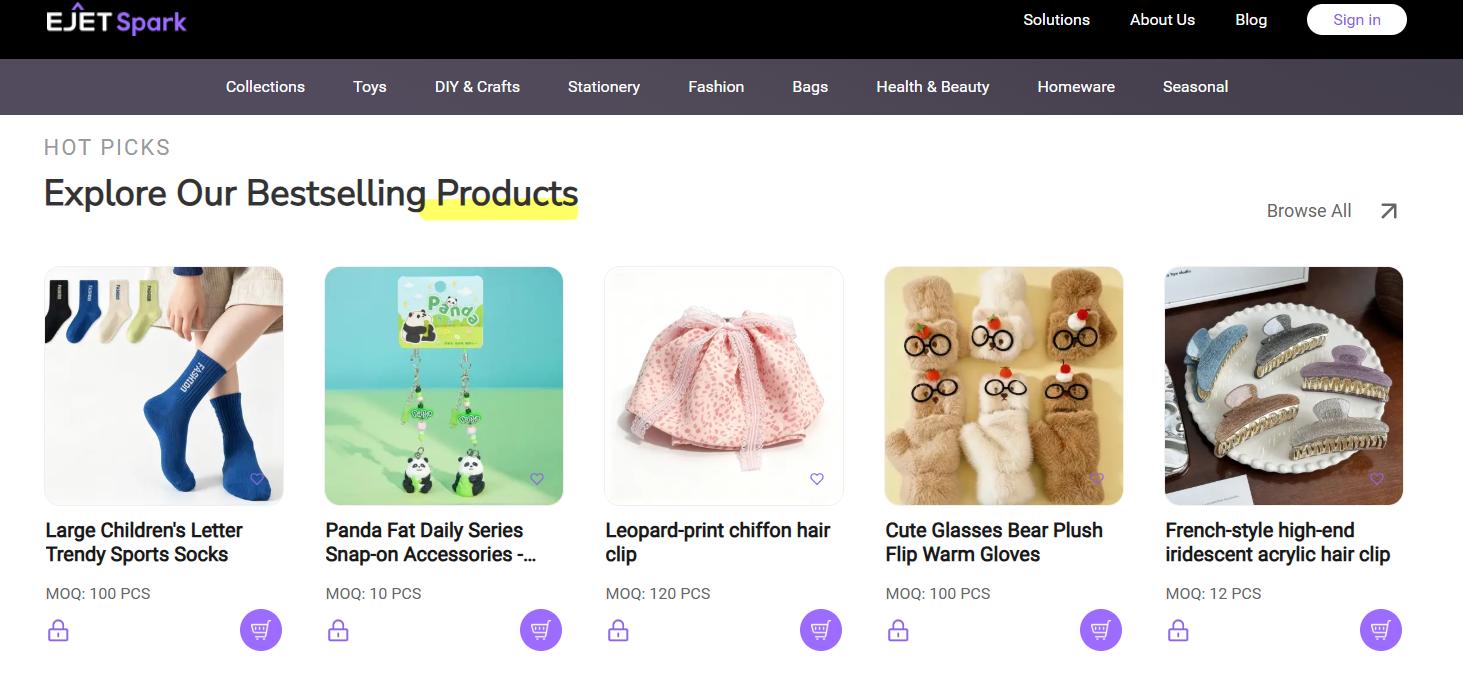
EjetSpark — EJET Wholesale Marketplace
3. How to Find Reliable Chinese Wholesale Suppliers
Finding a supplier offering the lowest price does not necessarily mean finding the best manufacturing partner.
We must evaluate suppliers based on their legitimacy, production capabilities, communication, quality standards, and delivery performance.
Verify Supplier Credentials
Before placing an order, we should request and review relevant business documentation. Important verification steps include confirming the supplier’s registered company name and business license.
Verifying their legal business address, clarifying whether the supplier operates as a manufacturer or trading company, assessing their relevant export experience, reviewing product certifications and testing documentation, evaluating their manufacturing facilities and
production capabilities, and obtaining customer references where available.
For higher-value transactions, conducting independent company verification or arranging a factory audit provides an additional layer of assurance.
Evaluate Manufacturing Capabilities
We should confirm that the supplier can manufacture the required products consistently. Useful questions to ask include: What is the factory’s monthly production capacity?
What is the normal manufacturing lead time? Which production processes are performed in-house? Does the factory subcontract any manufacturing operations?
What quality-control procedures are followed? Can the manufacturer support repeat orders? And what happens if products fail inspection? Clear answers help us determine whether the supplier can meet our long-term requirements.
Compare Multiple Suppliers
We recommend requesting quotations from at least three to five suppliers before selecting a manufacturing partner.
Comparing multiple suppliers helps us understand prevailing prices, minimum order quantities, production schedules, customization capabilities, and payment requirements.
A supplier offering a slightly higher price may deliver better overall value through more consistent quality, reliable communication, and fewer shipping delays.
4. Understand Minimum Order Quantities (MOQ)
The Minimum Order Quantity (MOQ) is the smallest number of units a supplier is willing to produce or sell in one order.
MOQ requirements vary considerably depending on the product and manufacturing process.
For example:
|
Product Category |
Illustrative MOQ |
|---|---|
|
Standard phone accessories |
100–500 units |
|
Basic clothing |
100–1,000 units |
|
Custom packaging |
500–5,000 units |
|
Household products |
100–1,000 units |
|
Custom electronics |
500–5,000+ units |
These are examples rather than guaranteed supplier requirements. Some suppliers accept smaller orders, while custom manufacturing may require substantially larger quantities.
How to Negotiate Lower MOQs
When launching a new business, we may not want to purchase thousands of units immediately.
We can negotiate lower quantities by offering to pay a modest unit-price premium, selecting existing factory designs, reducing customization requirements, or agreeing to larger orders after successful initial sales.
Another approach is to purchase a trial batch before committing to full-scale production.
The objective is to reduce inventory risk while establishing a productive supplier relationship.
5. Request Product Samples Before Buying in Bulk
Ordering samples is an essential part of wholesale sourcing.
Even when product photographs and descriptions appear satisfactory, actual manufacturing quality may differ from our expectations.
Before placing a substantial order, we should obtain physical samples and evaluate them carefully.
What to Check in Product Samples
Our sample inspection should cover:
-
Materials: Verify the composition, thickness, durability, and finish.
-
Dimensions: Measure the product against approved specifications.
-
Functionality: Test the product under realistic operating conditions.
-
Appearance: Check colors, logos, printing, and surface quality.
-
Packaging: Assess protection, presentation, and labeling.
-
Compliance: Verify relevant testing and certification requirements.
For electronic products, we may also need electrical safety, electromagnetic compatibility, or battery-related testing.
For children's products, toys, cosmetics, food-contact materials, and other regulated categories, additional market-specific requirements may apply.
We should approve a final reference sample before mass production and document the approved specifications in the purchase agreement.
6. How to Negotiate Wholesale Prices with Chinese Suppliers
Effective negotiation helps us obtain competitive pricing without sacrificing product quality.
Instead of immediately requesting the lowest possible price, we should first establish the supplier's standard quotation and understand what it includes.
Request a Detailed Price Breakdown
| Quotation Item | Details / Notes |
|---|---|
| Unit price | Base price per individual unit |
| Minimum order quantity (MOQ) | Lowest quantity the supplier will produce/supply |
| Product specifications | Materials, dimensions, features, quality standards |
| Packaging costs | Inner packaging, outer cartons, labeling, special packaging |
| Tooling / mold charges | One-time costs for new molds, dies, or production setup |
| Customization fees | Logo printing, color changes, design adjustments, private labeling |
| Production lead time | Days/weeks required after order confirmation & deposit |
| Applicable Incoterms | Shipping responsibility & delivery point (e.g. FOB, EXW, CIF, DDP) |
| Payment conditions | Deposit %, balance terms, accepted payment methods, currency |
| Quotation validity period | How long the listed price & terms remain binding |
Negotiate Based on Order Volume
We can request pricing for several order quantities, such as 500, 1,000, and 3,000 units.
Volume-based quotations reveal where meaningful price reductions occur.
However, buying additional inventory solely to obtain a lower unit price can create cash-flow problems if products sell slowly.
Build Long-Term Supplier Relationships
Reliable repeat business can improve negotiation outcomes.
When suppliers see consistent purchasing volumes, timely payments, and clear communication, they may be more willing to provide favorable pricing, flexible production schedules, and priority manufacturing capacity.
7. Calculate the True Cost of Importing from China
One of the most common wholesale sourcing mistakes is calculating profitability using only the supplier's product price.
We must calculate the total landed cost, which includes all expenses required to deliver products to the intended destination.
Landed Cost Formula
| Section | Details |
|---|---|
| Formula | Landed Cost = Product Cost + Freight + Insurance + Duties + Other Import Costs |
| Breakdown | |
| Product Cost | Base price of goods |
| Freight | Shipping charges |
| Insurance | Cargo / transport insurance |
| Duties | Import taxes / tariffs |
| Other Import Costs | Handling, fees, customs clearance, etc. |
| Example | |
| Total Landed Cost (1,000 units) | $4,700.00 |
| Landed Cost per Unit | $4,700 ÷ 1,000 = **$4.70** |
This calculation demonstrates why a seemingly inexpensive wholesale product can become significantly more expensive after international shipping and import charges.
For accurate profitability analysis, we should also consider storage, payment processing, marketplace commissions, marketing, product returns, and domestic fulfillment expenses.
8. Choose the Best Shipping Method from China
Selecting the right shipping method affects delivery time, transportation costs, and inventory availability.
The most common options are sea freight, air freight, and international express courier services.
Sea Freight
Typically the most economical choice for large, heavy shipments. Transit can take several weeks, depending on ports, routes, customs clearance, and inland delivery.
Air Freight
Faster than sea freight and suitable for urgent or higher-value goods, but generally more expensive, particularly for bulky products.
Express Courier
Services such as DHL, FedEx, and UPS are commonly used for samples and smaller shipments. They offer convenient tracking and relatively fast delivery.
FCL vs. LCL Shipping
For sea freight, we generally choose between two arrangements.
Full Container Load (FCL): We reserve a container for our shipment. This can be cost-effective for larger volumes and reduces some handling associated with shared containers.
Less than Container Load (LCL): We share container space with other importers. This is useful when our shipment does not justify a full container.
We should compare total door-to-door quotations rather than relying solely on advertised freight rates.
9. Understand Incoterms When Importing from China
Incoterms are internationally recognized trade rules published by the International Chamber of Commerce. They define specific responsibilities for delivery, transportation costs, and transfer of risk between buyers and sellers.
Commonly used terms include:
|
Incoterm |
Main Consideration |
|---|---|
|
EXW (Ex Works) |
Buyer assumes extensive collection, transportation, and export-related responsibilities |
|
Seller delivers goods on board the vessel at the named shipment port |
|
|
CIF (Cost, Insurance and Freight) |
Seller pays freight and specified insurance to the named destination port |
|
DAP (Delivered at Place) |
Seller delivers to the named destination, generally excluding import clearance and duties |
|
DDP (Delivered Duty Paid) |
Seller assumes extensive responsibilities, including import clearance and applicable duties |
FOB and CIF apply to sea and inland waterway transport, while EXW, DAP, and DDP can be used with any transport mode.
We should always specify the named location and the applicable version, such as Incoterms 2020, in our purchase agreement.
For DDP shipments, we must verify that the supplier or logistics provider can legally fulfill import clearance and tax obligations in the destination country.
10. Import Duties, Customs Clearance, and Product Compliance
Import regulations differ depending on the destination country, product classification, origin, and applicable trade rules.
Before ordering, we should determine the correct Harmonized System (HS) classification and check whether the products require permits, testing, labeling, or additional documentation.
Common Import Documents
International shipments frequently require:
-
Commercial invoice.
-
Packing list.
-
Bill of lading or air waybill.
-
Customs declaration.
-
Certificate of origin, where applicable.
-
Product-specific permits or certificates, where required.
-
Insurance documentation, if relevant.
Documentation requirements vary by jurisdiction and product category.
Importing from China to the United States
When importing into the United States, we should review applicable customs duties, additional China-related tariffs, product safety rules, and any relevant trade restrictions.
The correct tariff treatment depends on the product's classification, origin, entry date, and current regulations.
We can consult official guidance from U.S. Customs and Border Protection and the Harmonized Tariff Schedule of the United States.
Importing from China to the European Union
EU importers must consider customs duties, import VAT, product safety requirements, and applicable conformity rules.
Certain products require CE marking and supporting conformity documentation, while others are governed by different requirements.
We should consult the EU Access2Markets portal to research tariffs and trade requirements.
Importing from China to Singapore
Singapore-based importers generally need to consider customs permit requirements, import GST, and any duties or controls applicable to their products.
Many goods are non-dutiable, but GST and customs procedures may still apply.
Official information is available through Singapore Customs.
11. How to Pay Chinese Suppliers Safely
Payment arrangements should balance supplier requirements with buyer protection.
Telegraphic Transfer (T/T)
Bank transfers are widely used for international wholesale transactions.
One common arrangement is a 30% deposit before production and a 70% balance after production, often subject to agreed inspection and shipment conditions.
However, these terms are negotiable and do not automatically protect buyers against fraud or quality disputes.
We should verify the beneficiary's legal name and bank account details through an independently confirmed communication channel before transferring funds.
Alibaba Trade Assurance
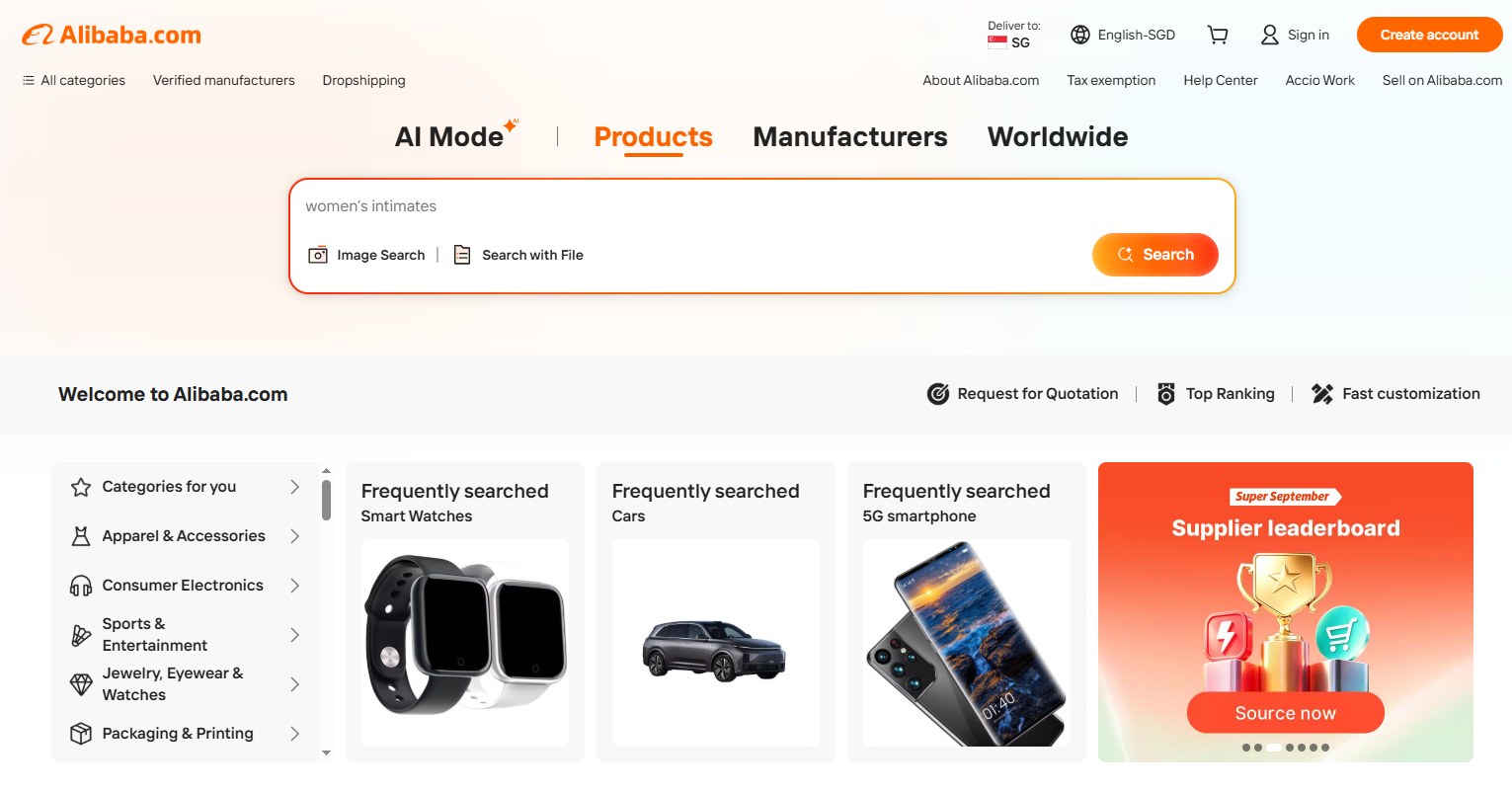
For eligible Alibaba transactions, Trade Assurance may provide dispute-resolution and payment-related protections under the platform's terms.
We should keep the order specifications, delivery commitments, and payments within the supported transaction process.
Letter of Credit (L/C)
Letters of credit are often used for larger international transactions.
They provide a bank-mediated payment structure based on compliance with specified documentary conditions.
Although they can reduce certain payment risks, they involve additional fees and do not independently guarantee the physical quality of goods.
12. Conduct Quality Inspections Before Shipment
Product inspection is one of the most effective ways to reduce the risk of receiving defective or nonconforming merchandise.
We should not assume that an approved sample guarantees consistent mass-production quality.
Types of Quality Inspections
Pre-production inspection: Verifies raw materials, components, and manufacturing preparations before production begins.
During-production inspection: Evaluates products while manufacturing is underway, allowing problems to be identified before the entire order is completed.
Pre-shipment inspection: Checks completed goods before final payment or dispatch.
Container loading inspection: Verifies quantities, packaging, container conditions, and loading procedures.
Independent inspection companies can evaluate products using agreed acceptance criteria, sampling plans, and inspection checklists.
For example, we may specify an Acceptance Quality Limit (AQL) sampling plan, but the appropriate thresholds must reflect product risk, defect severity, and contractual requirements.
Safety-critical defects may require stricter acceptance criteria than cosmetic imperfections.
13. Should We Use a China Sourcing Agent?
A China sourcing agent helps international buyers identify suppliers, communicate with factories, negotiate prices, coordinate samples, inspect goods, and organize logistics.
Using a sourcing agent can be particularly valuable when purchasing through domestic Chinese platforms or managing multiple factories.
Benefits of Working with a Sourcing Agent
A qualified agent may provide:
-
Access to additional supplier networks.
-
Chinese-language communication.
-
Factory verification.
-
Price negotiation support.
-
Product development coordination.
-
Quality-control management.
-
Shipment consolidation.
-
Export documentation assistance.
How to Select a Reliable Sourcing Agent
We should evaluate the agent's experience, references, fee structure, supplier relationships, and operational transparency.
Some agents charge a percentage of the purchase value, while others use fixed service fees or negotiated commercial arrangements.
We should request clear disclosure of commissions, supplier payments, inspection responsibilities, and ownership of tooling or intellectual property.
A sourcing agent can simplify procurement, but the buyer should retain visibility into product specifications, contractual obligations, and total costs.
14. Common Mistakes to Avoid When Buying in Bulk from China
Wholesale purchasing can become expensive when important sourcing decisions are rushed.
Choosing Suppliers Based Only on Price
An unusually low quotation may reflect inferior materials, incomplete specifications, excluded costs, or unrealistic production assumptions.
We should evaluate the complete commercial offer.
Skipping Samples and Inspections
Ordering thousands of units without confirming quality increases the risk of defective inventory, customer complaints, and financial losses.
Ignoring Import Regulations
Products that fail destination-market requirements may be delayed, rejected, recalled, or subject to enforcement action.
We must verify applicable compliance requirements before manufacturing.
Paying Unverified Bank Accounts
Fraudulent payment instructions can result in significant financial losses.
Supplier banking changes should always be independently verified.
Failing to Document Product Specifications
Vague descriptions such as "premium quality" or "standard packaging" can lead to disagreements.
We should document measurable requirements, approved samples, tolerances, packaging specifications, inspection criteria, and remedies for nonconforming goods.
Underestimating Shipping Costs
Freight rates, dimensional weight, destination charges, and customs expenses can significantly affect profitability.
Obtaining comprehensive logistics quotations before confirming an order helps avoid unexpected expenses.
15. How to Maximize Profit When Importing Wholesale Products
The goal of bulk purchasing is not simply to acquire products at low prices. We must develop a sustainable business model that generates acceptable margins while controlling operational risk.
Research Product Demand Before Ordering
Before committing to inventory, we should assess customer demand, competition, seasonal trends, and realistic selling prices.
Demand research may involve marketplace sales data, keyword research, customer interviews, competitor analysis, and small-scale product testing.
Calculate Gross Profit Margin
| Item | Details |
|---|---|
| Formula | Gross Margin = (Selling Price − COGS) ÷ Selling Price × 100 |
| Selling Price | $15.00 |
| − Landed Cost (COGS) | $4.70 |
| = Gross Profit | $10.30 |
| Calculation | ($15.00 − $4.70) ÷ $15.00 × 100
|
| Gross Profit Margin | 68.67% |
| Note | Illustrative margin before other expenses |
However, the final accounting gross margin depends on all costs included in cost of goods sold. Advertising, marketplace fees, warehousing, returns, and other operating expenses can further reduce net profitability.
Improve Packaging and Product Differentiation
Custom packaging, product bundles, useful features, and consistent branding can help distinguish our products from competing wholesale merchandise.
We should prioritize improvements that customers value and that justify their additional production costs.
Manage Inventory Carefully
Buying excessive quantities can tie up working capital and create storage expenses.
We should forecast sales, monitor inventory turnover, account for manufacturing and shipping lead times, and establish sensible reorder points.
Maintaining sufficient safety stock can reduce stockout risk without requiring unnecessarily large purchases.
16. Frequently Asked Questions About Buying in Bulk from China

What Is the Best Website to Buy Wholesale Products from China?
Alibaba is a widely used starting point for international wholesale sourcing. Made-in-China and Global Sources are also useful for finding manufacturers, while 1688 can provide access to China's domestic wholesale market.
The best platform depends on our product category, purchasing volume, language capabilities, and logistics requirements.
Can We Buy Directly from Chinese Manufacturers?
Yes. Many Chinese manufacturers accept direct international orders.
We can contact factories through B2B marketplaces, official company websites, industry exhibitions, and professional sourcing networks.
Direct factory purchasing may provide greater customization opportunities, although it does not always guarantee the lowest total cost.
How Much Money Do We Need to Start Buying in Bulk from China?
The required budget varies substantially by product and supplier.
Some small wholesale orders may require only a few hundred dollars in product expenditure, while customized products or larger manufacturing runs may require several thousand dollars or more.
We must also budget for samples, inspections, freight, duties, taxes, and working capital.
Is It Safe to Buy Wholesale Products from China?
Buying wholesale from China can be safe when we verify suppliers, document product requirements, use appropriate payment protections, inspect merchandise, and follow import regulations.
No sourcing platform or supplier verification badge eliminates every commercial risk.
How Long Does Shipping from China Take?
Shipping time depends on the origin, destination, transportation method, customs processing, and local delivery arrangements.
Express courier services may deliver many international shipments within several business days. Air freight generally takes longer when consolidation and customs processing are included, while sea freight commonly requires several weeks.
Production time must be added separately when products are manufactured to order.
Can We Buy from China Without Visiting a Factory?
Yes. Many international businesses source products remotely.
We can use video meetings, independent factory audits, sample testing, detailed purchase contracts, and third-party inspections to manage supplier relationships without traveling.
Is Alibaba Cheaper Than 1688?
1688 may offer lower advertised prices for certain products because it primarily serves the Chinese domestic market.
However, international buyers must consider sourcing agent fees, payment costs, export arrangements, quality control, and international shipping.
We should compare the final landed cost rather than advertised unit prices.
Do We Need an Import License to Buy Products from China?
Import registration, permits, and licensing requirements depend on the destination country and product type.
Some goods can be imported through standard customs procedures, while regulated products require additional authorizations.
We should verify the applicable requirements with the destination country's customs authority before ordering.
Conclusion: Building a Profitable Wholesale Sourcing Business with China
Learning how to buy in bulk from China involves understanding supplier selection, wholesale pricing, manufacturing quality, international shipping, customs compliance, and inventory management.
By researching products carefully, comparing manufacturers, ordering samples, negotiating transparent commercial terms, and verifying quality before shipment, we can reduce procurement risks and develop more dependable supply chains.
The most successful approach combines competitive wholesale purchasing with disciplined cost management and reliable supplier relationships.
Whether we are sourcing products for an e-commerce store, a retail business, a distribution company, or a private-label brand, a structured purchasing process enables us to make better decisions, protect working capital, and create opportunities for sustainable growth.