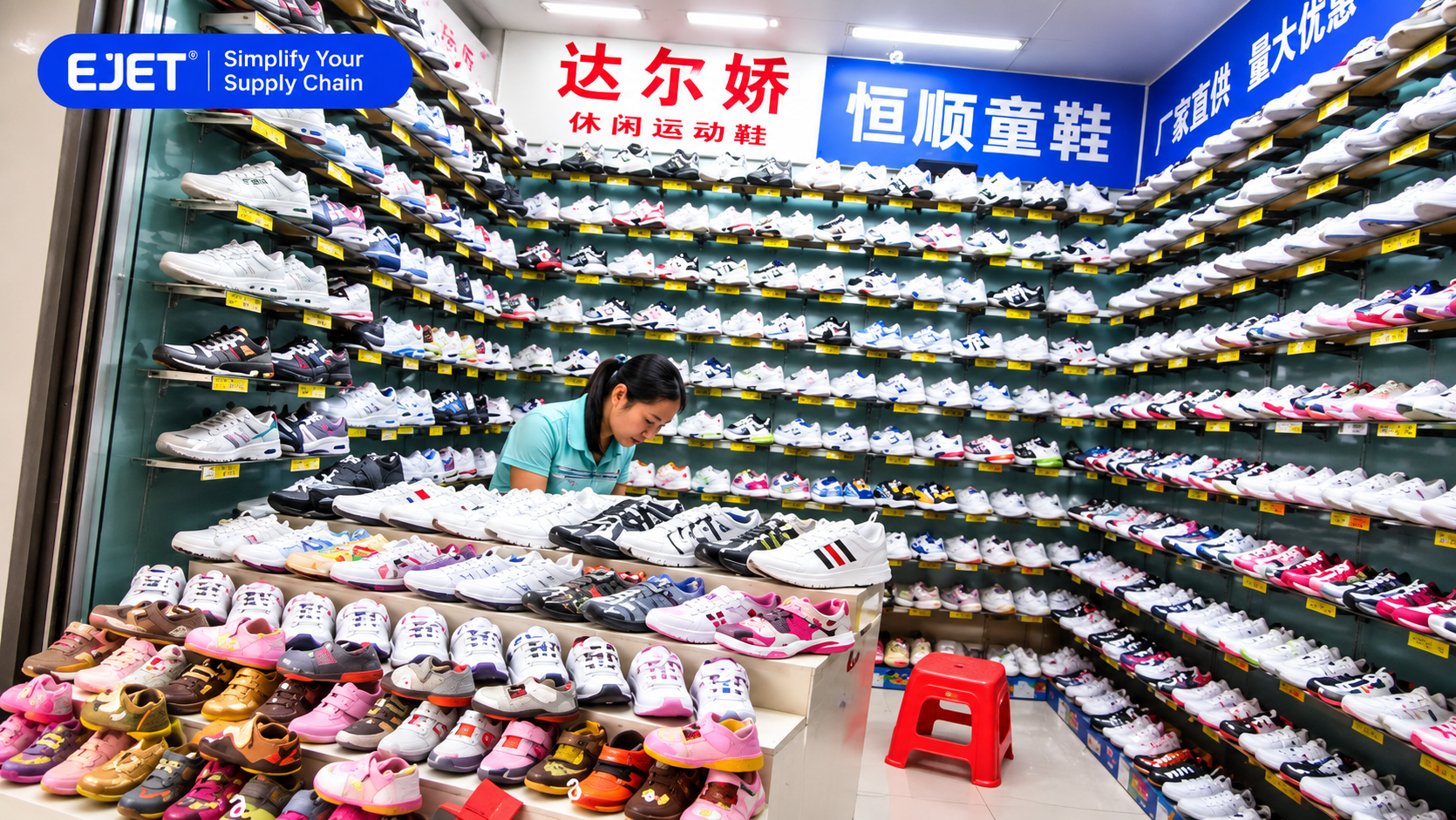
Superbuy helps buyers purchase products from Chinese marketplaces and arrange warehousing and international delivery.
When comparing Superbuy vs a professional sourcing agent, the useful distinction is not “professional versus unprofessional,” but buying selected products versus commissioning broader supplier and production management.
Superbuy also advertises business sourcing services, so compare the actual scope offered—not just the provider’s label.
This article compares those service models, explains the buying workflow, and provides a practical framework for assessing costs, quality checks, and supplier accountability.
What is the difference between Superbuy and a professional sourcing agent?
Superbuy’s standard shopping service centers on purchasing products according to the buyer’s instructions, followed by warehouse handling and international shipping.
For this comparison, a dedicated sourcing agent means a provider you commission to investigate suppliers, obtain comparable quotations, coordinate samples, or manage agreed production tasks.
Those responsibilities must be specified individually; the words “sourcing agent” do not establish what is included.
China-Britain Business Council guidance likewise treats sourcing as a decision involving supplier investigation, quality, logistics, and available resources—not price alone.
A useful starting question is: Have you already chosen what to buy, or do you need help establishing who should make it and how?
If you have selected an existing item and need purchasing support, assess the shopping-agent workflow. If you need several factories evaluated against a product specification, request a sourcing proposal with defined deliverables.
Avoid paying for an expansive service when you only need transaction support—or assuming transaction support includes factory management.
There is meaningful overlap. Superbuy Business Service advertises supplier negotiation, dedicated account management, product and packaging customization, quality inspection, and OEM/ODM project support.
A fair comparison therefore includes Superbuy’s relevant business offering alongside independent providers, rather than treating its standard shopping interface as its entire capability.
Compare responsibilities, not marketing language
Use the following as a quotation checklist, not a promise about either service model. Ask every provider to complete the same rows before comparing prices.
|
Decision area |
For a selected-product purchase, confirm |
For a sourcing project, request |
|---|---|---|
|
Product selection |
Exact listing, variation, and quantity |
Supplier shortlist against a written specification |
|
Supplier checks |
What information will be checked |
Verification method and documented findings |
|
Pricing |
Item price and purchasing charges |
Comparable quotations with disclosed compensation |
|
Quality |
Inspection scope and requested photos |
Sample approval and production inspection plan |
|
Customization |
Whether the request is supported |
Artwork, materials, tolerances, and approval stages |
|
Shipping |
Packing instructions and eligible routes |
Freight scope, documentation, and delivery responsibilities |
|
Problems |
Return, exchange, and claim procedures |
Escalation process and proposed corrective actions |
How to use Superbuy without overlooking the second payment
Superbuy describes its shopping process as two stages: purchasing first, then international shipping. Its guidance recommends estimating international freight before placing the product order. That makes the first payment a purchasing commitment, not a complete delivered-price quotation.
For a first order, use this sequence as a working checklist rather than relying on interface labels, which may change:
- Identify the exact product. Save the original listing and specify size, color, model, quantity, and any accessories you expect. Avoid instructions such as “the usual version.”
- Check purchasing and shipping eligibility. Ask about the exact item before committing, particularly if its contents or dimensions might affect carriage. Superbuy’s calculator includes an item-category field and prohibited-item notices.
- Estimate the complete budget. Record the product price, domestic delivery, requested services, international shipping estimate, and a separate allowance for applicable destination charges.
- Submit clear purchase instructions. Include the listing and chosen variation. If a detail matters enough to reject the order, state it before purchase.
- Review the warehouse evidence. Request the specific photographs or checks needed to resolve uncertainty. Superbuy lists additional photography and inspection among its optional services.
- Approve packing and international shipment. Check the selected route, parcel contents, delivery address, and quoted charges before authorizing dispatch.
Keep an order record throughout. For example, instead of writing “check the bag,” request a photograph of the zipper closure, the interior label, and a measurement across the base. Specific instructions give the person handling the item something observable to verify.
Start with an order whose outcome you can evaluate clearly. Treat it as a process test: Were your instructions understood, was the evidence sufficient, and did the final cost match the assumptions you recorded? Use those answers before increasing your commitment.
A Superbuy spreadsheet should support verification, not replace it
Treat any Superbuy spreadsheet as a discovery tool until you have checked the underlying products yourself. Do not interpret a curated link, product photograph, or enthusiastic description as evidence that the current seller meets your requirements. Apply the same checks whether you found the listing through a spreadsheet, a search result, or a personal recommendation.
Build your own comparison sheet around evidence rather than product names alone:
- Listing and variation: Save the original URL, seller name, exact option, and date checked.
- Specification: Record dimensions, materials, included components, and unresolved questions.
- Price basis: Separate the displayed unit price from quantity-dependent pricing and domestic delivery.
- Inspection request: List the measurements, photographs, or functional checks you want.
- Shipping assumptions: Keep seller estimates separate from warehouse measurements and packed-parcel figures.
- Decision status: Mark each product as unverified, sample requested, approved, or rejected, with a reason.
Consider a hypothetical desk organizer. Two listings may look similar in photographs, but your decision should wait until you have answers about dimensions, material, assembly, and packaging. Put those questions beside each listing instead of letting the lower displayed price decide the comparison.
For business purchasing, add supplier identity, quotation validity, sample approval, and reorder requirements. Keep unknown fields visibly marked “unconfirmed.” An incomplete but honest spreadsheet is more useful than a polished document that hides assumptions.
Compare total cost rather than the headline service fee
Superbuy’s published fee structure separates product purchasing, international shipping, and optional value-added services. It lists standard purchasing from Taobao, Tmall, JD.com, and 1688 without a purchasing service fee, while other purchasing categories can carry charges. Check the applicable category and current terms instead of assuming every order follows the same pricing model.
For your own comparison, build a delivered-cost worksheet covering:
Products + domestic transport + purchasing or sourcing fees + requested inspection + packaging + international freight + applicable import charges + final delivery.
Ask each provider to identify included, excluded, estimated, and third-party charges. For business orders, divide the total by the number of acceptable units you expect to receive—not simply the number purchased. Keep that expectation conservative until you have evidence from your own orders.
Require transparent quotations from sourcing providers
Do not assume a professional agent uses a particular fee model. Ask whether compensation comes from a project fee, commission, product-price margin, ongoing retainer, supplier payment, or some combination. Request disclosure of any supplier relationship that could affect recommendations.
Then clarify the quotation’s boundaries. Does “inspection included” mean taking arrival photographs, checking a sample against specifications, or arranging an independent factory inspection? Does “shipping included” end at a departure warehouse, destination port, or your receiving address?
For a hypothetical small accessories order, compare the cost of purchasing and forwarding the selected goods. For a hypothetical branded production run, request a separate breakdown for supplier research, samples, packaging development, inspection, and freight. Keep these scenarios separate rather than stretching one quote across both.
For U.S. imports, CBP states that the importer of record remains responsible for entry accuracy and applicable duties, taxes, and fees, even when using a broker. Confirm the treatment of your actual shipment with a qualified customs professional; do not build a budget around an old duty-free assumption.
Superbuy shipping needs a parcel-level comparison
Superbuy’s shipping calculator asks for destination, warehouse, weight, dimensions, and item category. Those inputs make a product-price comparison insufficient for estimating delivery: you need a credible picture of the parcel you intend to ship. Use early estimates for budgeting, then revisit them when better measurements are available.
Before choosing a route, ask these questions:
- What weight and dimensions were used for the quotation?
- How does the selected route calculate chargeable weight?
- Are the exact contents accepted on that route?
- Which packing changes are proposed, and what protection would be removed?
- What tracking, coverage, exclusions, and claim requirements apply?
- Which destination charges are included, and which remain outside the quotation?
Avoid issuing a blanket instruction to remove all packaging. For a collectible, you might require the retail box to remain intact. For a durable household item, you might approve removal of unnecessary outer packaging after reviewing the protection that remains. Specify your priorities before asking for the lowest-cost packing arrangement.
Also distinguish a shipping estimate from the final bill. Superbuy says its international shipping payment is initially calculated using estimated parcel information and later reconciled against the logistics provider’s final charges. Keep enough budget flexibility for that adjustment rather than treating the initial figure as a guaranteed ceiling.
When reviewing a sourcing proposal, request the same parcel or carton assumptions. A freight quote without dimensions, contents, shipment size, and a defined delivery endpoint is not ready for a like-for-like comparison.
What quality checks do you actually need?
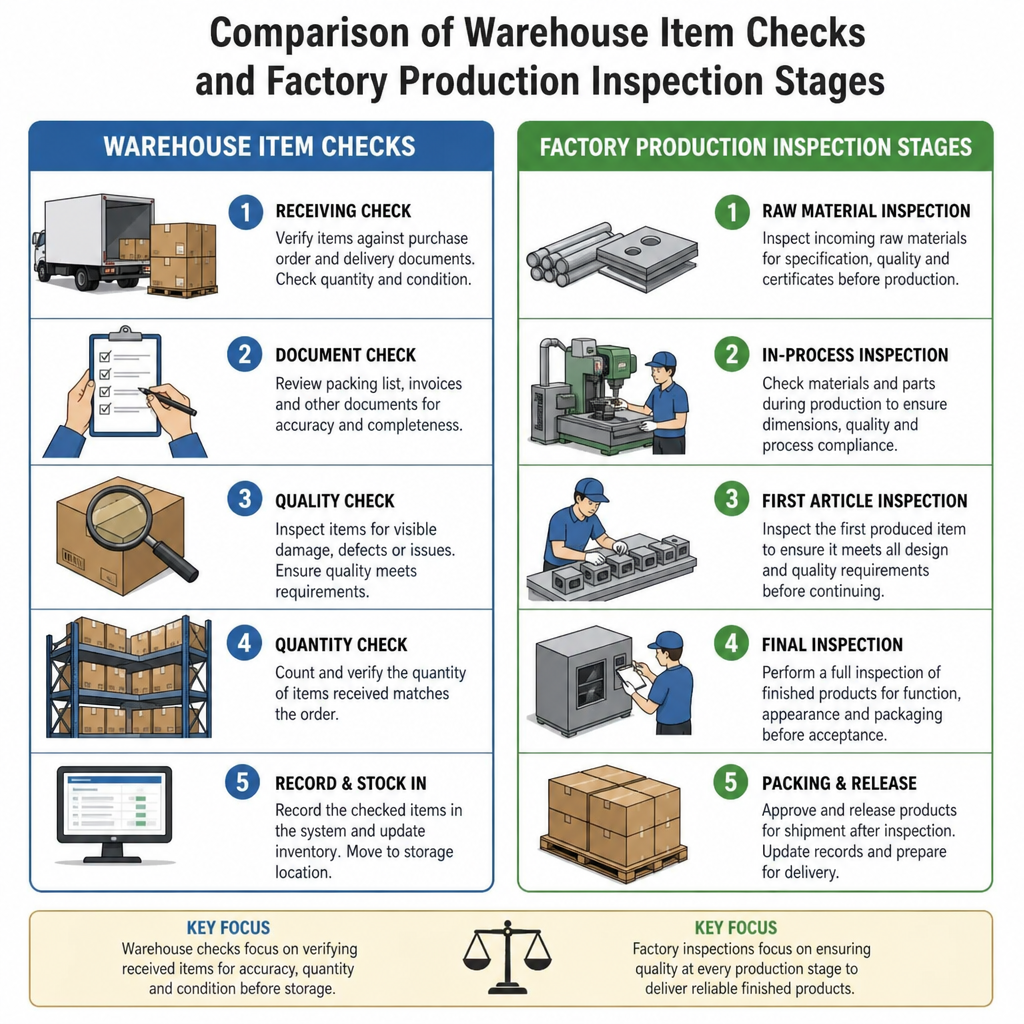
Choose quality checks according to what must be established: receipt of the correct item, conformity with a specification, production consistency, or performance under a defined test.
Superbuy offers standard and additional inspection-related services, while independent inspection providers such as QIMA offer checks at different production stages. Neither a service label nor a photograph tells you the complete inspection scope; request it explicitly.
For an existing product, write down the visible attributes you need confirmed. For a manufacturing project, establish an approved specification and sample before discussing acceptance. Keep performance claims separate from visual observations, and ask what evidence would substantiate each claim.
Turn “good quality” into observable requirements
Replace broad requests with instructions someone can follow:
|
Vague request |
More useful instruction |
|---|---|
|
Check the size |
Measure the specified dimensions using the agreed method |
|
Check the color |
Photograph beside the approved reference under agreed conditions |
|
Check the packaging |
Confirm the specified inserts, labels, and carton markings |
|
Check that it works |
Follow the written functional test and record the result |
|
Check for defects |
Inspect against the agreed defect examples and acceptance rules |
For a hypothetical fabric storage pouch, specify the required dimensions, closure operation, seam checks, and labeling. Ask the provider which checks it can perform, what they cost, and how results will be documented. Leave unsupported claims—such as a material composition that has not been tested—marked unverified.
Distinguish sampling from a guarantee
QIMA explains that its inspection services use acceptance sampling and that the method is not infallible. Its inspection offering also distinguishes initial, during-production, pre-shipment, and loading checks. This illustrates why “inspection included” needs clarification: timing, sample selection, instructions, and reporting all matter.
For a business order, request an inspection plan specifying when checks occur, who selects units, what gets measured, and what happens after a failed result. Ask whether specialist testing is needed beyond the proposed inspection. Do not authorize shipment merely because a report exists; review whether its findings satisfy your agreed acceptance criteria.
Choose agent services by evidence and accountability
Before selecting any sourcing partner, verify the business behind the proposal. The European Commission’s China IP SME Helpdesk recommends due diligence on new Chinese business partners and notes that checking legitimacy can include obtaining a Chinese business licence. Apply that principle to both the proposed supplier and any intermediary whose role is material to your purchase.
Use your discovery conversation to establish responsibilities:
- Supplier selection: What criteria will guide the shortlist, and what evidence will accompany recommendations?
- Commercial transparency: Will you see comparable supplier quotations and understand the agent’s compensation?
- Relevant capability: Can the provider explain the production and quality issues specific to your product?
- Communication: Who owns the project, how will updates be recorded, and who can approve changes?
- Problem handling: Who contacts the supplier, documents defects, negotiates remedies, and approves rework?
- Continuity: What records, specifications, and supplier information will you retain if the relationship ends?
Request a redacted example of a relevant deliverable, such as a supplier comparison or inspection report. Evaluate whether it answers useful purchasing questions rather than simply looking polished. If confidentiality prevents sharing past documents, ask the provider to explain its proposed reporting format using your project.
For customized products, discuss ownership of artwork, designs, tooling, and development records before sharing sensitive material. Obtain appropriate legal advice rather than assuming a general service agreement protects every asset. U.S. trade guidance recommends planning intellectual-property protection before entering the Chinese market and tailoring the approach to the business.
Finally, put the agreed scope in writing. Give each task an owner, an expected deliverable, and an approval point. If nobody is responsible for confirming a critical detail, resolve that gap before paying a deposit.
Read a Superbuy review in the context of the order
Use a Superbuy review to identify questions worth investigating, not to replace your own scope assessment. Ask whether the reviewer describes a single marketplace purchase, a consolidated parcel, or a business sourcing project. Then look for the underlying details: product type, requested services, destination, parcel measurements, and the date of the experience.
A Superbuy Taobao review is most useful to your decision when it separates the seller’s product from the intermediary’s work. Look for a clear account of what was ordered, what instructions were given, what the warehouse evidence showed, and how an issue was handled. Avoid treating either a positive delivery or a disappointing product as a complete verdict on every participant.
Apply the same standard to reviews of independent agents. Prefer specific descriptions of scope and outcomes over claims such as “best prices” or “perfect quality.” When important context is missing, turn the review into a question for the provider rather than a conclusion about your future order.
This comparison is based on published service descriptions and a purchasing framework, not a firsthand test order. Before committing, verify current terms directly and request a quotation for your exact requirements.
Match your sourcing options to the next decision
Rather than searching for one universal winner, identify what you need to establish next. Use the scenarios below as decision prompts, not automatic recommendations. In each case, ask the provider to confirm that the proposed work falls within its scope.
You have already chosen an existing product
Request a purchasing-and-forwarding quotation covering the exact listing, variation, inspection requests, packing, and destination. Compare Superbuy’s relevant service with other providers on that same basis. Keep supplier discovery or production development outside the comparison unless you genuinely need it.
Your main decision should be whether the provider can execute your instructions clearly at an acceptable total cost. Resolve unanswered product questions before purchase rather than expecting warehouse photographs to answer everything later.
You are validating a product for resale
Separate sample purchasing from approval for a larger order. Use the first stage to inspect the product yourself, refine the specification, and identify questions about repeatability or customization. Then request a business sourcing proposal if the next stage requires supplier evaluation or production coordination.
Do not treat the arrival of one satisfactory sample as completion of your sourcing work. Record exactly what was approved and ask how a future order would be checked against it. That creates a useful handover between product exploration and purchasing.
You need repeat production or customization
Compare dedicated sourcing proposals, including Superbuy’s business offering where relevant. Ask for supplier research, sample development, production milestones, inspection arrangements, and documented change approval. Evaluate the proposed process before comparing the final service fee.
A suitable Superbuy alternative is the provider whose written scope addresses your unresolved purchasing risks. Do not choose solely because it describes itself as a factory expert, offers a personal contact, or quotes a low commission. Require evidence and defined responsibilities.
The takeaway: buy the scope you need
Use this comparison to separate purchasing convenience from supplier and production management. First define the product, the evidence you require, the tasks you want delegated, and the delivered-cost assumptions. Then request comparable written proposals from providers willing to take responsibility for those tasks.
If your immediate need is a selected-product purchase, keep the process proportionate. If your next decision involves supplier capability, customization, or repeat production, demand a more detailed sourcing scope. The strongest choice is not the most impressive label—it is the clearest agreement about what will be done, checked, reported, and approved.
Frequently Asked Questions About Superbuy vs a Professional Sourcing Agent
What is Superbuy, and how does it work?
Superbuy is a platform that helps individuals and businesses purchase products from Chinese marketplaces like Taobao and Tmall. It facilitates the buying process by allowing users to select items, handle warehousing, and arrange international shipping.
What are the main differences between Superbuy and a professional sourcing agent?
The primary difference lies in the scope of services. Superbuy focuses on purchasing selected products per the buyer's instructions, while a professional sourcing agent takes a more comprehensive approach by conducting supplier investigations, obtaining quotations, managing production tasks, and ensuring quality control.
How can I ensure the quality of products sourced through Superbuy?
You can ensure quality by setting clear inspection requests, requesting specific photographs, and using a detailed checklist to confirm that the products meet your specifications before finalizing the purchase.
Are there any additional costs to consider when using Superbuy?
Yes, in addition to the product prices, you should consider domestic shipping, international freight, any applicable taxes or customs fees, and any optional services like product inspections or custom packaging.
Can I use Superbuy for business sourcing needs?
Yes, Superbuy offers business service options that include supplier negotiation, quality inspection, and project support for OEM/ODM needs, making it suitable for businesses looking to source products from Chinese marketplaces.