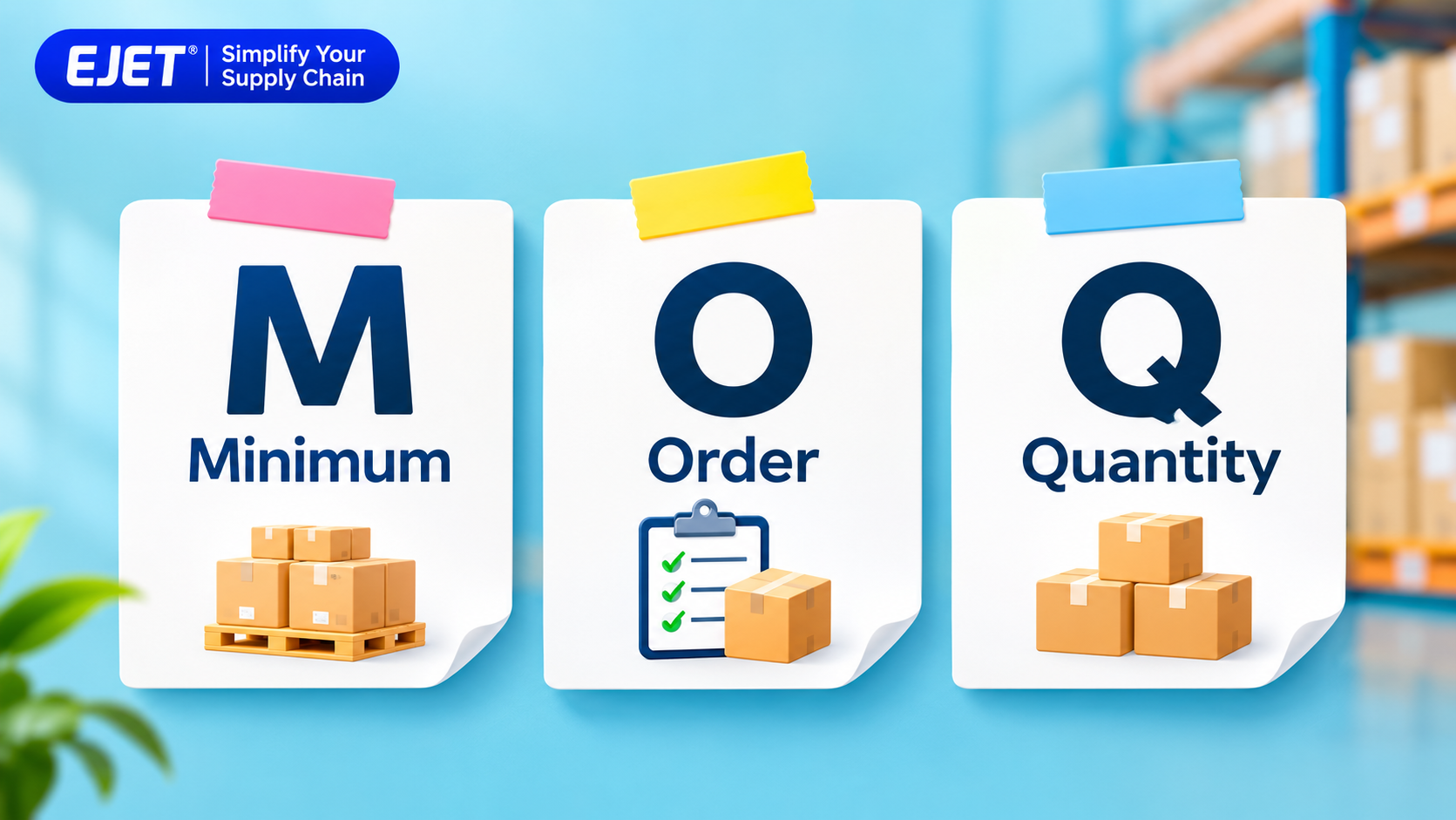
MOQ means minimum order quantity: the smallest purchase a supplier will accept for a particular product or order.
Negotiating lower minimums starts with understanding what drives that requirement, then proposing an order that reduces the supplier’s costs or risk.
This article explains the terms, trade-offs, and practical requests to use before committing to more inventory than you need.
What is MOQ, and what does it mean for buyers?
MOQ is the minimum quantity a supplier agrees to sell under specified conditions. The basic MOQ meaning stays the same across sourcing situations, but the conditions matter: a minimum might apply to an entire order, one product model, one color, or a customized component. Always ask what the quoted number covers.
For example, imagine a supplier quotes 300 units per color. Ordering 100 black, 100 blue, and 100 green units would not satisfy that requirement unless the supplier explicitly permits mixing colors. Treat this as a clarification exercise before treating it as a negotiation.
The MOQ wholesale meaning is similar: the smallest purchase a wholesaler accepts. However, clarify whether the requirement is a unit count, a case-pack quantity, or a minimum order value. These create different buying commitments and should appear separately in your quote.
When reviewing an **MOQ—minimum order quantity—**requirement, ask:
- What does it apply to? Confirm the minimum per order, model, size, color, or design.
- Can variants be combined? Request the permitted quantity breakdown in writing.
- Does customization change it? Separate stock-product requirements from branded-product requirements.
- What happens on reorders? Ask whether the opening-order minimum also applies later.
Why do suppliers set minimum order quantities?
Suppliers set minimums because small orders still require preparation, administration, and production resources. MOQ in manufacturing often reflects machine setup, tooling, raw-material purchases, and the supplier’s own component minimums. A smaller finished-product order does not necessarily reduce those underlying commitments.
That distinction changes your approach. Instead of asking only, “Can you lower the MOQ?” ask, “Which part of this specification sets the minimum?” You need to identify the constraint before offering a useful alternative.
A supplier might identify custom material, a printing run, or packaging as the limiting factor. Each points toward a different discussion: stock material, simpler artwork, or standard packaging. Alibaba’s packaging guidance specifically identifies these cost drivers and recommends considering alternatives rather than negotiating quantity alone.
Avoid assuming that every minimum is arbitrary. Ask for a practical explanation, then decide whether changing the order makes sense for your product. The objective is a viable smaller order, not a concession that quietly changes what you receive.
Set your buying limit before requesting a concession
Start with your own constraints: available cash, realistic demand, storage space, and the amount you can afford to leave unsold. A supplier’s minimum describes what works for its business; it does not establish the right inventory level for yours. Higher MOQs can increase both inventory exposure and cash tied up in stock.
Prepare a short buying brief before contacting suppliers. Include the exact product specification, preferred quantity, acceptable alternatives, destination, packaging needs, and sample requirements. Sending the same brief to each supplier makes quotes easier to compare.
Divide your requirements into two groups:
- Nonnegotiables: Required function, agreed materials, essential dimensions, quality standards, and necessary product protections.
- Flexible choices: Optional colors, decorative finishes, presentation packaging, delivery timing, and the breadth of the initial range.
Use that division to guide the conversation. For example, propose launching one finish instead of four while retaining the same functional specification. Do not authorize vague substitutions simply because the revised minimum looks attractive.
How can you negotiate a lower MOQ without sacrificing quality?
Negotiate a smaller order by changing the cost or complexity behind it while keeping quality requirements explicit. Ask about a paid trial, stock materials, simpler customization, mixed variants, or revised timing. Compare the resulting quantity, price, specification, and delivery terms together rather than accepting a lower number in isolation.
Offer a clearly defined trial order
Position the opening purchase as a controlled test with a specific scope. Explain what you want to evaluate, such as product fit, packaging presentation, or customer demand. Be honest about uncertainty rather than promising a large follow-up purchase you cannot support.
Request separate quotes for your preferred trial quantity and the supplier’s standard minimum. Alibaba’s sourcing guidance recognizes purchasing a smaller test quantity at a higher price as one possible route. Use the comparison to decide whether the trial premium is worthwhile.
Remove avoidable production complexity
Ask which changes would make your target quantity feasible. Consider an existing product design, stock materials, fewer variants, or simpler branding before requesting a fully bespoke production run. Manufacturing guidance notes that processes and materials may need to be optimized differently for small orders.
Make each proposal specific: “Please quote the existing design with our logo only” is easier to evaluate than “Please make it cheaper.” Ask the supplier to list exactly what changes between the original and revised versions. Review those differences before approving a sample.
Trade flexibility, not essential protections
Ask whether a flexible production window or a mixed-case order could help. These should be requests for confirmation, not assumptions about what a factory can accommodate. Alibaba’s wholesale guidance identifies mixed cases, smaller opening orders, and staged delivery as negotiation options.
Keep delivery flexibility separate from financial commitment. If you propose staged shipments, ask whether you are still purchasing the entire quantity upfront. Do not confuse receiving fewer units now with being obligated to buy fewer units overall.
Treat packaging as a separate negotiation
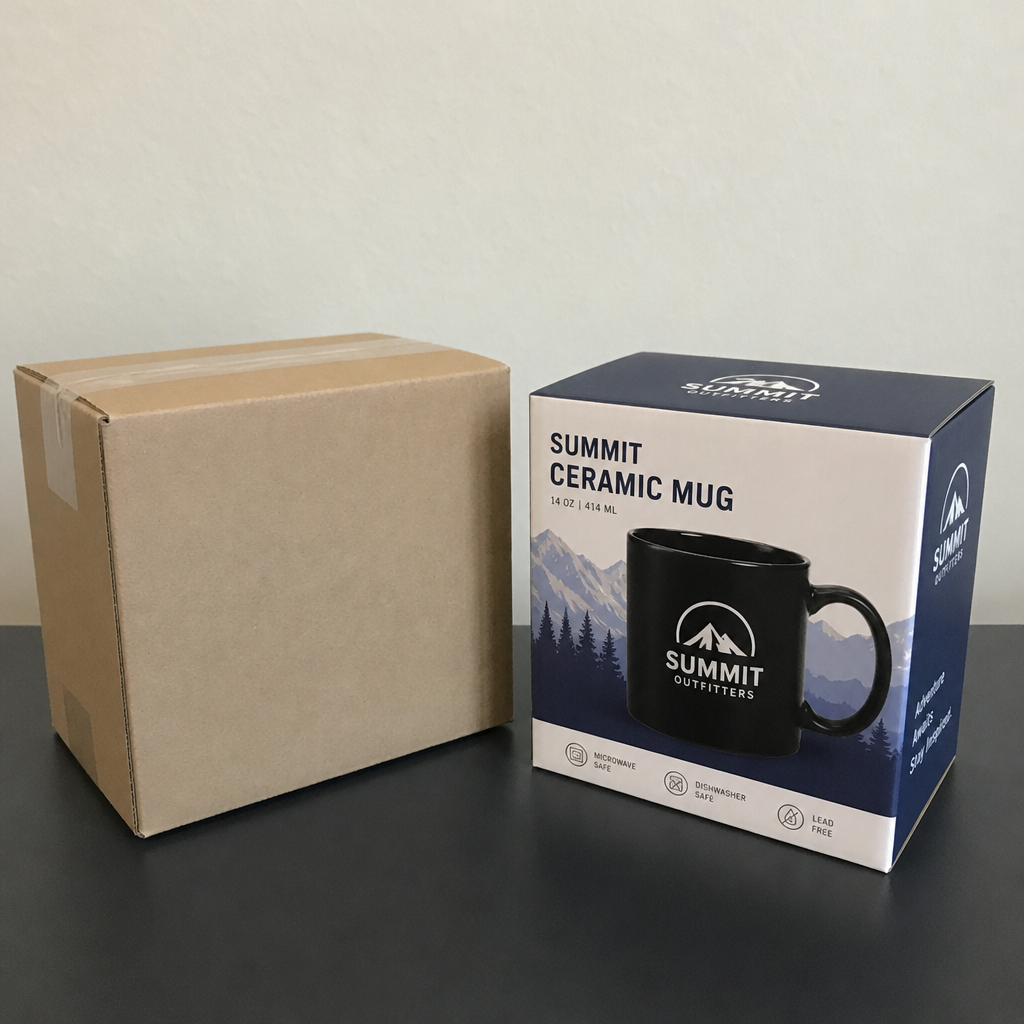
For MOQ negotiation, packaging deserves its own line of questioning. Ask the supplier to quote the product minimum and packaging minimum separately, along with any artwork or setup charges. Packaging materials, printing, and customization can be the actual reason a small product order is difficult.
Request two versions: standard protective packaging and your preferred branded presentation. Keep protection and presentation distinct in your brief so a simpler appearance does not accidentally authorize weaker packaging.
If the supplier proposes purchasing extra printed packaging for future use, clarify ownership, storage charges, storage duration, and what happens if your artwork changes. Treat unused packaging as a purchase commitment, not as free flexibility. Ask for an alternative without advance packaging inventory before deciding.
Compare MOQ pricing against the total commitment
MOQ pricing should be evaluated alongside setup charges, packaging, and shipping. A lower minimum may come with a higher unit price or additional fees, so compare complete quotes on the same basis. Alibaba’s packaging guidance recommends assessing total landed cost rather than quantity alone.
Consider this hypothetical product-only comparison; these are illustrative numbers, not market quotes:
|
Order option |
Quantity |
Unit price |
Product subtotal |
|---|---|---|---|
|
Standard run |
1,000 |
$4.00 |
$4,000 |
|
Smaller trial |
250 |
$5.20 |
$1,300 |
The trial costs $1.20 more per unit but requires $2,700 less in product spending. Neither option is automatically better. Use your sales expectations and complete supplier quotes to judge whether the discount justifies the larger commitment.
Build your comparison sheet with separate lines for samples, tooling, packaging, inspection, transport, and other applicable charges. Mark anything excluded or still unknown. Do not approve the order while major cost responsibilities remain ambiguous; written terms should identify pricing, delivery responsibilities, and required shipment documents.
Approach Alibaba negotiation services with clear expectations
On Alibaba.com, buyers can contact suppliers directly to negotiate product price, MOQ, shipping fees, delivery timing, and trade terms, particularly for customized products. Start with a precise inquiry and request a written quotation tied to your actual specification. A listing is not a substitute for confirming the order you intend to place.
If you search for an “Alibaba MOQ negotiation service” or “alibaba com moq negotiation service,” verify who is offering the assistance. Do not infer official platform affiliation from a search phrase or a provider’s name. Ask the provider to identify its legal business, role, deliverables, and relationship with the supplier.
Before hiring anyone, request written answers to these questions:
- What work is included? Specify supplier outreach, quote comparison, sample coordination, negotiation, and any inspection support.
- How are fees calculated? Request a complete fee schedule and disclosure of supplier-paid compensation.
- What counts as success? Define acceptable quantity, specification, total cost, and delivery terms—not merely a reduced MOQ.
- Who controls the transaction? Clarify who approves changes, places the order, receives invoices, and handles disputes.
Use those answers to compare assistance against managing the inquiry yourself. Avoid paying for an undefined promise to “get better terms.”
Apply the same logic to watch MOQ negotiation
Watch MOQ negotiation is a useful example of why component-level questions matter. Manufacturer HTIMES distinguishes projects using existing case molds from projects requiring new molds, while Taylor Muller distinguishes existing-reference logo changes from full customization. Their published terms illustrate why minimums cannot be compared without matching the design scope.
For a watch project, request separate confirmation for the case, dial, movement, strap, and presentation box. Ask whether dial colors can be combined and whether the minimum applies per model or per variation. Do not assume one manufacturer’s mixing rules apply to another; manufacturers publish different conditions for color allocation.
A useful opening request is: “Please quote your existing case design with our dial logo, one strap option, and standard packaging. Identify any component that prevents the proposed trial quantity.” This gives the supplier a defined alternative to evaluate without asking it to redesign the project blindly.
Put the agreement in writing before paying
The strongest MOQ best practices extend beyond getting a verbal yes. Record the final specification, quantity breakdown, price, sample approval, delivery requirements, inspection expectations, and defect-handling process. Alibaba’s buying guidance recommends documenting these core terms before committing to a bulk order.
Use this adaptable message to open the negotiation:
We are evaluating an initial order of [quantity] units of [product/specification]. Your quoted minimum is [quantity]. Please explain which material, component, process, or packaging requirement sets that minimum.
Could you quote a smaller trial using [acceptable alternative], with setup charges shown separately? Please confirm the minimum per model and color, sample requirements, production timing, packaging, shipping basis, and repeat-order terms. Future orders will depend on trial results; we cannot guarantee volume yet.
Before approving the revised quote, compare it against your original brief line by line. Highlight every specification change and unresolved charge. Ask for corrections in one consolidated message so both sides work from the same final version.
Negotiate the order your business can support
A lower MOQ is useful only when the complete agreement fits your needs. Start with a clear specification and buying limit, identify the supplier’s constraint, and offer a realistic trade-off. Keep quality requirements explicit and compare the full commitment before choosing.
Your next step is straightforward: send the same brief to suitable suppliers and request both a trial-order quote and a standard-minimum quote. Choose the arrangement you can support—not simply the smallest minimum or the lowest unit price.
Frequently Asked Questions About MOQ Minimum Order Quantity
What is MOQ and why is it important for buyers?
MOQ stands for Minimum Order Quantity, which is the smallest quantity a supplier is willing to sell in an order. It is important for buyers because it helps them understand the minimum investment required to purchase products, which directly affects their cash flow and inventory management.
How can I negotiate a lower MOQ with my supplier?
To negotiate a lower MOQ, start by understanding the supplier's constraints that lead to the minimum requirement. Propose alternatives that could reduce their costs, such as simplifying the product design, requesting a trial order, or offering flexibility on delivery timelines. Clear communication and a defined brief can also support the negotiation process.
What factors influence a supplier's MOQ?
Factors that influence a supplier's MOQ include production costs, machine setup time, raw material purchasing commitments, and packaging requirements. Understanding these elements can help you identify areas where you can negotiate better terms.
Is it possible to combine different products to meet MOQ requirements?
In some cases, suppliers allow buyers to combine different products or variations to reach the MOQ. It is essential to clarify this possibility with the supplier before placing the order and to get written confirmation of what can be included.
What should I consider besides MOQ when placing an order?
Besides MOQ, consider the total landed cost, which includes packaging, shipping fees, and any setup charges. It's crucial to evaluate the overall commitment, including quality standards, delivery timelines, and payment terms, to ensure that the agreement meets your business needs.