Finding the best Alibaba Verified Suppliers for your business means checking more than a badge: match the supplier’s capabilities to your product, review its assessment report, test samples, and document the order before committing.
This guide gives you a practical way to compare Alibaba suppliers and build a defensible shortlist.
It uses information available on November 27, 2026, for planning your 2027 sourcing; recheck platform features and protection terms before ordering.
How do you find the best verified suppliers on Alibaba?
Start with a clear product specification, search for relevant suppliers, confirm their Verified Supplier status, and examine the evidence behind their claims.
Then send comparable inquiries, evaluate samples, and choose a supplier whose capabilities, costs, and order terms fit your needs.
Alibaba’s buyer guidance recommends detailed purchase orders, samples, and production inspection rather than relying on profile information alone.
Treat “best” as a business-specific decision. A supplier suited to a large standardized order may not suit your first customized batch. Establish your nonnegotiables before browsing so an attractive photograph or low opening price does not drive the decision.
Prepare a sourcing brief covering:
- Product requirements: Materials, dimensions, function, finish, and acceptable variations.
- Order scope: Initial quantity, variants, customization, and possible reorder needs.
- Packaging: Individual packaging, labels, carton requirements, and artwork.
- Timing: Sample deadline, production target, and required delivery window.
- Destination: Delivery locati0n and any requirements you need help confirming.
- Acceptance criteria: What you will measure, inspect, or test before accepting goods.
Send the same brief to every candidate. Consistent requirements make quotations easier to compare and expose missing assumptions before negotiations begin. Alibaba’s supplier-selection guidance likewise recommends normalizing quotations into one comparison sheet.
What does Alibaba supplier verification actually mean?
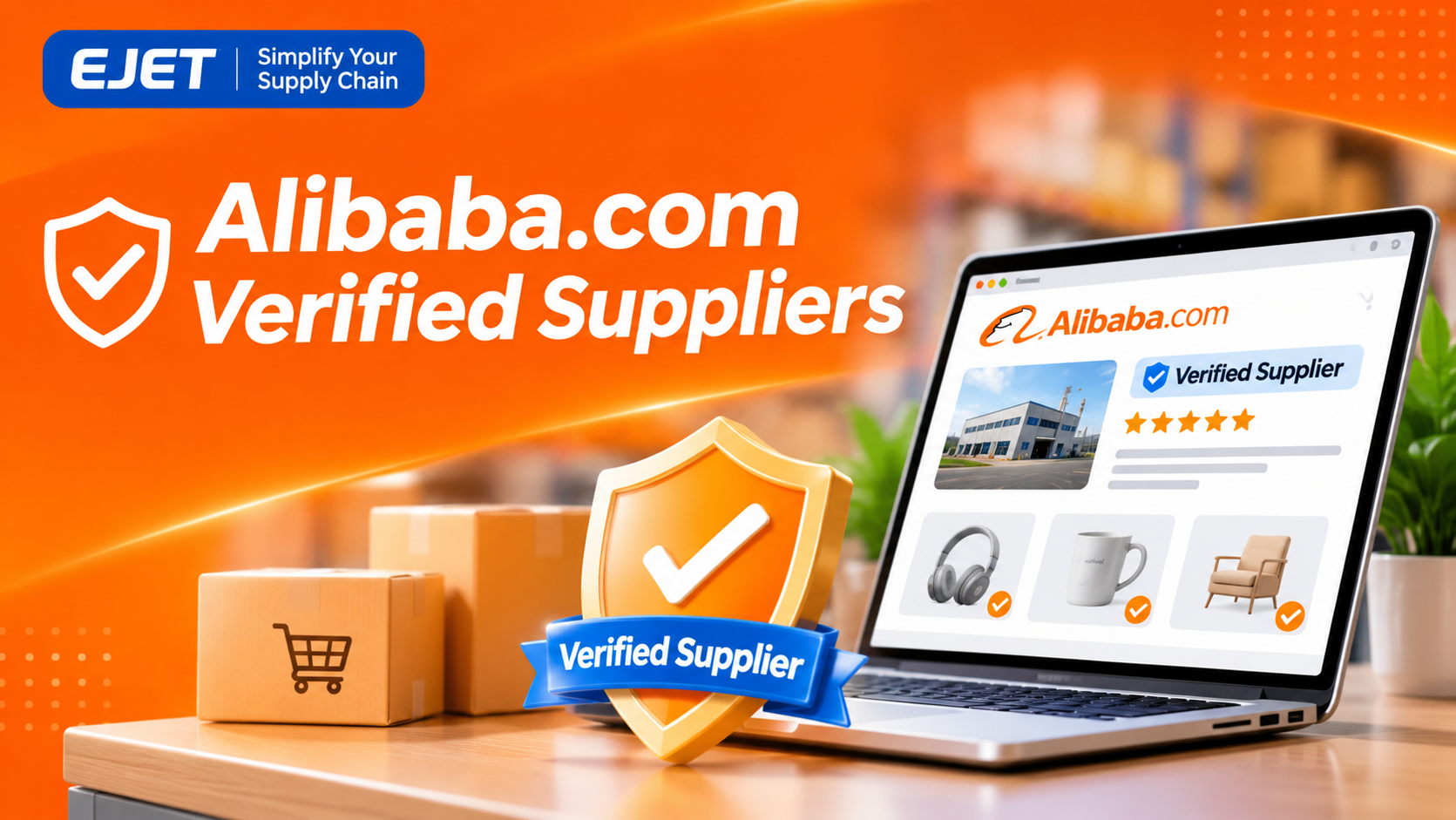
Alibaba’s Verified Supplier program includes an on-site assessment by an independent third-party inspection company and an assessment report available to buyers. It provides evidence about the business and its capabilities; it should not replace checks on your particular product or order.
Alibaba also states that it does not guarantee sellers’ product or certificate authenticity through these assessments.
The useful distinction is between company-level evidence and order-level evidence. A report can help you understand the operation you are considering. Your specifications, sample results, inspection findings, and written terms should determine whether to proceed with a particular purchase.
Avoid treating supplier verification as a permanent verdict. Check the report’s date and ask whether the production locati0n, equipment, ownership, or subcontracting arrangements relevant to your order have changed. Keep the answers with your sourcing records rather than relying on memory.
Search with product-specific intent
Use product names together with meaningful technical details. For example, try “cotton canvas zippered tote bag” rather than “bags.” For a custom component, include the material and manufacturing process you require instead of searching only for the finished item’s name.
Alibaba identifies Verified Suppliers through badges across search results and supplier profiles, and its sourcing guidance describes verification-related search filters. Use those tools where available, then open the company profile and supporting report rather than stopping at the search results.
Use the supplier directory to discover candidates, not to declare a winner. Supplier profiles can bring together company information, production capabilities, quality-management details, and buyer feedback. Review those categories together when deciding which businesses deserve an inquiry.
Create a manageable shortlist. Prioritize candidates that address your product category and specifications, then retain a backup or two while you investigate the strongest matches.
Read the assessment report like a buyer
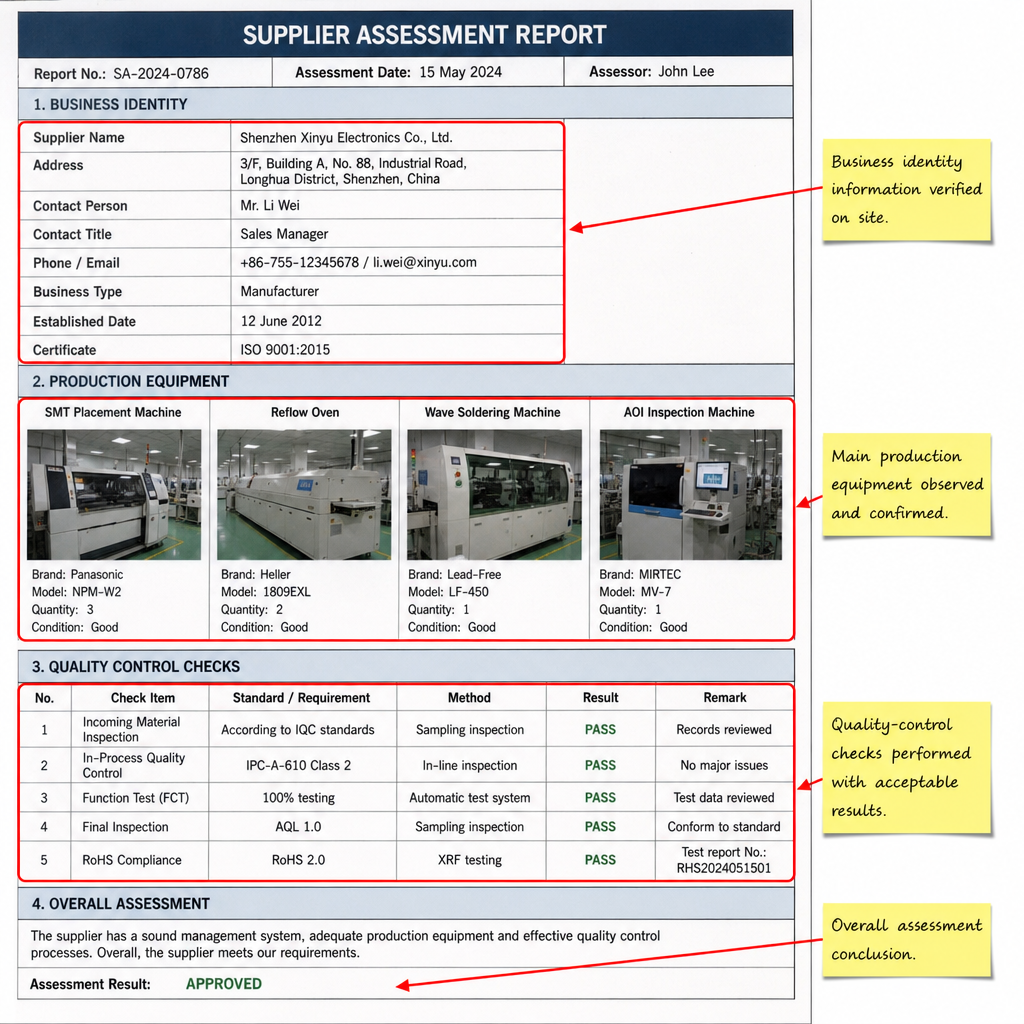
Download the assessment report instead of relying on the badge alone. Alibaba says these reports can cover production capabilities, research and development, quality-control processes, and business information. Use those details to prepare questions tied to your product.
Match the business identity and production scope
Compare the company name and locati0n in the report with the profile and quotation. Ask the supplier to explain any differences before placing an order. Request written confirmation of which business will contract with you and where your goods will be produced.
Check whether the assessed business is a manufacturer, a trading company, or both; Alibaba includes business type in its verification framework. Do not automatically reject an intermediary. Instead, ask who controls production, who approves changes, and who resolves quality problems.
Connect capabilities to your requirements
Turn broad statements into specific questions. If your product needs a particular finish, ask which process creates it and how it is checked. If color consistency matters, ask how the supplier will compare production against your approved reference.
Request evidence relevant to your order rather than collecting impressive-looking documents. Ask for examples of comparable work, an explanation of the production steps, and a live video discussion when useful. Record what remains unconfirmed so an unanswered question does not become an assumption.
Send inquiries that reveal how suppliers work
Your first message should invite a complete, comparable response. Ask Alibaba vendors to address the same specifications, quantities, sample requirements, packaging, and delivery assumptions. Alibaba’s sourcing tools recommend combining clear buying requirements with evidence of capability, samples, and written terms.
A useful inquiry might read:
We are evaluating suppliers for the attached product specification. Please confirm which requirements you can meet, identify any exceptions, and quote the requested quantity and packaging. Include sample cost, sample lead time, production lead time, inspection arrangements, and shipping assumptions. Please state whether any production steps will be subcontracted.
Evaluate the substance of the reply, not just its friendliness. Note whether the supplier answers each point, identifies uncertainties, and asks sensible questions. Before advancing, send a short written recap and ask the supplier to confirm or correct it.
Compare complete quotations, not headline prices
Build one comparison sheet and make every supplier quote against the same assumptions. Include product cost, customization, tooling where relevant, packaging, samples, inspection, and delivery arrangements. Alibaba’s supplier-selection guidance recommends comparing total sourcing costs and consistent quotation details rather than isolated prices.
Use a simple decision framework:
|
Criterion |
Evidence to request |
Decision question |
|---|---|---|
|
Product fit |
Confirmed specification and sample |
Can it meet your essential requirements? |
|
Production fit |
Process explanation and capacity discussion |
Can it handle your order and timeline? |
|
Quality control |
Inspection plan and acceptance criteria |
How will conformity be checked? |
|
Cost clarity |
Itemized quotation with exclusions |
What remains outside the quoted amount? |
|
Communication |
Complete answers and written confirmations |
Can you resolve details without ambiguity? |
|
Order terms |
Documented payment, shipping, and remedy terms |
Are responsibilities clearly assigned? |
Set rejection criteria before choosing a winner. For example, you might stop if a supplier will not confirm the material or accept agreed inspection arrangements. Do not let a strong price compensate for a failed nonnegotiable.
For US-bound goods, check the relevant import requirements separately. US Customs and Border Protection directs importers to the responsible government agency for commodity-specific requirements. Ask qualified advisers to resolve uncertainties before committing to production.
Use samples and inspection as separate checkpoints
Request samples before placing the full order; Alibaba includes sampling and production inspection among its recommended sourcing safeguards. Use the sample to evaluate the product against your written requirements, then plan how the production goods will be checked.
Create a sample review sheet with pass, fail, and clarification fields. Depending on the product, assess dimensions, finish, function, assembly, packaging, and labeling. Photograph the sample and record exactly what you approved or rejected.
Ask whether the sample represents the proposed production materials and process. If changes are needed, approve the revised version before authorizing production. Keep an identified reference sample and attach the final specification to the order.
Agree on inspection scope before production starts. Specify the characteristics to check, the reference documents to use, how results will be recorded, and what happens if the goods fail. For specialized testing, ask an appropriate independent provider to help define a suitable scope.
Where practical, make your first order a controlled pilot. Choose a quantity that lets you evaluate the working relationship without exceeding your risk budget. Review the goods and the supplier’s handling of issues before increasing your commitment.
How can you protect your first Alibaba order?
For an eligible purchase, use a Trade Assurance order, document the agreement on Alibaba.com, and pay through the platform’s designated process. Alibaba describes Trade Assurance as order protection supported by the online agreement and transaction records; payments made outside the platform are not protected by that service. Read the terms applicable to your specific order.
Verification and Trade Assurance serve different purposes. The former provides business-assessment information; the latter concerns eligible transactions and their agreed terms. Do not assume a Verified Supplier badge automatically means your purchase has Trade Assurance protection.
Before paying, confirm that the order records:
- The exact product specification, quantity, variants, and approved references.
- Packaging, labeling, and customization requirements.
- The agreed ship date and delivery responsibilities.
- Inspection arrangements and acceptance criteria.
- Payment milestones and the agreed response to nonconforming goods.
Keep important discussions and approvals in Alibaba’s messaging system. Its sourcing guidance recommends on-platform communication so the records can support dispute handling. Check the applicable claim deadlines when ordering rather than assuming a general refund window applies.
Treat unresolved inconsistencies as reasons to pause
Use a pause-and-verify rule whenever documents, messages, and order details do not align. Ask for a written explanation, check it against the available evidence, and postpone payment until you are satisfied. Apply the same standard even when the supplier is responsive or offers a discount.
Consider pausing when a supplier:
- Refuses to identify the company responsible for your order.
- Avoids confirming essential specifications or proposed inspection arrangements.
- Changes materials or production locations without your approval.
- Pressures you to pay before the order details are complete.
- Requests payment outside the agreed platform process.
An inconsistency is a prompt for investigation, not automatic proof of wrongdoing. Give the supplier a clear opportunity to resolve it. If the explanation remains incomplete, return to your shortlist rather than lowering your requirements to preserve momentum.
Build trust through documented performance
The best approach for 2027 is to use verification as the start of due diligence, not its conclusion. Define the product, examine the evidence, compare complete offers, approve samples, and document the transaction. Let each checkpoint determine whether the supplier advances.
Build your own list of trusted suppliers from actual performance. After each order, record conformity, timing, communication, and how problems were handled. That record gives your next sourcing decision a stronger foundation than a badge, a persuasive message, or the lowest quote alone.
Frequently Asked Questions About Alibaba Verified Suppliers
What does it mean when a supplier is "verified" on Alibaba?
A verified supplier on Alibaba has undergone a thorough assessment by an independent third-party inspection company, providing evidence about the business's capabilities. However, buyers should still conduct their own due diligence to verify the suitability of the supplier for their specific product and order.
How can I confirm if a supplier is genuinely verified?
You can confirm a supplier's verification status by checking for the verification badge on their profile, reviewing their assessment report, and examining details related to their business operation and capabilities.
What should I include in my product specification when reaching out to suppliers?
Your product specification should include detailed requirements such as materials, dimensions, functions, packaging needs, order quantity, and any customization or delivery requirements.
How can I protect my first order when sourcing from Alibaba?
To protect your first order, consider using Alibaba's Trade Assurance service, which ensures your transaction is covered by specific terms and agreements documented on the platform. Always communicate via Alibaba’s messaging system to maintain a record of discussions.
What steps should I take if there are inconsistencies in supplier information?
If you notice inconsistencies in supplier information, apply a pause-and-verify rule. Ask the supplier for a written explanation, cross-check it against available evidence, and delay any payments until you are satisfied with their answers.