Navigating the world of Amazon FBA can be complex, especially for sellers sourcing products from China.
An efficient FBA prep service from China can streamline the process of preparing your inventory for fulfillment.
Proper preparation ensures compliance with Amazon's strict guidelines. It also reduces headaches during shipping and handling.
In this article, we'll explore what a good prep service should include, the benefits it offers, and how to connect preparation with your FBA shipping service.
What should your China-based FBA prep service include?
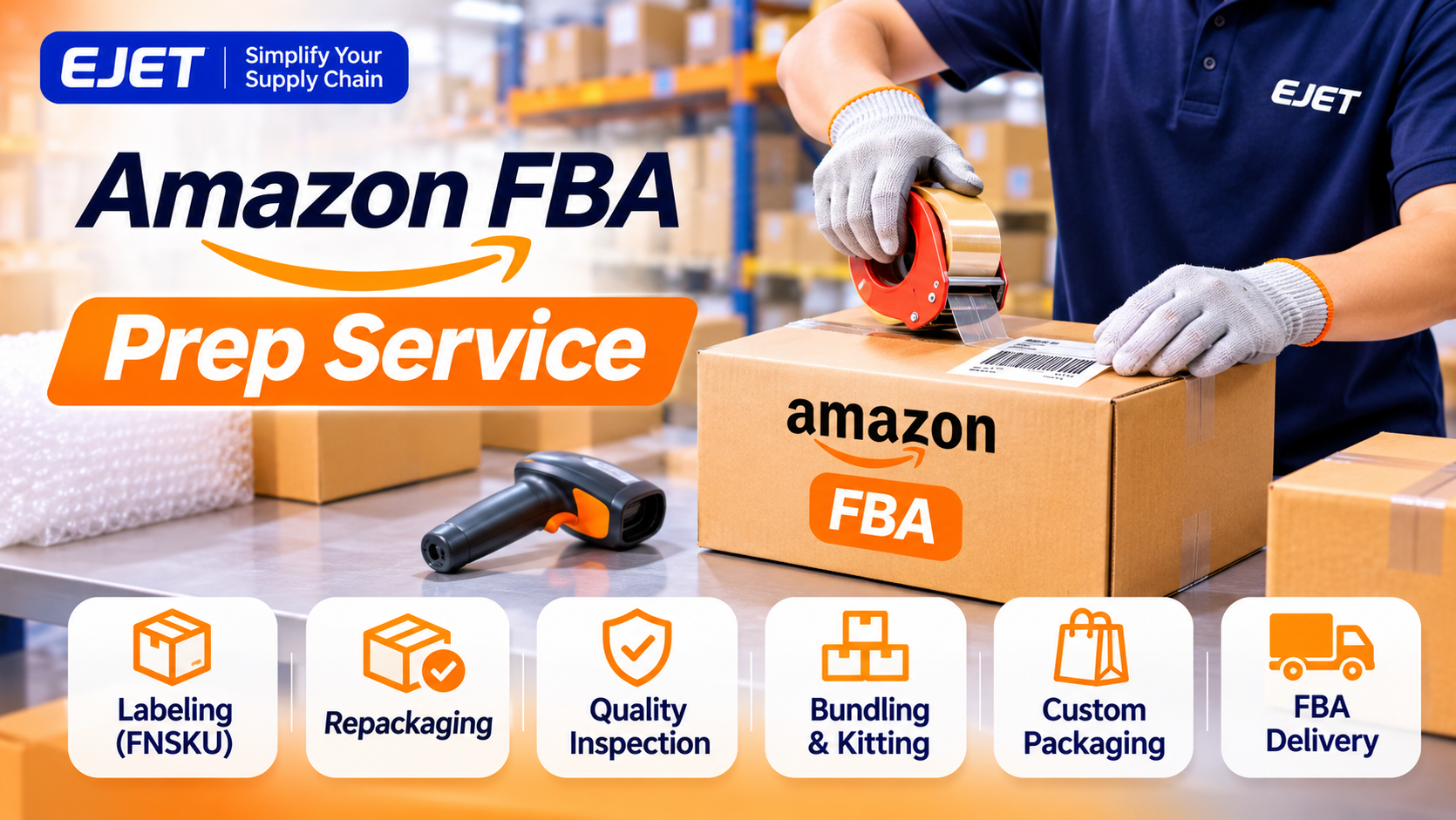
Your FBA prep service should cover the preparation your particular inventory needs before it reaches Amazon: checking product identity and quantities, applying the required labels, preparing protective packaging, and matching packed cartons to your shipment instructions.
Amazon’s preparation guidance distinguishes between barcodes, packaging, and product-specific requirements, so the scope should follow your actual products rather than assume every SKU needs identical treatment.
Start with the gap between what your supplier delivers and what your shipment requires. A factory may have finished production while packaging instructions, barcode files, or carton allocations still need approval. Make those unfinished tasks visible before authorizing dispatch.
For US-bound inventory, this planning matters particularly: Amazon ended its US FBA prep and item-labeling services on January 1, 2026. Sellers must arrange preparation themselves, through manufacturing partners, or through third-party providers before sending inventory into that service.
Build your requested scope around:
- Receiving and reconciliation: Specify how supplier deliveries will be matched against your SKU list and expected quantities.
- Unit preparation: Identify the labeling, bagging, protective wrapping, or set assembly needed for each product.
- Carton preparation: Define packing instructions, carton identification, and the shipment information needed before release.
- Exception handling: Agree who approves shortages, damaged packaging, substitutions, and additional work.
Turn supplier-ready stock into shipment-ready inventory
Production completion should trigger a preparation review, not an automatic freight booking. Use the review to confirm what is ready, what needs attention, and what requires your decision. Your quote should distinguish routine handling from work that depends on the condition of the arriving stock.
Product checks with a defined inspection scope
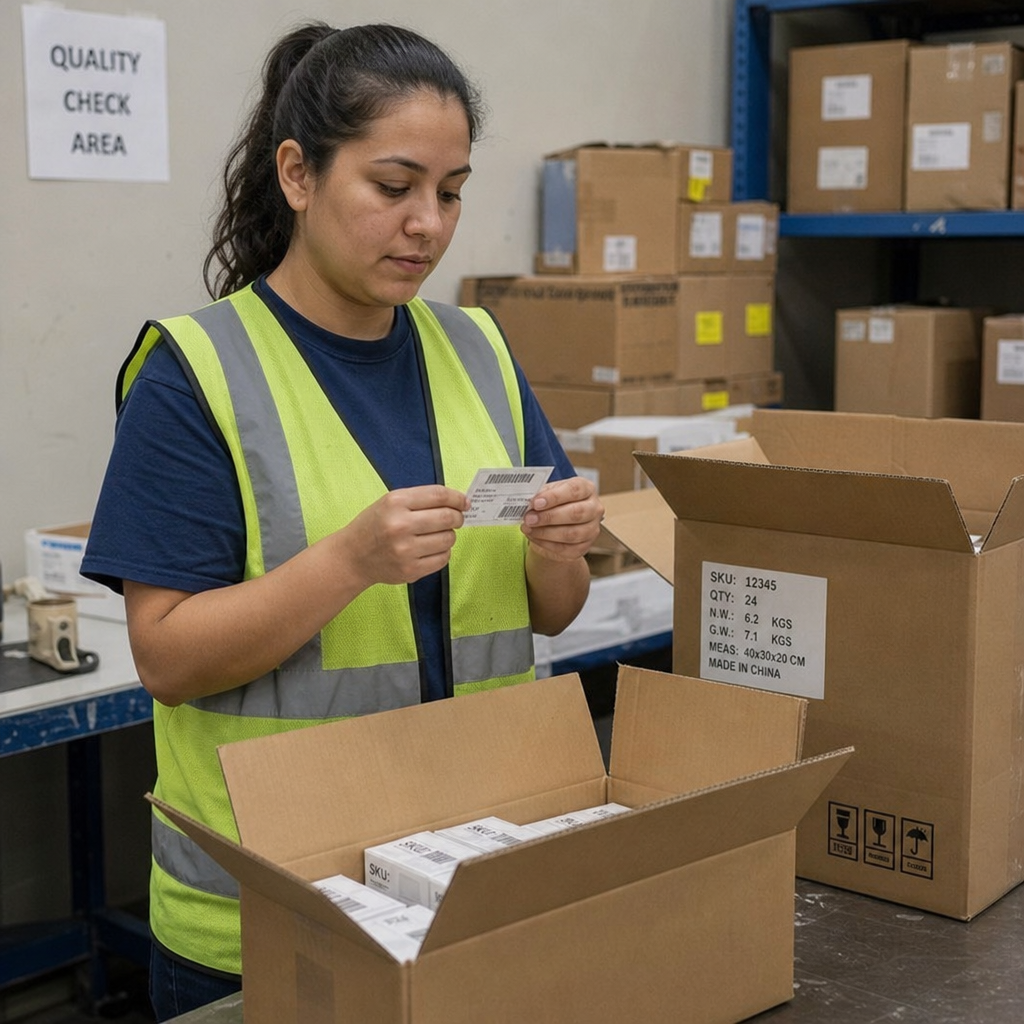
Specify what you want checked when inventory arrives: product identity, visible packaging condition, quantities, color variants, or accessories. Ask whether checks cover every unit, selected samples, or only outer cartons. Treat these as separate service levels when comparing proposals.
For example, checking that a carton contains the expected blue variant does not establish that every item functions correctly. If functional testing or a specialist quality inspection matters to your order, request it explicitly. Do not assume an ordinary receiving check includes it.
Labeling and packaging matched to the product
Provide current label files and a clear SKU-to-label reference before work starts. State which packaging surfaces should remain visible and request an approval image when placement is important. Keep revised files clearly identified so an earlier version is not used accidentally.
Amazon requires products to be identifiable and prepared according to applicable product requirements; some items need additional preparation such as bagging or protective wrapping. Confirm the instructions for your marketplace and inventory in Seller Central rather than applying one packaging method across your entire catalog.
Sets, cartons, and final release instructions
For bundles or multipacks, describe exactly what belongs in each sellable unit. Include component names, quantities, packaging references, and any approved substitutions. Ask for a sample assembly approval before authorizing the remaining work.
At carton level, establish a final release checkpoint. Confirm packed quantities, carton details, current shipment labels, and the party authorized to release the goods. Amazon’s shipping guidance requires appropriate shipment labeling and packaging, so these details belong in the preparation plan rather than being left to the carrier.
A practical workflow from supplier handover to dispatch
Keep the process understandable even when several businesses are involved. Your supplier, prep provider, freight forwarder, and internal team should work from the same approved shipment information. Assign responsibility at each handover instead of relying on everyone to interpret a shared email thread.
Use the following workflow to structure your service request:
Share the product and shipment brief. Provide your SKU list, expected quantities, supplier locations, destination marketplace, packaging photos, and target readiness date. Identify anything still awaiting confirmation.
Agree the preparation scope. Separate required tasks from optional checks. Confirm materials, inspection coverage, approval points, and how unexpected work will be priced.
Coordinate supplier delivery. Establish receiving instructions and identify each supplier’s cartons. Request confirmation of what has arrived before treating the order as complete.
Review discrepancies before processing. Set rules for shortages, mixed variants, visible damage, or packaging that differs from your reference. Decide whether affected stock should be held, corrected, or returned.
Approve completed preparation. Request the evidence agreed in your scope, such as label-placement photos, set assembly images, and packed quantity records. Resolve open issues before freight handover.
Authorize shipment release. Confirm final shipping instructions, documents, carrier responsibility, and the next reporting milestone. Keep the approved records with your shipment reference.
Avoid setting a dispatch deadline without identifying these dependencies. If final labels arrive late or a supplier changes its packing configuration, reassess the remaining work before confirming collection. A written release decision gives your team a clear record of what was approved.
Keep mixed-supplier orders under one clear plan
Consider a shipment containing kitchen accessories from one supplier and storage products from another. One factory supplies retail-ready units; the other sends products that still need individual packaging. You also want selected items combined into a promotional set.
In that situation, “prep everything for Amazon” leaves too much open to interpretation. Instead, create a line-by-line work order: retain the approved packaging for the first product, add the specified protection for the second, and assemble only the quantities allocated to the set. Keep remaining components separate and identifiable.
Before requesting consolidation, confirm the receiving locati0n, available handling services, storage conditions, and any limitations. Ask how incomplete supplier deliveries will affect the release of the rest of the order. This is especially useful when one supplier is ready but another has not finished production.
The objective is a traceable decision for each SKU: received, awaiting instruction, prepared, held, or released. Use those statuses to decide what can move without confusing unfinished inventory with shipment-ready stock.
Connect preparation with your FBA shipping service
Prep and freight should connect, but they should not be treated as the same job. Define where preparation ends, who books transport, and who manages destination delivery. If you already use a forwarder, include its handover requirements in the brief.
Fulfillment by Amazon handles inventory storage and customer-order picking, packing, shipping, customer service, and returns within its service. Your China-side preparation and inbound transport arrangements sit before that customer fulfillment stage; they are not a replacement for Amazon’s FBA fulfillment service.
When requesting an FBA shipping service alongside prep, ask the provider to identify:
- Collection responsibility: Who arranges pickup from suppliers or the preparation locati0n.
- Transport scope: Which origin, international, and destination legs appear in the quote.
- Customs arrangements: Who coordinates the broker and who will serve as importer of record.
- Delivery handover: Who manages destination instructions, carrier communication, and delivery evidence.
- Excluded charges: Which duties, taxes, storage, inspections, or additional handling costs remain outside the quoted scope.
Amazon does not act as importer of record for FBA inventory. Confirm that responsibility with your appointed logistics or customs professional before dispatch, rather than assuming an Amazon delivery address resolves the import arrangements.
Compare quotes by scope, not just the unit rate
A useful amazon prep service quote should make the planned work understandable. Request separate descriptions for receiving, unit handling, packaging materials, set assembly, carton work, storage, and freight where relevant. Mark any task that cannot be priced until the goods have been reviewed.
Then compare proposals against the same assumptions. A quote based on applying one label to an already packaged item should not be treated as equivalent to a quote covering repacking, assembly, and additional checks. Ask each provider to identify the condition it expects the products to arrive in.
Use these points to review the commercial terms:
- Charging basis: Clarify whether each task is charged per unit, set, carton, shipment, or another agreed measure.
- Materials allowance: Confirm whether bags, labels, protective materials, and replacement cartons are included or separate.
- Minimums and storage: Ask about minimum charges and what happens if inventory waits for missing information or supplier deliveries.
- Extra-work approval: Set an authorization process before unexpected corrections begin.
- Quote assumptions: Record quantities, packaging condition, service scope, and the point at which revised pricing may be necessary.
Do not rely on a headline price alone. Ask for a worked breakdown using your own SKU mix, including one product that needs straightforward labeling and another that needs more handling. That comparison gives you a clearer basis for choosing the appropriate scope.
Build the service around your selling operation
Request support that matches your current bottleneck. A first shipment may need a detailed preparation brief and explicit approval checkpoints. A repeat order may need the same approved work instructions applied consistently, with changes highlighted before processing.
For private-label products, include packaging artwork references and set configuration instructions. For multiple suppliers, prioritize receiving identification and discrepancy reporting. For replenishment orders, distinguish the requested dispatch date from any unresolved production, labeling, or shipment-planning tasks.
If you are comparing a China-based prep center for Amazon with destination-side preparation, map both proposed workflows before deciding. Identify where checks happen, where corrections would be made, and who controls release at each stage. Request comparable quotes rather than assuming one arrangement will always be cheaper or faster.
Choose a scope you can supervise through clear records, not one that depends on vague assurances. Ask which updates you will receive, what evidence accompanies an exception, and who can approve a change. These details turn a broad service description into an actionable work order.
Request a shipment-specific prep and shipping quote
Start with the information you already have. You do not need to invent carton dimensions, final quantities, or a confirmed shipment date to make an initial inquiry. Mark estimates as provisional and identify the details that must be confirmed before work or transport is authorized.
Include the following in your request:
- Products: SKU names, descriptions, photos, and any handling concerns.
- Quantities: Expected units per SKU and whether those figures are final.
- Suppliers: Pickup or delivery locations and estimated production readiness.
- Preparation needs: Labeling, protective packaging, sets, repacking, or specific checks.
- Destination: Amazon marketplace, available shipment instructions, and intended delivery arrangement.
- Timing: Your preferred readiness date and any dependencies still outstanding.
Add a short description of the problem you want solved. For example: “Two suppliers are delivering different products; one needs relabeling, and both must be checked against the final packing list before collection.” That is more useful than requesting an unspecified all-inclusive service.
Before accepting a proposal, confirm the receiving locati0n, responsible contact, approval process, and service exclusions in writing. Keep preparation charges distinct from freight and import costs so you can review the full shipment budget. Proceed only when the scope matches the stock you intend to send.
Request your FBA prep and shipping quote with your SKU list, supplier locations, and destination marketplace.
Frequently Asked Questions About Amazon FBA Prep Service from China
What is an Amazon FBA prep service?
An Amazon FBA prep service helps sellers prepare their inventory for fulfillment by Amazon. This includes tasks like product inspection, labeling, packaging, and organizing shipments to ensure compliance with Amazon's requirements.
Why should I use a prep service based in China?
A prep service in China can streamline the logistics for sellers sourcing products from Chinese manufacturers. It minimizes handling time, ensures that products meet Amazon’s requirements before shipment, and can help reduce shipping costs by optimizing the packaging for international transport.
What services are included in a typical FBA prep package?
A typical FBA prep service includes receiving inventory, checking product identity and quantities, applying necessary labels, preparing protective packaging, and ensuring all products match shipping instructions.
How can I ensure my products comply with Amazon's packaging and labeling requirements?
To ensure compliance, provide your prep service with clear labeling files, packing instructions, and the latest Amazon preparation guidelines. Specify any additional preparation requirements, such as bagging or assembly of sets, to avoid discrepancies.
What should I do if there are discrepancies during the inventory preparation process?
If discrepancies arise, you should have predefined procedures in place with your prep service. This may include reporting shortages, damaged packaging, or incorrect items. Make sure to establish an approval process for any corrective actions needed before the shipment is released.