


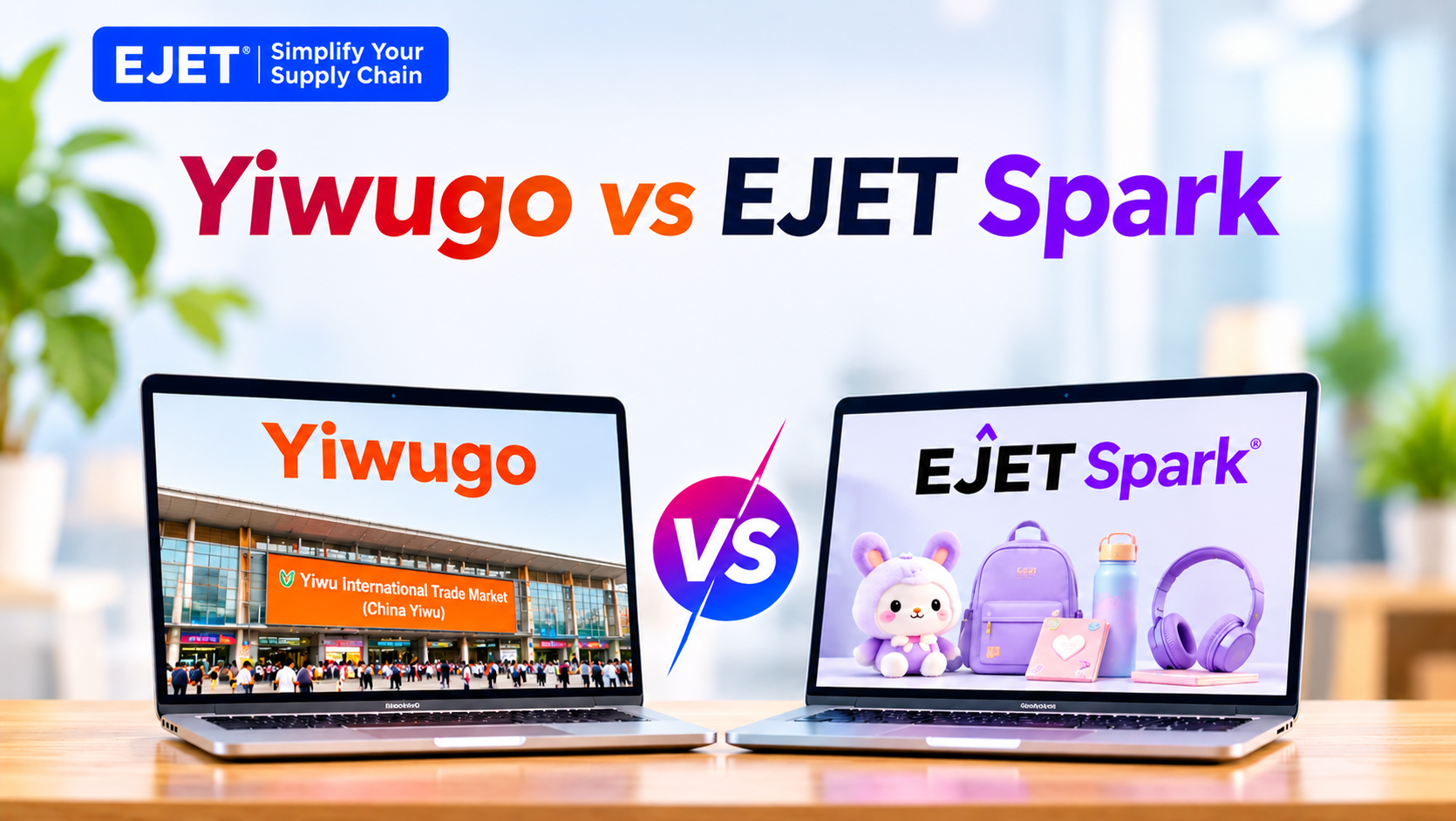
Yiwugo and ejetspark offer different starting points for sourcing products from China: Yiwugo connects buyers with Yiwu’s wholesale marketplace, while EJET Spark emphasizes curated products and flexible sourcing support.
The useful comparison is not simply which website has more listings, but which approach fits your buying process.
This article compares their published offerings and provides a practical framework for evaluating suppliers, quotations, samples, and service responsibilities.
What is the main difference between Yiwugo and ejetspark?
The main difference is their sourcing emphasis. Yiwugo is the official online platform of the Yiwu Small Commodity Wholesale Market, with digital storefronts connected to the physical market.
EJET Spark presents itself as a trend-driven product and supply platform, combining curated selections with sampling, flexible production, and delivery support. That suggests a choice between marketplace-led discovery and a more curated sourcing approach—not an automatic winner on price or quality.
For your business, the deciding question is how much work you want to manage internally. Do you want to investigate a wide selection of sellers yourself, or start with a narrower assortment and discuss sourcing support?
This comparison evaluates published capabilities rather than firsthand purchases. Treat service descriptions as a starting point for questions, not proof of performance on your particular order.
The two sourcing approaches at a glance
The table below summarizes each company’s published positioning. Use it to identify the conversations you need to have before requesting samples, rather than as a scorecard declaring one option universally better.
|
Buying consideration |
Yiwugo |
EJET Spark |
|---|---|---|
|
Main emphasis |
Online access to Yiwu market products and shops |
Curated, trend-driven products and flexible supply |
|
Product discovery |
Marketplace browsing and physical-market connections |
Collections and category-focused selection |
|
Published support |
Sourcing, translation, warehousing, and inspection services |
Sampling, flexible production, delivery, and retail solutions |
|
Useful evaluation question |
Which seller and support services fit my order? |
Which products and execution services are included in my proposal? |
Neither column establishes what your specific transaction will include. Ask for a written scope that names the contracting party, deliverables, exclusions, and person responsible for resolving problems.
Yiwugo review: marketplace access with room for independent research
Yiwugo’s defining feature is its connection to Yiwu’s physical wholesale market. Its official overview describes online shop displays, including panoramic views, while its English homepage organizes products alongside market districts and categories.
For a buyer researching Yiwu, those features provide ways to explore products and locate relevant market areas before making purchasing decisions.
A practical yiwugo review should also recognize that the platform publishes trade-support services. Its service information lists sourcing, accompaniment and translation, warehousing, and inspection.
It would therefore be misleading to describe Yiwugo as only a directory with no purchasing assistance. Confirm which services are available for your order and how they are charged.
When reviewing a potential seller, request:
- A precise specification: Materials, dimensions, colors, packaging, and acceptable variations.
- A quantity breakdown: Minimum quantities per item, color, carton, and total order.
- A clear supplier identity: The business issuing the quotation, receiving payment, and accepting responsibility.
- Written delivery terms: What the seller will deliver, where, and by what agreed deadline.
Keep those answers together so that similar-looking products do not become confused during negotiation.
EJET Spark: curated selection and flexible supply
EJET Spark emphasizes product discovery through curated collections rather than positioning itself solely around individual market storefronts. Its website presents collections and sourcing solutions for retailers, brands, distributors, and entrepreneurs.
Published offerings include small-batch testing, regional distribution partnerships, brand licensing collaborations, and turnkey store solutions. These are distinct offerings to investigate, not services to assume accompany every product purchase.
For a retailer building a coordinated assortment, ask the team to explain its selection logic. Request products organized around your customer, target selling prices, display space, and intended launch window. A shortlist becomes more useful when each recommendation has a clear role in the range.
Also distinguish EJET Spark from the wider EJET group. EJET’s main website describes separate business lines, including EJET Procurement for managed sourcing and supply-chain execution. If your project requires extensive supplier management, inspections, or consolidation, establish which team will perform that work and whether it belongs in your Spark quotation.
Do not substitute a broad company capability for an order-specific commitment.
Which option offers better value for your order?
Neither option can be declared better value without comparable quotations for the same requirements. Start with an identical product brief, quantity, packaging specification, delivery destination, and service scope. Then compare what each proposal actually commits to providing—not just the displayed item price.
Build a comparison worksheet with separate lines for:
- Products and samples: Record quantities, sample charges, and any sample-credit conditions.
- Packaging and preparation: Specify labels, inserts, barcodes, cartons, and customization.
- Sourcing and handling: Ask about service fees, inspection, storage, and consolidation.
- Transport: Identify the delivery point and request a breakdown of included shipping stages.
- Exceptions: Record cancellation terms, defect remedies, and charges for changes.
Leave unknown costs marked as unresolved rather than entering zero. Ask each provider to confirm whether its quotation is complete for your requested scope.
Your team’s workload deserves a separate comparison. Estimate the internal hours you are prepared to spend finding alternatives, following up, and reviewing documentation. Use that estimate as a planning assumption, not as a claimed saving from either provider.
Quality checks should follow the product, not the platform
Do not approve an order because a website looks professional or a collection appears well curated. Instead, define what acceptable goods look like and ask the responsible party to confirm those requirements in writing. Apply the same acceptance standard to both sourcing routes.
For a storage organizer, your checklist might cover dimensions, material, lid fit, stacking stability, color consistency, and packaging condition. For a printed accessory, focus on artwork placement, finish, attachment points, and approved branding. These are example inspection points, not evidence about either provider’s products.
Before paying a production deposit, request agreement on:
The reference sample: Identify the exact sample or specification used for approval.
The inspection scope: State which characteristics will be checked and who arranges the check.
The response to defects: Define notification deadlines, evidence requirements, and proposed remedies.
The shipment decision: Clarify who can authorize release when an issue remains unresolved.
Where product documentation is required for your intended market, request it early and arrange appropriate review. Do not treat an unrelated report or a general assurance as confirmation for your exact item.
Match the sourcing route to a realistic buying scenario
Consider two hypothetical projects. An experienced wholesaler wants to research several variations of an established household item and manage supplier discussions internally. Given Yiwugo’s marketplace structure, it is a reasonable place to begin that discovery exercise. This is a workflow recommendation, not a claim that its sellers will offer the lowest price.
Now consider a retailer developing a coordinated gift display and looking for product-selection support. EJET Spark’s published focus on curated assortments and retail solutions makes it worth requesting a proposal against that brief. Ask for the proposed range, sampling plan, execution responsibilities, and exclusions before deciding whether the support matches your needs.
You can also evaluate both without immediately committing to either. Keep the same brief and acceptance criteria so the exercise produces comparable evidence.
Use a small trial to make the final decision
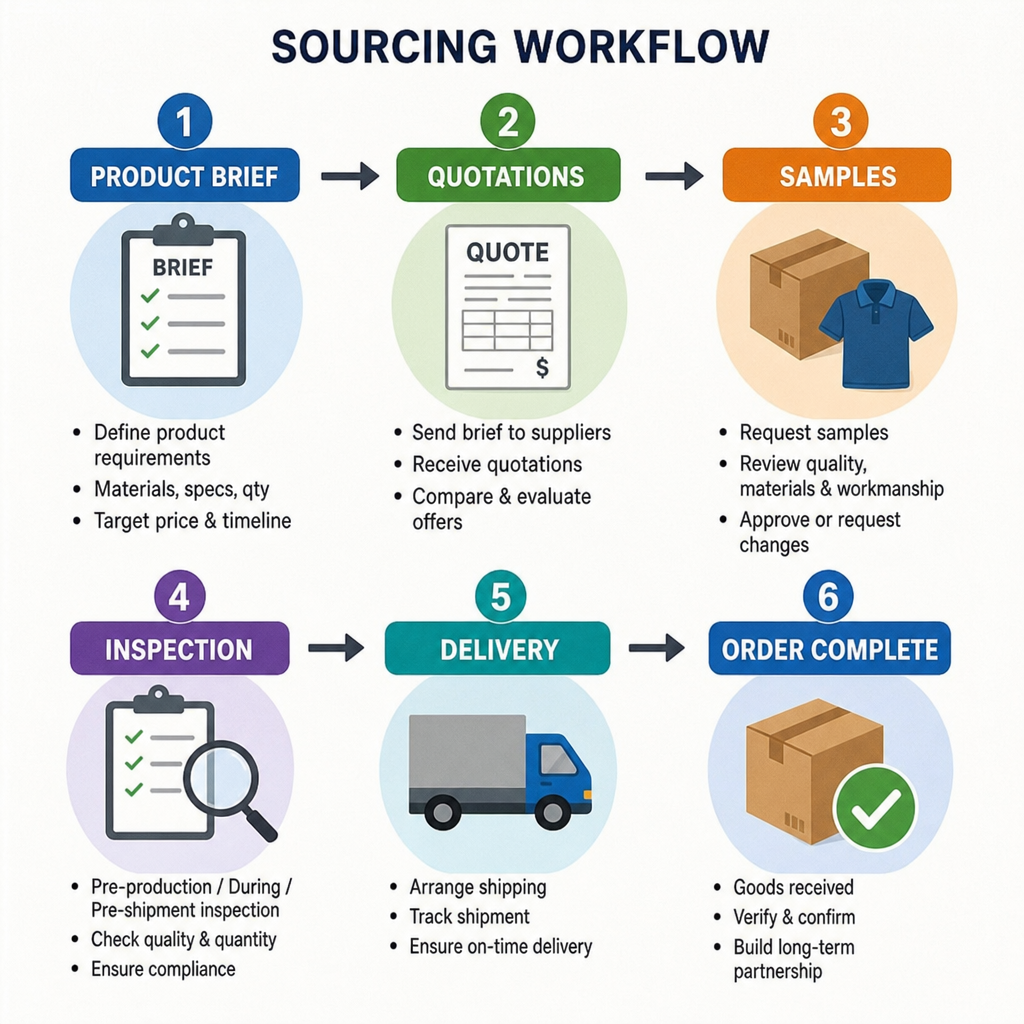
Turn the Yiwugo vs ejetspark comparison into a controlled purchasing exercise. Choose a manageable product range, set a maximum trial budget, and define the evidence you need before increasing your commitment. Avoid changing several major requirements midway through the comparison.
Send both routes the same brief and assess their responses against a simple scorecard:
Accuracy: Does the quotation address every requested specification?
Clarity: Are fees, exclusions, responsibilities, and deadlines understandable?
Sample fit: Does the sample meet your documented acceptance criteria?
Execution readiness: Is there a credible written plan for inspection, shipment, and exceptions?
Choose based on documented fit rather than a universal ranking. Yiwugo deserves consideration for marketplace-led exploration; EJET Spark deserves consideration for its curated sourcing proposition. The stronger choice for your business is the one whose actual proposal, sample, and agreed responsibilities satisfy your brief.
Frequently Asked Questions About Yiwugo vs Ejetspark
What are the main features of Yiwugo?
Yiwugo is the official online platform of the Yiwu Small Commodity Wholesale Market. It offers buyers access to a wide range of products and shops connected to the physical market. Key features include marketplace browsing, a digital catalog of products, and trade-support services like sourcing, translation, warehousing, and inspection.
How does EJET Spark differ from Yiwugo in product sourcing?
EJET Spark focuses on curated, trend-driven products and provides flexible sourcing support. Unlike Yiwugo, which connects users to a marketplace, EJET Spark organizes products into collections designed for specific retail needs, offering additional services like small-batch testing and regional distribution partnerships.
Can I rely on Yiwugo and EJET Spark for quality assurance?
Both platforms provide unique approaches to quality assurance. Yiwugo emphasizes independent research and encourages buyers to evaluate sellers thoroughly before placing orders. EJET Spark also advises users to define their acceptance criteria clearly and confirms quality checks and responsibilities before production.
What should I consider when choosing between Yiwugo and EJET Spark?
Your choice will depend on your sourcing preferences and the specific needs of your business. If you prefer self-directed exploration of a wide range of products, Yiwugo may suit you better. Conversely, if you require a curated assortment with additional support for retail solutions, EJET Spark is worth considering.
How can I evaluate the value of offers from Yiwugo and EJET Spark?
To assess value, request comparable quotations from both platforms based on an identical product brief. Compare service offerings, costs associated with samples, packaging requirements, and transport options. Document and analyze the responses to find the best fit for your needs.