


Xianyu is one of China’s most active resale platforms, built around everyday people buying, selling, bargaining, and discovering used or surplus goods.
Often translated as “Idle Fish,” it blends secondhand shopping, social commerce, local pickup, and niche collecting into one busy marketplace.
This Xianyu guide explains what the platform is, how to search and buy more safely, how sellers use it, and what foreigners should know before getting started.
What Is Xianyu (Idle Fish)?
Xianyu, also known as Idle Fish, is a secondhand and idle-goods marketplace where users list items they no longer need, from electronics and clothing to collectibles, home goods, books, and local services.
Unlike a standard retail store, the xianyu marketplace is driven heavily by individual sellers, informal negotiation, and product discovery through search, recommendations, and seller profiles.
The xianyu app is popular because it makes resale feel fast and conversational. Buyers can message sellers, ask for extra photos, negotiate prices, and sometimes arrange local pickup.
Sellers can clear unused items, test demand for niche products, or build small resale operations without creating a full traditional store.
For international users, the platform can feel unfamiliar at first. The interface, payment systems, seller norms, and Chinese-language search terms all matter.
That is why learning How to Download and Set Up Xianyu, How to Search for Items on Xianyu, and How to Buy Safely on Xianyu is essential before making your first purchase.
Xianyu works differently from a normal ecommerce site
On Xianyu, listings can be casual, brief, and highly dependent on communication. A seller might upload a few photos, mention the item condition, and expect buyers to ask questions before purchasing. This creates opportunities to find bargains, but it also means buyers need to check details carefully.
A typical product journey looks like this:
- Search using Chinese keywords rather than only English terms.
- Filter by category, locati0n, condition, or price when available.
- Review photos closely for wear, accessories, serial numbers, or packaging.
- Message the seller to confirm condition, shipping, authenticity, and what is included.
- Use platform-supported payment and order processes instead of moving the deal outside the app.
- Inspect the item after delivery and raise issues quickly if something is wrong.
This more conversational flow is part of Xianyu’s appeal. It rewards patient buyers who know how to compare listings, ask the right questions, and avoid rushing into deals that look too good.
How to Download and Set Up Xianyu
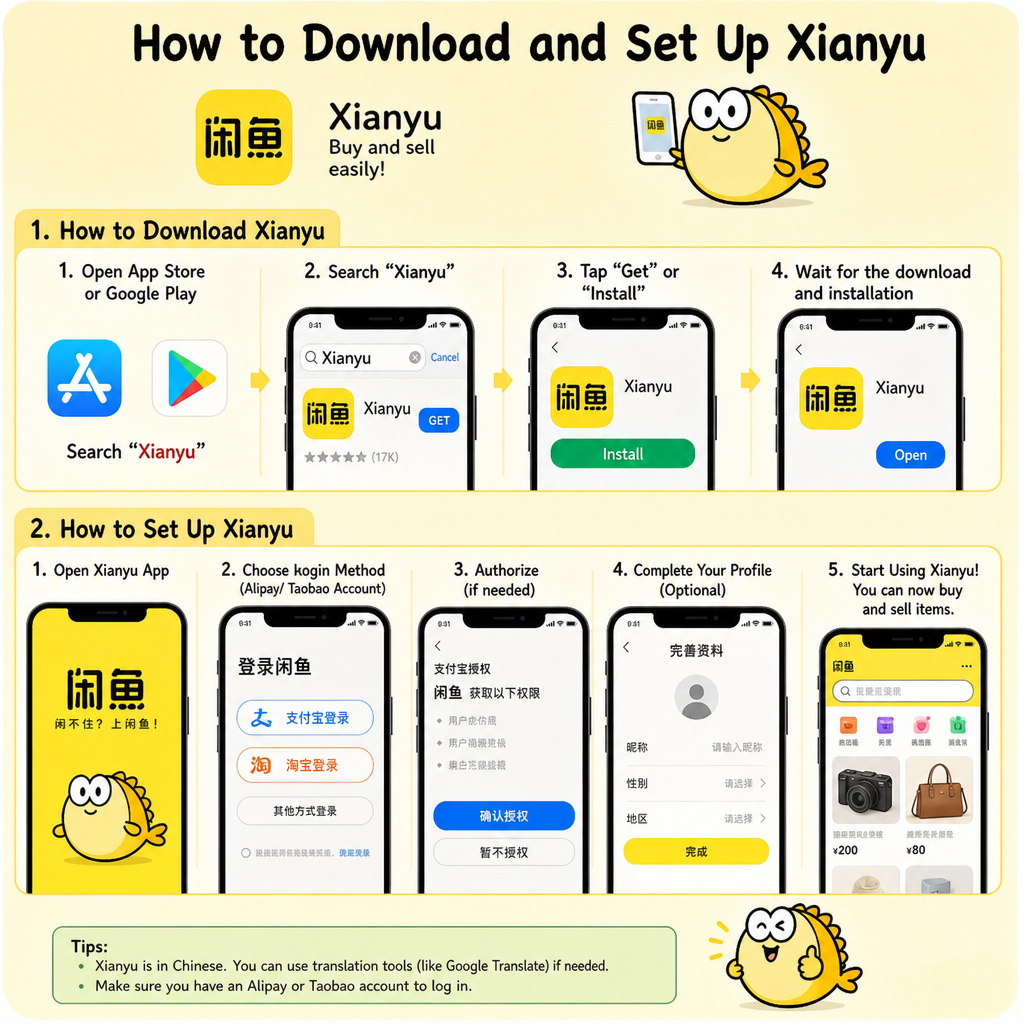
To begin, search for the xianyu app in your mobile app store or through an official Chinese app marketplace. The setup process generally involves installing the app, creating or linking an account, verifying a phone number, and connecting compatible payment or identity options where required.
If you are asking how to make xianyu account, expect the process to be easier if you already use related Chinese digital services. Some foreign users may face extra friction around phone verification, language barriers, payment setup, or identity checks.
These requirements can change, so treat any xianyu advanced operation guide 2024 or xianyu account nurturing guide 2024 as a starting point rather than a permanent rulebook.
After registration, spend time making your profile look trustworthy. Add a clear username, complete available profile fields, and avoid behavior that looks automated or suspicious.
Account nurturing is not about tricks; it is about using the platform normally, browsing, saving items, communicating politely, and building a clean activity history.
How to Search for Items on Xianyu?
The best way to search on Xianyu is to use specific Chinese keywords, compare several listings, and adjust your terms based on how real sellers describe the item. English searches may work poorly for many categories, so translation tools and product-specific Chinese names can make a major difference.
For example, instead of searching only for “vintage camera,” you may need the Chinese brand name, model number, and condition terms. For fashion, include size, color, brand, and style words. For electronics, include model numbers, storage capacity, accessory names, and words that indicate whether the item is used, sealed, repaired, or missing parts.
Useful search habits include:
- Save multiple keyword versions so you can compare results.
- Search by model number for electronics, collectibles, and replacement parts.
- Check newly posted listings if you are looking for underpriced items.
- Look at seller history to see whether they sell personal items or operate like a reseller.
- Compare photos, not just prices, because condition often explains price differences.
Good searching is the foundation of a smart Xianyu strategy. The more precise your terms, the less time you waste scrolling through unrelated listings.
How to Buy Safely on Xianyu
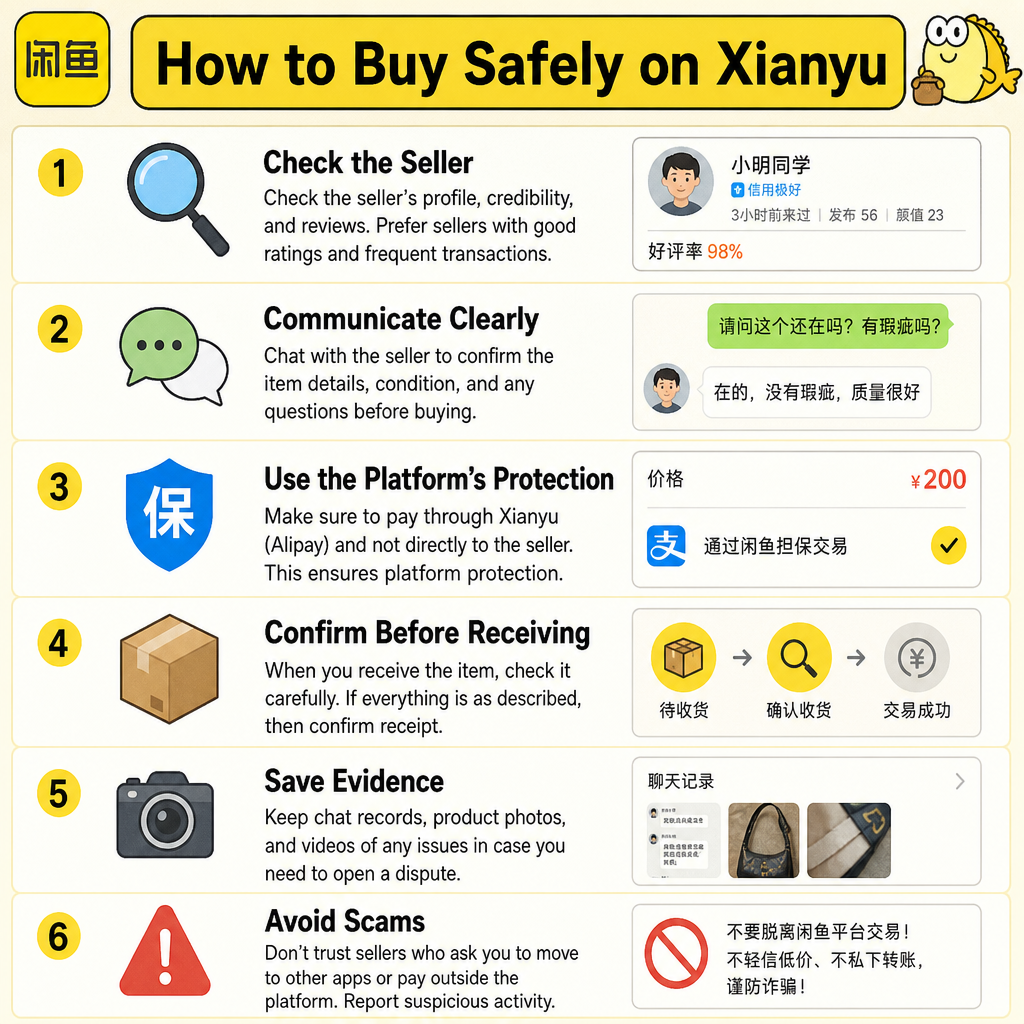
Buying safely on Xianyu means slowing down, verifying the listing, and keeping the transaction inside the platform whenever possible. Because many sellers are individuals, product descriptions may be incomplete, and buyers should ask direct questions before paying.
Before you buy, check these basics:
- Photos: Ask for real photos from multiple angles, not only stock images.
- Condition: Confirm scratches, repairs, missing parts, battery health, stains, or sizing issues.
- What is included: Clarify accessories, box, receipt, charger, tags, or warranty materials.
- Seller behavior: Be cautious with pressure, vague answers, or requests to move payment elsewhere.
- Price realism: Very low prices can be legitimate, but they deserve extra checking.
- Shipping and returns: Ask what happens if the item is damaged, incorrect, or not as described.
For higher-value goods, consider asking for a short video or a photo with a handwritten note. If buying branded items, collectibles, or electronics, learn the common signs of counterfeit or repaired products in that category before shopping.
Using Xianyu as a foreigner requires preparation
How to use Xianyu as a foreigner depends on your language ability, payment access, shipping needs, and whether you are inside or outside China.
Users based in China may have an easier time with phone verification, local delivery, and payment tools. Users outside China often need more support, especially for forwarding, communication, and after-sale issues.
A practical foreign-user setup includes a translation workflow, saved Chinese search terms, a clear budget, and a plan for shipping.
If you rely on an agent, choose one carefully and understand their fees, inspection process, and dispute support before ordering. Xianyu can offer unusual finds, but it is not as frictionless as buying from an international retail site.
Selling Your Items on Xianyu
Selling Your Items on Xianyu is about trust, clarity, and timing. A good listing should show the real item, explain its condition honestly, and answer the questions buyers are likely to ask.
Clear photos and straightforward descriptions reduce repetitive messages and help serious buyers decide faster.
Strong seller listings usually include:
- A direct title with brand, model, size, color, or item type.
- Clear condition notes such as lightly used, unopened, repaired, or missing accessories.
- Real photos in good lighting, including flaws.
- A fair asking price based on similar active listings.
- Shipping or pickup details so buyers know what to expect.
Some sellers explore a xianyu dropshipping model, but this should be approached carefully. Xianyu users often expect real, available goods and responsive communication. If you cannot control quality, shipping speed, or after-sale service, dropshipping can quickly create complaints and account problems.
Niche strategies: food, collectibles, and local goods
A xianyu food specialty selling strategy requires extra caution because food involves freshness, packaging, local regulations, delivery timing, and buyer trust.
Sellers should avoid vague claims and be clear about origin, production date, storage needs, and shipping limits. When rules are unclear, it is safer not to sell restricted or perishable goods.
Collectibles, hobby items, and local specialties can perform well when listings include detailed descriptions.
Buyers in these categories often care about authenticity, version, age, completeness, and condition. The more niche the item, the more your listing should educate the buyer rather than simply announce a price.
Xianyu vs Taobao vs Pinduoduo: Comparison Table
Xianyu vs Taobao vs Pinduoduo is mainly a comparison of resale, retail, and bargain-focused shopping. Xianyu is best for secondhand goods, discontinued items, personal resale, and negotiated deals.
Taobao is broader retail commerce with countless merchants and new products, while Pinduoduo is often associated with group-buying style value shopping and low-cost goods.
Choose Xianyu when you want used items, rare finds, or room to bargain. Choose Taobao when you want a wider retail selection and more conventional product listings.
Choose Pinduoduo when price is the main priority and you are comfortable comparing value-focused offers carefully.
| Feature | Xianyu | Taobao | Pinduoduo |
|---|---|---|---|
| Type of Marketplace | Secondhand/resale | New retail products | Group buying/discounted goods |
| User Base | Individual sellers and buyers | General consumers | Price-sensitive shoppers |
| Product Variety | Used and refurbished items | Wide range of new products | Low-cost goods |
| Price Negotiation | Common and encouraged | Generally fixed pricing | Group-buying for discounts |
| User Interaction | Direct messaging and bargaining | Less direct interaction | Group deals and shared purchases |
Key takeaways before you start
Xianyu can be rewarding, but it favors prepared users. Learn the interface, search in Chinese, compare listings, and communicate before you buy. If you plan to sell, focus on honest descriptions, clear photos, and reliable fulfillment rather than shortcuts.
The smartest approach is simple: start small, test the process, and build confidence before handling expensive items or advanced selling models. With patience and careful communication, Xianyu becomes more than a secondhand app—it becomes a window into China’s fast-moving resale culture.
Frequently Asked Questions About Xianyu
What is Xianyu, and how does it work?
Xianyu, also known as Idle Fish, is a secondhand marketplace in China where users can buy and sell a wide range of used items. It operates as a platform for individual sellers to list their goods, allowing for negotiation and direct communication between buyers and sellers.
How do I safely purchase items on Xianyu?
To buy safely on Xianyu, ensure you verify item details by asking the seller questions about condition and authenticity. Always use the platform’s payment system to complete transactions and check return policies or seller ratings before making a purchase.
Can foreigners use the Xianyu app?
Yes, foreigners can use Xianyu, but they may face challenges such as language barriers and payment setup. It's advisable to familiarize yourself with the app's interface and use translation tools when necessary.
How can I effectively search for items on Xianyu?
For the best search results, use specific Chinese keywords related to the item you are looking for, such as brand names, models, or condition descriptors. English searches may yield less accurate results.
What should I know about selling items on Xianyu?
When selling on Xianyu, it’s crucial to provide clear and accurate descriptions, honest condition notes, and high-quality photos. Establishing trust with potential buyers is essential, so be responsive to inquiries and transparent about what you're selling.