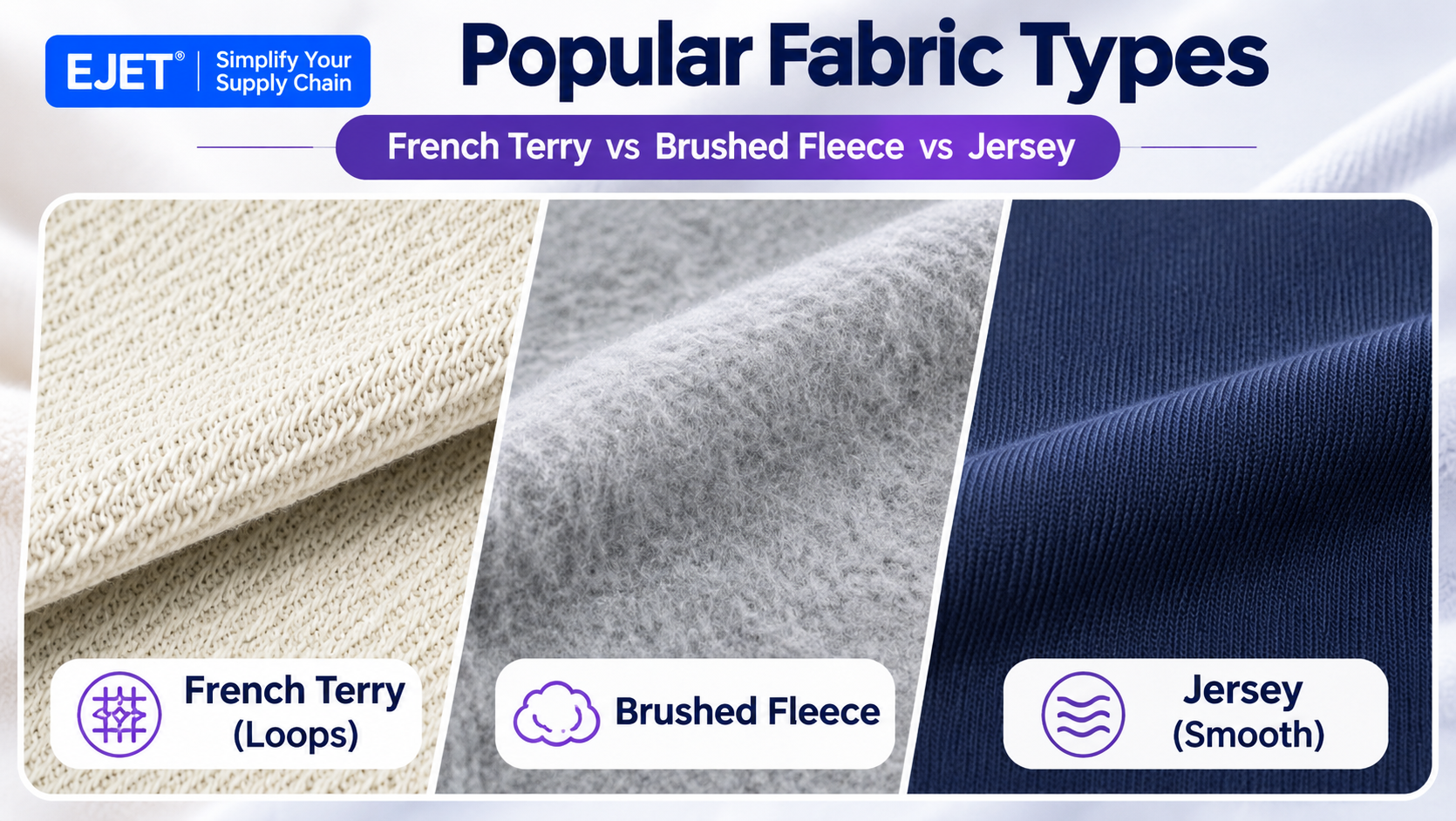
Hoodie fabrics combine fibers, such as cotton, polyester, and wool, with constructions such as French terry, jersey, or brushed fleece.
Understanding both parts helps you choose the comfort, warmth, and feel you want rather than relying on a material name alone.
This guide explains the main hoodie material types, their trade-offs, and what to check before buying or sewing one.
What are the main types of hoodie fabric?
The main types of hoodie fabric include cotton and cotton-blend sweatshirting, polyester performance fabrics, French terry, brushed fleece, jersey, and wool knits. These names describe different things: cotton and polyester identify fibers, while French terry and fleece describe fabric construction or finish. A hoodie can therefore be both a cotton blend and a brushed fleece without any contradiction.
Think of the label as two separate questions: What is it made from, and how is it built?
A fiber percentage answers the first. An interior photograph, fabric description, or swatch helps answer the second. Supplier listings that specify composition, construction, and weight together provide a much clearer picture than “soft fabric” alone.
For example, two cotton-rich hoodies might have similar fiber labels but different interiors. One could have visible loops, while another has a fuzzy brushed surface. Start with composition, then inspect the structure before deciding whether either suits your wardrobe.
The fibers behind a hoodie's feel
Cotton: absorbent everyday comfort
Cotton is worth considering when you want a soft hoodie for everyday wear rather than sustained exercise. Its absorbency is an important distinction: cotton takes up moisture, but holding water is not the same as moving it away and drying quickly. During sweaty activity, that comfortable fabric can become noticeably damp.
That trade-off makes intended use more useful than a blanket claim that cotton is “best.” Consider it for low-exertion settings, and be more selective if your hoodie needs to handle repeated sweating. Check whether the fabric is loopback, brushed, or jersey, because cotton content alone does not tell you its texture.
Cotton sweatshirting can also shrink during laundering. Follow the garment label; if you are sewing, prewash the fabric using the care routine planned for the finished hoodie before cutting your pieces. That helps you assess changes before committing to the final fit.
Polyester: quicker drying for active use
Polyester absorbs much less moisture into its fibers than cotton, helping explain why polyester fabrics generally dry more quickly. Engineered polyester textiles can also transport moisture toward the fabric surface. Those properties make polyester-based options worth investigating when drying performance matters.
However, do not treat every polyester hoodie as equivalent performance gear. A moisture-transporting fabric and an insulating fleece serve different priorities, even when both use polyester. Look for a description of the fabric's intended function rather than assuming the fiber name guarantees the result.
Surface wear deserves attention, too. Polyester fabrics can develop persistent pills where friction causes loose fibers to gather into small balls. That does not automatically make a hoodie unusable, but it is a reason to inspect the surface and follow appropriate washing instructions.
Cotton-polyester blends: judge the complete fabric
Cotton-polyester blends combine both fibers, but the ratio is only part of the specification. A supplier may use the same blend across loopback terry and brushed fleece, producing noticeably different surfaces. This makes blends a useful reminder to compare the complete textile rather than ranking hoodies by percentages alone.
When choosing between blends, ask what you actually want to improve: the interior feel, fabric weight, stretch, or suitability for your routine. Then request the relevant details. If two product descriptions provide only composition, you still need information about construction and care to make a useful comparison.
Wool and merino: moisture management with different care needs
Wool is another option, particularly when moisture-vapor management and odor resistance matter. Its fibers absorb and release moisture vapor, while their natural crimp helps trap insulating air. Fine merino fibers also bend more readily against the skin than coarser wool fibers, affecting how the fabric feels.
Consider wool for a hoodie you want to wear across changing conditions, but assess the actual garment rather than expecting every wool knit to feel identical. Check next-to-skin comfort and read the care label before buying. Some wool garments require handwashing or flat drying, while others permit machine laundering under specified conditions.
Elastane: a supporting fiber for stretch
Elastane, also called spandex, is an elastic fiber used alongside other fibers rather than a standalone hoodie fabric. Even a small addition can improve stretch, fit, and shape retention. You may also see a branded version identified as LYCRA fiber.
Consider an elastane-containing fabric when easy movement and recovery are priorities. Still, do not assume that any stretchy hoodie contains elastane: fabric construction can also provide stretch. Check the label and try moving naturally in the garment instead of judging flexibility by appearance alone.
Fabric construction changes the wearing experience
French terry and loopback
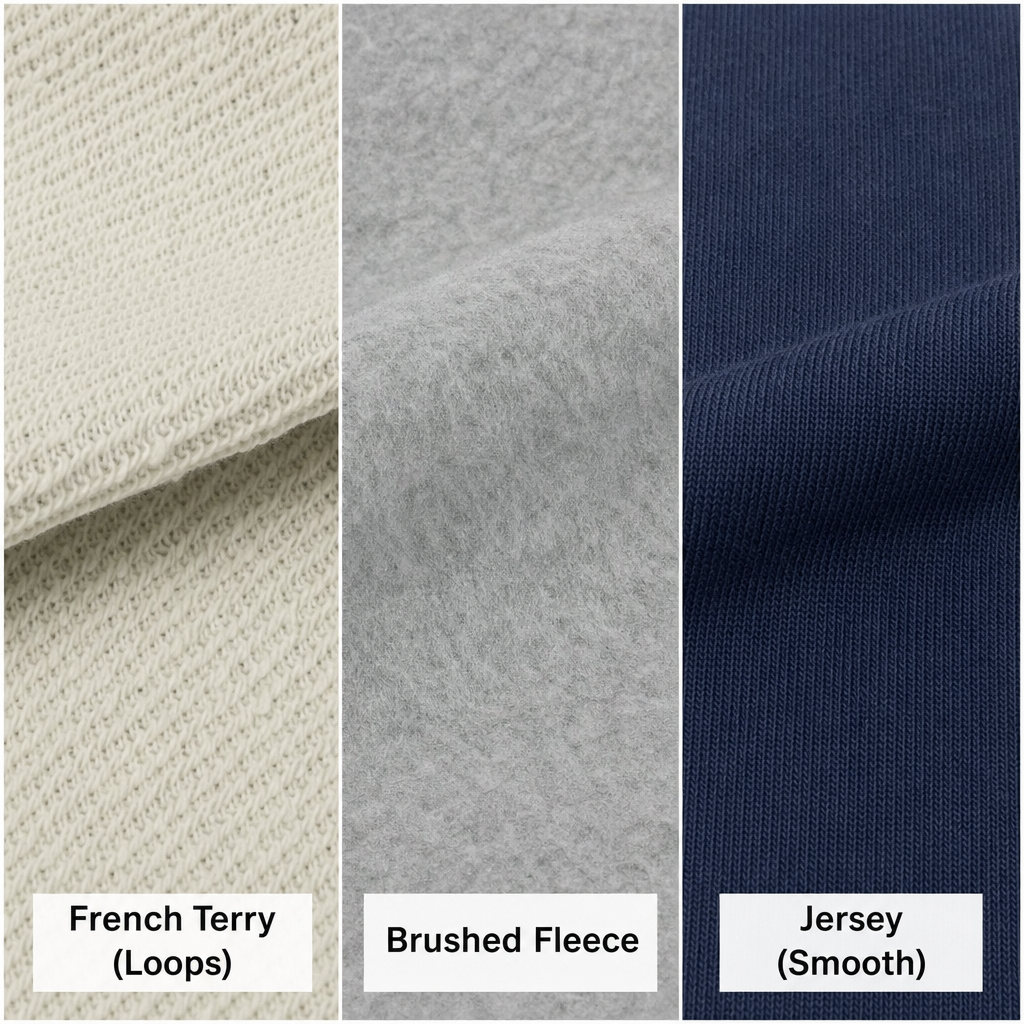
French terry typically has a smooth outer face and visible loops on the reverse. Those unbrushed loops distinguish it from the fuzzy interior associated with brushed sweatshirt fleece. It is a useful starting point when you want sweatshirt fabric without a plush inner surface.
Do not assume French terry means lightweight, however. Suppliers offer it in different weights, including substantial fabrics intended for hoodies. Compare the weight and handle of the actual material; the loopback label identifies its structure, not a fixed level of warmth or heaviness.
Brushed sweatshirt fleece
Brushed sweatshirt fleece has a soft, raised interior instead of clearly exposed loops. Fleece is associated with a plush feel and cold-weather comfort, making it a sensible candidate when coziness is your priority. Cotton-rich versions are available, so “fleece” does not automatically mean an entirely polyester garment.
Inspect both sides when comparing different types of hoodie fabric. The outside may look smooth and familiar while the reverse reveals the feature you care about most. If shopping online, request an interior photograph or swatch rather than relying on a close-up of the outer face alone.
Jersey and interlock
Jersey and interlock offer alternatives to loopback or brushed sweatshirting. CottonWorks describes jersey as soft and breathable, while interlock offers a smoother, more stable hand. These constructions are worth exploring when you prefer a smooth fabric rather than an obviously looped or fuzzy interior.
For a sewing project, compare samples against the pattern's fabric requirements before choosing either one. Focus on the specified weight, stretch, and finished effect rather than substituting solely because both fabrics are knits. A swatch gives you a more useful basis for that decision than a construction name alone.
Which hoodie fabric is best for your routine?
The best hoodie fabrics are the ones whose properties match how you will wear and care for them. For everyday softness, investigate cotton-rich options; for a plush interior, compare brushed fleece; for quicker drying, examine performance polyester; and for moisture-vapor management and odor resistance, consider wool. These are starting points, not universal rankings.
Use this shortlist to narrow the decision:
- Mostly relaxing or casual outings: Compare cotton-rich fabrics, then choose between visible terry loops and a brushed interior according to your texture preference.
- Exercise with significant sweating: Prioritize documented moisture-management properties and drying behavior rather than a generic “sport” description. Polyester's low moisture absorption makes it relevant here.
- A deliberately cozy feel: Start with brushed fleece, then compare actual weight and construction instead of assuming every fleece offers the same result. (
- Changing conditions or repeated wear: Investigate merino options for moisture-vapor handling and natural odor resistance, while checking whether the care requirements suit you.
- A closer fit with easy movement: Look for suitable stretch and recovery, including elastane blends, and test the finished garment through ordinary movements.
Before browsing, write down your two non-negotiables: perhaps a non-fuzzy interior and simple care, or stretch and moisture management. Use those priorities to eliminate unsuitable options first. That keeps the decision focused on your needs rather than whichever feature sounds most impressive.
What should you check before buying hoodie fabric?
Before choosing fabric for hoodies, check composition, construction, weight, stretch, surface feel, and care instructions together. A useful listing should tell you more than whether the material is cotton or fleece. For sewing or production, a sample lets you evaluate details that a photograph or percentage cannot fully communicate.
Use this practical checklist when comparing options:
- Read the full composition. Record the blend rather than stopping at the first fiber named, and note whether elastic fibers are included.
- Identify the reverse surface. Look for exposed loops, brushing, or a smooth knit so you know what will sit against your clothing or skin.
- Compare the stated weight. Suppliers often specify weight in GSM, or grams per square meter. Compare that alongside construction rather than treating weight as a complete description of quality.
- Assess stretch and recovery. Check whether the material suits the intended fit, particularly when following a sewing pattern with specific fabric requirements.
- Test the care routine. Prewash sewing fabric as intended for the finished garment, then reassess it before cutting.
For online shopping, save these details side by side rather than comparing product photographs alone. If an important specification is missing, ask the seller instead of filling the gap with an assumption. When sewing, keep the fabric description with your sample so you can connect what you feel with what you order.
Care for the fabric you actually own
Start with the sewn-in care label rather than a universal hoodie-washing rule. Different wool, cotton, and synthetic garments can require different temperatures and drying methods. A routine that suits one hoodie may not suit another, even when they look similar.
To help limit pilling, reduce unnecessary abrasion during laundering. Patagonia recommends turning fleece inside out and separating synthetics from abrasive fabrics such as denim. If pills develop, use an appropriate removal method rather than assuming the whole garment has reached the end of its useful life.
Choose the combination, not just the name
The simplest way to compare hoodie fabric types is to separate fiber content from construction. Cotton, polyester, wool, and elastane describe ingredients; French terry, brushed fleece, jersey, and interlock describe how the textile is built or finished. Both influence the choice.
Start with your routine, identify your preferred interior texture, and check the complete specification and care label. That approach turns a confusing list of types of fabrics into a practical shortlist—and helps you choose a hoodie you will actually enjoy wearing.
Frequently Asked Questions About Different Hoodies Fabrics
What are the best types of fabrics for hoodies?
The best types of hoodie fabrics depend on your intended use. Cotton is excellent for everyday comfort, polyester is ideal for moisture-wicking and quick-drying, and blends offer a combination of benefits. Wool is great for moisture management and odor resistance.
How do I choose the right fabric for a hoodie?
Consider factors like intended use (casual, exercise, or cold weather), desired feel (soft, stretchy, or breathable), and care requirements. Evaluating fabric composition, weight, and structure can help you make a more informed decision.
What's the difference between cotton and polyester hoodies?
Cotton is absorbent and soft, making it suitable for casual wear, while polyester dries quickly and wicks moisture, making it better for athletic activities. Both fabrics have different care needs and performance characteristics.
Can I wash all hoodies the same way?
No, different fabrics have varying care requirements. Always check the care label for specific washing instructions, as some materials may require special handling to maintain their quality.
Are blends like cotton-polyester better than single-fiber fabrics?
It depends on your preferences. Cotton-polyester blends can combine the comfort of cotton with the durability and moisture-wicking properties of polyester. Choosing the right blend involves considering the specific characteristics you desire in a hoodie.