









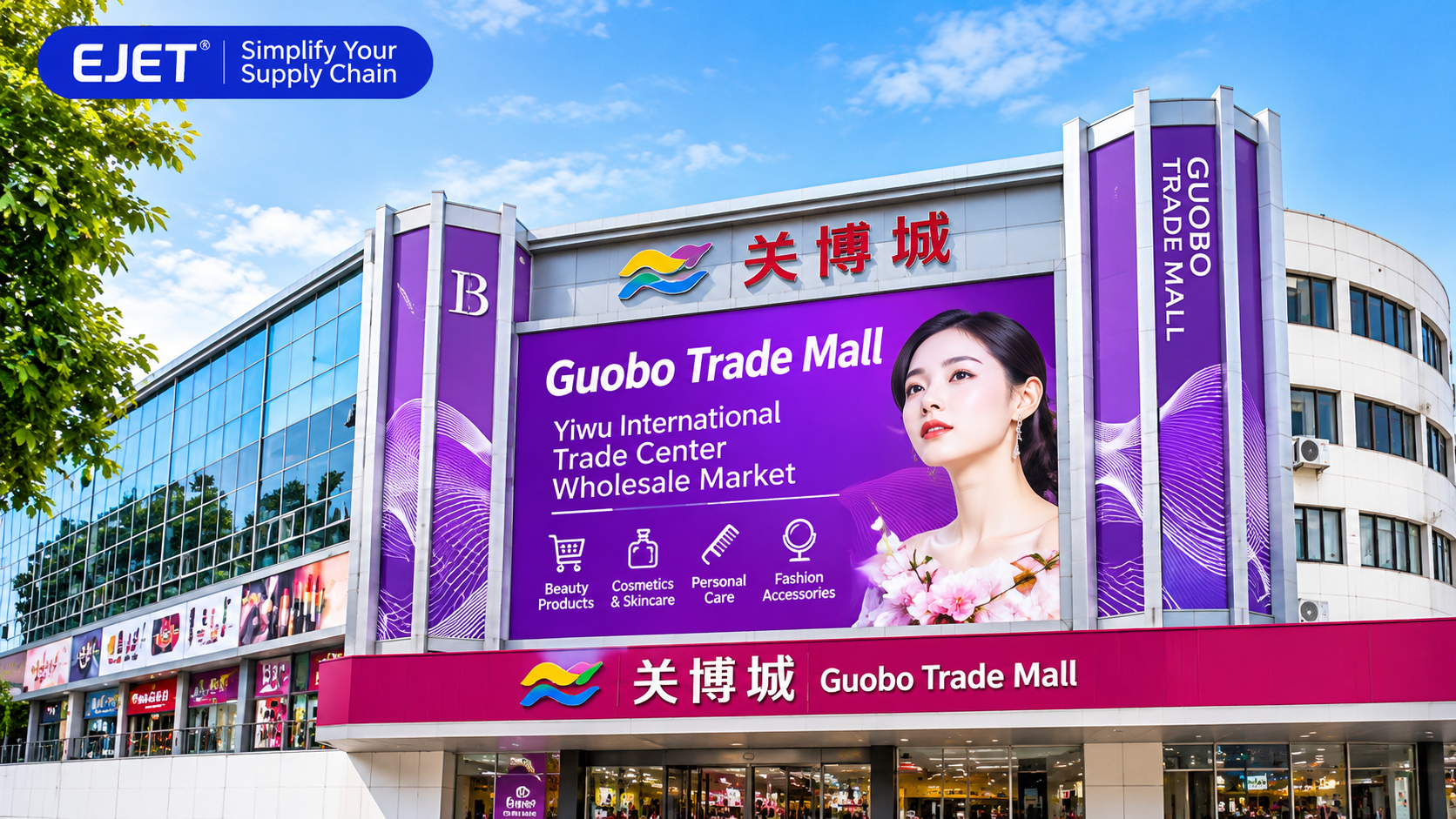
China’s cosmetic wholesale markets offer sourcing options for retailers, salon owners, distributors, and private-label businesses.
This guide compares eight destinations across Guangzhou, Yiwu, Shenzhen, Linyi, and Wuhan, explaining their product focus and the checks to make before ordering.
Treat it as a practical shortlist—not an official ranking or a guarantee of supplier quality.
Which cosmetic wholesale markets in China should you visit?
For a broad beauty-sourcing trip, start with Guangzhou’s specialist markets; for cosmetics alongside tools and accessories, consider Yiwu International Trade City’s District 3.
Shenzhen’s Mingtong is another cosmetics-trading destination, but documented enforcement activity makes provenance checks especially important. Linyi and Wuhan add regional distribution options worth investigating when their suppliers match your requirements.
Choose your route around a buying objective, rather than trying to visit every market:
- Building a retail range: Prepare a category list and compare equivalent products across several vendors.
- Launching a private label: Prioritize meetings that establish who manufactures the product and controls its documentation.
- Restocking a salon: Bring specifications for consumables, pack sizes, and equipment compatibility.
- Buying branded stock: Make traceable purchasing records and resale authorization central to your screening.
The Chinese beauty market is not one uniform sourcing channel. Use the following profiles to narrow your search, then confirm current tenants and meeting locations before booking travel.
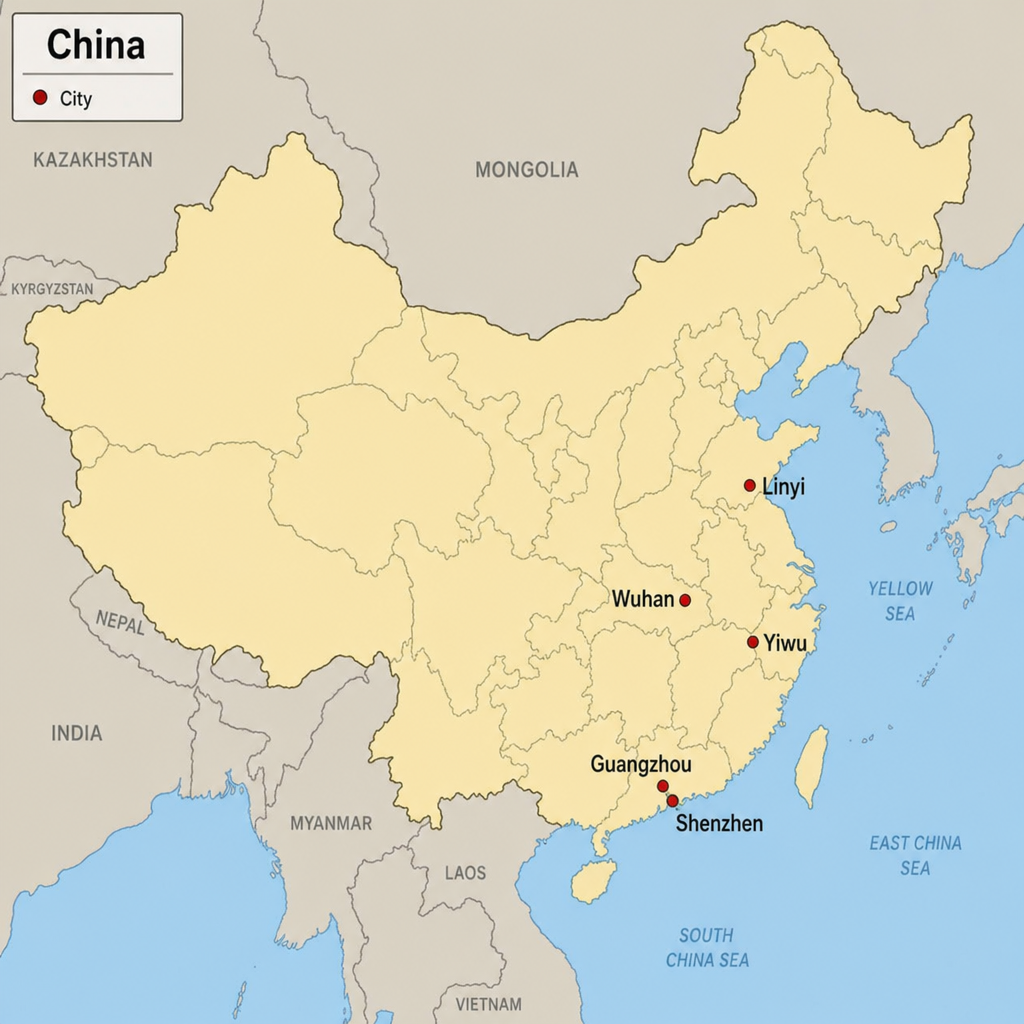
1. Guangzhou Beauty Exchange Center: Broad Beauty Sourcing
Guangzhou Beauty Exchange Center, commonly called Meibo City or Meibocheng, is a specialist beauty-trading destination. Its official categories include skincare, color cosmetics, hairdressing supplies, beauty equipment, and OEM/ODM supply-chain services. That breadth makes it a sensible starting point for buyers exploring several related categories.
For your visit, organize appointments by product family rather than browsing without a plan. A retailer developing a skincare-and-makeup assortment should compare packaging, available shades, ingredient information, and replenishment terms—not simply the displayed unit price.
Ask each exhibitor whether it is the manufacturer, an authorized distributor, or a trading company. Request the legal name of the business that will invoice you and identify the factory responsible for any proposed custom production.
2. Guangzhou Xingfa Plaza: An Established Trading Cluster
Xingfa Plaza is an established cosmetics-distribution market in Guangzhou’s Sanyuanli area. Guangzhou reporting identifies it as an anchor for a surrounding cluster that also includes Yifa Plaza and Yifa International. Its appeal is the opportunity to investigate several beauty product suppliers within the same broader trading area.
Use Xingfa to build a comparison set. Give shortlisted vendors the same product brief, including size, packaging, quantity, destination country, and required delivery date. Otherwise, apparently similar quotations may cover different products or service levels.
Confirm the specific building and shop before traveling. Sourcing reports describe redevelopment and supplier relocation affecting parts of Xingfa, so an old address or saved shop photograph should not be your only navigation reference. (jingsourcing.com)
3. Yifa International Cosmetics Purchasing Center: Nail and Beauty Supplies
Yifa International, also called EVA International, belongs to Guangzhou’s wider cosmetics-trading cluster. Specialist sourcing coverage describes nail-art supplies, skincare, body care, makeup, and beauty tools among its offerings. It is a relevant stop to investigate if your assortment combines finished cosmetics with manicure or application accessories.
Bring a detailed purchasing sheet for each category. For press-on nails, for example, specify the size assortment, finish, packaging, and whether adhesive is included. For tools, request samples that let you assess construction and usability before discussing branded packaging.
Do not assume similarly named markets are interchangeable. Ask your contact to send the market’s Chinese name, building entrance, and shop number; distinguish Yifa International from Yifa Cosmetics Plaza when arranging meetings.
4. Yiwu International Trade City, District 3: Cosmetics and Accessories
Yiwu International Trade City’s District 3 is the relevant starting point for cosmetics—not District 1.
Official market information identifies cosmetics among District 3’s categories, while its supplier directory lists products such as eyeshadow, foundation, lipstick, and mascara.
Local reporting also documents beauty tools, nail supplies, fragrances, and packaging within its beauty trade.
Consider Yiwu when planning an assortment that pairs wholesale beauty products with accessories. Build separate specifications for the cosmetic formula, applicator, and outer packaging, even when one vendor offers the complete set.
Ask whether minimum order quantities apply per item, shade, design, or carton. Request a written breakdown for mixed orders, and identify which products are available now versus those requiring production. This keeps a small trial order from becoming an unexpectedly large commitment.
5. Shenzhen Mingtong Cosmetics Market: Provenance Comes First
Mingtong is a cosmetics-trading destination in Shenzhen’s Huaqiangbei area. However, buyers should weigh its trading activity against documented risks: Shenzhen’s market regulator reported inspections and enforcement action involving counterfeit cosmetics and products without legitimate sourcing records in March 2026. Inclusion here is not an endorsement of individual vendors.
If you investigate branded stock, ask for supplier invoices, the chain of ownership, batch information, and evidence supporting any claimed distribution rights. Have those records independently reviewed before committing to volume.
Set a clear rejection rule before visiting: no satisfactory provenance, no order. An attractive carton, recognizable logo, or seller’s assurance should not replace documentary checks. For an inexperienced buyer, avoiding an unverifiable offer is a better outcome than securing a low quoted price.
6. Guangzhou Baiyun Beauty Bay Plaza: A Newer Trade Destination
Baiyun Beauty Bay Plaza, also known as Baiyun Meiwan Plaza, is a newer addition to Guangzhou’s beauty-trading network. Baiyun District reporting places it alongside the established Sanyuanli cosmetics markets as part of the area’s evolving commercial landscape. Consider it an additional appointment destination rather than assuming it replaces the older markets.
Before adding it to your itinerary, request a current tenant directory or introductions relevant to your category. Specify whether you need ready-made stock, packaging, manufacturing discussions, or brand-distribution contacts.
Use meetings to clarify what the company actually delivers. Ask who develops the formula, purchases packaging, approves production samples, and handles complaints. For a private-label project, record those responsibilities in writing before paying a development deposit.
7. Linyi Small Commodity City: A Regional Wholesale Alternative
Linyi Small Commodity City is a mixed-category wholesale destination rather than an exclusively cosmetic market. The Linyi Mall Management Committee’s June 2026 market list includes cosmetics, office supplies, and daily necessities among its categories. Its market profile also identifies a dedicated cosmetics trading area.
Investigate Linyi if you are comparing regional distributors or combining beauty purchasing with everyday retail merchandise. First establish whether prospective suppliers can support your destination market and provide the documents your shipment requires.
Ask vendors to separate domestic distribution capabilities from export services in their proposals. Identify who will issue the commercial invoice, prepare the packing list, and coordinate shipment. Do not book a visit solely because a supplier says it can “ship worldwide”; request an explanation of the actual process.
8. Wuhan Wenzhou City: Professional Beauty Distribution
Wuhan’s Wenzhou City, associated with the Central China Beauty and Health Products Trading Town, is another specialist destination to investigate. Reporting hosted by Wuhan’s commerce authority describes beauty, hairdressing, cosmetics, and nail-product trading there. Because that profile is older, confirm current occupancy and category coverage directly before arranging a visit.
For salon purchasing, take an inventory-based brief rather than a general shopping list. Include the products you need to replenish, acceptable substitutes, pack sizes, and any compatibility requirements.
Evaluate after-sales support during the quotation stage. Ask how the seller handles damaged goods, incorrect items, unavailable replacements, and product complaints. If equipment enters the discussion, request a separate specification and compliance review rather than treating it like an ordinary cosmetic reorder.
How do you compare beauty product suppliers before ordering?
Compare suppliers against one written specification and approve them only after reviewing identity, product information, samples, and commercial terms. For U.S.-bound cosmetics, make ingredient, labeling, safety, and applicable regulatory documentation part of that review—not an afterthought once production is finished. FDA states that imported cosmetics must meet the same requirements as domestically produced products.
Whether your search began with “cosmetic suppliers China,” “wholesale makeup China,” or “beauty wholesale China,” use the same screening checklist:
- Verify the contracting business. Request its registered name, business license, invoicing details, and explanation of its relationship with the manufacturer. Investigate unexplained differences in payment details.
- Define the product precisely. Record formula or product reference, net contents, shade, packaging, labeling, and permitted substitutions. Attach approved artwork where relevant.
- Review samples systematically. Compare appearance, packaging operation, labeling, and agreed performance criteria. Retain an approved reference sample and arrange appropriate independent testing.
- Clarify order quantities. Request minimums per shade, packaging format, and total order. Separate sample, customization, and repeat-order conditions.
- Agree on inspection and remedies. Put acceptance criteria, inspection timing, defect handling, and replacement or refund arrangements into the purchase agreement.
- Compare the complete delivered cost. Request freight and handling estimates, then obtain advice on applicable duties, taxes, testing, and other destination expenses.
Create one comparison sheet with a column for unresolved questions. A supplier with a higher quotation may deserve further consideration if its scope is clearer; equally, complete paperwork should still be checked rather than accepted at face value. Keep the final selection tied to documented requirements, not the most persuasive sales conversation.
U.S. Import Checks Belong Before the Purchase Order
A product’s availability in China does not establish that it can be legally sold in the United States. FDA explains that imported cosmetics must be safe and properly labeled, and that color additives must be permitted for their intended uses. Some personal-care products may instead be drugs, or both drugs and cosmetics, depending on their intended use and claims.
Review applicable Modernization of Cosmetics Regulation Act requirements with qualified support. Facility registration and product listing obligations can apply, with exemptions for certain businesses and products. Registration or listing does not mean FDA approval, and FDA does not issue certificates verifying compliance with these registration or listing requirements.
Before issuing a purchase order, identify who will review ingredients, claims, artwork, safety documentation, and import arrangements. Leave enough time to resolve missing information before labels are printed. If a supplier cannot provide the information your reviewer needs, pause the order rather than relying on a promise to supply it after shipment.
Build a Shortlist, Then Buy Against Evidence
Use these eight cosmetic wholesale markets as starting points for supplier discovery, not shortcuts around verification. Pick destinations that match your product brief, arrange targeted meetings, and compare written offers against identical requirements.
Your first trip does not need to end with a large order. A stronger result is a manageable shortlist, approved samples, clear responsibilities, and enough evidence to decide which supplier deserves a carefully controlled trial purchase.
Frequently Asked Questions Related to Top 8 Cosmetic Wholesale Markets in China
What should I consider when visiting cosmetic wholesale markets in China?
When visiting, it's essential to have a clear buying objective, such as restocking a salon or launching a private label. Prepare detailed specifications, confirm the legal identity of suppliers, and ensure provenance for products, particularly branded items.
How do I verify the legitimacy of a cosmetic supplier in China?
Verify suppliers by requesting their registered name, business license, and invoicing details. Look for any discrepancies in payment information, and conduct independent testing of product samples when possible.
What types of products can I find in these wholesale markets?
These markets offer a wide range of beauty products, including skincare, color cosmetics, hairdressing supplies, beauty tools, nail art supplies, fragrances, and accessories.
Are there any risks associated with sourcing cosmetics from China?
Yes, there are risks such as counterfeit products and suppliers without proper sourcing documentation. It's vital to conduct thorough checks on provenance, especially for branded cosmetics, and have a clear rejection rule regarding unsatisfactory documentation.
How can I ensure compliance with U.S. import regulations for cosmetics?
Before placing an order, review all applicable FDA requirements for cosmetics, including ingredient safety, labeling, and potential registration obligations. Make sure that all required documentation is in place before shipping to avoid compliance issues.