Shipping from China to the USA is an essential part of international trade for American importers, wholesalers, retailers, Amazon sellers, and e-commerce businesses. Whether we are importing small packages, purchasing wholesale products, or transporting full containers, understanding the shipping process helps us reduce costs, avoid customs delays, and improve supply chain efficiency.
China remains a major manufacturing and sourcing destination for businesses purchasing electronics, furniture, clothing, toys, machinery, home products, and consumer goods.
However, international shipping involves more than choosing a freight company. We must consider shipping methods, freight rates, transit times, customs duties, import regulations, documentation, and final delivery arrangements.
In this comprehensive guide, we explain how to ship products from China to the United States, compare sea freight and air freight, calculate shipping expenses, understand customs clearance requirements, and select the most cost-effective logistics solutions.
1. How to Ship From China to USA
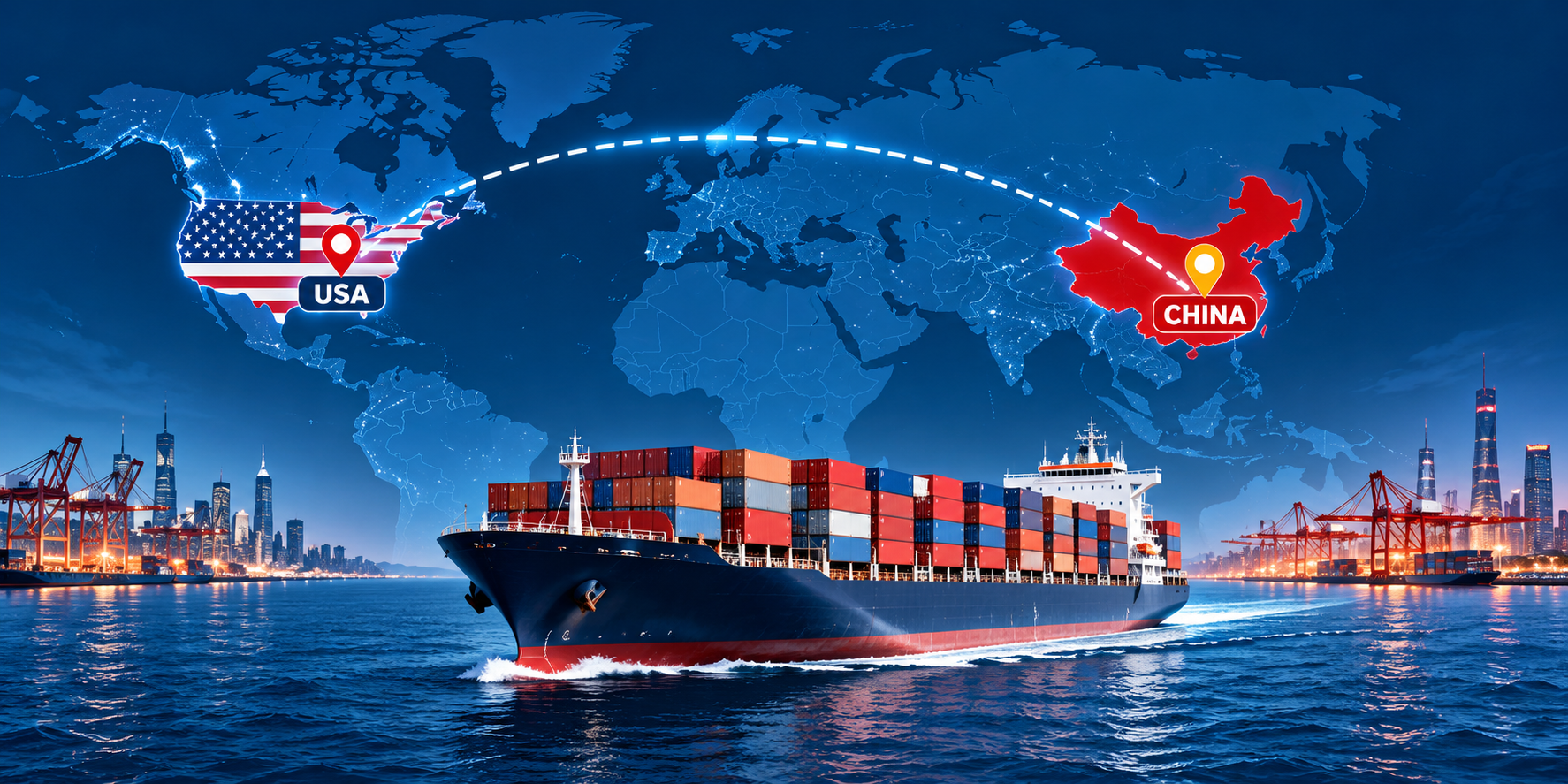
Shipping products from China to the United States typically involves coordinating several logistics activities between the Chinese supplier, freight forwarder, customs broker, shipping carrier, and American importer.
We generally follow these steps:
Confirm the products and supplier: Verify the order, product specifications, quantity, packaging, and shipment readiness.
Select a shipping method: Choose sea freight, air freight, express courier, or door-to-door shipping based on the shipment size and delivery deadline.
Request a freight quotation: Compare transportation rates, handling charges, customs services, and destination fees.
Prepare shipping documents: Collect the commercial invoice, packing list, and transportation documentation.
Arrange export procedures: Coordinate collection, cargo handling, and export customs processing in China.
Transport the shipment: Move the goods through the selected international freight service.
Complete U.S. customs clearance: Submit required information, pay applicable import duties, and satisfy any regulatory requirements.
Deliver the goods: Arrange transportation to the warehouse, distribution center, Amazon fulfillment center, or business address.
Working with experienced logistics providers can simplify these procedures, especially when we are managing shipments from multiple Chinese manufacturers.
2. Best Shipping Methods From China to USA
Choosing the right transportation method is one of the most important decisions when importing products from China.
Each shipping method offers different advantages regarding cost, speed, cargo capacity, and delivery flexibility.
Sea Freight From China to USA
Sea freight is generally the most economical option for transporting large shipments, heavy products, and wholesale merchandise.
We commonly recommend ocean freight when importing furniture, building materials, home decorations, machinery, industrial products, or large quantities of consumer goods.
There are two primary types of sea freight.
Full Container Load (FCL)
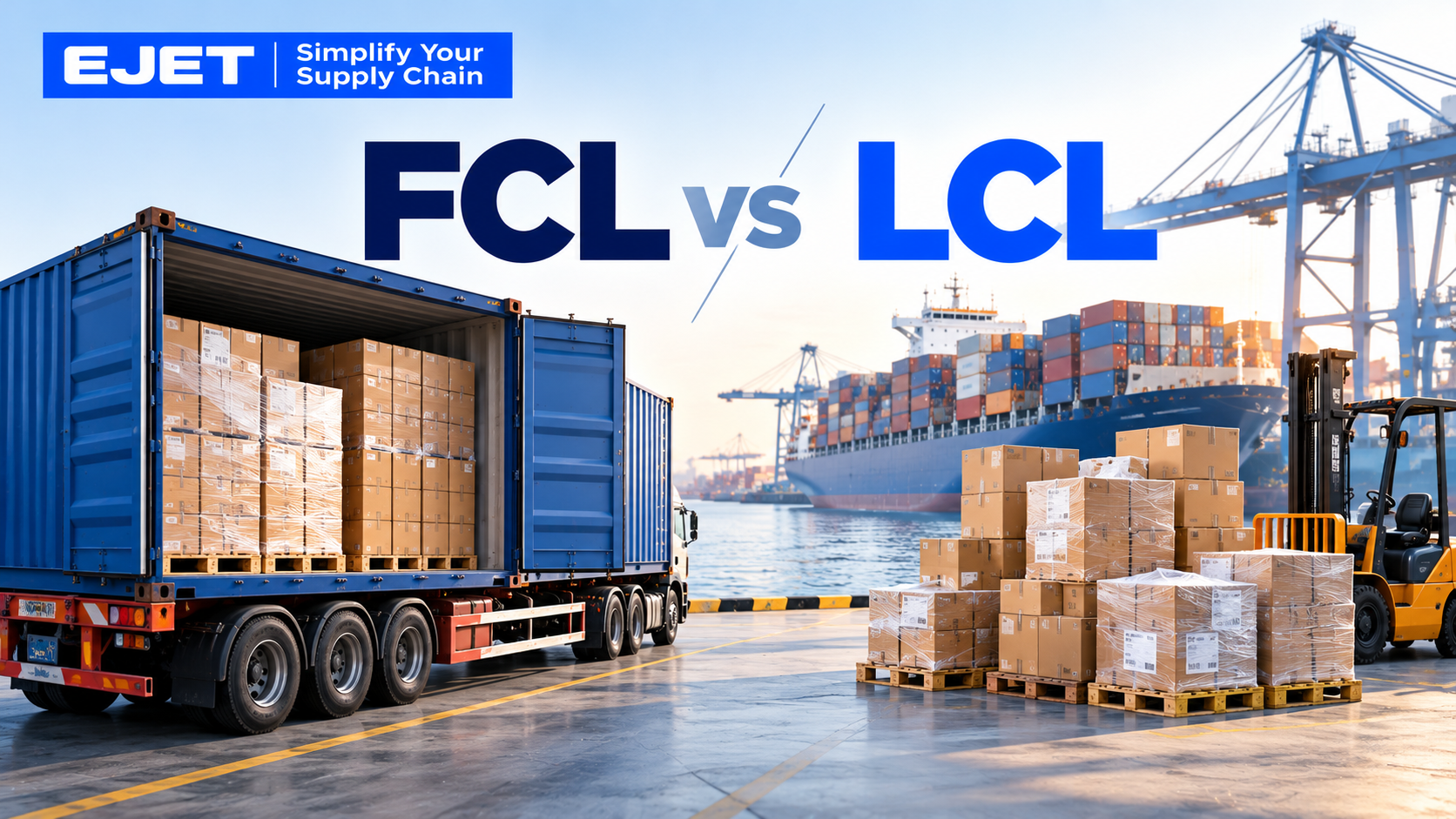
Full Container Load shipping allows us to reserve an entire shipping container for one shipment.
Common container options include:
20-foot container: Suitable for medium-sized shipments and dense, heavy products.
40-foot container: Suitable for larger wholesale orders and high-volume cargo.
40-foot high-cube container: Provides additional internal height for bulky merchandise.
FCL shipping offers several advantages, including predictable container-level freight pricing, fewer consolidation procedures, and reduced handling compared with shared-container shipments.
Less Than Container Load (LCL)
Less Than Container Load shipping allows us to share container space with other importers.
This method is particularly useful when we purchase products from China but do not have enough cargo to fill an entire container.
LCL freight is usually calculated according to the shipment's chargeable volume or weight, depending on the carrier's pricing rules.
For example, if we need to transport 5 cubic meters of products, LCL shipping may be considerably more economical than reserving a full container.
However, LCL shipments can involve additional consolidation, warehouse handling, and destination charges.
Air Freight From China to USA
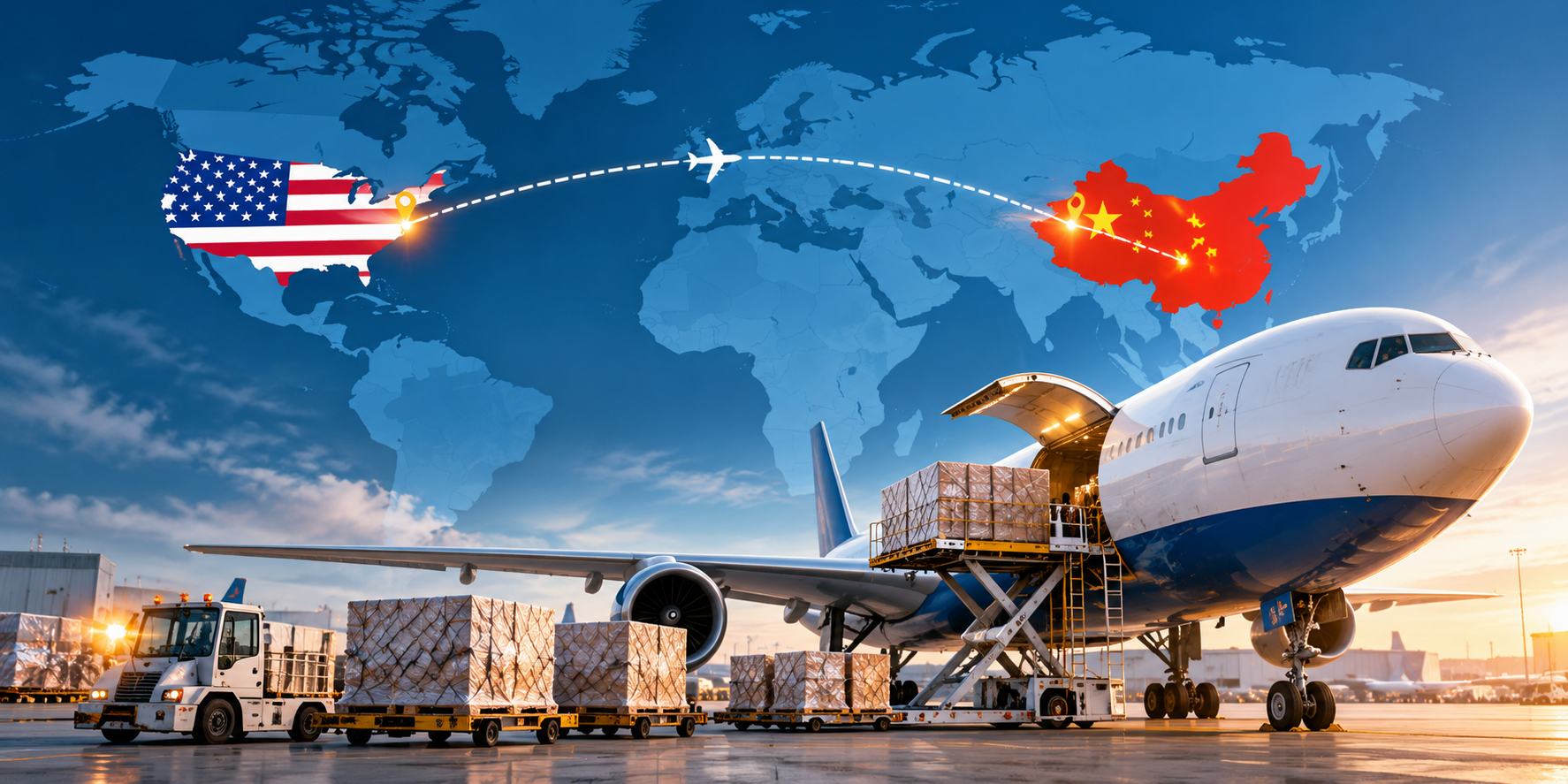
Air freight provides faster international transportation for businesses requiring shorter delivery times.
We generally use air freight when shipping:
Electronic components and accessories
Fashion products and seasonal merchandise
Product samples and prototypes
Small, high-value consumer goods
Urgent inventory replenishment
Time-sensitive commercial orders
Air freight is more expensive than ocean freight, but it can reduce inventory shortages and improve product availability.
Air freight pricing depends on chargeable weight, cargo dimensions, airline capacity, airport selection, fuel costs, and special handling requirements.
Express Shipping From China to USA
International express shipping is suitable for small parcels, samples, documents, and urgent product deliveries.
Popular international express providers include DHL, FedEx, and UPS.
Express shipping generally includes collection, international transportation, tracking, and final delivery, although duties, taxes, and customs-related charges may be billed separately.
We recommend comparing express courier quotations when shipping small quantities because dimensional weight can significantly affect the final price.
3. Shipping From China to USA: Transit Time Comparison
Shipping time varies according to the transportation method, departure location, destination, customs procedures, and international freight conditions.
The following table presents general planning estimates rather than guaranteed delivery schedules.
|
Shipping Method |
Estimated Transit Time |
Recommended For |
|---|---|---|
|
Express courier |
3–7 business days |
Samples and small packages |
|
Standard air freight |
5–12 days |
Urgent commercial cargo |
|
Sea freight to West Coast |
15–30 days |
Large wholesale shipments |
|
Sea freight to East Coast |
30–45 days |
Containerized imports |
|
LCL sea freight |
Often longer than FCL |
Small and medium shipments |
Estimates depend on routing and service scope. Ocean estimates mainly reflect international transport and may exclude origin handling, customs clearance, and inland delivery.
How Long Does Sea Freight Take From China to USA?
Ocean freight transit times differ significantly between U.S. coastal destinations.
For example, shipping from Shanghai or Ningbo to Los Angeles or Long Beach normally requires a shorter ocean journey than shipping to New York or Savannah.
East Coast routes may involve longer ocean voyages, additional transshipment, or Panama Canal routing.
We should also allow time for factory pickup, container loading, export customs, vessel scheduling, unloading, import customs clearance, and domestic transportation.
How Long Does Air Freight Take From China to USA?
Air freight generally provides a much shorter transportation period.
However, total delivery time is influenced by airport cargo handling, security screening, flight availability, customs inspection, and final distribution.
For time-sensitive merchandise, we recommend confirming whether the quoted transit time represents airport-to-airport, airport-to-door, or complete door-to-door delivery.
These services can have very different total lead times.
4. How Much Does Shipping From China to USA Cost?
The cost of shipping from China to the USA depends on transportation mode, cargo volume, weight, shipping route, season, and delivery requirements.
We must also consider additional expenses such as export handling, customs brokerage, import duties, cargo insurance, and domestic transportation.
Sea Freight Shipping Costs
Ocean freight is generally the most cost-effective solution for shipping large cargo volumes.
Shipping rates fluctuate according to container availability, carrier capacity, fuel prices, and international trade conditions.
For example, the Baltic Exchange reported the following freight index levels for the week of October 2, 2026:
|
Shipping Route |
Benchmark per 40-Foot Container |
|---|---|
|
China/East Asia to U.S. West Coast |
$8,319 |
|
China/East Asia to U.S. East Coast |
$9,606 |
These figures are regional ocean freight benchmarks, not guaranteed quotations or complete door-to-door shipping prices. Actual charges depend on the departure port, carrier, equipment, destination, and included services.
Air Freight Shipping Costs
Air freight is usually charged according to the greater of the shipment's actual weight and volumetric weight.
For example, a shipment weighing 200 kg with bulky packaging may be charged at a higher weight because it occupies additional aircraft space.
We calculate air freight volumetric weight using the carrier's applicable dimensional divisor.
A commonly used formula for air cargo measured in centimeters is:
Volumetric Weight (kg) = Length × Width × Height ÷ 6,000
Different services may apply different divisors.
Factors That Affect Shipping Costs
Several elements can significantly influence the final freight quotation.
Cargo weight and volume: Larger or heavier shipments generally cost more to transport.
Shipping method: Express and air freight usually cost more than sea freight.
Departure and destination: Different ports and airports have different operating costs.
Cargo characteristics: Hazardous, oversized, fragile, and temperature-sensitive products may require special handling.
Seasonal demand: Shipping rates may increase before major holidays and peak retail seasons.
Customs charges: Duties, taxes, processing fees, and brokerage costs affect the landed cost.
Delivery address: Remote warehouses or inland destinations can require additional trucking expenses.
To obtain accurate pricing, we recommend requesting a detailed quotation that separates freight charges from customs duties and destination fees.
5. Cheapest Way to Ship From China to USA
The cheapest shipping method depends on the size, weight, urgency, and destination of the cargo.
For small packages, international express services may offer competitive total delivery costs because several logistics operations are included in one service.
For medium-sized commercial shipments, consolidated air freight or LCL sea freight may provide better value.
For large wholesale orders, FCL ocean freight is often the most economical solution.
How to Reduce Shipping Costs From China
We can reduce international transportation expenses through better purchasing and shipment planning.
Consolidate orders from multiple suppliers. When purchasing from different Chinese factories, we can collect products at a consolidation warehouse before arranging international shipping. This reduces fragmented freight bookings and may improve container utilization.
Optimize carton dimensions. Packaging should protect the products without unnecessarily increasing shipment volume. Reducing unused carton space can lower volumetric shipping charges.
Compare FCL and LCL quotations. As cargo volume increases, reserving a full container may become more economical than paying LCL charges for each cubic meter.
Book shipments in advance. Early booking provides more time to compare carrier schedules and potentially avoid expensive urgent transportation.
Choose suitable departure ports. Shipping from a port close to the manufacturing location can reduce domestic trucking costs in China.
Calculate landed costs before purchasing. The lowest factory price does not always produce the lowest total import cost.
6. Major Shipping Ports From China to USA
China has an extensive network of commercial ports supporting international trade.
Selecting an appropriate departure port can influence transportation costs, vessel availability, and delivery times.
Major Shipping Ports in China
|
Chinese Port |
Major Manufacturing and Sourcing Regions |
|---|---|
|
Shanghai |
Shanghai, Jiangsu, Zhejiang |
|
Ningbo-Zhoushan |
Ningbo, Yiwu, Zhejiang |
|
Shenzhen |
Shenzhen, Dongguan, Guangdong |
|
Guangzhou/Nansha |
Guangzhou, Foshan, Guangdong |
|
Qingdao |
Shandong |
|
Tianjin |
Tianjin, Beijing, Hebei |
|
Xiamen |
Fujian |
For example, when sourcing wholesale products from Yiwu Market, we frequently consider Ningbo as a convenient export port because of its location and established container shipping infrastructure.
Major Destination Ports in the United States
The most common U.S. seaports for Chinese commercial shipments include:
Los Angeles, California
Long Beach, California
Oakland, California
New York/New Jersey
Savannah, Georgia
Houston, Texas
Charleston, South Carolina
Seattle/Tacoma, Washington
We select the destination port by comparing ocean freight rates, available vessel services, port handling expenses, and inland transportation costs.
For example, importing goods to a warehouse in California may favor Los Angeles or Long Beach, while a business in Georgia may benefit from Savannah.
7. Customs Clearance When Shipping From China to USA
U.S. customs clearance is a critical stage of the import process.
Imported merchandise must satisfy applicable U.S. Customs and Border Protection requirements before it can enter domestic commerce.
We must provide accurate shipment information, classify products correctly, declare their customs value, and pay applicable duties and fees.
Documents Required for Shipping From China to USA
The standard commercial shipping documents include:
|
Document |
Purpose |
|---|---|
|
Commercial invoice |
Identifies the merchandise, seller, buyer, quantities, and values |
|
Packing list |
Provides packaging, carton, weight, and dimension information |
|
Bill of lading |
Documents ocean transportation and shipment details |
|
Air waybill |
Documents air cargo transportation |
|
Customs entry documents |
Support entry and release of merchandise |
|
Import permits or certificates |
Required for certain regulated product categories |
|
Cargo insurance certificate |
Provides evidence of insurance coverage, when purchased |
Additional records may be required depending on the merchandise and shipping arrangements.
CBP requires sufficient commercial invoice information to establish the nature, quantity, classification, and value of imported goods.
What Is Import Security Filing (ISF)?
Import Security Filing, commonly called ISF 10+2, is an advance information requirement for applicable cargo arriving in the United States by ocean vessel.
For most covered containerized imports, the required initial ISF data must be submitted no later than 24 hours before cargo is loaded aboard the vessel bound for the United States.
Late, inaccurate, or incomplete filings can lead to enforcement action and additional expenses.
We recommend coordinating the ISF with a qualified filing agent before the supplier delivers cargo to the shipping terminal.
8. Import Duties and Taxes From China to USA in 2026
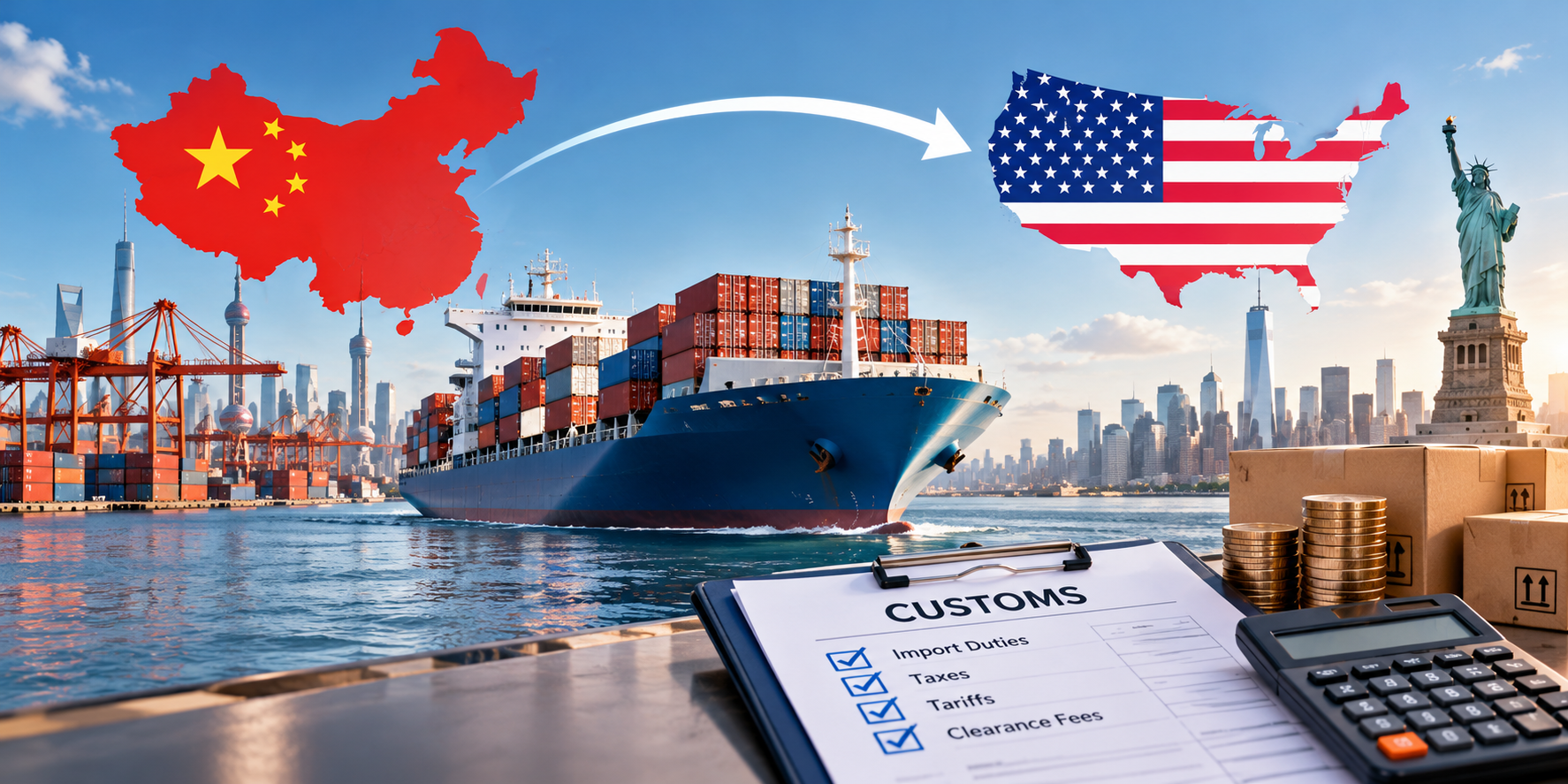
Import duties are an important part of calculating the true cost of purchasing products from Chinese manufacturers.
The applicable tariff depends on the product's classification, country of origin, customs value, and relevant trade measures.
How Are Import Duties Calculated?
We first identify the correct classification under the U.S. Harmonized Tariff Schedule (HTS).
We then determine whether the imported product is subject to ordinary customs duties, Section 301 tariffs, Section 232 measures, antidumping or countervailing duties, or other applicable charges.
Because tariff measures can change, we should verify the applicable rules immediately before importation.
The U.S. International Trade Commission published its 2026 HTS Revision 21 on October 9, 2026. Importers can consult the official U.S. Harmonized Tariff Schedule for current classification information.
Is the $800 Duty-Free Import Rule Still Available?
No. The former general $800 de minimis duty-free treatment was suspended for covered imports from all countries beginning August 29, 2025, and the suspension was continued under a February 20, 2026 executive order.
We therefore should not assume that small parcels from China automatically qualify for duty-free entry. Applicable treatment and collection procedures depend on the shipping channel and current customs rules.
Additional U.S. Import Fees
In addition to customs duties, importers may encounter the following fees:
Merchandise Processing Fee (MPF): For applicable formal entries, the MPF rate is 0.3464% of entered merchandise value. For fiscal year 2027, beginning October 1, 2026, the minimum is $34.58 and the maximum is $670.86.
Harbor Maintenance Fee (HMF): A fee of 0.125% generally applies to the value of applicable commercial ocean imports at covered ports. It does not apply to air cargo.
Customs brokerage fees: These charges compensate customs brokers for handling import clearance services.
Customs bond costs: Certain imports require a bond that guarantees payment of duties, taxes, and fees.
The current MPF limits were established through the fiscal year 2027 customs user fee adjustment.
9. Understanding FOB, CIF, EXW, and DDP Shipping Terms
International commercial terms, also known as Incoterms, define important responsibilities between buyers and sellers.
We should understand these arrangements before signing purchase agreements with Chinese suppliers.
|
Shipping Term |
Main Responsibility |
|---|---|
|
EXW – Ex Works |
Buyer assumes most transportation responsibilities from the seller's premises |
|
Seller delivers cargo on board the vessel at the named departure port |
|
|
Seller arranges and pays for ocean freight and specified insurance to the named destination port |
|
|
DAP – Delivered at Place |
Seller arranges transportation to the named destination, while buyer generally handles import clearance and duties |
|
Seller takes responsibility for delivery and import clearance, including applicable duties |
The exact allocation of costs and risks follows the agreed Incoterms rule and named location. Under CIF, for example, the seller pays freight to the destination port, but transport risk generally transfers when the goods are loaded on board at origin.
Is DDP Shipping From China to USA a Good Option?
DDP shipping can simplify purchasing for importers who prefer a quotation that includes transportation, import clearance, applicable duties, and final delivery.
However, we must verify that the seller or logistics provider can legally fulfill the importer-of-record responsibilities.
We should also confirm that the quoted DDP service includes legitimate customs declarations, correct tariff classification, and all applicable duties.
DDP does not eliminate U.S. import regulations or product compliance requirements.
10. Shipping From China to Amazon FBA Warehouses
Amazon FBA shipping requires additional logistics coordination because products must satisfy marketplace preparation and delivery requirements.
When importing products for Amazon, we need to consider both international transportation and the receiving requirements of the assigned fulfillment centers.
Main Steps for Amazon FBA Shipping
We generally organize Amazon FBA shipments through the following process:
Confirm product specifications and required labeling.
Arrange product inspections before shipment.
Prepare packaging according to the applicable Amazon requirements.
Create the shipment through Amazon Seller Central.
Confirm the assigned fulfillment destination and shipping requirements.
Arrange international transportation and customs clearance.
Coordinate domestic delivery and appointment requirements where applicable.
Amazon does not automatically become the importer of record simply because a shipment is addressed to an Amazon fulfillment center.
We should establish the customs import arrangement before dispatching merchandise from China.
Best Shipping Methods for Amazon Sellers
For launching new products or replenishing urgent inventory, air freight may provide faster availability.
For established products with consistent demand, sea freight can reduce transportation expenses per unit.
We often recommend comparing the additional cost of air freight against the commercial losses associated with running out of inventory.
11. How to Choose a Reliable Freight Forwarder in China
A freight forwarder coordinates transportation services and helps businesses manage shipments between manufacturers, carriers, warehouses, and customs service providers.
Choosing a reliable freight forwarder is essential for reducing unexpected costs and delivery disruptions.
What Should We Look for in a Freight Forwarder?
We recommend evaluating freight forwarders according to several criteria.
Experience with China–USA trade: Providers familiar with this route may better understand port procedures, documentation requirements, carrier options, and shipment coordination.
Transparent quotations: Reliable freight partners should explain origin charges, freight costs, destination handling fees, customs services, and delivery expenses.
Shipment visibility: Tracking information and proactive milestone updates help us monitor orders.
Customs coordination: The provider should explain whether it arranges licensed customs brokerage or requires the importer to appoint a separate broker.
Cargo insurance options: Importers should understand coverage limits, exclusions, and claims procedures.
Company credentials: For ocean transportation intermediary services subject to U.S. Federal Maritime Commission oversight, we can verify relevant licensing or registration through the FMC Ocean Transportation Intermediary database.
12. Common Shipping Problems When Importing From China
International shipping can involve unexpected complications, even when we work with established manufacturers and logistics providers.
Understanding common risks allows us to prepare suitable solutions.
Customs Delays
Incomplete documents, incorrect declarations, product restrictions, and customs examinations can delay shipments.
We reduce these risks by reviewing documentation before dispatch and confirming product-specific import requirements.
Unexpected Shipping Fees
Additional charges may arise from terminal handling, storage, demurrage, detention, customs exams, or inland delivery.
We should clarify quotation exclusions and container free-time terms before booking.
Damaged or Missing Products
Poor packaging, excessive handling, and insufficient cargo protection can cause damage.
We recommend pre-shipment inspections, suitable export packaging, accurate carton labels, and appropriate cargo insurance.
Supplier Production Delays
Manufacturing delays can cause missed vessel departures and longer overall lead times.
We can reduce this risk by confirming production milestones and planning shipments around realistic factory completion dates.
13. Important U.S. Product Compliance Requirements
Some product categories require additional regulatory checks before entering the United States.
For example:
Food, cosmetics, and certain medical products: May be subject to FDA requirements.
Children's toys and consumer products: May require compliance with applicable CPSC safety standards.
Wireless electronics: May require FCC authorization or compliance.
Certain chemicals and equipment: May be regulated by the EPA.
Plant and wood-based products: May require additional agricultural or Lacey Act-related documentation.
We should also verify applicable country-of-origin marking, labeling, and product safety requirements.
For products made in China, accurate supply chain documentation is important because U.S. import enforcement also addresses prohibited forced-labor goods.
14. How to Calculate the Total Landed Cost of Shipping From China
The landed cost represents the total expense required to purchase, transport, import, and deliver merchandise to its intended destination.
We calculate it by combining the product purchase price with the applicable logistics and import expenses.
Total Landed Cost = Product Cost + Origin Charges + Freight + Insurance + Customs Duties + Import Fees + Customs Brokerage + Domestic Delivery + Other Applicable Charges
Example of a Landed Cost Calculation
Assume we purchase 1,000 units of a product from a Chinese manufacturer.
|
Expense |
Example Amount |
|---|---|
|
Product purchase cost |
$10,000 |
|
Origin handling charges |
$250 |
|
International freight |
$1,500 |
|
Cargo insurance |
$100 |
|
Import duties (hypothetical 10%) |
$1,000 |
|
Customs processing and clearance |
$250 |
|
Domestic delivery |
$400 |
|
Total landed cost |
$13,500 |
In this simplified example:
Landed Cost per Unit = $13,500 ÷ 1,000 = $13.50
This example is illustrative and is not a current freight quotation or an actual tariff calculation for a specific product. Real duties, customs fees, and other expenses depend on the shipment.
Calculating landed cost helps us set accurate wholesale prices, evaluate supplier quotations, and determine profit margins before placing bulk orders.
15. Conclusion: How to Ship From China to USA Successfully
Shipping from China to the USA requires careful coordination between product sourcing, international transportation, customs compliance, and domestic logistics.
We can achieve better results by selecting the appropriate shipping method, comparing freight quotations, preparing accurate documents, understanding import duties, and working with reliable logistics partners.
For small and urgent shipments, express delivery and air freight provide faster solutions. For larger wholesale orders, sea freight offers greater cargo capacity and generally lower transportation costs per unit.
The most effective shipping strategy is not simply the one with the lowest freight quotation. It is the one that delivers products safely, legally, and efficiently at the most competitive total landed cost.
By managing sourcing, quality control, freight planning, and import requirements together, we can reduce unnecessary expenses and build a more reliable supply chain between China and the United States.
16. Frequently Asked Questions About Shipping From China to USA

What Is the Cheapest Shipping Method From China to USA?
Sea freight is usually the cheapest method for large commercial shipments. LCL shipping is suitable for smaller cargo volumes, while FCL shipping often provides better value for high-volume orders. Express shipping can be competitive for small parcels.
How Long Does Shipping From China to USA Take?
Express shipping commonly takes approximately 3–7 business days, while standard air freight often requires around 5–12 days. Ocean freight generally takes several weeks, depending on the route and whether the estimate includes customs clearance and final delivery.
How Much Does It Cost to Ship a 40-Foot Container From China to USA?
The price varies significantly with the shipping season, departure port, destination, carrier, and market conditions. We recommend requesting current quotations for the exact shipping route rather than relying on a fixed annual rate.
Do We Have to Pay Import Taxes on Products From China?
Applicable customs duties, taxes, and import-related fees depend on the product classification, value, country of origin, and current trade measures. The former general $800 de minimis exemption is suspended, so low-value imports should not automatically be treated as duty-free.
Can We Ship Directly From China to an Amazon FBA Warehouse?
Yes. We can arrange shipping to an Amazon fulfillment center, provided customs clearance, required product preparation, shipment documentation, and delivery arrangements are completed correctly.
Is It Better to Ship From China by Air or Sea?
Air freight is preferable for urgent deliveries, smaller shipments, and certain high-value products. Sea freight is generally more economical for heavy or bulky merchandise and large wholesale orders.
Can We Ship Products From Multiple Chinese Suppliers Together?
Yes. Cargo consolidation allows us to collect orders from different suppliers and combine them into one international shipment. This is particularly useful for importers purchasing wholesale products from Yiwu and other Chinese manufacturing centers.
Do We Need a Customs Broker to Import From China?
A licensed customs broker can help prepare customs entries and coordinate clearance procedures. Importers may file eligible entries themselves, but they remain responsible for satisfying customs obligations. A broker is particularly valuable when importing regulated products or managing complex tariff classifications.