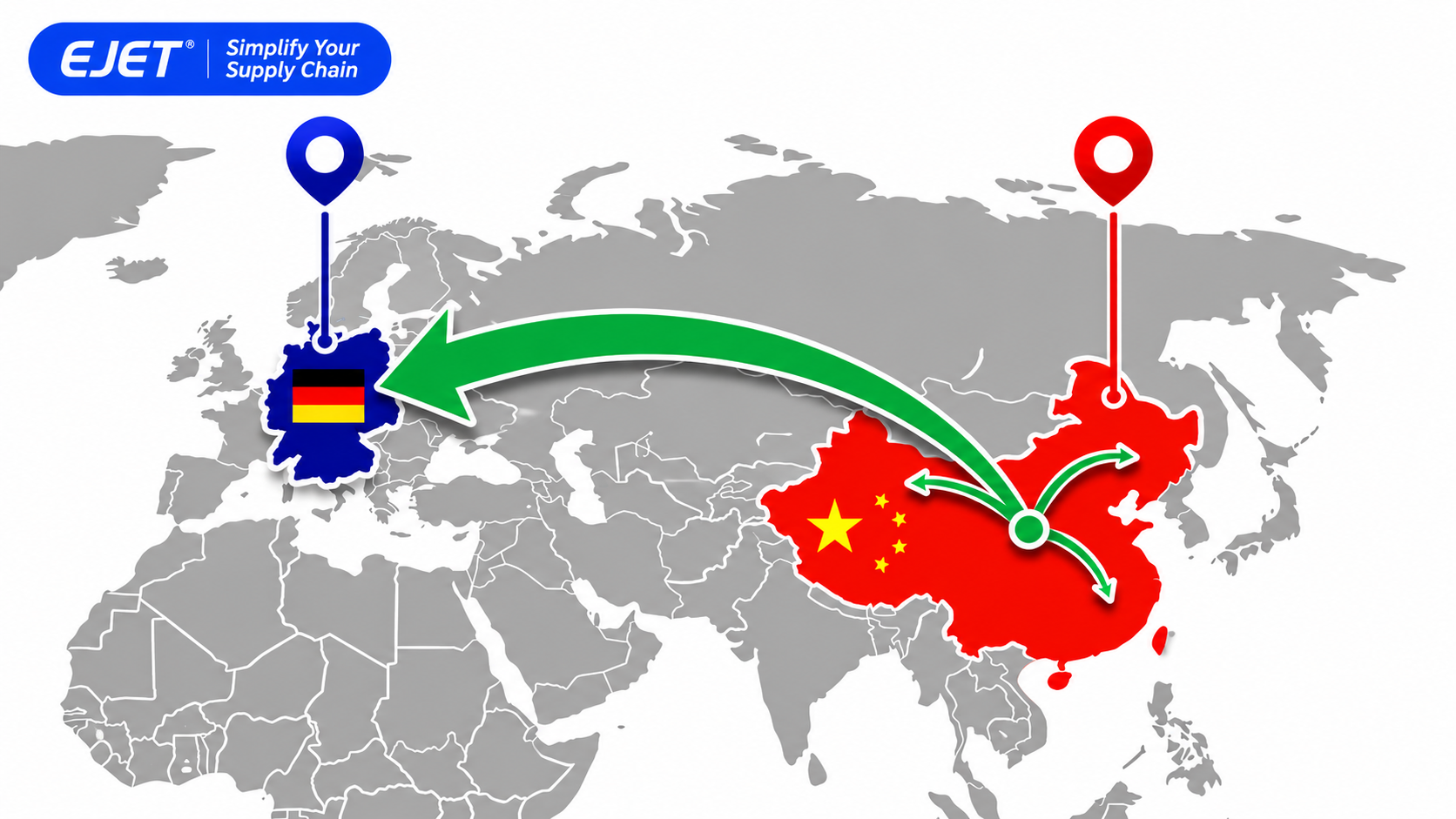



Shipping from China to the UK involves choosing a transport service, agreeing responsibilities with your supplier, preparing customs information and budgeting for delivery—not just the international freight charge.
This article explains how to compare shipping methods, assess costs and organise a commercial shipment without overlooking essential checks.
The customs guidance below focuses on Great Britain: England, Scotland and Wales. Northern Ireland has different requirements in some areas, so confirm the correct process before booking goods for a Northern Ireland destination.
What is the best shipping method from China to the UK?
The best method depends on shipment size, urgency, cargo characteristics and the complete delivery price. Start by comparing express courier for packages with air or ocean freight for larger shipments, then request estimates based on your actual cargo and deadline. DHL distinguishes time-sensitive express packages from larger freight movements handled through forwarding services.
Express courier and air freight
Consider express courier when requesting samples or sending a small, urgent order. For pallets or larger urgent consignments, request an air freight quotation rather than assuming a parcel service is the best fit. Ask whether collection, clearance and final delivery are included before comparing prices.
Pay particular attention to packaging dimensions. Freight pricing can use chargeable weight, comparing gross weight with volumetric weight, so bulky, lightweight cartons may be charged above their scale weight. Ask the provider to show its calculation rather than estimating from product weight alone.
Sea freight: shared or dedicated containers
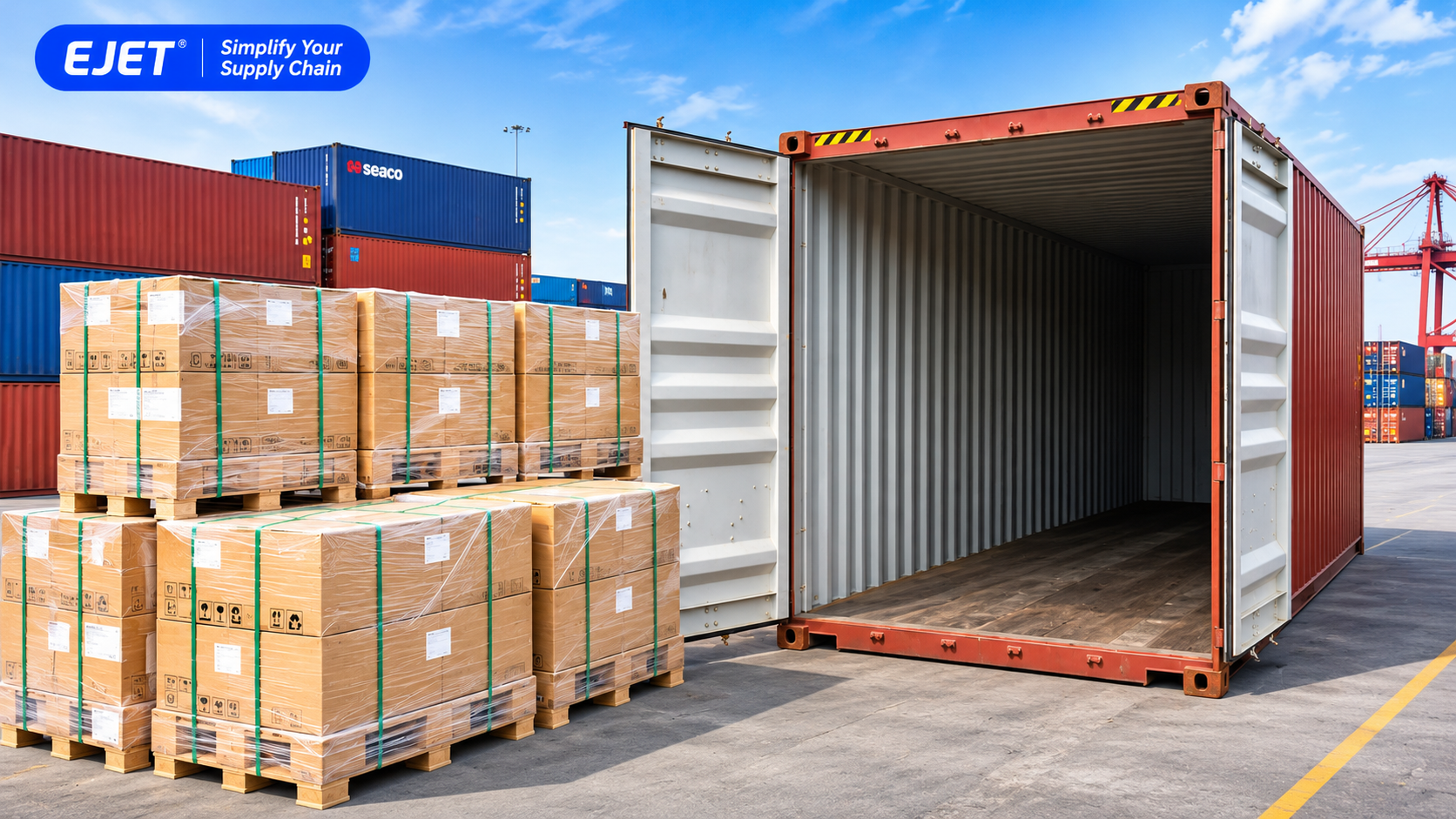
Less than container load, or LCL, lets your cargo share container space with other shipments. Full container load, or FCL, gives you a dedicated container. LCL involves consolidation and deconsolidation, which can make its transit time longer than FCL.
Request both options when comparing a substantial order. Avoid choosing from a headline ocean rate alone: ask each provider to identify collection, terminal handling, clearance and delivery charges separately. This makes the comparison useful even when the services have different inclusions.
How much does shipping from China to the UK cost?
There is no single reliable price without shipment details. Weight, dimensions, origin, destination, transport mode and additional services all influence the quotation. Treat a published rate as a starting point, not a confirmed budget for your order.
For a useful comparison of shipping costs, UK importers should request an itemised, door-to-door quotation. Give every provider the same cargo description, collection address, delivery postcode and packed measurements. Then ask for the following breakdown:
- Origin services: collection, export handling and any documentation charges.
- International transport: the main freight charge and applicable surcharges.
- Destination services: unloading, terminal or warehouse handling, and customs-agent fees.
- Final delivery: transport to your premises, including any access requirements.
- Exceptions: storage, inspections, redelivery and other charges that are excluded or conditional.
- Keep transport costs separate from the goods price and tax calculations. HMRC requires a customs value for imported goods, and the import VAT value also includes applicable duty and certain incidental expenses.
For planning, build a landed-cost worksheet covering goods, transport, insurance, duty, non-recoverable taxes and delivery-related charges. Track recoverable VAT separately after confirming your position with your accountant. Your aim is to understand both the shipment's economic cost and the cash needed to release and receive it.
Before accepting a quote, check its currency, validity period and assumptions. Ask what happens if the factory changes the packing dimensions or misses the agreed collection date. Keep the written response with the booking confirmation.
How long does China–UK shipping take?
Delivery time depends on the booked service and the stages included in the estimate. A port-to-port or airport-to-airport figure does not describe the same journey as factory collection through to warehouse delivery. Request a shipment-specific schedule rather than relying on a general China–UK shipping estimate.
Ask the forwarder to separate these milestones:
- Goods ready for collection at the factory.
- Collection, export processing and departure.
- Main international journey.
- Arrival handling and customs release.
- Delivery appointment at your premises.
Ask whether each date is estimated or committed, and who will notify you if it changes. For LCL shipments, specifically check the time allocated to consolidation and deconsolidation. Those processes can extend the journey compared with a dedicated container service.
Work backwards from the date the stock must be available for sale or production. Leave a planning allowance between estimated delivery and any customer commitment. For a time-critical order, request a second service option before choosing on price alone.
Get the customs basics right before ordering
Before you import from China, establish who will make the declaration and what information they need. Most importing businesses use a transporter or customs agent, although businesses can handle declarations themselves. Appointing an agent should be part of your preparation, not a task left until arrival.
EORI numbers and commodity codes
Businesses importing into Great Britain generally need an EORI number starting with GB. Movements involving Northern Ireland may require an XI EORI, depending on the circumstances. Check your registration against the destination and importing arrangement.
Identify the correct commodity code using the product's materials, function and other relevant characteristics. The UK Trade Tariff lets you check duty, VAT and applicable measures against that classification. Give your agent a specific description rather than a vague label such as “accessories”.
Customs duty and import VAT
Do not apply a blanket duty percentage to everything purchased in China. Check the tariff entry for the specific goods, then establish the correct customs value. HMRC provides valuation methods because the declared value is not simply an arbitrary figure chosen for the shipment.
Import VAT valuation includes the customs value, applicable duty and specified incidental expenses, including relevant transport and insurance costs. Avoid calculating it from the supplier's product invoice alone without checking those additions.
UK VAT-registered businesses may use postponed VAT accounting to declare and, subject to normal recovery rules, reclaim import VAT on the same VAT Return. If an agent handles the import, provide written instructions before the declaration is made. This changes how VAT is accounted for; it does not remove the tax obligation.
Check product compliance before paying a deposit
Shipping arrangements do not replace product-safety checks. Businesses that import or sell consumer products in the UK have responsibilities for their safety, and the applicable requirements depend on the product. Establish what evidence, labelling and documentation your goods require before committing to production.
Ask the supplier for documents identifying the exact model you intend to buy. Have relevant evidence reviewed where necessary, and resolve missing information before shipment. Keep compliance approval separate from freight approval: a transport booking should not be treated as confirmation that a product is lawful to sell.
Also check whether your goods require an import licence or certificate. GOV.UK's import process includes these checks because requirements vary by commodity. Build any necessary approvals into the purchasing schedule rather than treating them as routine paperwork.
Prepare consistent shipping documents
Common customs-clearance documents include a commercial invoice, packing list and transport document, such as a bill of lading or cargo receipt. Additional documents depend on the commodity and shipment. Confirm the required set with your customs agent before collection.
Use this review checklist:
- Invoice: check buyer and seller details, precise descriptions, quantities, values and currency.
- Packing list: confirm carton or pallet counts, weights, dimensions and package references.
- Transport instructions: verify consignee details, destination and contact information.
- Supporting evidence: obtain any licences, certificates or product documents your agent identifies.
Ask the supplier and forwarder to resolve inconsistencies before final documents are issued. A simple comparison between the purchase order, invoice and packing list is a useful internal control. Assign one person to approve corrections so different parties do not circulate conflicting versions.
Keep the commercial invoices and customs paperwork after delivery. HMRC's import guidance requires importers to retain relevant records, including applicable import VAT evidence.
Agree responsibilities through clear trade terms
Incoterms define important delivery responsibilities, including the allocation of costs and risk. The named place matters as much as the three-letter term: an agreement should identify the relevant locati0n clearly. Do not assume that the party paying for transport necessarily carries the risk throughout the journey.
Two useful distinctions to discuss with your supplier are:
- EXW: places substantial transport and export-clearance responsibilities on the buyer. Confirm you can fulfil those obligations before accepting it.
- FCA: puts export clearance with the seller and can suit containerised or multimodal transport, with delivery to the buyer's nominated carrier at the agreed point.
For any delivered quotation, ask who will be named as importer, who appoints the customs agent and how taxes will be handled. Also confirm which import records you will receive. If the supplier arranges an import on your behalf, agree VAT instructions in writing before the declaration is submitted.
Choose a forwarder through the questions they answer
When comparing China logistics providers, look beyond the lowest number. Request a written explanation of the service boundaries, handover points and communication process. A clear quotation should help you understand the booking rather than leave you guessing what happens after arrival.
Ask each candidate:
- Who coordinates collection with the factory, and who confirms cargo readiness?
- Who handles export and UK import formalities?
- Which charges are fixed, estimated or excluded?
- What tracking milestones and exception notifications will you receive?
- Who arranges delivery, and what unloading arrangements must you provide?
- What insurance options, exclusions and claims procedures should you review?
- Use the answers to compare equivalent services. If one quote includes delivery and another stops at the terminal, ask for revised pricing before choosing. Keep one shipment reference across correspondence so your purchasing, logistics and accounts teams can follow the same order.
Your final pre-shipment check
Before releasing freight from China, bring the commercial, transport and customs details together in one approval. Use this checklist as an internal handover, not a substitute for commodity-specific advice:
- Confirm the cargo: obtain final packed dimensions, weights and package counts.
- Approve the service: record collection details, destination, schedule and quotation inclusions.
- Confirm customs readiness: check the EORI, classification and agent instructions.
- Resolve compliance questions: obtain the required product evidence and approvals.
- Review documents: reconcile descriptions, quantities, values and consignee details.
- Prepare for receipt: arrange access, unloading, inspection and an internal delivery contact.
After arrival, reconcile the invoices and customs records against your original budget. Record unexplained differences and clarify them before the next order. That review gives you a practical basis for improving future bookings rather than repeating the same assumptions.
Plan the whole journey, not just the freight
A useful plan for shipping to the UK connects the supplier's packing details, transport service, customs instructions and final delivery arrangements. Start with a complete shipment brief, compare equivalent quotations and settle responsibilities before collection. The goal is not simply a low freight rate—it is a shipment you can budget for, receive and account for with confidence.
Frequently Asked Questions Related to Shipping from China to the UK
What shipping methods are available for importing goods from China to the UK?
The available shipping methods include express courier services for smaller, urgent shipments and air freight or sea freight (both Less than Container Load (LCL) and Full Container Load (FCL)) for larger consignments. The choice depends on factors such as shipment size, urgency, and cargo characteristics.
How are shipping costs calculated for shipments from China to the UK?
Shipping costs depend on various factors, including weight, dimensions, origin, destination, transport mode, and any additional services. It's essential to request an itemized quotation from freight providers that includes all possible charges for a comprehensive understanding of the costs involved.
How long does it take to ship goods from China to the UK?
The delivery time varies based on the selected shipping method and services included in the estimate. For instance, express shipments can take a few days, while sea freight can take several weeks. It's best to request a specific schedule from your freight forwarder.
What customs documentation is required for shipping goods to the UK?
Common customs documents include a commercial invoice, packing list, and transport document (such as a bill of lading). Depending on the product, additional certificates or licenses may also be required to ensure compliance with UK regulations.
What should I check before accepting a shipping quote?
Before accepting a quote, confirm the currency, validity period, and any assumptions made in the quotation. Additionally, inquire about what happens if there are changes in packing dimensions or collection dates. It's crucial to keep all correspondence for reference.