


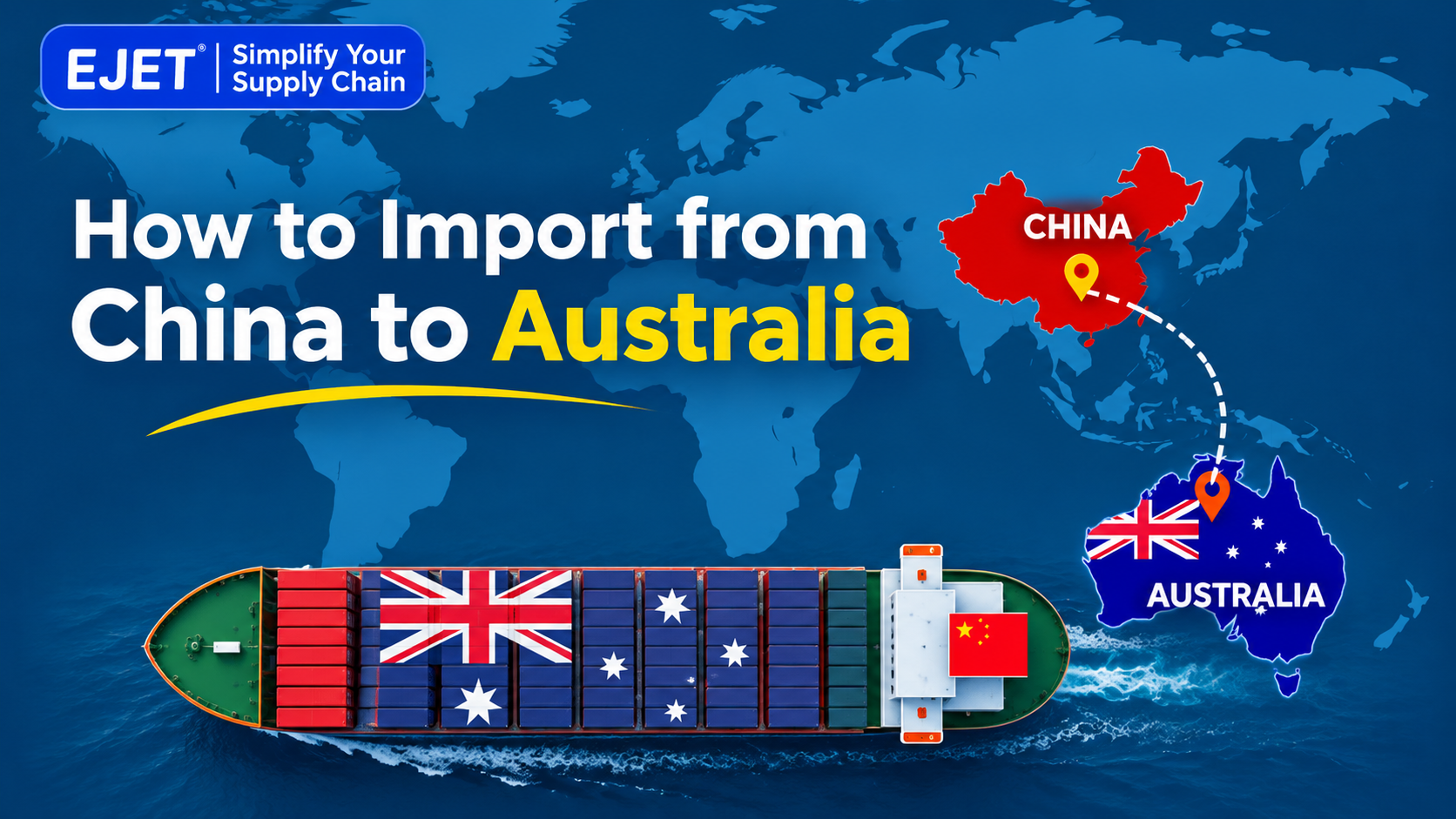
Importing from China to Australia involves choosing a viable product, checking Australian requirements, verifying suppliers, arranging freight and clearing the shipment.
This guide explains how to plan each stage, calculate your likely landed cost and prepare before committing to stock. Use it as a practical starting point, then confirm product-specific requirements with the relevant regulator and a licensed customs broker.
What do you need before your first shipment?
You do not need a general import licence to bring goods into Australia, but particular products may require permits, approvals or specific labelling. Start by identifying exactly what you intend to import: its materials, purpose, construction and country of manufacture. These details help establish the applicable tariff classification and regulatory requirements.
Before paying a supplier, build a product file containing photographs, specifications, intended use and proposed packaging. Ask a licensed customs broker to review anything you cannot confidently classify. Australian Border Force recommends brokers for first-time or infrequent importers.
For a commercial venture, also clarify your business and tax arrangements. If you have an Australian Business Number, supply it when formally entering goods; an ABN and GST registration are needed to claim eligible import GST credits.
Confirm your circumstances with your accountant rather than assuming every payment is recoverable.
What does Australia import from China, and what should you choose?
Australia imports telecommunications equipment, electrical machinery, passenger vehicles, computers, furniture, toys and sporting goods from China. These categories feature in the Department of Foreign Affairs and Trade’s 2025 trade data, but their national importance does not make every product within them suitable for a small importer.
When deciding what to import from China to Australia, begin with a customer problem rather than a supplier’s catalogue. Consider whether you can improve the product selection, instructions, packaging or buying experience. A product needs a credible reason for customers to choose your offer.
Treat lists of the “most profitable items to import from China to Australia” as research prompts, not forecasts. Instead, assess each candidate against these questions:
- Demand: Can you identify customers, competing offers and an achievable selling price?
- Differentiation: Could a useful bundle, material choice or specialised size distinguish your offer?
- Delivery economics: What happens to margin after international freight, storage and customer delivery?
- Compliance: Can you establish the relevant requirements and obtain satisfactory evidence?
- Inventory exposure: Can you afford the minimum order if sales develop slowly?
For an initial shortlist, consider investigating non-electrical desk accessories, textile organisers or hobby storage. These are examples to evaluate, not guaranteed low-risk or high-margin products. Score each against the same criteria before requesting samples.
Check product compliance and biosecurity before ordering
Permission to enter Australia and permission to sell a product are separate checks. Australian suppliers, including importers, must comply with applicable mandatory safety and information standards, bans and recalls. Check the exact product rather than relying on a broad category description.
Request evidence relevant to the model you intend to buy. Ask a qualified adviser or testing provider whether the documents address the applicable Australian requirements. Make this review a purchasing condition, alongside approval of labels, warnings and instructions—not something to resolve after production.
Include packaging in your biosecurity checks
Search the Department of Agriculture, Fisheries and Forestry’s Biosecurity Import Conditions system, BICON, for the goods and relevant origin. It identifies whether importation is permitted and what conditions apply. Imported food intended for sale also faces food safety requirements.
Do not overlook pallets, crates or dunnage. Timber and bamboo packaging must meet applicable import conditions, and non-compliant packaging may require treatment, export or disposal at your expense. Ask the supplier to confirm packaging materials before freight is booked. (agriculture.gov.au)
Make sourcing from China a controlled process
Approach sourcing from China as a sequence of checks, not a search for the lowest unit price. Start with a written specification so each supplier quotes against the same requirements. Include dimensions, materials, finish, packaging, labelling and acceptable defects.
Use supplier marketplaces, trade events, referrals or sourcing agents to build a shortlist, then investigate each business independently. Ask whether you are dealing with the manufacturer or a trading company and who controls production. Either arrangement may suit your needs; the important point is understanding responsibilities.
A practical supplier review should include:
- Confirm business identity. Request registration details and verify the contracting entity and payment beneficiary.
- Compare complete quotations. Include minimum quantities, tooling, packaging, sample costs and delivery terms.
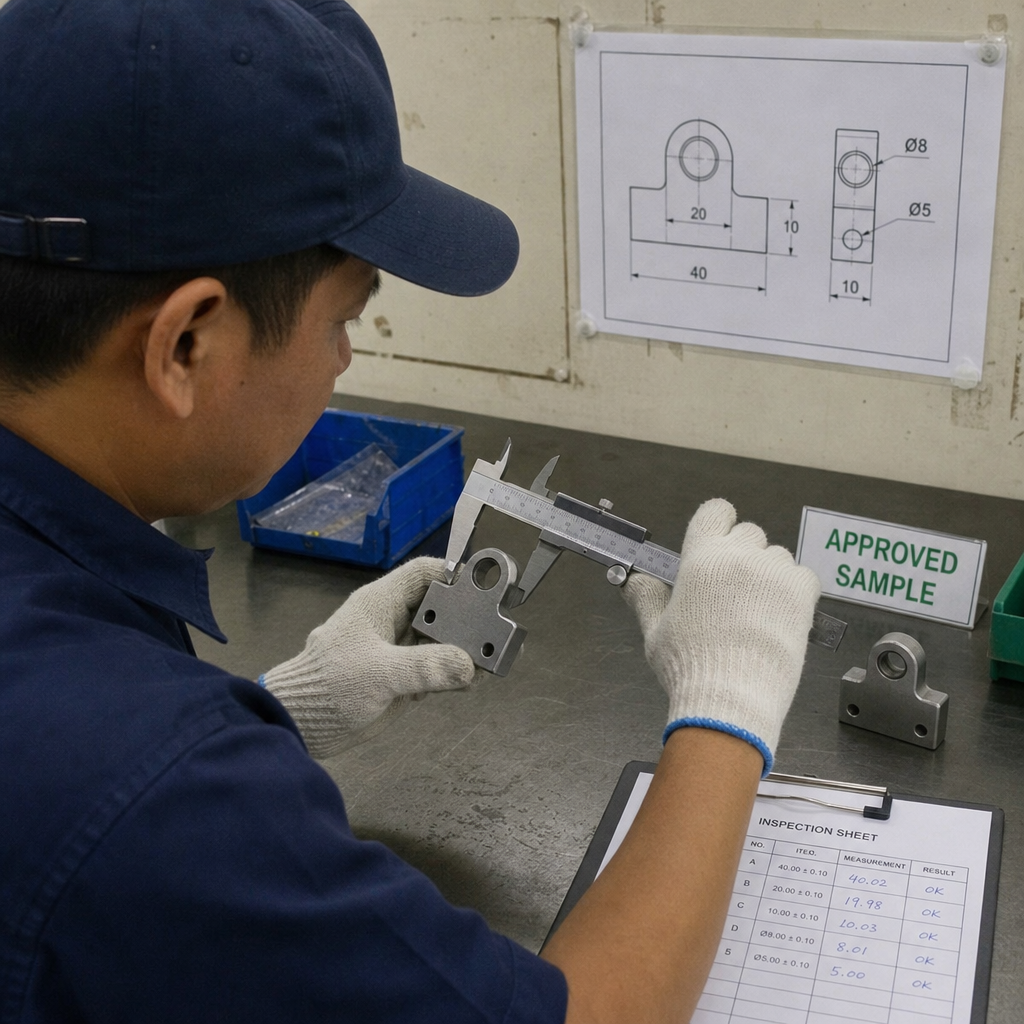
- Order representative samples. Assess function, finish, dimensions and packaging against your specification.
- Document acceptance criteria. Record what counts as a defect and how failed checks will be handled.
- Plan a pre-shipment inspection. Agree its scope and payment consequences before placing the order.
Keep an approved sample as your reference, while separately checking compliance evidence. Put specifications, production milestones, inspection arrangements and remedies into the purchase agreement. Independently confirm any later request to change bank details before transferring money.
For your first order, favour a manageable test quantity over a discount that stretches your budget. Define success beforehand: acceptable defects, a workable landed cost and enough customer demand to justify reordering.
Calculate landed cost before negotiating volume
Build your budget around the cost of getting saleable stock into your Australian warehouse, not simply the factory invoice. Use the following as a quotation checklist, marking each line as included, excluded or still unconfirmed:
- Product, tooling and retail packaging costs.
- Sample assessment, testing and inspection.
- Collection in China and export handling.
- International freight and cargo insurance.
- Customs duty, import GST and processing charges.
- Biosecurity assessment, inspection or treatment where applicable.
- Destination handling, brokerage and final delivery.
Obtain written quotes for your actual shipment dimensions, weight and destination. Ask what could trigger extra charges and how long each quotation remains valid. Add a contingency based on those unresolved risks rather than inventing a universal percentage.
Calculate a landed cost per saleable unit, allowing for any expected losses in your planning assumptions. Then model selling expenses separately: marketplace fees, advertising, fulfilment, returns and customer support. This gives you a more useful purchasing ceiling than a simple markup on the supplier’s price.
Keep recoverable GST separate from permanent costs, but include its payment timing in your cash-flow plan. Ask your accountant which amounts are creditable in your circumstances. GST registration alone should not replace a review of the transaction and supporting records.
How much import tax from China to Australia will you pay?
Import tax from China to Australia depends on tariff classification, customs value, origin and applicable concessions. Separate customs duty from GST: eligible goods may receive preferential duty treatment under the China–Australia Free Trade Agreement, ChAFTA, while import GST can still apply. Confirm the treatment of your specific goods before ordering.
Customs duty and ChAFTA
ChAFTA eligibility depends on rules of origin, not merely shipping goods from a Chinese port. Preferential claims require appropriate origin evidence, subject to the agreement’s requirements. Ask your broker what documentation is acceptable and arrange it with your supplier before dispatch.
Have the broker confirm the Australian tariff classification rather than copying a supplier’s code without review. Classification determines how the goods are treated under the agreement. For uncertain cases, consider seeking advance advice before committing to a large order.
GST and shipment value
For taxable importations, GST is generally 10% of the customs value plus customs duty, international transport and insurance, and any applicable wine equalisation tax. For illustration, assume a customs value of AUD10,000, freight and insurance of AUD1,000, and no duty or wine equalisation tax. The import GST would be AUD1,100; this is a hypothetical calculation, not a shipment quote.
Consignments over AUD1,000 generally require an import declaration and attract applicable taxes and charges. Most goods at or below that threshold have different border treatment, but low-value consumer purchases can still attract GST collected by the seller or marketplace. Alcohol and tobacco also have special treatment, so do not assume a small shipment is automatically tax-free.
Choose freight and delivery terms together
Compare freight options using both urgency and shipment size. Air freight offers faster transport, while sea freight provides less-than-container-load, LCL, and full-container-load, FCL, options. LCL shares container capacity; FCL provides a dedicated container. The better choice depends on your cargo and service requirements.
When choosing a freight forwarder for China to Australia shipments, request comparable written quotations. Give each provider the same collection address, delivery postcode, cargo description, carton dimensions, weight and readiness date. Ask them to identify destination handling, brokerage, delivery and potential storage charges separately.
Agree the Incoterm and named locati0n in the purchase contract. Incoterms allocate transport-related responsibilities, costs and risk; EXW and DDP, for example, place substantially different obligations on buyer and seller. Avoid accepting an abbreviation without understanding what it means for your shipment.
For a door-to-door offer, ask who will handle the import declaration and which documents you will receive. Also request a realistic end-to-end schedule covering collection, export handling, transport, clearance and final delivery—not just a port-to-port estimate.
Prepare documents for customs clearance in Australia
Ask your broker to review the document set before departure. Depending on the goods and transport method, it may include invoices, transport documents, packing information, origin evidence, permits and treatment certificates. The exact requirements should follow the shipment’s customs and biosecurity conditions.
Use this preparation checklist with your supplier and logistics providers:
|
Document |
What to check before submission |
|---|---|
|
Commercial invoice |
Buyer and seller details, specific goods descriptions, quantities, values and currency |
|
Packing list |
Carton contents, package counts, weights and dimensions |
|
Bill of lading or air waybill |
Parties, shipment identifiers and transport details |
|
Origin evidence, where applicable |
Eligibility for the intended preferential duty claim |
|
Permits and treatment records |
Consistency with the applicable import conditions |
|
Packing declaration, where required |
Packaging materials and relevant container information |
These document types support customs or biosecurity assessment; have your broker confirm which are required for your consignment.
Compare descriptions and shipment references across the documents before submitting them. Ask for corrections while the supplier and forwarder can still resolve questions promptly. Customs release requires payment of applicable duties, taxes and charges, and relevant biosecurity requirements must also be satisfied.
Start small and improve the next order
Learning how to import products from China to Australia is best approached as building a repeatable purchasing process. Validate the product, settle compliance questions, approve the supplier and budget the complete shipment before increasing volume. Your first order should test those decisions without putting the entire business at risk.
After delivery, compare quoted and actual costs, inspect stock and record customer feedback. Use those findings to revise specifications, packaging and reorder quantities. The strongest next step is a better-informed order—not simply a bigger one.
Frequently Asked Questions About Importing from China to Australia
Do I need a license to import goods from China to Australia?
No, a general import license is not required; however, certain products may need permits or approvals. It's essential to check product-specific requirements with the relevant regulator.
What are the most profitable items to import from China to Australia?
Popular categories include electronics, textiles, furniture, and accessories. The profitability depends on market demand, differentiation, and compliance with Australian regulations.
How do I calculate the landed cost of my imported products?
Landed cost includes the product price, shipping fees, customs duties, insurance, and any applicable taxes. It's crucial to build an accurate budget around all these costs before finalizing your order.
What documentation is needed for customs clearance in Australia?
Essential documents typically include a commercial invoice, packing list, bill of lading or air waybill, and any relevant permits or treatment certificates. Ensuring all documentation is accurate is crucial for smooth clearance.
How can I ensure product compliance with Australian regulations?
It's vital to research the specific compliance standards for your product category. Additionally, working with a licensed customs broker or compliance expert can help ensure that you meet all the necessary requirements.