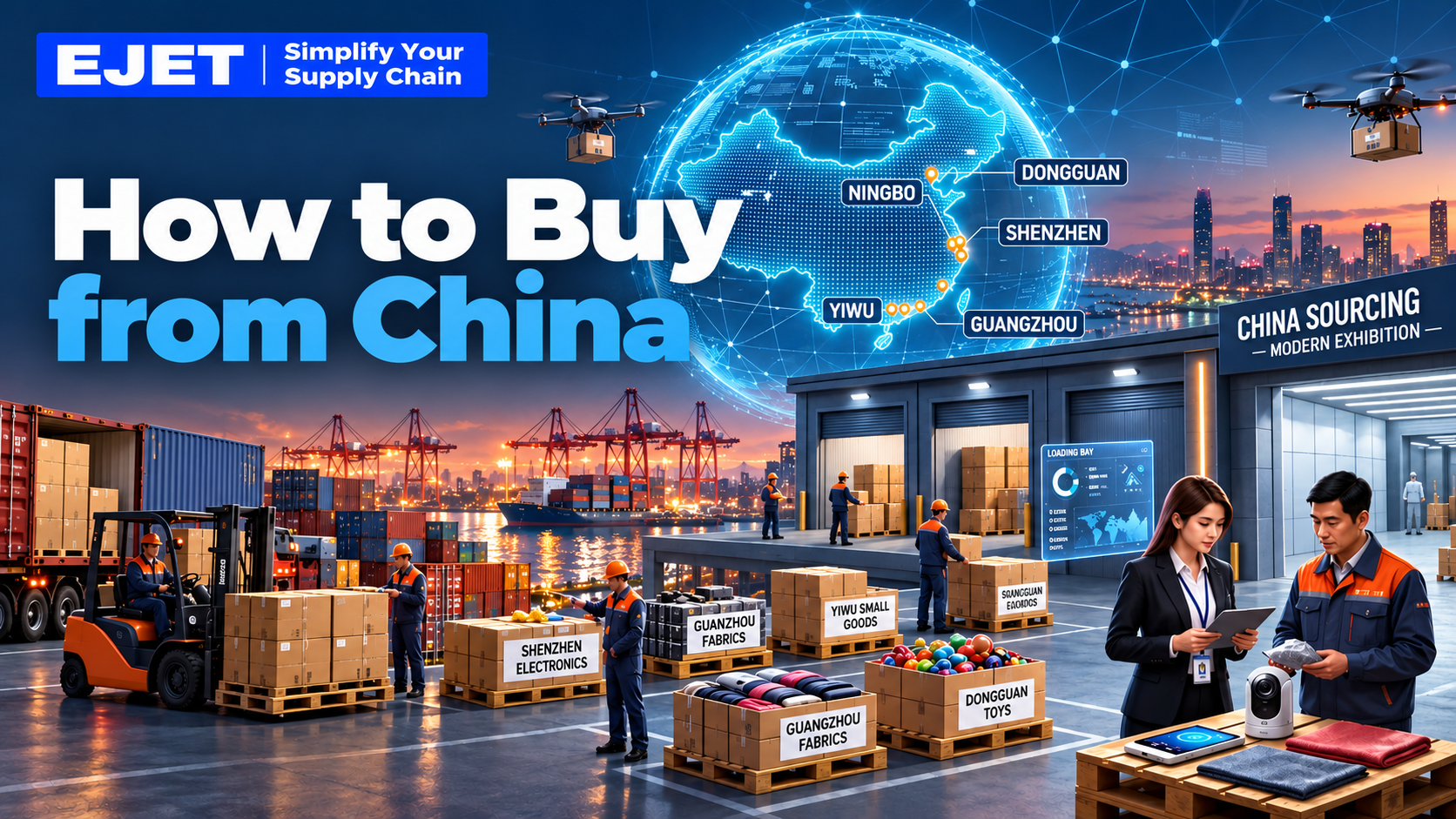
Buying products from China is one of the most effective ways for businesses to access competitive manufacturing costs, diverse product categories, and flexible customization opportunities.
Whether we operate a wholesale business, retail store, e-commerce platform, or established international brand, understanding how to buy from China allows us to improve purchasing efficiency, develop profitable products, and build reliable supply chains.
However, successful importing requires more than finding a supplier with an attractive price. We must evaluate manufacturers, negotiate terms, verify product quality, understand international shipping, and prepare for customs clearance.
In this comprehensive guide, we explain how to buy products from China safely, find reliable suppliers, purchase wholesale products, and manage the entire importing process from initial product research to final delivery.
1. How to Buy From China: 10 Essential Steps
To purchase products directly from Chinese suppliers, we recommend following a structured process:
Identify the products we want to import and define detailed specifications.
Research Chinese manufacturers and suppliers using trusted sourcing platforms, trade fairs, and wholesale markets.
Verify supplier credentials and assess manufacturing capabilities.
Request quotations and compare minimum order quantities, pricing, and production terms.
Order product samples to evaluate quality before mass production.
Negotiate purchasing agreements covering specifications, payment, packaging, and delivery.
Place the production order using an appropriate payment method.
Conduct quality inspections during production and before shipment.
Arrange international shipping and prepare customs documents.
Receive and evaluate the goods before placing repeat orders.
Following these steps helps us control purchasing costs, minimize commercial risks, and establish sustainable relationships with Chinese manufacturers.
2. Why Buy Products From China?
China remains a major global manufacturing center, supplying an extensive range of products to businesses worldwide. Its industrial clusters, established supplier networks, and export infrastructure provide several advantages for international buyers.
Competitive Manufacturing Costs
One of the principal reasons businesses import from China is the opportunity to achieve competitive production costs.
Chinese manufacturers often benefit from specialized industrial clusters, established raw material supply chains, and large-scale production capabilities.
However, we should evaluate the total landed cost rather than selecting suppliers solely according to factory prices. Shipping, import duties, inspection, packaging, and domestic transportation can significantly affect the final purchase cost.
Wide Range of Wholesale Products
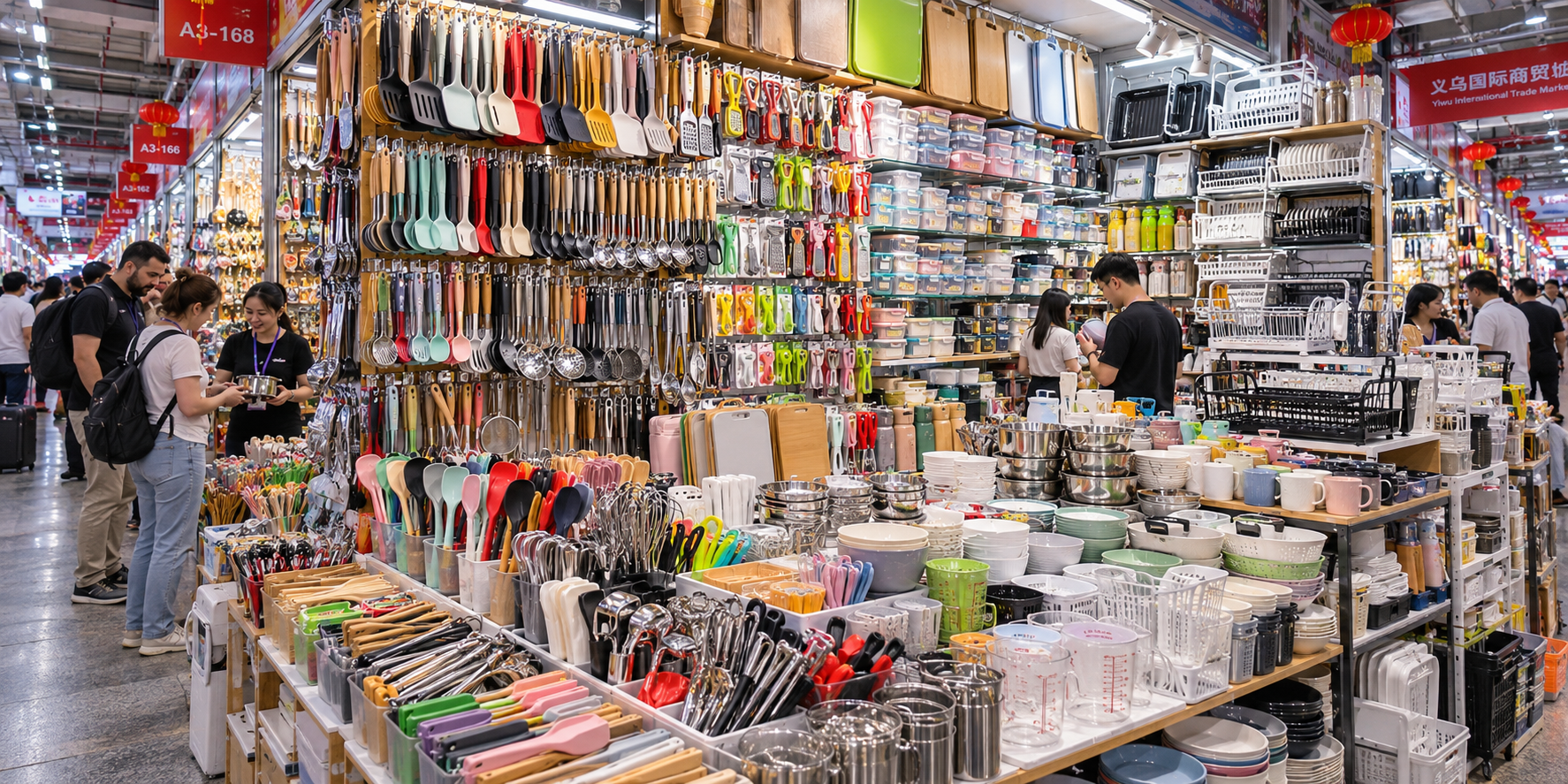
China offers diverse product categories, including consumer electronics, home decorations, furniture, kitchenware, stationery, toys, clothing, bags, and packaging materials.
We can source standard wholesale products, customized merchandise, or products developed specifically for our business.
OEM and ODM Manufacturing Opportunities
Chinese manufacturers frequently provide customized production services.
Original Equipment Manufacturing (OEM) allows us to produce goods according to our specifications, designs, or branding requirements.
Original Design Manufacturing (ODM) generally involves selecting or adapting products developed by the manufacturer.
These options enable retailers, distributors, and private-label businesses to develop differentiated product collections.
Established Shipping Infrastructure
Major Chinese export centers benefit from extensive international transportation networks.
Ports such as Shanghai, Ningbo-Zhoushan, Shenzhen, and Guangzhou support international trade, while air cargo networks provide alternatives for urgent or smaller shipments.
3. Where to Buy Products From China
Finding the right sourcing channel is essential when purchasing wholesale products from China.
We can choose online B2B platforms, physical wholesale markets, trade fairs, direct manufacturers, or professional sourcing companies.
Best Websites to Buy Wholesale Products From China
| Platform | Best for | Main advantages |
|---|---|---|
| Alibaba.com | International wholesale buyers | Large supplier network, RFQs, international purchasing tools |
| 1688.com | Domestic China wholesale sourcing | Extensive domestic supplier listings and competitive quotations |
| Made-in-China.com | Industrial products and manufacturers | Manufacturer discovery and supplier information |
| Global Sources | Electronics and consumer products | Supplier sourcing, industry events, and product discovery |
| EJETSPARK | Yiwu trend collections and products | Explore Trend Collections That Inspire Business Growth |
| ChinaGoods | Yiwu small commodities | Yiwu market-related wholesale sourcing |
Buying From Alibaba
Alibaba is a practical starting point for businesses looking to buy products directly from China.
We can search for products, contact multiple suppliers, request quotations, negotiate customization requirements, and arrange eligible purchases through Alibaba's transaction services.
However, appearing on Alibaba does not automatically mean a business is the original manufacturer. We should still verify company information, production capabilities, and product quality.
Buying From 1688
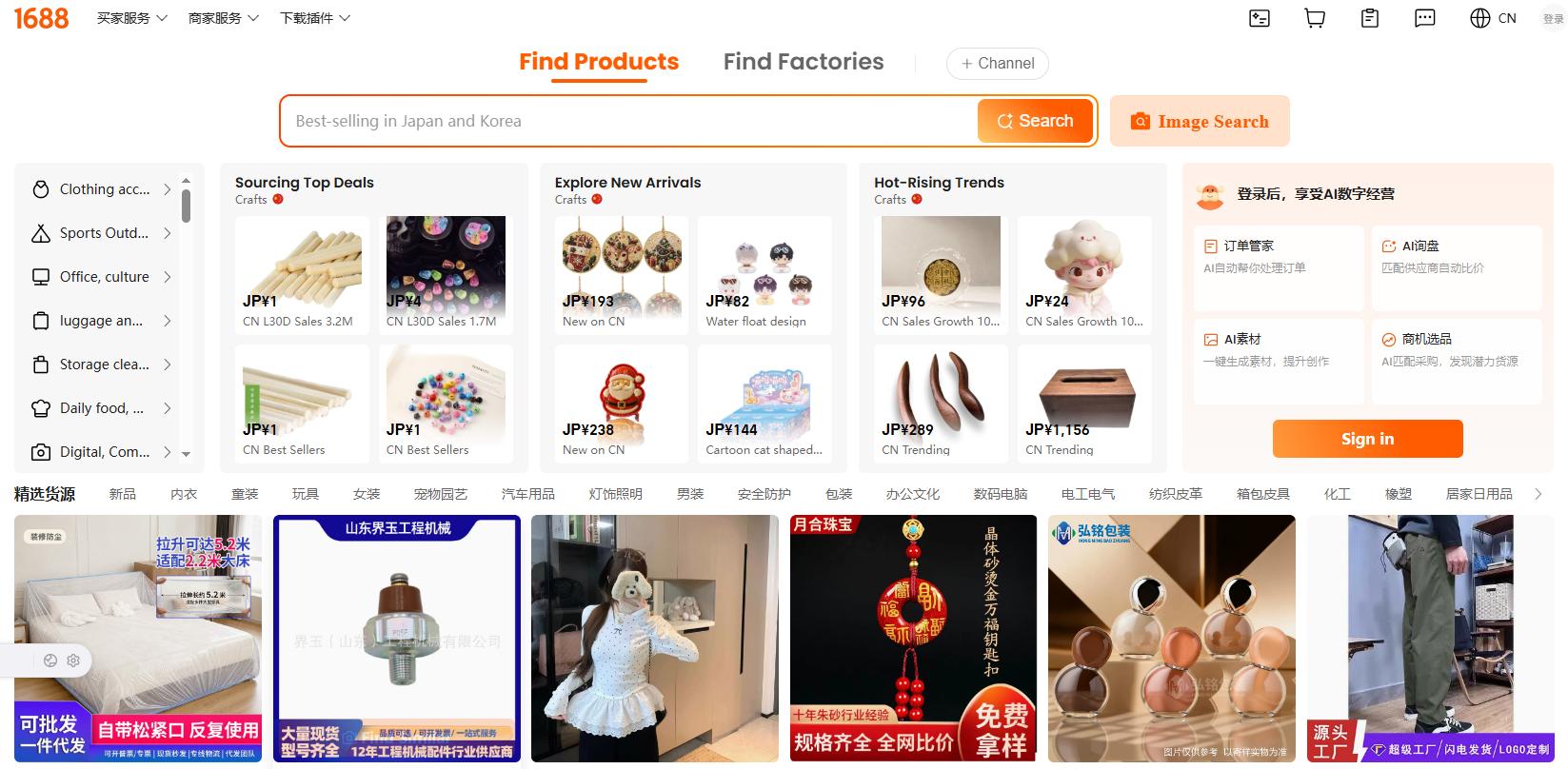
1688 is primarily designed for China's domestic wholesale market.
The platform can provide opportunities to compare local wholesale prices and discover suppliers that may not actively market internationally.
However, international buyers may encounter challenges involving Chinese-language communication, domestic payment methods, delivery addresses, export documentation, and shipping.
When buying from 1688, we may benefit from working with a reliable China sourcing agent capable of coordinating domestic purchasing and international shipment.
Buying Directly From Chinese Factories
Direct factory sourcing is especially useful when purchasing large quantities or developing customized products.
By communicating directly with manufacturers, we can negotiate product specifications, establish production schedules, and discuss long-term pricing agreements.
The main challenge is verifying whether the supplier operates its own production facilities and has the capacity to meet our requirements.
4. Visit China's Major Wholesale Markets
Online sourcing is convenient, but visiting wholesale markets allows us to inspect products, meet suppliers, and compare multiple options in person.
Yiwu International Trade Market
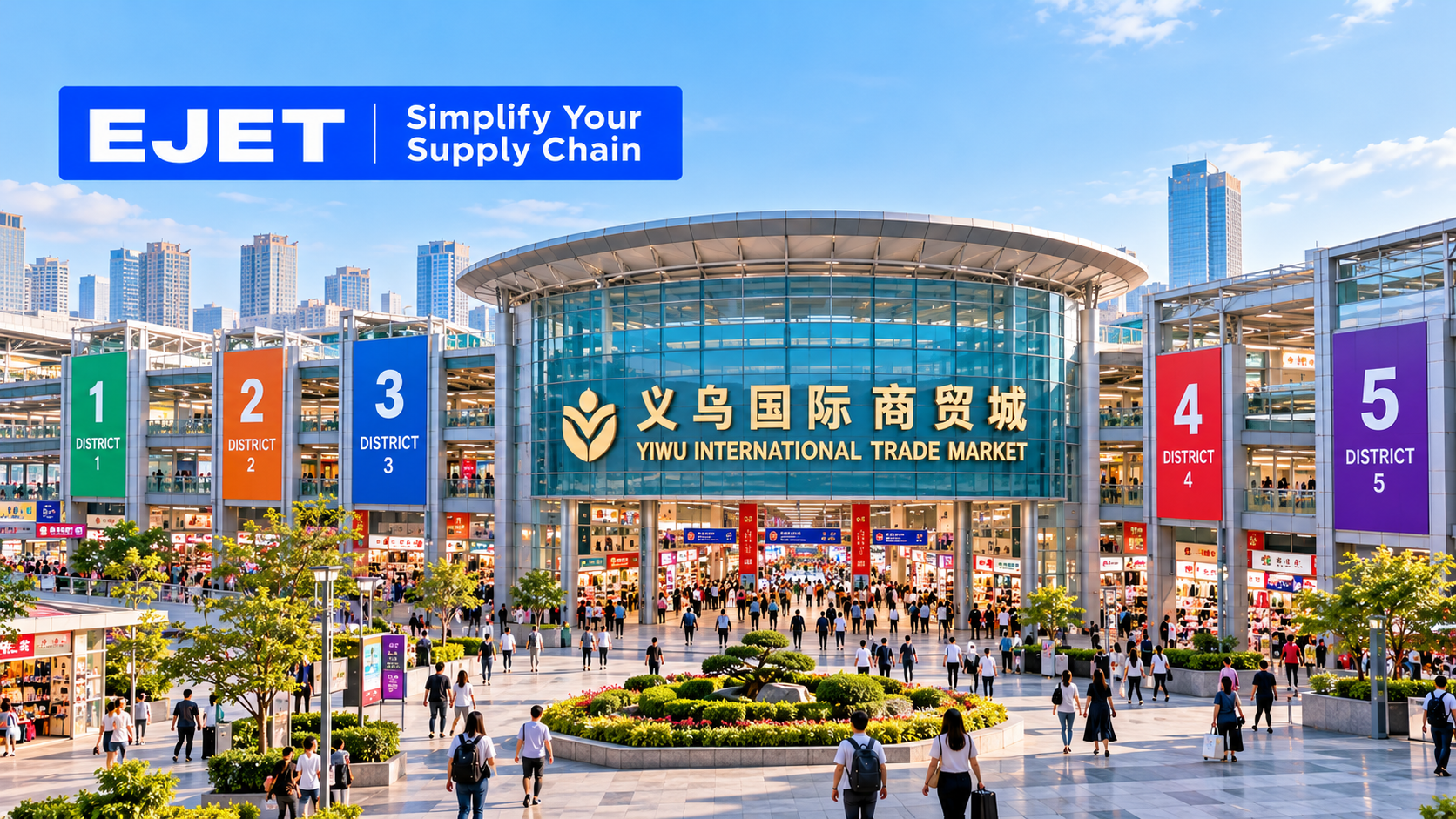
Yiwu International Trade Market is one of China's best-known wholesale destinations for small commodities.
We can explore categories such as stationery, toys, gifts, fashion accessories, home products, seasonal decorations, and packaging supplies.
Yiwu is particularly suitable for buyers looking to purchase different product categories and consolidate shipments from multiple suppliers.
Guangzhou Wholesale Markets
Guangzhou offers important wholesale sourcing opportunities across clothing, fashion accessories, leather goods, beauty-related products, and general merchandise.
Buyers often visit specialized markets in different districts depending on their product requirements.
Shenzhen Electronics Markets
Shenzhen is a major center for electronics manufacturing and component sourcing.
The Huaqiangbei area is known for electronics markets, including components, accessories, and devices.
For finished electronic products, we must verify applicable electrical safety requirements, intellectual property rights, certifications, and destination-market compliance.
Foshan Furniture Markets
Foshan, particularly the Lecong area, is widely recognized for furniture sourcing.
We can find residential furniture, commercial furniture, hospitality furnishings, and customized interior products.
5. How to Find Reliable Suppliers in China
Choosing a dependable manufacturer is one of the most important stages of the import process.
A low quotation is not sufficient evidence that a supplier is trustworthy.
We should assess the company's legal identity, production experience, quality procedures, communication standards, and export capabilities before placing an order.
Verify the Supplier's Business License
A legitimate Chinese company should be able to provide appropriate business registration information.
We should request the company's registered Chinese name, business license, and Unified Social Credit Code.
We can then compare these details with official business-registration records, where available, and check whether the company receiving payment is the same legal entity named in the purchasing agreement.
Determine Whether the Supplier Is a Factory or Trading Company
Factories manufacture products, while trading companies typically source merchandise from one or more manufacturers.
Both can be suitable business partners.
Factories may provide stronger technical control and direct production communication. Trading companies can offer broader product selections, lower purchasing quantities for certain categories, and coordinated orders across multiple manufacturers.
The most suitable option depends on our product complexity, purchasing volume, and sourcing requirements.
Review Manufacturing Capabilities
Before choosing a supplier, we should evaluate factory equipment, production capacity, employee expertise, relevant quality-control procedures, and experience with similar products.
For significant orders, a factory audit or independent supplier verification service can help us assess whether the operation matches the supplier's claims.
Check Export Experience
Suppliers familiar with our destination market may better understand necessary labeling, product documentation, packaging, and shipping arrangements.
Nevertheless, the importer remains responsible for confirming applicable market requirements.
6. How to Request a Quotation From Chinese Suppliers
A clear request for quotation, commonly called an RFQ, helps us receive accurate prices and compare suppliers fairly.
Before sending an inquiry, we should define the product specifications as precisely as possible.
These typically include dimensions, materials, colors, functions, packaging, quantity, branding, destination country, and required compliance documents.
A professional supplier inquiry can follow this format:
Subject: Wholesale Product Inquiry – Request for Quotation
Hello,
We are looking for a reliable supplier for our wholesale purchasing requirements.
Please provide your best quotation for the following product specifications:
Product: [Product name]
Quantity: [Required units]
Materials: [Specifications]
Packaging: [Packaging requirements]
Destination: [Country]
Please also confirm the minimum order quantity, sample cost, production lead time, available customization options, payment terms, and applicable shipping terms.
We look forward to reviewing your quotation and exploring a long-term business relationship.
We recommend contacting several qualified suppliers using the same specifications. This makes it easier to identify differences in pricing and production capabilities.
7. Understand Minimum Order Quantity (MOQ)
The minimum order quantity (MOQ) is the smallest quantity a supplier is willing to produce or sell under specified conditions.
MOQs vary by product, manufacturing process, material, customization level, and factory policy.
Ready-made wholesale products may be available in relatively small quantities, while customized packaging or products requiring new production tooling can involve larger minimum orders.
How to Negotiate a Lower MOQ
We can sometimes negotiate a smaller initial order by selecting existing designs, using standard packaging, reducing the number of colors, or agreeing to a higher price per unit.
For example, instead of requesting several customized colors immediately, we may begin with one standard color to test market demand.
We should also clarify whether the supplier's MOQ applies to each product, each color, each size, or the entire combined order.
This distinction can substantially change the minimum purchasing commitment.
8. Order Product Samples Before Bulk Purchasing
Samples help us confirm whether a supplier can meet the expected quality standard.
Before placing a substantial wholesale order, we should request samples representing the materials, dimensions, finish, functionality, and packaging we intend to purchase.
When examining samples, we should assess durability, appearance, consistency, workmanship, labeling, and performance.
For regulated products, samples may also require laboratory testing against applicable safety or technical standards.
Golden Samples and Production Approval
For customized products, we recommend approving a final reference sample before mass production.
This approved reference is commonly called a golden sample.
We can use it together with written technical specifications to evaluate later production.
However, sample approval alone does not guarantee that every manufactured unit will match the reference. Production monitoring and quality inspections remain necessary.
9. Negotiate Prices and Payment Terms
Price negotiations should focus on the overall commercial arrangement rather than the lowest possible unit price.
We should compare quotations using identical specifications, quantities, packaging conditions, and Incoterms.
For example, a quotation of $2.50 per unit under EXW terms cannot be directly compared with a $2.90 quotation under FOB terms without accounting for the additional responsibilities and transportation costs.
Common Payment Methods When Buying From China
| Payment method | Common use | Important consideration |
|---|---|---|
| Telegraphic Transfer (T/T) | Commercial wholesale orders | Verify the beneficiary and payment instructions |
| Letter of Credit (L/C) | Larger international transactions | Bank documentation and fees must be evaluated |
| Alibaba Trade Assurance | Eligible Alibaba platform transactions | Protection depends on order terms and eligibility |
| Credit or debit card | Samples and supported online orders | Platform limits, fees, and dispute terms may apply |
Many negotiated manufacturing orders use a deposit and a balance payment after agreed production milestones. A 30% deposit and 70% balance is one arrangement sometimes used, but it is not a universal standard.
We should negotiate payment milestones according to supplier reliability, order value, inspection results, and available payment protections.
For eligible Alibaba transactions, maintaining the order and payment within Alibaba's official Trade Assurance process is important for accessing its stated protections. We should always examine the actual order agreement and applicable coverage conditions.
10. Prepare a Detailed Purchase Order
A formal purchase order or sales contract reduces misunderstandings between buyers and suppliers.
The agreement should identify both legal entities and define the products being purchased.
It should also specify product requirements, approved samples, quantities, unit prices, packaging, delivery dates, shipping terms, payment milestones, defect tolerances, inspection rights, and procedures for handling nonconforming goods.
We should make sure the supplier explicitly accepts these terms before production begins.
For customized products, ownership and permitted use of designs, molds, trademarks, and other intellectual property should also be addressed.
11. Manage Production and Quality Control in China
Quality management should begin before production, not after the goods reach the destination country.
We can establish measurable acceptance requirements for materials, dimensions, colors, functionality, assembly, workmanship, and packaging.
Pre-Production Inspection
A pre-production review can confirm that raw materials, components, and production preparations match approved requirements.
This stage is particularly valuable when manufacturers are using new materials or developing unfamiliar products.
During-Production Inspection
During-production inspections help us identify defects while manufacturing is still underway.
If problems are found early, the supplier may have opportunities to correct production methods before completing the entire order.
Pre-Shipment Inspection
A pre-shipment inspection is commonly performed when most or all goods have been produced and packed.
The inspector evaluates selected products against the agreed requirements and reports any defects or inconsistencies.
Where appropriate, we can use an agreed sampling methodology, such as an acceptance quality limit (AQL) plan, to determine sample sizes and acceptance criteria.
Container Loading Inspection
For larger shipments, container loading supervision can help verify quantities, packaging conditions, carton markings, and loading practices.
It can also help reduce errors involving mixed orders or incorrect product quantities.
12. How to Ship Products From China
International shipping affects delivery time, inventory planning, and landed cost.
We should select the transportation method based on shipment size, product characteristics, urgency, and destination.
Shipping Methods Compared
| Shipping method | Suitable for | Main consideration |
|---|---|---|
| Express courier | Samples and small parcels | Convenient but potentially expensive per unit |
| Air freight | Urgent or high-value goods | Faster transportation with higher costs |
| Sea freight (LCL) | Smaller commercial shipments | Shared container space and handling charges |
| Sea freight (FCL) | Large-volume orders | Dedicated container and potentially lower unit transport costs |
| Rail freight | Supported inland routes | Route availability and transit requirements vary |
Sea Freight From China
Sea freight is commonly used for bulk merchandise, furniture, home products, and other commercial goods that do not require urgent delivery.
Full Container Load (FCL) is suitable when we need a dedicated container.
Less than Container Load (LCL) allows us to share container capacity with other shippers.
The most economical option depends on cargo volume, weight, handling charges, and destination costs.
Air Freight From China
Air freight is useful for shipments requiring shorter transport times.
However, airlines commonly apply chargeable-weight calculations, making bulky, low-density products comparatively expensive to transport.
We should calculate both actual weight and volumetric weight when comparing quotations.
Consolidating Multiple Suppliers
When purchasing products from several Chinese suppliers, we can arrange for the merchandise to be delivered to a consolidation warehouse.
There, goods can be counted, inspected, labeled, repacked where necessary, and prepared for a combined shipment.
Consolidation can simplify logistics, particularly for buyers purchasing different categories from Yiwu and other manufacturing areas.
13. Understand Incoterms When Buying From China
Incoterms define important responsibilities for transportation, delivery, cost allocation, and risk transfer between buyers and sellers.
The latest published edition is Incoterms 2020, issued by the International Chamber of Commerce.
| Incoterm | Meaning | Key consideration |
|---|---|---|
| EXW | Ex Works | Buyer takes on substantial collection and export-related responsibilities |
| FCA | Free Carrier | Seller delivers to the nominated carrier at the agreed point |
| FOB | Free On Board | Seller delivers goods on board the vessel at the named shipment port |
| CIF | Cost, Insurance and Freight | Seller arranges ocean freight and specified insurance to the named destination port |
| DAP | Delivered at Place | Seller arranges delivery to the named place, excluding import clearance obligations |
| DDP | Delivered Duty Paid | Seller takes responsibility for import clearance and applicable duties and taxes |
For containerized shipments, FCA may be more appropriate than FOB when goods are delivered to a carrier at a container terminal rather than directly on board a vessel.
Under CIF, the seller pays for freight and required insurance, but the risk transfers to the buyer when the goods are loaded on board at the port of shipment.
Under DDP, we must verify that the seller can legally manage the destination country's import responsibilities, tax requirements, and customs clearance.
We should always identify the named place or port and the applicable Incoterms edition in our commercial agreement.
14. How to Calculate the Total Cost of Importing From China
A supplier's quoted price represents only one component of the importing budget.
To determine the true purchasing cost, we need to calculate all relevant expenses associated with getting goods to our warehouse.
Landed Cost Formula
Total landed cost = Product cost + Origin charges + International freight + Insurance + Import duties and applicable taxes + Customs and destination charges + Inland delivery
The treatment of import VAT or sales tax in commercial cost calculations depends on whether it is recoverable.
Example: Importing 1,000 Units From China
Consider a hypothetical wholesale order.
| Expense | Example cost |
|---|---|
| Products: 1,000 units | $5,000 |
| Origin and handling charges | $250 |
| International freight | $900 |
| Cargo insurance | $50 |
| Illustrative import duty | $500 |
| Customs clearance and destination fees | $200 |
| Local delivery | $300 |
| Total | $7,200 |
In this example, our landed cost per unit is $7.20.
The example excludes any separately payable taxes and other unspecified charges. The duty figure is illustrative rather than a rate applicable to a particular product or country.
We should calculate landed cost before finalizing retail pricing and target profit margins.
15. Import Duties, Customs Clearance, and Product Compliance
Import regulations vary according to the product, destination country, origin, declared customs value, and relevant trade measures.
Before shipping, we should confirm whether the goods are permitted for import and whether special licenses, approvals, inspections, or certifications are required.
Understand HS Codes
The Harmonized System (HS) provides an international foundation for classifying traded goods.
The first six digits are internationally harmonized, while importing countries may use longer national tariff codes.
Correct classification helps determine duties, trade restrictions, documentation, and other customs requirements.
Importing From China to the United States
For US imports, we should confirm the correct Harmonized Tariff Schedule classification and check applicable duties, additional tariffs, admissibility requirements, and product regulations.
Requirements may involve authorities such as US Customs and Border Protection, the Food and Drug Administration, or the Consumer Product Safety Commission, depending on the goods.
Importing From China to the United Kingdom
UK importers generally need to follow customs procedures involving appropriate commodity codes, import declarations, duty calculations, and applicable VAT rules.
Businesses importing into Great Britain ordinarily need the appropriate EORI registration.
Importing From China to the European Union
For the EU, we should check customs classification, duties, import VAT, product regulations, and market-specific conformity requirements.
The European Commission's Access2Markets service helps businesses research import tariffs, trade requirements, and customs procedures.
A CE marking may be necessary for products covered by relevant EU legislation, but it is not a general certification required for every product imported from China.
Essential Shipping Documents
Commercial shipments commonly require a commercial invoice, packing list, and transportation document such as a bill of lading or air waybill.
Depending on the product and destination, we may also need an origin document, laboratory reports, conformity documentation, permits, or other supporting records.
We should confirm these requirements with our customs broker before shipment.
16. Should We Use a China Sourcing Agent?
When purchasing from multiple factories or managing complex projects, working with a China sourcing agent can simplify the buying process.
A professional sourcing company may coordinate supplier identification, quotation comparisons, factory communication, product sampling, production follow-up, quality inspections, warehouse consolidation, and shipping.
Direct Sourcing vs. China Sourcing Agent
| Factor | Direct manufacturer sourcing | Sourcing agent |
|---|---|---|
| Supplier identification | Managed by buyer | Agent assists |
| Supplier negotiations | Direct communication | Agent may coordinate |
| Quality control | Buyer arranges | Agent may organize |
| Multiple suppliers | Separate coordination | Consolidated coordination possible |
| Service cost | No agent fee | Fee or commission may apply |
| Best suited for | Experienced importers | Buyers needing local coordination |
We should evaluate the sourcing partner's fee structure, transparency, supplier-verification methods, and service responsibilities before signing an agreement.
For example, EJET provides China sourcing and supply chain services for importers, wholesalers, retailers, and brands. Its procurement services cover supplier sourcing, production coordination, quality control, consolidation, and logistics.
17. Common Mistakes to Avoid When Buying From China
Even experienced importers can encounter difficulties when purchasing from overseas manufacturers.
Selecting Suppliers Only by Price
Extremely low quotations can indicate different material specifications, incomplete cost coverage, or manufacturing limitations.
We should compare products according to consistent technical requirements and total costs.
Placing Large Orders Without Samples
Bulk purchasing without sample approval increases the risk of receiving merchandise that does not meet our expectations.
Samples and testing should be proportional to product complexity and order value.
Sending Payments Without Verification
We should verify supplier payment instructions through an established communication channel, particularly when banking details change unexpectedly.
For platform-protected orders, we should follow the platform's official payment procedures.
Ignoring Quality Inspections
Without an agreed inspection process, defects may remain undetected until the shipment reaches our warehouse.
Independent quality checks can provide additional oversight.
Underestimating Shipping and Customs Charges
Comparing quotations solely on product price can lead to unexpected logistics costs and reduced profit margins.
We should obtain detailed shipping estimates and confirm customs obligations before purchasing.
Failing to Protect Intellectual Property
When ordering customized or branded products, we should establish contractual protections for designs, trademarks, artwork, and tooling.
We must also avoid importing counterfeit goods or products that infringe third-party rights.
18. How to Buy From China Safely as a Beginner
For first-time importers, we recommend beginning with a manageable order and limiting unnecessary complexity.
We can choose a product with straightforward specifications, evaluate several suppliers, request samples, verify the destination country's import requirements, and arrange an appropriate inspection.
Rather than immediately purchasing a large volume, we can test the quality of the supplier's service, manufacturing consistency, and logistics arrangements.
After successfully receiving the first order, we can evaluate actual landed costs, delivery performance, customer feedback, and product defects.
These findings can guide future purchasing quantities and supplier negotiations.
The objective is not simply to complete the first transaction. We want to create a repeatable purchasing process that supports long-term business growth.
19. Frequently Asked Questions About Buying From China

Can We Buy Directly From China Without a Sourcing Agent?
Yes. We can contact Chinese manufacturers through B2B platforms, trade fairs, supplier websites, or physical wholesale markets.
However, direct purchasing requires us to manage supplier verification, communications, product requirements, inspections, and shipping arrangements ourselves.
What Is the Cheapest Way to Buy Products From China?
The cheapest purchasing method depends on the quantity, product type, supplier, and logistics arrangement.
Direct factory purchasing can reduce certain intermediary costs, while domestic wholesale platforms such as 1688 may offer competitive quotations.
We should always compare the total landed cost rather than relying on the advertised unit price.
Can We Buy From China in Small Quantities?
Yes. Some Chinese wholesalers sell ready-made merchandise in small quantities, and certain manufacturers accept trial orders.
However, customized manufacturing may require higher MOQs because of tooling, material procurement, packaging, and production setup.
Is It Safe to Buy From Chinese Suppliers Online?
Buying from Chinese suppliers online can be safe when we follow appropriate verification and purchasing procedures.
We should check company registration, confirm product specifications, review order terms, use suitable payment protections, and inspect the goods when appropriate.
No single platform badge or supplier certificate eliminates every commercial risk.
How Long Does It Take to Import Goods From China?
The total importing timeline depends on product availability, customization, production capacity, transportation method, customs processing, and destination.
Ready-made products may be dispatched sooner than customized goods. Air transportation is generally faster than ocean freight, although complete door-to-door delivery times vary.
We should distinguish production lead time, transportation time, and customs and local delivery time when planning inventory.
Do We Need an Import License to Buy From China?
Not every product or importing country requires a general import license.
However, certain goods may require specific licenses, registrations, permits, or regulatory approvals.
We should verify requirements with the relevant destination-country authorities before ordering.
Can We Customize Products Bought From China?
Yes. Many Chinese manufacturers provide branding, custom packaging, material changes, color variations, and OEM or ODM development.
Customization costs, production lead times, minimum quantities, and tooling arrangements should be agreed upon before production.
How Do We Pay Chinese Suppliers Safely?
We should use a payment method appropriate to the order value and transaction risks, verify the supplier's legal entity and banking details, and maintain complete documentation.
For eligible Alibaba purchases, using the official Trade Assurance checkout and payment process can provide contractual protections subject to the platform's terms.
What Products Can We Import From China?
Businesses commonly import home goods, furniture, stationery, toys, electronics, packaging, fashion accessories, and numerous other categories.
Before choosing a product, we should evaluate local market demand, product compliance, shipping costs, competition, and realistic profit margins.
How Can We Reduce Shipping Costs From China?
We can compare freight forwarders, optimize packaging dimensions, combine compatible supplier orders, plan purchasing schedules earlier, and evaluate whether LCL or FCL offers better economics.
Reducing unnecessary shipment volume and improving container utilization can help lower per-unit logistics costs.
20. Final Thoughts: How to Buy From China Successfully
Understanding how to buy from China involves much more than finding inexpensive products.
We need to select suitable suppliers, establish clear purchasing terms, verify product specifications, manage production quality, and understand international shipping and customs requirements.
The most successful importing strategies focus on supplier reliability, cost transparency, consistent product quality, and long-term purchasing relationships.
Whether we are starting a small wholesale business or expanding an established distribution network, a structured sourcing process helps us make better purchasing decisions and build a more dependable supply chain.
Start Sourcing Products From China With EJET
At EJET, we help international buyers simplify sourcing and supply chain management in China.
From identifying suppliers and coordinating product development to managing production, quality inspections, warehouse consolidation, and international delivery, our procurement solutions are designed around business purchasing requirements.
Looking to buy wholesale products from China?
Contact EJET to discuss your product requirements, sourcing challenges, and supply chain needs.