


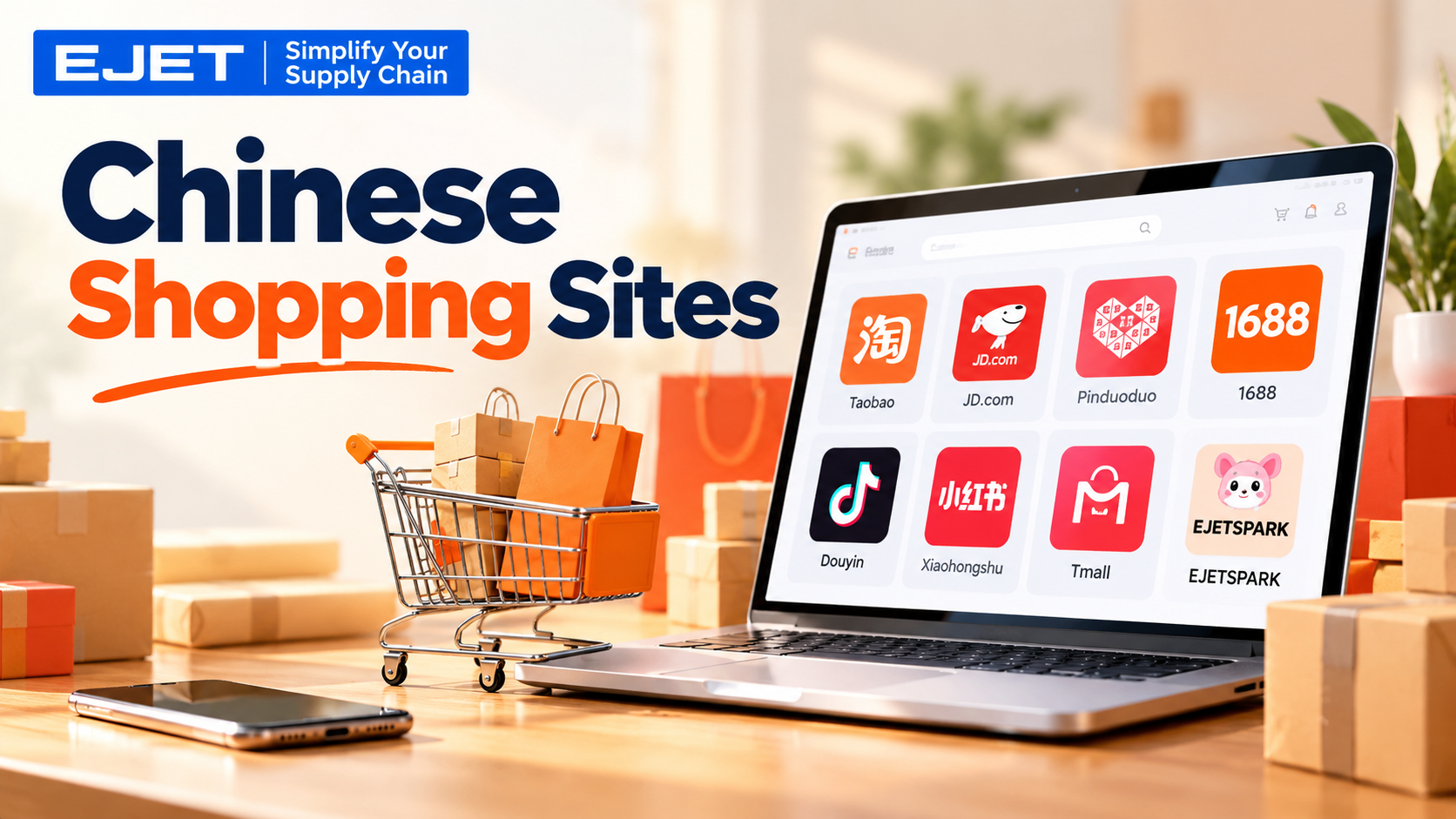
Chinese shopping sites offer several ways to buy products, from ordering individual accessories to developing a customized collection for a retail business. However, these websites serve different purposes.
A consumer marketplace, a domestic wholesale platform, and a sourcing service each require a different buying approach.
For personal purchases, we generally prioritize convenient checkout, clear delivery options, and manageable returns.
For commercial orders, we focus on product specifications, supplier capability, minimum order quantities, quality control, and total delivered cost.
Below, we compare nine Chinese shopping and sourcing websites, including EJET Spark, to help buyers choose an appropriate channel.
Chinese Shopping Sites Compared
We group these websites by their buying model and practical use rather than treating them as interchangeable platforms.
| Website | Buying model | Suitable use | Main consideration |
|---|---|---|---|
| AliExpress | International retail marketplace | Individual items and small purchases | Review each seller, listing, and delivery option |
| Alibaba.com | International B2B marketplace | Wholesale purchasing and customized products | Confirm specifications, MOQ, and order terms |
| 1688 | China domestic wholesale marketplace | Domestic supplier discovery and price research | Confirm payment, communication, and export arrangements |
| Taobao | China-focused retail marketplace | Consumer products and assortment research | Check destination-specific purchasing and shipping support |
| Tmall | Brand-focused retail platform | Branded products and official-store research | Verify store identity and warranty coverage |
| EJET Spark | Product sourcing and wholesale service | Curated retail assortments and product development | Request product-specific quotations and service terms |
| DHgate | Cross-border wholesale marketplace | Comparing smaller wholesale opportunities | Check quantity pricing and seller performance |
| Made-in-China.com | B2B supplier marketplace | Manufacturer research and specification-based sourcing | Examine supplier information and relevant audit reports |
| Global Sources | B2B sourcing platform | Supplier discovery and trade-show sourcing | Confirm production capability and purchasing requirements |
1. AliExpress: Chinese Online Shopping for Individual Purchases
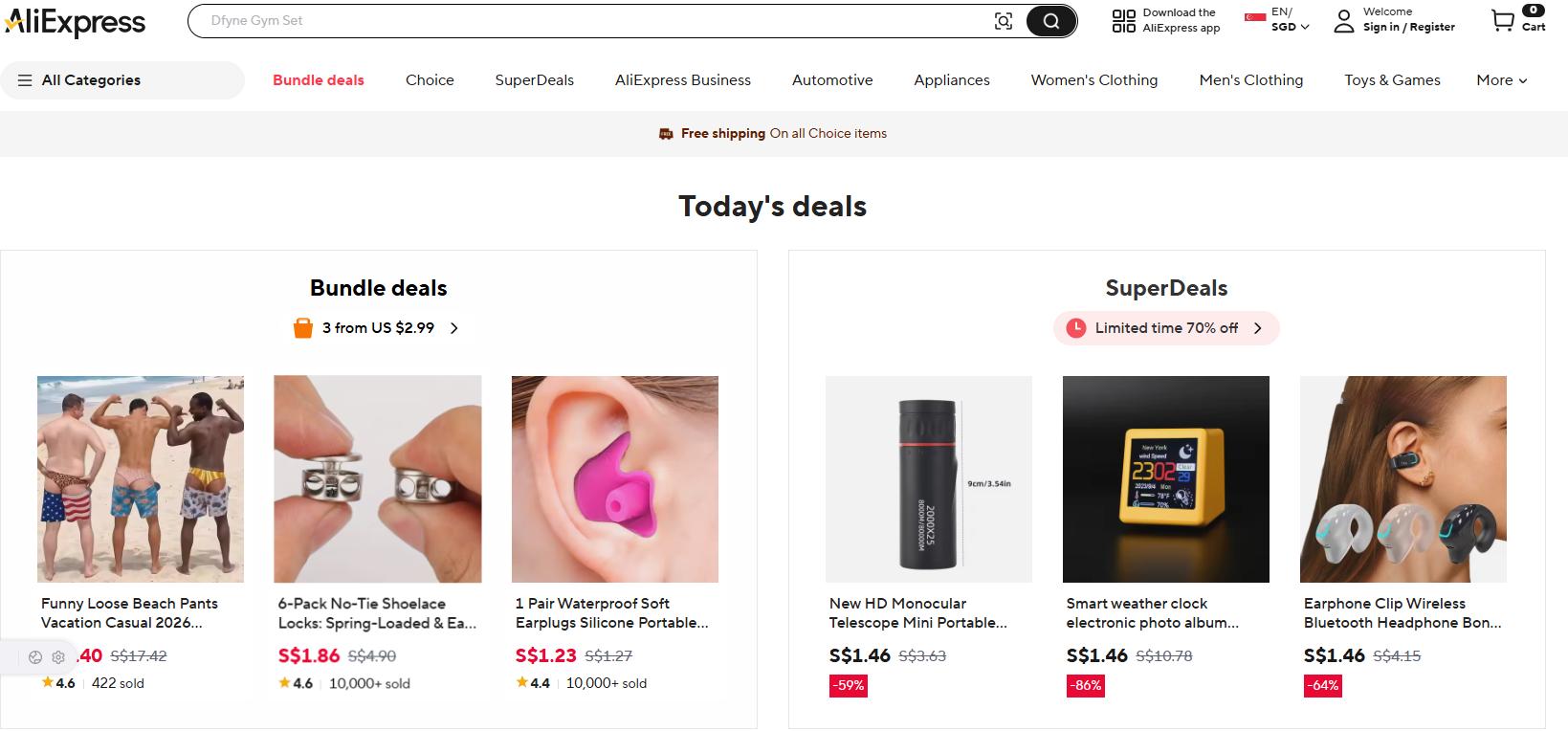
AliExpress is an international online retail platform within Alibaba Group’s business portfolio. Its consumer focus makes it a relevant starting point when we want to browse products without beginning a formal wholesale sourcing process.
We would consider AliExpress for purchasing individual accessories, comparing product styles, or assessing an item before researching a larger commercial order elsewhere.
The key is to evaluate the specific listing and seller. Similar photographs do not establish that two products use the same materials, components, or packaging.
Before purchasing, we check:
- The selected size, color, model, and quantity.
- Recent reviews that discuss actual product performance.
- Shipping availability for the destination.
- The estimated delivery window.
- Return conditions shown for that order.
For resale, a successful retail purchase should be treated as an initial product assessment. We still need to establish repeat-order consistency, commercial pricing, and suitable documentation before building an inventory plan around it.
2. Alibaba.com: Wholesale Purchasing and Customized Products
Alibaba.com provides an international B2B buying environment for finding ready-to-ship products and suppliers that can customize products. Its buyer services also include Trade Assurance, an order protection service subject to applicable terms.
We would shortlist Alibaba.com when the purchasing brief includes a defined quantity, branded packaging, particular materials, or changes to an existing design.
An effective inquiry should specify the product’s dimensions, materials, intended application, quantity, packaging, and delivery destination. Asking several suppliers to quote against the same brief makes the responses easier to compare.
The advertised unit price is only a starting point. We also request sample costs, customization charges, production lead times, carton measurements, and shipping terms. Before payment, we ensure that the written order reflects the agreed requirements and review the protection available for that transaction.
3. 1688: Domestic Wholesale Product Research
1688 is Alibaba Group’s domestic wholesale marketplace in China. Its domestic orientation distinguishes it from Alibaba.com’s international B2B buying environment.
We would use 1688 to research wholesale product options, compare supplier offers, and investigate potential sources within China.
For an overseas buyer, the practical question is whether the complete purchase can be executed efficiently. We need to establish who will communicate with the supplier, receive the goods, inspect them, and arrange international shipment.
A low domestic quotation may become less attractive after adding local delivery, purchasing assistance, consolidation, and freight. We therefore compare the cost of receiving acceptable goods at the destination, rather than ranking suppliers by the first price displayed.
For repeat orders, we also ask whether the quoted product is regularly available and whether its specifications can remain consistent.
4. Taobao: Consumer Shopping and Product Assortment Research
Taobao is a Chinese retail e-commerce platform covering a broad range of consumer needs. Alibaba describes its ecosystem as including products from individual stores, small businesses, and other retail channels.
We would consider Taobao for discovering consumer styles, exploring niche products, and studying how sellers present different product variations.
For retail businesses, it can also support assortment research. We can examine color combinations, packaging approaches, accessories, and customer feedback before preparing a wholesale sourcing brief.
However, finding an attractive retail listing does not establish commercial supply capability. Before planning a larger purchase, we confirm stock availability, repeat-order pricing, packaging consistency, and shipping arrangements.
International buyers should check the purchasing and delivery options available to their location for the particular item. Where an intermediary is involved, its fees and return process belong in the cost comparison.
5. Tmall: Branded Products and Official-Store Research
Tmall is Alibaba’s brand-focused retail platform serving Chinese consumers. It is relevant when we want to research branded products and compare their retail presentation.
We would use Tmall to investigate product ranges, model differences, packaging, and brand positioning.
When purchasing a branded item, we verify the seller’s identity and examine the exact model offered. For electronics, that includes checking language settings, plug specifications, accessories, and warranty coverage relevant to the intended destination.
For commercial buyers, retail availability does not establish distribution rights. If we intend to resell branded goods, we separately confirm authorization, territory restrictions, and access to the documents required by our sales channels.
6. EJET Spark: Curated Product Sourcing for Retailers and Brands
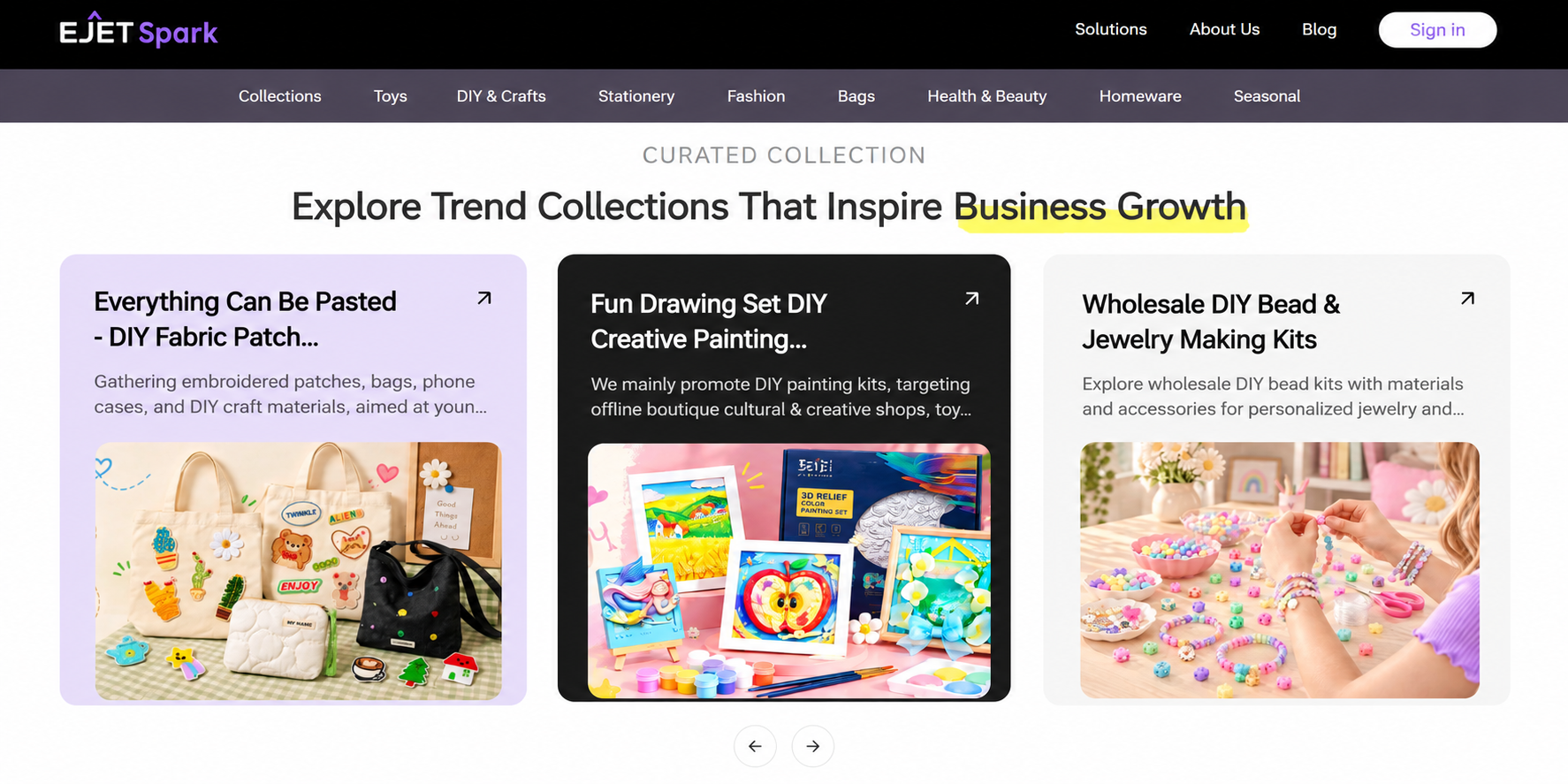
EJET Spark belongs in this comparison as a product sourcing and wholesale option for business buyers. Its website describes solutions for retailers, brands, distributors, and entrepreneurs, including product selection, customized development, and IP collaboration opportunities.
We would consider EJET Spark when the objective is to build a coordinated product assortment with sourcing support.
Its published workflow begins with submitting an inquiry, followed by product recommendations and quotation confirmation, then production and delivery coordination. This provides a service-led route for buyers who want assistance moving from product discovery to execution.
A useful inquiry should include:
- Target market and customer profile.
- Product categories and preferred styles.
- Expected quantities and budget.
- Branding or packaging requirements.
- Required delivery date and destination.
We recommend requesting product-specific details on minimum quantities, sampling, customization, inspection scope, and delivery responsibilities. For products involving intellectual property, we also confirm the relevant licensing and territory permissions before ordering.
7. DHgate: Cross-Border Wholesale Shopping
DHgate operates a wholesale marketplace connecting buyers with sellers. Its official app description presents purchasing services that include payment and international logistics functions.
We would examine DHgate when comparing smaller wholesale opportunities and quantity-based offers.
The most useful comparison is between the exact quantities and specifications we intend to order. A price shown for one quantity tier may not apply to a smaller purchase, a different variant, or alternative packaging.
We review seller feedback, ask questions about unclear specifications, and retain written confirmation of important requirements. For branded-looking merchandise, we request evidence of authorization rather than relying on photographs or product titles.
A trial order can help assess workmanship and communication before we consider a larger commitment.
8. Made-in-China.com: Supplier Research for Defined Product Requirements
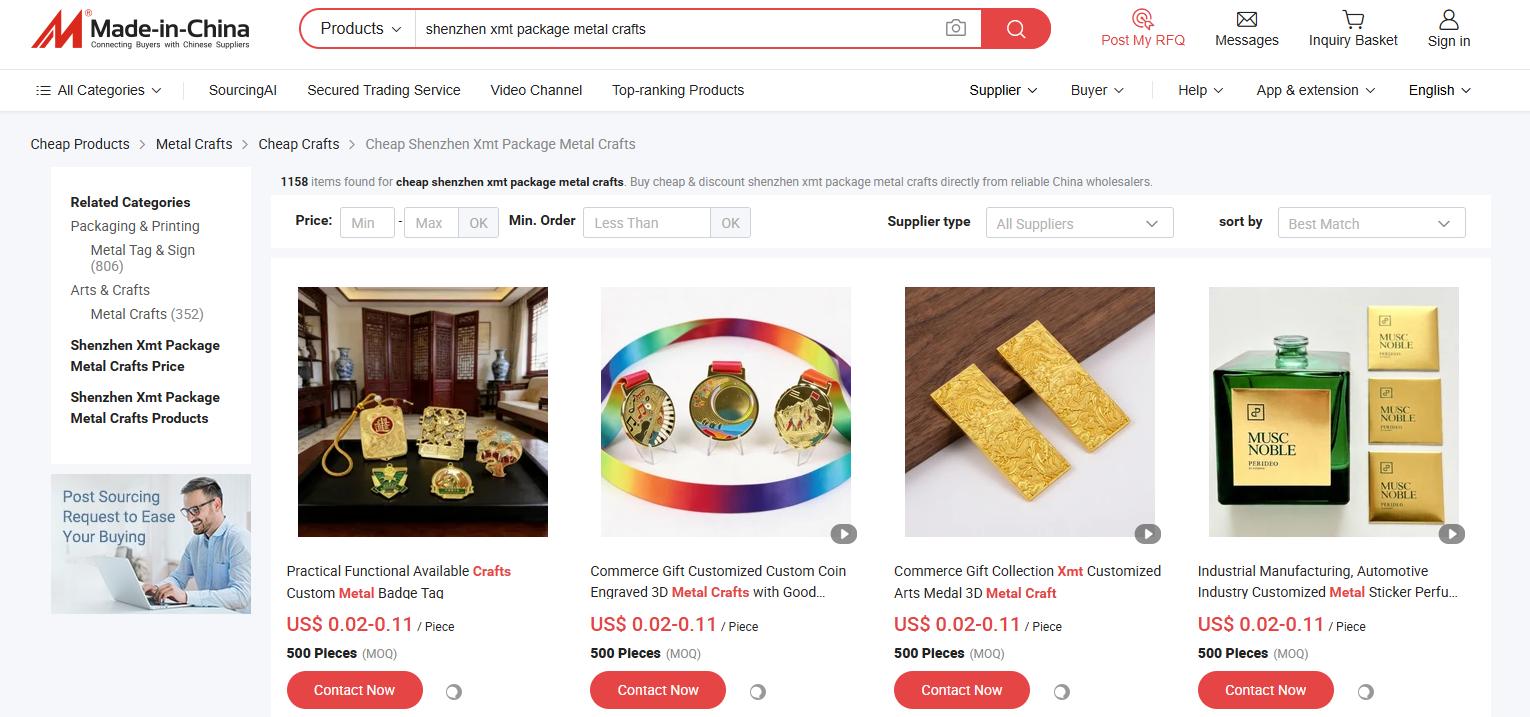
Made-in-China.com is a B2B sourcing platform where buyers can research suppliers and products. Its purchasing guidance recommends examining supplier profiles and checking Audited Supplier information during evaluation.
We would consider it when purchasing requires detailed technical discussions or a structured comparison of manufacturing capabilities.
Instead of sending a general request for a “good-quality product,” we provide measurable requirements. These might include dimensions, tolerances, material grades, finishes, performance criteria, and packaging specifications.
Where audit information is available, we check its date, scope, and connection to the company providing the quotation. We then assess the proposed product separately through samples, documentation, or inspection appropriate to the order.
9. Global Sources: B2B Supplier Discovery and Trade-Show Sourcing
Global Sources connects international buyers with suppliers, primarily from Asia. Its sourcing services include an online platform and trade-show-related tools.
We would use Global Sources to develop a supplier shortlist and organize more detailed sourcing discussions.
For a productive comparison, we ask each candidate about product specialization, production lead times, customization, sample procedures, and relevant export experience.
If attending a sourcing exhibition, we prepare a brief in advance and record the exact models discussed. This helps prevent confusion when several suppliers display visually similar products.
Following initial contact, we request a written quotation and confirm which company will manufacture, invoice, and fulfill the order.
How We Choose the Right Chinese Shopping Site
The appropriate platform depends on the purchasing objective.
For individual purchases, we prioritize accessible checkout, destination-specific delivery, and clear return terms. AliExpress provides an international retail starting point, while Taobao and Tmall warrant closer examination of the purchasing arrangements available to the buyer.
For wholesale and customized orders, we compare supplier capability and commercial terms. Alibaba.com, Made-in-China.com, and Global Sources provide channels for that research.
For domestic wholesale discovery, we consider 1688 alongside the practical costs of purchasing and exporting.
For curated product sourcing, we assess EJET Spark’s proposed assortment and service scope against the project brief.
Compare Total Delivered Cost Before Ordering
To compare Chinese shopping sites accurately, we calculate more than the product price:
Total delivered cost = goods + delivery within China + purchasing and handling fees + inspection + packaging + international freight + applicable import charges + destination delivery.
For example, a hypothetical order of 100 products at $3 each costs $300 before other expenses. If handling, transport, and destination charges total another $180, the delivered cost becomes $4.80 per unit.
We also allow for unsellable units, returns, and storage when estimating resale margins. These calculations help us decide whether an apparently inexpensive product remains commercially viable.
Frequently Asked Questions About Chinese Shopping Sites

Which Chinese shopping site is best for beginners?
For an individual purchase, we would begin by comparing international retail listings on AliExpress. For a business order, we would first prepare a purchasing brief, then compare suitable suppliers or sourcing services.
Is 1688 always cheaper than Alibaba.com?
We would not assume so. A meaningful comparison requires matching specifications, quantities, quality expectations, and delivery responsibilities. The lower listed price may produce a higher delivered cost.
Can we buy directly from a factory through these websites?
Some sourcing platforms provide access to manufacturers, but we verify the company’s role before ordering. We ask who produces the goods, where production takes place, and which entity appears on the quotation and invoice.
Is EJET Spark suitable for personal shopping?
EJET Spark’s published positioning centers on business sourcing and retail growth. We would assess it primarily for product assortments, wholesale inquiries, and development projects, while confirming the terms available for each request.
How can we reduce the risk of a disappointing order?
We define requirements in writing, check supplier information, approve representative samples, confirm payment and delivery terms, and arrange appropriate inspection for commercial quantities. The strongest purchasing decision combines a suitable website with a clearly documented order.