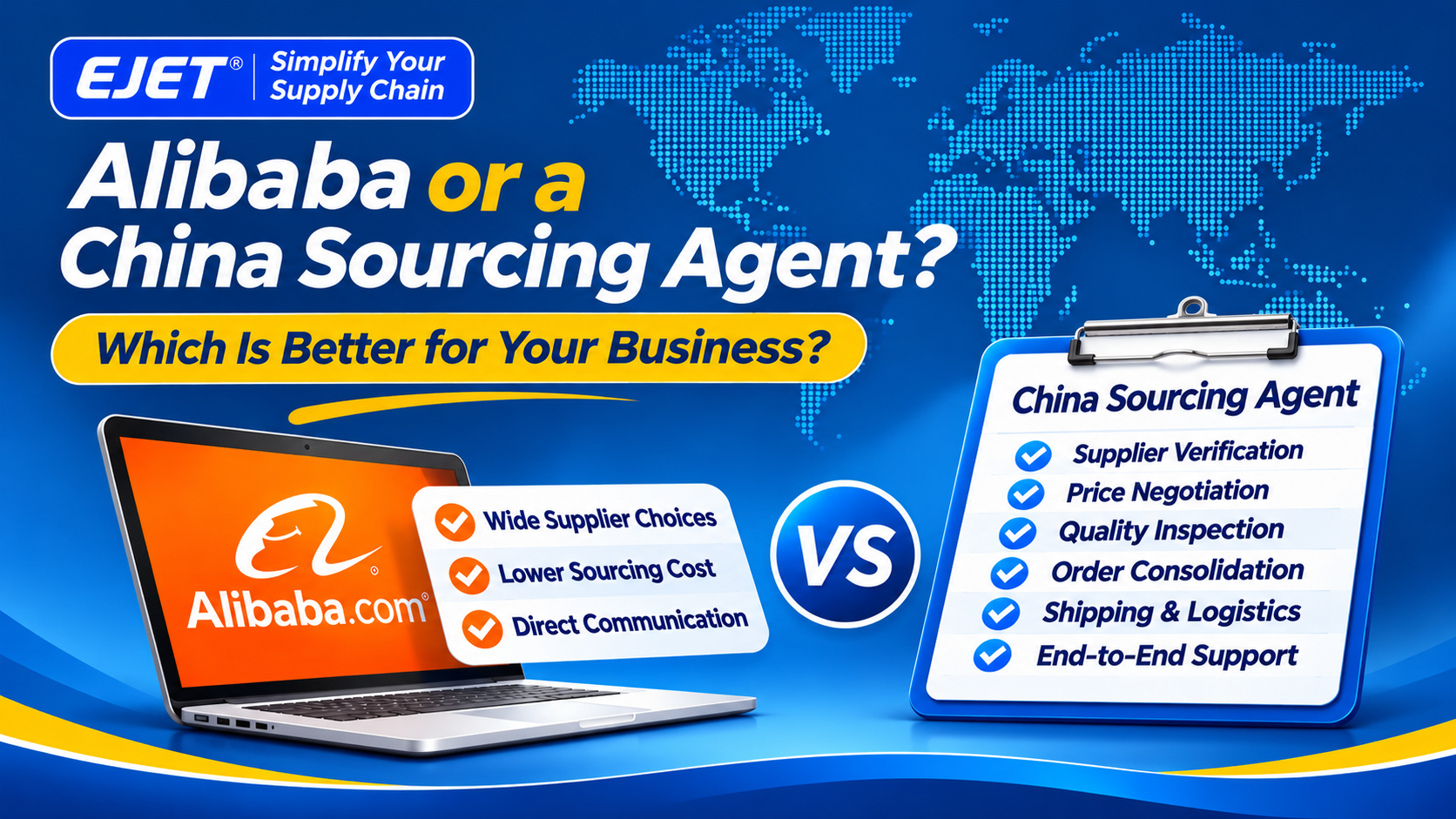
Alibaba is a strong starting point for bulk buyers who can evaluate suppliers and manage production themselves; a China sourcing agent is worth considering when an order needs more coordination, customization, or local oversight.
Neither route automatically delivers a lower total cost or a safer purchase.
This comparison explains where each approach fits, which responsibilities stay with you, and how to choose without paying for support you do not need.
Which is better for bulk orders: Alibaba or a China sourcing agent?
Choose direct Alibaba buying when your specifications are clear, your supplier options are manageable, and your team can handle verification, negotiation, and follow-up.
Consider agent-assisted sourcing when several factories, complex specifications, or limited internal capacity make hands-on coordination valuable. Treat this as a workload decision rather than a simple contest between a website and a person.
Alibaba provides tools for discovering suppliers, discussing requirements, placing orders, and accessing eligible order protection. A sourcing service can take on selected operational tasks, such as supplier screening, procurement coordination, or project management, depending on its contract. These are different functions, so the two approaches can also work together.
For example, consider two hypothetical purchases. A repeat order of a standard storage container from an established supplier may need little intervention. A coordinated launch involving a custom container, printed packaging, and accessories from separate factories deserves a more detailed management plan.
The second project does not automatically require an agent. It does require someone to own the dependencies, approve changes, and resolve conflicting timelines. Your decision should identify who can do that work reliably.
The practical differences at a glance
Use this table to assign responsibilities before comparing quotes. The agent column describes services to request and verify, not a package every provider includes. Alibaba’s own buying guidance recommends detailed orders, samples, and production monitoring or inspection as additional safeguards.
|
Decision area |
Direct Alibaba buying |
Agent-assisted sourcing |
|---|---|---|
|
Supplier discovery |
You search, shortlist, and contact suppliers |
Specify whether the agent must identify new suppliers or assess your shortlist |
|
Supplier verification |
You review records and commission further checks |
Define required background checks, visits, and reporting |
|
Negotiation |
You compare terms and communicate directly |
Set negotiation objectives and require disclosure of fees and incentives |
|
Quality checks |
You arrange inspections and interpret results |
Confirm who inspects, who reports, and who authorizes corrective action |
|
Order management |
Your team tracks approvals, milestones, and changes |
Assign named responsibilities and escalation procedures |
|
Relationship control |
Keep supplier contacts and purchasing records internally |
Establish access to factory identities, records, and communications |
|
Payment arrangements |
Review the protection and terms of the specific order |
Identify the contracting seller, payment recipient, and applicable protections |
Do not score either route on the number of tasks it appears to cover. Score it on whether those tasks have clear deliverables and accountable owners. An impressive service list is less useful than a modest scope executed transparently.
Alibaba pros and cons for bulk purchasing
Alibaba supports a buyer-led sourcing process: you can communicate with sellers, request samples, document requirements, and place eligible protected orders. Its guidance also encourages keeping relevant communications within its messaging system. That creates a useful starting framework, but buyers still need to define what an acceptable product looks like.
Where direct buying makes sense
Direct buying is worth considering when you want to develop your own supplier knowledge. Ask each shortlisted seller the same questions about materials, production capacity, packaging, minimum order quantities, and shipment timing. Keep the answers in a comparison sheet rather than relying on the impression created by a polished listing.
A focused shortlist is easier to evaluate than dozens of loosely relevant conversations. Start by eliminating suppliers that cannot explain how they will meet your requirements. Then use samples and further checks to investigate the remaining candidates.
This approach suits a buyer prepared to own the process. You should be comfortable challenging unclear answers, recording agreed changes, and arranging specialist help when necessary.
Where the workload becomes a drawback
Direct buying deserves reconsideration when too much depends on your team chasing individual updates. Before proceeding, ask who will track sample revisions, inspect packaging artwork, reconcile quantities, and resolve a missed production milestone. If the answer is always the same overloaded person, the purchasing plan needs more support.
Do not mistake quick replies for production readiness. Request evidence tied to the milestone: an approved sample reference, a completed specification sheet, or an inspection report. Alibaba itself recommends samples, detailed purchase orders, and production monitoring or inspection alongside platform protection.
What a China sourcing agent should add
Evaluate a China sourcing agent by the work it will perform, not by a promise to find “the best factory.” Request a written scope covering supplier identification, screening, sample coordination, production follow-up, and any logistics support you need. Sourcing and manufacturing-support providers offer different combinations of these functions, so do not assume they are bundled.
Ask for deliverables you can review. A shortlist should explain why each candidate fits; a production update should identify progress, open issues, and the next decision. “Everything is fine” is not an adequate management report.
For a customized product, require the agent to show how an approved change reaches the factory’s working documents. For multiple suppliers, require a shared schedule showing dependencies between components and packaging. These requirements make the service easier to assess before a missed detail becomes an expensive problem.
Keep incentives and access visible
Ask how the provider earns money and whether it receives supplier-side payments. Also establish whether you can communicate with factories directly and retain sourcing records after the engagement ends. These are sensible transparency requirements, particularly when the provider influences both supplier selection and purchasing decisions.
Fee structures are not uniform. Sofeast, for example, describes a time-based professional-services model and some fixed-fee deliverables rather than an order-percentage arrangement. This illustrates why you should compare the actual commercial model instead of assuming all sourcing support is priced alike.
What costs should you compare before choosing?
Compare the total cost of receiving usable inventory, not just the supplier’s unit price or the agent’s fee. Build equivalent budgets for both routes, including the same product specifications, quantities, inspection scope, shipping responsibilities, and delivery destination. Otherwise, the apparently cheaper offer may simply leave more work or expense outside the quote.
Use the following worksheet categories:
- Product and setup: Unit price, samples, tooling, artwork setup, packaging, and customization charges.
- Sourcing support: Agent fees or the internal staff time needed to perform the same tasks.
- Verification and quality: Background checks, factory assessments, inspections, testing, and any agreed reinspection.
- Movement and handling: Collection, consolidation, storage, freight, insurance, and destination handling where applicable.
- Payment: Transfer charges, payment-processing fees, and any disclosed currency-conversion cost.
- Import expenses: Obtain product-specific estimates for duties, taxes, brokerage, and other applicable charges from appropriate specialists.
- Contingency: Set a planning allowance for plausible rework, replacement, or delay scenarios without presenting it as a guaranteed expense.
Ask every quoting party to mark each line as included, excluded, estimated, or not applicable. Also specify quote validity and the assumptions behind freight estimates. You need a comparable cost boundary before you can judge value.
Test the agent’s value against a defined workload
Request a service quote tied to your project rather than asking only for a commission percentage. Separate one-time supplier development from recurring order management, and identify optional work. This lets you decide whether full-service support or a narrower engagement fits the purchase.
Do not assume an agent will negotiate a lower factory price. Sofeast explicitly notes that price and payment terms depend on factors including quantity and supplier motivation, and cautions against pursuing a lower purchase price at the expense of total ownership cost. Evaluate service value through the complete project budget.
Supplier verification requires more than a badge
Alibaba’s Verified Supplier program includes third-party assessment of areas such as company profiles, production capabilities, and process controls, with assessment reports available to buyers. Alibaba also states that it does not itself guarantee seller products or certificate authenticity. Treat the assessment as evidence to examine, not a substitute for order-specific due diligence.
Read the report with your product requirements beside it. Check whether the assessed business, locati0n, equipment, and capabilities match the operation you intend to use. Record unanswered questions and request clarification before committing to production.
Apply the same discipline to agent recommendations. Ask what was checked, when it was checked, who performed the work, and which limitations remain. A supplier should not pass your review merely because someone says they have used it before.
Your verification brief should request:
- The legal identity of the proposed seller and the identity of the manufacturing site.
- An explanation of any trading-company or subcontracting role.
- Evidence relevant to the actual product and process, rather than unrelated certificates.
- Confirmation of the contracting party and intended payment recipient.
- A written list of unresolved concerns and the checks proposed to address them.
Quality checks must connect samples to bulk production
Build quality checks into the purchasing plan instead of treating them as a final administrative step. Inspection providers distinguish between checks at the beginning of production, during production, before shipment, and at loading. Choose the stages that address your product’s risks rather than assuming one final visit answers every question.
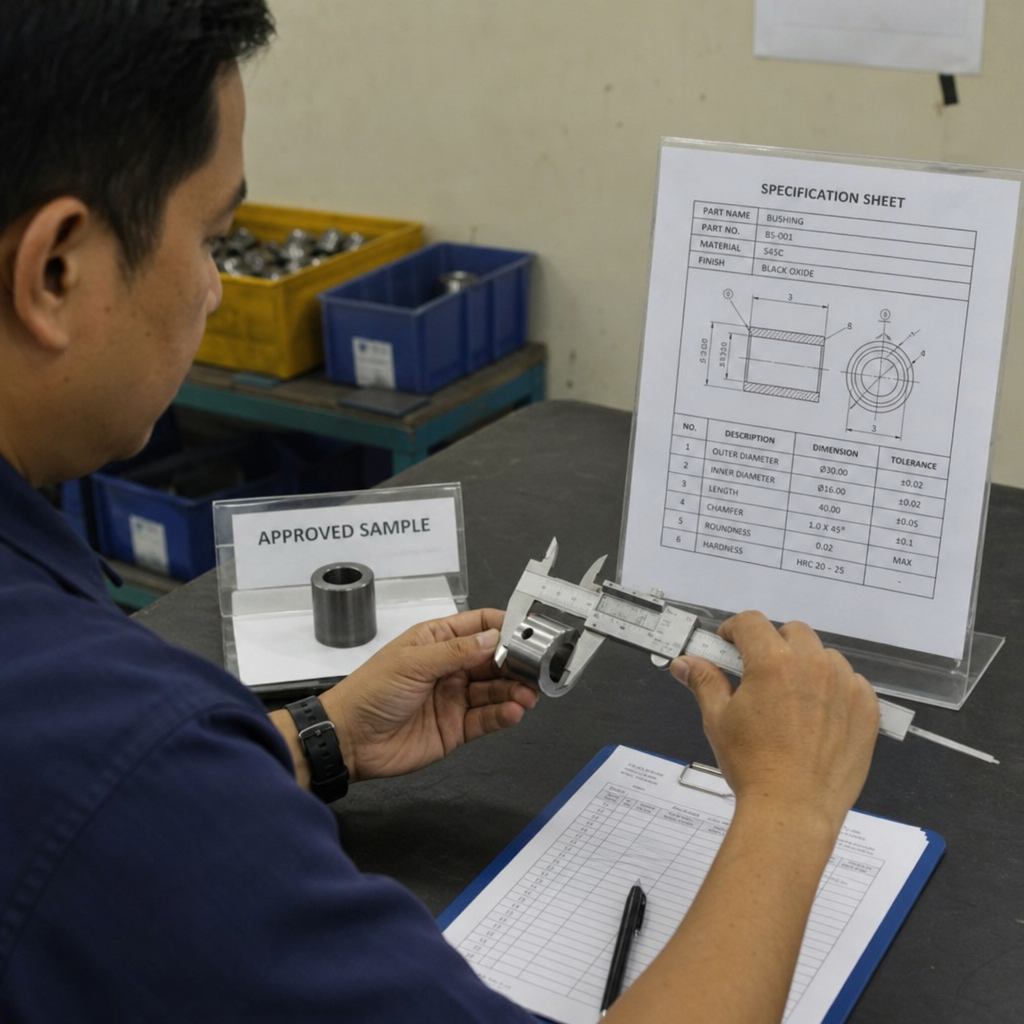
Start with a specification sheet and an approved reference sample. Define materials, dimensions, tolerances, appearance, function, labeling, and packaging wherever relevant. Replace vague requirements such as “premium finish” with observable acceptance criteria.
For example, a hypothetical fabric-bag order might specify material, dimensions, stitching details, handle attachment, print placement, and packing method. Give the same requirements to the supplier, agent, and inspector. That creates one reference point when opinions differ.
Separate inspection from acceptance decisions
Ask who selects inspection samples and how results will be reported. QIMA, for example, describes independent selection of samples at the factory using a defined sampling approach, rather than accepting only supplier-selected units. Clarify the method before booking any inspection service.
Decide in advance who can approve shipment, accept a deviation, or require corrective action. Request photographs, measurements, and a clear record of failed checks. Also distinguish physical inspection from any laboratory testing your product requires; manufacturing-support providers offer these as separate quality activities.
Communication and order management need a shared system
Use a shared order record regardless of who coordinates production. Give every specification revision a date or version number, keep approvals identifiable, and summarize decisions in writing. The goal is to make the current requirement clear to someone who did not attend the last call.
For each active order, track at least these milestones:
- Specification approval: Identify the authorized product and packaging versions.
- Sample approval: Record the accepted sample and any remaining changes.
- Production readiness: Confirm materials, open questions, and the proposed schedule.
- Production follow-up: Assign an owner to each issue and a response deadline.
- Inspection and correction: Document findings, corrective work, and any reinspection.
- Shipment approval: Confirm who authorizes release and which documents are required.
Set an escalation rule as well. Specify what happens when a deadline slips, a material substitution is proposed, or the supplier requests a payment change. An agent should make these decisions easier to see, not become another layer through which information disappears.
For eligible Alibaba orders, keep material terms and supporting records in the platform’s order and communication system. Alibaba describes those records as central to reviewing quality or shipment disputes. An external conversation should not be the only place a critical agreement exists.
Payment protection and accountability are different safeguards
Alibaba Trade Assurance applies to eligible orders placed and paid through the supported platform process. Its usefulness depends on the written terms, payment route, evidence, and applicable claim requirements; a refund is not automatic simply because a buyer is dissatisfied. Review the protection attached to the particular order before paying.
If an agent introduces a supplier or manages the transaction, map the arrangement explicitly. Identify who sells the goods, who receives your money, and whether your purchase uses an eligible Alibaba order. Do not assume an introduction made through Alibaba extends platform protection to a separate transaction; Alibaba says off-platform payments cannot receive Trade Assurance protection.
Keep import responsibilities explicit
For U.S. purchases, establish who will act as importer of record and obtain product-specific advice before shipment. CBP describes reasonable care as an importer responsibility, including where an importer uses others to assist with transactions. Hiring sourcing support should therefore not be treated as a complete transfer of compliance responsibility.
Ask your customs broker and relevant product-compliance specialists to confirm the documentation and requirements for the actual goods. Keep their findings alongside the purchasing specification. Neither a marketplace badge nor a general sourcing promise answers every import question.
Ideal buyer profiles for each sourcing route
The most useful China sourcing agent vs Alibaba comparison starts with your internal capabilities. Use the profiles below as decision prompts, not rigid categories. A first-time buyer with strong technical support may need less coordination help than an experienced buyer launching an unfamiliar product.
Direct buying: a focused purchase with an accountable owner
Consider direct buying when you can write a clear specification, compare supplier evidence, and assign someone to manage the order through delivery. It is especially worth evaluating for a straightforward purchase or repeat order with limited coordination needs. Budget for independent checks rather than treating the absence of an agent fee as the entire saving.
Before choosing this route, ask the proposed order owner to describe the inspection plan and escalation process. If those answers are incomplete, fill the gaps with targeted support. You do not have to outsource the whole purchase.
Agent assistance: coordination that exceeds internal capacity
Consider agent assistance when the project involves several factories, extensive revisions, or more local follow-up than your team can provide. Ask prospective providers to explain how they would manage your specific dependencies. Prefer a concrete reporting plan over broad claims about contacts or negotiating power.
Start with a bounded engagement where practical: supplier screening, sample coordination, or management of an initial order. Set deliverables and review performance before expanding the scope. This makes the buying decision more testable.
A hybrid model: retain control and buy specialist help
A hybrid model lets you keep supplier selection and commercial decisions while commissioning particular checks or coordination tasks. Alibaba recommends third-party inspection as an additional safeguard, while manufacturing-support firms offer separate auditing, quality, and supplier-management services. There is no need to treat sourcing as an all-or-nothing choice.
For example, you could discover suppliers yourself, commission due diligence, and use an independent inspector before shipment. Or retain a sourcing specialist only through sample approval. Write down where each engagement starts and ends so responsibility does not fall between providers.
Alibaba alternatives and a practical next step
Evaluate Alibaba alternatives by the gap you need to fill. Your next step might be another supplier-discovery channel, direct manufacturer outreach, or a specialist service rather than a replacement marketplace.
Sofeast, for example, encourages buyers to obtain firsthand marketplace offers as part of understanding available pricing, illustrating how different sourcing strategies can complement one another.
Use this China sourcing guide as a decision framework: prepare one product brief, build comparable budgets, and assign every critical responsibility. Then request evidence that the proposed supplier or service can perform the work. Avoid choosing first and designing the controls afterward.
For bulk orders, the better route is the one that gives you sufficient oversight at a justified total cost. Choose direct buying when you can own the process, agent assistance when you need defined operational help, and a hybrid when only specific gaps need filling.
Frequently Ssked Questions About Alibaba vs China Sourcing Agent
What are the main differences between buying directly from Alibaba and using a China sourcing agent?
Direct buying from Alibaba allows buyers to communicate with suppliers and manage their orders independently, while a China sourcing agent can provide hands-on support with tasks such as supplier verification, negotiation, and quality checks, especially for complex orders.
When should I consider using a sourcing agent instead of Alibaba?
Consider using a sourcing agent when your order involves multiple factories, complex specifications, or when you need more local oversight than your team can provide. A sourcing agent can simplify coordination and ensure quality control.
Can I save money by buying directly through Alibaba?
While buying directly through Alibaba may appear cheaper initially, it is crucial to consider the total cost of receiving usable inventory, including sourcing support, verification, quality checks, and shipping expenses. A detailed budget comparison between the two options is recommended.
How can I verify the credibility of suppliers on Alibaba?
You can verify suppliers on Alibaba by reviewing their records, checking their ratings and reviews, and potentially commissioning further background checks or factory visits. Utilizing Alibaba’s Verified Supplier program can also provide third-party assessments of suppliers.
What should I include in my quality check plan when sourcing products?
Your quality check plan should specify required inspections at different production stages, outline clear criteria for acceptable product quality, and detail the responsibilities for selecting inspection samples and reporting results. Establishing clear acceptance criteria is essential to avoid disputes later on.