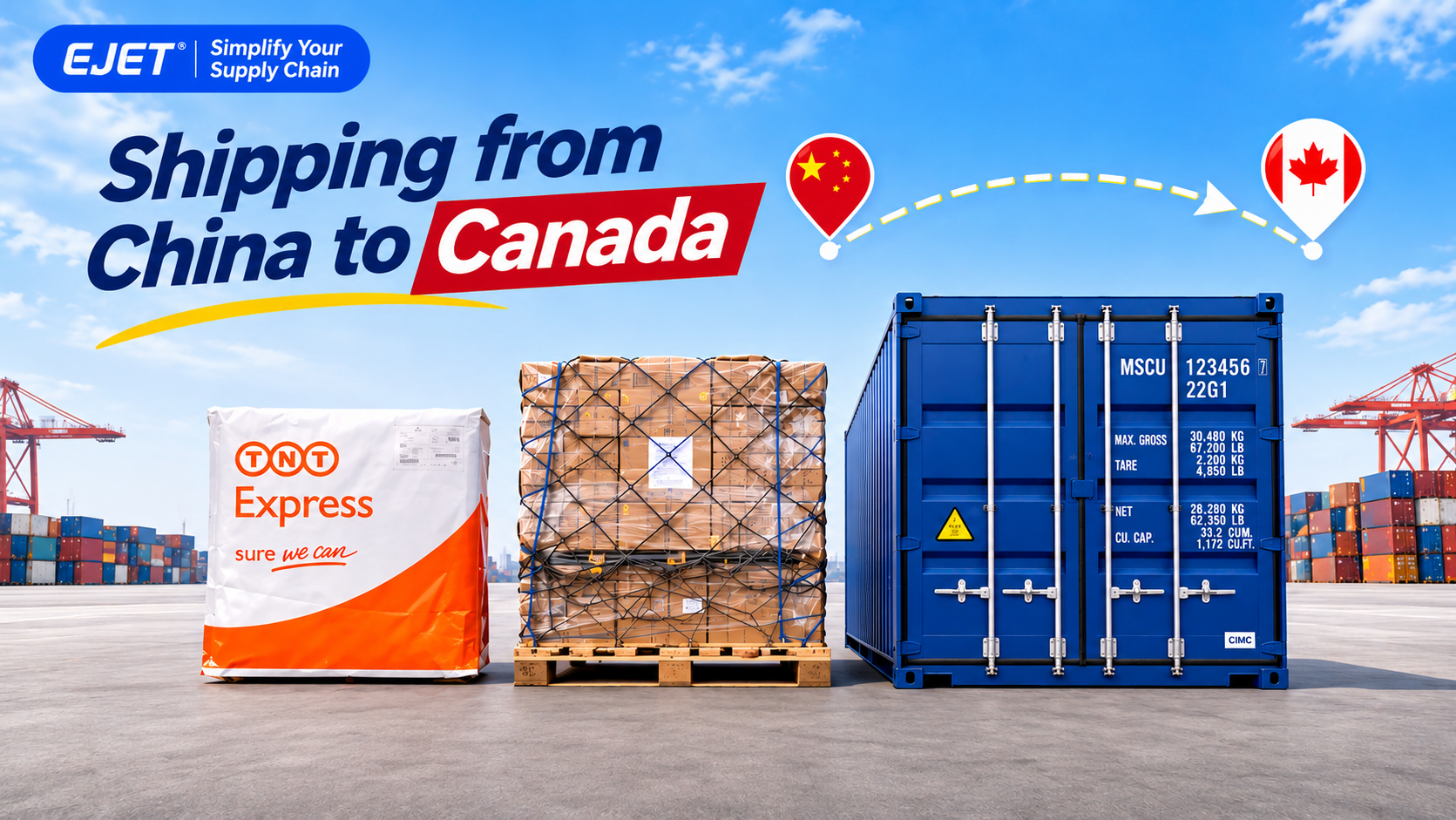
Shipping from China to Canada starts with matching your cargo, deadline, and budget to the right transport service. Express, air freight, and ocean freight serve different needs, while customs requirements and destination charges affect the final bill.
This guide explains how to compare options, understand chargeable weight, prepare paperwork, and avoid preventable surprises.
What is the best way to ship from China to Canada?
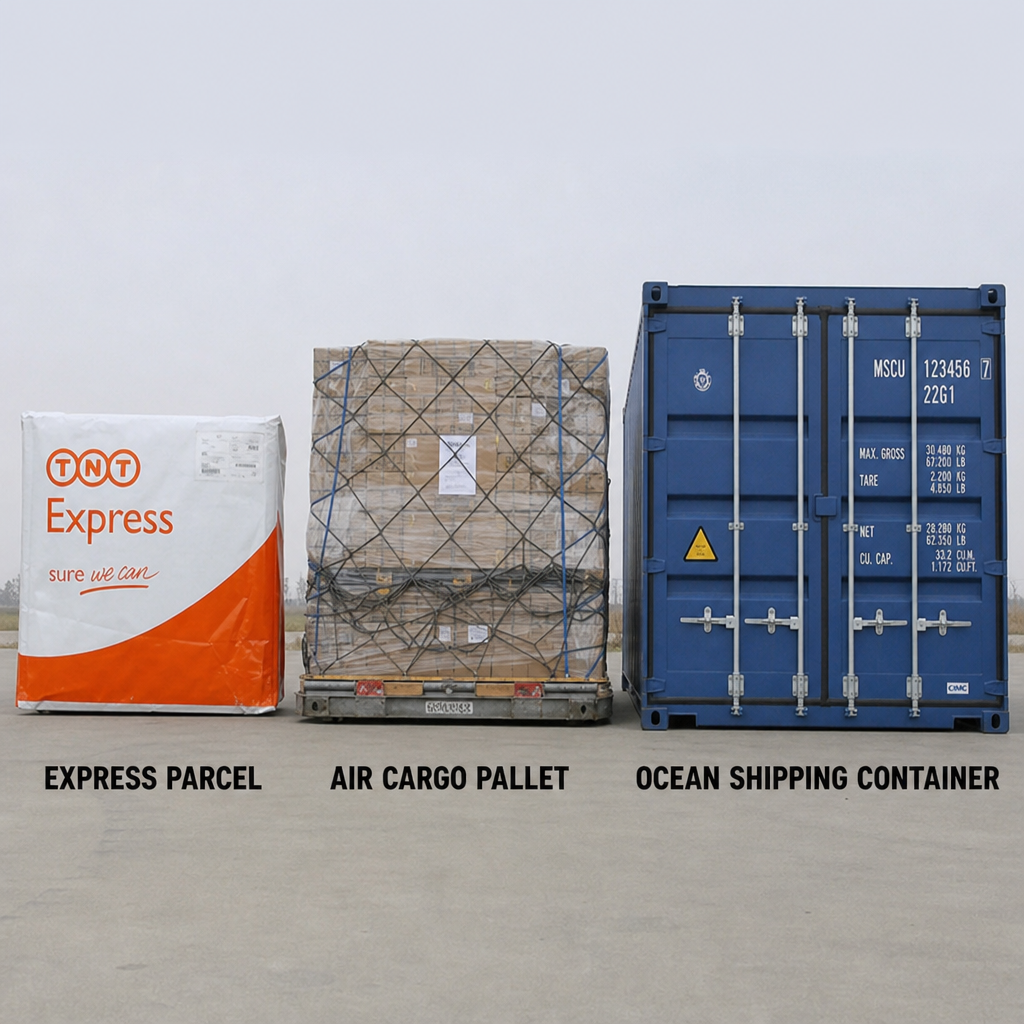
The best method depends on shipment size, urgency, and the total delivered cost. Express courier suits small, urgent shipments; air freight offers speed for larger time-sensitive orders; and ocean freight is worth comparing for bulky cargo when delivery dates allow.
There is no universal weight threshold at which one option becomes cheapest, so compare quotes for your actual shipment.
Use these starting points when requesting quotes:
- Express courier: Consider it for samples, replacement parts, and small orders with firm deadlines. Confirm customs services and delivery coverage.
- Air freight: Compare it for urgent commercial inventory. Ask whether airport handling, clearance, and final delivery are included.
- Less-than-container-load ocean freight (LCL): Your goods share container space with other shipments. Compare the complete bill, including handling and destination charges.
- Full-container-load ocean freight (FCL): You book a container for your goods. Request an FCL alternative when an LCL shipment becomes substantial, rather than assuming shared space remains cheaper.
For example, consider sending launch samples by express while requesting ocean quotes for the main inventory order. Treat this as a planning option, not an automatic saving: the extra booking and handling must still make financial sense.
How long does shipping from China to Canada take?
Shipping from China to Canada can take several days by express, roughly a week or more by air freight, and several weeks by ocean. Freightos gives broad normal-condition planning estimates of around three days for express, eight to ten days for air freight, and thirty to forty days for ocean freight. These are estimates, not guaranteed delivery commitments for your addresses.
The useful question is what the quoted clock includes. A sailing duration is not the same as factory-to-warehouse lead time, and an airport arrival does not mean goods are ready for sale. Pickup, consolidation, customs clearance, and inland delivery all need consideration.
Ask your provider to identify these milestones:
- Cargo-ready date and collection date.
- Planned departure and arrival.
- Expected clearance and cargo-availability date.
- Delivery appointment at the final address.
Build your purchasing schedule around the final milestone. Before committing to a launch date, ask how holidays, missed departures, inspections, or route changes would affect that booking. Location, shipment size, season, and operating conditions can all change transit times.
What determines the shipping cost from China to Canada?
The shipping cost from China to Canada depends on transport mode, origin and destination, cargo dimensions, weight, and service scope. A useful quote must identify both the freight charge and the extra services needed to reach your delivery address. Comparing only the headline rate can hide meaningful differences between offers.
Request itemized figures for pickup, export handling, international transport, destination handling, brokerage, and inland delivery. Ask separately about insurance, storage, inspections, and special delivery requirements. Not every charge applies to every shipment; the purpose is to distinguish included services from possible extras.
For budgeting, use this framework:
Landed cost = goods + transport and handling + applicable duties and taxes + other delivery-related charges.
Keep currency visible throughout your comparison. Request a stated quote-expiry date and identify which charges remain estimates. A cheaper international leg is not necessarily a cheaper delivered order once you compare the same services.
Understanding the shipping from China to Canada price per kg
A shipping from China to Canada price per kg generally needs to be read against chargeable weight, not just the weight shown on a scale. Air and express pricing commonly compares actual weight with dimensional, or volumetric, weight and charges using the higher figure. The applicable calculation depends on the service.
For illustration, suppose a service uses a dimensional divisor of 6,000. A carton measuring 60 × 40 × 40 centimetres has a dimensional weight of 16 kg. If its actual weight is 10 kg, the dimensional figure would govern before any applicable rounding; confirm the provider’s divisor and billing rules rather than applying this example universally.
Ocean LCL pricing commonly uses weight or volume, while FCL uses a container-based charge. That makes a single per-kilogram comparison misleading across all shipping methods. Ask for the complete shipment price as well as the billing basis.
Canadian customs belongs in the plan
Before ordering commercial goods, confirm they are admissible, determine their tariff classification, and check applicable duties and taxes. The Canada Border Services Agency (CBSA) also directs importers to verify other government requirements, including permits and marking or labelling obligations. Transport availability does not establish that a product can legally enter Canada.
Duty depends on factors including classification, origin, and customs value. Do not assume every product shipped from China faces the same rate, and check whether additional duties or product-specific measures apply. CBSA provides classification guidance and a duties-and-taxes calculator through the CARM Client Portal.
For qualifying mail and courier shipments imported directly from China, the general duty-and-tax remission threshold is CAD 20, with exclusions and conditions. Above that threshold, applicable duties and taxes may be assessed; the higher courier thresholds associated with imports from the United States or Mexico should not be applied automatically.
Commercial importers and CARM
Commercial importers should arrange their business registration and import program account through the appropriate CBSA process before shipment. CARM is the system used to assess and pay duties and taxes on commercial imports. Confirm your setup and your broker’s access early rather than waiting for cargo arrival.
If you want release before paying duties and taxes, check the Release Prior to Payment requirements, including enrolment and financial security. Alternatively, discuss payment-at-release arrangements with your broker. Hiring a broker does not remove the importer of record’s accountability for the import.
Prepare consistent documents before collection
Have your supplier and logistics provider agree on the required documents before pickup. CBSA needs accurate information about the goods, value, origin, and classification for commercial release and accounting. Your broker should review anything unclear while corrections are still straightforward.
Use this preparation checklist:
- Commercial invoice: Provide a specific goods description, transaction details, and accurate values rather than vague descriptions such as “accessories.”
- Packing list: Request package counts, contents, gross weights, and dimensions so the shipment can be matched to its paperwork.
- Transport document: Confirm the appropriate air waybill or bill of lading with the carrier or forwarder.
- Supporting documents: Establish whether permits, licences, certificates, or origin evidence are required for the particular goods.
Check names, addresses, quantities, and product descriptions across the file. Ask the supplier to explain discrepancies before approving dispatch. Never request an artificially low invoice value as a cost-saving measure; accurate declarations belong at the centre of the process.
Clarify who pays before accepting delivery terms
Incoterms define responsibilities for tasks, costs, and risks between buyer and seller. They help clarify transport, documentation, clearance, and related obligations, but they do not replace the complete sales contract. Record the selected rule, named place, and version in your agreement.
Two terms deserve particular attention when comparing delivery offers:
- DAP, Delivered at Place: The seller arranges delivery to the named destination, while import clearance and related import charges generally remain the buyer’s responsibility.
- DDP, Delivered Duty Paid: The seller takes responsibility for import formalities and applicable import duties and taxes, as well as delivery obligations under the rule.
If an offer says “tax included” or “door to door,” ask which Incoterm applies and who will be the importer of record. Request written confirmation of exclusions and delivery conditions. Clear wording is more useful than a reassuring label.
Reduce costs without creating avoidable risk
Controlling shipping costs in Canada starts with comparing identical requirements, not chasing the smallest number in an advertisement. Give each provider the same cargo details and final address. Then evaluate the delivered total alongside timing and responsibility.
Use these practical checks:
- Measure the finished packaging. Ask for packed weights and dimensions, including pallets where applicable, before requesting firm quotes.
- Review excess space. Discuss smaller cartons or better packing arrangements without sacrificing product protection.
- Price consolidation. If buying from several suppliers, request a combined-shipment option and identify the extra collection, storage, and handling involved.
- Compare LCL and FCL when relevant. Request complete destination charges rather than comparing only the international freight component.
- Separate urgent goods from routine replenishment. Quote the alternatives before deciding whether a split shipment is worthwhile. Weight, volume, handling, and service selection all influence the comparison.
Also request the provider’s claims procedure and available insurance terms. Ask what evidence would be needed if cargo arrived damaged and who would submit a claim. Keep photographs, packing records, invoices, and correspondence together so responsibilities remain traceable.
Plan returns from Canada to China separately
The cheapest shipping to China from Canada requires a separate comparison; do not assume the inbound arrangement will apply in reverse. Canada Post lists several service types for China, with different weight limits and coverage features. Check destination restrictions and compare quotes using the packed parcel’s actual details.
Before returning goods, obtain the supplier’s authorization and confirm the receiving address. Compare transport costs with the refund or replacement value, and ask whether tracking and coverage are appropriate. Complete accurate customs information and verify that the contents are accepted by the selected service and destination.
A better booking starts with better information
Reliable China to Canada shipping starts with a clear brief: what the goods are, how they are packed, where they must arrive, and when they are needed. Compare complete quotes, resolve customs responsibilities before dispatch, and keep the paperwork consistent. The strongest choice is the service that meets your deadline with costs and obligations you understand.
Frequently Asked Questions Related to Shipping from China to Canada
How long does shipping from China to Canada typically take?
Shipping can take several days by express (around 3 days), about 8 to 10 days by air freight, and 30 to 40 days by ocean freight. It's important to confirm the specific timelines with your shipping provider as they can vary.
What factors influence shipping costs from China to Canada?
Shipping costs depend on factors such as transport mode, origin and destination, cargo dimensions, weight, service scope, and any additional services required for delivery.
What is the difference between chargeable weight and actual weight for shipping?
Chargeable weight is typically calculated using either the actual weight or the dimensional (volumetric) weight, whichever is higher. It's crucial to ask your provider which weight calculation method they use for your shipment.
What customs duties and taxes apply to imports from China to Canada?
Duties depend on the tariff classification, origin, and customs value of the goods being imported. It's essential to verify admissibility, check applicable rates, and consult the Canada Border Services Agency (CBSA) for specific duties.
What documentation is required for shipping goods from China to Canada?
Key documents include a commercial invoice, packing list, transport document (like an air waybill or bill of lading), and any necessary permits or licenses related to the goods being shipped. Ensure all information is accurate and aligns with customs requirements.