Temu offers purchase protection, but that does not guarantee every product is safe, suitable, or accurately described.
Buying wholesale from China requires a different evaluation: supplier checks, product specifications, and import responsibilities matter alongside payment security.
This comparison separates those risks so you can make a more informed buying decision.
Is Temu safe for online shopping?
Temu is an operating marketplace with published purchase-protection and return policies, but it should not be treated as a blanket guarantee of product safety. Its protection program offers refunds for items that do not arrive, arrive damaged, or are not as described.
Those remedies address transaction problems; they do not establish that an item meets applicable safety requirements.
Product oversight remains a substantive concern. On November 17, 2026, the European Commission issued preliminary findings that Temu had failed to implement effective measures against illegal products, citing weaknesses in compliance checks, moderation, and seller sanctions. These are preliminary findings, not a final decision on that particular breach.
That followed a €200 million fine on May 28, 2026, for inadequate assessment of illegal-product risks. The Commission accepted a corrective action plan on October 26, 2026, but that acceptance was not a certification that all products were safe.
These are EU proceedings, not rulings that every Temu product violates US requirements.
For your own decision, separate four questions:
- Payment: Can you challenge an incorrect or unauthorized charge?
- Fulfillment: What happens if the order is missing or misdescribed?
- Product safety: Is there credible evidence supporting its intended use?
- Privacy: Are you comfortable with the information the service collects?
A satisfactory answer to one does not settle the others. Start with the potential consequences of failure, not the size of the discount.
Temu versus wholesale: convenience and control
The useful distinction is not simply “Temu versus China.” It is marketplace purchasing versus a managed supplier relationship. The China-Britain Business Council describes direct sourcing as work involving supplier due diligence, contracts, quality, transportation, and import arrangements—not merely finding a lower unit price.
Use the following comparison as a purchasing framework rather than a promise about every seller:
|
Decision factor |
Evaluating a Temu purchase |
Evaluating a wholesale supplier |
|---|---|---|
|
Order commitment |
Check quantity, variant, and checkout total |
Request minimum quantities and volume pricing |
|
Product requirements |
Assess the listed specifications |
Negotiate written materials, dimensions, and tolerances |
|
Quality evidence |
Examine listing details and buyer feedback |
Request samples, testing, and inspection arrangements |
|
Problem resolution |
Read platform protection and return terms |
Agree on remedies for defects and short shipments |
|
Repeat purchasing |
Recheck the listing before reordering |
Establish specifications and change-control procedures |
For one noncritical item, consider whether a sourcing project would be disproportionate. For repeat business inventory, ask whether you need documented consistency, traceability, or customized packaging. Choose the process that fits those requirements rather than assuming either channel is automatically safer.
How safe is the Temu app for your personal data?
Temu app safety is partly a privacy question: its US privacy policy describes collecting account and order information, device data, browsing and purchasing activity, and approximate locati0n derived from technical information.
That disclosure explains collection practices; it is not an independent security audit or proof of malicious behavior. Read the applicable policy and settings before deciding what access to allow.
Apply the same online safety habits you would use with other shopping apps. CISA recommends curated app stores, current software, minimal permissions, and strong authentication. Avoid installing a shopping app through an unsolicited message or an unofficial download page.
A practical setup checklist is:
- Use a unique password: Keep your shopping login separate from email and financial accounts.
- Restrict permissions: Review access to contacts, photos, microphone, and locati0n; disable anything unnecessary.
- Install updates: Keep both the app and operating system current.
- Enable additional authentication: Use multifactor authentication wherever the service supports it.
- Remove unused apps: Delete applications you no longer need.
If you prefer not to install the app, consider shopping through a browser. Do not confuse that choice with anonymity: Temu’s policy also describes website-related cookies and service-usage collection. Review browser privacy controls and the platform’s available choices.
Reading Temu reviews and recognizing scams
Treat Temu reviews as clues, not certification. The FTC recommends checking several sources and looking beyond star ratings because reviews can be fake, misleading, or influenced by incentives. A review praising fast delivery does not establish electrical safety, durability, or suitability for workplace use.
When reading feedback, look for details that answer your actual buying question. For a storage organizer, prioritize measurements, material thickness, assembly, and photos showing scale. For repeat orders, look for comments about consistency rather than relying only on first impressions.
Be equally careful with reports of “Temu scams.” Distinguish a product complaint from an impersonation attempt: the appropriate response differs. Iowa’s attorney general advises marketplace shoppers to verify seller identity and be cautious when asked to move communications or payments away from the official platform.
Use these checks before responding to an offer or message:
- Open your account independently to verify an order or refund request.
- Compare the sender’s address and destination website with the official service.
- Refuse requests to disclose passwords or verification codes.
- Stop if someone insists on gift cards, cryptocurrency, or another difficult-to-reverse payment method.
A padlock alone is not enough. The FTC notes that encryption protects the connection but does not prove the website is legitimate.
Product safety deserves a separate decision
Set a higher evidence threshold when product failure could cause injury. The European Commission’s Temu investigation identified safety concerns involving selected chargers and baby toys, illustrating why a successful delivery and attractive appearance are not sufficient checks. Those findings concern tested selections, not every item offered on the platform.
Consider the difference between a drawer divider and a device plugged into mains electricity. For the divider, start by checking fit and finish. For the electrical device, require credible product-specific evidence addressing the applicable requirements; do not substitute a positive unboxing review for that evidence.
A Temu safety vest needs more than bright fabric
A search for a Temu safety vest should lead to verification, not just a color comparison. ANSI/ISEA 107 addresses high-visibility apparel performance, including color, retroreflection, and material configuration. Bright fabric or reflective-looking strips alone do not demonstrate that a garment meets the relevant standard.
Before buying a vest for work, ask your employer or safety manager which garment type, performance class, and standard edition apply. Request documentation tied to the exact model rather than accepting a generic certificate image. If the evidence is unavailable or does not match the product, choose a supplier that can substantiate the claim.
Apply that approach to wholesale purchases too. A larger order is not a substitute for verification, and an approved-looking sample should not end your checks.
When is buying wholesale from China the better choice?
Wholesale sourcing is worth considering when you need repeatable specifications, planned quantities, or a supplier relationship you can actively manage. It is not inherently safer or cheaper: direct sourcing adds due diligence, quality-management, logistics, and inventory decisions. Its value depends on whether you can use those controls effectively.
Before committing, build a supplier-validation process:
- Establish business identity. Request registration details, addresses, and a clear explanation of whether you are dealing with a manufacturer or trading company.
- Write the specification. Define dimensions, materials, packaging, labeling, acceptable variation, and intended use.
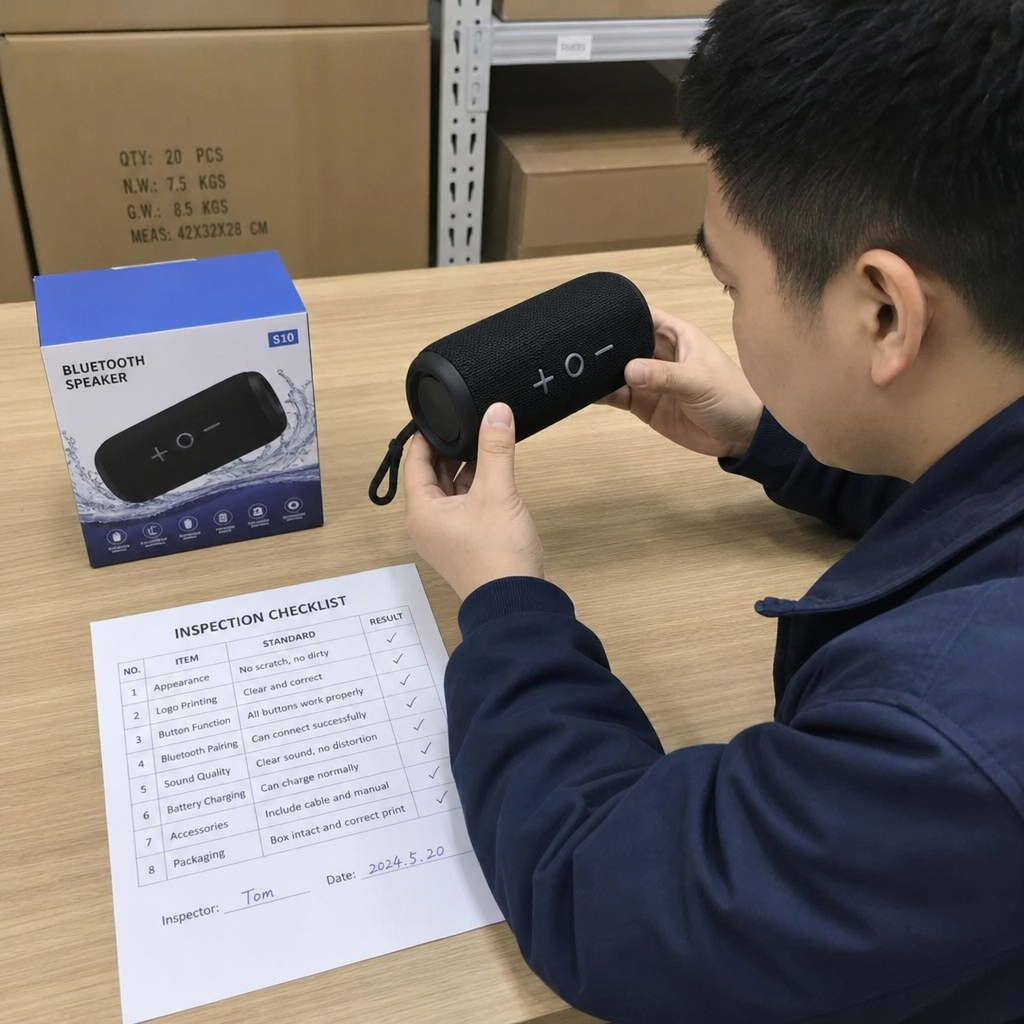
- Evaluate samples. Assess them against that specification rather than relying on photographs or verbal assurances.
- Plan verification. Agree on testing, inspection timing, and how production goods will be checked.
- Document remedies. Set out procedures for defects, shortages, substitutions, and delivery problems before payment.
These steps put supplier due diligence and quality planning into practice.
Import responsibilities remain with the relevant business
For US businesses, clarify who is importing the goods and who must provide compliance documentation. CPSC explains that importers of overseas-manufactured children’s products must issue the applicable Children’s Product Certificate.
General-use products subject to relevant CPSC rules may require a General Certificate of Conformity issued by the importer. Requirements depend on the product.
Do not assume a supplier’s statement that an item is “certified” resolves your obligations. Ask a qualified testing laboratory, compliance specialist, or customs professional what evidence your particular product needs. Complete that work before placing a resale order, not after the shipment arrives.
Compare total cost and realistic remedies
Do not compare a marketplace checkout price with a factory quotation as though they include identical services. For wholesale, request an itemized landed-cost estimate covering goods, freight, insurance, customs charges, brokerage, testing, inspection, and delivery.
CBP notes that imported goods can attract duties and other fees depending on the goods and entry method; sourcing guidance also highlights logistics and inventory costs.
A useful planning calculation is:
Estimated usable-unit cost = total purchasing and import costs ÷ units you reasonably expect to accept and use.
Include sample and inspection costs in your estimate, and test different outcomes for defects or unsold stock. Do not insert an assumed defect percentage as though it were established fact. Ask whether the purchase still makes sense if you must reject part of the shipment.
For Temu, read the current item-specific return conditions before paying. Its US policy generally allows returns within 90 days of purchase, with exceptions; most electronics have seller-dependent windows of 45, 60, or 90 days. The first eligible return per order generally has free return shipping, while later returns can incur charges.
Inspect purchases promptly, retain packaging and order records, and document discrepancies. The FTC recommends keeping receipts and communications and contacting the seller when problems arise. Paying by credit card can also provide a route to dispute eligible billing problems; act promptly and check the issuer’s procedure.
For wholesale, negotiate the remedy before ordering: replacement goods, a credit, a refund, or another clearly defined outcome. Ask who pays inspection and return freight when defects are disputed. A promise to “solve any problem” is less useful than an agreed process tied to measurable acceptance criteria.
Choose the process, not just the price
The practical answer to “Is Temu safe?” depends on the product, the evidence, and the consequences of failure. For a small personal purchase, assess the listing, privacy settings, payment method, and return terms. For repeat business inventory, decide whether you can support supplier verification, compliance checks, and ongoing quality control.
Safe shopping starts with a simple rule: match the depth of your checks to the risk you are taking. If you cannot verify a safety-critical claim or understand your responsibilities, pause the purchase. A low price is not a reason to skip the checks that matter most.
Frequently Asked Questions About Is Temu Safe? Temu vs Buying Wholesale From China
Is Temu safe for online shopping?
While Temu has purchase protection policies in place, safety is not guaranteed for every product. It is essential to evaluate the seller, product specifications, and customer reviews before making a purchase.
What should I consider when buying products from Temu?
When purchasing from Temu, consider payment options, fulfillment policies, product safety, and privacy settings. Verify whether there is credible evidence supporting the product’s intended use.
How does buying from Temu compare to purchasing wholesale from China?
Buying from Temu provides a marketplace experience with convenience, while purchasing wholesale from China requires supplier due diligence, contract negotiations, and quality management for repeat orders.
What safety measures should I take when using the Temu app?
Use a unique password, restrict app permissions, keep your device updated, and consider enabling multifactor authentication. Review the privacy policy before granting access to personal information.
How can I identify scams related to Temu?
Be cautious of messages requesting personal information or payment outside of the official platform. Verify sellers independently, check for seller identity, and watch for signs of impersonation.