
Temu is an online marketplace for clothing, household goods, electronics and other consumer products, available through its website and mobile app. It is also facing closer scrutiny over product safety, personal data and marketplace disclosures.
On October 26, 2026, the European Commission accepted its corrective action plan under the Digital Services Act, following a Texas settlement announced earlier that month.
Those developments make understanding Temu’s shopping services, credits, promotions and customer support especially relevant for U.S. consumers.
What is Temu, and how does its marketplace work?
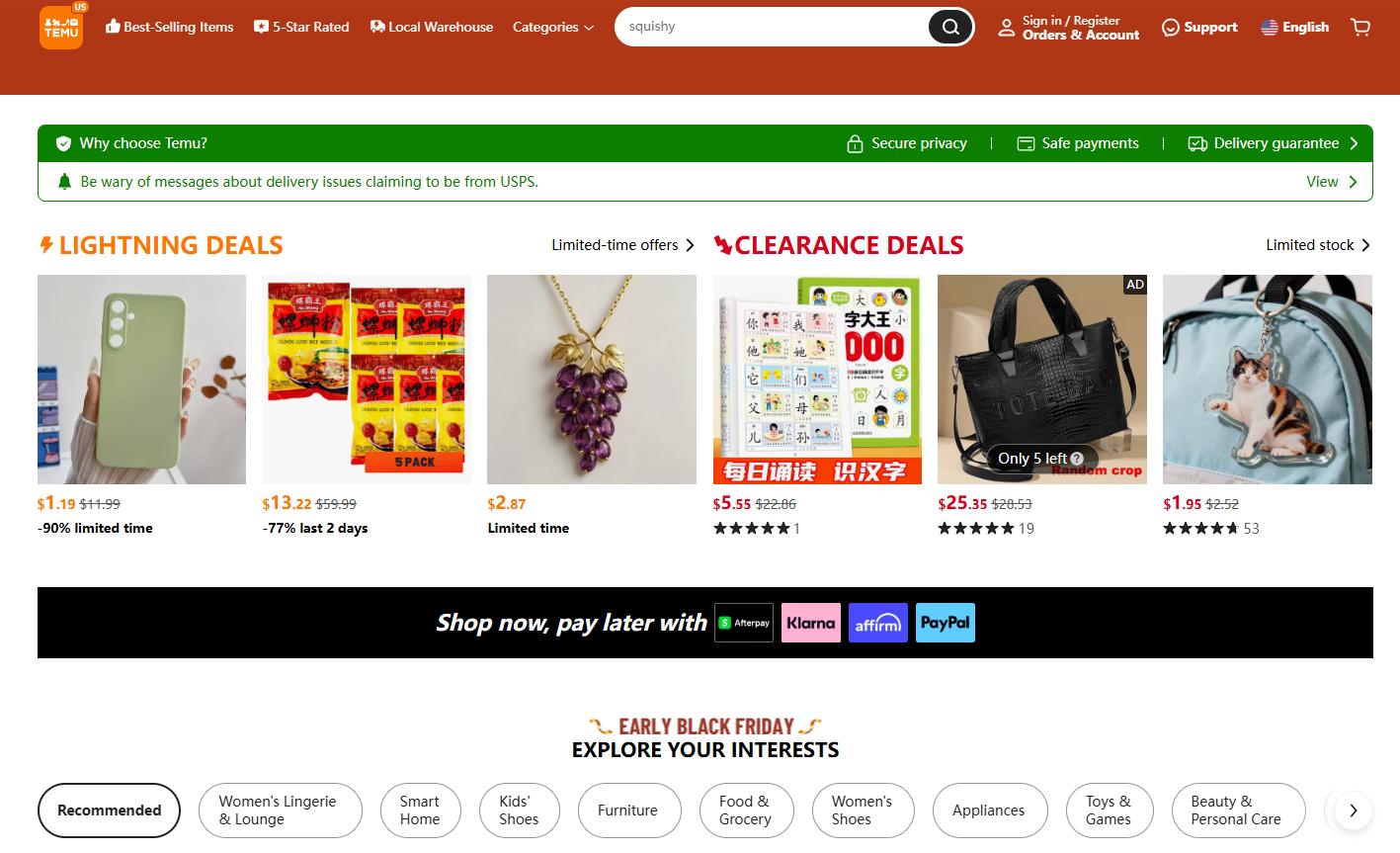
Temu is a shopping platform that brings together products from third-party sellers rather than operating solely as a retailer selling its own merchandise. It belongs to PDD Holdings, and its U.S. operating company is Whaleco Inc.
Temu entered the U.S. market in 2022 and built recognition around inexpensive products and prominent advertising.
Its marketplace includes apparel, home goods, appliances and electronics. Fulfillment arrangements differ: some listings use Temu-managed operations, while sellers participating in its local seller program can fulfill orders directly.
Consequently, two products purchased through the same platform may have different sellers and delivery arrangements.
That distinction matters when evaluating a purchase. Treat the individual listing—not simply the Temu name—as the starting point for checking dimensions, materials, seller information and delivery expectations.
A successful purchase of one item does not establish the quality or suitability of another.
Temu shopping also combines conventional product browsing with promotional activities. The Federal Trade Commission has described experiences involving games, spinning wheels and coupons.
These are shopping promotions, not substitutes for reading the product description or understanding the amount due at checkout.
October developments bring safety and privacy into focus
The European Commission’s October 26 acceptance of Temu’s action plan followed its May 28, 2026 decision imposing a €200 million fine. The Commission found that Temu had failed to adequately identify, analyze and assess risks associated with illegal products on its platform. Its findings concerned Temu’s risk-assessment obligations under the Digital Services Act.
The accepted plan addresses five areas: platform-specific risk analysis, measurement of mitigation effectiveness, moderation limitations, recommendation systems and deliberate manipulation by sellers or other users.
Temu now has four months to conduct an interim assessment covering a six-month period ending November 30, 2026. Acceptance of the plan marks a compliance step, not a certification that every listing is safe.
In the United States, Texas announced a separate settlement on October 16, 2026. According to the state attorney general’s office, Temu must pay $3 million, store Texans’ personal data on American-owned and controlled U.S. servers, restrict access from China subject to essential business functions, and undertake independent annual product-safety testing.
The requirements also address removal of products confirmed to contain harmful substances and refunds for affected Texas consumers.
Reuters reported that Temu did not admit wrongdoing and said it had reached an agreement while continuing to serve consumers and businesses in Texas.
That response is important context: allegations, settlements and regulatory findings should not be presented as interchangeable. Nor should Texas-specific obligations be assumed to describe protections applying identically throughout the country.
A separate FTC announcement in September 2025 concerned a $2 million penalty to resolve alleged marketplace-disclosure violations. For shoppers, these developments put seller identification, reporting tools and product information alongside price as essential parts of evaluating the service.
The Temu app and the benefits shoppers are offered
The Temu app provides another route to the marketplace, alongside its website. Customers can use either channel to view orders and shipping information. Temu’s support instructions direct users to “Your orders” and then “Track” to see the carrier, tracking number, delivery time and latest status.
The practical appeal is straightforward: shoppers can browse many product categories and manage purchases through one account. But the more useful Temu benefits are specific services with published conditions, rather than a general promise of savings. These include shopping credit, price adjustments and remedies for certain delivery or product problems.
Several distinctions help explain those services:
- Price adjustment: Temu describes eligibility when the identical item from the same seller falls in price within 30 days, in the same country or region. Promotional or unavailable items may be excluded.
- Purchase protection: Its support guidance offers refunds for items that do not arrive, arrive damaged or are not as described, subject to the process and applicable terms.
- Late-delivery compensation: This is a shopping credit tied to the delivery promise, rather than automatically a refund of the purchase price.
Evaluate those benefits separately. A price adjustment addresses a lower selling price; purchase protection addresses an order problem. Neither should be confused with an optional promotional reward.
Temu credit is shopping value, not withdrawable cash
For shoppers asking what Temu credit is, the company defines it as a balance that can pay for orders on its app or website. Credit can come from promotional activities, late-delivery compensation or refunds when the customer chooses credit rather than the original payment method. Its source matters because a reward and a returned payment represent different transactions.
Temu says available credits are automatically applied to eligible orders at checkout. Customers can change the amount used before completing the purchase. Review that line carefully so you understand how much comes from an existing balance and how much will be charged through another payment method.
The company’s help pages state that issued Temu credit does not expire and cannot be redeemed for cash. They also advise customers who want to change a credit refund back to the original payment method to leave the returned credit unused and contact customer service. That instruction is not a promise that every requested change will be approved.
For example, imagine a hypothetical checkout total of $40 with $15 of eligible credit applied. The remaining payment would be $25. That does not mean the product’s listed price fell to $25; it means part of the purchase was funded by value already held in the account.
This distinction is particularly important with refunds. Choose credit because you want future Temu purchasing power—not because you assume the balance can later be transferred into a bank account.
Reimbursement offers need a closer reading
Searches for “what is Temu reimbursement” and “what is Temu reimbursement offer” point to an important ambiguity: the word alone does not establish the payment destination, eligibility rules or amount.
Temu has used reimbursement language in marketing, including an archived email headed “Your Reimbursement Is Ready!” That email is evidence of promotional wording, not a universal reimbursement policy.
Start by separating an order-related refund from a promotional offer. Temu’s purchase-protection guidance addresses non-delivery, damage and products that do not match their descriptions.
Its credit guidance separately identifies rewards from themed activities and promotional events. Those are different routes to receiving value.
Before relying on any reimbursement message, establish the following from the actual offer:
- The trigger: Is it connected to an existing order problem, or does it ask for a new qualifying purchase?
- The destination: Does the wording specify the original payment method, Temu credit, coupons or another reward?
- The required action: Must you submit evidence, claim a reward, complete tasks or contact support?
- The limits: What exclusions, maximum amounts, deadlines or minimum spending requirements are stated?
- The confirmation: Where will the approved refund or issued reward appear?
These are verification questions, not a claim that every Temu campaign contains all those conditions. If the offer does not clearly answer them, ask support before making an additional purchase.
The financial test is simple: assess what you must pay now without assuming an uncertain future reward. A promotional headline should not determine your budget. Keep screenshots of the offer, its rules and the checkout total so you can explain any discrepancy precisely.
An order remedy deserves the same care. Describe what went wrong and request the appropriate resolution; do not assume a marketing reimbursement campaign is the route for reporting a damaged or missing purchase.
Temu Circle information may be outdated
Temu Circle has been described by participating shoppers as a membership program associated with promotional benefits, including credit-back offers.
However, historical descriptions should not be treated as reliable evidence of what a new customer can join today. Public user reports indicate that access and continuation have changed.
One Reddit user reported an account notice stating that the program had been discontinued and that their membership ended on February 13, 2026. Other participants described losing access at different times.
These are account-level reports, not an independently verified announcement establishing one worldwide closure date.
The cautious answer to “what is Temu Circle” is therefore that it refers to a membership offering whose current availability should be checked directly in your account. Do not budget around an old membership price, advertised percentage or renewal arrangement found in a discussion thread.
If a Circle-related page remains visible, inspect its current terms before paying or renewing. Confirm the membership period, included benefits, cancellation process and whether rewards require separate claims. If it has disappeared, ask support about any outstanding membership issue rather than assuming an unrelated promotion replaces it.
Shipping estimates matter more than a speed-up button
Shoppers asking what the “speed up shipment” option on Temu does should distinguish the button from a confirmed shipping service. Public discussions describe users encountering it, but accounts of its effect vary. Those anecdotes do not establish a guaranteed reduction in delivery time, a universal fee policy or a consistent change to every order.
If the option appears, read its confirmation text before proceeding. Check whether it identifies any charge, changes the handling of individual items or gives a revised delivery estimate. If it promises no specific date, avoid treating it as a dependable solution for a time-sensitive purchase.
The more concrete source is the order’s tracking page. Temu says customers can access shipping information through “Your orders,” including the carrier, tracking number and delivery time. A missing tracking number can mean the order is still being processed rather than already traveling with a carrier.
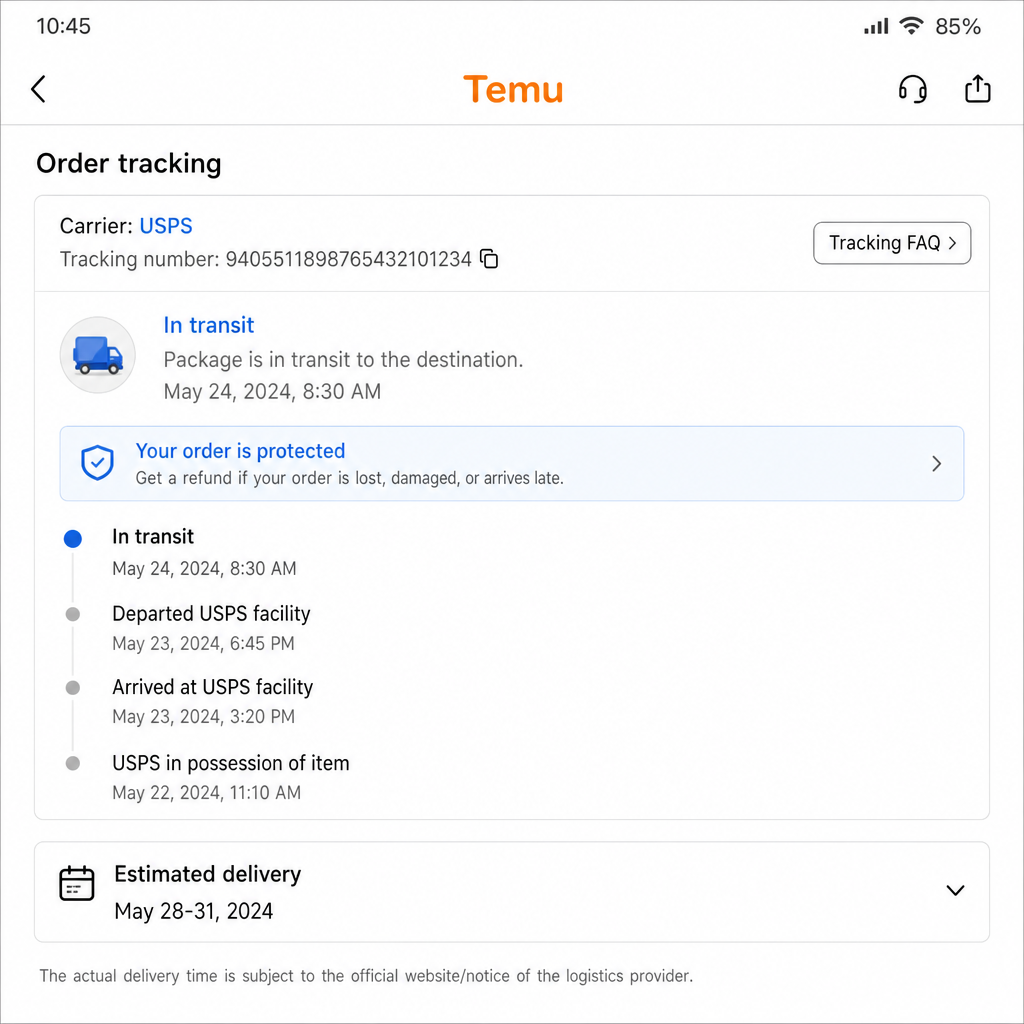
For late delivery, Temu’s help page says a courtesy credit is offered within 48 hours after the latest promised delivery date is missed. The compensation amount is shown in the order details.
Check that amount and the applicable policy rather than relying on a fixed figure copied from an older article.
For an event or essential replacement, make the decision around the stated delivery window and a backup plan. A speed-up request is not the same as a documented commitment to arrive before your deadline.
Returns and refunds have separate deadlines
Temu’s U.S. return policy, updated September 17, 2026, generally allows returns within 90 days of purchase, with exceptions. Most electronics have seller-dependent windows of 45, 60 or 90 days.
Some categories and conditions are excluded, including certain personal-care items, customized products and clothing that has been worn or washed.
The first return shipment for an order is generally free within the applicable window, although pickup can involve an additional charge. Second and subsequent returns from the same order carry a $7.99 shipping deduction plus applicable tax. The policy also requires the return package to be sent back within 14 days of submitting the request.
Do not confuse the deadline for initiating a return with the deadline for dispatching it. Inspect purchases promptly, group eligible unwanted items where practical, and retain the shipping receipt.
Refund approval and arrival are separate stages. Temu says refunds to an original payment account can take 5–14 business days, sometimes up to 30, depending on the financial institution.
Customer service: verify the channel, not a search-result number
People searching “what is Temu customer service number 24 hours” should distinguish round-the-clock chat from telephone availability. Temu advertises 24/7 chat support on its contact pages.
That wording does not establish that every regional phone line operates continuously.
Public contact listings disagree about U.S. telephone support. The Elliott Report says Temu does not operate a customer-service phone line, while other directories publish a number and limited phone hours. Because that conflict could send shoppers to outdated information, this overview does not present a directory number as a verified 24-hour helpline. Start from the official contact options displayed inside your account.
For an order issue, open the relevant purchase before contacting support. Have the order identifier, affected item, tracking information and any photographs ready. State the requested outcome plainly: locating the package, correcting an item problem, explaining a promotion or checking an approved refund.
A useful message might read: “This order shows delivered, but I have not received it. Please investigate the delivery and explain the next step.” For a promotion, identify the offer and attach its terms rather than describing it only as a missing reimbursement.
Keep the conversation and any case reference. If the response addresses a different issue, explain the mismatch and ask for review. Avoid submitting account credentials or payment information to a phone number or contact form simply because it appears prominently in search results.
Temu reviews need to be read at the right level
Temu reviews can describe very different experiences: an individual product, a seller, the app interface or a refund dispute. Reading them as one overall verdict can hide the information relevant to your purchase. Instead, decide what you need the review to establish.
For a product, look for concrete details about dimensions, materials, assembly, fit and what arrived in the package. Favor comments that explain the reviewer’s use case. “Too small” becomes useful when it includes measurements; “great value” tells you less unless it explains what performed well.
For service reviews, distinguish a late package from a failed refund or an unresolved promotional claim. Check the review date and country before treating the account as relevant to your own order.
Policies and fulfillment arrangements should be verified separately rather than inferred from someone else’s experience.
Reviews also cannot establish product safety on their own. The European Commission’s May 2026 findings cited testing concerns involving selected chargers and baby toys.
Those findings do not mean every Temu product is unsafe, but they show why favorable ratings are not equivalent to independent compliance evidence.
Apply particular care when a product’s failure could cause harm. For electrical goods or children’s products, seek clear manufacturer identification, appropriate safety information and traceable documentation. If you cannot establish suitability, a low price is not a sufficient reason to proceed.
What happens next for shoppers and the platform
The immediate regulatory focus is implementation. In Europe, the accepted action plan sets further assessment work rather than ending scrutiny. In Texas, the announced settlement establishes data-handling and product-testing obligations. Neither development removes the need to assess individual listings or follow the correct process when an order goes wrong.
Temu services are best understood as separate tools: tracking explains shipment progress; purchase protection addresses specified order problems; credit funds eligible future purchases; promotions carry their own terms. Confusing those functions is where an apparently simple deal can become difficult to evaluate.
For consumers, the practical conclusion is to judge the transaction rather than the headline discount. Check the seller and product, verify the final payment, save the relevant terms and know which support route applies. Treat any unconfirmed reward as uncertain—not as money already returned.
Temu’s next chapter will depend partly on how its announced obligations translate into marketplace practices. For an individual shopper, however, the decision remains specific: whether this product, from this listing, on these terms, is worth buying.
Frequently Asked Questions About Temu
What is Temu and how does it operate?
Temu is an online marketplace that connects customers with various third-party sellers offering a wide range of products, including clothing, electronics, and home goods. It operates through a website and a mobile app.
How can I contact Temu customer service?
You can reach Temu customer service via their official website, where they offer 24/7 chat support. However, availability of phone support may vary, so it's best to check the contact options in your account.
What is Temu Credit and how does it work?
Temu Credit is a balance that customers can use to pay for future orders. It can be earned through promotional activities, late-delivery compensation, or refunds credited to your account. It cannot be withdrawn as cash.
What should I know about Temu’s return policy?
Temu generally allows returns within 90 days of purchase, but specific categories may have different time frames. The first return shipment is usually free, while subsequent returns may incur a fee.
How does the speed-up shipment feature work on Temu?
The speed-up shipment option allows users to expedite delivery on certain orders, but its effectiveness may vary. It's important to check any associated costs or delivery estimates before using this feature.