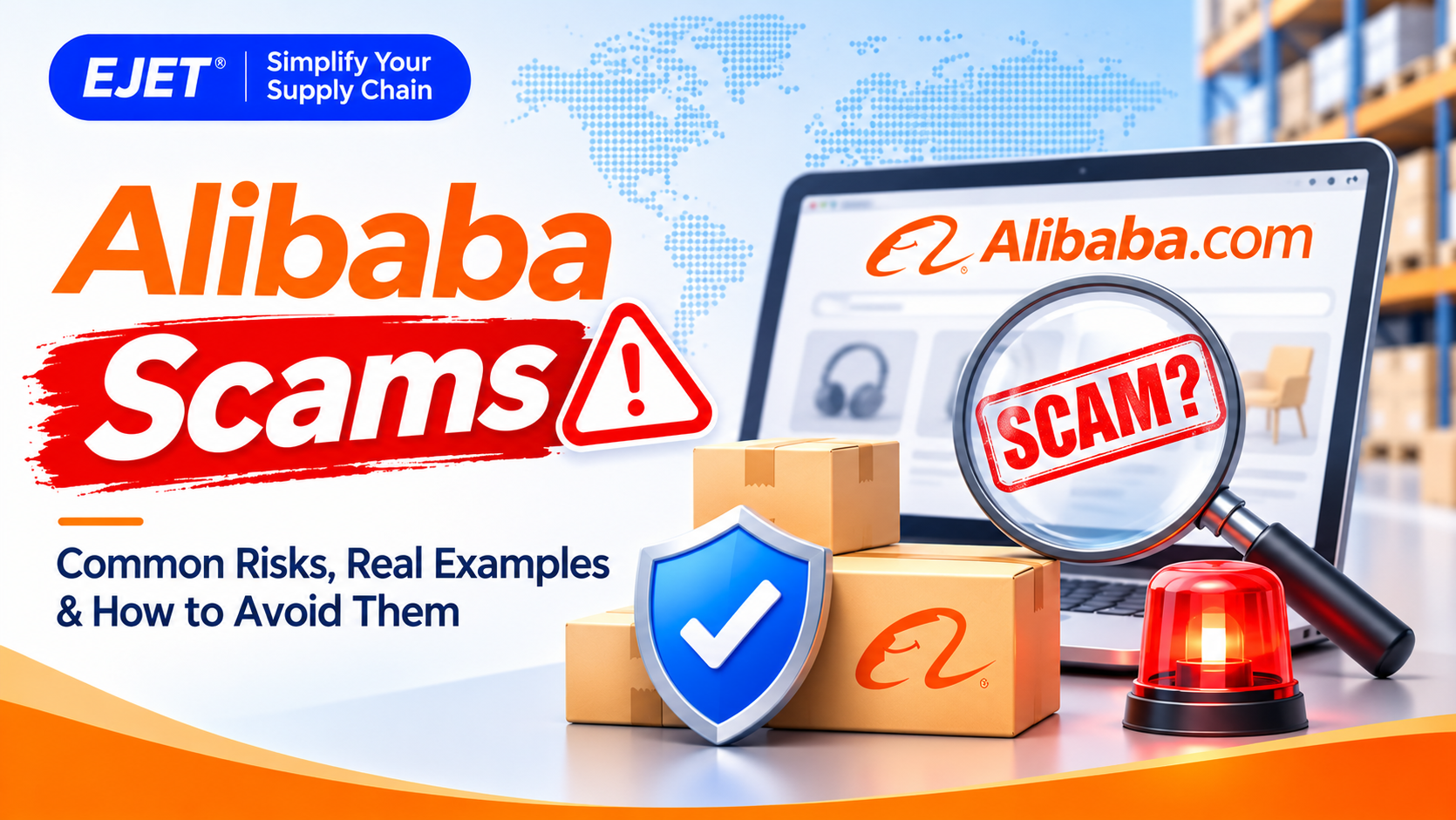
Alibaba scams can put your sourcing budget at risk through diverted payments, misleading supplier claims, and orders that do not match what you agreed to buy.
This guide explains ten warning signs and practical checks to make before paying, during production, and after delivery.
Alibaba.com offers Trade Assurance for eligible orders, but protection depends on using its supported ordering and payment process—not simply finding a supplier on the marketplace.
How can you spot Alibaba scams before paying?
Look for gaps between what a supplier promises and what you can independently verify. Unexplained payment changes, pressure to bypass Alibaba.com, inconsistent business details, and resistance to written specifications are reasons to pause.
The checks below combine Alibaba’s order-protection guidance with the FBI’s advice to verify payment changes through a separate communication channel.
Treat each red flag as a prompt to investigate, not automatic proof of fraud. Your decision should rest on the explanation and supporting evidence, rather than a polished storefront or reassuring conversation. Set three conditions before committing: know which business you are buying from, define exactly what it must deliver, and verify where your payment will go.
1. The supplier pressures you to pay outside Alibaba.com
A supplier offers a discount if you transfer money directly, claims checkout is temporarily unavailable, or says platform fees make a protected order impossible. Whatever the explanation, a request to bypass the order’s payment process deserves scrutiny. Alibaba states that payments outside its platform are not protected by Trade Assurance.
Protect yourself: Open your account independently and locate the actual order. Confirm the product, supplier, amount, and payment instructions there before authorizing payment. Do not treat an invoice bearing an Alibaba logo as a substitute for an order visible in your account.
A bank transfer is not automatically outside the system: Alibaba supports wire transfers through its prescribed payment process. The important distinction is whether you follow the instructions associated with your protected order, rather than separate bank details supplied in a message.
If the supplier insists on a different route, stop the transaction and ask Alibaba support to clarify your options. Do not send a small “test payment” to an unverified recipient as reassurance. Your purchasing rule should be straightforward: no payment until the order and payment route are confirmed through your account.
2. The price is low, but the quotation leaves major gaps
A low price is a reason to compare carefully, not proof of a scam. For your review, focus on what the quotation actually includes. If one supplier’s offer looks dramatically better, ask it to explain the difference against the same specifications and purchasing conditions.
Build a comparison sheet covering:
- Product: Exact model, material, dimensions, finish, and accessories.
- Quantity: Minimum order, price breaks, and packaging units.
- Customization: Artwork, tooling, labeling, and setup charges.
- Delivery: Shipping method, destination, and stated exclusions.
- Quality: Testing, inspection, and acceptance requirements.
Send the same requirements to each shortlisted supplier. Ask each one to identify exclusions rather than assuming that matching product photos mean matching offers. Make any accepted clarification part of the written order; Alibaba identifies order terms and communication records as the basis for resolving covered disputes.
Protect yourself: Request an itemized quotation before negotiating a deposit. If the supplier will not explain what is included, you do not yet have enough information to compare the deal.
Choose a transparent offer over an attractive headline price that depends on unanswered questions. This is especially important when your resale margin leaves little room for unexpected costs.
3. Business names and supplier details do not line up
Use the supplier’s profile, assessment report, quotation, and order as a cross-checking exercise. List the legal business name, trading name, address, and contact details from each. Ask the supplier to explain discrepancies before you approve payment, particularly when an invoice introduces a company you have not previously discussed.
A Verified Supplier assessment can help with that review. Alibaba describes third-party checks of company information and capabilities, but explicitly says it does not guarantee sellers’ product or certificate authenticity. Treat the report as evidence to examine, not a blanket endorsement of every transaction.
Protect yourself: Ask for a clear written explanation of which entity is selling the goods and which facility will manufacture them. Compare that explanation with the available assessment report. Where a trading company is involved, ask what responsibilities it takes for quality, inspection access, and resolving problems.
Do not reject a supplier merely because its trading name differs from its registered name. Instead, require a coherent explanation and documents that support it. Keep the explanation with your purchasing records so another team member can understand the relationship without relying on verbal assurances. If the supplier refuses to identify the contracting business, do not proceed.
4. Bank details change just before payment
An unexpected message announces a new account, a different beneficiary, or an urgent need to redirect the balance.
This matches the payment-diversion risk described by the FBI: business email compromise can involve criminals using compromised business accounts to induce unauthorized transfers. A familiar email thread is therefore not enough to authenticate new instructions.
Protect yourself: Freeze the payment and verify the request through a separate, previously established channel. The FBI recommends secondary-channel verification for changes to account information. Do not use only the phone number supplied in the change request; return to contact information you already trust.
For an Alibaba order, also check the payment instructions inside your account. Ask platform support to explain any discrepancy before sending funds. Avoid letting a shipping deadline override this review.
Use a written approval rule for your purchasing team: nobody changes beneficiary details solely because an email, chat message, or attached invoice requests it.
Have a second person review the change when possible. Record who verified it, which contact method they used, and the outcome. This creates an approval record instead of leaving the decision to whoever happens to be handling an urgent message.
5. The supplier avoids samples or independent inspection
Before a substantial order, ask how you can evaluate a sample and verify the finished goods. Alibaba’s buyer resources recommend samples as part of evaluating quality, while its inspection offering includes checks against the quality requirements in the Trade Assurance contract.
Resistance deserves questions, especially when it conflicts with earlier promises. Rather than demanding a generic “quality check,” propose a defined inspection scope and ask the supplier to confirm access, timing, and responsibilities. Make the request early enough to address objections before production begins.
Protect yourself: Plan separate checks for the sample and the production order:
- Record the approved sample’s materials, measurements, finish, and function.
- Photograph identifying details and label the sample clearly.
- Specify what the inspector should examine and document.
- Agree how defects will be reported and corrected.
- Align inspection timing with the payment milestones you negotiate.
Do not accept supplier-selected photos as the entire review when you have agreed to an independent inspection. Ask for the promised access or resolve the issue before moving forward.
If your product requires specialist testing, obtain qualified advice on the appropriate scope rather than assuming a visual inspection answers every question.
Keep inspection expenses in your purchasing budget from the start, so you are not forced to choose between an agreed safeguard and an unexpected cost.
6. Product specifications remain vague or keep changing
Promises such as “premium quality” or “same as the picture” leave too much room for interpretation. Alibaba’s guidance emphasizes measurable requirements recorded in the online order rather than vague off-platform assurances. Treat resistance to that level of detail as a purchasing risk, even when the conversation remains friendly.
Protect yourself: Convert the sales conversation into a specification sheet. Include material, dimensions, tolerances, color reference, performance requirements, accessories, packaging, labeling, and quantity where relevant. Identify the approved sample or drawing revision, and ask the supplier to acknowledge the complete version.
For example, replace “strong fabric” with an agreed fabric composition and weight. Replace “fits our device” with the applicable measurements or drawing. These are examples of how to make your requirements testable; select the details that matter to your actual product.
Control revisions just as carefully. If the supplier proposes a substitute component or different packaging, require a written explanation and approve or reject it explicitly. Update the order before accepting the change.
Keep one final specification version clearly identified so your supplier, inspector, and purchasing team are not working from different documents. If the supplier will only promise that everything will be fine, you still lack an agreed basis for deciding whether the goods are acceptable.
7. Badges, certificates, and branded-goods claims replace evidence
A badge or certificate should begin a verification process, not end it. Alibaba’s Verified Supplier disclaimer specifically distinguishes third-party assessments from any guarantee of product or certificate authenticity. That makes it important to examine what a document actually covers rather than relying on its appearance.
Protect yourself: Ask for the complete document and compare its company name, product model, issuer, dates, and stated scope with your order. Contact the named issuer through independently obtained details when verification is needed. Ask a qualified testing or compliance professional to assess relevance if you are unsure what evidence your product requires.
For branded goods, request documentation supporting the seller’s claimed authorization and verify it with the brand owner. Do not accept “same factory,” “export surplus,” or similar descriptions as your purchasing standard. Decide what proof you require before discussing a bulk commitment.
Keep three questions separate in your review: Is this the business it claims to be? Does the document apply to this product? Does it address the requirements for your intended market? A satisfactory answer to one should not substitute for answers to the others. If the supplier pressures you to stop asking, pause the purchase until the evidence can be reviewed independently.
8. Urgency and suspicious links interfere with verification
Watch for messages that combine an immediate payment demand with an unexpected link or attachment. Examples to scrutinize include account-suspension warnings, last-minute invoice replacements, or instructions to sign in to release an order.
The FTC advises businesses not to click links or open attachments in unexpected messages because they may be used to steal information or install malware.
Protect yourself: Open Alibaba.com through your usual trusted route and check the order or notification there. If the message claims to come from your bank or a carrier, contact that organization independently. Do not share passwords, one-time codes, or sensitive account information in response to the message.
Build time for verification into your purchasing schedule. Ask the supplier to confirm any genuine deadline and explain what changes if you miss it. Your team should be allowed to pause without having to prove that the message is fraudulent first.
Use scam alerts as reminders to review your procedures, not as the only way to recognize danger. For day-to-day fraud prevention, make unexpected payment or account-access requests subject to a standard check. The goal is to prevent urgency from deciding who gets access to your money or accounts.
9. Shipping claims cannot be independently checked
After payment, apply the same verification discipline to delivery updates. If a message introduces an unfamiliar carrier, a new payment recipient, or a fee you cannot reconcile with the order, ask for supporting information before acting. The FTC recommends checking invoices carefully and making purchasing and payment-approval procedures clear to staff.
Protect yourself: Request the carrier name, shipment reference, relevant transport documents, package details, and the destination associated with the shipment. Check updates through the carrier’s independently located website or established contact channel, rather than relying only on a seller-provided screenshot.
For an unexpected charge, ask who issued it, what service it covers, and why your business is responsible under the agreed shipping terms. Compare the explanation with your order and freight arrangements. If you use a freight forwarder or customs broker, ask them to review the request before payment.
Keep your review factual: identify the missing document or inconsistency, request clarification, and retain the response. Do not let an unresolved shipping story distract you from checking the refund or dispute options attached to your order. Alibaba’s Trade Assurance information includes remedies for eligible orders that are not shipped, go missing, or arrive with product-related problems.
10. The seller asks you to confirm receipt or close a dispute early
A request to confirm delivery before inspection deserves an immediate pause. Alibaba’s help center explains that manual receipt confirmation can trigger release of held funds, and that automatic confirmation can also occur when the inspection period expires. Check your order’s status and applicable deadlines instead of treating confirmation as an administrative favor.
Protect yourself: Inspect promptly and document any mismatch against the written requirements. Keep packaging, labels, product photos, inspection results, and relevant messages. Describe the issue precisely: what the order required, what arrived, and what remedy you are requesting.
If the supplier offers a replacement or refund in exchange for closing a case, ask Alibaba support how to record and implement that agreement without losing your available options. Do not assume a promise in chat automatically changes the applicable process. Alibaba notes that refund windows depend on policy and buyer eligibility, so check the rules shown for your own order.
Make one person responsible for tracking deadlines and responses. Set reminders early enough to gather evidence rather than filing at the last moment. Your objective is to preserve a clear record and follow the actual dispute process, not to win an argument through increasingly urgent messages.
Build a repeatable buyer-protection routine
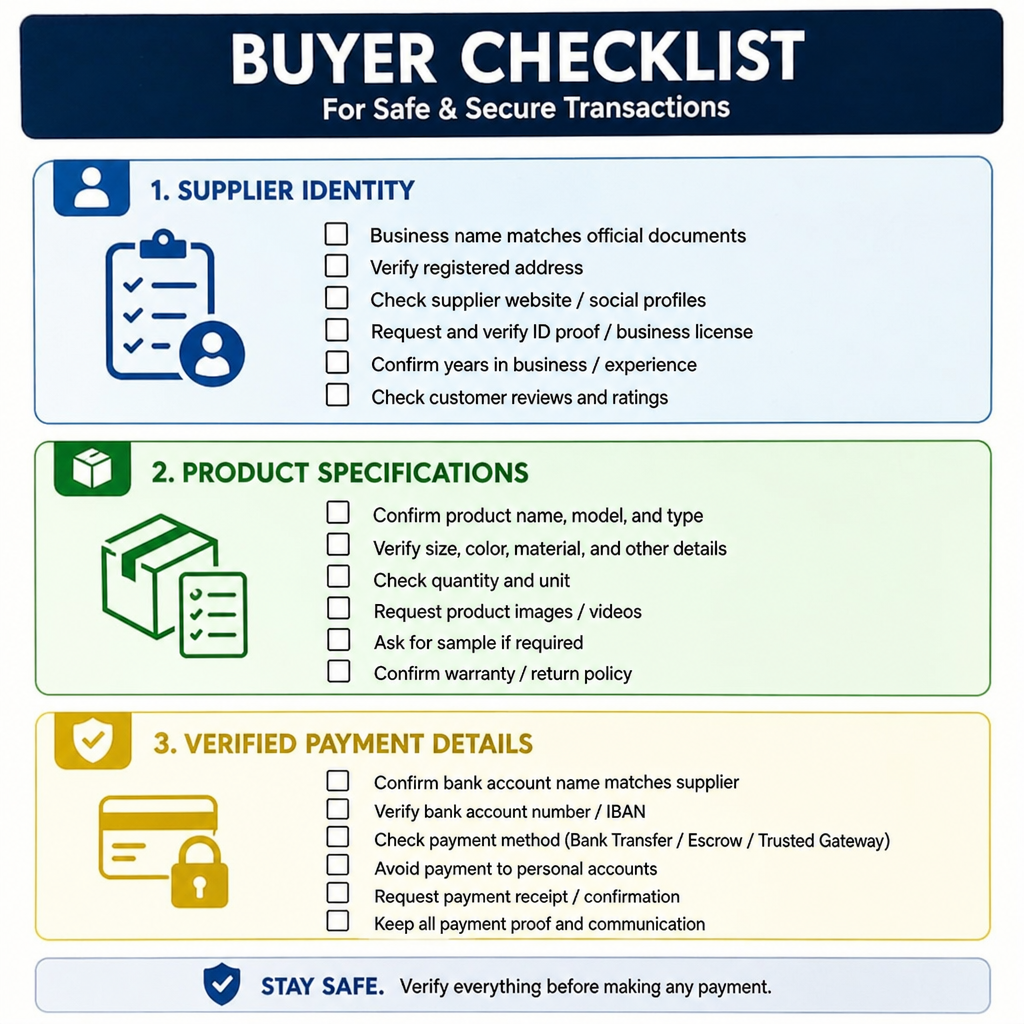
Use this checklist for each new supplier and review it again when an established supplier changes important details. Assign a named person to each check rather than assuming someone else has completed it. Keep one order folder so the evidence remains accessible if the employee managing the purchase is unavailable.
- Before ordering: Reconcile supplier identity, review relevant reports, and resolve document gaps.
- Before paying: Approve the final specification and verify the order’s payment instructions.
- During production: Record approved changes and confirm inspection arrangements.
- Before shipment: Review inspection findings and outstanding corrective actions.
- After delivery: Inspect promptly, retain evidence, and check dispute deadlines.
Treat buyer protection as a combination of documented requirements, controlled payments, and timely follow-through—not a substitute for any of them. That approach reflects Alibaba’s emphasis on order records and the FBI’s advice to independently verify payment changes.
What should you do if you suspect Alibaba fraud?
Stop additional payments, preserve your records, and contact the relevant payment provider immediately. The FTC recommends reporting suspected scam payments to the bank, card issuer, payment app, or transfer service used and asking whether the transaction can be reversed or refunded. Recovery is not assured, but the FTC says it is worth asking.
Then organize your response:
- Open the appropriate Alibaba case. Use your account to review refund options and submit the order, messages, and evidence supporting your complaint. Follow the applicable process and deadlines.
- Report payment diversion promptly. For suspected business email compromise, contact your financial institution and file a detailed complaint with the FBI’s Internet Crime Complaint Center.
- Report the broader scam. U.S. buyers can report marketplace scams and other online scams to the FTC; local police or a state attorney general may also be appropriate contacts.
Keep reports factual and consistent. Distinguish a missed contractual requirement from evidence of intentional deception, and include dates, amounts, transaction references, and the remedy sought. Above all, do not send another payment merely to keep negotiations alive: return to independent verification before making any new commitment.
Frequently Asked Questions About Alibaba scams and Fraud Prevention
What should I do if I suspect that a supplier on Alibaba is a scam?
If you suspect fraud, stop any further payments immediately and preserve all records of your transaction. Contact the relevant payment provider to inquire about reversing the transaction and open an appropriate case with Alibaba to report the issue.
How can I verify a supplier's legitimacy on Alibaba?
Check the supplier's profile, assessment reports, and customer reviews. Look for verified supplier badges and cross-check the business details provided. Ask for documentation to support claims about product quality and certification.
What are some red flags indicating a potential scam when dealing with suppliers?
Common red flags include suppliers pressuring you to pay outside Alibaba, inconsistent business details, low prices with vague quotations, changes to payment accounts before payment, and reluctance to provide samples or inspection access.
What is Alibaba's Trade Assurance, and how does it protect buyers?
Alibaba's Trade Assurance is a service that protects orders by ensuring that buyers are covered for on-time shipment and product quality. To benefit from this protection, you must use Alibaba's secure ordering and payment process.
How can I ensure quality and specifications when ordering from Alibaba?
Clearly define all product specifications, request detailed quotations, and insist on inspecting samples before full production. Document all agreements and maintain clear communication with your supplier to avoid misunderstandings.