Toy manufacturing is evolving through digital design, additive manufacturing, automation, and new material choices. These innovations give brands more ways to develop custom toys, refine production, and connect creative ideas with practical factory capabilities.
The opportunity is not simply to make toys faster: it is to make better decisions about play value, safety, cost, and repeatable quality before committing to production.
How is technology changing toy design and manufacturing?
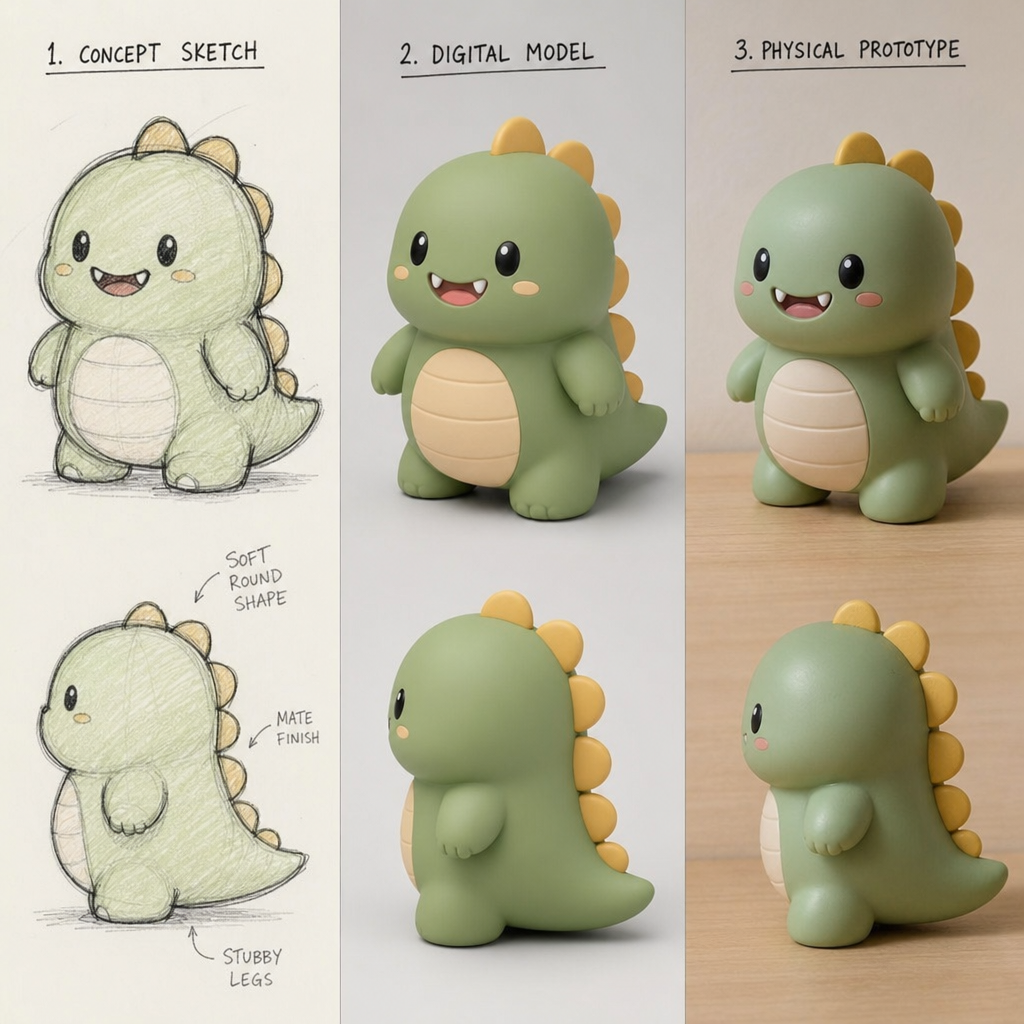
Technology is connecting toy design more closely with production. Digital models and physical prototypes help teams examine shapes and assembly before investing in molds, while additive manufacturing can support personalized components.
Rather than replacing conventional manufacturing, these tools can complement it, allowing each production method to handle the parts it suits best.
A useful example is Hasbro’s Selfie Series project, documented by Formlabs in 2022. Its manufacturing approach combined injection-molded bodies with personalized, 3D-printed heads and hair.
The lesson remains relevant: customization does not require every component to be unique. A shared platform can provide consistency while a smaller set of variable components supplies the personal connection.
For a new concept, ask which details actually improve the play experience. A distinctive silhouette might matter more than an elaborate surface finish. An interchangeable accessory might offer more creative possibilities than another fixed decoration.
Use prototypes to explore those choices, then request a manufacturability review before approving tooling.
The Toy Manufacturing Process becomes a learning loop
Treat the Toy Manufacturing Process as a sequence of decisions with opportunities to revisit earlier assumptions. Prototype evaluation and design-for-manufacturing analysis can reveal problems before tooling begins, including features that complicate mold construction or prevent a part from releasing cleanly.
For a molded toy project, use this planning sequence:
- Define the brief. Identify the intended user, play experience, dimensions, and target sales market.
- Develop the design. Specify components, materials, finishes, connections, and proposed assembly methods.
- Evaluate prototypes. Examine fit, handling, movement, and appearance; record what each prototype does not represent.
- Review manufacturability. Ask the factory to explain tooling constraints, difficult features, and proposed design changes.
- Approve production evidence. Establish sample approval, inspection expectations, and required compliance documentation before release.
Make each review produce an updated specification, not just an informal agreement. When a joint changes, for example, record the revised geometry and approval status. This gives designers and suppliers a clear reference when evaluating the next sample.
Automation connects production with material handling
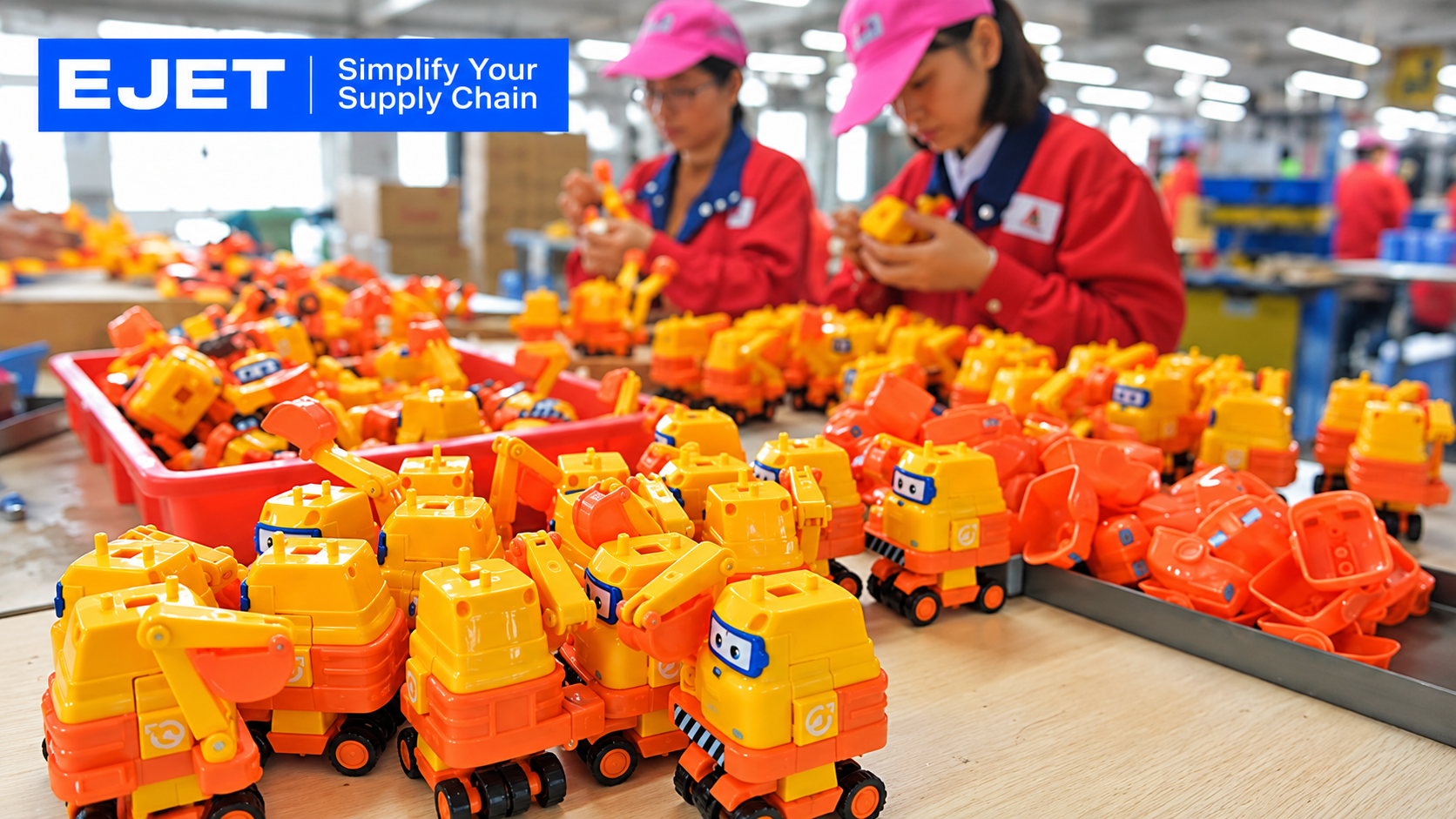
Automation in toy factories extends beyond making individual parts. LEGO describes a production system in which molding machines signal robot trucks when collection boxes are full. Conveyors then move parts onward, while other equipment decorates elements and assembles components. Packing operators also check for mistakes.
That example illustrates an important distinction: a production line is a connected workflow, not a collection of impressive machines. When evaluating a supplier, ask how parts move between molding, decoration, assembly, and packing.
Request an explanation of where checks happen and who decides whether questionable output can proceed.
Do not make “fully automated” your only purchasing criterion. Instead, ask the factory to demonstrate its proposed process using your product’s requirements. A useful discussion should cover component handling, changeovers, inspection responsibilities, and the response to a rejected sample—not merely equipment speed.
New materials require performance evidence
Recycled and renewable materials are part of manufacturing innovation, but changing a material is not a simple substitution. LEGO identifies safety, quality, durability, and compatibility as challenges in developing alternatives. Its materials program includes recycled inputs for some transparent elements and renewable inputs for certain flexible pieces.
The practical implication is to evaluate a proposed material against the toy’s actual requirements. Ask suppliers to identify the grade and provide supporting documentation. Then define the product evaluations needed before approval, rather than assuming a familiar material name guarantees equivalent results.
Environmental claims also need careful wording. LEGO distinguishes physical recycled or renewable content from a mass-balance approach, where alternative feedstocks are mixed with conventional sources upstream. Under that approach, purchasing claims do not guarantee a minimum renewable or recycled content in each finished product.
For your own development brief, separate three questions:
- Product suitability: What evidence supports the material’s intended application?
- Claim accuracy: Does the claim describe physical content, sourcing, packaging, or another specific attribute?
- Approval control: Which material changes require review before production resumes?
Keep those answers together so marketing language does not drift beyond the technical evidence.
Safety remains a design requirement
Innovation does not remove safety obligations. In the United States, ASTM F963 is incorporated into the mandatory children’s toy safety framework, and applicable requirements depend on the product. CPSC guidance addresses hazards involving small parts, accessible mechanisms, batteries, magnets, and other features.
For toys intended primarily for children aged 12 or younger, CPSC guidance generally requires testing by a CPSC-accepted third-party laboratory and certification through a Children’s Product Certificate. Manufacturers and importers must identify the requirements that apply to their products; a supplier’s general assurance is not a substitute for that work.
Build the compliance discussion into the initial brief. Ask the testing laboratory which evaluations apply to the proposed design and materials, and document who will supply the necessary information. Revisit that plan when specifications change. CPSC’s product-specific guidance is a starting point, not a replacement for reviewing the applicable requirements.
How much does it cost to manufacture a toy?
There is no universal manufacturing price for a toy. For injection-molded products, tooling complexity, material selection, production volume, and machine time influence costs. Features such as undercuts, elaborate finishes, and additional mold mechanisms can change the economics substantially, so meaningful estimates require a defined design rather than a product idea alone.
Request an itemized quote instead of comparing headline unit prices. Use the same drawings, quantities, materials, and packaging brief with each supplier, and ask them to identify exclusions. Include separate lines for development, prototypes, tooling, production, decoration, assembly, testing, packaging, and delivery wherever relevant.
Before accepting a quote, clarify:
- Tool ownership: Who owns, stores, maintains, and can transfer the molds?
- Design revisions: What changes are included before additional charges apply?
- Quantity assumptions: Which order volume supports the quoted unit price?
- Acceptance criteria: Which approved sample and inspection requirements govern delivery?
Treat cost reduction as a design discussion. Ask which features create expense and what alternatives preserve the intended play experience.
Sourcing transparency matters across product categories
A manufacturing search can blur the distinction between a brand, distributor, and actual producer. If your research starts with a phrase such as “american distribution manufacturing woof dog toy lick mat,” separate the questions: who sells the product, who makes it, and where that specific item is manufactured.
WOOF’s own FAQ illustrates why the distinction matters. It describes different sourcing arrangements for different product categories, including overseas manufacturing for hard goods. It also identifies its Lick Mat as natural rubber. An American-facing brand or distribution channel therefore should not be treated as proof of domestic production.
Use this as a sourcing discipline, not a basis for assumptions about unrelated products. Ask for product-specific manufacturing information and material documentation. Keep children’s toy requirements separate from pet-product evaluation rather than transferring claims or compliance expectations between categories.
Toy manufacturing jobs span several disciplines
Toy manufacturing jobs are not limited to assembly. TOMY’s recruitment information identifies technical development, production engineering, safety and quality, and planning and development among its career areas. These categories show how creative decisions and production responsibilities meet within a toy business.
If you are looking for a toy manufacturing job in Japan, start with official employer recruitment pages and read the individual role requirements. Check language expectations, locati0n, qualifications, and application instructions rather than assuming all manufacturing-related positions involve factory-floor work.
For a portfolio, consider showing both a finished concept and the decisions behind it. Include prototype revisions, assembly reasoning, or a clearly documented quality investigation where appropriate. Give the reviewer evidence of how you approach problems, not only attractive final images.
Choose innovation that solves a real problem
The strongest development plan starts with a clear play experience and a realistic production brief. Choose technologies because they help answer a specific question: whether a part fits, customization adds value, or a proposed workflow meets your requirements.
Keep specifications, supplier responsibilities, and approval evidence aligned as the project develops. That is a practical foundation for turning an inventive toy concept into a repeatable product.
Frequently Asked Questions About Toy Manufacturing
What is the typical toy manufacturing process?
The toy manufacturing process typically involves several stages, including defining the product brief, developing designs, creating prototypes, evaluating manufacturability, and finally approving production. Each stage is crucial to ensuring that the final product meets quality and safety standards.
How much does it cost to manufacture a toy?
The cost of manufacturing a toy can vary greatly depending on factors like tooling complexity, material selection, production volume, and design specifications. It is important to get an itemized quote from suppliers to understand all associated costs.
What materials are commonly used in toy manufacturing?
Common materials in toy manufacturing include plastics, wood, metal, and textiles. There is a growing trend towards using recycled and renewable materials, but it's essential to ensure these materials meet safety and durability standards.
What safety regulations must toys comply with?
In the United States, toys must comply with ASTM F963 standards, which cover various safety requirements. Manufacturers are required to conduct safety testing and obtain certification through a CPSC-accepted third-party laboratory.
What types of jobs are available in the toy manufacturing industry?
The toy manufacturing industry offers a range of jobs beyond assembly, including roles in technical development, production engineering, safety and quality assurance, and planning and development. Opportunities can vary by company and region.