











On December 5th last year, NVIDIA CEO Jensen Huang was seen drinking at a roadside stall in Vietnam, with none other than the Prime Minister of Vietnam, Pham Minh Chinh, serving him the drink. The two toasted together in a moment of camaraderie.
Behind this convivial scene was a major business deal: Huang had just signed an agreement with the Vietnamese government to establish an AI research center in Ho Chi Minh City.
This marks another milestone in Vietnam’s growing role in the semiconductor industry, following the completion of Intel’s largest global factory in the country.

Image source: Zhi News
Just five days before Huang’s visit, the Vietnamese National Assembly approved a major investment plan for a North-South high-speed rail project. This rail line, connecting Hanoi with Ho Chi Minh City, is considered Vietnam’s version of China’s Beijing-Shanghai high-speed rail, given the similar urban levels and distances involved.
Initially planned in partnership with Japan, the project shifted to China after negotiations with Japan fell through.
Earlier this year, Apple’s supply chain companies began accelerating their shift from China to Vietnam, while the textile industry has long been making its transition.
All of this seems to signal one thing: Vietnam, a small nation in Southeast Asia, is making significant moves on the global stage, pivoting between larger powers and showcasing its burgeoning potential.
But the question remains: Is Vietnam truly the promised land for businesses looking to expand abroad?
Vietnam's "Time Machine Theory"
Masayoshi Son, founder of SoftBank, has a famous “Time Machine Theory,” which suggests that global development follows a pattern of lag. Every country will experience a technological transformation similar to that of the United States. If something succeeds in the U.S., it is bound to thrive elsewhere.
Many apply this theory to China and Vietnam, suggesting that if something succeeds in China, it will inevitably do well in Vietnam.
In this sense, Vietnam is often viewed as a reflection of China’s past.
With abundant cheap labor, its proximity to China’s Guangxi region, and the impact of U.S. tariffs, Vietnam has become a key destination for Chinese manufacturers, much like China once was for foreign supply chains.
In the first quarter of 2024, foreign direct investment (FDI) in Vietnam reached a record $6.17 billion, a 13.4% increase from the previous year. Among the most active investors were Chinese companies, which played a significant role in fueling Vietnam’s rapid trade growth.
According to statistics from the Ministry of Investment and Development of Vietnam, among the newly registered capital of foreign direct investment in 2023, funds from mainland China ranked only second (US$3.544 billion, Singapore ranked first with US$3.77 billion, and Hong Kong ranked third with US$3.413 billion), but many investments from mainland China were made through Singapore and Hong Kong. In terms of both quantity and total amount, China's investment in Vietnam undoubtedly ranks first.
Vietnam's position as an emerging manufacturing hub is further evidenced by the rising trade volumes.
In 2022, Vietnam’s exports to the U.S. grew by 13.6%, reaching $109.4 billion, while its trade surplus with the U.S. expanded to $94.9 billion.
Conversely, the country’s trade deficit with China in 2021 was $54.6 billion, highlighting the fact that much of Vietnam’s manufacturing is based on assembling semi-finished products from China.
For example, in the textile industry, Vietnam has developed strong capabilities in spinning and garment manufacturing but lacks key capabilities in weaving, dyeing, and finishing, often relying on Chinese imports to complete these processes. This dependency is reflected in the textile machinery market, where Chinese-made equipment accounts for 42% of the total, and where the full weaving process still relies on China’s supply chain.
One noteworthy example is Shenzhou International, a major player in global knitwear manufacturing and a key supplier for brands like Nike, Adidas, Uniqlo, and Puma. In 2014, Shenzhou expanded its operations to Vietnam, setting up fabric mills and garment factories, and helping transform the labels on Nike products from "Made-in-China" to "Made-in-Vietnam."
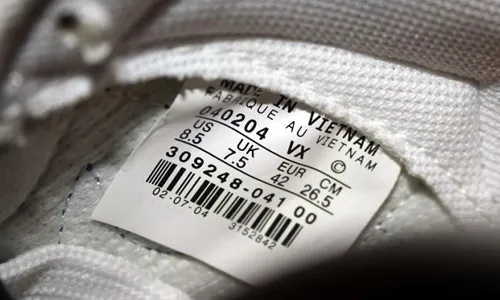
Image Source: VnExpress International
Vietnam acts much like a merchant collecting grain—its yarn is sent to China for weaving and dyeing, then returned to Vietnam for assembly and labeling before being shipped worldwide.
However, the country profits mainly from low-value-added processing fees, with much of the supply chain flowing through Vietnam as a low-end link.
From this perspective, Vietnam resembles early-stage China, where limited capital and technology are supplemented by cheap labor. It has become a haven for low-value, labor-intensive manufacturing.
Authorities' Ambition, Strict Government Regulations
The Vietnamese government clearly doesn’t want to continue enduring such a situation—at least not forever.
The difficulties China has faced are lessons they don't want to repeat, but the benefits China has reaped are something they also want a share of.
Vietnam has ambitious goals for industrial upgrading. Rumors suggest that when negotiating with China over high-speed rail construction, they even asked China to transfer high-speed rail technology.
While such demands might seem far-fetched, they clearly reflect an awareness of the importance of industrial independence and technological development.
A notable example of this ambition is the suspension of Chinese cross-border e-commerce platforms, Temu and Shein, in Vietnam.
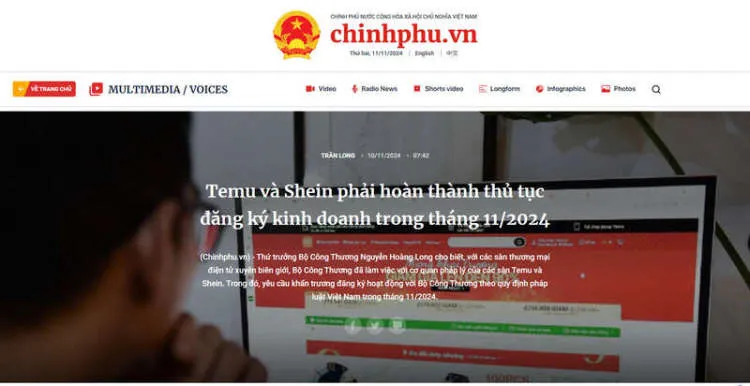
The Vietnamese government required these platforms to register with the government by the end of November, or face suspension of all services, commercial activities, and advertisements.
Temu, in particular, entered the Vietnamese market aggressively.
Right from the start, their ads flooded social media platforms like Facebook, promoting slogans such as "The lowest prices ever" and "If you buy it, you profit," with a sense of urgency behind them.
In addition, Temu offered significant subsidies, including free shipping and discounts of up to 90%, as well as commissions as high as 30%. New users could receive rewards of up to 50,000 VND, and sharing product links also earned users additional rewards.
This type of strategy, akin to the flood-of-subsidies model seen in Chinese e-commerce, quickly disrupted the market in Vietnam, with prices so low that local competitors struggled to keep up.
However, this bold approach upset the Vietnamese authorities, who felt it was destabilizing the market and leaving local businesses powerless.
As a result, the authorities took swift action, ordering Shein and Temu to register with the government by the end of November or face suspension.
Recently, the Vietnamese government issued a statement saying that Temu has submitted a registration application and is under review. The platform’s operations will be temporarily suspended until the registration process is completed. The statement did not specify how long the review would take or how operations could resume. As a result, orders on Temu are now suspended, pending the clearance process, with no clear timeline in sight.
Meanwhile, in response to the influx of companies and factories, Vietnam is also raising its entry requirements.
In Quang Ninh Province, close to China, it used to be possible to set up a foreign-invested manufacturing company with $500,000 or $1 million, but Chinese companies following these procedures have been unable to get approvals.
It was later revealed that while there were no formal regulations, the investment threshold for foreign factories in the region has been raised to over $5 million, with actual funds required.
Moreover, while Vietnam is very welcoming of businesses in sectors such as environmental protection and high-tech industries, traditional industries like clothing and textiles are now being discouraged.
This reveals the government's clear ambition.
So, if you’re planning to expand into Vietnam, it’s best not to adopt a “one-time deal” mentality. You should be prepared to settle in and grow with the market. Vietnam welcomes businesses that want to grow alongside it.
Cultural Similarities? Inevitable Conflicts
From both cultural traditions and folk customs, Vietnam bears many similarities to China.
Vietnam is heavily influenced by Confucian culture and shares many of China’s major festivals, such as the Lunar New Year (Tết), Mid-Autumn Festival, and Dragon Boat Festival. During Tết, they decorate with couplets, set off fireworks, and visit family members. Mid-Autumn Festival is marked by moon gazing and mooncakes, while the Dragon Boat Festival features zongzi (sticky rice dumplings) and dragon boat races. Even the Vietnamese language includes many loanwords from Chinese.
Compared to Muslim-majority regions, Vietnam offers fewer cultural taboos for businesspeople going global, making it easier to build rapport.
More importantly, Vietnam shares a border with China, meaning that a package shipped from Shenzhen or Dongguan can reach Hanoi in just two days.
Vietnam seems like the natural first stop for Chinese businesses looking to expand abroad.
However, due to historical reasons, tensions between China and Vietnam remain significant. Despite the Vietnamese government's diplomatic agility in securing ongoing cooperation with countries like China, the US, and South Korea, cultural divides persist.
In Vietnam, you can easily connect with locals, share drinks, and establish strong personal relationships. Yet, once the conversation shifts to history and politics, disagreements can quickly arise.
This tension becomes particularly noticeable in business management.
Vietnamese workers are often resistant to Chinese management. When hiring for management positions, it's advisable to select local talent, while Chinese staff should primarily focus on technical support.
Furthermore, local Vietnamese managers should receive compensation equal to their Chinese counterparts, with similar working conditions—such as a single day off per week. Failure to adhere to these norms could lead to discontent.
One example of this tension is a Chinese company in Vietnam that faced mass resignations from 50 employees. The issue stemmed from locals refusing to accept Chinese-style management practices, including clocking in and KPIs.
In another instance, factory workers went on strike after receiving less generous Lunar New Year gifts than in previous years. To restore order and maintain production during peak periods, the factory had to distribute much larger gifts.
Vietnamese workers also highly value team-building activities. Unlike in China, where such activities are often viewed as a hassle, Vietnamese workers enjoy organizing events during major holidays. A lack of such activities may even reduce the attractiveness of a factory to potential employees.
Additionally, while China is often perceived as benefiting from cheaper labor, the reality in Vietnam is more complex.
Due to continued investment, labor costs in Vietnam have risen.
According to industry reports, the average salary for a Vietnamese worker is now around 3,000 RMB per month, including social insurance and two hours of overtime. In comparison, a similar position in a Chinese factory in Huizhou may pay 3,800-4,000 RMB. Management positions, in particular, often see salary increases through job-hopping, as workers seek higher compensation.
Thus, labor costs in Vietnam no longer offer a significant advantage. However, one benefit is the younger workforce, with most workers between 18-30 years old. In China, younger people are increasingly reluctant to work in factories, and some older workers even struggle to see fine details on parts.
Even with a younger workforce and a single day off per week, productivity in Vietnam is about 70% of what it would be in China.
On the infrastructure front, Vietnam still lags behind China, especially in areas such as transportation and power supply. In remote regions, unstable electricity can lead to factory shutdowns or reliance on backup generators, which not only slows down productivity but also increases costs.
On the labor side, Vietnamese workers are generally less industrious than their Chinese counterparts. In a similar assembly line setting, Chinese workers rarely stop, while Vietnamese workers may experience occasional pauses.
Despite these challenges, Vietnam’s young workforce is also an advantage. As the country is currently in a demographic dividend phase, it holds significant potential.
The youth in Vietnam typically cannot afford housing or cars and tend to spend their wages immediately on fashion, electronics, and dining out. As income levels rise, the market potential in Vietnam will continue to grow.
This emerging market, powered by a young, consumption-driven population, is set to become a major force in the future of Southeast Asia’s economy. Vietnam is well-positioned to be a key market anchor, with the potential to drive growth across the entire region.
Vietnam, the market fulcrum of Southeast Asia, will one day leverage the entire Southeast Asian market.

.png)
.png)