AliExpress is a real online marketplace, but a legitimate platform does not make every seller trustworthy or every product safe.
Your risk depends on what you buy, who sells it, and the transaction terms—not simply whether checkout works.
This safe shopping guide explains the main risks, practical precautions, and alternatives worth considering before you order.
Is AliExpress safe for online shopping?
AliExpress can be a reasonable option for carefully selected purchases, but it is not a blanket guarantee of quality, authenticity, or safety. Its terms distinguish the marketplace from the buyers and sellers conducting transactions.
Treat each listing as a separate buying decision rather than assuming the platform name endorses the product.
For your own decision-making, separate three questions:
- Payment safety: Are you using the official checkout and a payment method with dispute protections?
- Seller reliability: Does the seller provide credible information, relevant feedback, and clear terms?
- Product safety: Could a defect cause injury, fire, or another serious consequence?
These checks address different problems. An encrypted payment page does not establish that merchandise is genuine, and customer feedback cannot replace a product safety assessment. The FTC specifically warns that HTTPS means a connection is encrypted, not that a seller is legitimate.
My practical recommendation: reserve unfamiliar sellers for purchases where disappointment would be manageable. Use a more verifiable supply chain when failure could hurt someone or leave you facing a substantial loss.
The main risks behind a low price
Misleading listings and counterfeit goods
Product photos, brand names, and attractive prices deserve scrutiny. The U.S. Postal Inspection Service warns that counterfeit goods are sold online and that prices significantly below other retailers should raise concern. A familiar logo is not enough to establish authenticity.
Read the selected variant as closely as the main description. Before paying, confirm dimensions, materials, included accessories, compatibility, and whether the item is new or used. Save that information so you have a record of precisely what you agreed to buy.
As a buying rule, reject an unclear listing rather than filling gaps with assumptions. If a seller cannot explain what is included, the apparent bargain is not ready for checkout.
Unsafe products and unverifiable claims
Product safety concerns are not merely theoretical. In January 2025, the U.S. Consumer Product Safety Commission announced a recall of multi-styler hair dryers sold on AliExpress because they lacked immersion protection, creating electrocution or shock hazards. That example concerns specific products, not every item on the marketplace.
Use stricter standards for electrical appliances, children's products, protective equipment, and anything whose failure could cause injury. My recommendation is to avoid unfamiliar sellers in these categories unless you can independently verify the manufacturer and relevant safety information.
Search the CPSC recall database using the brand and model before buying. A recall search is a useful screening step, not proof that an unlisted product has been tested or approved.
Delivery uncertainty and difficult returns
Shipping promises and return terms deserve the same attention as price. The FTC recommends checking expected shipment timing, refund eligibility, and who pays return postage before purchasing online. Those details determine how much inconvenience or expense you may face if something goes wrong.
AliExpress's published Free Returns terms apply to participating products and include eligibility, timing, shipping, and condition requirements. They also direct buyers to information displayed on the order page. Do not interpret a promotional badge as an unconditional refund promise.
For deadline-sensitive purchases, my advice is simple: choose a seller whose delivery commitment and backup options you can accept. Avoid making an important event depend on the most optimistic arrival estimate.
What does AliExpress buyer protection actually cover?
AliExpress provides return and refund processes, but the applicable terms depend on the service, product, seller, and order details. For example, its Free Returns terms cover participating merchandise and specify conditions for requesting and completing a return.
Check your particular order rather than relying on a universal return window quoted elsewhere.
Before buying, establish:
- Eligibility: Does this exact item qualify for the advertised service?
- Deadline: When must you request a return or report a problem?
- Shipping arrangements: Must you use a designated carrier or label?
- Condition requirements: Which packaging, accessories, and other materials must accompany the return?
- Refund process: What steps must occur before the refund is approved?
These are practical checks drawn from the program's published conditions. Preserve the relevant order-page terms, and follow the instructions attached to your case rather than assuming another buyer's experience applies.
Think of protection as a process you may need to use, not a reason to ignore warning signs before payment. Personally, I would pass on any order whose return procedure I could not understand in advance.
AliExpress shopping tips that reduce avoidable risk
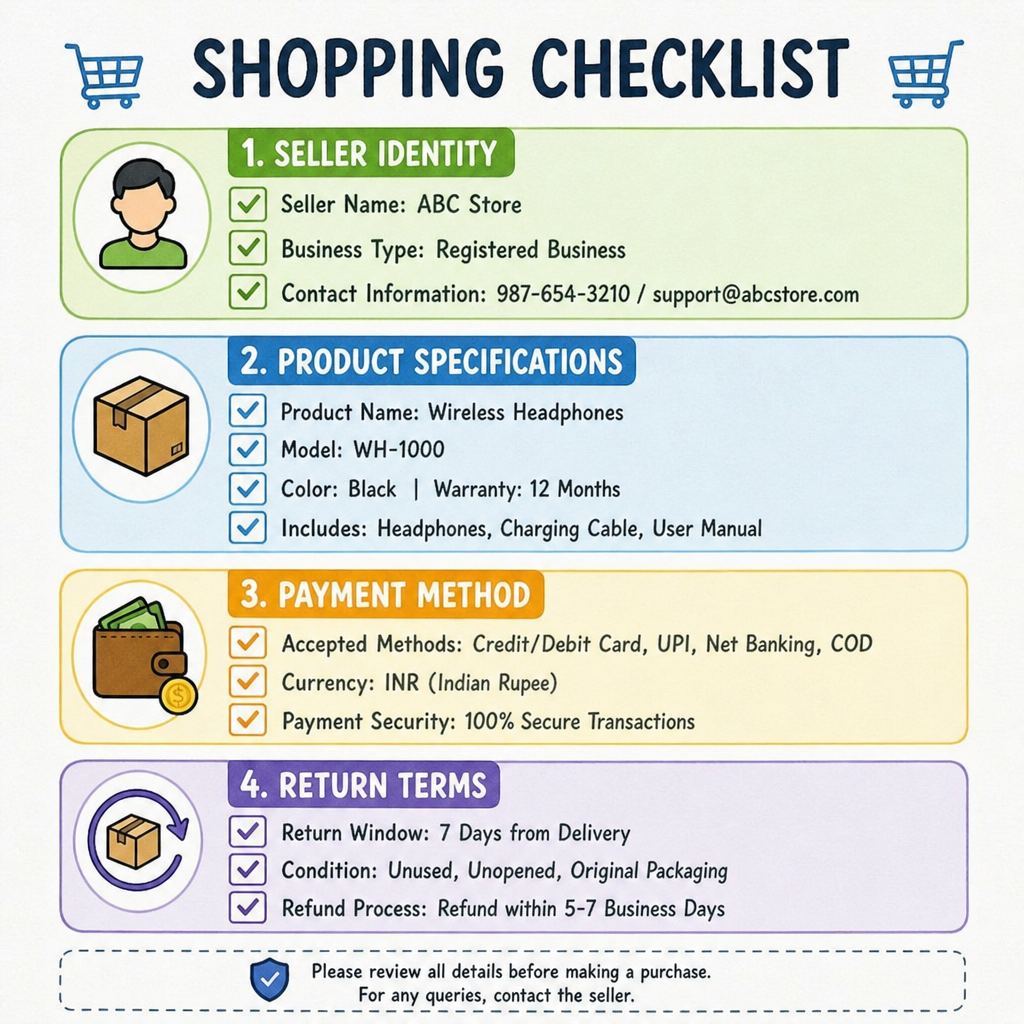
The most useful AliExpress tips are about slowing down at the right moments. Use the following routine before placing an order, especially when the seller or product is unfamiliar.
Check the seller and read reviews critically
Look at seller history, feedback, customer photos, and return terms together. The Iowa Attorney General recommends examining these details and watching for repetitive or suspicious reviews. No single rating should carry the entire decision.
For a useful review check, ask whether reviewers discuss the exact feature you need. A comment about fast delivery does not answer your question about fit, durability, or compatibility. Look beyond the marketplace, too: the FTC recommends consulting varied sources rather than relying on stars alone.
I would favor specific, relevant feedback over a large volume of vague praise. If the evidence remains ambiguous, keep comparing instead of treating uncertainty as reassurance.
Confirm the total cost and exact configuration
Review the final price alongside shipping charges and any other disclosed costs. The FTC advises comparing the full purchase cost, not just the advertised item price, and understanding the deal's terms before ordering.
My suggested final check is to read your cart as though someone else assembled it. Confirm the size, color, quantity, plug type, and included components against your actual needs. Then ask whether you would still want the item without the discount message or countdown.
Set a personal loss limit, too. Decide what amount you could comfortably risk on an unfamiliar seller, including the time needed to resolve a problem. If the purchase exceeds that limit, seek stronger verification or buy elsewhere.
Keep checkout and communication on the platform
Be cautious if a seller asks you to pay directly or continue the transaction elsewhere. Marketplace protections may depend on using official payment and dispute systems, according to the Iowa Attorney General. A promised extra discount is not a good reason to abandon that record.
For secure online shopping, use a credit card when possible and retain payment records. The FTC recommends credit cards because they provide protections when purchases go wrong. Avoid sellers who insist on hard-to-reverse methods such as gift cards, wire transfers, or cryptocurrency.
Protect your account and preserve evidence
Use a unique password and enable multifactor authentication wherever available. Keep software updated and treat unexpected payment or delivery messages cautiously. These are core cybersecurity precautions recommended by CISA, regardless of which marketplace you use.
Review shopping-app permissions and privacy settings rather than accepting access automatically. The FTC advises checking what personal information an app collects and how it is used or shared.
Save the listing, receipt, shipping promise, return policy, and seller messages. When the package arrives, my recommendation is to photograph any damage and compare the contents with your saved order before discarding packaging. Clear records make it easier to describe a problem accurately.
Safer alternatives depend on what you need
A safer alternative is not automatically another marketplace. For authenticity-sensitive purchases, the U.S. Government Accountability Office recommends authorized retailers, including official brand stores. The important distinction is a verifiable seller relationship—not simply a different shopping app.
Use these options as a comparison framework, not a guarantee:
|
Alternative |
When to consider it |
What to verify |
|---|---|---|
|
Manufacturer's own store |
Authenticity, compatibility, or product support matters |
Correct website, warranty coverage, and return costs |
|
Brand-authorized retailer |
You want a branded product with a traceable seller |
Authorization through the brand, plus the retailer's terms |
|
Local or domestic specialist |
You need advice, inspection, or an accessible return route |
Who handles support and whether returns are actually convenient |
|
Established retailer selling directly |
You prefer a clearly identified retail counterparty |
The actual seller, fulfillment arrangements, and product-specific policy |
Authorization is particularly relevant to avoiding counterfeits; clear prices and return policies remain important whichever option you choose. Apply the same seller research rather than assuming a familiar storefront removes all risk.
For example, I would prioritize a manufacturer or authorized specialist for a replacement charger. For a decorative storage pouch, I might accept more uncertainty after checking dimensions and materials. The point is to match your verification effort to the consequences of failure.
Compare purchases side by side using the exact model or specification. If one seller cannot identify the manufacturer, explain compatibility, or provide understandable terms, do not treat its lower price as an equivalent offer. Compare certainty as well as cost.
What to do if an order goes wrong
Start with the seller and the platform's official resolution process, while preserving your payment-provider deadlines. The FTC recommends trying to resolve online purchase problems with the seller or site owner, and the CFPB advises prompt action when disputing qualifying credit-card billing errors.
Use this sequence:
- Describe the problem precisely. State what you ordered, what arrived or failed to arrive, and the resolution you want.
- Attach relevant evidence. Include the listing, receipt, tracking information, photographs, and messages that establish the issue.
- Follow the official instructions. Record the case deadline and any authorized return requirements.
- Contact your card issuer promptly if unresolved. Ask which dispute process applies and what documentation it needs.
These steps combine the FTC's recordkeeping guidance with the CFPB's advice to contact your issuer about disputed charges. For qualifying U.S. credit-card billing errors, preserving federal rights generally requires written notice within 60 days after the first statement showing the error was sent. Do not assume a marketplace case pauses that deadline.
If you suspect a product is unsafe, report it to the CPSC through its consumer reporting system. Include the purchase source and identifying details; the agency also accepts reports of recalled products still offered online.
The takeaway: match the bargain to the risk
The best answer to “Is AliExpress safe?” is conditional: assess the seller, product, payment method, and terms separately. A functioning marketplace cannot substitute for those checks.
Make online shopping safety a repeatable habit. Compare the complete deal, preserve your records, and choose a more verifiable seller whenever authenticity or safety matters more than the lowest price. A bargain should leave you comfortable with the purchase—not dependent on a refund process you hope never to need.