









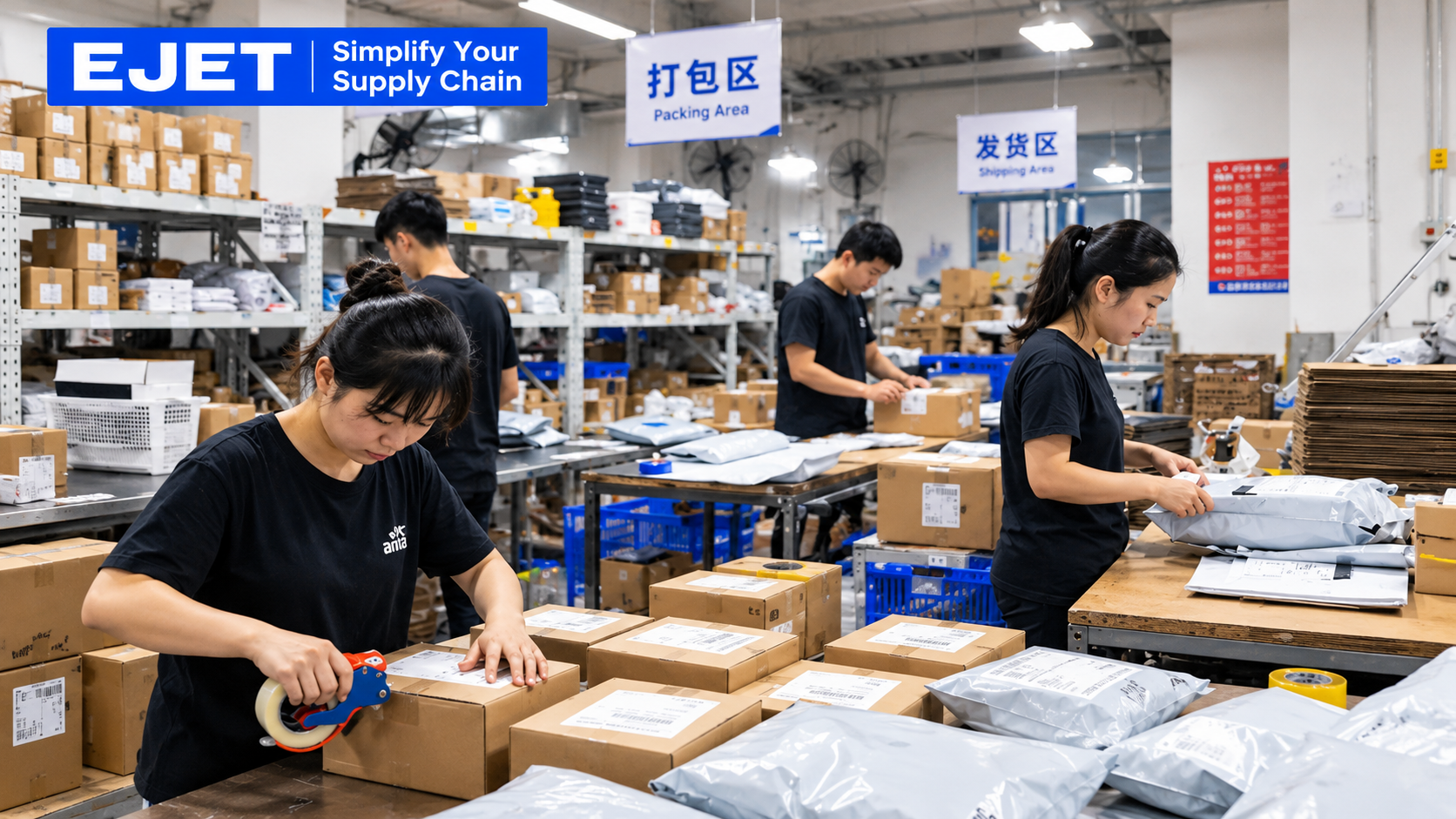
Turn product sourcing, storage, packing, and international delivery into one clearer workflow with a China-based dropshipping fulfillment partner.
This page is for ecommerce sellers, Shopify store owners, marketplace brands, and growing DTC teams that need practical support for dropshipping from China without managing every supplier, label, and shipment manually.
Use it to understand what a dropshipping fulfillment center can handle, when China ecommerce fulfillment makes sense, and what to prepare before requesting a quote.
Looking for a fulfillment setup that connects Chinese suppliers with your customers?
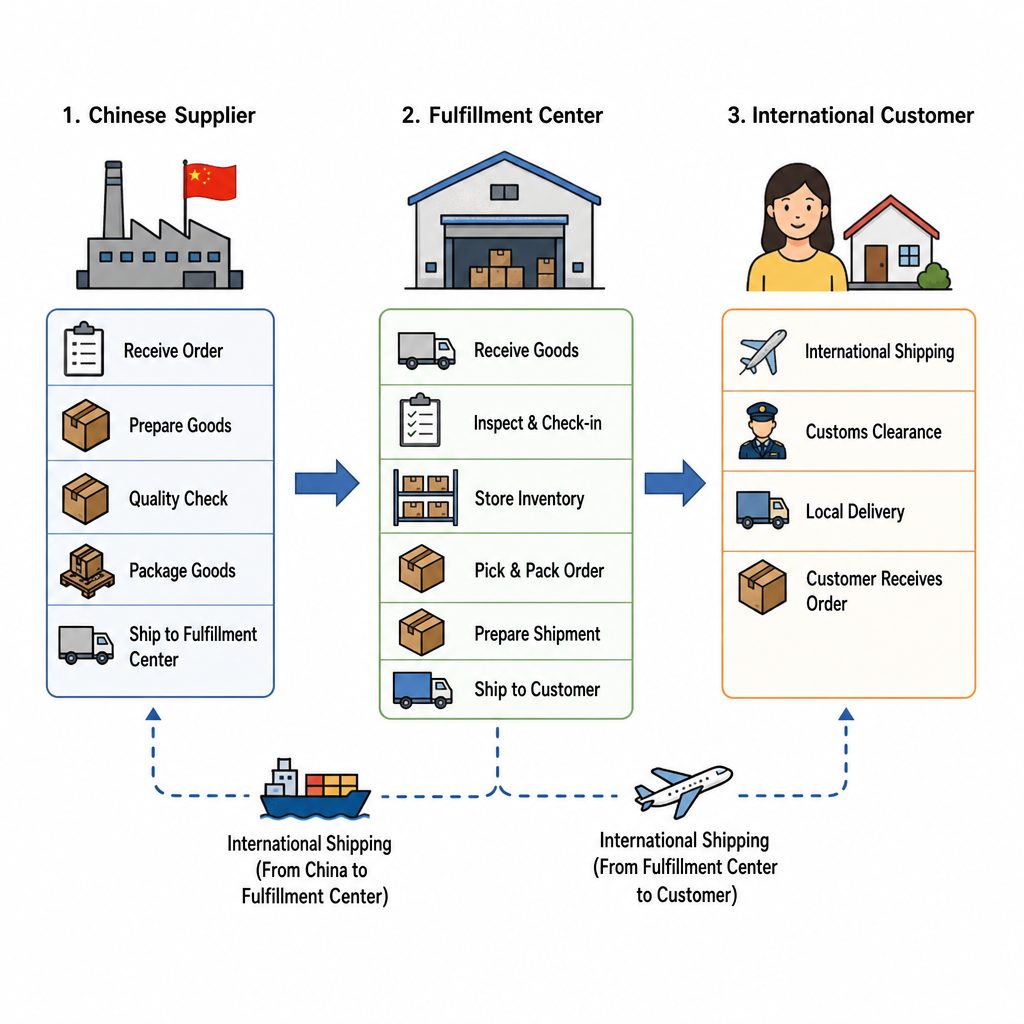
A China-based fulfillment setup helps you move products from factories or dropshipping suppliers in China into a controlled order fulfillment process before parcels are shipped to your customers.
Instead of coordinating every order across multiple contacts, you can centralize receiving, storage, quality checks, packaging, labeling, and dispatch through one operational workflow. For sellers using Shopify, marketplaces, or custom ecommerce systems, the goal is simple: make each order easier to process, easier to track, and easier to scale.
This service is especially useful when your suppliers are already in China or when you want to test products before committing to bulk inventory in your target market.
It can also support stores that are tired of inconsistent handling from individual Chinese dropshipping suppliers and want more visibility between purchase, packing, and delivery.
The right partner does not remove every challenge from international ecommerce, but it gives your business a more organized way to manage orders, reduce manual follow-up, and create a better post-purchase experience.
Ready to simplify your China order fulfillment workflow? Share your product type, order volume, destination countries, and current platform to request a practical fulfillment quote.
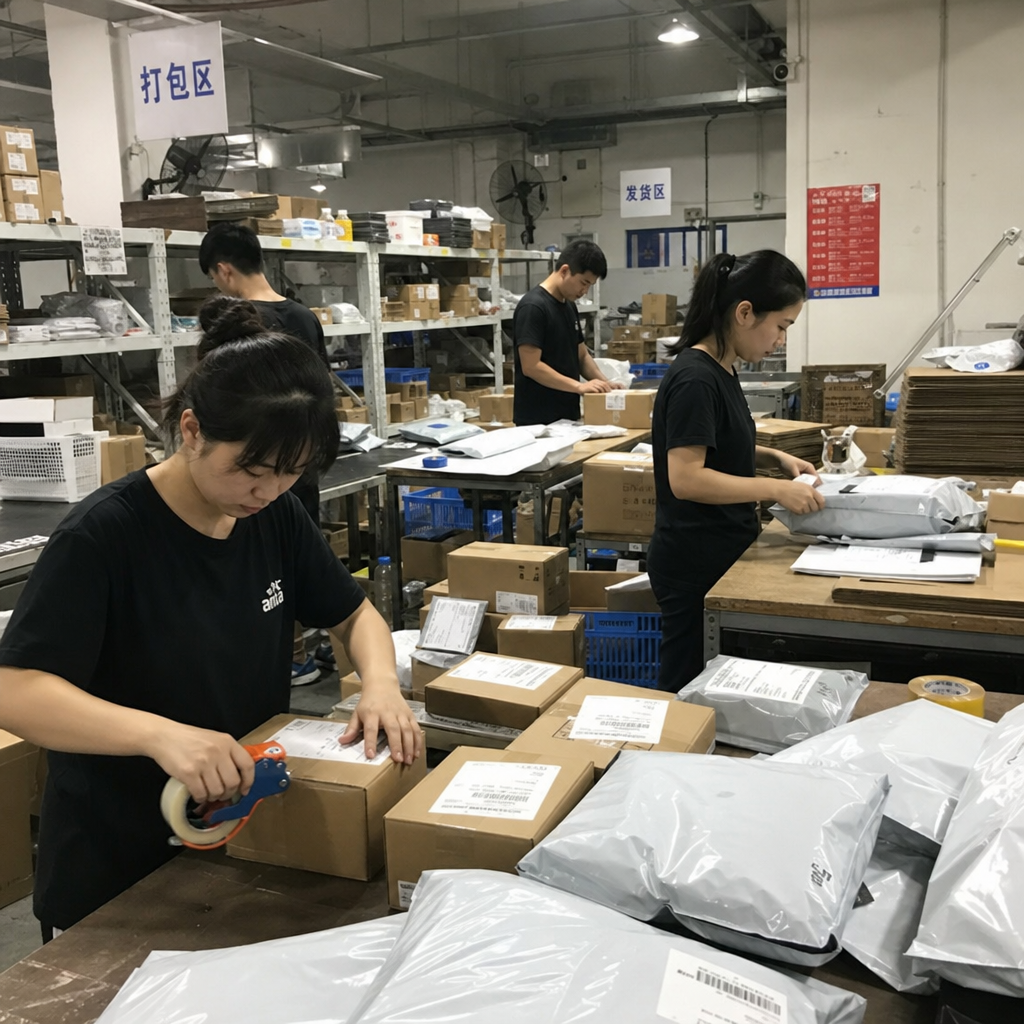
A practical bridge between sourcing, fulfillment, and delivery
Dropshipping from China works best when the supply chain is treated as a system, not a patchwork of one-off supplier messages.
A fulfillment partner can receive goods from your china dropshipping suppliers, check incoming items, store stock where needed, and process orders as they arrive. That creates a cleaner handoff between sourcing and shipping, which matters when customers expect accurate items, presentable packaging, and reliable tracking updates.
For many sellers, the problem is not finding products. The harder part is keeping fulfillment consistent once orders start to grow. One supplier may communicate quickly, another may delay dispatch, and another may use packaging that does not match your customer experience. A dropshipping fulfillment center gives you a place to standardize the operational steps that happen after the product is sourced.
This approach can support one-product stores, niche catalog brands, subscription-style replenishment products, seasonal campaigns, and stores testing new offers. Whether you work with one manufacturer or several dropshipping suppliers China-wide, the fulfillment workflow should help you bring orders into one process rather than chasing every shipment separately.
Core fulfillment services for China-based ecommerce operations
A complete China ecommerce fulfillment setup can be adapted to the products you sell, your sales channels, and the countries you ship to. Not every store needs every service, but a strong workflow should make the order journey easier to control from supplier pickup to customer delivery.
Typical services can include:
- Supplier coordination: Arrange inbound goods from factories, trading companies, or chinese dropshipping suppliers so stock reaches the fulfillment locati0n in a workable condition.
- Receiving and counting: Check that incoming quantities match the expected purchase order or supplier confirmation before inventory is made available for orders.
- Basic quality review: Inspect visible issues such as wrong variants, missing accessories, damaged packaging, or obvious product mismatches before items are shipped.
- Inventory storage: Hold stock for products that sell repeatedly, so orders can be packed faster than waiting for each supplier to ship one parcel at a time.
- Pick and pack: Select the correct SKU, variant, bundle, or accessory combination and prepare it for international dispatch.
- Custom packaging support: Use plain packaging, branded inserts, barcodes, labels, or other prepared materials when available and suitable for the product.
- Shipping method selection: Match parcels with available shipping options based on destination, product category, weight, and service requirements.
- Tracking updates: Provide tracking details that can be shared with your store, your team, or your customers depending on your workflow.
- Returns handling support: Receive selected returns or undeliverable parcels where a return route is available and commercially reasonable.
The benefit is not only that tasks are outsourced. The real value is that these steps happen in a repeatable sequence. When your process is consistent, you can identify problems faster, improve supplier instructions, forecast packaging needs, and make customer support less reactive.
Built for Shopify sellers and growing ecommerce teams
Shopify fulfillment China workflows are often requested by sellers who want a cleaner connection between their storefront and their back-end logistics.
When orders arrive, your team should not need to manually copy customer details, message suppliers one by one, and wait for scattered tracking numbers. A more organized workflow can reduce repetitive admin and let your team focus on product selection, conversion, creative, and customer care.
For early-stage stores, a China fulfillment partner can help test products without building a large warehouse operation. For established stores, it can support higher order volume, more consistent packing, and better supplier management. For teams selling across several countries, it can also help keep international dispatch more structured than relying on separate supplier-controlled shipments.
This is not limited to Shopify. A China order fulfillment process can also support ecommerce stores using other platforms, marketplaces, preorder campaigns, influencer launches, and private-label product tests. The key is to define how orders will be received, how inventory will be identified, and how tracking will move back into your customer communication process.
The right fit for stores that need more control
China dropshipping services are most valuable when your business has moved beyond casual testing and needs operational consistency. If you are getting orders but spending too much time following up with suppliers, confirming tracking, or fixing preventable fulfillment mistakes, a centralized workflow may be the next logical step.
This kind of service is often a strong fit for:
- Shopify stores that want more reliable order processing from China-based inventory or suppliers.
- DTC brands that source from China and need packaging, labeling, and dispatch support before goods reach customers.
- Product testing teams that want to validate demand without immediately importing bulk stock to a domestic warehouse.
- Multi-SKU stores that need help managing variants, bundles, accessories, and supplier handoffs.
- Sellers working with multiple suppliers who want one fulfillment process instead of several disconnected shipping arrangements.
- Brands improving customer experience by adding better packaging control, clearer tracking, and fewer supplier-dependent inconsistencies.
- Campaign-based sellers running seasonal promotions, product launches, or influencer-driven traffic that requires organized dispatch.
It may not be the best fit if you only ship a few orders occasionally, if your product has complex compliance restrictions that have not been reviewed, or if your business model depends entirely on the lowest possible shipping cost regardless of customer experience. In those cases, it is better to clarify your goals before changing fulfillment methods. A good setup should support your business model, not force you into unnecessary services.
How the order fulfillment process works
A clear workflow helps your team know what happens before, during, and after each order. While the exact setup depends on your products and systems, most dropshipping fulfillment from China follows a similar operational path.
- Share your product and sales details Start with the basics: product type, SKU count, average order volume, destination countries, packaging needs, and sales platform. This helps determine whether your products are suitable for the available fulfillment options.
- Connect suppliers or inbound inventory Your goods are sent from manufacturers, agents, or dropshipping suppliers China-based. The fulfillment center receives the stock, checks quantities, and prepares it for storage or direct processing.
- Set fulfillment rules Define how orders should be packed, which accessories or inserts belong with each item, how variants should be identified, and what shipping methods are acceptable for each market.
- Process customer orders Once an order is received, the fulfillment team picks the item, prepares the parcel, applies the required label, and dispatches it through the selected route.
- Return tracking to your workflow Tracking information is made available for your store, operations team, or customer service process. This helps customers understand that their order is moving and gives your team a reference point for support questions.
- Review and improve As orders increase, the workflow can be refined. You may adjust packaging, change supplier instructions, review slow-moving SKUs, prepare stock earlier, or create different shipping rules for different destinations.
This step-by-step structure matters because fulfillment problems often come from unclear expectations. When your suppliers, fulfillment partner, and internal team understand the same process, fewer decisions need to be made in a hurry.
Fast shipping from China starts with better preparation
Fast shipping China workflows are not only about choosing the quickest delivery line. Speed also depends on product readiness, inventory placement, packaging decisions, order cutoffs, address accuracy, and the suitability of the shipping route for the item.
A parcel that is packed correctly and handed off quickly usually has a better chance of moving smoothly than an order delayed by missing stock, unclear variants, or incomplete customer details.
A fulfillment partner can help by preparing repeat-selling products in advance, standardizing labels, and separating products that need special handling from products that can ship through common ecommerce routes.
This reduces the avoidable delays that happen before a parcel even leaves the warehouse. It also makes it easier to compare shipping options because the fulfillment data is more consistent.
You should still set realistic expectations with customers. International delivery can be affected by destination country, customs procedures, product category, peak seasons, holidays, and carrier capacity.
The strongest approach is to build a fulfillment process that is organized before dispatch and transparent after dispatch, so your customer service team can communicate clearly when questions arise.
Supplier coordination that protects the customer experience
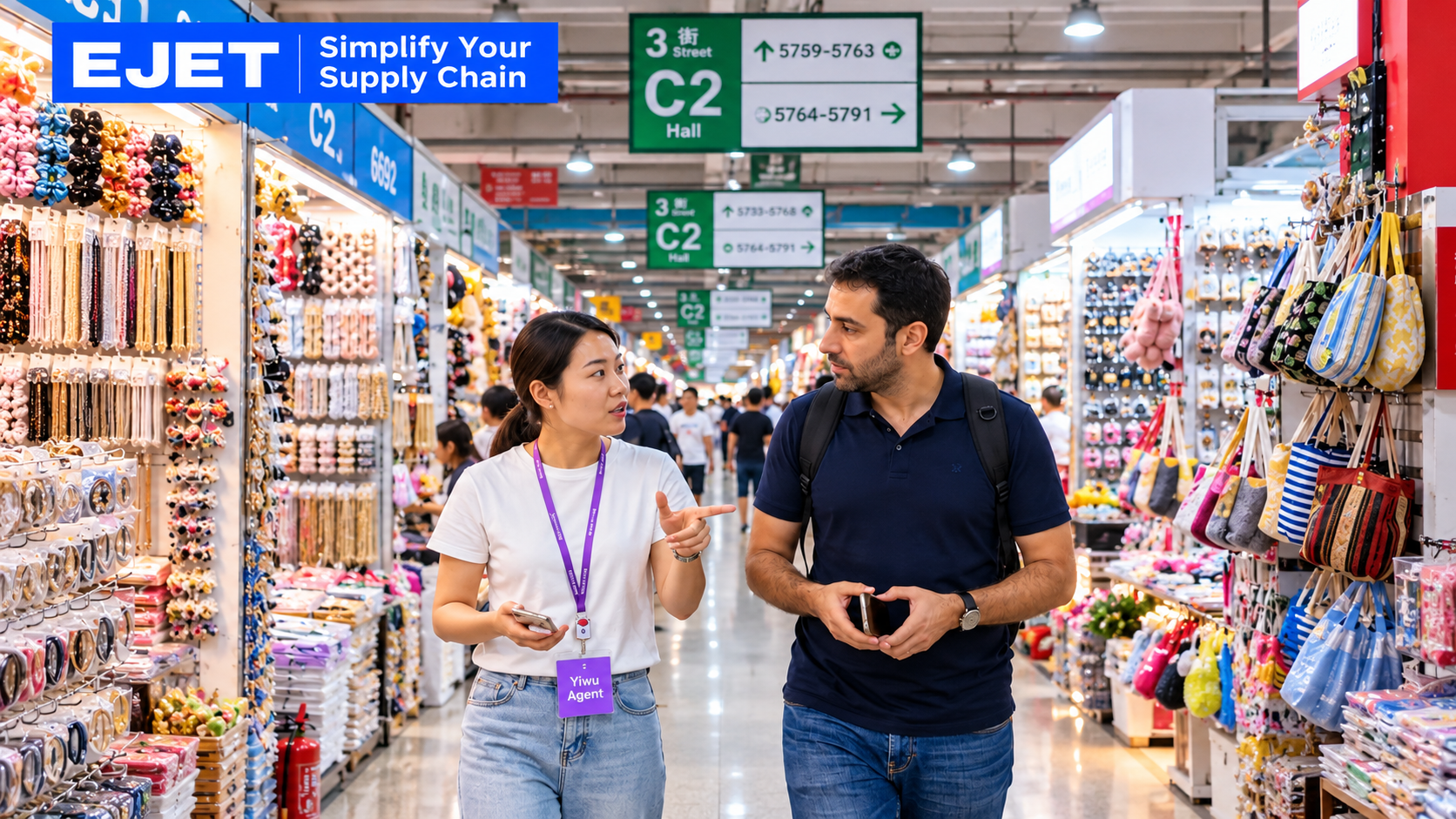
Many ecommerce sellers already have access to china dropshipping suppliers, but access does not always mean control. A supplier may be excellent at manufacturing but less reliable at individual parcel fulfillment. Another may offer attractive product pricing but limited packaging options. A third may be responsive during negotiation and slower once daily order processing begins.
Centralized fulfillment creates a layer between supplier performance and customer experience. Instead of sending every order directly from each supplier to each customer, products can be routed through a process designed for ecommerce handling. That gives your business more opportunity to confirm product details, combine items where practical, prepare branded materials, and avoid sending parcels that look inconsistent from one order to the next.
This is particularly helpful when your store works with multiple Chinese dropshipping suppliers. Your customers see one brand, not your supplier network. A structured fulfillment process helps the parcel experience feel more consistent, even if the products originally come from different factories or vendors.
Packaging, branding, and quality checks that make orders feel deliberate
A customer’s first physical interaction with your brand often happens when the parcel arrives. Even simple improvements can make an order feel more intentional: the right product variant, clean protective packaging, a clear insert, or a label that does not confuse the customer. These details are difficult to control when every supplier ships in their own way.
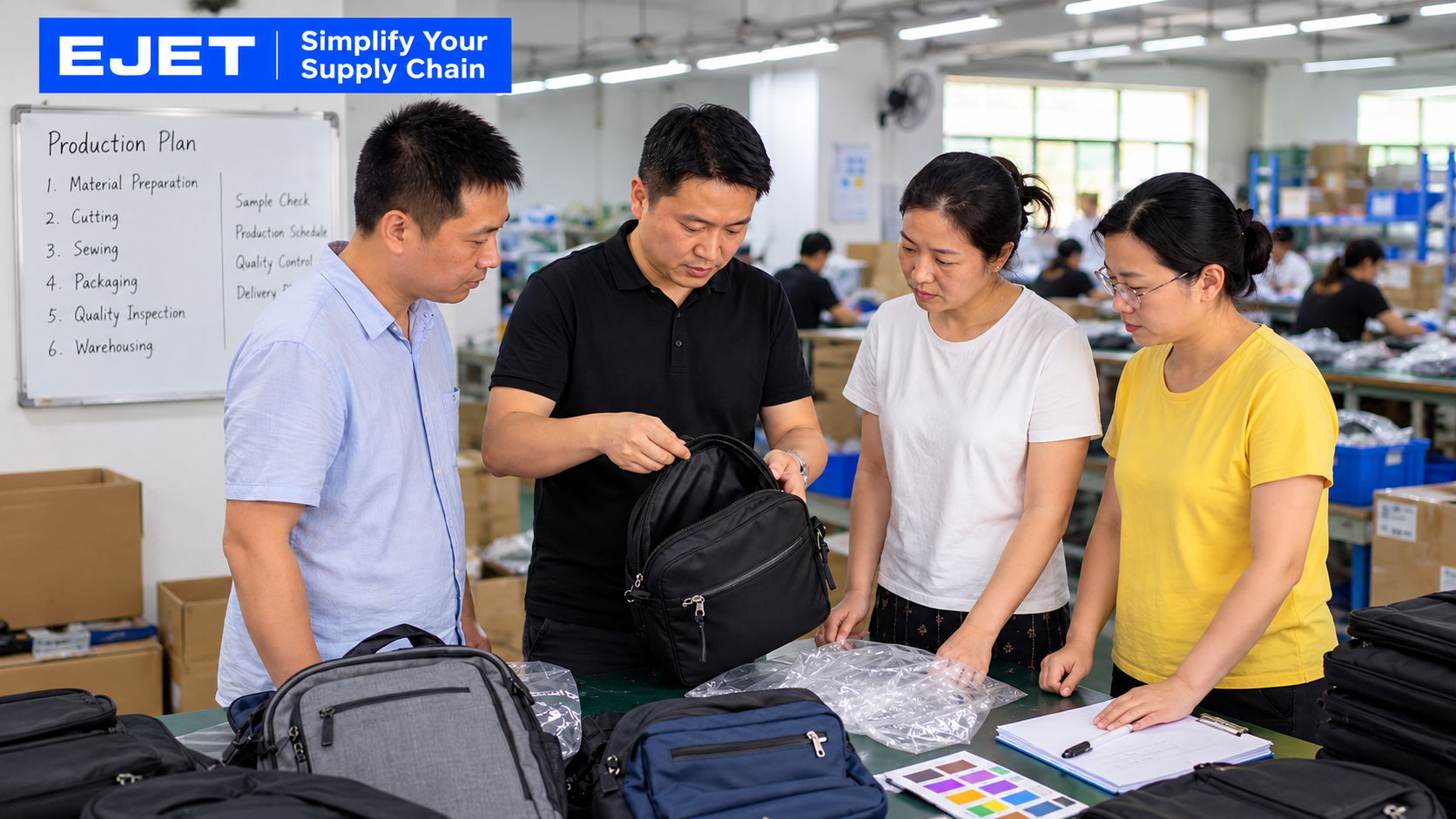
With a China-based fulfillment workflow, you can define realistic packing instructions based on your product and budget. Some stores need plain protective packaging. Others want branded inserts, thank-you cards, barcode labels, bundle assembly, or accessory checks. The best choice depends on margin, product fragility, destination, and customer expectations.
Quality control should also be practical. A fulfillment center is not a full product laboratory unless that service is specifically arranged, but basic checks can catch obvious problems before dispatch.
For example, the team may confirm that the color, size, quantity, or visible condition matches the order requirements. That can reduce avoidable complaints caused by sending the wrong item or shipping visibly damaged goods.
Useful preparation items include:
- A clean SKU list with product names, variants, photos, and supplier references.
- Clear packaging instructions for each product or bundle.
- Insert cards, labels, or branded materials if you want them included.
- Rules for handling damaged, incorrect, or incomplete inbound goods.
- Shipping restrictions for products with batteries, liquids, magnets, sharp parts, or other special considerations.
- A customer communication plan for tracking updates and delivery questions.
The more specific these details are, the easier it is to build a repeatable fulfillment process. Vague instructions usually create avoidable back-and-forth, especially when order volume rises.
Flexible support for product testing and scaling
One reason sellers choose dropshipping from China is flexibility. You can test demand before committing to large local inventory, expand a catalog without opening your own warehouse, and work close to the manufacturing base for many product categories. A fulfillment workflow should preserve that flexibility while making the process more reliable.
For product testing, you may start with small quantities or supplier-held stock and then move winning products into a more prepared inventory model.
This can help you reduce the friction between a successful ad test and the operational reality of shipping many orders. Instead of scrambling to find a new process after a product begins selling, you can plan how inventory, packaging, and shipping will be handled as demand grows.
For scaling, the focus shifts from “Can we ship this?” to “Can we ship this repeatedly without creating support problems?” That is where centralized china ecommerce fulfillment becomes especially useful. You can improve product data, organize SKUs, separate bestsellers from slow movers, and decide which products deserve branded packaging or dedicated stock planning.
A clearer comparison with direct supplier shipping
Direct supplier shipping can be useful at the earliest testing stage, especially when order volume is low and customer expectations are modest. However, as a store grows, the gaps can become more visible. A fulfillment center is not automatically better for every product, but it can provide more structure when consistency matters.
|
Fulfillment factor |
Direct supplier shipping |
China-based fulfillment workflow |
|---|---|---|
|
Supplier management |
Each supplier may handle orders differently |
Multiple suppliers can feed into one process |
|
Packaging control |
Often limited to supplier defaults |
Can be defined by product, bundle, or brand need |
|
Inventory visibility |
May depend on supplier updates |
Stock can be received, counted, and organized |
|
Quality review |
Usually varies by supplier |
Basic checks can be standardized before dispatch |
|
Order scaling |
More manual follow-up as volume grows |
Process can be documented and repeated |
|
Customer experience |
Parcels may look inconsistent |
Packing and tracking can be managed more deliberately |
This comparison is not about choosing the most complicated option. It is about matching fulfillment to the stage of your business. If you are running a serious ecommerce operation, the back end needs to support the promise your storefront makes.
What to prepare before requesting a quote
A good quote depends on accurate information. If you only ask for a generic price, the answer may not reflect your product size, order volume, destination mix, storage needs, or packaging expectations. Preparing a few details upfront helps the fulfillment provider recommend a more realistic setup.
Before you request pricing or a workflow review, gather:
- Product photos, descriptions, and variant details.
- Estimated monthly order volume and expected growth patterns.
- Main destination countries or regions.
- Product weight, dimensions, and packaging requirements if available.
- Current suppliers, factories, or sourcing contacts in China.
- Sales platform information, such as Shopify or marketplace order flow.
- Any special handling concerns, including fragile goods, electronics, liquids, batteries, or regulated categories.
- Branding requirements, such as inserts, labels, stickers, or custom boxes.
- Current fulfillment problems, including delays, wrong items, poor tracking, or inconsistent packaging.
You do not need a perfect operations manual to start the conversation. You do need enough detail to avoid a one-size-fits-all answer. The more your fulfillment partner understands your actual order journey, the easier it is to design a practical solution.
Designed to reduce manual work and support better decisions
The strongest fulfillment systems do more than move parcels. They help you see where your operations need attention. If one supplier sends damaged cartons, if one SKU creates frequent support tickets, or if one destination requires a different shipping approach, a centralized workflow makes those patterns easier to notice.
For the store owner, that means fewer scattered messages and more usable information. For the customer service team, it means clearer tracking references and more consistent answers. For the brand, it means the delivery experience is less dependent on whichever supplier happened to ship the order.
This is where china dropshipping services can become a strategic part of the business instead of just an expense. Fulfillment affects reviews, repeat purchases, support workload, and the confidence you have when launching new products.
When the process is documented and repeatable, your team can spend less time fixing avoidable fulfillment issues and more time building demand.
Start with a fulfillment review
If your store is sourcing from China, working with china dropshipping suppliers, or planning to move beyond basic supplier-direct shipping, now is the right time to review the process. A focused fulfillment review can identify which parts of your workflow should stay simple, which parts need more control, and what information is required before your first order is processed.
To get started, share your product details, supplier situation, platform, target markets, and current order volume. You can also include the biggest fulfillment problem you want to solve, such as slow supplier dispatch, inconsistent packaging, missing tracking, or too much manual order work
. From there, the next step is to map a practical China order fulfillment workflow that fits your products and your customers.
Request a fulfillment quote today and build a clearer path from Chinese suppliers to delivered ecommerce orders.
Frequently Asked Questions About Dropshipping Fulfillment from China
What is a dropshipping fulfillment center?
A dropshipping fulfillment center is a service that handles the storage, packing, and shipping of products sourced from suppliers. It allows eCommerce sellers to automate their order fulfillment process, enabling them to manage multiple suppliers and customers efficiently.
How does dropshipping from China work?
In dropshipping from China, sellers partner with Chinese suppliers or manufacturers who produce the products. When a customer places an order, the fulfillment center prepares the product for shipping directly to the customer, allowing the seller to avoid holding inventory or managing logistics.
What are the benefits of using a China-based fulfillment partner?
Using a China-based fulfillment partner streamlines the logistics process, offers faster shipping times, improves packaging and branding control, ensures quality checks, and provides better visibility into inventory management.
Can I use a fulfillment center with my Shopify store?
Yes, many fulfillment centers cater specifically to Shopify sellers, providing integrations that facilitate order processing and fulfillment directly through the Shopify platform for enhanced efficiency and organization.
What information should I provide when requesting a fulfillment quote?
When requesting a fulfillment quote, you should provide details such as product specifications, estimated monthly order volume, target markets, storage needs, packaging requirements, supplier information, and any specific handling concerns related to your products.