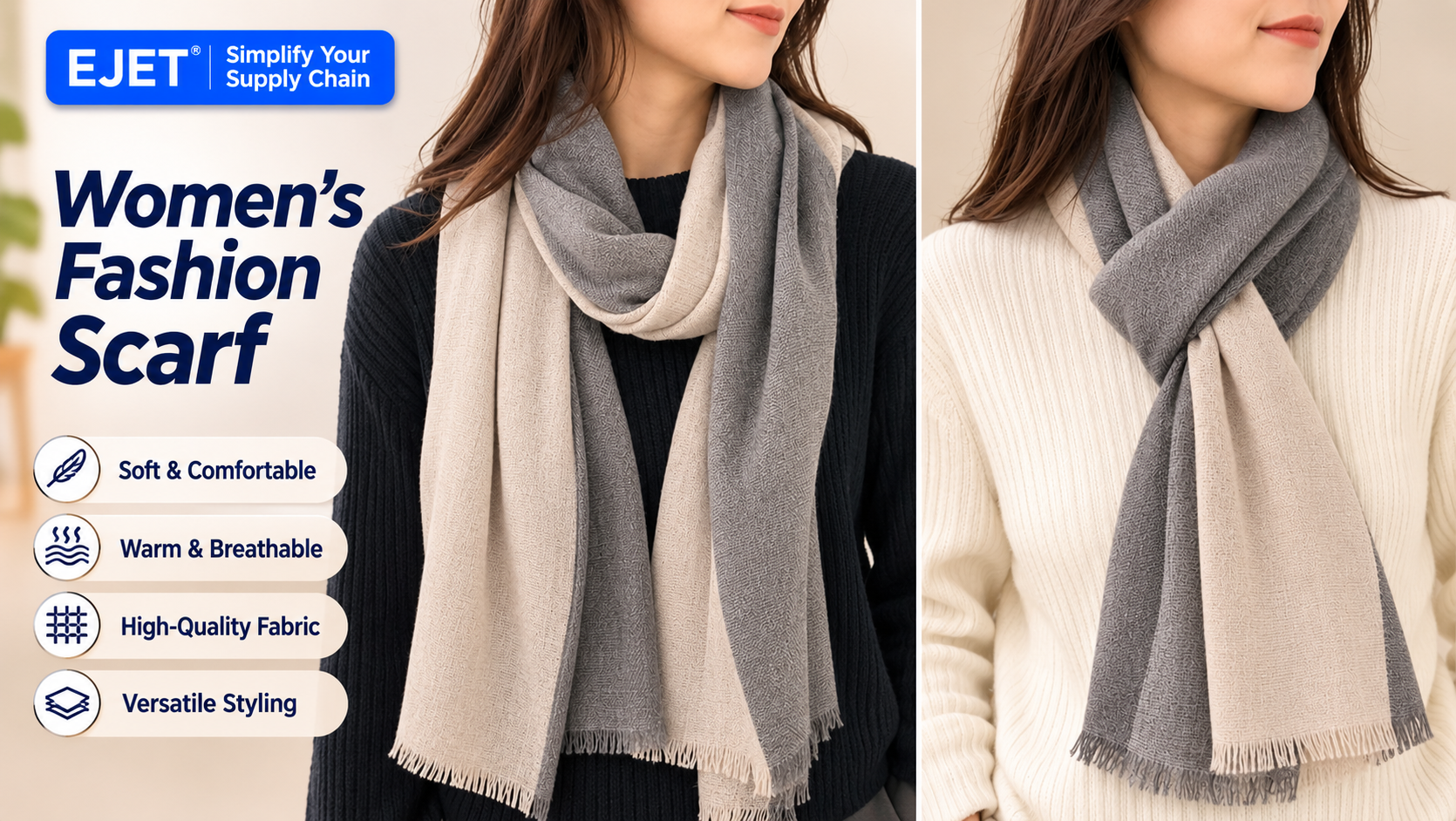
Scarves come in several shapes, fabrics, and weights, so choosing one means looking beyond its color or pattern.
The most useful approach is to match the shape to how you want to wear it, then choose a fabric and weight for the weather.
This guide explains the main types of scarves, offers seasonal outfit ideas, and helps you build a practical collection without unnecessary overlap.
What are the main types of scarves?
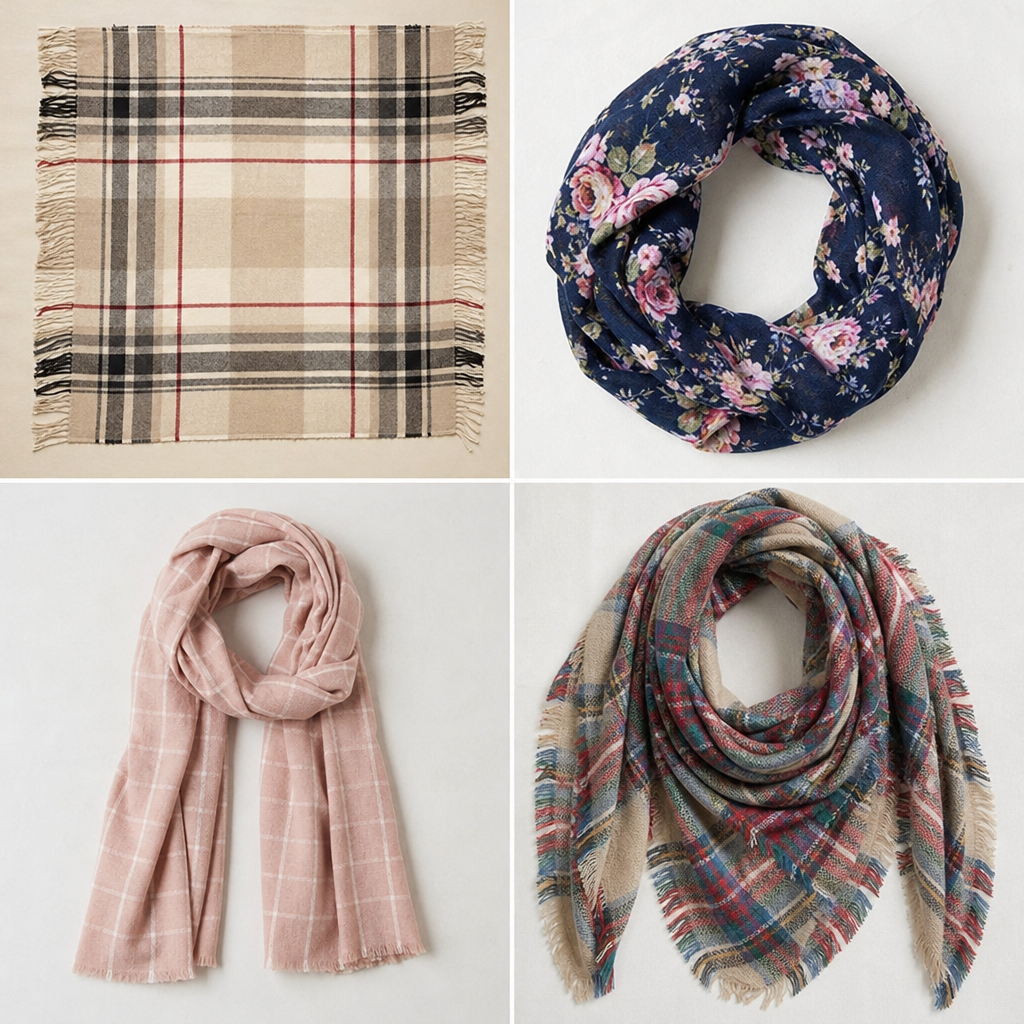
The main scarf types include rectangular scarves, square scarves, infinity scarves, blanket scarves, and shoulder wraps. These names describe shape or construction, while terms such as silk, wool, and cotton describe material.
A silk square and a wool square share a shape but serve different wardrobe needs. Keeping those categories separate makes product descriptions easier to compare.
Start by deciding what you want your scarf to do. Perhaps you need something to tuck into a coat, add interest to a plain shirt, or drape over your shoulders at dinner. That purpose should guide your choice before a beautiful print persuades you otherwise.
Think of fashion scarves as outfit accents rather than a separate shape category. For your own wardrobe planning, distinguish between scarves you wear primarily for decoration and those you rely on for warmth.
Scarf shapes and how to wear them
Rectangular scarves
A rectangular, or oblong, scarf gives you two free ends to arrange. Try it hanging straight, wrapped around the neck, or folded into a pull-through loop. This shape is a useful starting point if you want to experiment with several scarf styles rather than commit to one arrangement.
For everyday dressing, try one loose wrap with the ends tucked inside your jacket. Before buying, check the dimensions against a scarf you already own. Product photos alone may not tell you whether you will have enough length for your preferred knot.
Square scarves and neckerchiefs
Square scarves can be folded diagonally into triangles or folded into narrow bands. Smaller versions suit compact neck ties, while larger squares offer more fabric to arrange. Choose this shape when you want to practice folded looks rather than leave long ends hanging down your coat.
Try a patterned square with a plain shirt, placing the knot slightly off-center. If the design has a border, experiment with folding that edge outward. You may prefer the framed effect to showing the center of the print.
Infinity scarves
Infinity scarves form a continuous loop instead of having separate ends. Depending on the length, you can wear the loop hanging down or double it around your neck. The defining feature is the closed shape, not a particular fabric or season.
Choose this style if arranging loose ends feels like an unnecessary morning task. Check how the doubled loop sits with your usual coat collar, though. If it crowds your chin or feels restrictive, try a longer loop or less fabric.
Blanket scarves, wraps, and stoles
Blanket scarves offer generous fabric for wrapping, while wraps and stoles can be arranged across the shoulders as well as around the neck. These labels overlap, so compare actual dimensions rather than relying on the product name.
Try an oversized scarf over a simple sweater, leaving the rest of the outfit relatively uncluttered. For shoulder coverage, test whether you can move your arms comfortably without constantly readjusting it. More fabric is only useful if you enjoy wearing it.
Neck gaiters and tube scarves
A neck gaiter is a tube-shaped garment worn around the neck; some designs can also be repositioned over the head. BUFF demonstrates multiple arrangements for its tubular accessories, illustrating how this format differs from a traditional scarf with loose ends.
Consider this option when you prefer a compact neck covering. Evaluate the particular product for your activity rather than assuming every tube scarf has the same warmth, fit, or performance.
Fabric, weight, and construction matter together
A shape tells you how a scarf can be arranged, but it does not tell you everything about comfort. When comparing fabrics, examine thickness, surface texture, and flexibility alongside the fiber label. For wool in particular, its naturally crimped fibers help trap insulating air, while its ability to manage moisture vapor contributes to breathability.
Wool and cashmere options
For winter scarves, wool is worth considering because of that insulating structure. However, choose a specific scarf by trying it against your neck and checking how it fits beneath your outerwear. A fiber name cannot tell you whether you personally enjoy its texture.
If you are comparing cashmere options, decide how much coverage you need before shopping. Cashmere accessories include both scarves and broader stoles, so compare their dimensions and intended arrangement, not just their material descriptions.
Silk scarves and printed accents
Try silk scarves when your priority is a folded neck accent or a decorative finishing touch. For example, pair a printed square with a simple knit and let one color from the print echo another accessory. Treat this as an outfit experiment rather than a rule about what silk must accompany.
Check care requirements before making one your daily accessory. Hermès, for example, recommends specialist cleaning for its silk scarves and cautions that rain can damage printed silk. Follow the instructions for your particular piece rather than assuming every silk scarf tolerates washing.
Cotton and synthetic alternatives
For active use, moisture behavior deserves attention. REI explains that cotton absorbs moisture and dries slowly, while many synthetic fabrics perform well at moving moisture and drying. That makes a decorative cotton scarf a different proposition from purpose-designed outdoor neckwear.
For ordinary outfit styling, compare the actual scarves in front of you. Check whether the fabric feels pleasant, holds your chosen arrangement, and meets your care preferences instead of choosing by fiber name alone.
Which scarves work best in each season?
Use the following combinations as starting points rather than strict seasonal rules. Your local weather, time outdoors, and tolerance for neck coverage matter more than the calendar. Begin with the amount of coverage you want, then test the scarf with the clothes you will actually wear.
Spring: keep the arrangement adjustable
For a spring outfit, try a small square with a shirt or a lightweight rectangle with an open jacket. Start with a loose arrangement that you can remove easily as the day changes. If you expect to carry the scarf later, check whether it fits comfortably in your bag.
Choose a print that works with several existing tops. You could repeat a familiar wardrobe color while introducing a second accent shade. This gives you a way to experiment without needing an entirely new outfit.
Summer: make the scarf optional
For summer styling, consider a narrow folded square or carry a lightweight wrap for indoor use. Try the scarf with your outfit before leaving home, and skip it if the extra neck coverage feels uncomfortable. An accessory does not need to stay on all day to earn its place.
For outdoor activity, look for a product designed for that purpose rather than substituting a decorative scarf. In particular, assess moisture management if you expect to sweat; cotton and performance synthetics do not behave identically when damp.
Fall: test your layering combinations
Try a medium-weight rectangle or infinity scarf with your most frequently worn jacket. Put both on together and check the collar area before deciding the combination works. You should be able to turn your head and fasten the jacket comfortably.
For color, start with something already present in your shoes, bag, or outerwear. If your coat has a strong pattern, experiment with a plain scarf first. Alternatively, make a checked scarf the focal point of an otherwise simple outfit.
Winter: prioritize comfortable coverage
For cold-weather use, consider an insulating wool scarf and assess how effectively your arrangement covers the opening of your coat. Wool's crimp helps create the air-trapping structure behind its insulation. Still, choose a weight and size you can wear comfortably rather than assuming the largest option is best.
Try sitting down, looking over your shoulder, and fastening your coat during a fitting. These small checks can reveal whether the scarf is practical for your commute. If you dislike the resulting bulk, compare a narrower design before abandoning scarves altogether.
A practical checklist for choosing a scarf
Use this checklist to compare options against your own habits rather than an imagined wardrobe:
- Name its main job. Choose between decorative styling, neck coverage, shoulder coverage, or a specific outdoor activity.
- Check the dimensions. Compare them with a scarf you own, especially when shopping online.
- Test your preferred arrangement. Make sure the ends, loop, or folded corners sit where you want them.
- Wear your usual outerwear. Assess the scarf alongside your actual collar, hood, and jacket fastening.
- Check neck comfort. Notice texture and pressure before focusing on appearance.
- Read the care label. Decide whether the cleaning requirements suit your routine.
- Picture three outfits. If you cannot find useful combinations, consider a different color or pattern.
You do not need every shape represented in your closet. Start with the job your current accessories cannot perform, whether that means a compact neck accent or a substantial winter layer. Add another scarf when you can explain what it will do differently.
Simple ways to style your scarves
Practice with a scarf you already own before shopping for more. Try each arrangement with your usual neckline and adjust it in front of a mirror. Aim for something comfortable enough that you stop thinking about it once dressed.
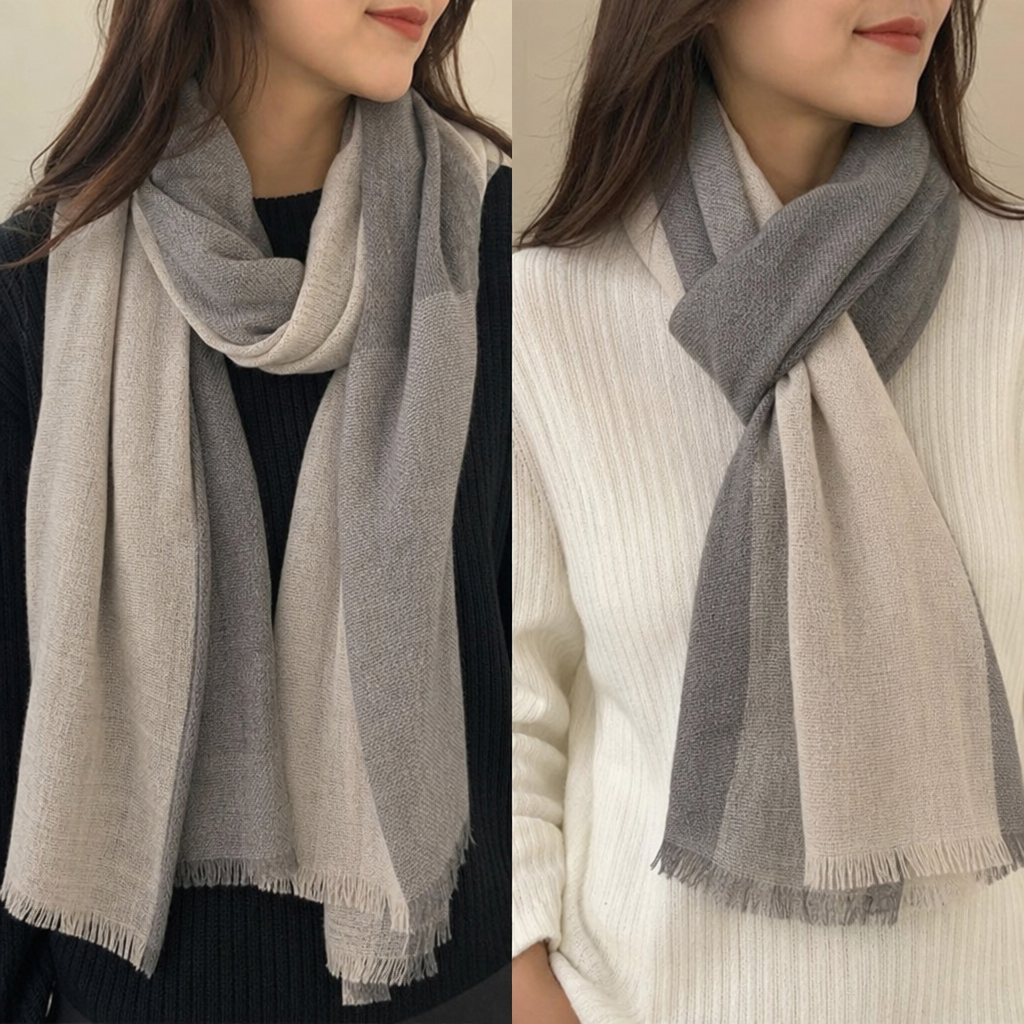
- The loose wrap: Place a rectangular scarf around your neck, leaving one end longer. Bring that end around once, then adjust both ends to your liking.
- The pull-through loop: Fold a long scarf in half, place it around your neck, and pass the loose ends through the folded side. Leave enough room to avoid a tight fit.
- The folded-square tie: Fold a square diagonally, then fold it into a band. Place it around your neck and tie a small, loose knot.
- The shoulder drape: Open a broad scarf across your shoulders. Adjust the ends so they do not interfere with your hands or bag.
Use these as experiments, not prescriptions. If a knot feels oversized, try a simpler arrangement before deciding the scarf is wrong. If the pattern disappears when folded, change the starting corner or leave a broader section visible.
Care starts with the label
Check cleaning instructions before the first wash, not after a stain appears. Woolmark identifies following the individual care label as the essential starting point for wool care. Do not assume that all wool accessories share the same washing or drying instructions.
Apply the same product-specific approach to silk. Hermès advises customers to use a specialist cleaner for its scarves and to explain any stains when handing them over. That advice should not be replaced with a universal home-washing recipe.
The most useful scarf collection is one you enjoy wearing and can realistically maintain. Choose the shape for your preferred arrangement, evaluate comfort with your actual clothes, and let weather and purpose guide the final decision.
Frequently Asked Questions About Different Types of Scarves
What are the main types of scarves available?
The main types include rectangular scarves, square scarves, infinity scarves, blanket scarves, and neck gaiters. Each type serves different styling and functional purposes.
How do I choose the right scarf for winter?
For winter, consider scarves made from insulating materials like wool or cashmere. Look for thicker options that provide warmth while being comfortable to wear under outerwear.
Can I wear a scarf in summer?
Yes! In summer, opt for lightweight scarves made from breathable fabrics. Narrow folded squares or lightweight wraps can be used for style or indoor air conditioning.
How do I style a rectangular scarf?
Rectangular scarves can be styled in various ways, including loose wraps, pull-through loops, and tied arrangements. Experiment with different styles to find what suits your outfit.
What materials are best for scarves?
The best materials depend on the intended use. Wool and cashmere are excellent for warmth in colder months, while silk and lightweight synthetics are great for decorative purposes. Consider moisture management if planning to engage in outdoor activities.