










_1741245660678.png)
Zhejiang Yongkang, 1992—The relentless clanging of metal echoed through the town’s hardware workshops.
When Li Huiping and Zhang Zhihui hammered out their first non-stick pan in a 30-square-meter factory, they never imagined that this industry would confine them for an entire generation.
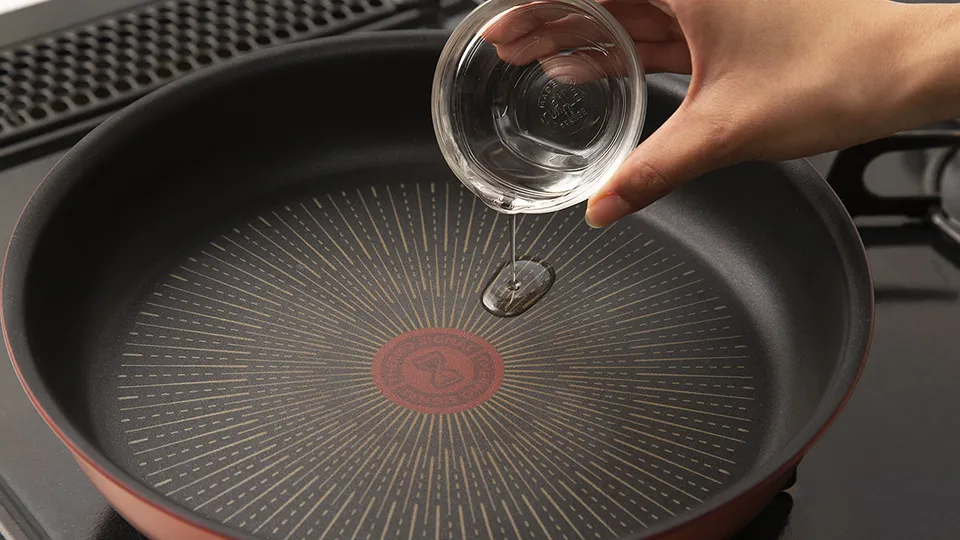
Once their cookware was stamped with the Tefal logo, it hit the shelves of Galeries Lafayette in Paris at 15 times the factory price. Meanwhile, their factory earned a mere 1.2 RMB per pan—just enough to cover two days of a worker’s meals at the time.
Source: Tefal
This “invisible poverty” lasted for two decades.
By 2007, when Carote became a global supplier for Walmart, Zhang Zhihui noted a painful set of numbers in the company ledger:
Annual revenue: 130 million RMB; Net profit margin: 3.7%—a mere fraction of the gross profit their U.S. clients were making.
"We were like the Foxconn of the kitchenware industry—assembling iPhones for Apple while using knockoff phones ourselves."
—Zhang Guodong, second-generation successor of Carote.
The Turning Point: Milan, 2013
The real turning point came at the 2013 Milan Home Design Expo.
When Lü Yili saw a Carote-designed cast iron pot rebranded under Italy’s Lagostina with a €299 price tag, she quickly did the math:
Carote had covered the patent design fees and mold costs, yet only earned a €15 processing fee per unit.
On the flight back to China, she turned to her husband and said:
"If we don’t build our own brand now, we’ll be nothing but harvest-ready leeks for the global giants."
Amazon Jungle Warfare: How an Enamel Pot Carved Its Path to Success
By 2016, the Carote Tmall flagship store was like a leaky boat lost in a sea dominated by Supor and Joyoung. The first month’s sales? A mere 87 orders. In frustration, Zhang Guodong shattered a teacup in his office at 3 AM.
Their breakthrough came from an unexpected source—Lü Yili’s Instagram browsing history.
She noticed a pattern in Western influencer kitchens: cast iron pots always took center stage, but they were uniformly bulky and dark red.
"Why can’t they come in macaron colors? Why can’t the handles be detachable?"
This insight led to Carote’s viral “cream-colored, detachable-handle enamel pot” on Amazon.
To perfect the color glaze, Lü Yili’s team visited Chaozhou seven times, learning the ancient “three-bake, three-cool” technique from traditional enamel artisans.
_1741245786952.png)
Source: Online
Their journey was fraught with 47 failed attempts. The glaze cracked under heat or turned into a murky mess—until one night, an old master craftsman used pinewood charcoal to fine-tune the kiln temperature.
Finally, a soft gradient cherry blossom pink enamel pot emerged.
"That pink hue, glowing in the 3 AM kiln fire, looked like the first light of dawn." —Lü Yili.
In March 2019, this $89 enamel pot launched on Amazon U.S., with Zhang Guodong betting everything—the first batch of 3,000 units was worth three months’ worth of the company’s cash flow.
They rented a warehouse in Brooklyn, hired college students to promote #MyCaroteKitchen on TikTok, and on Day 17, a miracle happened.
A five-star review with the caption—
"This pot makes my kitchen look like a Tiffany store."
—went viral among American homemakers.
12,000 units sold in the first month.
Three months later, Carote ranked in Amazon’s Top 3 kitchenware brands.
Riding this momentum, Carote leveraged Yongkang’s “flexible manufacturing alliance”—a network of 500 modular factories capable of reconfiguring production overnight.
By 2020, Carote launched 1,372 new SKUs, averaging 3.8 new products per day.
While Zwilling Germany spent months deliberating over their annual product release, Carote used Amazon reviews to issue overnight directives—like an improved heat-resistant silicone handle—to their manufacturing partners.
The Asset-Light Gamble: A Supply Chain Revolution After Factory Shutdown
In early 2022, as snow lingered in Yongkang’s industrial park, Carote’s headquarters erupted in its fiercest debate ever.
When Zhang Guodong proposed shutting down their own factory, his father, Zhang Zhihui, slammed a teacup against the table:
"A kitchenware company without production lines is nothing more than a trader!"
The finance team’s projections were even more brutal:
By outsourcing 100% of production, 80% of suppliers’ payment terms would extend to 60 days—a supply chain disaster waiting to happen.
Yet, the second generation prevailed.
As the last stamping machine was wheeled out of Carote’s factory, Lü Yili took a final photo of the empty workshop.
The financial impact was immediate: gross margins surged from 18.7% to 35.7%. But in exchange, Carote became deeply entwined with Yongkang’s cookware supply chain.
Today, Carote’s 32 core partner factories must adopt “data transparency”—sharing 137 real-time production metrics with headquarters daily to support a weekly rolling inventory model.
"We treat our suppliers the way Starbucks treats coffee farmers."
—Zhang Guodong.
Carote guarantees 8% profit margins (vs. the industry’s 2.5%) for suppliers, but requires 30% production capacity on standby for urgent orders.
In 2023, this “community of shared interests” proved its worth:
When Amazon suddenly demanded 100,000 Christmas edition red pots in two weeks, three partner factories reconfigured production lines within 72 hours to deliver on time.
But the flip side? Ruthless elimination.
A supplier who delayed shipments three times was permanently blacklisted.
On Carote’s digital dashboard, each factory’s real-time data pulses like an EKG monitor—any fluctuation triggers an immediate alert.
_1741245806251.png)
Source: Carote
Under the Surface: Cracks Beneath a $4.9 Billion Valuation
In October 2024, under the spotlight of the Hong Kong Stock Exchange, Zhang Guodong held up a Carote pot, a moment broadcast worldwide.
_1741245859961.png)
Carote listed in Hong Kong/Source: Hong Kong Economic Journal Timely News
But hidden in Carote’s IPO prospectus were alarming signals:
Marketing expenses surged by 332% over three years
R&D investment dropped from 4.1% to 2.3%
35% of IPO funds earmarked for acquiring traditional European kitchenware brands—contradicting Carote’s “disruptor” narrative
Meanwhile, supply chain cracks were beginning to show.
A supplier revealed:
"They demand 20 new color variations per month, but we bear the cost of unsold inventory."
On Amazon, Carote’s customer acquisition costs soared by 58% in Q1 2024, while their flagship product’s repurchase rate was only 11%.
Even more telling?
Before the IPO, the founding couple cashed out 150 million RMB in dividends—raising eyebrows about liquidity concerns.
The Dialectics of China’s Manufacturing Breakthrough
The story of Carote is, at its core, a generational shift in perception.
The older generation holds firm to the belief that “without a factory, one feels uneasy,” rooted in traditional manufacturing. Meanwhile, the new generation sees “brand as traffic, data as production capital.”
This tension between tradition and transformation continues to unfold in Yongkang’s hardware industry cluster—
In the livestream studio of Zhang Lei, a factory manager born in the '90s, a Carote enamel pot, co-branded with the Forbidden City, is selling out in seconds. Comments flash across the screen: “This pot is perfect for my light salad meals.”
Three kilometers away, in an old workshop, 65-year-old master craftsman Wang Jianguo still insists on using his ancestral method of “listening to the sound to determine quality.” He taps the pot and explains: “The cold-forged sound must be crisp but not sharp—like raindrops on green tiles.”
When Amazon’s algorithm suggests that “coral orange has an 11% higher conversion rate than turquoise green,” product manager Li Wei argues in the weekly meeting, “But Nordic customers prefer Morandi tones.”
_1741662720030.png)
Source: Carote
At the same time, in Chaozhou, enamel artisan Chen Bo dips a goose feather into gold powder, carefully painting a "Hundred Birds Facing the Phoenix" pattern on the rim of a pot. “Machine printing has no soul,” he says.
This collision between tradition and modernity finds a delicate balance within Carote’s product line.
In 2024, the company launched its “Heritage Series,” blending Longquan celadon glaze with ergonomic handles—winning Germany’s Red Dot Award while also becoming a sensation on Xiaohongshu.
Zhang Guodong describes this evolution in almost philosophical terms:
“The essence of new Chinese-made goods isn’t a crude imitation of tradition, but a retelling of Chinese manufacturing in a global language.”
Inside the user manual of Carote’s latest air fryer, a small line of text reads:
“Manufactured in Yongkang, Zhejiang. Designed in Stockholm. Cloud services deployed in Silicon Valley.”
This pot, spanning three continents, may just be a metaphor for the evolution of Chinese manufacturing.
As Zhang Guodong stands beneath a billboard in New York’s Times Square, an ad flashes behind him:
“One in every three high-end enamel pots worldwide comes from Yongkang.”
Meanwhile, in the Yongkang Hardware Museum, a rough non-stick pan from 1992 sits in silent contrast to a 2024 smart frying pan.
This breakthrough is far from over.
But at least on this night, as Zhang Guodong sears a steak in a Carote pan for investment bankers, the flickering flames forge two eras together—his father’s molten iron in the workshop and the numbers dancing in the capital markets—melding at the bottom of the pan into a new emblem of Chinese brands.
And so, the collision of past and future continues—as China’s manufacturing dream evolves into a global force.