









Plastic bottles differ in material, flexibility, intended use, and disposal options—not just shape or size. Understanding different types of plastic bottles starts with identifying the resin, then checking whether the finished container suits its contents and conditions of use.
This article explains familiar materials, specialized alternatives, and practical ways to compare them without mistaking a plastic identification number for a recycling guarantee.
What do the numbers on plastic bottles mean?
The number on a plastic bottle is a resin identification code: it identifies a material category, not a safety rating or promise of local recyclability. Codes 1 through 6 identify specific types of plastics, while code 7 covers other materials and combinations. Your local recycling program determines which bottles it actually accepts.
|
Code |
Material |
Familiar examples |
|---|---|---|
|
1 |
PET: polyethylene terephthalate |
Water and soda bottles |
|
2 |
HDPE: high-density polyethylene |
Milk jugs and detergent bottles |
|
3 |
PVC: polyvinyl chloride |
Some juice bottles and packaging |
|
4 |
LDPE: low-density polyethylene |
Squeezable bottles |
|
5 |
PP: polypropylene |
Food containers and specialty bottles |
|
6 |
PS: polystyrene |
Rigid packaging and specialty containers |
|
7 |
Other |
Various bottle materials outside categories 1–6 |
These categories describe materials across many types of containers, not bottles alone. A food tub and a bottle may share a code, but that does not make them interchangeable for every purpose. Intended contents, temperature, and single-use or repeated-use conditions still matter.
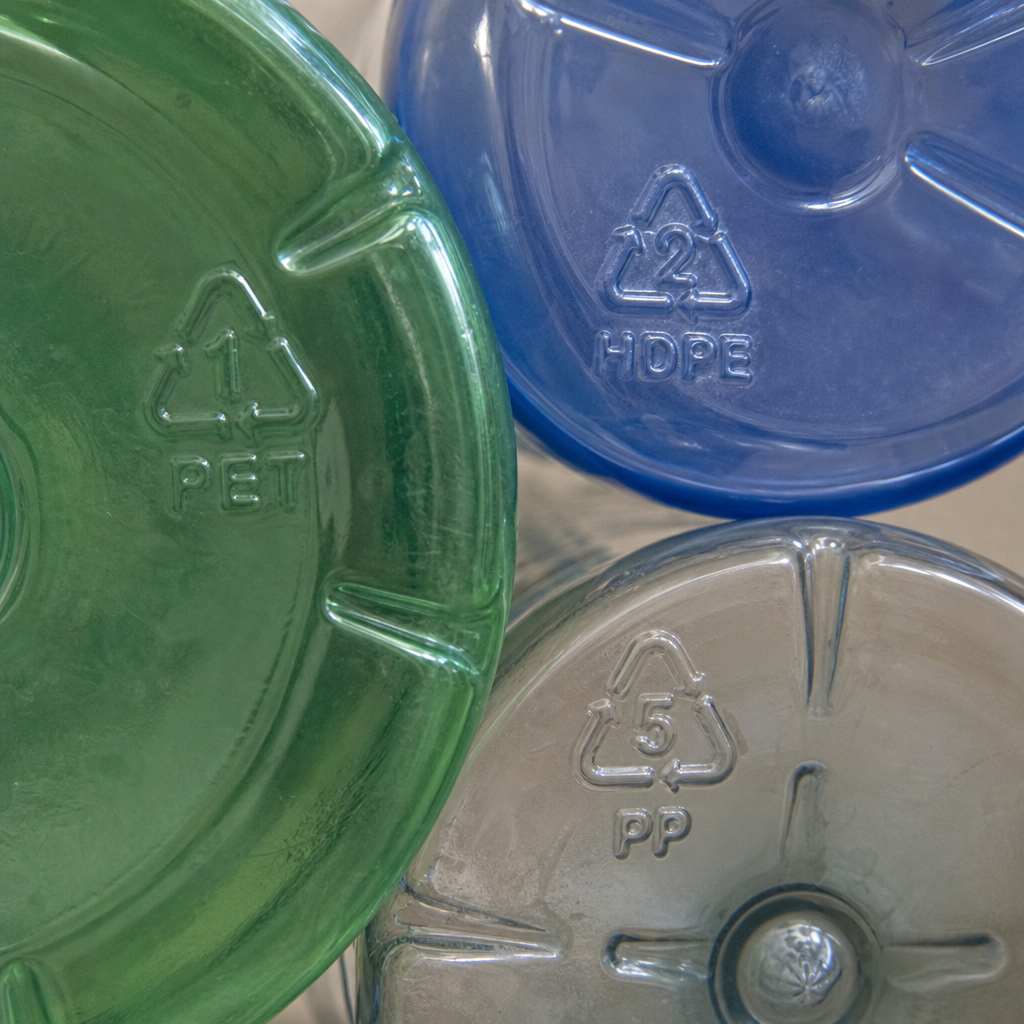
10 different types of plastic bottles and their uses
The following overview includes material families and one recycled-content variation: rPET. It is not a list of ten separate resin codes. Some entries are familiar beverage packaging; others help explain the wider range of plastic bottle types used for dispensing, storage, and specialized applications.
1. PET bottles
Polyethylene terephthalate, commonly labeled PET or PETE, is used for water, soda, and cooking-oil bottles. Its clarity makes contents visible, while its gas-barrier properties help explain its use for carbonated drinks. When comparing PET bottles, consider the intended beverage and filling conditions rather than assuming every clear bottle performs identically.
2. Recycled PET bottles
Recycled PET, or rPET, describes PET made with recycled feedstock rather than a new polymer family. For beverage packaging, the recycling process and final material must be suitable for food contact. Check the stated recycled-content percentage when comparing products; the PET identification code alone does not tell you how much recycled material a bottle contains.
3. HDPE bottles
High-density polyethylene appears in milk jugs, shampoo bottles, and detergent containers. Compared with LDPE, it has a more compact molecular structure that makes it more rigid and less permeable. These characteristics help explain its usefulness for sturdy packaging, but a detergent bottle should never be treated as equivalent to a drinking-water bottle simply because both use HDPE.
4. LDPE bottles
Low-density polyethylene is associated with squeezable bottles, including food-dispensing containers. Its less compact structure makes it more flexible than HDPE, allowing the bottle wall to move during dispensing. Consider LDPE when squeeze action matters, but verify temperature limits: flexibility is not evidence that a bottle can tolerate hot filling or dishwasher cleaning.
5. PP bottles
Polypropylene is used for specialty bottles as well as other containers. Certain PP laboratory bottles tolerate autoclaving, illustrating the material's usefulness where heat resistance matters. That does not make every PP consumer bottle suitable for boiling water or sterilization. Check the finished product's instructions instead of transferring a laboratory capability to an unrelated bottle.
6. PVC bottles
Polyvinyl chloride appears in some bottle applications, including juice packaging, although the same material category also includes products such as pipes and films. This range shows why resin identity alone cannot establish suitability for a particular drink or product. When evaluating PVC packaging, request confirmation for the intended contents and check local collection rules before planning disposal.
7. PS bottles
Polystyrene is not limited to foam: manufacturers also offer clear, rigid PS bottles for specialized uses, including sampling. Transparency can make contents easier to inspect, but a sampling bottle is not automatically a consumer drinking bottle. Confirm the intended application before choosing it for food or beverages, and investigate disposal separately from its appearance.
8. Polycarbonate bottles
Polycarbonate, often abbreviated PC, is a hard, clear plastic used in some water bottles and other durable products. BPA is a structural component of conventional polycarbonate, making material identification relevant when comparing these bottles. However, code 7 does not mean every bottle contains BPA: it covers multiple materials, so look for the actual resin name.
9. Copolyester bottles
Copolyesters include materials used in reusable water bottles, such as Eastman's Tritan. These products can offer clarity and resistance to breakage, making them worth considering for repeated use. Still, check bottle-specific restrictions: a manufacturer's Tritan bottle instructions may prohibit hot liquids or carbonated drinks even when the material is described as durable and dishwasher-compatible.
10. PLA bottles
Polylactic acid, or PLA, is a biobased plastic that has been used in clear beverage bottles. Plant-based sourcing does not establish how a finished bottle should be discarded. Compostability depends on the actual product and appropriate conditions; industrially compostable packaging should not be assumed suitable for backyard composting or ordinary plastic recycling.
Which types of plastic water bottles suit your routine?
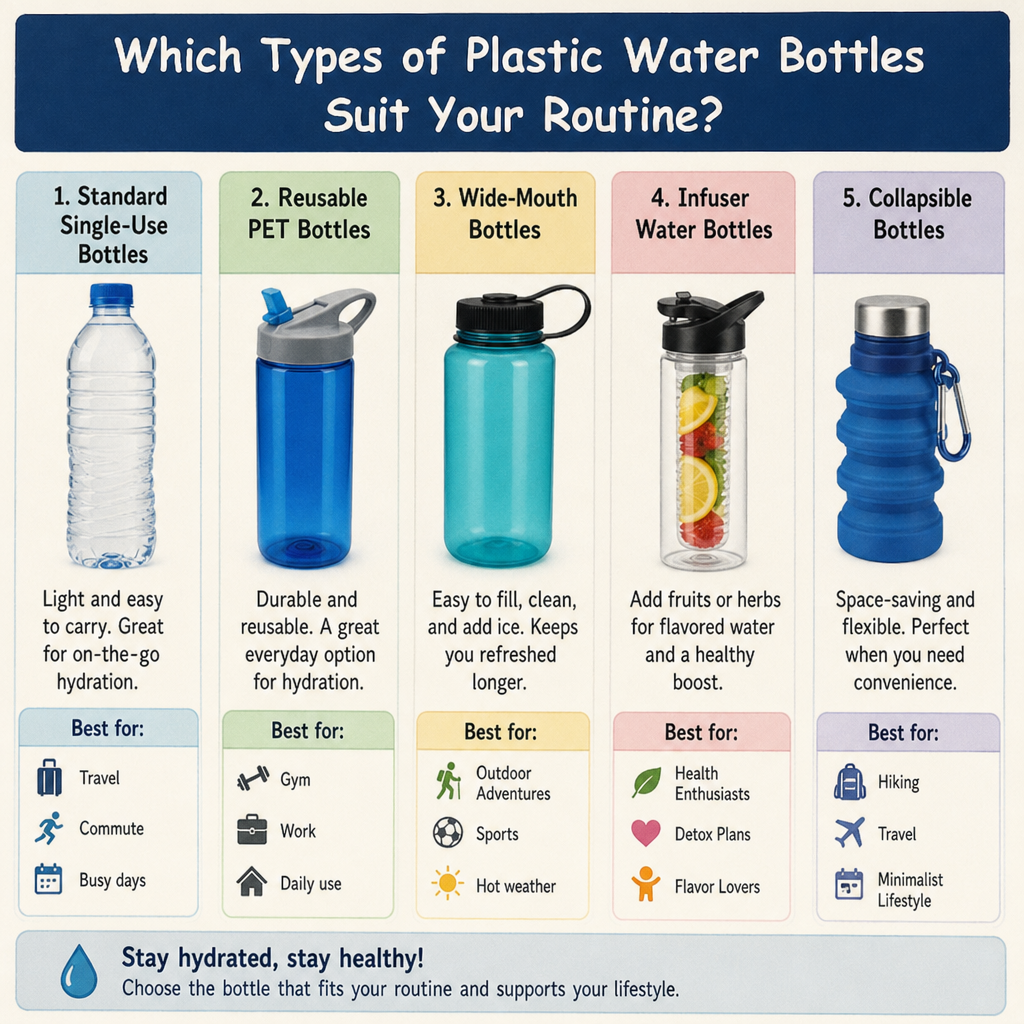
Different types of plastic water bottles suit different needs, so compare the finished product's intended use rather than choosing by resin number alone. PET is familiar in packaged water, while copolyesters appear in reusable drinkware. For repeated use, the most useful comparison includes permitted beverages, cleaning instructions, temperature restrictions, and a design you can comfortably maintain.
When comparing different types of water bottles, plastic material is only one consideration. Picture how you will actually use the bottle: carrying cold water to work, refilling during exercise, or washing it after another beverage. Then check whether the product documentation supports that routine instead of relying on broad claims such as “durable.”
A useful comparison checklist is:
- Intended contents: Confirm that the bottle is designed for drinking water or the beverage you plan to carry.
- Temperature limits: Look for explicit permission before adding hot liquids, freezing, or using high-temperature cleaning.
- Repeated-use suitability: Distinguish a purpose-built reusable bottle from packaging intended for single use.
- Care requirements: Check instructions for the body, closure, seals, and any removable parts.
Food-contact suitability depends on conditions of use, including temperature, contact duration, and whether use is repeated. Bottle-specific instructions can also impose restrictions that a general material description does not reveal.
Recycling decisions start with local instructions
A familiar resin number can help identify a bottle, but your local program's acceptance list should guide disposal. Do not assume that every item with the same code belongs in the same collection stream. Likewise, “biobased” and “compostable” are not substitutes for clear disposal directions.
Before discarding a bottle:
- Check the accepted item type. Look for instructions covering bottles, not just a list of resin numbers.
- Empty and prepare it as directed. Follow local requirements for cleaning and sorting.
- Check cap instructions. EPA notes that caps and labels can typically remain, but local directions should settle any uncertainty.
- Keep compostable plastics separate. They can disrupt conventional plastic recycling; seek an accepting composting program instead.
If collection information is unclear, ask the recycling provider rather than adding an uncertain item to the bin. The resin symbol helps identify material; it does not guarantee that local equipment or collection arrangements can handle it.
The practical takeaway
Treat material, intended use, and disposal as three separate checks. Start with the resin label, confirm the finished bottle's instructions, and consult local collection guidance when it reaches the end of use. Understanding different plastic bottle types is most useful when it leads to a bottle that fits your routine—not simply a preferred number on its base.
Frequently Asked Questions Related to Different Types of Plastic Bottles
What are the most common types of plastic used for water bottles?
The most common types of plastic used for water bottles are PET (polyethylene terephthalate) and HDPE (high-density polyethylene). PET is typically used for single-use bottles, while HDPE is common in more durable bottles.
Can I reuse plastic water bottles?
While some plastic water bottles, like those made from PET or HDPE, can be reused, it's essential to ensure they are cleaned properly. Always check the manufacturer's guidelines for reuse and cleaning instructions to ensure safety.
What does the number on the bottom of a plastic bottle mean?
The number represents the resin identification code, which indicates the type of plastic used to make the bottle. It ranges from 1 to 7, with each number corresponding to a different type of plastic with unique properties and recyclability.
Are all plastic bottles recyclable?
Not all plastic bottles are recyclable. It depends on the type of plastic, local recycling guidelines, and whether the bottle is clean and free from contaminants. Always check with local recycling facilities for specific acceptance criteria.
What should I consider when choosing a plastic water bottle?
When selecting a plastic water bottle, consider factors such as the intended use (single-use or reusable), materials (check for BPA-free options), temperature limits, cleaning instructions, and whether it is appropriate for the beverages you plan to store.