The best fulfilment companies in the UK depend on what you sell, where your customers live, and how much operational support you need.
This shortlist compares ten providers offering UK fulfilment services, highlighting their published capabilities and the questions worth asking before signing.
Treat it as a starting point for matching a logistics partner to your business—not a universal ranking or a substitute for tailored quotes.
Which UK fulfilment company is best for your business?
The right provider is the one whose warehouse processes, technology, delivery options, and commercial terms match your orders. For example, Zendbox advertises a late dispatch cut-off, ILG offers services focused on beauty and fashion, and ShipBob combines UK operations with an international fulfilment network.
Those differences make each worth investigating for different needs.
The selections below draw on providers’ published service information, rather than independent warehouse testing. Their suggested uses are editorial assessments, not guarantees of suitability. Numbering helps navigation; it does not imply that the first company will outperform the tenth.
When comparing UK order fulfilment partners, start with your actual order profile: monthly volume, product dimensions, items per basket, returns, and destinations.
Ask each shortlisted provider to assess the same information so its proposal addresses your operation rather than an idealised example.
Ten UK fulfilment providers worth shortlisting
1. Huboo
Huboo offers ecommerce fulfilment backed by its own warehouse operations and technology, with sales-channel integrations and a network covering the UK, EU, and US. Its website presents services for businesses across different shipment-volume bands.
Consider it for: a growing brand seeking connected fulfilment across several sales channels. During your consultation, ask who handles day-to-day warehouse queries and how exceptions reach your team. Request a demonstration using an order with multiple items, a cancellation, and a return—not just a straightforward single-product purchase.
2. ShipBob
ShipBob provides UK fulfilment for direct-to-consumer and B2B orders alongside a wider international network. Its UK offering includes picking, packing, and shipping, while the broader platform supports multiple retail channels.
Consider it for: a brand evaluating international expansion alongside domestic fulfilment. Ask for a proposed stock-locati0n plan based on your customer destinations, rather than assuming every available warehouse is necessary. Have the team explain how replenishment, inventory transfers, and reporting would work before committing to a multi-locati0n setup.
3. J&J Global Fulfilment
J&J Global Fulfilment, also known as James and James, combines ecommerce and marketplace fulfilment with its ControlPort platform. Published software capabilities include live order tracking, inventory insights, returns management, product analysis, and service-level reporting.
Consider it for: a business that wants operational visibility alongside outsourced warehousing. Ask to see how ControlPort presents delayed orders, ageing inventory, and stock discrepancies. Request sample reports that your merchandising and customer-service teams could actually use, then check which functions are included in your proposed service.
4. fulfilmentcrowd
fulfilmentcrowd offers UK and international fulfilment, with technology covering inventory control, workflow automation, delivery, and returns. Its published integrations include Shopify, Amazon, eBay, TikTok Shop, and business systems such as NetSuite and Microsoft Dynamics.
Consider it for: multichannel businesses coordinating consumer and wholesale orders. Ask the team to map your channels into one proposed workflow, including stock allocation and order priorities. If overseas markets matter, request a territory-by-territory implementation plan rather than treating international coverage as a single feature.
5. Zendbox
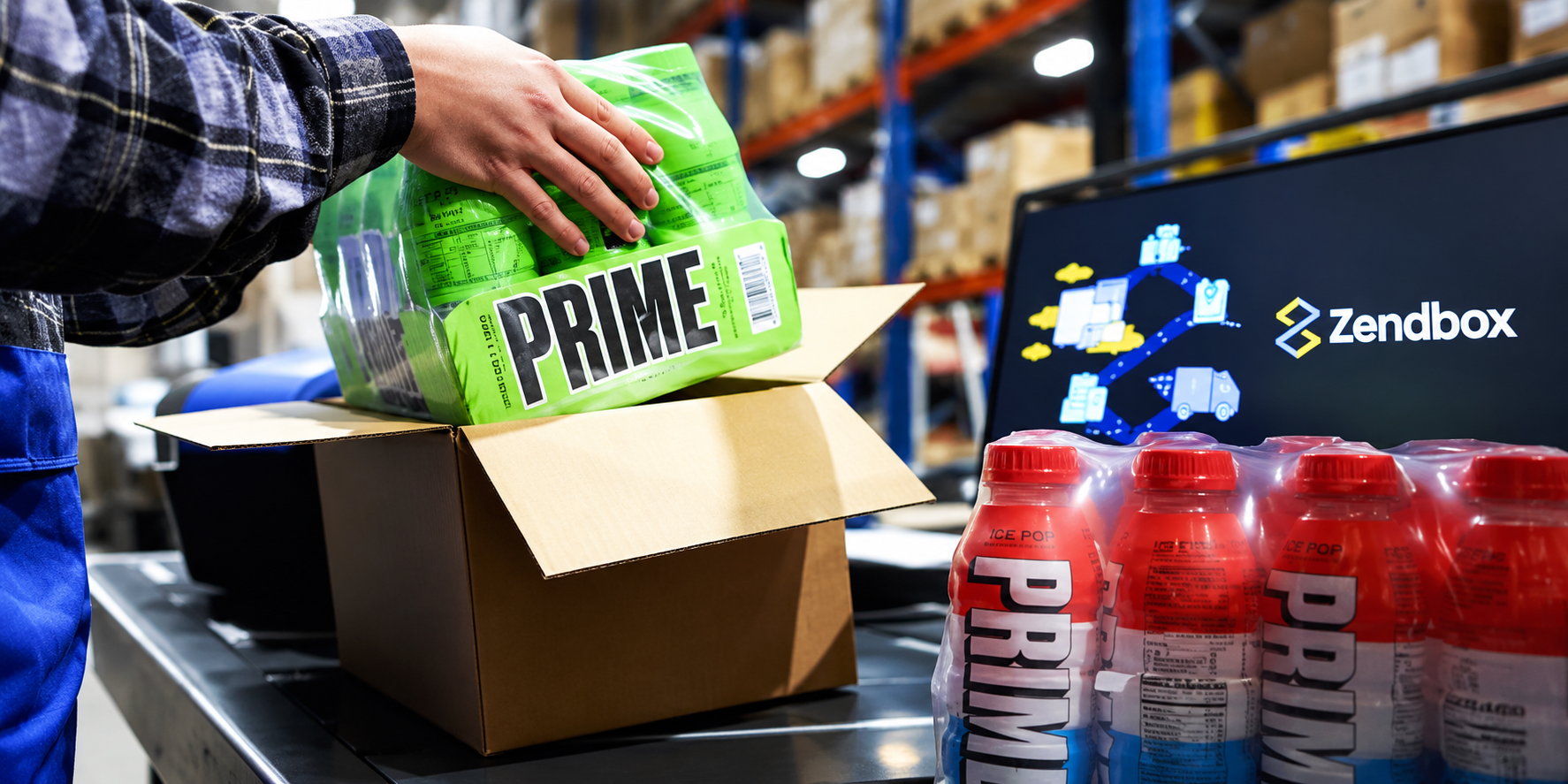
Zendbox offers ecommerce fulfilment, returns management, custom packaging, and inventory tools. It publishes a 9pm weekday order cut-off for next-day delivery, subject to UK mainland and courier-specific conditions.
Consider it for: a store whose customers frequently order during the evening. Before promoting a late delivery promise, confirm which services, destinations, and order types qualify. Ask what happens when an order enters the system just before cut-off but requires address correction, payment approval, or another manual intervention.
6. ILG
ILG offers ecommerce and omnichannel fulfilment, returns, delivery, and value-added services, with dedicated offerings for fashion, beauty, and wellbeing. It also publishes services aimed at indie and scaleup brands.
Consider it for: products where presentation and sector-specific handling deserve close attention. Bring packaging samples to the discussion and ask the team to walk through your exact packing instructions. For beauty or fashion ranges, clarify how it would inspect returned products and decide whether they can re-enter saleable inventory.
7. Whistl
Whistl’s fulfilment services span ecommerce, B2B, and subscription models, including warehousing, pick-and-pack, dispatch, returns, and customer support. Its subscription offering includes shipment scheduling, SKU rotation, kitting, and assembly.
Consider it for: a retailer exploring fulfilment alongside customer-contact support or recurring-order operations. Specify which responsibilities you want outsourced and which should stay in-house. For subscriptions, ask how the team manages changing box contents, assembly approvals, and recurring dispatch dates, then request those requirements in the service specification.
8. Green Fulfilment
Green Fulfilment publishes UK and EU warehouse coverage and describes itself as B Corp certified. Its services include goods receipt, picking and packing, returns, kitting, and a platform connecting multiple sales channels to shared inventory.
Consider it for: businesses that want sustainability to form part of supplier selection. Ask for evidence relevant to your operation, such as packaging specifications and available environmental reporting. Keep those questions alongside the commercial checks: stock visibility, escalation routes, and the practical details of getting orders out correctly.
9. Gonini
Gonini offers ecommerce fulfilment across the UK and international markets, with storage, picking and packing, shipping, and returns. Its published proposition includes one dashboard for stock and orders across markets and a named account contact.
Consider it for: a direct-to-consumer brand wanting to coordinate several countries through one relationship. Ask which facilities would handle your stock and who remains accountable when an issue crosses borders. Request a worked example covering replenishment, a delayed shipment, and a return from each market you intend to serve.
10. Fullers Fulfilment
Fullers supports ecommerce and B2B fulfilment, including order processing, picking and packing, delivery, and returns. It also publishes capabilities in bespoke integrations, stock preparation, rebranding, and subscription-box fulfilment.
Consider it for: a business with packing or stock-preparation requirements beyond a standard parcel. Show the team your most awkward product and most complicated typical order. Ask it to document the handling method, materials, quality checks, and associated charges before you compare its proposal with more standardised services.
How should you compare fulfilment costs?
Compare the complete proposed monthly bill, not just a pick-and-pack headline. Give every provider the same order sample and ask it to show all charges that would apply, including quiet months and seasonal peaks. Treat any unexplained exclusion as a follow-up question before deciding which quote offers value.
Use this checklist when requesting prices for fulfilment services:
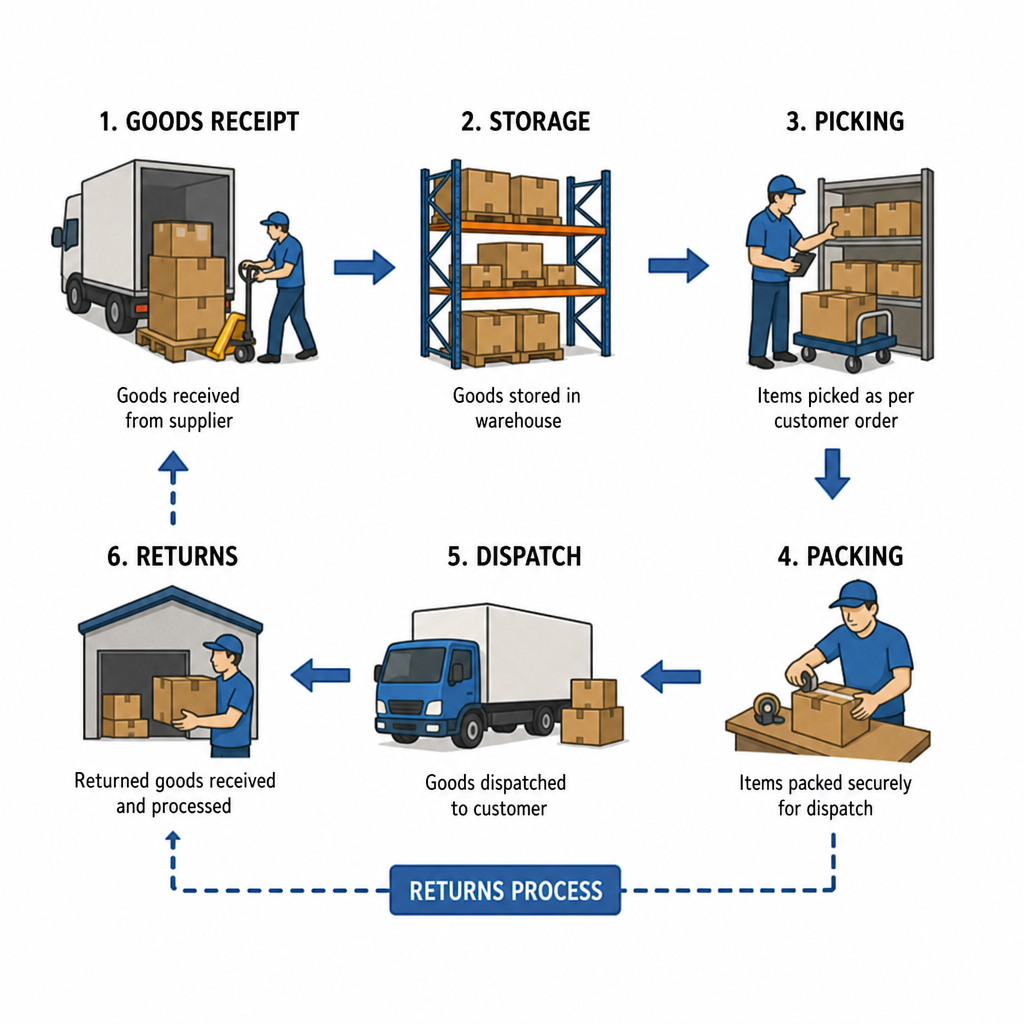
- Goods receipt: unloading, counting, inspection, labelling, and booking stock into inventory.
- Storage: the charging unit, billing frequency, and treatment of slow-moving stock.
- Order processing: first-item picks, additional items, packaging, inserts, and assembly.
- Delivery: the proposed carrier service and any applicable surcharges or exclusions.
- Returns and account charges: inspection, restocking, disposal, software, minimum spend, and exit costs.
Ask providers to price several realistic baskets, including a single item, a multi-item order, and a return. Keep assumptions visible so a cheaper-looking proposal does not win simply because it leaves more work unpriced.
Build a shortlist around operational fit
If you need a list of fulfillment services for small business UK operations, use these ten names as a research pool—not ten sales calls to book immediately. Choose three whose published capabilities address your specific needs, then send each the same brief. For broader UK supply chain management requirements, specify which responsibilities extend beyond warehouse fulfilment.
Before choosing between UK logistics companies, request:
- A demonstration of your essential ecommerce fulfillment workflows and integrations.
- Written dispatch commitments, escalation procedures, and peak-period arrangements.
- Clear stock-reconciliation, returns, insurance, and contract-exit terms.
- A documented onboarding plan with responsibilities and acceptance checks.
The best fulfilment companies UK retailers can choose are those that fit the business in practice. Select the partner that can explain your workflow clearly, price it transparently, and commit to measurable service expectations—not simply the most persuasive sales presentation.
Frequently Asked Questions About Fulfilment Companies In The UK
What services do fulfilment companies in the UK typically offer?
Fulfilment companies in the UK typically provide services such as warehousing, order processing, packing and shipping, returns handling, inventory management, and customer support. Many also offer integrations with e-commerce platforms.
How do I choose the right fulfilment company for my business?
To choose the right fulfilment company, consider factors such as the provider's service offerings, technology and warehouse capabilities, pricing structure, shipping options, and the specific needs of your business, such as monthly order volume and types of products.
What are the costs associated with using a fulfilment company?
Costs can vary significantly and often include fees for goods receipt, storage, order processing, shipping, returns handling, and any additional services like kitting or custom packaging. It's essential to request detailed pricing from each provider based on your operational needs.
Can fulfilment companies help with international shipping?
Yes, many fulfilment companies in the UK offer international shipping services as part of their fulfilment solutions, allowing businesses to reach customers in different countries while managing logistics through one provider.
What should I ask during the initial consultation with a fulfilment provider?
During the consultation, ask about their processes for order handling, how they manage returns, their integration capabilities with your existing systems, the details of their pricing structure, and examples of how they have supported similar businesses in the past.