








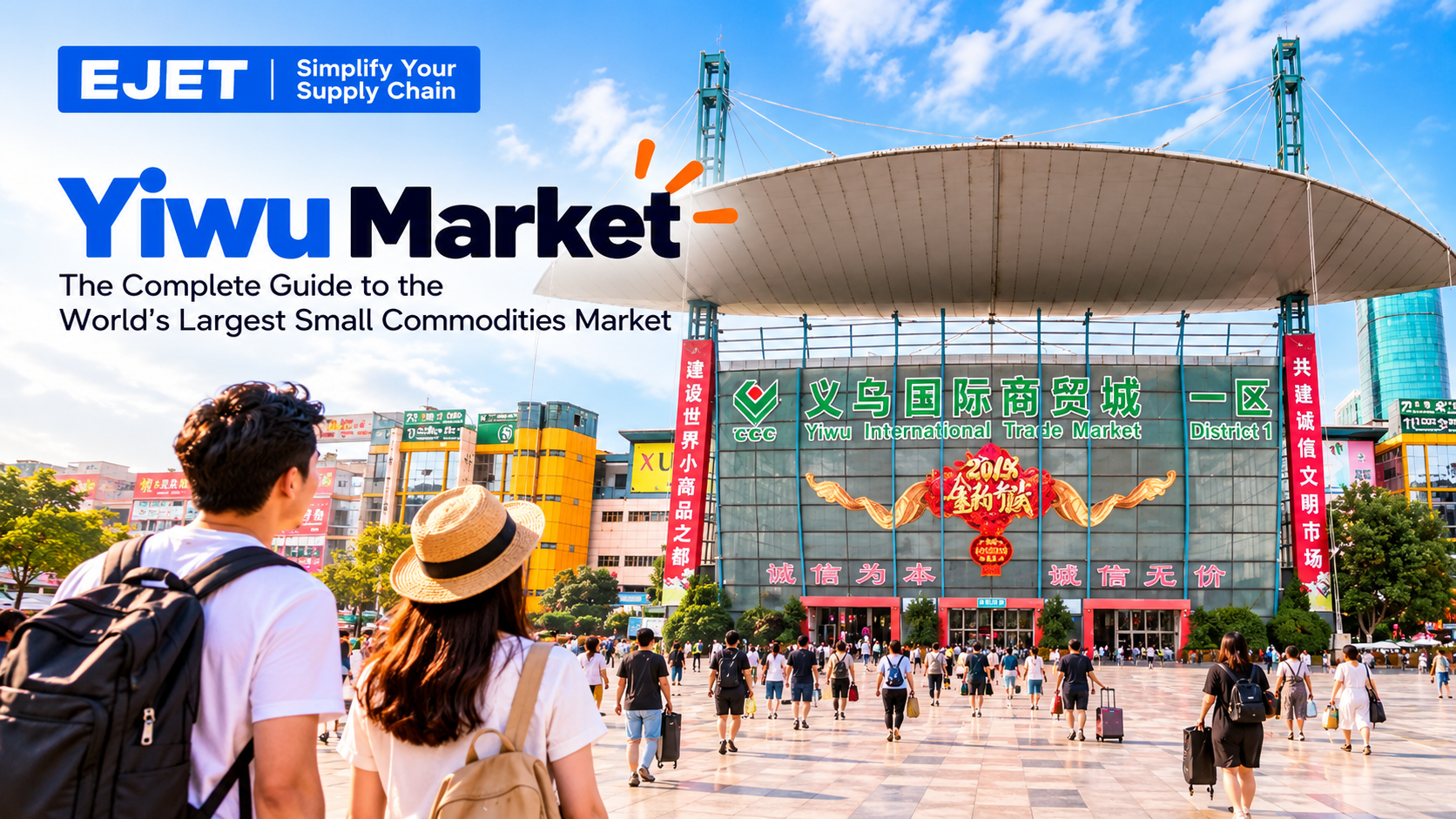
The Yiwu market is one of the world's largest wholesale marketplaces for small commodities, attracting international importers, retailers, Amazon sellers, and sourcing professionals looking for competitively priced products from China.
Located in Yiwu City, Zhejiang Province, the Yiwu China wholesale market offers an enormous selection of products, including toys, jewelry, home accessories, stationery, gifts, electronics, and fashion accessories.
With tens of thousands of suppliers operating across interconnected market districts, buyers can compare products, negotiate wholesale prices, and organize international shipments.
This guide explains how to navigate the market, find reliable suppliers, understand minimum order quantities, and import products successfully.
1. What Is the Yiwu Market?
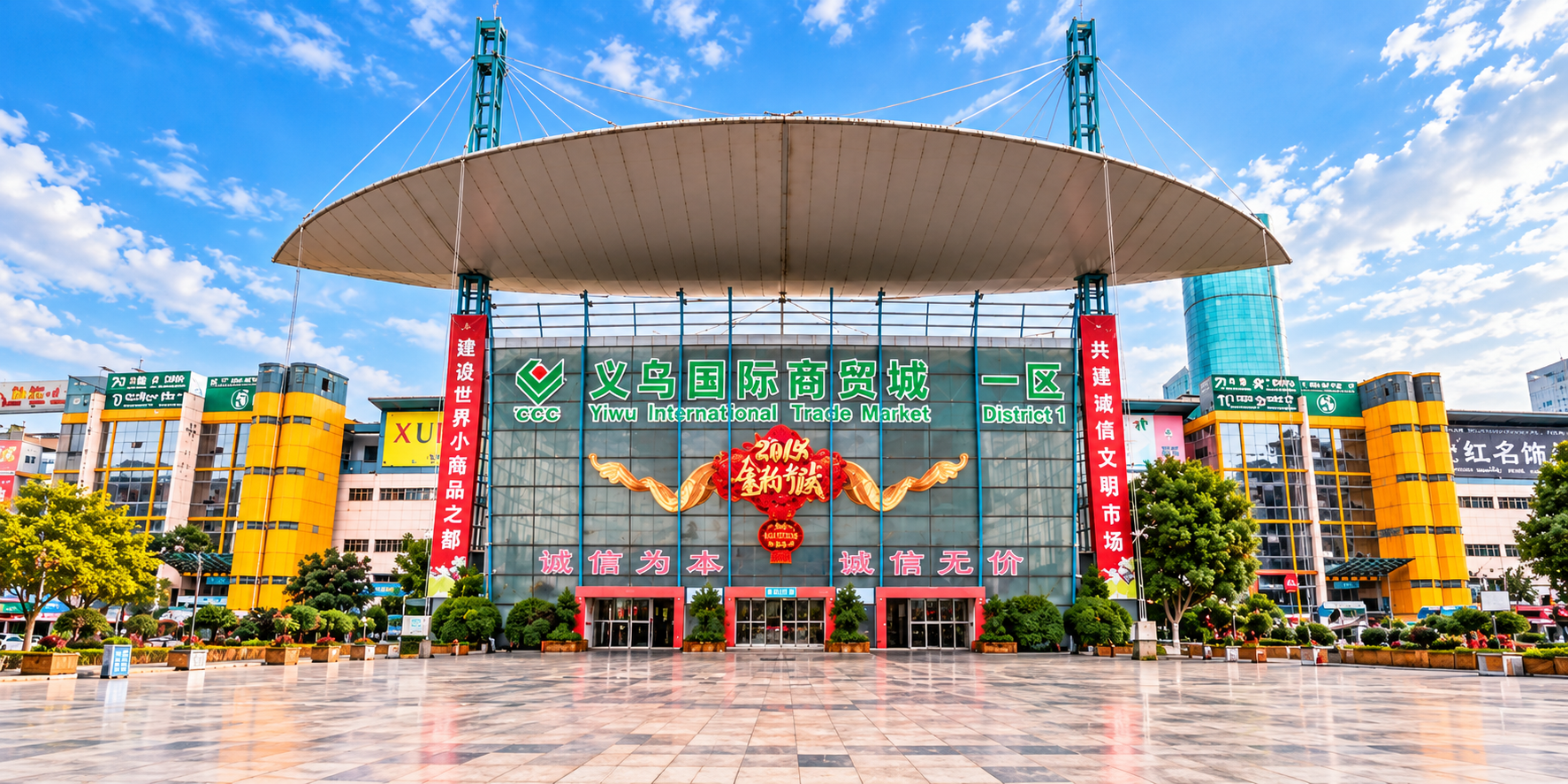
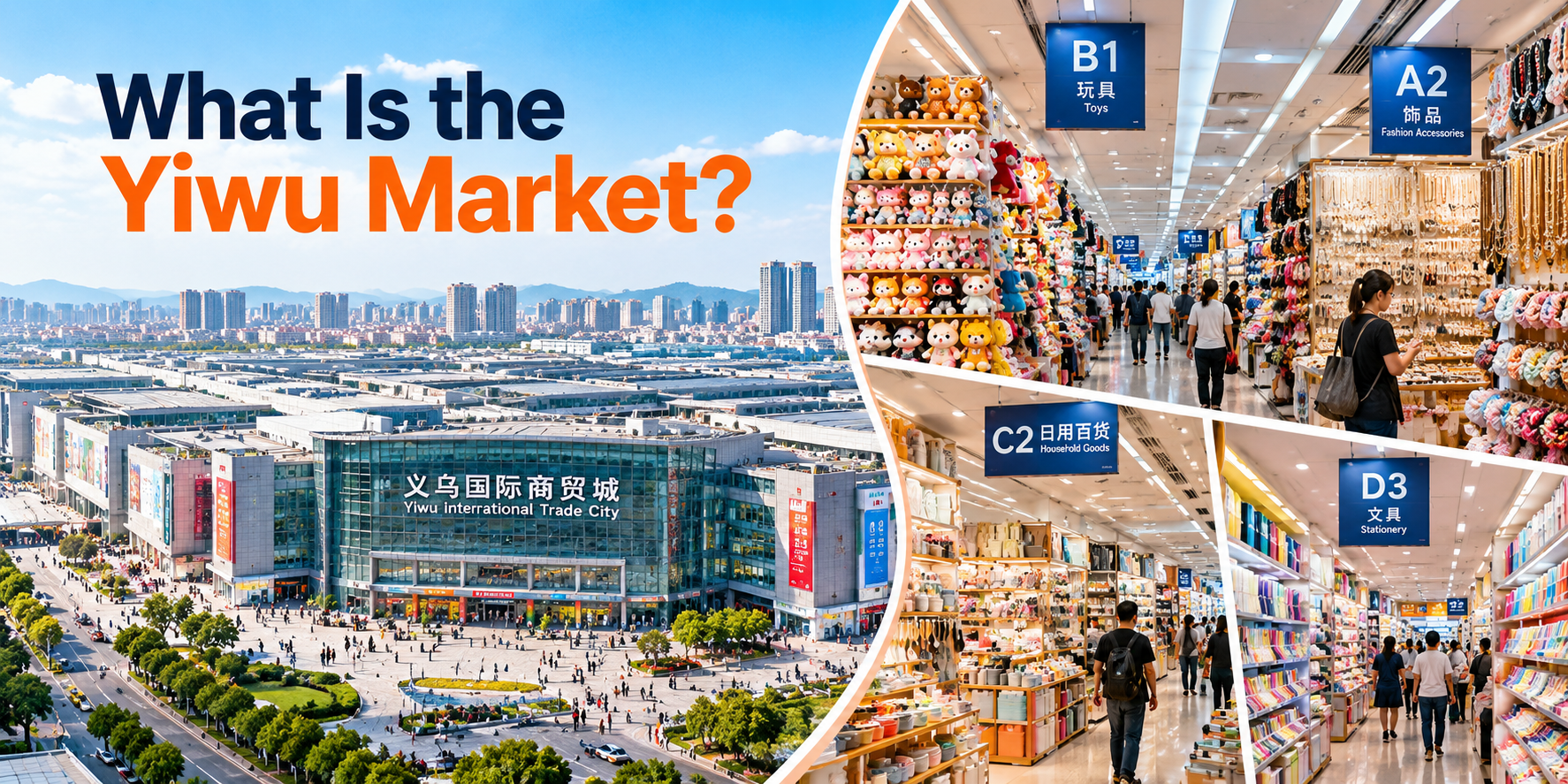
The Yiwu Market, officially known as Yiwu International Trade City, is a massive wholesale trading complex in Yiwu City, Zhejiang Province, China.
It is also widely known as the Yiwu Futian Market, Yiwu Small Commodity Market, or Yiwu International Trade Market.
Unlike a conventional shopping mall, Yiwu Market primarily serves business buyers purchasing merchandise for resale, distribution, promotional campaigns, and international trade.
The market brings together manufacturers, wholesale distributors, trading companies, and specialized product suppliers in one commercial ecosystem.
How Big Is Yiwu Market?
Yiwu's International Trade City is commonly described as having more than 75,000 booths, although published counts vary according to which market facilities and development phases are included.
The broader Yiwu wholesale ecosystem covers millions of square meters of commercial space and offers an extensive range of product categories.
|
Market Feature |
Overview |
|---|---|
|
Location |
Yiwu City, Zhejiang Province, China |
|
Main Trading Complex |
Yiwu International Trade City |
|
Common Name |
Futian Market |
|
Trading Booths |
Commonly reported at over 75,000 |
|
Main Buyers |
Importers, wholesalers, retailers, online sellers |
|
Product Categories |
Toys, jewelry, household goods, stationery, hardware, accessories, and more |
|
Purchasing Model |
Primarily business-to-business wholesale |
|
Export Services |
Freight forwarding, consolidation, customs documentation |
The size of the market makes it possible to compare many suppliers in the same product category without traveling between multiple manufacturing cities.
History of Yiwu Wholesale Market
Yiwu's modern wholesale industry developed from small street markets and local trading activities.
In 1982, Yiwu established an officially recognized small commodities market, marking an important stage in the city's development as a wholesale trading center.
During the following decades, Yiwu expanded its trading infrastructure, attracted manufacturers and merchants, and developed increasingly sophisticated logistics networks.
The opening and expansion of Yiwu International Trade City in the 2000s transformed the local wholesale industry into a large, organized commercial complex.
Today, Yiwu plays an important role in connecting Chinese suppliers with buyers across international markets.
Why Is Yiwu Called the World's Small Commodities Capital?
Yiwu is frequently described as the world's small commodities capital because of its extraordinary concentration of suppliers specializing in relatively inexpensive, mass-produced consumer merchandise.
Small commodities generally include everyday products such as hair accessories, decorative items, toys, stationery, kitchen utensils, gift packaging, and household accessories.
Yiwu's competitive advantage comes from its combination of product variety, specialized wholesale suppliers, supporting manufacturers, and established export infrastructure.
For international buyers, this means that many different product categories can be sourced through one trading destination.
2. Yiwu City Wholesale Market: Districts and Layout
The Yiwu city wholesale market is not a single building with one entrance. It consists of several major trading districts, connected market buildings, and specialized commercial areas.
Understanding the layout before visiting is essential because walking between different sections can consume significant time.
The main International Trade City is traditionally organized into Districts 1 through 5, while newer market developments and additional specialized trading areas form part of the broader Yiwu commercial network.
Yiwu Wholesale Market District Overview
|
Market District |
Main Product Categories |
|---|---|
|
District 1 |
Toys, artificial flowers, jewelry, decorative accessories, handicrafts |
|
District 2 |
Bags, luggage, umbrellas, hardware, tools, electrical products |
|
District 3 |
Stationery, office supplies, cosmetics, sporting goods |
|
District 4 |
Socks, hosiery, underwear, shoes, belts, scarves, textiles |
|
District 5 |
Bedding, curtains, fabrics, automotive accessories, imported commodities |
These are general category groupings. Individual floors and sections can change as market operators reorganize tenants or expand facilities.
Other Important Wholesale Areas in Yiwu
Beyond the main International Trade City, buyers may encounter specialized wholesale markets and commercial streets.
Huangyuan Garment Market is particularly relevant for buyers sourcing fashion apparel, dresses, casual clothing, and other ready-made garments.
The Yiwu International Production Materials Market focuses more heavily on production-related merchandise, equipment, and industrial supplies.
Yiwu also has specialized streets and trading areas for products such as packaging, accessories, and seasonal merchandise.
For most first-time international importers, the International Trade City districts are the most practical starting point.
New Development: Yiwu Global Digital Trade Center
An important update for buyers visiting Yiwu in 2027 is the opening of the Yiwu Global Digital Trade Center on October 14, 2025.
The new center is part of Yiwu's sixth-generation wholesale market development.
It covers approximately 1.25 million square meters across its combined commercial, office, residential, and trading facilities. The market section occupies approximately 410,000 square meters and accommodates more than 3,700 storefronts.
Product sectors include fashion jewelry, creative toys, smart equipment, and other emerging industries.
This development expands the sourcing opportunities available beyond the traditional five districts.
3. Yiwu Futian Market in Detail: Districts, Floors, Products & Opening Hours
The Yiwu Futian Market is the central destination for buyers visiting Yiwu International Trade City.
Each district specializes in different merchandise categories, and most product sections are organized by floor.
Understanding this structure allows us to locate relevant suppliers more efficiently.
Yiwu Market District 1: Toys, Jewelry and Decorative Products
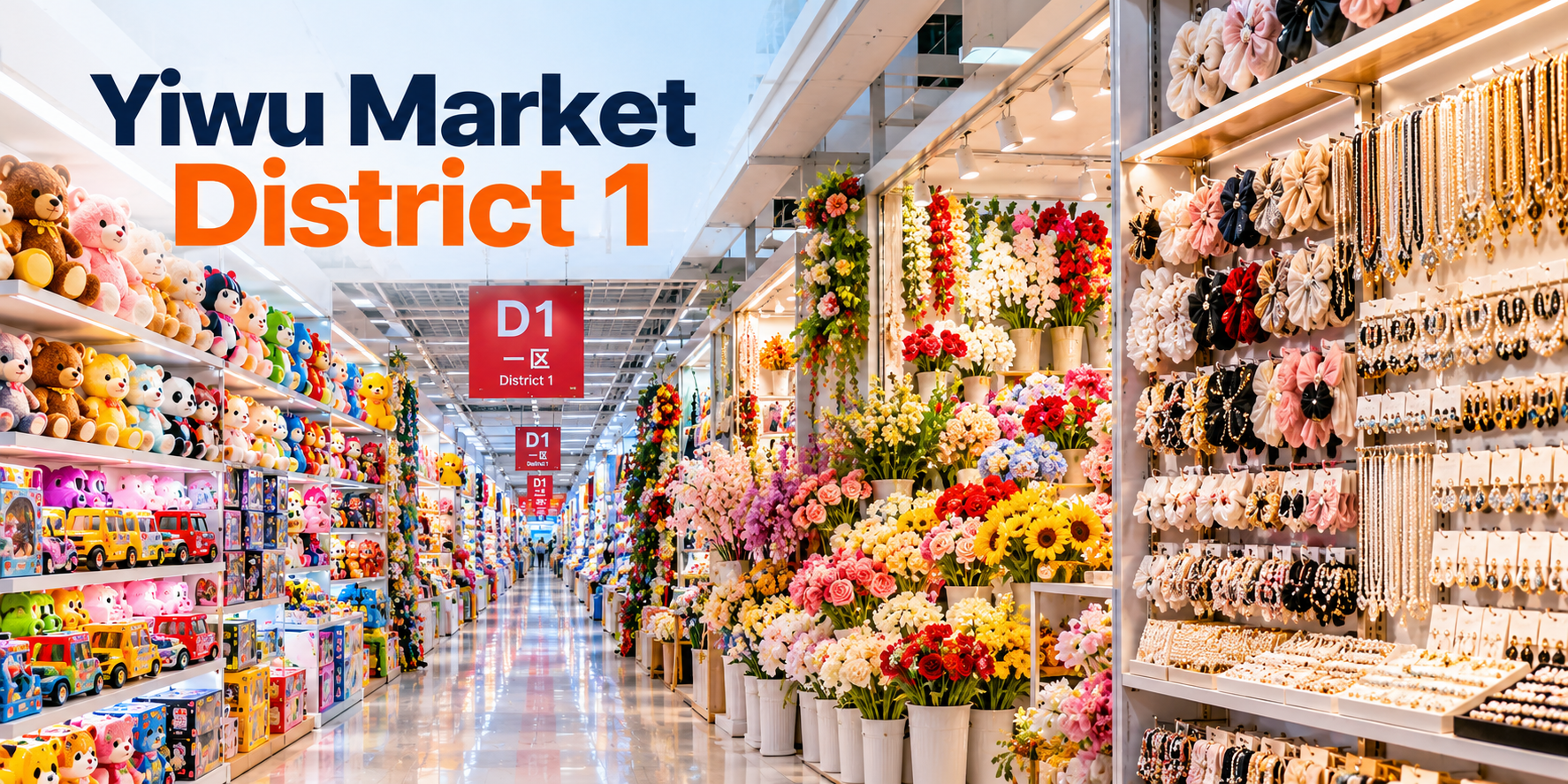
District 1 is particularly useful for businesses sourcing inexpensive consumer merchandise, promotional gifts, and decorative products.
|
Floor |
Main Products |
|---|---|
|
1F |
Artificial flowers, flower accessories, toys |
|
2F |
Jewelry, hair ornaments, fashion accessories |
|
3F |
Festival crafts, decorative crafts, photo frames, crystal and ceramic items |
|
4F |
Factory outlets and manufacturer showrooms |
District 1 opened in 2002 and remains one of the market's established wholesale sections.
Best for: Toy importers, gift wholesalers, party supply businesses, jewelry retailers, and home decoration sellers.
Yiwu Market District 2: Bags, Hardware and Electronics
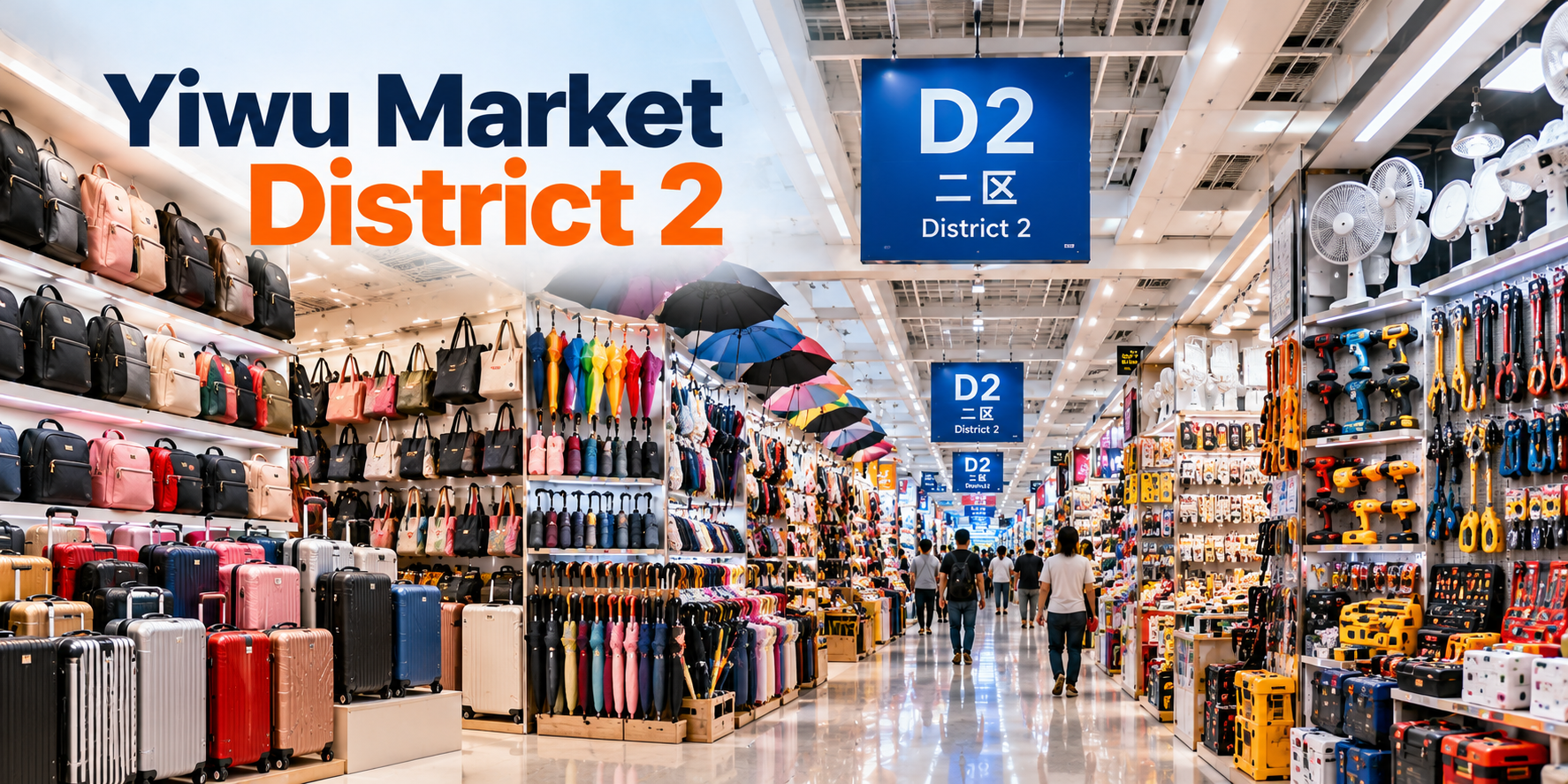
District 2 is known for luggage, handbags, hardware, electrical accessories, and small appliances.
|
Floor |
Main Products |
|---|---|
|
1F |
Bags, luggage, umbrellas, rainwear |
|
2F |
Hardware, locks, tools, electrical products |
|
3F |
Kitchen hardware, bathroom hardware, small appliances, electronic products, watches |
|
4F |
Manufacturer outlets and specialty showrooms |
|
5F |
Foreign trade and procurement services |
District 2 also has an eastern expansion area with additional categories, including home hardware and new-energy-related products.
Best for: Hardware wholesalers, luggage retailers, home improvement distributors, and electronics accessory importers.
Yiwu Market District 3: Stationery, Cosmetics and Sporting Goods
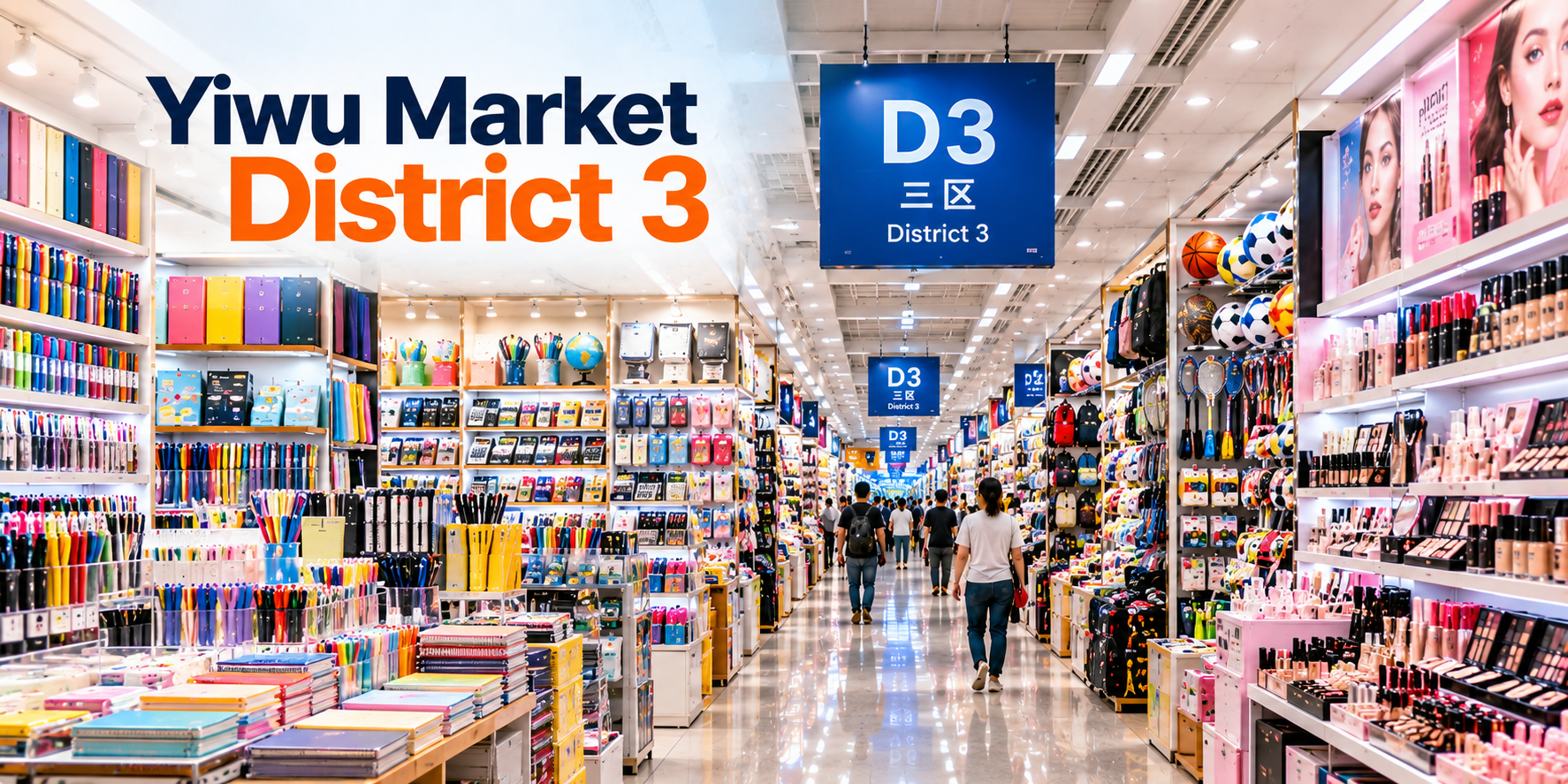
District 3 is particularly relevant for stationery businesses, educational product importers, sporting goods distributors, and beauty accessory sellers.
|
Floor |
Typical Product Categories |
|---|---|
|
1F |
Pens, writing instruments, paper products |
|
2F |
Office supplies, stationery, sporting goods |
|
3F |
Cosmetics, beauty accessories, mirrors, personal care accessories |
|
4F |
Manufacturer showrooms and specialized product displays |
|
5F |
Additional business and trade services |
Product placement can vary within the district, so buyers should consult the current directory when entering.
Best for: School supply retailers, stationery wholesalers, office suppliers, promotional product businesses, and beauty accessory distributors.
Yiwu Market District 4: Socks, Underwear, Clothing Accessories and Textiles
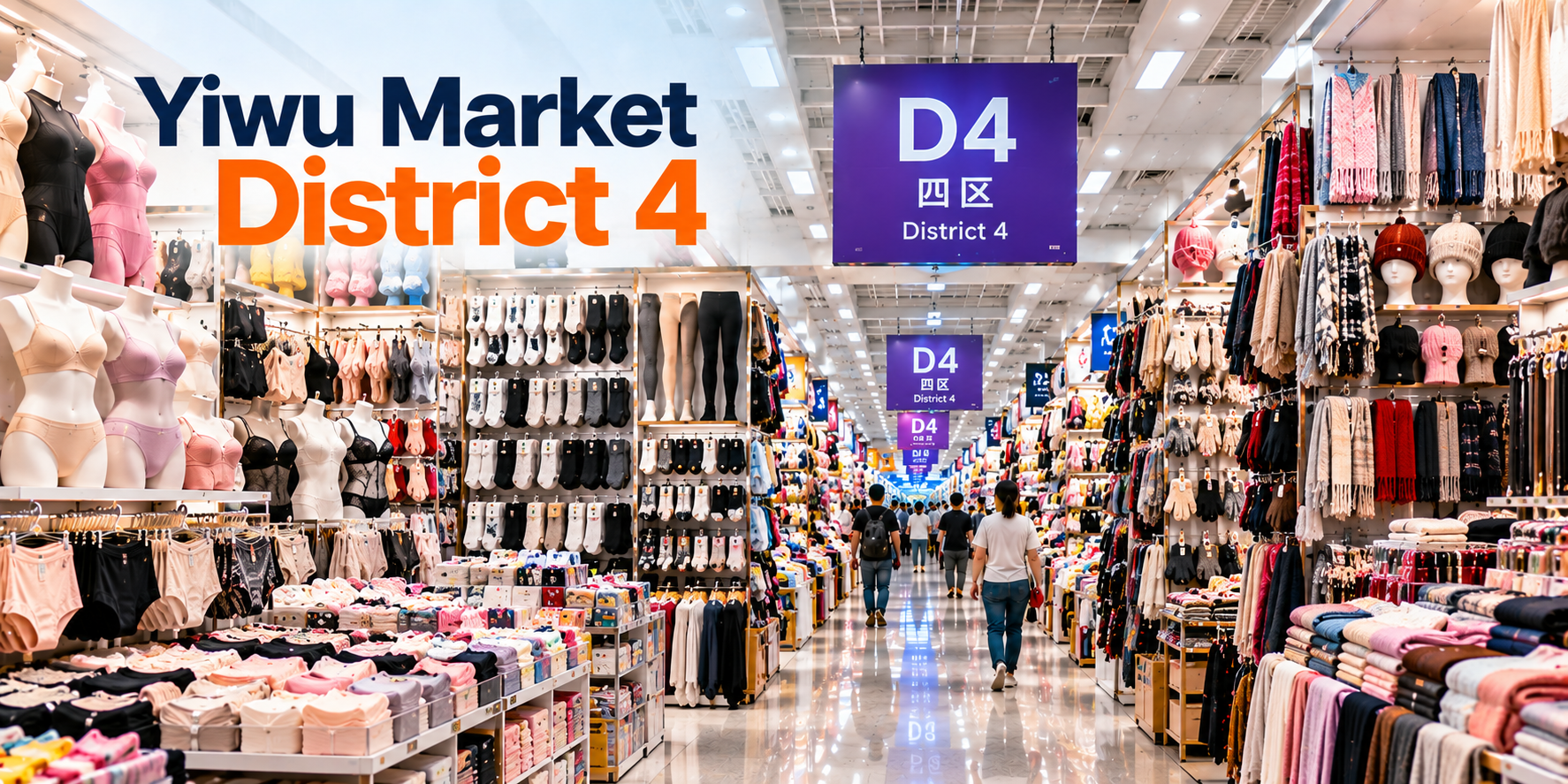
District 4 is especially important for fashion accessory importers and businesses selling basic clothing products.
|
Floor |
Main Products |
|---|---|
|
1F |
Socks, hosiery, leggings |
|
2F |
Gloves, hats, scarves, selected everyday goods |
|
3F |
Shoes, ribbons, lace, ties, textile accessories |
|
4F |
Underwear, bras, belts, shawls and related products |
|
5F |
Manufacturer showrooms and commercial services |
Best for: Hosiery importers, underwear brands, fashion accessory wholesalers, and apparel retailers.
Buyers looking for specialized seamless clothing manufacturers may need to arrange separate factory visits, as market showrooms do not necessarily contain production facilities.
Yiwu Market District 5: Bedding, Textiles and Automotive Accessories
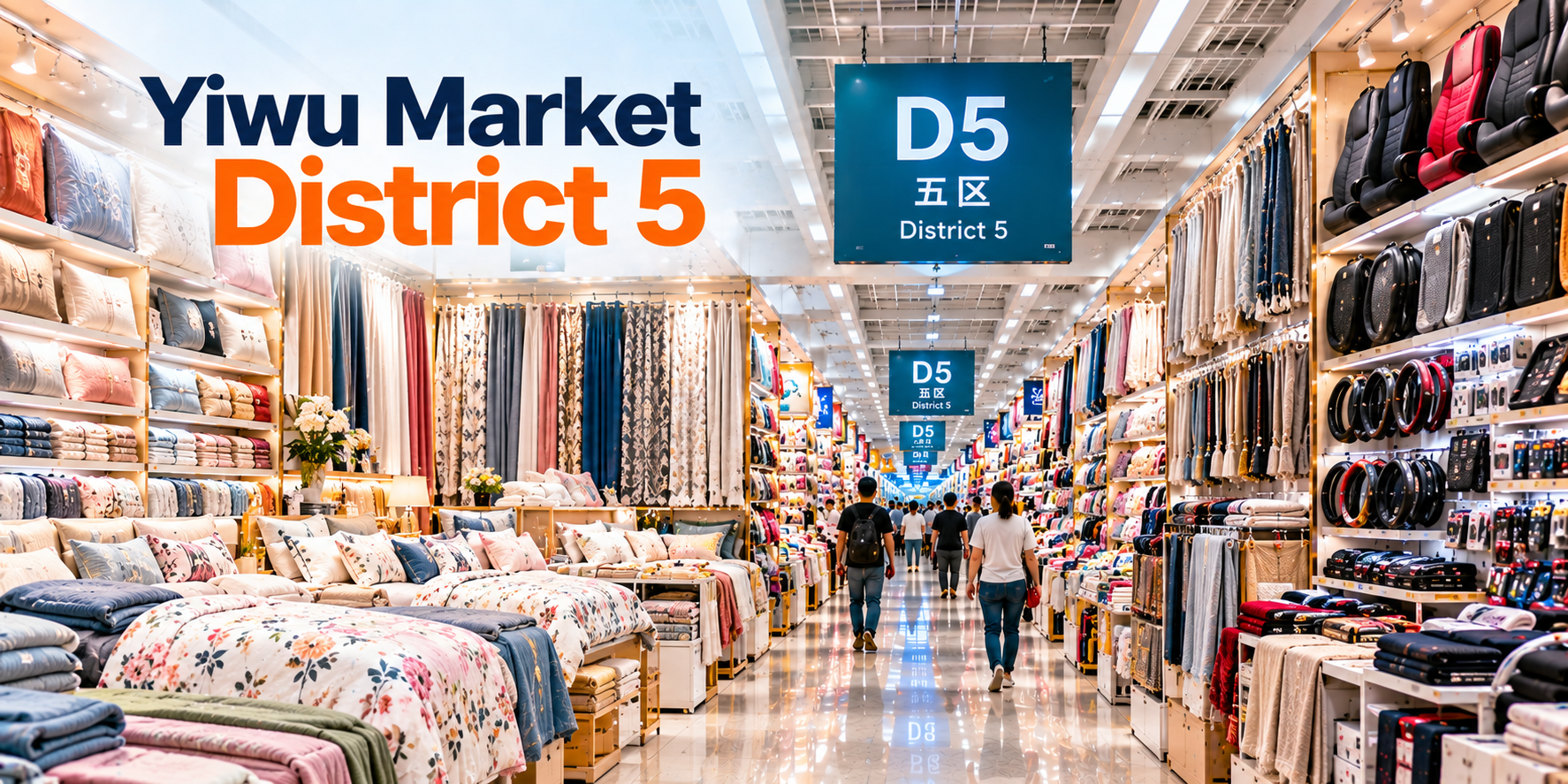
District 5 serves buyers interested in household textiles, imported products, and automotive accessories.
|
Floor |
Main Products |
|---|---|
|
1F |
Imported commodities and international product displays |
|
2F |
Bedding, blankets, curtains, household textiles |
|
3F |
Knitting materials, fabrics, textile products |
|
4F |
Automotive accessories and related merchandise |
|
5F |
Online trading and commercial services |
Best for: Home textile importers, bedding wholesalers, fabric buyers, and automotive accessory distributors.
Yiwu Futian Market Opening Hours
|
Day |
Opening Hours |
Best Visiting Time |
|---|---|---|
|
Monday |
9:00 AM – 5:00 PM |
9:30 AM – 4:30 PM |
|
Tuesday |
9:00 AM – 5:00 PM |
9:30 AM – 4:30 PM |
|
Wednesday |
9:00 AM – 5:00 PM |
9:30 AM – 4:30 PM |
|
Thursday |
9:00 AM – 5:00 PM |
9:30 AM – 4:30 PM |
|
Friday |
9:00 AM – 5:00 PM |
9:30 AM – 4:30 PM |
|
Saturday |
9:00 AM – 5:00 PM |
10:00 AM – 4:00 PM |
|
Sunday |
9:00 AM – 5:00 PM |
10:00 AM – 4:00 PM |
|
Chinese New Year |
Usually closed or limited operations |
Avoid visiting |
|
Other Public Holidays |
Hours may vary |
Confirm in advance |
Important: The Yiwu Futian Market generally operates seven days a week, including weekends. However, individual wholesale booths may open later or close earlier than the market's typical operating hours.
For international buyers, we recommend visiting between 9:30 AM and 4:30 PM on weekdays to maximize opportunities for supplier meetings, product comparisons, and wholesale negotiations.
4. What Products Can You Source From Yiwu Market?
One of the biggest advantages of the Yiwu China wholesale market is the diversity of available merchandise.
Buyers can source low-cost accessories, customized promotional products, seasonal goods, household essentials, and more specialized consumer items.
Yiwu Market Product Categories, Typical MOQs and Price Ranges
The figures below are illustrative sourcing budget ranges, not verified live quotations. Actual supplier offers can vary substantially by quality, order size, customization, and material specifications.
|
Product Category |
Indicative MOQ |
Illustrative Unit Price (USD) |
|---|---|---|
|
Fashion Jewelry |
50–300 pcs |
$0.20–$3.00 |
|
Hair Accessories |
100–500 pcs |
$0.05–$1.50 |
|
Small Plastic Toys |
100–1,000 pcs |
$0.20–$5.00 |
|
Artificial Flowers |
50–500 pcs |
$0.30–$4.00 |
|
Stationery |
100–1,000 pcs |
$0.05–$2.00 |
|
Basic Socks |
100–500 pairs |
$0.30–$2.00 |
|
Cosmetic Bags |
100–500 pcs |
$0.50–$4.00 |
|
Kitchen Accessories |
100–1,000 pcs |
$0.30–$5.00 |
|
Party Decorations |
100–1,000 pcs |
$0.10–$3.00 |
|
Phone Cases |
50–500 pcs |
$0.30–$3.00 |
|
Reusable Shopping Bags |
100–1,000 pcs |
$0.30–$3.50 |
|
Small Home Decorations |
50–300 pcs |
$0.50–$8.00 |
These ranges are intended for preliminary planning only. They should not be treated as current market-wide averages or supplier commitments.
Can You Buy Small Quantities at Yiwu Market?
Yes, some suppliers accept smaller orders, particularly for products already available in stock.
However, the Yiwu market primarily serves wholesale buyers.
A supplier may offer a lower MOQ for existing inventory while requiring a larger quantity for custom colors, logos, packaging, or new product development.
For small businesses, we recommend comparing the cost of purchasing ready-made products with the additional expense of customization.
Which Products Are Best for Small Importers?
Small importers often begin with lightweight, compact products that are relatively easy to store and ship.
Examples include fashion accessories, hair clips, stationery, gift packaging, decorative accessories, and selected household items.
However, product selection should also account for import regulations, testing requirements, customer demand, competition, and shipping costs.
A product with a low factory price is not necessarily profitable after transportation, duties, taxes, and marketplace fees.
5. How to Buy at the Yiwu China Wholesale Market
Buying from Yiwu involves more than selecting products and paying a supplier.
International buyers must evaluate product quality, negotiate commercial terms, arrange export documentation, and coordinate shipping.
There are two main approaches: visiting the market personally or working with a professional sourcing agent.
Option 1: Visit Yiwu Market in Person
Visiting the market allows buyers to inspect merchandise, meet suppliers, compare samples, and negotiate directly.
This approach is especially useful when developing a new product range or evaluating several competing manufacturers.
We recommend preparing a product sourcing list before arriving, including target prices, quantities, materials, packaging requirements, and destination-market regulations.
During supplier meetings, record the booth number, contact information, quoted price, MOQ, sample availability, and estimated lead time.
Advantages: Direct supplier communication, physical product inspection, immediate comparison, and opportunities to build supplier relationships.
Limitations: Travel expenses, language barriers, limited time, and the need to manage shipping and quality control.
Option 2: Hire a Yiwu Sourcing Agent
A Yiwu sourcing agent helps international buyers identify suppliers, negotiate prices, coordinate orders, inspect goods, and arrange shipments.
For businesses unable to visit China, sourcing agents can simplify procurement across multiple market districts.
Typical services may include supplier research, factory verification, sample collection, purchasing, quality inspections, warehousing, consolidation, and export coordination.
At Ejet Sourcing, we recommend establishing clear product specifications and quality requirements before placing orders, regardless of whether a buyer sources directly or through an agent.
Visiting Yiwu vs. Using a Sourcing Agent
|
Factor |
Visit Personally |
Sourcing Agent |
|---|---|---|
|
Travel Required |
Yes |
Usually no |
|
Product Inspection |
Buyer can inspect samples |
Agent can arrange inspection |
|
Supplier Communication |
Direct |
Coordinated through agent |
|
Language Assistance |
May require interpreter |
Usually available |
|
Multiple Supplier Orders |
Buyer coordinates |
Agent may consolidate |
|
Quality Control |
Buyer arranges |
Agent can coordinate |
|
Service Cost |
Travel and local expenses |
Agreed service fees |
|
Best Suited For |
Buyers who want direct market exposure |
Remote buyers and complex multi-supplier orders |
How to Negotiate Wholesale Prices in Yiwu
Negotiation is a normal part of wholesale purchasing.
However, buyers should focus on total value rather than demanding the lowest possible unit price.
We recommend requesting quotations from at least three comparable suppliers whenever practical.
Each quotation should specify the same product quality, materials, quantity, packaging, delivery terms, and inspection requirements.
For example, a lower-priced bag may use thinner fabric, weaker stitching, or inferior zippers.
Comparing prices without comparing specifications can lead to poor purchasing decisions.
We should also ask suppliers to quote several quantity levels to understand whether larger orders provide meaningful savings.
Payment Methods for Yiwu Wholesale Orders
Common international payment arrangements include bank transfers, approved cross-border payment platforms, and other methods agreed upon by the buyer and supplier.
Payment terms vary according to supplier policies, order value, and commercial relationships.
For custom manufacturing, suppliers may request a deposit before production and the remaining balance before shipment.
Before transferring funds, we recommend verifying that the beneficiary name matches the contracted legal entity and confirming payment instructions through an independently verified contact channel.
Buyers should avoid sending substantial payments to unverified personal accounts.
Shipping Products From Yiwu to Other Countries
Yiwu's logistics network supports international air freight, sea freight, rail services on selected routes, and express courier shipments.
Sea Freight
Suitable for large-volume shipments and goods that do not require urgent delivery. Buyers can compare full-container-load and less-than-container-load options.
Air Freight
Appropriate for higher-value merchandise, smaller commercial shipments, and products requiring faster transportation.
Rail Freight
Available on selected China–Europe and other international corridors, subject to routing, service availability, and customs arrangements.
Express Courier
Useful for samples, small parcels, and urgent shipments, although costs per kilogram may be higher.
Understanding EXW, FOB, CIF and DDP
International buyers should understand the agreed Incoterm before accepting a supplier quotation.
EXW (Ex Works) places extensive collection and transportation responsibilities on the buyer.
FOB (Free on Board) is used for sea or inland waterway shipments and defines delivery when goods are loaded on board the nominated vessel.
CIF (Cost, Insurance and Freight) includes specified freight and insurance obligations to the named destination port, but risk transfers earlier, at shipment.
DDP (Delivered Duty Paid) places extensive delivery and import clearance obligations on the seller, subject to the agreed destination and applicable law.
Always specify the Incoterms edition and named place in the purchase contract.
6. Visiting Yiwu Market: Location, Transportation and Travel Planning
Visiting Yiwu requires some advance planning, particularly for international buyers unfamiliar with China's transportation network.
Where Is Yiwu Market Located?
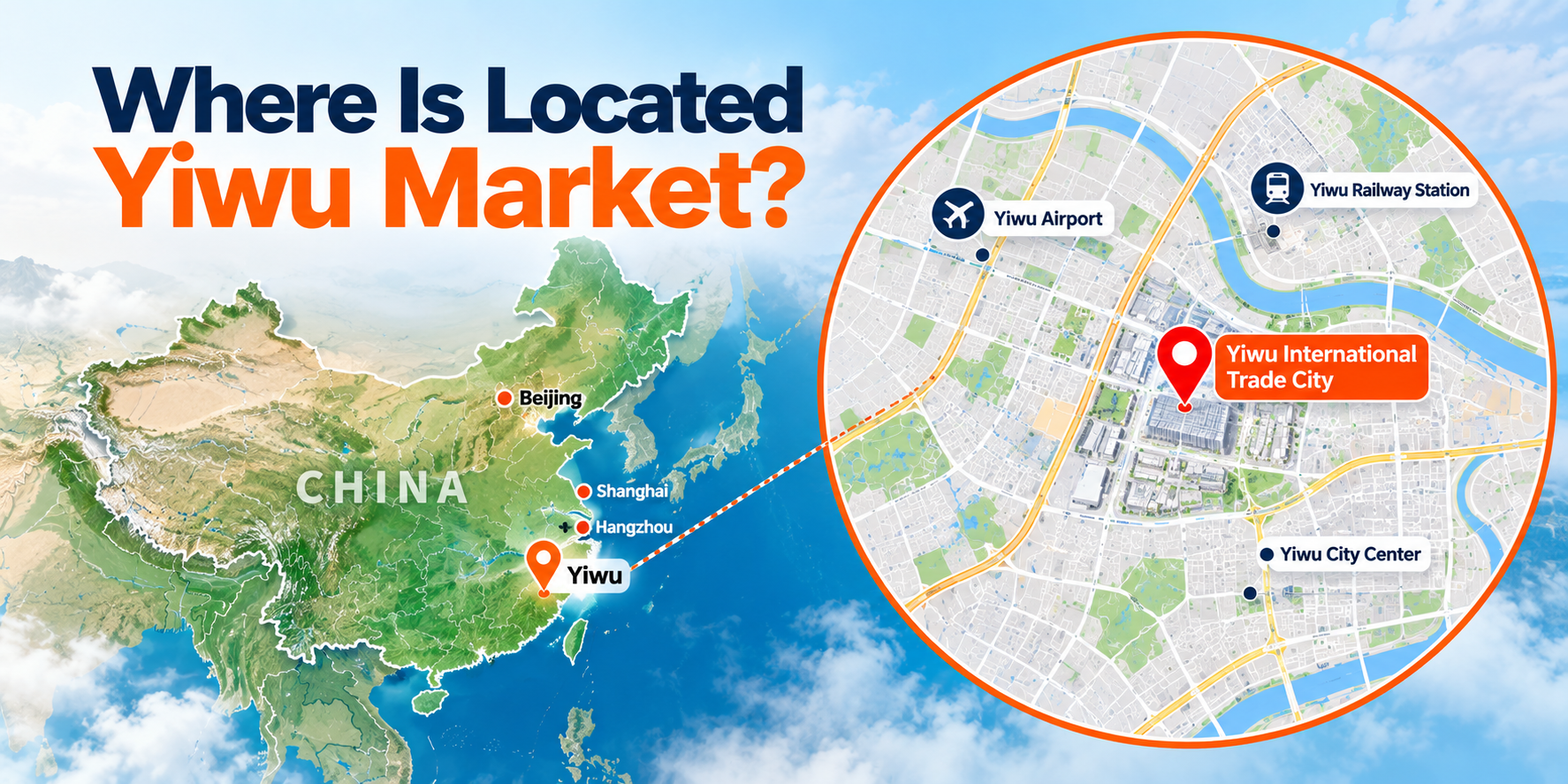
The main market is located in the Futian commercial area of Yiwu City, Zhejiang Province, eastern China.
Yiwu is part of the Jinhua administrative region and has transportation connections to major Chinese cities, including Hangzhou and Shanghai.
How to Get to Yiwu Market From Shanghai
Travelers arriving in Shanghai can take a high-speed train toward Yiwu from an appropriate Shanghai railway station.
The journey generally takes around 1.5–2.5 hours depending on the departure station, train service, and stops.
After arriving at Yiwu Railway Station, travelers can take a taxi or ride-hailing service to the International Trade City.
We recommend checking train schedules and ticket availability before departure.
How to Get to Yiwu Market From Hangzhou
Hangzhou is another convenient entry point for international buyers.
High-speed rail services connect Hangzhou and Yiwu, with some services taking approximately 30–60 minutes depending on the station and train.
Travelers arriving at Hangzhou Xiaoshan International Airport should allow additional time to reach the railway station or arrange road transportation.
Best Time to Visit Yiwu Market
For many international buyers, March to May and September to November are practical periods for visiting Yiwu.
These months can offer comfortable weather and active wholesale trading.
However, major trade fairs can increase hotel demand and local transportation costs.
We recommend avoiding visits during the Chinese New Year closure period and confirming booth availability around other major Chinese public holidays.
How Many Days Do You Need at Yiwu Market?
Choose a visit duration
Suggested three-day itineraryDay 1: Visit the districts most relevant to your primary product categories.Day 2: Compare additional suppliers, request samples, and negotiate quotations.Day 3: Revisit shortlisted suppliers, finalize specifications, and meet a freight forwarder or sourcing agent.
For first-time importers planning to source multiple categories, we generally recommend allocating at least three full business days.
What to Bring When Visiting Yiwu Market
We recommend bringing a passport, suitable payment methods, a smartphone with translation tools, product reference photos, a purchasing spreadsheet, and comfortable walking shoes.
Buyers should also prepare digital copies of business information, technical specifications, and any required product certifications.
Since mobile payment methods are widely used in China, international visitors should investigate supported payment options before arrival.
7. Yiwu Market Sourcing Tips and Common Mistakes to Avoid
Successful wholesale purchasing depends on supplier verification, accurate product specifications, quality control, and careful cost planning.
Mistake 1: Assuming Every Yiwu Supplier Is a Manufacturer
Not every wholesale booth is operated by a factory.
Some businesses are manufacturers, while others are distributors or trading companies.
Working with a trading company is not inherently problematic, but buyers should understand who is responsible for manufacturing, quality assurance, and delivery.
We recommend asking suppliers for their business registration, factory information, and manufacturing capabilities when relevant.
Mistake 2: Choosing Suppliers Based Only on Price
The cheapest quotation may not represent the best value.
Differences in raw materials, product dimensions, workmanship, packaging, and quality inspection can significantly affect product performance.
We recommend comparing samples and written specifications before selecting a supplier.
Mistake 3: Not Confirming the Minimum Order Quantity
A supplier's advertised price may apply only to a particular order quantity.
Buyers should confirm whether the MOQ applies per product, color, design, or packaging variation.
This is especially important for businesses purchasing multiple SKUs.
Mistake 4: Skipping Product Samples and Quality Inspections
Product photographs and showroom samples do not guarantee consistent bulk production quality.
We recommend obtaining representative samples and establishing measurable acceptance criteria before approving production.
For larger orders, independent pre-shipment inspections can help identify defects before goods leave China.
Mistake 5: Ignoring Import Regulations
Different countries impose different requirements on imported products.
Toys, electrical products, cosmetics, food-contact materials, and children's merchandise may require specific testing, documentation, labeling, or regulatory approvals.
Buyers should confirm destination-market requirements before placing orders.
Mistake 6: Forgetting the Total Landed Cost
A product's wholesale price represents only one part of its final cost.
Additional expenses may include domestic transportation, inspection, packaging, export handling, international freight, customs duties, taxes, and local delivery.
We recommend calculating landed costs before deciding whether a product is commercially viable.
Mistake 7: Not Recording Supplier Information
Yiwu contains thousands of similar-looking wholesale booths.
Without organized records, it can be difficult to identify a supplier after leaving the market.
We recommend documenting booth numbers, supplier names, contact information, product photos, quoted prices, MOQs, and sample references.
8. Frequently Asked Questions About Yiwu Market
Where is Yiwu market?
Yiwu Market is located in Yiwu City, Zhejiang Province, China, within the Jinhua administrative region. Its main wholesale complex, Yiwu International Trade City, is situated in the Futian commercial area.
Is Yiwu market open on weekends?
Yes. Yiwu International Trade City generally operates on Saturdays and Sundays, with typical visiting hours around 9:00 AM to 5:00 PM. Individual supplier schedules may vary, particularly during public holidays.
How big is Yiwu market?
Yiwu International Trade City is commonly reported to contain more than 75,000 wholesale booths across its established trading complex. The broader market ecosystem also includes specialized trading areas and the Global Digital Trade Center, which opened in October 2025.
Can foreigners buy from Yiwu market?
Yes. International buyers regularly visit Yiwu to purchase wholesale merchandise. Foreign buyers can negotiate directly with suppliers or hire sourcing agents to assist with purchasing, quality control, and shipping.
Is Yiwu market cheaper than Alibaba?
Yiwu Market can offer competitive wholesale prices, particularly when buyers negotiate directly and compare multiple suppliers. However, prices are not always lower than Alibaba. The final cost depends on product quality, order quantity, customization, supplier margins, and shipping arrangements.
What is the difference between Yiwu Market and Canton Fair?
Yiwu Market is a permanent wholesale trading destination with suppliers operating throughout most of the year. The Canton Fair is a scheduled trade exhibition held in Guangzhou during designated spring and autumn sessions.
Yiwu is particularly useful for sourcing a wide range of small commodities, while the Canton Fair covers numerous industrial and consumer product categories through exhibition-based supplier meetings.
9. Conclusion: Is Yiwu Market Worth Visiting in 2027?
The Yiwu China wholesale market remains an important sourcing destination for international importers, wholesalers, retailers, and e-commerce businesses.
Its extensive supplier network, specialized product districts, competitive wholesale environment, and established logistics infrastructure make it especially useful for businesses sourcing multiple consumer product categories.
The opening of the Yiwu Global Digital Trade Center in 2025 has further expanded the city's trading infrastructure, adding new opportunities in branded merchandise, smart products, and digitally supported wholesale trade.
For first-time visitors, the key to successful sourcing is preparation. We recommend identifying the correct market districts, preparing detailed product requirements, comparing several suppliers, verifying manufacturing capabilities, and confirming quality standards before placing orders.
Whether we purchase directly from Yiwu Futian Market or work with a professional Yiwu sourcing agent, a structured approach helps reduce procurement risks, improve product consistency, and support long-term importing success.

_1751507038923.png)