











If you have ever picked up a product and noticed the words “Made in PRC” instead of the more familiar “Made in China,” you may have wondered what those three letters actually mean. Is PRC another country?
Does the label indicate a special manufacturing zone? Is it connected to a particular quality standard? Or is it simply a different way of writing China?
The short answer is straightforward: PRC stands for the People’s Republic of China, so “Made in PRC” generally means that the product was manufactured in China. Current sourcing references continue to describe the two expressions as referring to the same country of origin in ordinary commercial usage.
The interesting part begins when you look beyond the basic definition. A country-of-origin label is only one small piece of information about a product, and the exact wording can matter differently depending on where the product is sold or imported.
For example, U.S. country-of-origin rules require imported goods generally to indicate the English name of the country of origin, and U.S. Customs rulings have specifically addressed the acceptability of abbreviations such as “PRC.”
That means a consumer asking “What does Made in PRC mean?” needs one answer, while an importer preparing goods for a particular market may need a more detailed answer.
This guide explains both sides so you can understand the label without treating it as something mysterious.
What Does PRC Stand For?
PRC stands for the People’s Republic of China, the formal name of the country commonly called China. When a manufacturer places “Made in PRC” on packaging, the phrase is normally intended to communicate that the product was manufactured in China.
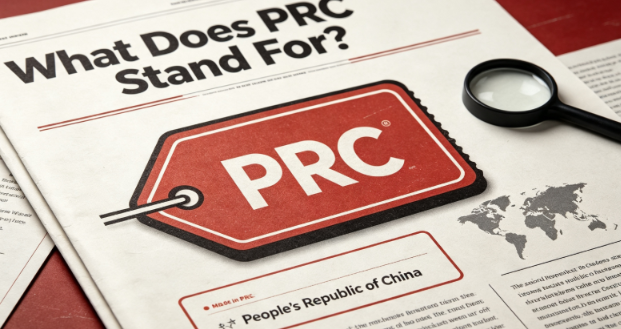
There is no separate country called PRC hiding behind the abbreviation, and it does not identify a special class of Chinese factory. In ordinary commercial language, “Made in PRC” therefore points to the same national manufacturing origin that shoppers usually associate with the phrase “Made in China.”
The abbreviation can initially look confusing because consumers encounter country names in their everyday form. We say China, Japan, Germany, France, and Canada rather than routinely using each country's formal constitutional or governmental name.
A product label, however, may use formal terminology, abbreviations, or wording chosen for a particular market. Think of PRC as a formal-name shortcut, rather than as a secret code.
The key distinction is between the name of the country and the rules governing how that country's name must appear on merchandise. Those are two separate questions.
A label can refer to China in a commercially understandable way while still requiring review under the labeling regulations of the destination market.
PRC vs. China in Everyday Language
In everyday language, PRC and China refer to the same country when “PRC” is being used as an abbreviation for the People’s Republic of China. This is why you may see “Made in PRC,” “Product of PRC,” or similar wording on products sourced from Chinese manufacturers.
The label does not mean that the item was produced in an unknown location or in a separate territory that happens to share Chinese supply chains. Current 2026 sourcing guides continue to make this basic distinction clear: PRC is the abbreviation for the People's Republic of China.
What changes is the presentation, not necessarily the underlying country. Imagine seeing “United States” on one document and “U.S.” on another. The abbreviation does not create another country. Similarly, PRC is a shorthand expression connected to China's formal state name.
Still, businesses should not assume that every abbreviation is automatically acceptable for every legal purpose. Country-of-origin marking is governed by the destination country's regulations, and those regulations may specify what wording or abbreviations can be used.
So, for a shopper, the meaning is simple; for an importer, the label should be checked against the rules of the market where the product will be sold.
Is Made in PRC the Same as Made in China?
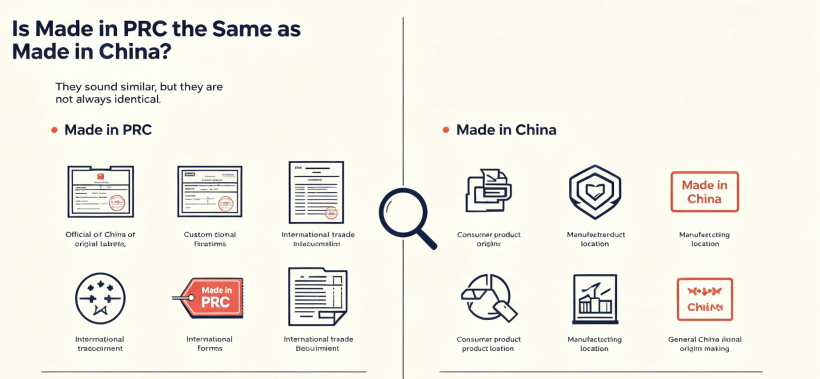
For ordinary product-origin interpretation, “Made in PRC” means the same country as “Made in China.” Both identify China as the manufacturing origin when the wording is being used to describe where the product was made.
Current sourcing and trade guidance describes the two phrases as referring to the same country, although it also emphasizes that destination-market labeling requirements can differ.
This distinction is important because people sometimes confuse the meaning of a label with whether that exact label format is legally acceptable.
Consider the difference between meaning and compliance. Meaning asks, “What country does this label refer to?” Compliance asks, “Is this exact wording permitted on goods entering this market?” Those questions can produce different answers.
A product can clearly be understood as Chinese-made while the abbreviation printed on its packaging may not satisfy a particular jurisdiction's technical marking requirements. U.S. law, for example, generally requires imported foreign-origin articles to be marked in a way that indicates the English name of the country of origin to the ultimate purchaser.
Therefore, “same country” does not necessarily mean “identical legal labeling treatment everywhere.”
Country of Origin vs. Product Label
The phrase country of origin refers to where a product is considered to have been manufactured, produced, or grown under the applicable rules. In U.S. regulations, for example, country of origin generally means the country of manufacture, production, or growth of an imported article, with further processing in another country potentially changing origin when it results in a substantial transformation.
That definition demonstrates why a small printed phrase cannot always tell the complete story of a global supply chain.
A modern product might contain components from several countries before final assembly occurs somewhere else. A smartphone, for instance, can involve raw materials from multiple regions, components produced by specialized suppliers, software developed by international teams, and final assembly in another country.
The country-of-origin marking is intended to identify the legally relevant origin, not to provide a complete map of every stage of production. This is why sophisticated buyers should distinguish between “where the product was made for origin purposes” and “where every component came from.” “Made in PRC” normally answers the first question. It does not automatically answer the second.
Why Do Products Say Made in PRC?
There is no single universal reason every manufacturer uses “Made in PRC.” Companies and suppliers can choose wording for branding, market presentation, formal terminology, customer expectations, packaging conventions, or other commercial reasons.
Recent sourcing discussions suggest that some manufacturers prefer PRC because it uses the country's formal name rather than the shorter everyday term “China,” while other businesses may simply follow a supplier's established packaging format. It would therefore be inaccurate to assume that every company using the phrase has the same motivation.
There can also be a psychological element. Consumers recognize “Made in China” immediately, whereas “Made in PRC” requires a moment of interpretation. That difference can make the wording appear more formal or less familiar, even though the underlying origin is the same.
Some commercial sources argue that manufacturers may use the abbreviation to create distance from established perceptions surrounding the phrase “Made in China,” but that is a claimed marketing motivation rather than a universal fact about every product carrying the label.
The safest interpretation is therefore simple: the wording alone does not reveal the manufacturer's motivation. If you want to understand why a particular brand selected it, you need information from that brand or its supplier rather than guessing from the label.
Does Made in PRC Mean the Product Is Lower Quality?
No. “Made in PRC” is not a quality grade. The label tells you about geographic origin; it does not tell you whether the product is excellent, average, defective, premium, inexpensive, carefully engineered, or poorly manufactured.
A Chinese factory can produce highly sophisticated electronics, precision components, medical equipment, furniture, clothing, toys, machinery, and countless other products.
At the same time, Chinese factories can also produce low-cost goods designed around aggressive price targets. The label itself does not distinguish between those categories.
This is an important point because country-of-origin labels can become mental shortcuts. Someone sees “Made in PRC” and may instinctively connect it with a preconceived idea about quality. But manufacturing quality is determined by factors such as materials, engineering specifications, production controls, supplier capability, inspection procedures, tolerances, testing, and consistency.
If you are purchasing a product for business use, the factory's quality-management process is far more informative than whether the box says “China” or “PRC.” Current sourcing guidance similarly emphasizes checking factories, samples, specifications, certifications, and inspections rather than using the country label as a proxy for quality.
Why the Label Alone Cannot Measure Quality
Think of a country-of-origin label as a street address rather than a restaurant review. Knowing the city where a restaurant is located tells you something useful, but it does not tell you whether the food will be exceptional.
The same principle applies to manufacturing. “Made in PRC” tells you the relevant national origin in ordinary usage, but it says almost nothing about the factory's workmanship.
If quality matters, investigate the details behind the product. Look for product specifications, applicable safety certifications, testing documentation, warranty terms, defect rates, inspection reports, customer feedback, and supplier history.
For private-label products, ask for a sample before committing to a large production run and make sure the approved sample becomes the reference standard for mass production.
These steps provide evidence about quality; simply replacing the phrase “Made in PRC” with “Made in China” would not. The label is a useful origin clue, but it should never be treated as a technical performance certificate.
Made in PRC and International Trade
The phrase “Made in PRC” matters because country of origin plays a significant role in international commerce. Importers, customs authorities, retailers, marketplaces, and regulators may need to know where merchandise originated.
Country-of-origin information can be relevant to customs declarations, labeling, trade statistics, consumer information, and other regulatory processes. U.S. regulations, for example, define country of origin and establish marking requirements for imported foreign-origin articles.
However, the label itself does not magically determine every trade consequence. Customs treatment can depend on the product's classification, origin determination, destination country, applicable trade measures, and other facts. A product made in China might face particular tariff treatment, but that treatment is not created simply because a supplier printed “PRC” rather than “China” on the box.
Origin is established under the relevant legal framework, while the label communicates that origin to the required audience. This distinction becomes especially important when products have complex international supply chains. If substantial processing occurs in another country, the origin analysis may require more than simply looking at the final packaging. Importers should therefore treat the label as part of the compliance picture rather than the entire picture.
Made in PRC and U.S. Customs Rules
For businesses importing into the United States, the exact wording of a country-of-origin mark deserves particular attention. U.S. law generally requires foreign-origin imported articles to be marked conspicuously, legibly, indelibly, and permanently in a way that indicates the English name of the country of origin to the ultimate purchaser.
The implementing regulations state that required markings generally include the full English name of the country of origin unless another marking has been specifically authorized.
That is why businesses should not automatically assume that “Made in PRC” is legally interchangeable with “Made in China” for every U.S. import. A U.S.
Customs ruling specifically stated that “China” and “P.R. China” were acceptable, while “P.R.C.” and “PRC” were not acceptable in the particular country-of-origin marking context addressed by that ruling. Another CBP ruling from 2015 considered a request to change “Made in China” to “Made in PRC” and discussed the statutory requirement that the marking indicate the English name of the country of origin.
The practical lesson is clear: U.S. importers should verify current marking requirements rather than assuming an abbreviation is sufficient.
Why U.S. Labeling Requirements Matter
A seemingly tiny wording choice can become a real compliance issue when merchandise crosses an international border. U.S. regulations provide detailed rules covering required markings, exceptions, containers, repackaged goods, and articles found not to be legally marked.
The regulations also provide for additional duties in certain circumstances when imported articles are not properly marked, making labeling more than a cosmetic packaging decision.
This does not mean that seeing “Made in PRC” on an ordinary consumer product automatically means the product is illegal or counterfeit. It means context matters. A consumer buying a product in a store and an importer designing packaging for a U.S. shipment have very different responsibilities.
If you are an importer, manufacturer, or brand owner, have the final label reviewed against the destination market's current rules before printing thousands of units. A few minutes of compliance checking can be much cheaper than changing packaging after a shipment has already been produced.
Made in PRC vs. Made in China: Key Differences
| Factor | Made in PRC | Made in China |
|---|---|---|
| Basic meaning | People’s Republic of China | China |
| Ordinary country reference | China | China |
| Indicates a different country? | No | No |
| Quality grade | None | None |
| Automatically proves authenticity? | No | No |
| Describes every component's origin? | No | No |
| Legal acceptability | Depends on destination-market rules | Generally familiar, but still subject to local rules |
| U.S. marking considerations | Requires particular attention to applicable rules | Specifically recognized as an English country name |
The biggest difference is therefore wording rather than geographic origin. In ordinary commercial usage, both phrases identify China, but their regulatory treatment can differ because governments do not necessarily treat every abbreviation as an acceptable country-of-origin marking. U.S. regulations, for instance, generally favor the full English country name unless an alternative is authorized, and a CBP ruling specifically addressed “PRC” versus “P.R. China” and “China.”
For consumers, there is usually little practical difference in what the label tells them about origin. For importers, however, the distinction between semantic equivalence and regulatory equivalence is crucial.
A supplier may casually describe a product as “Made in PRC,” while the importer may need packaging that satisfies the destination country's formal requirements. The correct approach is not to panic when you see PRC; it is to determine which market's rules apply.
Does Made in PRC Mean the Product Is Authentic?
No. The phrase “Made in PRC” does not prove authenticity. It is a country-of-origin statement, not an authentication certificate. A genuine branded product may be manufactured in China, but a counterfeit product could also falsely display a Chinese origin statement.
The same logic applies to “Made in China”: seeing the phrase does not establish that the brand, seller, manufacturer, or product itself is legitimate.
If authenticity matters, examine the entire purchasing chain. Buy from an authorized retailer when possible, check the manufacturer's verification system if one exists, compare model numbers and packaging, inspect serial numbers where applicable, and be cautious about prices that appear inconsistent with the normal market.
For business buyers, verify the supplier's company identity, production capability, documentation, and contractual details. A country-of-origin label is only one data point.
This distinction is especially useful when shopping online. A marketplace listing might contain product descriptions supplied by a seller, while the physical product might have different labeling.
If the listing says “designed in the USA” and the item says “Made in PRC,” those statements are not necessarily contradictory because design location and manufacturing origin are different concepts. What matters is whether each statement is accurate and whether applicable consumer-protection and labeling rules are satisfied.
The phrase “Made in PRC” itself should not be treated as evidence either for or against authenticity.
Which Products Commonly Carry a Made in PRC Label?
You can encounter “Made in PRC” across a wide range of manufactured goods. Examples can include electronics, accessories, household products, furniture components, clothing, toys, tools, packaging, consumer accessories, and industrial products.
China has an enormous manufacturing ecosystem, so there is no single product category associated exclusively with the abbreviation. Recent sourcing guides similarly describe the label appearing across ordinary consumer and commercial goods.
You might find the wording printed directly on a product, attached as a sewn-in label, included on retail packaging, printed on a carton, or shown in supplier documentation.
The exact location depends on the product and the applicable regulations. Sometimes the country-of-origin statement is highly visible; other times it may appear in a small compliance area alongside model numbers, importer information, material details, or safety markings.
The presence of the phrase is therefore not unusual. What matters is what the label is being used for and where the product is being sold.
A manufacturer exporting the same product to multiple markets may use different packaging versions to satisfy different labeling requirements. That is one reason professional importers do not simply copy a supplier's label without checking the destination market.
What Made in PRC Does Not Tell You
One of the easiest ways to understand the label is to focus on what it does not tell you. “Made in PRC” does not automatically tell you the manufacturer's name, factory address, production date, materials, labor conditions, quality level, safety certification, ownership structure, warranty quality, or authenticity.
It also does not provide a complete breakdown of the product's global supply chain.
The label does not tell you whether the factory is a huge automated facility or a smaller specialist manufacturer. It does not tell you whether the product underwent rigorous inspection or whether the seller simply selected the lowest-cost production option.
It does not tell you whether the product is designed in China, designed elsewhere, assembled in China, or composed of components sourced from several countries unless the additional labeling makes those facts clear.
That is why sophisticated purchasing decisions require more evidence. If you are buying a $20 household accessory, the origin label may be all you need to understand the basic manufacturing location.
If you are importing thousands of electrical devices, however, you need documentation, testing, supplier verification, and regulatory review. The more consequential the purchase, the less useful the country label becomes as a standalone decision tool.
How to Check the Actual Country of Origin
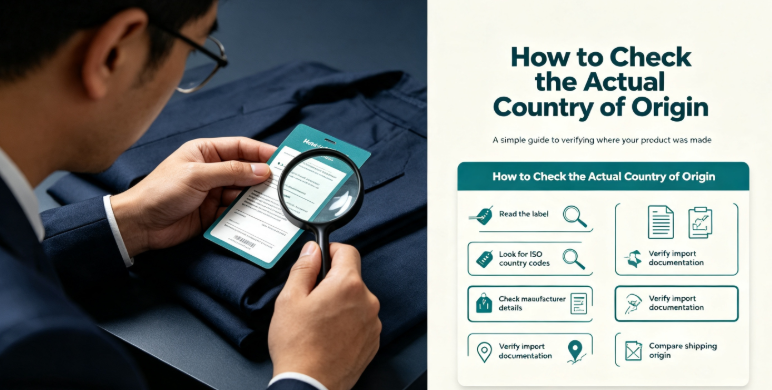
If you want to verify a product's origin, start with the physical label and then compare it with the product documentation. Look for phrases such as “Made in,” “Product of,” or equivalent country-of-origin wording. If the product has a manufacturer or importer listed, check whether that information matches the seller's description.
For commercial imports, compare the product label with invoices, packing lists, supplier declarations, and customs documentation where appropriate.
Remember that origin can become complicated when manufacturing occurs across several countries. Under U.S. regulations, for example, further work or material added in another country must result in a substantial transformation to change the country of origin under the general marking framework.
That means simply shipping components to another country for limited processing does not necessarily mean the final product automatically becomes a product of that second country.
For high-value or regulated goods, professional verification can be worthwhile. Ask the supplier where the product is manufactured, which components are imported, what processes occur at each location, and what documentation supports the origin claim.
If you are dealing with a major commercial shipment, consult the customs authority or a qualified trade-compliance professional in the destination market. Origin is a legal concept, not merely a phrase that a supplier can redefine through packaging.
What the Label Means for Online Shoppers
For most online shoppers, seeing “Made in PRC” is primarily an origin disclosure. It means you are looking at a product associated with manufacturing in China. There is generally no reason to interpret the abbreviation itself as a warning sign.
Instead, treat it in the same way you would treat any other country-of-origin statement: as useful information that forms one part of the larger product description.
Online shopping makes this particularly important because product pages often contain several different location-related claims. A listing might say “designed in Europe,” “brand based in the United States,” “assembled in China,” and “Made in PRC” within the same product ecosystem.
Those statements can describe different stages of a product's lifecycle. A brand's headquarters, design office, component suppliers, assembly facility, seller location, and country of origin are not necessarily the same place.
If quality is your concern, read reviews and specifications rather than making assumptions from PRC. If safety is your concern, check the relevant certification and compliance information. If authenticity is your concern, verify the seller and brand.
If environmental or labor practices matter to you, look for credible supply-chain disclosures. The label answers “where,” but it does not answer every question about “how.”
What Importers and Businesses Should Check
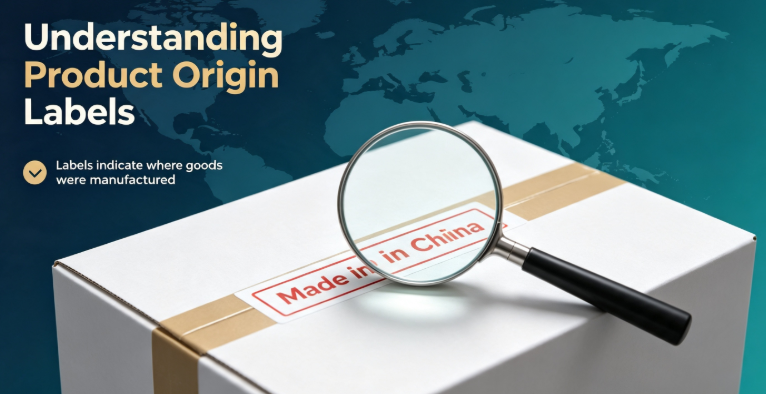
Businesses sourcing products from China should treat the Made in PRC question as a compliance issue as well as a sourcing issue. Before approving packaging, determine the destination markets and review their country-of-origin marking rules.
Do not assume that wording accepted by a supplier in China will automatically satisfy regulations in the United States, European Union, United Kingdom, Australia, Canada, or another market. Each jurisdiction can have its own requirements and exceptions.
A practical sourcing review should also examine the supplier itself. Confirm the legal identity of the manufacturer, factory location, product specifications, applicable certifications, testing requirements, packaging requirements, and inspection procedures.
If you are placing a large order, establish written quality standards and agree on exactly what the finished product must match. The country label should be only one item on that checklist.
For U.S. imports, this deserves particular care because federal law requires foreign-origin goods generally to carry an appropriate country-of-origin marking, and the regulations contain detailed rules about acceptable country names, exceptions, containers, and other circumstances.
A supplier saying “everyone uses Made in PRC” is not a substitute for checking the applicable U.S. requirements. Compliance should be determined by the rules governing your shipment, not by how common a particular phrase happens to be in supplier catalogs.
Does Made in PRC Affect Tariffs or Duties?
The words “Made in PRC” do not by themselves create a tariff. Tariffs and other trade measures are determined under applicable laws, tariff schedules, classifications, origin rules, and government measures.
Changing the printed phrase from “Made in China” to “Made in PRC” does not, by itself, transform the underlying product into merchandise from another country.
This distinction matters because people sometimes assume that an abbreviation might be a way to change customs treatment. It generally is not. If the legally determined country of origin is China, writing PRC on the package does not magically change the origin.
The relevant customs authority looks at the applicable origin rules and the facts of production rather than simply accepting whatever geographic implication a supplier might prefer.
U.S. regulations define country of origin in terms of manufacture, production, or growth, with the substantial-transformation concept playing a role when additional work or materials are introduced elsewhere.
Consequently, businesses should never use “PRC” as a strategy for disguising origin or attempting to obtain a different tariff result. The correct approach is to determine origin accurately and then use labeling that complies with the destination market's requirements.
Common Misconceptions About Made in PRC
Several myths surround the phrase because it looks less familiar than “Made in China.” The first misconception is that PRC is a different country. It is not; PRC is an abbreviation for the People's Republic of China. The second misconception is that the phrase automatically means lower quality.
It does not. The third is that it automatically indicates counterfeit merchandise. Again, it does not. A label cannot establish authenticity or quality on its own.
Another misconception is that “Made in PRC” always has exactly the same legal effect as “Made in China.” The underlying country reference may be the same, but the exact wording can matter for compliance.
The U.S. Customs ruling discussed earlier is a useful example: it distinguished acceptable country-of-origin wording such as “China” and “P.R. China” from “PRC” in the particular marking context considered.
That is why a good article about PRC meaning needs to make a distinction between what the abbreviation means and whether a particular government accepts that abbreviation for labeling purposes.
A final misconception is that the label reveals the entire supply chain. It does not. Modern manufacturing is international, and a finished product can contain materials and components originating in several places. Country-of-origin rules determine the legally relevant origin; the label is not intended to be a miniature supply-chain database.
Made in PRC and Global Manufacturing
The growing appearance of “Made in PRC” reflects the international nature of modern manufacturing, where products routinely cross borders during design, component production, assembly, packaging, and distribution.
China remains deeply integrated into global manufacturing networks, and suppliers may serve customers across many different markets. Against that background, a formal abbreviation such as PRC is not especially mysterious; it is simply another way of referring to the country commonly known as China.
Global supply chains also explain why a country-of-origin label should be interpreted carefully. Imagine a laptop whose processor, memory, display, battery cells, and other components come from different suppliers before final assembly.
If the legally relevant origin is China, the finished product may carry a Chinese country-of-origin marking even though many individual components originated elsewhere. That does not make the label false; it reflects the legal framework for determining origin.
The same principle appears across industries. A piece of furniture might use imported hardware and locally produced wood. A garment could use fabric from one country and be cut and sewn in another.
An appliance might contain dozens of components produced across Asia before final assembly. Global manufacturing is more like a network than a straight line, and “Made in PRC” identifies one important point in that network rather than describing every step.
A Simple Example of Made in PRC
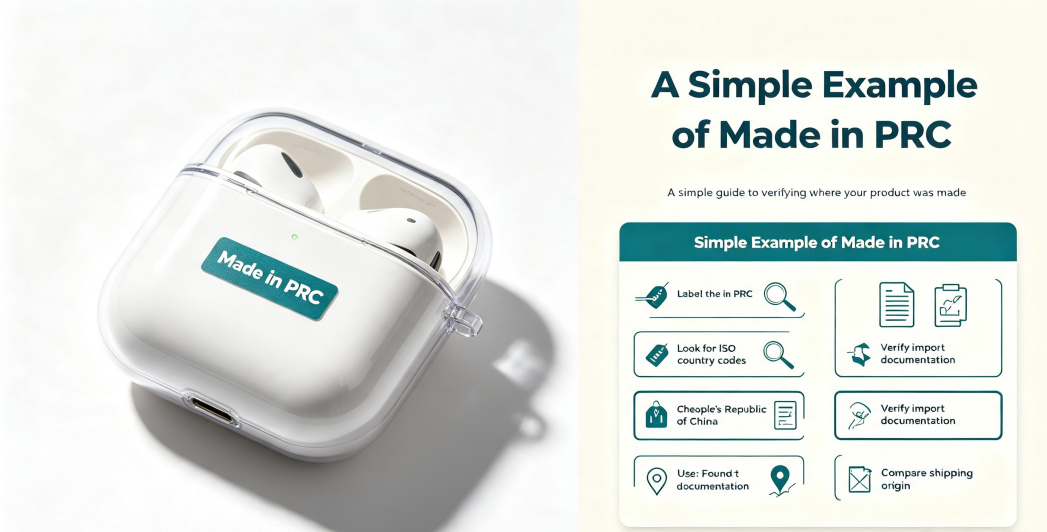
Imagine that you purchase a wireless keyboard and discover a small label on the underside that says “Made in PRC.” The simplest interpretation is that the keyboard was manufactured in China.
You do not need to assume that PRC represents another country, a special Chinese province, or a secret manufacturing classification. In ordinary usage, it is a reference to the People's Republic of China.
Now imagine that the keyboard brand is headquartered in Germany, its industrial designers work in Sweden, some electronic components come from other Asian suppliers, and the final keyboard is manufactured in China.
The brand may truthfully describe itself as German while the product carries a Chinese country-of-origin marking. Those statements describe different things: company identity and product manufacturing origin.
Finally, suppose the company wants to sell the keyboard in the United States. At that point, the business should verify that the actual country-of-origin marking satisfies U.S. requirements rather than simply assuming “Made in PRC” is acceptable because the phrase is understandable. U.S. law and regulations contain specific requirements concerning how foreign-origin goods must be marked, and CBP rulings have addressed the use of PRC specifically.
The example shows why the meaning of the phrase is simple while its compliance implications can be more nuanced.
Should You Be Concerned About a Made in PRC Label?
For a normal consumer, the phrase “Made in PRC” is not, by itself, a reason to assume that something is wrong with a product. It simply identifies China as the manufacturing origin in ordinary commercial usage.
You should evaluate the product according to the things that actually matter for your purchase: specifications, materials, safety information, seller reputation, warranty, reviews, certifications, price, and intended use.
For an importer or brand owner, the question is different. You should be concerned about compliance accuracy, not about the abbreviation itself. Verify the country of origin, determine whether the destination market permits the chosen wording, and make sure the packaging and documentation are consistent.
In the United States, for example, the regulations generally call for the English country name and provide detailed rules concerning acceptable markings.
The best mental model is to treat “Made in PRC” as a piece of information, not a verdict. It tells you something useful about origin, but it does not tell you whether the product is good, bad, authentic, counterfeit, expensive, cheap, safe, unsafe, or ethically produced.
Those questions require different evidence. Once you understand that distinction, the label becomes much less mysterious.
Conclusion
The meaning of Made in PRC is simple: PRC stands for the People’s Republic of China, so the phrase generally means Made in China. It is not a separate country, a special quality designation, or an automatic indication that a product is counterfeit.
Current sourcing references consistently describe PRC as an abbreviation for China's formal name and explain that products carrying the label are associated with manufacturing in China.
The important nuance is that meaning and legal labeling requirements are not always identical concepts. A shopper can reasonably understand “Made in PRC” as referring to China, while an importer may still need to check whether that exact wording satisfies the destination country's regulations. U.S. rules are a clear example: federal law generally requires imported foreign-origin goods to indicate the English name of the country of origin, while specific Customs rulings have addressed the acceptability of “PRC” versus “China” or “P.R. China.”
So, the next time you see “Made in PRC,” there is no secret code to crack. Read it as a country-of-origin reference to China, then look at the rest of the available information if you need to assess quality, authenticity, safety, or compliance.
For everyday shopping, that is usually enough. For international trade, however, verify the applicable rules before relying on the exact wording of the label.
FAQs About Made in PRC Meaning

1. What does Made in PRC mean?
Made in PRC means Made in the People’s Republic of China. In ordinary commercial usage, it indicates that the product was manufactured in China. PRC is simply an abbreviation for the country's formal name. It does not identify a separate country or a special category of Chinese manufacturing.
2. Is Made in PRC the same as Made in China?
Yes, when discussing the ordinary country of origin, both phrases refer to China. The important distinction is that the exact wording used for legal country-of-origin marking can be regulated differently by individual countries.
U.S. Customs rules, for example, have specifically addressed the use of “PRC” and have distinguished it from acceptable forms such as “China” or “P.R. China” in particular marking contexts.
3. Does Made in PRC mean the product is low quality?
No. The label does not measure quality. A product made in China can be inexpensive or premium, simple or highly sophisticated, depending on its manufacturer, specifications, materials, engineering, and quality-control procedures. If quality matters, examine those factors rather than using the country-of-origin wording as a quality rating.
4. Does Made in PRC mean the product is counterfeit?
No. A Made in PRC label does not prove that a product is genuine or counterfeit. Authentic and non-authentic products can both carry country-of-origin statements.
To evaluate authenticity, look at the seller, brand authorization, product identifiers, documentation, packaging, and any authentication system provided by the manufacturer.
5. Is Made in PRC acceptable for U.S. imports?
Do not assume that it is automatically acceptable simply because it means China. U.S. law generally requires imported foreign-origin goods to indicate the English name of the country of origin, and U.S. regulations specify rules for acceptable country names and abbreviations.
A CBP ruling specifically stated that “China” and “P.R. China” were acceptable in the relevant context while “PRC” and “P.R.C.” were not. Importers should check the current rules applicable to their specific product and shipment.

_1751507038923.png)