



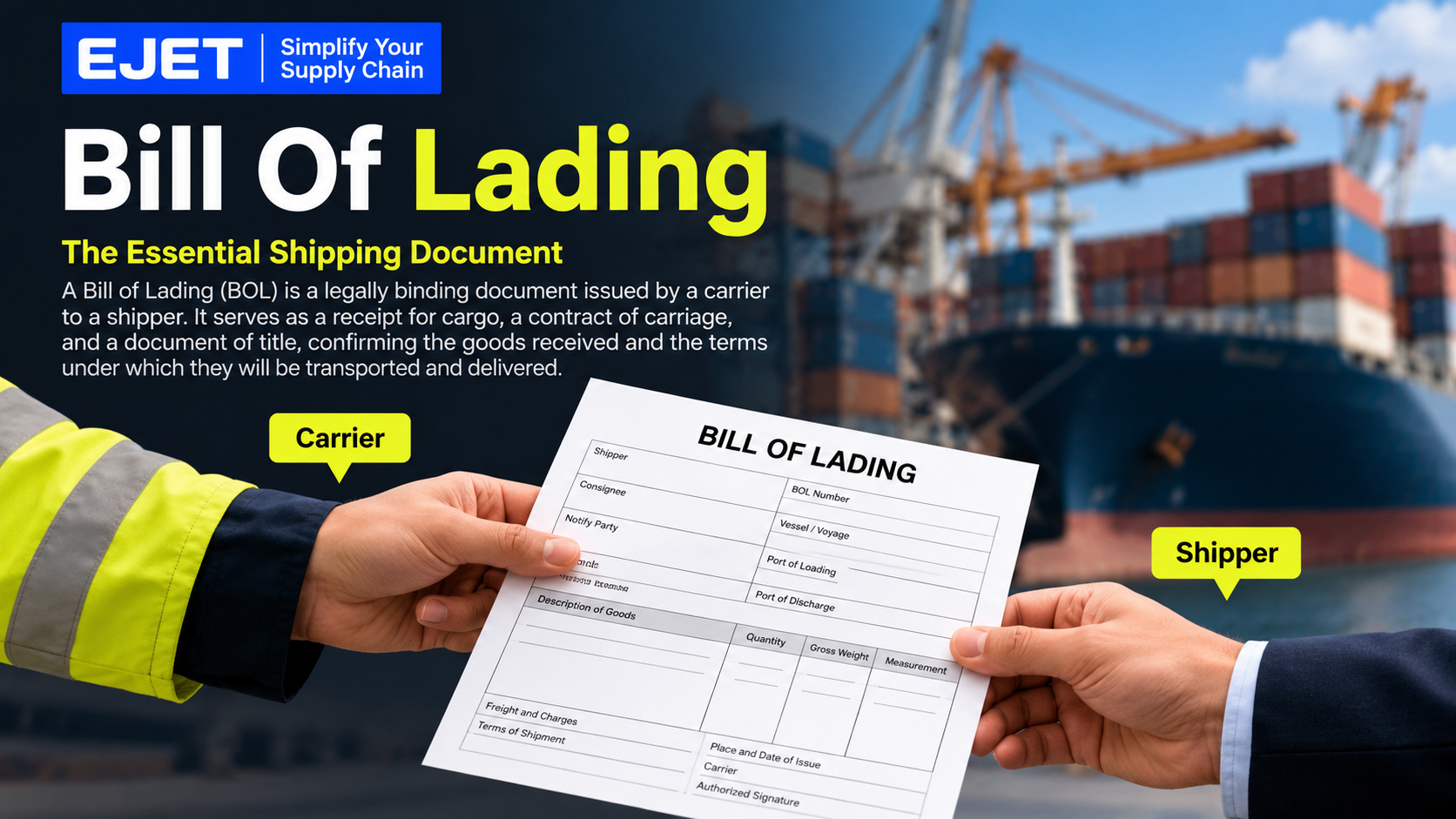
In shipping, B/L means Bill of Lading: a transport document that acknowledges receipt of goods and records or evidences the terms of their carriage. Depending on its type, it can also serve as a document of title, helping establish entitlement to claim the cargo.
This guide explains the abbreviation, the document’s main functions, and how to distinguish it from similar-looking terms.
What is B/L?
B/L is an abbreviation for Bill of Lading, a document issued by a carrier or its authorized representative for goods accepted for transportation. In ocean shipping, it connects the cargo with the parties involved and the conditions governing its movement.
Its importance extends beyond identifying a shipment: certain bills also support the transfer of rights to the goods.
If you are asking “what is bl” after reading shipping paperwork, Bill of Lading is the relevant interpretation. However, letters alone are not enough to establish meaning outside that setting. Before applying the shipping definition, check the surrounding sentence and the document’s purpose.
The three defining functions
A bill of lading has three principal functions, although the effect of a particular document depends on its wording and type:
- Receipt for goods: It acknowledges that the carrier received the cargo described. The description may include identifying marks, package quantities or weight, and the goods’ apparent condition.
- Evidence of the carriage contract: It records or incorporates the conditions under which the carrier transports the shipment. This helps distinguish transport responsibilities from the separate sale between buyer and seller.
- Document of title: Where applicable, it supports the holder’s right to claim possession. A negotiable order bill can also facilitate trading goods while they are in transit.
These functions explain why a B/L is more than a tracking reference. It brings receipt, transport terms, and potentially control over delivery into one document. Reading only the cargo description misses much of its purpose.
Information a bill of lading contains
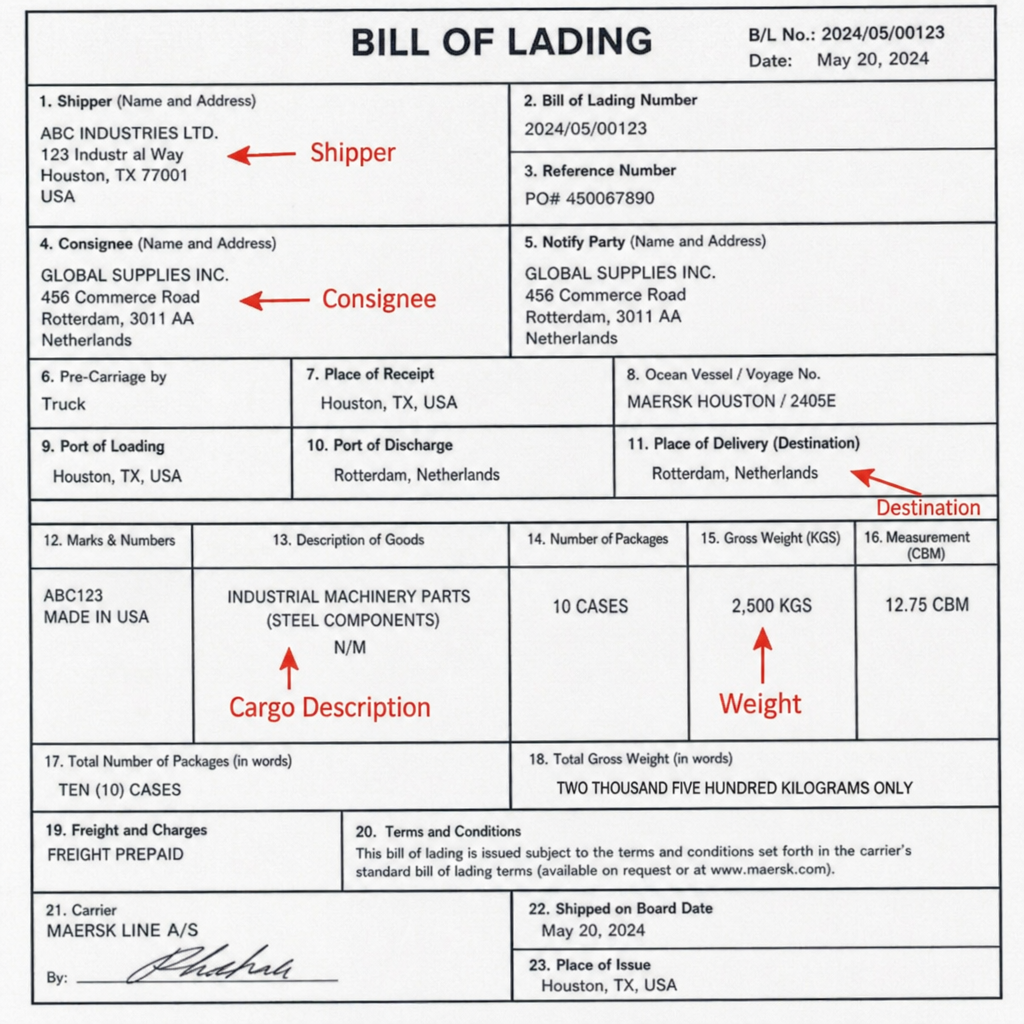
Typical information includes the shipper, consignee, cargo description, weight, packaging, and route. These details identify who is sending the goods, who is designated to receive them, and what the carrier is transporting. U.S. Customs and Border Protection also identifies hazardous-material information as relevant where applicable.
When reviewing a document, focus on these fields:
- Parties: Check the shipper’s and consignee’s names against the intended shipment.
- Cargo: Compare the description, package count, and weight with the shipment records.
- Movement: Review the stated route and destination.
- Document terms: Identify whether it is negotiable and confirm the applicable release requirements.
How does a bill of lading work?
A bill of lading links the carrier’s receipt of cargo to its transportation and eventual delivery. The carrier issues the document, and the receiving party follows the release requirements associated with that document. For some ocean shipments, presentation of an original bill is an important part of obtaining possession.
Consider a hypothetical furniture shipment. The seller hands packaged goods to a carrier, which issues a B/L describing the shipment. At destination, the buyer must meet the carrier’s applicable delivery requirements; a shipment reference alone should not be treated as proof of entitlement.
The practical lesson is to confirm the release process rather than assume every B/L works identically. Original-document presentation, an agreed release arrangement, and the type of transport document can affect what the recipient must provide. Ask the issuing carrier which process applies before relying on a copy.
Common types and practical uses
Two important ocean-shipping categories are straight bills of lading and negotiable order bills of lading. A straight bill is non-negotiable, while an order bill can support buying, selling, or trading goods during transit. “Negotiable” therefore concerns transferability, not whether someone can bargain over the freight charge.
Practical examples include:
- Delivery to a designated recipient: A straight bill identifies the consignee without providing the same negotiable mechanism as an order bill.
- A sale during transit: A negotiable order bill can support a transaction involving goods already moving between ports.
- Document-based financing: A bill of lading may be relevant where a transaction uses a documentary letter of credit. The required document should match the transaction’s conditions.
How does a B/L differ from an invoice or waybill?
A B/L concerns transportation, whereas a commercial invoice concerns the sale and amount payable. A sea waybill also provides evidence of carriage and receipt, but it is not a document of title. These documents may accompany the same shipment without being interchangeable.
|
Document |
Main distinction |
|---|---|
|
Bill of lading |
Acknowledges cargo receipt and evidences carriage terms; may function as a document of title. |
|
Commercial invoice |
Identifies goods sold and the amount the buyer must pay. |
|
Packing list |
Describes packages, quantities, weights, and other packing details. |
|
Sea waybill |
Supports carriage and receipt without functioning as a document of title. |
The invoice and packing-list distinctions above follow International Trade Administration guidance; the sea-waybill distinction follows carrier guidance.
Similar-looking searches with different meanings
Not every spaced-letter query concerns shipping. Keep these separate from the B/L meaning:
- “g o b b l e meaning”: Gobble means to eat quickly or make a turkey’s characteristic sound.
- “meaning of s u b t l e”: Subtle describes something not obvious or easily noticed.
- “b u i l t meaning”: Built is the past tense and past participle of build.
- “b l d meaning”: Context matters. One U.S. Department of Veterans Affairs architectural abbreviation sheet uses BLD for “build.”
For shipping paperwork, remember the central distinction: B/L identifies the Bill of Lading, but its type and terms determine how it functions.
Frequently Asked Questions Related to the Bill of Lading (B/L)
What is a Bill of Lading (B/L)?
A Bill of Lading is a transport document issued by a carrier that acknowledges the receipt of goods and details the terms of their transportation.
What are the main functions of a Bill of Lading?
The main functions include serving as a receipt for goods, providing evidence of the carriage contract, and acting as a document of title for the goods.
What information is typically found on a Bill of Lading?
Common information includes the names of the shipper and consignee, cargo description, weight, packaging details, and the route of transportation.
How does a Bill of Lading work?
A Bill of Lading links the receipt of the cargo to its transportation, and the delivery party must meet specific requirements to claim possession of the goods.
How does a Bill of Lading differ from other shipping documents?
Unlike a commercial invoice, which outlines the sale details, a Bill of Lading pertains to the transportation of goods and may also serve as a document of title, whereas a sea waybill is not a document of title.