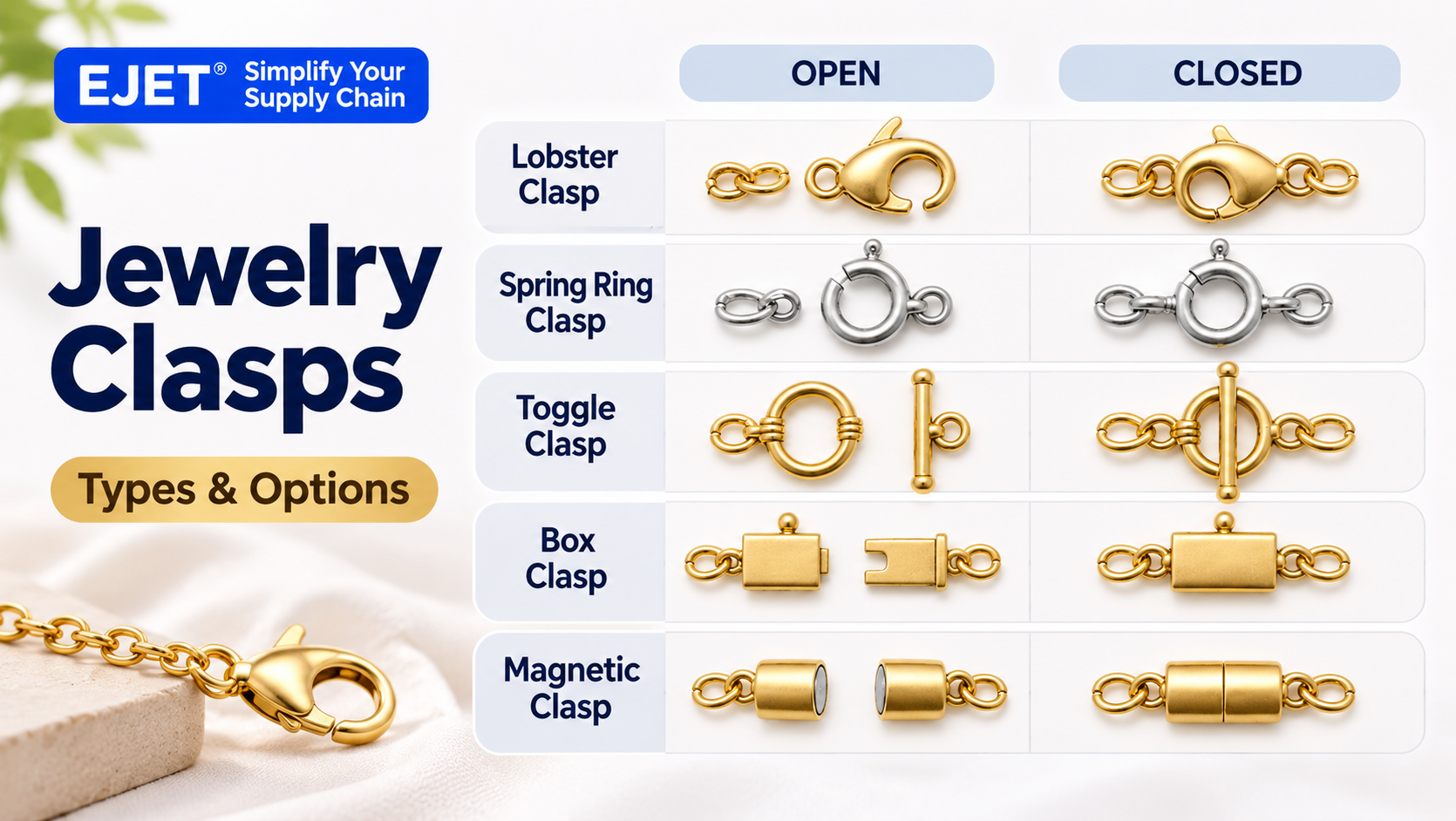
Bracelet clasps are the fasteners that join a bracelet’s ends, and their design affects both security and how easily you can put the piece on. Common options include lobster claws, spring rings, toggles, box clasps, and magnetic closures.
This guide explains how to recognize the main bracelet clasp types, operate them, and compare their practical trade-offs.
Which bracelet clasp types should you choose?
Choose a bracelet clasp by matching its mechanism to the bracelet’s construction and your ability to operate it comfortably. Start by trying the closure yourself rather than judging it only by appearance. A fastening that looks discreet may be awkward to handle, while a decorative clasp may need more attention to fit.
Use these priorities to narrow your options:
- Everyday handling: Try the release tab and fastening motion with one hand.
- Bracelet weight: Ask whether the clasp suits the complete piece, not just its style.
- Added protection: Check whether a safety catch supplements the main closure.
- Fit: Make sure the bracelet’s movement does not encourage the fastening to disengage.
1. Lobster Claw Clasps
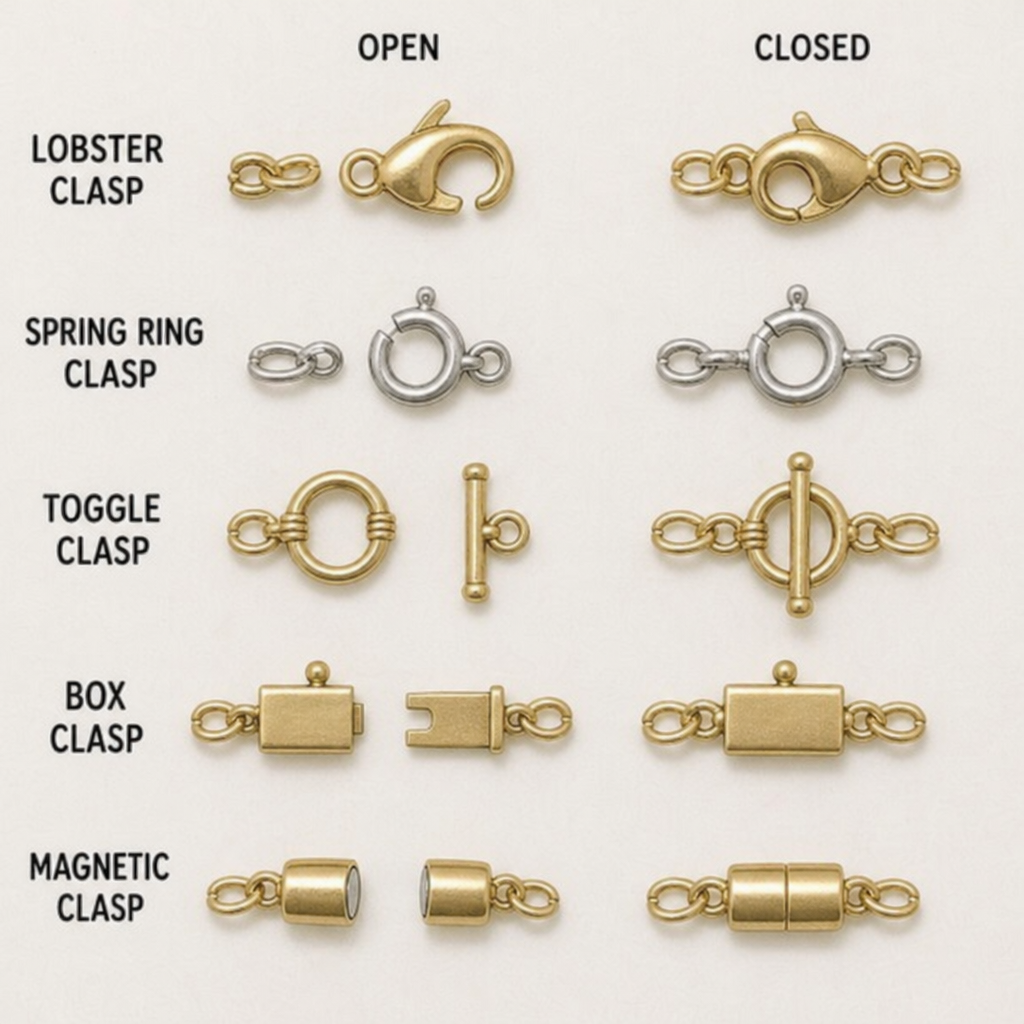
A lobster claw clasp has a curved body and a small lever that retracts its spring-loaded gate. Pull the lever, pass the bracelet’s connecting ring through the opening, then release it. The gate closes to capture the ring.
This is a practical starting point when comparing bracelet fasteners for chain designs. However, pay attention to the actual clasp size: you need enough room to hold the body, move the lever, and guide the opposite end into place.
Try that sequence on your wrist before deciding that the mechanism feels convenient. Check that the gate returns fully rather than remaining partly open.
2. Spring Ring Clasps
A spring ring clasp looks like a small circle with a projecting tab. Moving the tab retracts a curved section into the hollow ring, creating an opening for the bracelet’s connecting ring. Releasing the tab lets the internal spring close the gap.
The compact shape makes this closure worth considering when you want a visually unobtrusive fastening. Its handling deserves a careful trial, though: position your fingers as you would while wearing the bracelet, rather than testing it loose on a counter.
Confirm that you can keep the opening exposed while guiding the other end through. Do not assume that a neat appearance means easy one-handed use.
3. Toggle Clasps
A toggle uses a bar and a larger ring. To fasten it, pass the bar lengthwise through the ring, then let it turn across the opening. There is no tiny spring lever to hold back, which can make this style easier to manipulate with one hand.
Fit is especially important. If a bracelet is too loose, a short bar can work its way back through the ring; choosing a longer bar does not eliminate that possibility. Check that the bar passes through comfortably during fastening but remains properly positioned during wear. On beaded designs, bulky beads near the bar can also interfere with closing it.
4. Box Clasps
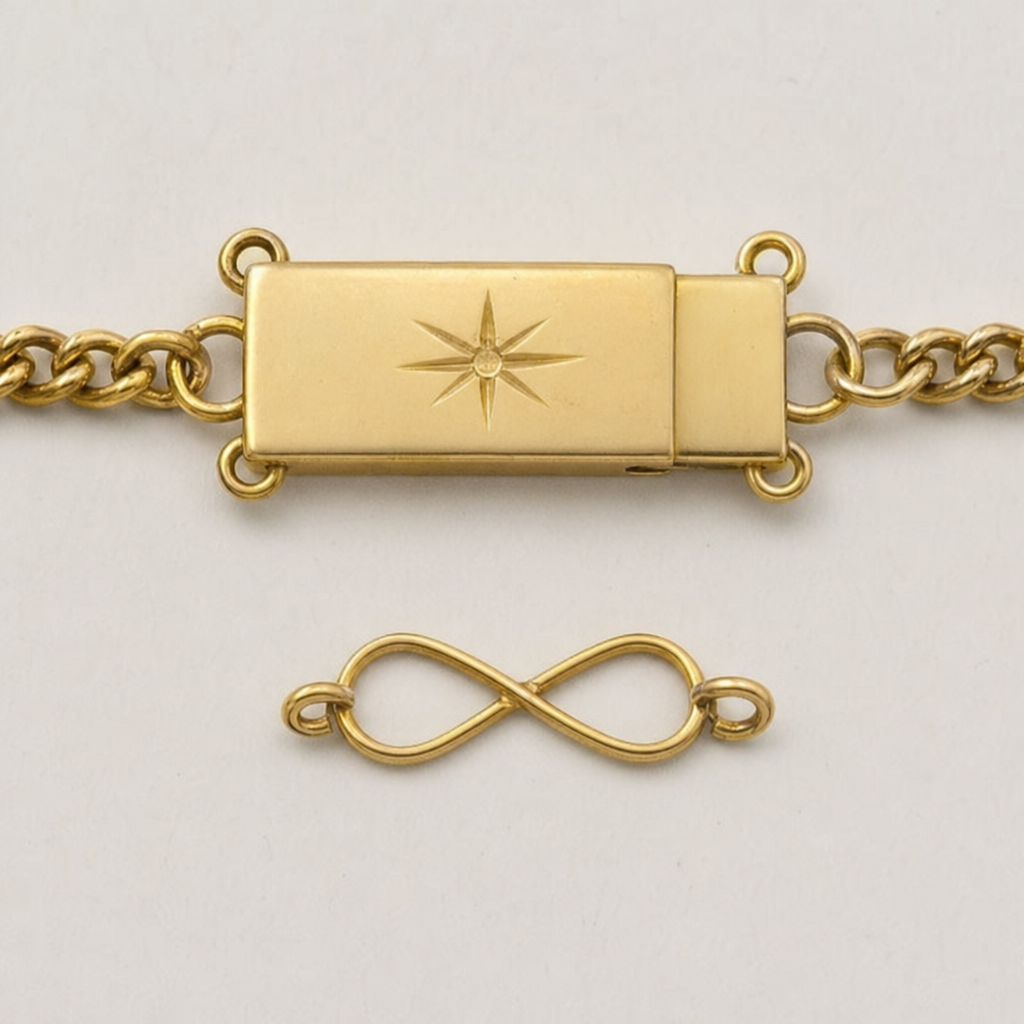
A box clasp joins a projecting tongue to a receiving housing. The tongue slides into the box and engages inside; a release tab allows it to come back out. Some designs also have a separate safety latch that closes after the main fastening.
When comparing tennis bracelet clasp types, a box clasp with a secondary catch is an important design to recognize. Ask to see the main mechanism and safety catch operated separately so you understand the closing sequence. Fasten the primary clasp first, then engage the additional catch. Avoid treating the extra latch as a substitute for a main closure that no longer holds properly.
5. Magnetic Clasps
Magnetic clasps bring two ends together through magnetic attraction. They remove the need to keep a small lever retracted while finding a connecting ring, making them worth trying if conventional closures feel fiddly. Their holding ability depends on the particular construction and magnets used.
Read the opening instructions for the specific clasp. Some should separate with a sliding or tilting action rather than a hard pull; pulling on the bracelet itself can strain its construction. Before choosing one, ask how it releases and whether it includes any mechanical locking feature. Judge the complete closure, not simply the reassuring snap as the magnets meet.
6. Barrel Screw Clasps
A traditional barrel screw clasp has two threaded sections that twist together. Align the ends and rotate them until the connection is properly seated. The paired halves form a relatively continuous shape when closed, rather than leaving a separate hook or ring visible.
Try the twisting motion on your wrist before choosing this mechanism. Ask the seller to demonstrate correct alignment and let you repeat it, especially if you normally fasten bracelets without help. Also check what the word “barrel” describes: a cylindrical shape does not necessarily identify a screw closure. Pandora’s barrel clasp, for example, uses a different closing method.
7. Fold-Over Clasps
A fold-over clasp uses a hinged section that closes over its receiving part. Lift the flap or lever to open it; position the components correctly and press the hinged section down to fasten it. This creates a flatter closure than a projecting hook-style fastening.
Focus on the hinge and the point where the flap engages. Ask for a demonstration if the opening edge is difficult to identify, and avoid twisting the bracelet to force it apart. During a trial, check whether the closed clasp feels comfortable against your wrist. If it feels loose or refuses to close normally, have it inspected rather than trying to reshape it yourself.
8. Hook-and-Eye and S-Hook Clasps
A hook-and-eye clasp connects a shaped hook to a ring or loop. An S-hook uses a curved, S-shaped component to link the ends. These closures make the fastening itself part of the bracelet’s appearance, with fewer moving components than a spring-operated mechanism.
Look closely at how the hook enters and leaves its receiving loop. There should be enough resistance to discourage an unintended release without making normal fastening difficult. Ask whether the design has an additional catch: some hook clasps do, while a plain open hook relies on its shape and fit. Consider your usual wrist movements when deciding whether that arrangement suits you.
9. Fishhook Clasps
A fishhook clasp generally conceals a hooked component inside a decorative housing. It is different from an exposed hook-and-eye closure: opening it can require releasing the housing first, then maneuvering the hook out of an internal safety section. This style is associated with pearl bracelets.
Follow the demonstrated sequence rather than pulling the ends apart when the first release does not fully open the bracelet. To close it, guide the hook through the safety section before seating it inside the housing. If you are examining an unfamiliar or vintage piece, ask a jeweler to show you its mechanism. A concealed fastening is easier to understand once you have seen it open.
10. Slide-Lock or Tube Clasps
A slide-lock clasp has two tube-like parts that slide into one another. Depending on the design, friction or an additional magnetic feature holds them together. Multiple attachment loops along the sides allow separate strands of beads or pearls to connect to the same fastening.
This makes a tube clasp a useful option to recognize on multi-strand bracelets. Check the number and spacing of attachment loops when choosing a replacement, rather than selecting only by the clasp’s overall length. Ask how the particular model releases, since “slide clasp” covers more than one design. It should not be confused with a sliding bead that adjusts bracelet size.
11. Sliding or Bolo Closures
A sliding closure adjusts the bracelet’s fit by moving along its ends instead of simply disconnecting them. On a bolo-style bracelet, the slider lets you enlarge the opening to put it on and then reduce it around your wrist. Its ability to maintain the chosen position matters during wear.
When trying one, adjust it yourself and check that you understand which part should move. A slider that no longer maintains its position needs attention, rather than repeated tightening throughout the day. Also distinguish size adjustment from charm loading. On Pandora’s Snake Chain Slider Bracelet, for example, the sliding clasp adjusts the fit while movable end caps provide access for adding charms.
12. Pandora Barrel and Decorative Clasps
When researching Pandora bracelet clasp types, distinguish the clasp’s outward shape from its opening mechanism. Pandora bracelets include barrel and heart-shaped clasp designs, as well as sliding closures. Those descriptions should not be treated as interchangeable instructions for opening every bracelet.
For the barrel clasp described in Pandora’s size guide, place the bracelet tip correctly inside the clasp before closing the lock securely. If it does not close, reposition the tip rather than forcing it. Ask for instructions for your exact model, especially when purchasing secondhand. A familiar-looking clasp is not a reason to twist, pry, or press it without checking the intended method.
Safety Catches Add Protection, Not a New Main Closure
A figure-eight safety catch supplements the primary fastening rather than replacing it. A safety chain serves a related protective role on compatible charm bracelets, helping prevent charms from falling off and becoming lost. Identify these parts separately when comparing bracelet closure types so you know what actually holds the ends together.
Before wearing a bracelet with secondary protection:
- Close and check the main fastening first.
- Engage every supplied safety catch in the demonstrated order.
- Confirm that a safety chain is compatible with the bracelet.
- Seek advice if either the main closure or added catch feels loose.
How can you compare clasps before buying?
Compare clasps by operating the actual bracelet on your wrist, checking the fastening sequence, and asking about any secondary catch. Do not rely on a clasp’s name alone. Even a familiar mechanism needs to suit the bracelet’s weight, fit, and your everyday handling preferences.
For anyone comparing men’s bracelet clasp types, use the same practical test rather than choosing by a gender label. Ask the seller to demonstrate opening and closing, then repeat both motions without assistance. Pay attention to whether your fingers obscure the opening or make the release difficult to reach.
Finally, inspect the closure before wearing it. If a hinge feels loose, a gate remains open, or the parts no longer meet correctly, stop forcing the mechanism and ask a jeweler to assess it. The most useful choice among different types of clasps is one you understand, can operate comfortably, and can recognize when it needs attention.
Frequently Asked Questions About Bracelet Clasps
What are the different types of bracelet clasps available?
There are several common types of bracelet clasps, including lobster claw clasps, spring ring clasps, toggle clasps, box clasps, magnetic clasps, barrel screw clasps, fold-over clasps, hook-and-eye clasps, and slide-lock clasps.
How do I choose the right clasp for my bracelet?
Choose a clasp based on the bracelet's construction, weight, and your ability to operate it comfortably. It's important to try the clasp mechanism yourself to ensure it suits your needs.
Are magnetic clasps secure enough for everyday wear?
Magnetic clasps can be secure, but their holding ability depends on the clasp's construction and the magnets used. It's advisable to choose a magnetic clasp that includes a mechanical locking feature for added security.
What is a safety catch, and do I need one?
A safety catch is an additional mechanism that provides extra security to a bracelet clasp. While it's not a substitute for the main closure, it helps prevent accidental openings and loss of the bracelet.
Can I replace a clasp on my existing bracelet?
Yes, most clasps can be replaced. If you want a different clasp style or need to repair a broken one, consult with a jeweler who can help choose a compatible replacement based on the bracelet's design and function.