LEGO, Mattel, Hasbro, Bandai, and other established toy companies offer a useful starting point for understanding the global toy business heading into 2027.
This selection explores 11 businesses, their distinctive toy brands, and the practical differences between their portfolios. It is a forward-looking editorial shortlist based on information available on November 5, 2026—not a verified ranking of future sales or market share.
For parents, retailers, and product developers, the useful question goes beyond company size: which toy makers create the kind of play experience you actually need?
How were these toy companies selected?
These 11 companies were selected for their established toy portfolios, international presence, and coverage of different play categories. The numbering helps readers navigate; it does not represent a revenue ranking. Official company and brand information supports the profiles, while the buying suggestions are editorial guidance.
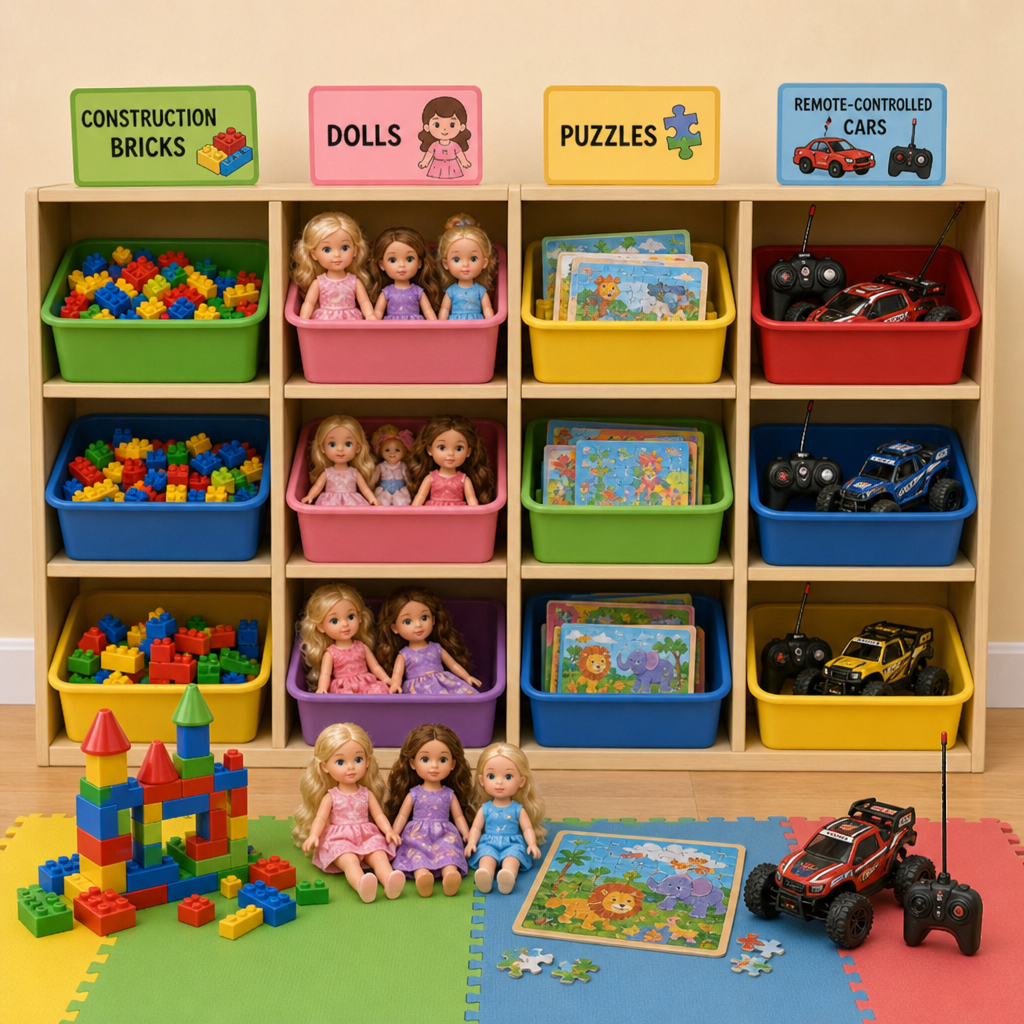
The selection spans construction toys, dolls, games, electronic learning, character merchandise, puzzles, and radio-controlled vehicles. Together, the companies illustrate different approaches to toy design rather than a single definition of “best.” Their official portfolios provide the basis for those category distinctions.
Keep one distinction in mind: a consumer-facing toy company is not automatically a contract manufacturer. Anyone seeking private-label production should separately establish whether a business accepts outside projects, supports custom tooling, and supplies products for the intended market.
Which toy makers belong on a 2027 watchlist?
The following companies deserve consideration across several distinct categories, from building systems and fashion dolls to learning products and collectible models. Treat the profiles as a way to narrow your research, not as a promise about 2027 performance. A company's broad reputation should still be tested against the particular product, audience, and purchase you have in mind.
1. The LEGO Group
The LEGO Group is a privately held, family-owned company based in Billund, Denmark. Its central proposition is a reusable building system: the company describes LEGO play as an opportunity to create something new repeatedly, with compatibility connecting its bricks across generations. That makes construction and reinvention central to its identity.
For a shopper, the useful comparison is not simply set size. Consider whether the recipient prefers following instructions, inventing structures, or rebuilding familiar models. For someone studying toy design, LEGO offers a clear example of designing around a repeatable play mechanism rather than a single finished object. Ask what the child can do after the first build is complete.
2. Mattel
Mattel's portfolio includes Barbie, Hot Wheels, Fisher-Price, American Girl, UNO, Matchbox, Monster High, and other owned or licensed properties. Its business extends beyond physical toys into content, consumer products, digital experiences, and live experiences. The breadth makes Mattel relevant to several different shopping missions rather than just one toy category.
Compare its brands individually. A preschool purchase, a vehicle collection, and a family card game need different evaluation criteria, even when the same parent company stands behind them. Retailers can use this portfolio as a starting point for category planning, then examine individual assortments, intended ages, packaging, and local availability before deciding what belongs on the shelf.
3. Hasbro
Hasbro combines toys, games, and entertainment properties. Its official portfolio includes MONOPOLY, NERF, TRANSFORMERS, PLAY-DOH, MAGIC: THE GATHERING, and DUNGEONS & DRAGONS, alongside partner brands. Physical and digital play both form part of its business, so a company-level comparison should distinguish toys from tabletop games and other entertainment products.
Start with the desired activity: creative making, active play, character-based collecting, or shared gameplay. Then examine the specific product rather than assuming every item under a familiar franchise offers the same experience. For games especially, check player count, reading requirements, setup, and expected adult involvement. Those details are more useful to a household than brand recognition alone.
4. Bandai and BANDAI SPIRITS
Bandai and BANDAI SPIRITS operate within the Bandai Namco Group's Toys and Hobby Unit. Their activities include toys, capsule toys, card games, plastic models, figures, and character-related products. BANDAI SPIRITS specifically addresses a more mature fan base through categories including model kits, figures, and robots.
This is an important distinction for buyers comparing children's toys with hobby merchandise. Decide whether the intended experience is assembly, everyday play, collecting, or display before choosing a product. Examine age guidance, required tools, and the contents of the package. For retailers, separating introductory products from specialist hobby items can also make the assortment easier for customers to understand.
5. Spin Master
Spin Master operates across toys, entertainment, and digital games. Its portfolio includes PAW Patrol, Melissa & Doug, Bakugan, and Rubik's, while its corporate materials also identify Kinetic Sand, Air Hogs, Hatchimals, and GUND among its toy and game brands. This brings several different play formats into one corporate portfolio.
Use that range to compare activities, not just characters. A shopper might prioritize a tactile activity, a puzzle challenge, pretend play, or an interactive toy. For assortment planning, ask whether a proposed addition fills a genuine gap or duplicates an experience already available. Also review the individual product's storage needs, accessories, and instructions before making a choice.
6. MGA Entertainment
MGA Entertainment's brands include L.O.L. Surprise!, Bratz, Rainbow High, Little Tikes, and MGA's Miniverse. Its company history describes both fashion-doll development and expansion into preschool and outdoor toys through Little Tikes. The portfolio therefore reaches beyond dolls into other forms of play and collecting.
When comparing products, look past the initial reveal or packaging presentation. Ask what remains to play with, how accessories are organized, and whether the recipient enjoys collecting, storytelling, making, or physical activity. Retailers should likewise assess each line on its own requirements. A collectible assortment and a larger preschool toy may need very different shelf space, explanations, and customer support.
7. VTech
VTech focuses on electronic learning products for infants, toddlers, and preschoolers, with VTech and LeapFrog represented in its learning-toy business. Its official materials describe product development informed by in-house learning experts. That makes it a relevant company to examine when comparing electronic play with a stated educational purpose.
For a practical purchase, identify the actual activity before evaluating the electronics. Does the product invite the child to sort, listen, respond, move, or solve a problem? Then check language options, volume controls, battery requirements, and adult setup. Treat educational positioning as a reason to investigate the product—not as a substitute for checking whether its activities suit the intended child.
8. TOMY
TOMY's official investor overview identifies TOMICA, PLARAIL, LICCA, and DUEL MASTERS among its principal Japanese product brands. These span miniature vehicles, railway toys, dress-up dolls, and trading card games. The portfolio offers a useful perspective on toy businesses built around several established play categories.
For buyers considering products across markets, verify the exact regional assortment instead of assuming that every brand is available everywhere. Look at packaging language, instructions, accessories, and compatibility with items already owned. A train or vehicle purchase is easier to evaluate when you know whether it is intended as a standalone toy, part of a larger system, or a collectible piece.
9. Horst Brandstätter Group / PLAYMOBIL
PLAYMOBIL is the toy brand within the Horst Brandstätter Group. Its system centers on figures, animals, and accessories arranged in historical and contemporary themed worlds. The group's official description emphasizes imaginative role play rather than presenting the products primarily as construction challenges.
That distinction gives shoppers a useful decision point: does the recipient want to build the setting, act out stories within it, or do both? Compare the figures, scenery, and accessories included in each package. If you plan to expand a collection, choose additions that create new storytelling possibilities rather than simply repeating the same characters or equipment in a different box.
10. Ravensburger Group
The Ravensburger Group brings together Ravensburger, BRIO, and ThinkFun. Ravensburger covers games, puzzles, and creative activities; BRIO is associated with railway and construction toys; ThinkFun focuses on brain and logic games. These brands give the group several approaches to hands-on play and shared activities.
Choose according to the challenge the recipient enjoys. For puzzles, investigate piece count and image complexity. For games, look at the rules, player interaction, and whether independent or group play is intended. For railway purchases, verify the specific components and connections you need. A recognizable brand can narrow the search, but it cannot determine the right difficulty or format for every household.
11. Simba Dickie Group
Simba Dickie Group brings together a broad family of toy brands. One particularly relevant business is Jada Toys, which produces licensed die-cast collectibles, figures, radio-control vehicles, and other toys. Jada became part of the group in 2019, according to the group's official company profile.
For readers researching RC toy manufacturers, this is a useful place to investigate vehicle-based products. Compare the exact controller, charging arrangements, intended surface, and included equipment rather than choosing by appearance alone.
If your goal is commercial sourcing, establish who handles wholesale inquiries and whether custom production is offered; a branded radio-control range does not itself establish private-label manufacturing capability.
Toy trends to evaluate for 2027
Rather than treating future toy trends as settled facts, use this shortlist to frame your research. The portfolios above suggest several areas worth comparing, although they do not prove how demand will develop in 2027:
- Construction and repeat play: Examine how many different activities a product supports after its initial setup, using LEGO's building system as one reference point.
- Collectors and mature fans: Separate display, assembly, and collecting experiences from products intended for younger children, as illustrated by BANDAI SPIRITS' stated audience.
- Learning through different formats: Compare electronic activities with puzzles, logic games, and hands-on systems instead of treating “educational” as one uniform category. VTech and Ravensburger illustrate contrasting approaches.
- Physical and entertainment connections: Investigate whether a character or digital connection contributes to the play experience you want. Mattel, Hasbro, and Spin Master all operate beyond physical toys.
How should you choose between these companies?
Choose by product fit, not by a company's position in a list. First define the intended user and activity; then compare the specific products that meet those needs. For business buyers, add a separate assessment of the proposed supplier relationship before committing to an order.
Use this checklist to make the comparison concrete:
- Define the purpose. Specify a play activity, customer category, or sourcing requirement rather than starting with a famous logo.
- Inspect the complete purchase. Check included accessories, required extras, instructions, storage, and ongoing consumables.
- Test regional fit. Confirm local availability, language, seller identity, and after-sales arrangements.
- Clarify the business relationship. Distinguish buying finished branded goods from licensing a property or commissioning custom manufacturing.
- Request evidence for claims. Ask for product-specific support rather than relying on broad statements about quality, learning, or sustainability.
The takeaway for 2027 is straightforward: use prominent toy companies to organize your search, then make the final decision at product level. The strongest choice is the one whose play experience, practical requirements, and purchasing terms match your actual needs.
Frequently Asked Questions About Toy Companies
What are the key factors to consider when choosing a toy company for sourcing products?
When selecting a toy company, consider factors such as the product category, age appropriateness, safety standards, brand reputation, and the company's history in toy design. Additionally, assess their compatibility with your target audience and the uniqueness of their product offerings.
How do these top toy companies prioritize sustainability in their operations?
Many leading toy companies implement sustainable practices by using eco-friendly materials, reducing packaging waste, and promoting recycling initiatives. Check their corporate responsibility reports for specific programs and commitments toward environmental sustainability.
What trends are expected to shape the toy industry in 2027?
Trends for 2027 include a focus on educational toys that promote learning through play, the integration of digital and physical play experiences, growing interest in collectibles and hobby-based toys, and an emphasis on sustainable and safe manufacturing practices.
How can I find toys that are suitable for specific age groups?
Look for toys that indicate age recommendations on their packaging. Additionally, consider the developmental benefits of each toy, such as motor skills enhancement, problem-solving skills, or imaginative play. Product descriptions on retail websites often provide valuable information regarding age appropriateness.
Are these toy companies involved in producing educational toys?
Yes, many of these top toy companies, including VTech and Hasbro, offer a range of educational toys designed to enhance learning in areas such as STEM (science, technology, engineering, and math), language skills, and social interaction. Check their official websites or product catalogs for specific educational offerings.