







Shenzhen’s wholesale scene offers specialized destinations for electronics, fashion, jewelry, stationery, and fresh food.
Five useful starting points are Huaqiangbei, Nanyou, Shuibei, Sungang, and Haijixing, each serving a different buying need.
This guide explains what to source at each locati0n and how to approach suppliers without making price your only consideration.
Which Shenzhen wholesale market should you visit?
Choose Huaqiangbei for electronics, Nanyou for fashion, Shuibei for jewelry, Sungang for stationery and seasonal goods, and Haijixing for agricultural products.
Treat these as a category-based shortlist rather than an official ranking: the best destination depends on what you sell and how you intend to buy it. Several names describe trading districts rather than a single market building.
Before planning your Shenzhen shopping trip, write down your product specifications, preferred order size, target purchase cost, and delivery deadline. Bring reference photographs where appropriate, but pair them with written requirements. A photograph of a cable, dress, or necklace cannot communicate every detail that matters to your business.
Use the five destinations below to narrow your itinerary. Aim to compare relevant suppliers thoroughly instead of collecting quotations from unrelated categories across the city.
1. Huaqiangbei: Electronics and Components
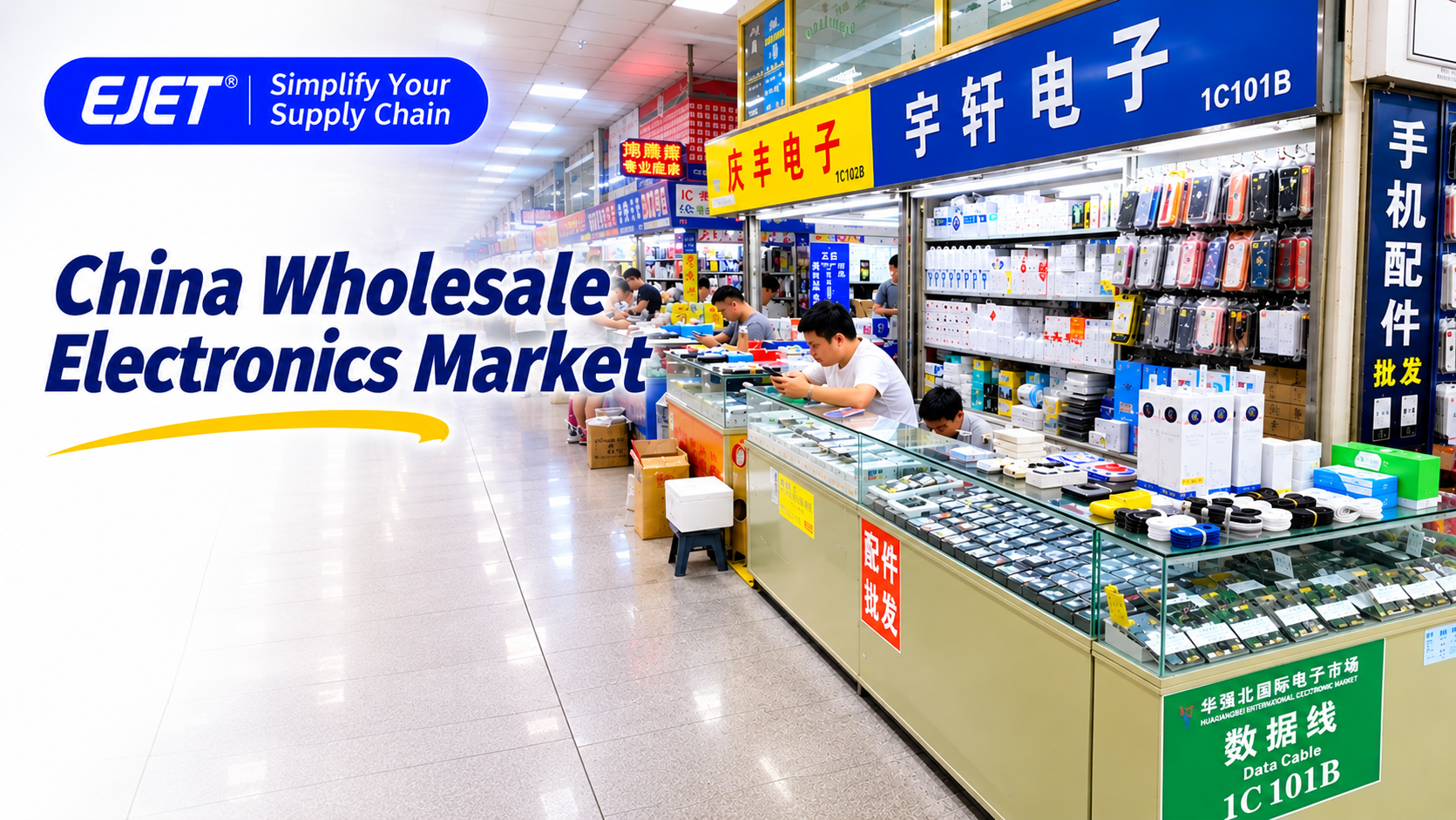
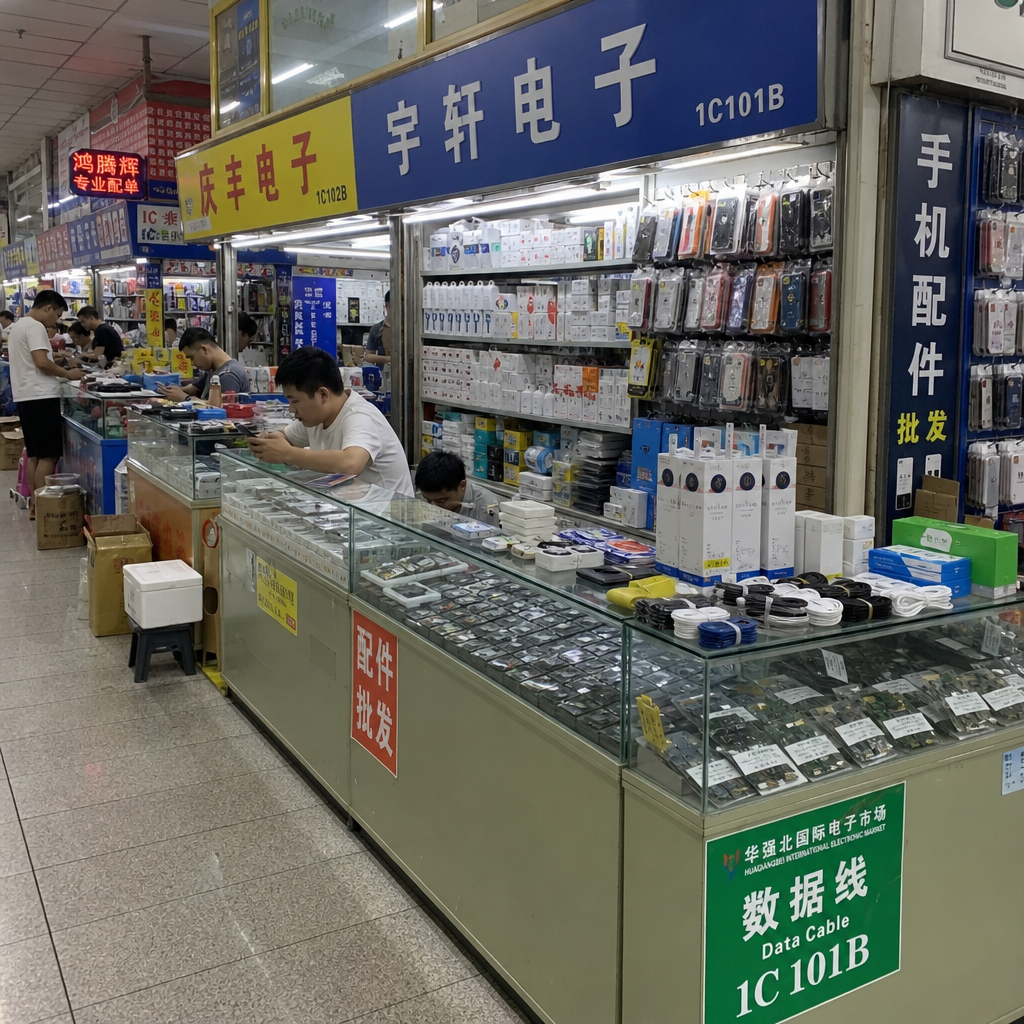
Huaqiangbei, in Futian District, is an electronics trading area containing multiple specialist markets. SEG Electronics World focuses on electronic components and computers, while SEG Communications
Market offers mobile accessories such as chargers, power banks, and speakers. Longsheng Accessories City is another destination for cables and related accessories.
Choose the building that matches your product rather than treating the whole neighborhood as interchangeable.
For a focused visit, prepare a specification sheet before approaching sellers. If you need charging cables, for example, list connector types, length, required performance, packaging, and branding expectations. Ask each supplier to quote against that same sheet so you can compare equivalent wholesale products.
Useful checks before ordering:
- Product identity: Record the exact model, part number, or agreed specification, not just a photograph.
- Condition: Request written confirmation of whether goods are new, used, refurbished, or otherwise graded.
- Sample performance: Test the functions that matter to your customers rather than relying on a display demonstration.
- Order consistency: Ask how the supplier will ensure the production shipment matches your approved sample.
- After-sales terms: Agree on the process for shortages, defective units, and replacement shipments before payment.
Keep a labeled sample and a copy of the quotation together. For a first order, consider a manageable trial quantity rather than committing your entire inventory budget immediately. Use the trial to evaluate both the merchandise and the supplier’s communication.
2. Nanyou: Fashion and Original-Design Womenswear
Nanyou, in Nanshan District, is a fashion wholesale district associated with original-design womenswear, buyer showrooms, and apparel sourcing. Its wider Lixiu fashion area has developed beyond manufacturing into a center for original design. That makes it a relevant starting point for boutique buyers seeking a defined style rather than simply the lowest garment price.
Start with a customer profile: preferred silhouettes, expected fabric quality, size range, season, and intended retail positioning. Then build a small, coherent selection instead of buying isolated pieces because each looks attractive on a hanger. Your buying decisions should support an assortment customers can understand.
Examine garments inside and out. Check seams, lining, fastenings, fabric composition labels, and measurements, and ask permission before photographing designs. Request an explanation of any differences between the sample shown and the stock you would receive.
Before agreeing to bulk buying, clarify these points:
- Whether minimum quantities apply per design, color, size, or total order.
- Whether the quoted price permits mixed sizes or colors.
- Whether goods are available now or require production.
- Whether repeat orders will use the same fabric and measurements.
- How incorrect sizes, shortages, or manufacturing defects will be handled.
For example, a boutique testing a new collection might prioritize a smaller, balanced size run over a lower unit price tied to excessive stock. Ask for both options, then judge the purchase against your actual sales plan.
3. Shuibei: Jewelry and Precious-Metal Sourcing
Shuibei, in Luohu District, is a major gold and jewelry trading cluster with multiple specialist markets. It brings together jewelry businesses and wholesale and retail activity rather than functioning as one uniform shopping center.
Consider it when jewelry is your primary sourcing category, but investigate individual suppliers rather than treating the district’s reputation as proof of a particular item’s quality.
Begin by defining exactly what you want to purchase. Separate questions about material, metal purity, weight, stones, workmanship, and design rights. Request an itemized quotation so you can understand what the seller has included instead of comparing only the final figure.
For higher-value purchases, ask what supporting documentation is available and arrange independent verification where appropriate. Match the paperwork to the actual item or batch, and request a detailed invoice. Do not treat a verbal assurance or an unfamiliar certificate as sufficient evidence by itself.
A practical supplier discussion should cover:
- The declared metal composition, purity, and item weight.
- Any stones, treatments, or other material descriptions relevant to the purchase.
- How workmanship, customization, and packaging are priced.
- The documents accompanying the shipment.
- The procedure for resolving a mismatch between the order and delivered goods.
Avoid rushed decisions because a design appears popular or a quotation seems attractive. If you cannot confidently assess the merchandise, bring a qualified independent specialist into the buying process. Keep the first transaction proportionate to what you have verified.
4. Sungang: Stationery, Toys, Gifts, and Seasonal Supplies
Sungang is a useful sourcing area for stationery, toys, gifts, and festive decorations. Recent local coverage identifies Sungang Stationery, Toy & Gift City as a destination for seasonal shopping. However, older guides may point to the former Sungang Warehouse market, whose closure was announced for April 1, 2021; confirm the current building and supplier locati0n before traveling.
Approach this stop with a replenishment list or event brief. For stationery, specify pack quantities, colors, dimensions, and any printing requirements. For decorations, bring a theme, installation plan, and delivery deadline so the conversation moves beyond whatever is displayed at the counter.
Ask sellers to distinguish the unit price from the pack or carton price. Request photographs of both the item and its packaging, and confirm how many saleable units you will receive. This keeps a seemingly inexpensive quotation from becoming an order with the wrong quantity or presentation.
For seasonal wholesale goods, work backward from the date customers need them. Leave room in your schedule for sample approval, inspection, and delivery rather than planning only around the seller’s dispatch promise. Consider a smaller initial assortment when testing an unfamiliar seasonal category.
If buying toys or other children’s products, make compliance review a separate purchasing step. Ask a qualified testing or compliance provider what evidence your intended market requires before approving the order. Do not substitute a seller’s general reassurance for a product-specific assessment.
5. Haijixing: Agricultural Products and Food Wholesale
Haijixing is the food-focused choice on this list, serving buyers looking for fresh fruit, vegetables, meat, and frozen goods. Local reporting identifies it as a major agricultural wholesale destination, while other coverage places the logistics park in Pinghu, Longgang District. It is more relevant to food procurement than to a general merchandise shopping itinerary.
For a productive visit, define your requirements by grade, origin, maturity, pack size, and delivery condition. Ask to inspect representative goods from the stock being offered, not only a display carton. Record which specification the quotation covers so a later price comparison remains meaningful.
For perishable purchases, put handling and delivery arrangements alongside the product price. Confirm who organizes collection, what condition the goods should arrive in, and how discrepancies will be recorded. Ask how shortages, damaged packaging, or quality disagreements should be reported.
Before confirming a food order, request:
- The sale unit: carton, crate, bag, weight, or another clearly defined measure.
- The product grade and any agreed tolerance for variation.
- The quantity available for your intended collection date.
- Storage and transport arrangements appropriate to the goods.
- An invoice and any product documentation relevant to your purchase.
Start with quantities your operation can realistically handle. A lower purchase price is not a useful saving if the order exceeds your storage, distribution, or sales capacity. For buyers without a food business need, prioritize the other markets instead.
How do you compare wholesale prices fairly?
Compare quotations only after matching product specifications, quantities, packaging, delivery terms, and the process for resolving defects. Request an itemized written offer from every shortlisted supplier, then calculate the cost of receiving usable stock. Treat the lowest headline price as a starting point for questions, not an automatic winning bid.
Use the same comparison checklist for each seller:
- Product: Confirm material, model, dimensions, grade, and approved sample reference.
- Quantity: Record minimum order quantities and any restrictions on mixing variants.
- Packaging: Specify individual packs, labels, cartons, and any customization.
- Timing: Separate stock availability, production completion, and dispatch dates.
- Delivery: State the destination and ask which transport-related charges are included.
- Resolution: Agree on inspection, shortages, defects, and the evidence required for a claim.
For example, ask two garment suppliers to quote the same size mix and packaging rather than comparing one seller’s loose garments with another’s individually packed stock. Apply the same discipline to electronics specifications or food grades. The purpose is to expose differences before they become expensive misunderstandings.
Keep negotiations practical. Ask what changes at a larger quantity, with simpler packaging, or under a different delivery schedule. Do not accept an unwanted specification merely to secure a discount.
Plan a Focused Buying Trip
Choose one primary product category and shortlist relevant sellers before you leave. Confirm each supplier’s current locati0n and availability, and request the building name in Chinese for your navigation app. Avoid building your schedule around unverified opening hours from an old market guide.
Prepare a simple supplier record for every serious conversation. Include the business name, contact person, stall or showroom locati0n, quoted item, sample reference, order terms, and next action. Ask permission to photograph the product alongside its identifying label so you can reconnect it with the correct quotation later.
Separate browsing from purchasing. Use your first conversations to understand available options, then return to shortlisted suppliers with more precise questions. Before committing funds, review the written order, verify the counterparty, and resolve any unclear delivery or quality terms.
If you intend to ship internationally, arrange a separate review with an appropriate freight and customs professional. Request a written estimate based on the actual goods and destination before approving the purchase. Keep that estimate alongside your supplier quotations rather than treating shipping as an afterthought.
The Takeaway
Use this shortlist to find the right wholesale markets for your category, then evaluate suppliers on their own merits. Bring clear specifications, compare equivalent offers, and keep samples and written terms organized. The goal is not merely to buy cheaply—it is to leave Shenzhen with a sourcing decision you can explain, verify, and repeat.
Frequently Asked Questions About Wholesale Markets in Shenzhen
What should I bring when visiting wholesale markets in Shenzhen?
It’s essential to bring product specifications, reference photographs, a list of preferred order sizes, target purchase costs, and delivery deadlines to effectively communicate with suppliers.
How do I compare wholesale prices effectively?
To compare prices fairly, ensure that you match product specifications, quantities, packaging, delivery terms, and resolution processes. Request itemized quotations from suppliers for accurate comparisons.
Can I negotiate prices with suppliers in Shenzhen?
Yes, negotiation is common in wholesale markets. Be prepared to discuss terms, quantities, and packaging options to secure the best deal possible.
What are the primary product categories in Shenzhen’s wholesale markets?
Major categories include electronics (Huaqiangbei), fashion (Nanyou), jewelry (Shuibei), stationery and gifts (Sungang), and agricultural products and food (Haijixing).
Is it advisable to buy in bulk on my first visit?
It’s often recommended to start with a manageable trial quantity to evaluate both the merchandise and the supplier's communication before committing your entire inventory budget.