



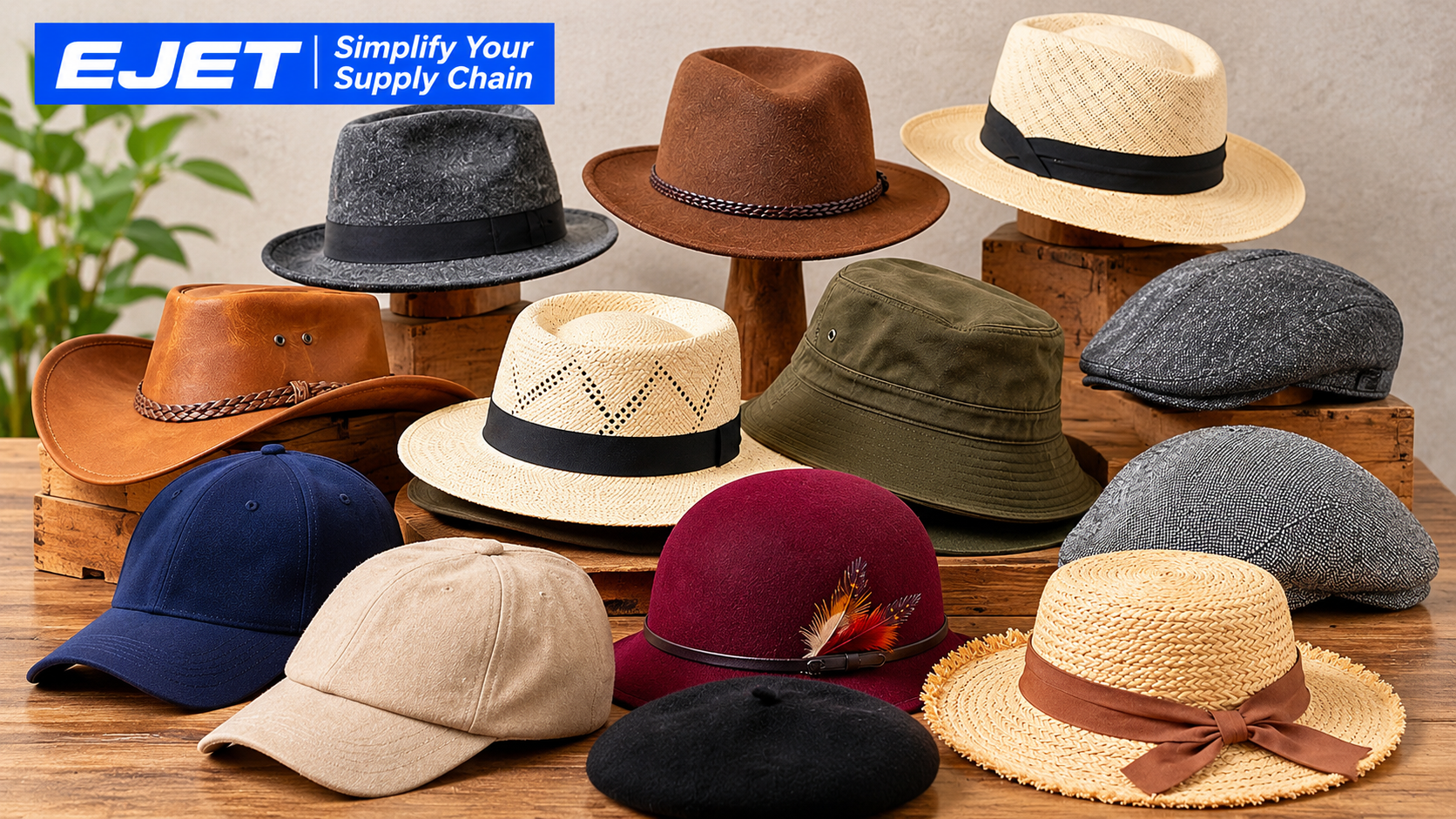
Choosing the right fabric for hats affects far more than appearance. Hat materials influence structure, breathability, weather resistance, comfort, durability, and which hat styles the finished piece can realistically support.
This guide explains 15 common hat fabrics so you can compare material choices for everyday caps, dress hats, outdoor headwear, cowboy hats, and fashion-forward designs.
What are the most common hat fabrics?
The most common hat fabrics include wool, cotton, linen, straw, felt, fur felt, leather, suede, denim, canvas, polyester, nylon, acrylic, tweed, velvet, silk, satin, and corduroy.
Each fabric for hats behaves differently: some hold a crisp shape, some pack easily, some breathe well in heat, and others protect better in cold or damp weather.
The best material to make hats depends on the hat construction, intended season, level of formality, and how much structure the design needs.
A simple way to think about hat textiles is to separate them by purpose. Structured hats usually need firm materials or stiffening. Soft casual hats can use flexible woven fabrics.
Performance hats often rely on synthetics. Western and dress hats commonly use felt, straw, or leather because those materials can support a defined crown and brim.
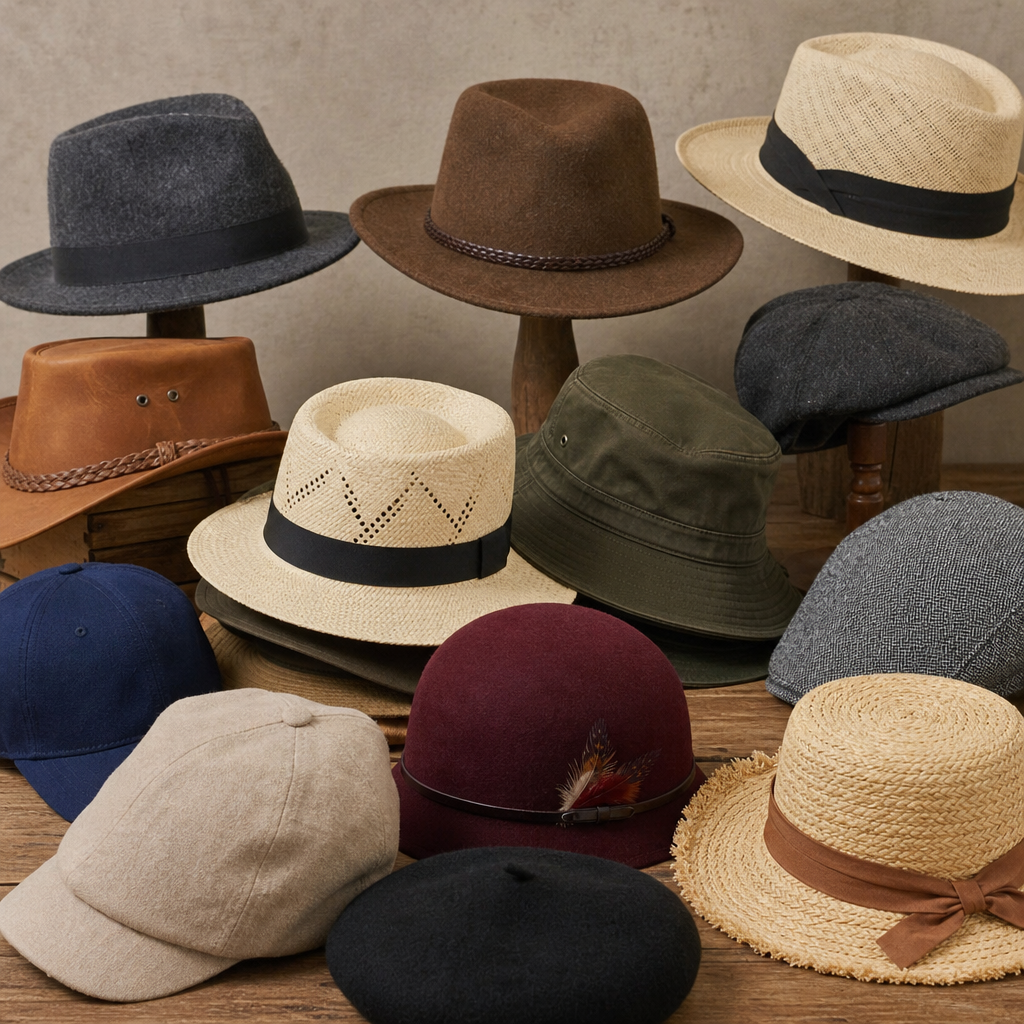
1. Wool
Wool is one of the most traditional hat fabrics because it is warm, resilient, and naturally suited to cool-weather headwear. It can be woven, knitted, or felted, which makes it useful for everything from a woolen cap to a structured fedora-style hat.
Wool fibers trap air, helping the wearer stay warm without making the hat feel excessively bulky.
In hat design, wool is valued for its ability to look refined while still feeling practical. A knitted woolen cap is soft and flexible, while wool felt can create a stronger crown and brim.
Wool can absorb some moisture, so it is comfortable in many conditions, but it should be dried carefully to help preserve shape and avoid shrinkage.
2. Cotton
Cotton is a comfortable, breathable, and familiar material for casual hats. It is often used for baseball caps, bucket hats, sun hats, and lightweight fashion hats. Because cotton is soft against the skin, it works well for everyday wear and warm-weather designs.
The tradeoff is that cotton does not always hold a sharp shape on its own. In structured caps, it is often combined with interfacing, foam, buckram, or reinforced panels. Cotton also absorbs moisture, which can make it comfortable at first but slower to dry than many synthetic hat materials.
3. Linen
Linen is a lightweight natural fabric made from flax, known for its airy feel and relaxed texture. It is a strong choice for summer hats, resort-style caps, and breathable brimmed designs. Linen has a crisp surface that can make even casual hats feel a little more elevated.
Because linen wrinkles easily, it is best for hat styles where a slightly relaxed look is acceptable. It is not usually the first choice for rigid hat construction unless supported by lining or stiffening. For hot climates, however, linen remains one of the most comfortable material choices because it allows airflow and feels cool against the skin.
4. Straw
Straw is a classic warm-weather hat material used in sun hats, boater hats, Panama-style hats, cowboy hats, garden hats, and beach hats. Straw material for hats is prized because it is lightweight, breathable, and capable of forming a brim that shades the face. Different weaves and straw types can create very different looks, from rustic and casual to finely finished and dressy.
Straw hats are not all equal in quality. A tight, even weave typically feels smoother and can look more polished, while a looser weave may allow more ventilation. Straw can become brittle if crushed, soaked, or stored poorly, so good hat care is important.
5. Wool Felt
Wool felt is made by matting wool fibers together rather than weaving them. This creates a dense, shapeable material that is widely used for fedoras, trilbies, cloches, and some cowboy hats. It is one of the most important hat fabrics for structured designs because it can be blocked into a crown and brim.
Wool felt is generally more affordable than fur felt and offers a substantial look for dress and western-inspired hats. It can feel warm, so it is especially suitable for fall and winter. When comparing hat quality, look for smoothness, even density, clean shaping, and a brim that returns to form instead of feeling limp.
6. Fur Felt
Fur felt is commonly made from animal fibers such as rabbit, hare, or beaver, depending on the hat and quality level. It is a premium material for dress hats and western hats because it can be dense, smooth, durable, and highly shapeable. Fur felt is often associated with higher-end hat construction because it can hold detail well and feel lighter or more refined than some wool felts.
For cowboy hats material, fur felt is one of the most recognized options. It is often chosen for formal western hats, cooler weather, and long-term wear. The exact performance depends on the fiber blend and finishing, so it is better to judge the hat as a whole rather than assume every fur felt hat is identical.
What material are cowboy hats made of?
Cowboy hats are commonly made of fur felt, wool felt, straw, palm leaf, and sometimes leather.
The best material for cowboy hats depends on season, use, budget, and style: felt is common for cooler weather and dressier western wear, while straw and palm leaf are popular for hot weather, ranch work, festivals, and casual summer use. Leather cowboy hats can be durable and distinctive, but they are usually heavier and less breathable than straw.
The main types of cowboy hats material can be understood by use case:
|
Cowboy hat material |
Best for |
Main advantage |
Watch out for |
|---|---|---|---|
|
Fur felt |
Dress western wear, cooler weather, long-term use |
Strong shape, refined finish |
Usually needs careful storage and care |
|
Wool felt |
Affordable felt cowboy hats |
Warmth and structure |
May be less refined than premium fur felt |
|
Straw |
Summer, sun protection, casual western style |
Lightweight and breathable |
Can crack or lose shape if crushed |
|
Palm leaf |
Outdoor western wear |
Sturdy, rustic feel |
Less formal than fine felt |
|
Leather |
Distinctive rugged style |
Durable character |
Heavier and warmer |
7. Leather
Leather is strong, protective, and visually distinctive. It is used in outback hats, western hats, aviator styles, fashion caps, and some structured brimmed hats. Leather develops character over time, which makes it appealing for wearers who want a hat that looks more personal with age.
As a hat material, leather is less breathable than many woven fabrics. It can also be heavier, especially in full-brim designs. Good leather hat construction often includes thoughtful shaping, a comfortable sweatband, and sometimes ventilation details to reduce heat buildup.
8. Suede
Suede is leather with a soft, napped surface. It gives hats a warmer, more tactile look than smooth leather and is common in fashion hats, western-inspired styles, and autumn or winter accessories. Suede adds texture without needing a loud color or complicated design.
The main concern with suede is maintenance. It can stain, darken, or show water marks more easily than smooth leather. For that reason, suede hats are often better for style-focused wear than rough weather use, unless the material has been properly treated and the wearer is prepared to care for it.
9. Denim
Denim is a durable cotton twill associated with casual style. It works well for baseball caps, bucket hats, newsboy caps, and streetwear-inspired designs. Denim brings texture, structure, and a familiar everyday look.
Because denim can vary from lightweight to heavy, the feel of a denim hat depends heavily on the fabric weight. A lighter denim may feel soft and packable, while a heavier denim can offer more structure. Washed denim creates a relaxed look, while dark denim can feel cleaner and more versatile.
10. Canvas
Canvas is a sturdy woven fabric, often made from cotton or cotton blends. It is a practical choice for outdoor hats, workwear caps, military-inspired styles, bucket hats, and utility designs. Canvas has more body than many lighter cotton fabrics, so it can support a more rugged shape.
Canvas is also useful when durability matters more than elegance. It can handle frequent wear, and depending on the finish, it may offer some resistance to wind, dust, or light moisture. For comfort, many canvas hats use ventilation eyelets, softer linings, or washed finishes that reduce stiffness.
11. Polyester
Polyester is one of the most common synthetic hat materials because it is durable, versatile, and easy to blend with other fibers. It is found in sports caps, trucker hats, fashion hats, performance sun hats, and linings. Polyester can help a hat keep its shape and resist wrinkling.
In performance hat styles, polyester is often chosen because it can dry faster than absorbent natural fibers. It can also be engineered into mesh, fleece, microfiber, or smooth woven panels. The downside is that low-quality polyester may feel less breathable or less refined, so construction and finish matter.
12. Nylon
Nylon is lightweight, strong, and often used in packable outdoor hats. It is common in hiking hats, rain hats, running caps, travel hats, and sun-protection designs. Nylon can be made thin without feeling fragile, which makes it useful when a hat needs to fold, compress, or dry quickly.
For active use, nylon is one of the most practical material choices. It can shed light moisture depending on the weave and finish, and it often works well with adjustable closures and mesh ventilation. However, like polyester, it can feel technical rather than traditional, so it may not suit dressier hat design.
13. Acrylic
Acrylic is a synthetic fiber often used as a wool alternative in knitted hats and cold-weather caps. It is common in beanies, pom hats, cuffed caps, and casual winter headwear. Acrylic is lightweight, soft, and can hold bright colors well.
Acrylic does not behave exactly like wool. It may not regulate temperature or moisture in the same way, but it can be easier to care for and suitable for people who prefer not to wear animal fibers. In a woolen cap alternative, acrylic is a practical option for everyday casual use.
14. Tweed
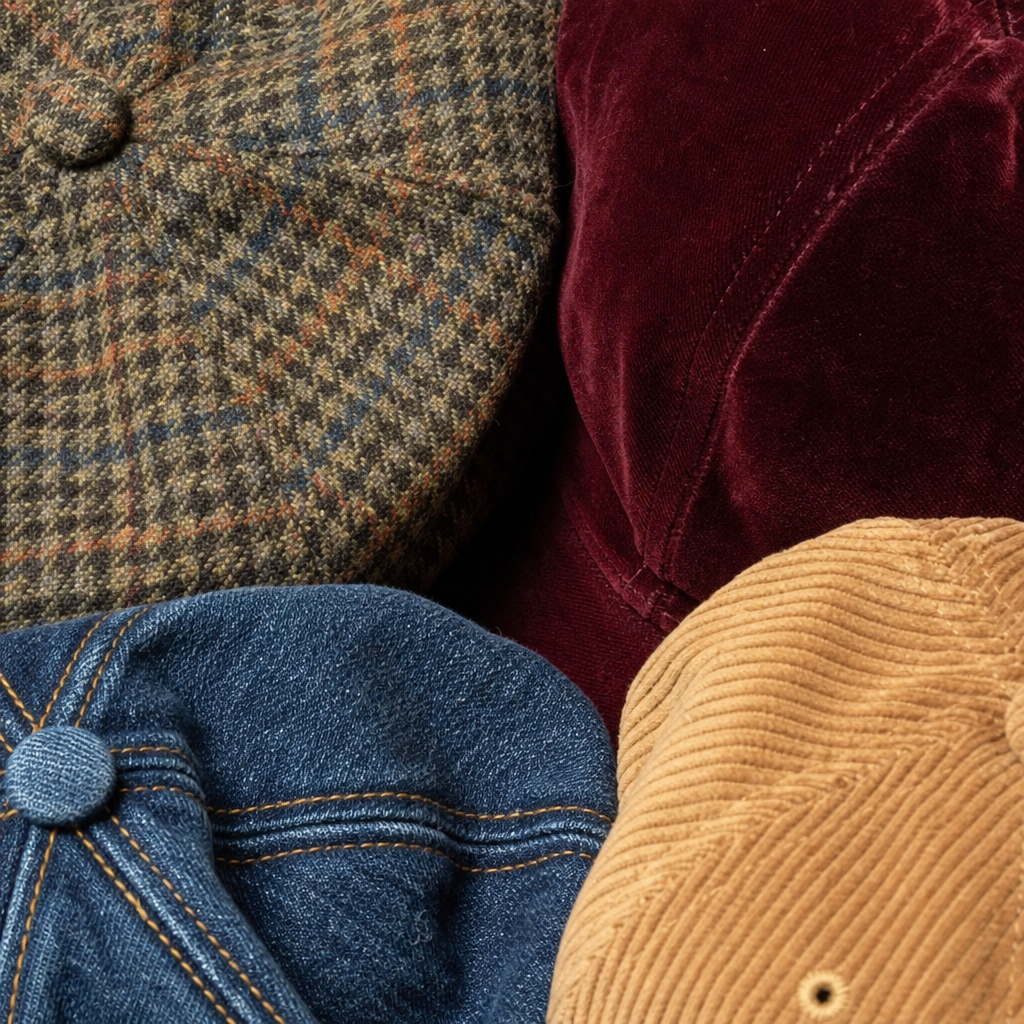
Tweed is a textured woolen fabric often associated with heritage style, country wear, and classic tailoring. It is frequently used in flat caps, newsboy caps, walking hats, and vintage-inspired headwear. Tweed adds visual depth because its yarns often include subtle color variation.
As a fabric for hats, tweed is best when the design benefits from texture rather than a smooth formal finish. It offers warmth and character but usually needs proper shaping and lining to feel comfortable. A well-made tweed cap can look refined without feeling overly dressy.
15. Velvet, silk, satin, and corduroy
Some hat fabrics are chosen mainly for texture, sheen, or fashion impact. Velvet has a soft pile and a rich appearance, making it useful for dressy headbands, turbans, berets, and statement hats. Silk and satin bring smoothness and shine, often appearing in linings, occasion hats, trims, or luxury-inspired designs rather than hard-wearing outdoor hats.
Corduroy deserves mention because it gives casual hats a ribbed texture and vintage feel. It is often used for caps, bucket hats, and relaxed cold-weather styles. These materials can be beautiful, but they are usually selected for aesthetic effect more than rugged performance.
How do you choose the right fabric for hats?
Choose the right fabric for hats by matching the material to the hat’s purpose, climate, structure, and care needs. A summer sun hat needs breathability and shade, while a dress fedora needs shape and finish. A winter cap should feel warm and comfortable, while a travel hat may need to be packable, washable, or quick-drying.
Use this checklist before choosing hat materials:
- Season: Wool, felt, tweed, suede, and corduroy suit cooler weather; straw, linen, cotton, nylon, and lightweight polyester work well in heat.
- Structure: Felt, leather, canvas, and reinforced cotton support stronger shapes; knit wool and acrylic suit soft caps.
- Breathability: Straw, linen, cotton, mesh polyester, and some nylon designs are better for airflow.
- Formality: Fur felt, fine wool felt, silk, satin, and velvet can look dressier; denim, canvas, acrylic, and washed cotton feel casual.
- Care: Leather, suede, felt, and straw usually need gentler care than many cotton or synthetic hats.
- Use: Outdoor activity favors nylon, polyester, canvas, straw, or palm leaf; fashion styling can prioritize texture, color, and drape.
Hat quality depends on more than fabric
Material hats are only as good as the way they are made. Two hats made from the same textile can feel completely different because of blocking, stitching, lining, brim reinforcement, sweatband quality, finishing, and storage. Fabric matters, but hat construction turns the fabric into something wearable and lasting.
When judging hat quality, look at the whole piece. The crown should feel intentional rather than collapsed. The brim should suit the style and return to its intended shape when handled gently. Seams should be neat, the sweatband should sit comfortably, and trims should be attached cleanly.
Practical signs of better construction
A good hat usually has balance: the fabric weight, shape, brim width, and trim all work together. A heavy material on a weak structure may sag, while a stiff material in the wrong style may feel awkward. For fitted caps and soft hats, comfort and stitching are especially important; for felt and straw hats, shaping and brim stability become more noticeable.
Matching materials to common hat styles
Different types of hats have different material needs. A baseball cap often works well in cotton, wool blend, polyester, denim, canvas, or nylon because panel construction provides shape. A bucket hat can use cotton, canvas, nylon, denim, corduroy, or linen depending on whether the goal is softness, utility, or summer comfort.
Dress hats such as fedoras, trilbies, and cloches often rely on wool felt or fur felt because these materials can be blocked cleanly. Flat caps and newsboy caps commonly use tweed, wool, cotton, linen, or corduroy. Cowboy hats are most often associated with felt, straw, palm leaf, and leather because they need a recognizable crown and brim.
Final takeaways on hat fabrics
The best hat textiles are the ones that fit the wearer’s climate, lifestyle, and preferred shape. Wool, felt, fur felt, and tweed bring warmth and structure; straw, linen, cotton, nylon, and polyester support lighter warm-weather designs; leather, suede, denim, canvas, velvet, satin, silk, acrylic, and corduroy each add their own balance of function and style.
If you are comparing material choices, start with the hat’s job before judging the look. Ask whether it needs to shade, warm, fold, breathe, dress up an outfit, or withstand frequent wear. Once the purpose is clear, choosing the right material to make hats becomes much easier—and the finished hat is far more likely to feel as good as it looks.
Frequently Asked Questions About Hat Fabrics
What are the best materials for cowboy hats?
Cowboy hats are commonly made from materials such as fur felt, wool felt, straw, palm leaf, and leather. The choice of material depends on the intended use, climate, and style preferences.
How do I choose the right fabric for my hat?
To select the right fabric, consider the hat’s purpose, climate, structure, and care needs. For example, opt for breathable materials like straw or linen for summer hats, while wool or felt is ideal for winter wear.
What is the difference between wool felt and fur felt?
Wool felt is made from matting wool fibers and is generally more affordable, suitable for a variety of hat styles. Fur felt, made from animal fibers like rabbit or beaver, is a premium option known for its durability and ability to hold shape well.
Are straw hats durable for outdoor use?
Yes, straw hats are lightweight and breathable, making them great for outdoor use. However, they can become brittle if not properly cared for, so it's essential to store and handle them carefully.
Can I wash my cotton hat?
Cotton hats are generally washable, but the washing method can vary. It's best to refer to the care label for specific instructions to avoid damaging the structure or shape of the hat.