











In the cross-border e-commerce industrial park in Nanshan, Shenzhen, the lights are always on at 3 AM.
Packages marked "same-day dispatch" race along the conveyor belt, while operators keep an eye on the GMV data flashing on the screen, and crumpled logistics quotes scatter nearby—this is just another typical yet unusual night for Chinese cross-border e-commerce on the early morning of February 7, 2025.

When the news alert popped up about Trump reinstating the $800 exemption for packages, 27-year-old operations manager Xiao Lin jumped out of his gaming chair, excitedly celebrating the U.S. policy reversal.
Just one week earlier, Trump had signed an executive order imposing a 10% tariff on imports from China, removing the "de minimis" exemption for small packages worth under $800 from China.
According to Caixin, on February 3, U.S. Customs and Border Protection (CBP) announced that, following the President's executive order, goods imported from China would no longer be eligible for the "de minimis" tax exemption and would incur an additional 10% tariff.
It was a classic case of a "policy flip-flop."
This storm, which began in Washington and stirred the Pacific in just 48 hours, revealed one undeniable fact: in the tug-of-war between globalization and de-globalization, overseas entrepreneurs were already deep in the eye of the storm.
The Start of Small Exemption Tax Thresholds
In 2016, when the U.S. Congress casually raised the tax exemption threshold for packages from $200 to $800, no one could have predicted that this number would become the key to rewriting global trade history.
In a basement shop in Huaqiangbei, Shenzhen, a small boss named Lao Chen crunched the numbers: $200,000 worth of headphones in a shipping container could be split into individual packages and shipped directly to the U.S., with the tariff cost dropping from 12% to 0.
This tiny leverage sparked a massive wave of Chinese manufacturing—by 2024, 4 million Chinese packages were flooding into U.S. customs daily, averaging 278 every minute, with 80% of them tagged with "$9.9 free shipping."
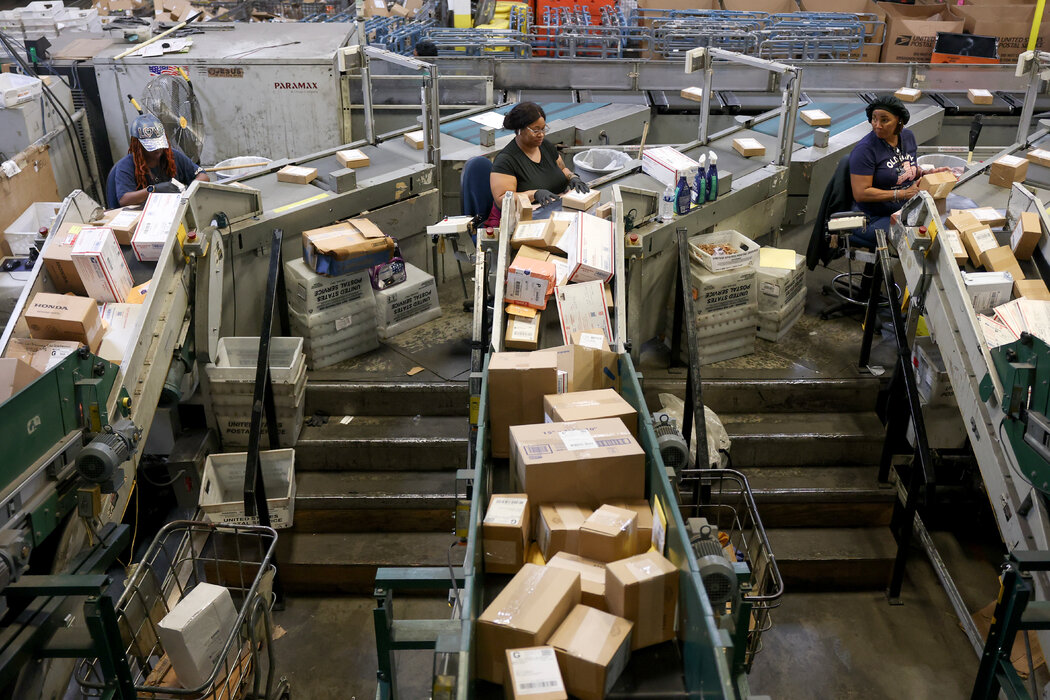
Source: The New York Times
“This is not just a price war; it's a lightning-speed supply chain battle,” said the CEO of a cross-border logistics company. “When a U.S. consumer clicks ‘buy’ on Temu, the factories in Yiwu, bonded warehouses in Dongguan, and cargo holds at Shenzhen airport respond within 72 hours—manufacturing, customs clearance, and shipping in a seamless chain of operations. This speed makes Washington’s political clock seem antiquated.”
The Customs Gridlock and the Hidden Business War
On February 1, Trump’s decision to cancel the tax exemption policy first hit U.S. Customs.
From signing the executive order on February 1 to its official implementation on February 4, to the reversal on February 7, over a million packages piled up at U.S. customs in just a few days. Packages that would have been directly shipped now needed additional information and underwent formal declaration processes, increasing costs and greatly delaying clearance times.
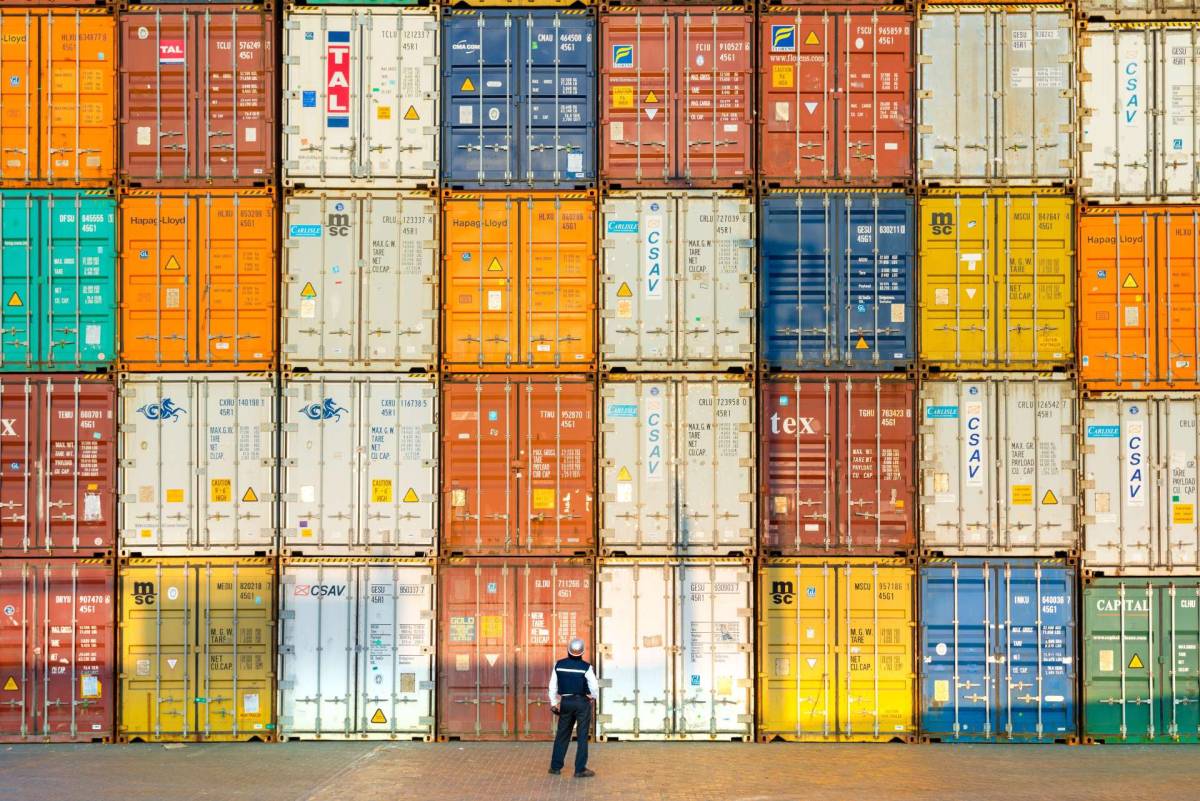
Surveillance footage from the Port of Los Angeles captured a surreal scene: neatly stacked containers were suddenly overwhelmed by a tidal wave of scattered packages. Customs officers stumbled through the mountain of parcels, resembling a scene from an escape movie.
An anonymous customs officer laughed wryly, “It takes us 3 minutes to process one package, but 300 packages come in every minute—it’s like trying to scoop dry Niagara Falls with a soup spoon.”
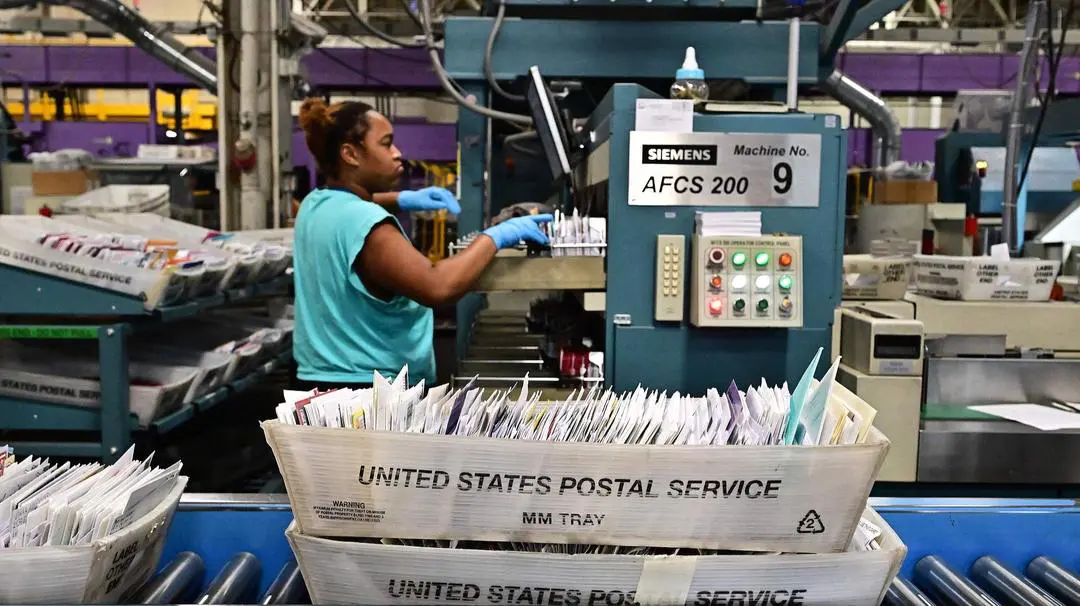
Source: Meijing Headlines
Meanwhile, on the other side of the Pacific in Chinese seller groups, a wave of ingenious responses was underway.
A Guangzhou clothing seller, Lao Li, contacted his Vietnamese factory overnight to change the "Made in China" label to "Southeast Asia Assembly" in the HTS code; a Shenzhen tech company rushed to launch an AI customs declaration system to automatically generate millions of compliant documents; Yiwu small commodity sellers screamed during TikTok live streams: “Last 100 orders to the U.S., all will be redirected to Mexico warehouses tomorrow!”
Trump's "policy sit-up" was, in fact, a carefully designed political arithmetic problem.
The cancellation of the exemption catered to blue-collar workers in Ohio—those who believed cheap Chinese goods were taking away their jobs. But just three days after the policy’s implementation, it was urgently reversed, exposing not only the fragility of the customs system but also a fear that the White House could not openly acknowledge: cutting off 4 million packages daily could send U.S. inflation soaring by 2 percentage points overnight, a political disaster for re-election-minded politicians.
A Deeper Battle Revealed by Data:
Chinese cross-border platforms contribute 12% of daily retail sales for U.S. household goods. Each Chinese package saves U.S. consumers an average of $28, and stocks of domestic giants like Walmart surged 5% the day the tax exemption policy was canceled.
“This is not just a trade war; it's a chaotic battle involving votes, prices, and capital interests,” said international relations scholar Li Mingyang. “When Trump swings the tariff stick, he aims to strike at China’s supply chain but must be careful not to shatter American consumers' shopping carts with the flying debris.”
Overseas Entrepreneurs’ Response: Multiple Strategies
As Shenzhen sellers regained their composure after the initial panic, a more ambitious strategic transformation quietly began. The fear pushed all sellers to urgently find survival routes.
Channel 1: Building a Global Web with Overseas Warehouses
In Tijuana, a border city between Mexico and the U.S., a 100,000-square-meter overseas warehouse operated by Chinese entrepreneurs is processing goods 24/7. Zhao Feng, the head of the warehouse, pointed to a real-time logistics screen and said, “Shipping from China to Mexico costs $2 per kilogram, then crossing into the U.S. tariff-free—this ‘roundabout strategy’ increased our orders by 30% during the policy fluctuations.”
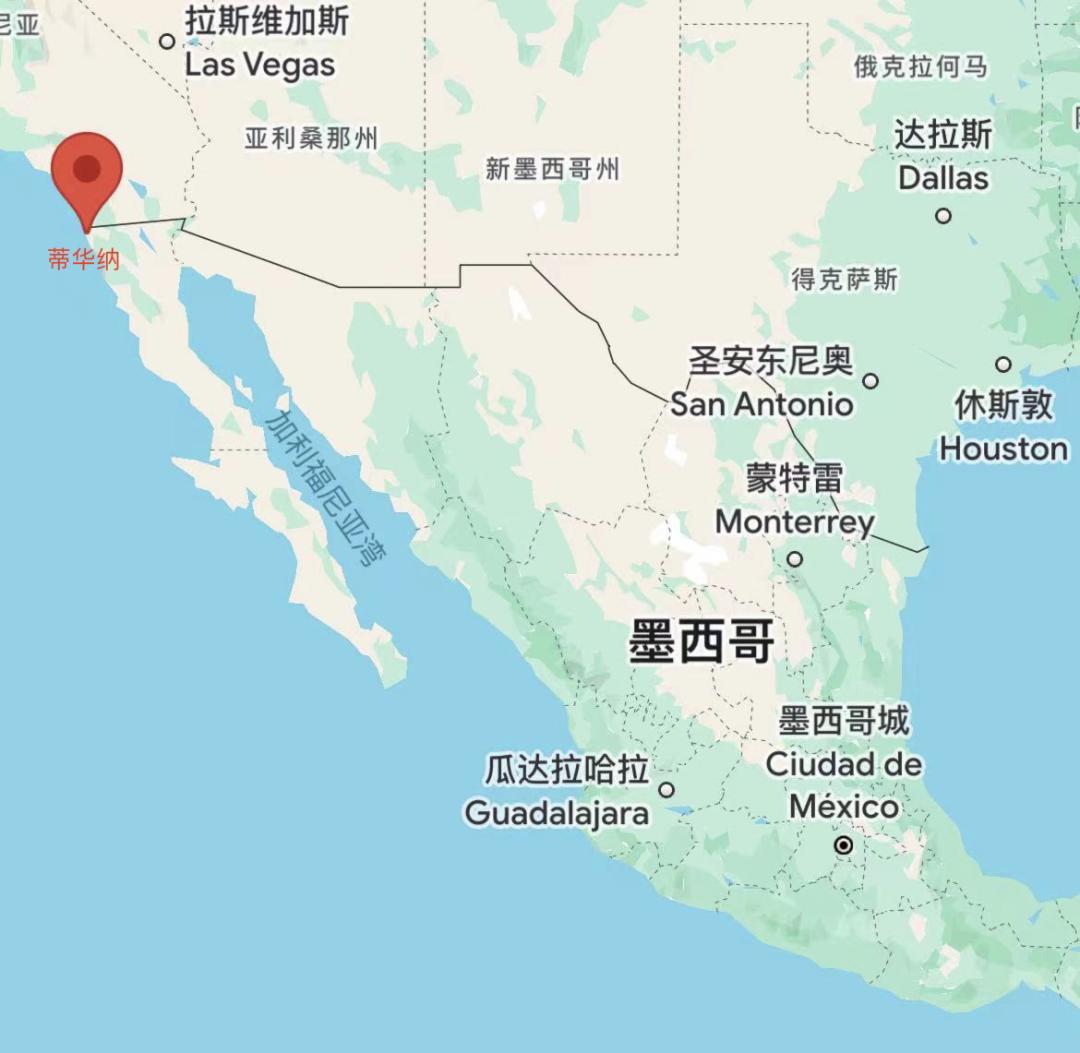
This "made in China, hub in a third country, end-point in Europe and the U.S." model is rewriting the map of traditional cross-border logistics.
Channel 2: Speeding Up Data Flow Over Goods Flow
An AI company in Hangzhou has developed the "Cross-Border Prophet" system, which can predict hot product categories 14 days in advance by tracking trending TikTok hashtags, Amazon search trends, and even complaints on Reddit forums.
Founder Zhang Rui demonstrated a classic example: when U.S. social media began flooding with discussions on "camping power stations," the system triggered an alert, and the Dongguan factory quickly revamped production to make 20,000 mobile power units within 48 hours.
"Now, it's not people looking for products; it’s algorithms directing the supply chain to dance."
Channel 3: Turning Price Wars into Value Wars
In the showroom of Foshan furniture seller Zhou Ming, an AR fitting mirror projected a set of traditional Chinese wooden furniture into the living room of an American buyer. By scanning the user's height and room data, the system automatically recommends furniture dimensions and simulates different lighting effects.
This black technology allowed the product to be sold at a 150% premium while reducing the return rate to an impressive 3%.
“Americans are willing to pay for ‘zero trial error costs,’ and that’s the pricing power of the new era.”
Channel 4: Tapping into National Strategic Benefits
For Guangxi cross-border seller Huang Wei, the rumble of the China-Thailand railway project sounds like music to his ears.
“Before, it took 15 days by sea to Southeast Asia, but with the railway, it’s down to 5 days to Bangkok, saving 40% on shipping costs.” He opened the latest "Digital Export White Paper" published by the Ministry of Industry and Information Technology and added, "Building overseas warehouses along the 'Belt and Road' and optimizing the supply chain under RCEP rules—this is the ultimate insurance for navigating policy cycles."
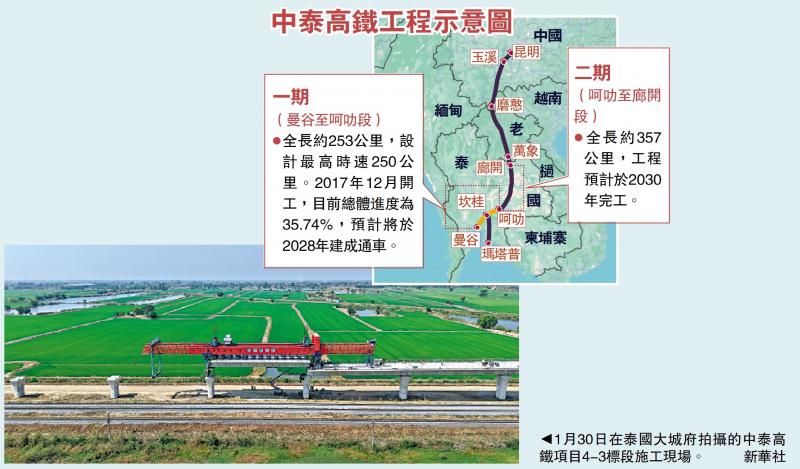
Schematic Diagram of China-Thailand Railway Project
The Prelude to Cross-Border Transformation
Looking back from the threshold of 2025, this tax exemption policy storm may only be the beginning of a larger transformation.
At the WTO headquarters in Geneva, a framework agreement on global digital trade taxation is under heated discussion; in a blockchain lab in Qianhai, Shenzhen, technicians are testing "digital passports" for automatic customs clearance; and a Chinese seller’s phone just received a push notification from TikTok Shop, marking their $10 million order made through an AI virtual host.
"Future cross-border trade will be a battle of algorithms, with ecosystems devouring each other," predicted Xu Lei, a seasoned investor in cross-border e-commerce. "While the U.S. still uses tariffs, China has already built a ‘flexible supply chain + digital infrastructure + localized operations’ moat."
At Shenzhen Airport at 5 AM, another Boeing 777 loaded with packages soars into the sky.
At the end of the runway, a faded billboard in the morning mist reads: "As long as the Earth keeps spinning, Chinese manufacturing will never scatter." The airport lights illuminate the words, almost like a metaphor—
In this endless trade game, the true winners are those who adapt faster than change itself.
(Names in the text have been changed for anonymity.)

_1751507038923.png)