


Effective sourcing services in China should help you identify suitable suppliers, verify their capabilities, define product requirements, and manage orders through inspection and delivery.
The strongest strategy is to select partners against clear specifications and total costs—not simply the lowest quotation. This guide explains how to choose sourcing support, evaluate factories, control quality, and build a purchasing process you can repeat as your business grows.
What do sourcing services in China include?
Sourcing services in China provide support for finding, evaluating, and coordinating suppliers for products or components.
Your service agreement should specify which activities the provider will handle, what evidence they will deliver, and which decisions remain yours. Supplier research alone is a different assignment from managing product development, factory qualification, production follow-up, and shipment release.
For your project, divide the scope into three stages:
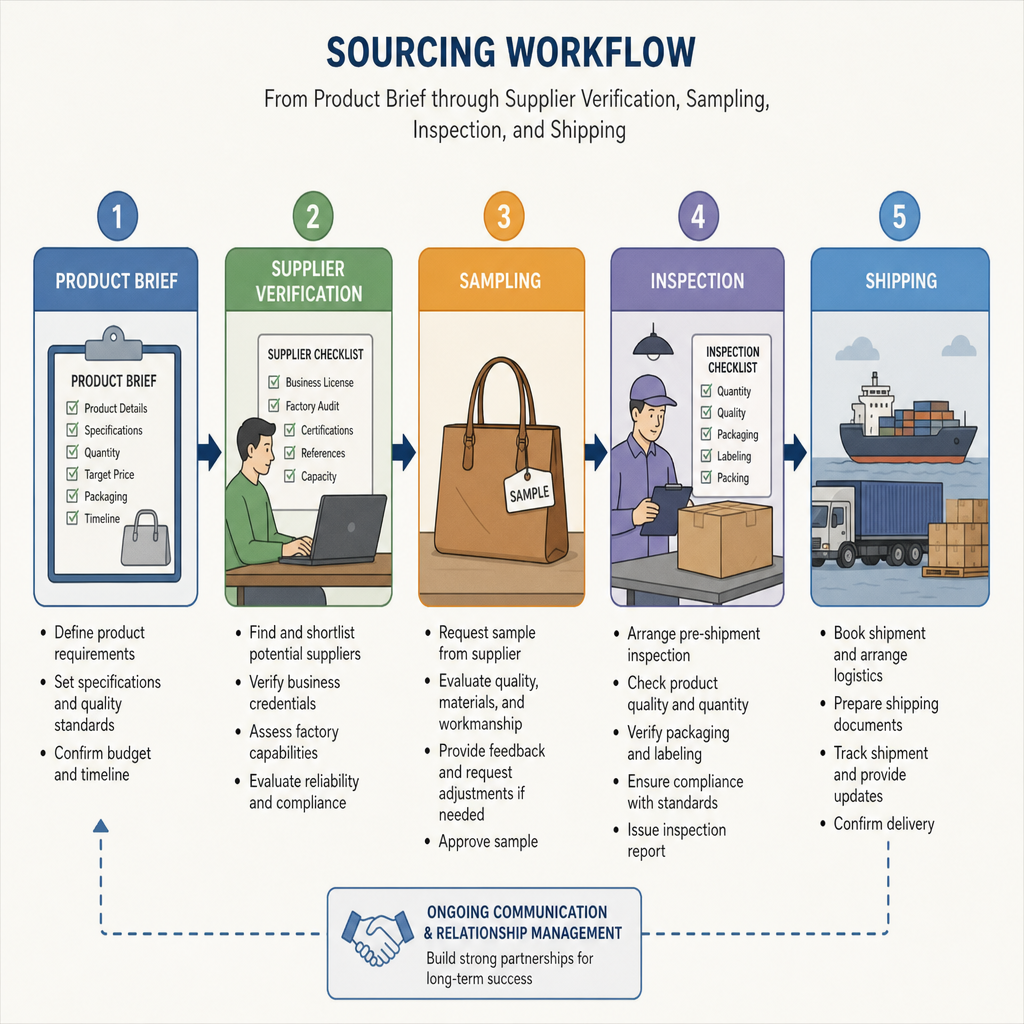
- Before ordering: Translate requirements into a sourcing brief, identify candidates, compare quotations, verify supplier identities, and coordinate samples.
- During production: Track agreed milestones, manage approved changes, arrange inspections, and escalate quality or scheduling problems.
- Before delivery: Confirm packaging, review inspection findings, coordinate shipping documents, and hand over records needed for importing and receiving.
Treat this as a menu for your contract, not a promise that every provider offers every service. Ask who performs each task and whether specialists or subcontractors are involved.
China procurement services should support your purchasing decisions rather than make the process opaque. Retain access to specifications, approved samples, inspection reports, and commercial records. Canada's Trade Commissioner Service similarly recommends establishing sourcing requirements, conducting due diligence, agreeing contracts, and checking quality before shipment.
Build a sourcing brief before contacting suppliers
Start China product sourcing with a document that makes your requirements comparable across suppliers. Canada's sourcing guidance emphasizes preparing drawings and specifications before researching potential manufacturers. Use that principle to replace subjective requests such as “premium quality” with observable requirements and acceptance criteria.
Include the following information in your brief:
- Product definition: Intended use, dimensions, materials, drawings, photographs, and essential performance characteristics.
- Commercial scope: Initial quantity, expected reorder pattern, target purchasing budget, and acceptable minimum order quantity.
- Customization: Branding, colors, finishes, tooling, packaging, and any features that require development.
- Quality requirements: Measurements, functional checks, cosmetic expectations, and unacceptable defects.
- Destination requirements: Intended sales markets, known testing obligations, labeling needs, and required documentation.
- Delivery expectations: Required arrival date, delivery destination, and flexibility around partial shipments.
Separate nonnegotiable requirements from preferences. For example, you might require a particular material and load performance while allowing suppliers to propose alternative packaging. That distinction gives manufacturers room to suggest improvements without quietly changing the product you need.
Ask each candidate to identify assumptions, exclusions, and unanswered questions. A quotation based on an unstated substitute material should not sit beside a fully compliant quotation as though they are equivalent.
Finally, assign a revision number to the brief. When you change a dimension or finish, issue the same updated document to every shortlisted supplier and request written acknowledgment. Keep one internal owner responsible for approving revisions so purchasing, engineering, and marketing do not send conflicting instructions.
Match the sourcing model to your business
Choose how much work to retain internally before comparing service providers. Direct purchasing, an agency relationship, and buying through a trading company should be evaluated as different operating arrangements. Ask each candidate to describe its actual contractual role rather than relying on its business name.
|
Arrangement to evaluate |
Consider it when |
Clarify before proceeding |
|---|---|---|
|
Direct factory purchasing |
Your team can manage supplier communication, technical decisions, and purchasing |
Who handles verification, inspections, and problem resolution |
|
Independent sourcing agent |
You need defined local support while retaining purchasing control |
Authority, compensation, supplier disclosure, and reporting |
|
Sourcing company |
Your project needs coordinated support across several activities |
Named staff, deliverables, subcontracting, and escalation |
|
Trading company |
You prefer purchasing through an intermediary |
Seller identity, manufacturer visibility, and responsibility for defects |
|
Internal procurement team |
Recurring purchasing justifies dedicated management |
Staffing, specialist support, oversight, and operating cost |
Use these arrangements as a starting point, not a hierarchy. The Canadian sourcing road map recommends evaluating whether to buy directly, use an intermediary, or establish a strategic manufacturer relationship. The appropriate model depends on what your company needs from sourcing.
For wholesale sourcing in China, prioritize confirmation of the exact available product, quantities, variant consistency, and replenishment arrangements. For a custom product, place more emphasis on development responsibilities, tooling, technical communication, and change control. Do not pay for a complex service package if you only need a clearly bounded verification assignment.
A hybrid arrangement is also worth evaluating: retain commercial negotiations internally while commissioning independent factory checks or inspections. Write down the handoffs so no essential task falls between organizations.
How should you choose a China sourcing partner?
Choose a China sourcing partner by evaluating category knowledge, transparent compensation, verifiable work methods, and clear accountability. Require evidence that matches your assignment rather than broad claims about connections or low prices. A useful selection process should reveal how the provider works when information is incomplete or production goes wrong.
Test product knowledge and operating methods
Ask the provider to review your brief and identify the main manufacturing, quality, and scheduling risks. Request an explanation of the supplier capabilities they would investigate and the evidence they would collect. For example, a packaging assignment should prompt discussion of material specifications, print approval, dimensions, and transport protection—not just a list of factories.
Request anonymized examples of deliverables, where confidentiality permits. Look for clear supplier comparisons, dated inspection findings, unresolved issues, and documented recommendations. Ask who would actually manage your account and how technical questions would reach the right specialist.
Make fees and incentives explicit
When comparing sourcing services companies in China, request a complete written explanation of compensation. Ask whether the proposed arrangement includes project fees, commissions, product markups, supplier payments, inspection charges, or referral income. Require disclosure of relevant ownership interests or exclusive supplier relationships.
Evaluate the quoted fee alongside the deliverables and exclusions. A supplier introduction is not equivalent to documented qualification, and production updates are not equivalent to independent inspection. Specify what you receive if no suitable supplier is found or if you end the engagement.
Before awarding ongoing work, consider a bounded paid assignment with clear acceptance criteria. For instance, request a documented shortlist and quotation comparison rather than committing immediately to full order management. Evaluate whether the provider explains uncertainty honestly and makes its work reviewable.
Verify the supplier and the production site separately
Supplier verification should establish who you are contracting with and whether the proposed production operation can meet your needs. Canada's due diligence guidance recommends checking registration, business scope, address, license validity, and representatives' authority. It also recommends reviewing relevant financial, litigation, sanctions, and intellectual property risks.
Begin with the supplier's registered Chinese name and business registration details. Cross-check records through appropriate official sources or qualified local support. Do not treat a polished website, marketplace profile, or certificate image as a complete background check.
Then organize your review around four distinct identities:
- Contracting entity: The organization accepting your order and obligations.
- Production site: The locati0n where the relevant manufacturing will happen.
- Payment recipient: The account holder receiving your funds.
- Exporting party: The organization handling the export transaction, where applicable.
Ask for a documented explanation of any differences. Pause before paying if the parties cannot explain the structure or provide consistent records. Independently verify payment instructions through a previously established contact method, especially after any requested account change.
For operational verification, give the reviewer a product-specific checklist. Request evidence of relevant equipment, measurement methods, production records, material controls, and subcontracted processes. Ask how capacity for your order will be established rather than accepting a general claim about factory size.
Scale the review to the consequences of failure. A standard accessory and a safety-sensitive component should not receive identical qualification plans. Where the exposure warrants it, commission an on-site assessment and specialist review rather than relying solely on remote conversations.
Document the result as a decision: approved, conditionally approved pending specific evidence, or rejected. Record unresolved issues and assign owners. This makes verification an actionable purchasing control rather than a folder of documents nobody has evaluated.
Compare quotations using total landed cost
Compare supplier quotations on the same specification, quantity, packaging, delivery basis, and currency. The International Trade Administration defines landed cost as the product price plus insurance, freight, tariffs, taxes, and other fees needed to reach the buyer. That makes the factory unit price only one part of your comparison.
Build a worksheet that separates:
- Product price and quantity breaks.
- Tooling, setup, samples, and development charges.
- Sourcing, inspection, and testing expenses.
- Origin transport, freight, insurance, and destination handling.
- Customs brokerage, applicable duties, taxes, and final delivery.
- Your internal allowance for inventory exposure, rework, or replacement planning.
Label estimates clearly and avoid counting the same charge twice. For internal planning, divide the relevant total by the number of usable units you expect to receive. Keep that management calculation separate from customs valuation, which requires its own correct treatment.
Consider a hypothetical comparison: Supplier A offers a lower unit price but requires a larger order and excludes packaging. Supplier B quotes more per unit but includes the specified packaging and accepts your intended quantity. Request revised quotations on a common basis before deciding which is commercially preferable.
Ask your provider to explain proposed savings. A lower quotation is worth investigating if it follows a packaging redesign, production improvement, or clarified specification. It deserves scrutiny if it depends on an unexplained material substitution or removal of an agreed check.
For China sourcing solutions, define success as meeting your documented commercial and quality requirements within an acceptable total cost. Do not reward a service provider solely for reducing the headline purchase price. Require approval before any cost-saving proposal changes the product, order quantity, or risk allocation.
Use samples and inspections as separate controls
An approved sample should establish what you intend to purchase; production controls should establish whether the order meets that agreement. Canada's sourcing guidance recommends obtaining samples before production, checking packaging, and checking quality before shipment. Build these activities into the purchase plan rather than arranging them only after a concern arises.
Approve a documented reference sample
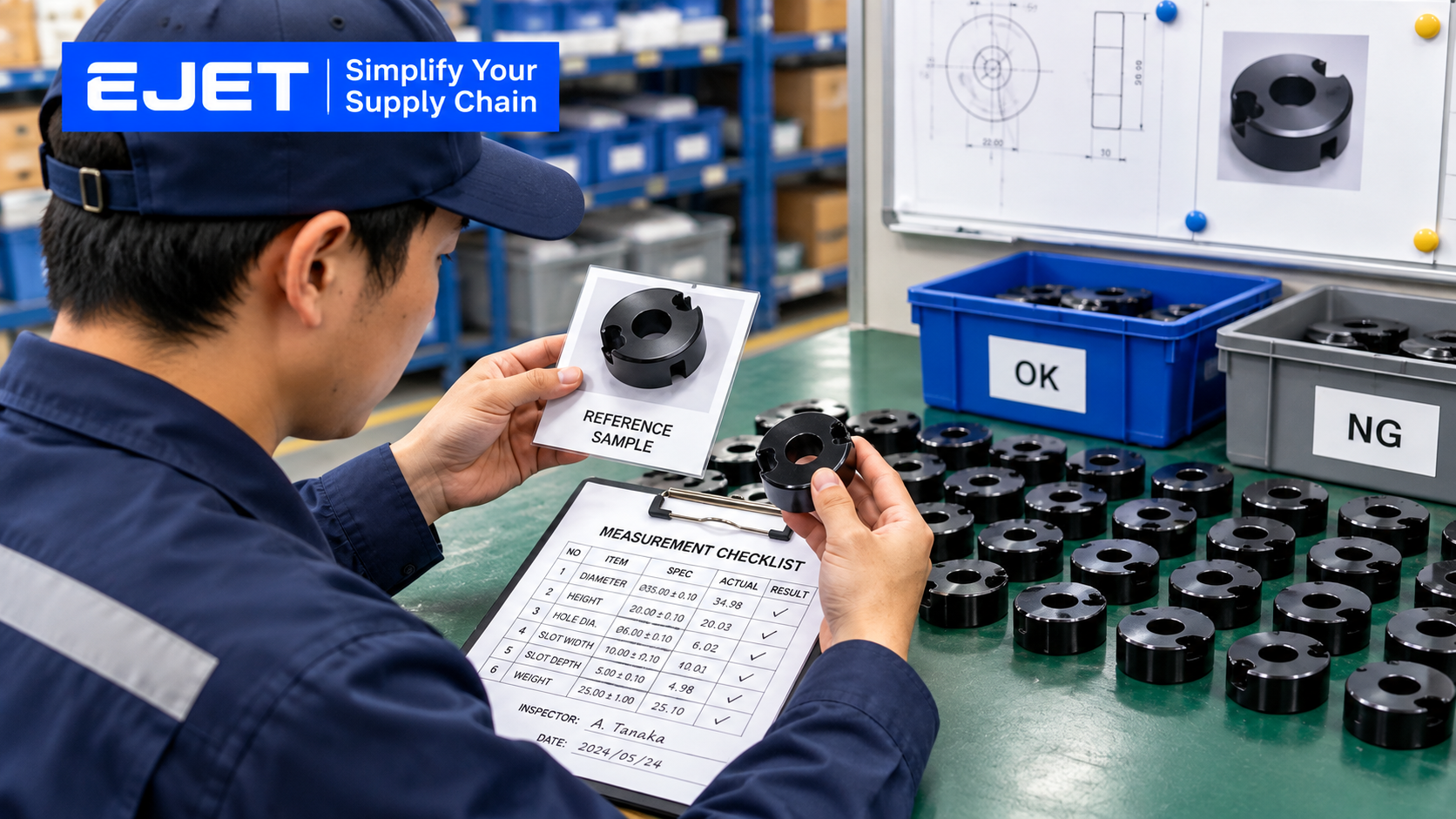
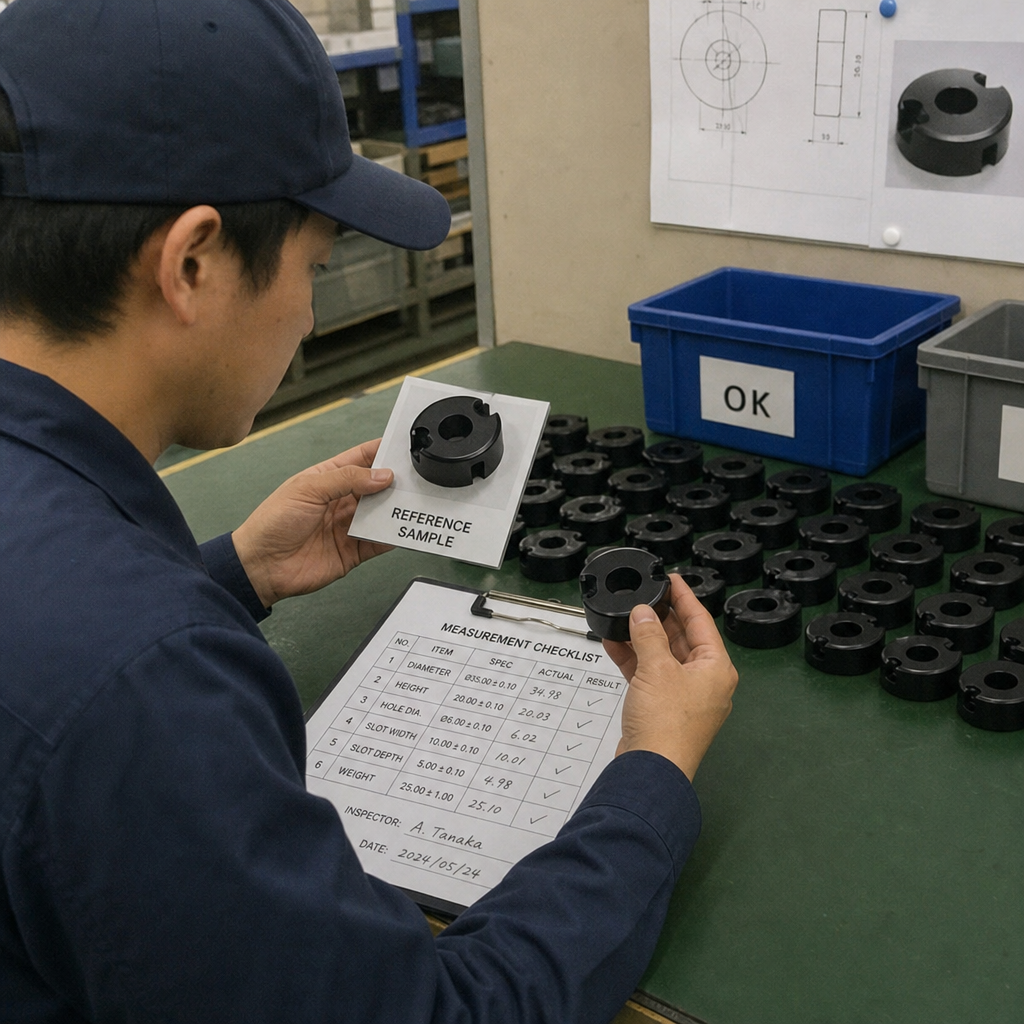
Identify the sample by supplier, product version, date, materials, finish, and relevant measurements. Record any exceptions instead of approving the sample with informal comments such as “fine except for the color.” Ensure the supplier and inspector have access to the same approved reference and written requirements.
For custom products, ask how the sample was made and what will change in production. Request approval of a production-representative sample where the manufacturing method matters. If there is a pilot run, define what you need to learn from it before authorizing a larger order.
Plan checks around the product's risks
Discuss these possible checkpoints with your quality specialist:
- Before production: Confirm approved inputs, drawings, tooling readiness, and work instructions.
- During production: Review early output and investigate deviations while corrective action remains practical.
- Before shipment: Check finished goods against the agreed inspection plan, including packaging and labeling.
- During loading, where justified: Verify shipment identity, quantities, loading condition, and seal records.
Agree in advance who can stop work, approve rework, accept a deviation, or release a shipment. Your sourcing provider should not make those decisions without the authority you have explicitly granted.
If using acceptance sampling, have a competent specialist select the plan, sample size, defect classifications, and acceptance criteria. NIST explains that acceptance sampling supports a decision about accepting or rejecting a lot; it is not a guarantee that every unit conforms. Do not treat a passing inspection as proof of zero defects.
Require reports with identified batches, measured results, photographs where useful, and a clear disposition. A report that merely states “quality good” gives you little basis for a release decision.
When an inspection fails, record the defect, proposed correction, responsible party, and verification method. Separate an immediate fix from the explanation of why the problem occurred. Make the next shipment decision against documented evidence rather than an assurance that the factory will be more careful.
Put commercial terms and ownership in writing
Use written agreements to connect the sourcing brief, approved samples, quality plan, payment terms, and delivery obligations. Canada's sourcing guidance recommends clear contracts covering payment, safety, quality control, compensation, inspection rights, and dispute resolution. Obtain qualified legal advice for the parties, jurisdiction, and transaction involved.
Ask counsel to address responsibilities for specifications, substitutions, subcontracting, delays, nonconforming goods, and corrective work. Clarify how changes become binding and which documents control if instructions conflict. Agree payment milestones before production rather than improvising them when a shipment is ready.
For custom manufacturing, explicitly address ownership and permitted use of molds, tools, drawings, software, and development outputs. Specify identification, storage, maintenance, access, and return arrangements for buyer-owned assets. The European Commission's China IP Helpdesk recommends defining relevant intellectual property ownership in supplier agreements and using China-specific legal expertise. (intellectual-property-helpdesk.ec.europa.eu)
Handle confidentiality before circulating sensitive files. IP Australia recommends early IP protection, due diligence, well-drafted contracts, and procedures that restrict confidential information to those who need it. Use an access-controlled document process alongside legal protections, rather than assuming an agreement alone controls disclosure.
Apply the same clarity to the sourcing relationship. State who owns supplier records, whether you may contact manufacturers directly, and what information must be handed over when the engagement ends. Preserve enough documentation to continue purchasing without rebuilding the entire project.
Plan product compliance and traceability early
Create a destination-specific compliance review before committing to production. List the product's intended users, materials, functions, claims, and sales markets, then ask qualified specialists to identify applicable obligations. Keep the review connected to the exact product version you intend to import.
For example, CPSC guidance states that nearly all children's products require testing by a CPSC-accepted third-party laboratory for applicable children's product safety rules. Passing results support issuance of the required Children's Product Certificate, and laboratory acceptance is rule-specific. This illustrates why a generic supplier certificate should not replace a product-specific compliance review.
Request reports and supporting records that identify the tested product, relevant materials, applicable requirements, laboratory, and dates. Have the responsible specialist assess whether those records support your actual product and current requirements. Establish a review trigger for changes to materials, components, design, or manufacturing arrangements.
For U.S. imports, CBP says importers must exercise reasonable care over their supply chains and understand where and how goods are manufactured, including production in part. Its forced-labor guidance also emphasizes sufficient documentation to establish admissibility. Outsourcing purchasing should therefore not be treated as outsourcing your need for supply-chain visibility.
Ask your provider to identify relevant upstream suppliers and obtain traceability records proportionate to the product's risks and legal requirements. Escalate missing information before ordering. Make compliance evidence a release requirement where appropriate, not an administrative task deferred until the goods reach the border.
Coordinate logistics before goods are finished
Bring your freight forwarder and customs broker into planning early enough to review the product, packaging, shipment details, and proposed delivery arrangement. Ask them to identify missing information and unresolved responsibilities before production is complete. Build the delivery plan backward from your required receiving date.
Specify the selected Incoterms rule, named place or port, and version in the contract. Incoterms allocate responsibilities concerning delivery, transport, customs formalities, costs, and transfer of risk. The International Trade Administration emphasizes identifying the chosen version and the relevant delivery locati0n.
For any door-to-door proposal, request a written breakdown of what is included and who performs the importing role. Ask your broker to review classification, origin, valuation, documentation, and applicable charges. Do not authorize inaccurate descriptions or values as a way to reduce a quotation.
Create a shipment-readiness checklist covering:
- Approved inspection disposition and any outstanding corrective work.
- Final quantities, carton dimensions, weights, and packaging details.
- Consistent invoice, packing list, and transport instructions.
- Required certificates, test records, and other supporting documents.
- Insurance decisions, receiving arrangements, and escalation contacts.
Ask each party to confirm its own milestones and required lead times. Include time for document correction or reinspection rather than treating the planned factory completion date as the arrival date. For services that include consolidation, define how individual supplier lots remain identifiable and how discrepancies will be resolved before dispatch.
Build a repeatable China supply chain
After the first order, evaluate performance before increasing purchasing commitments. Use a scorecard that links results to your own requirements, not a provider's general claim of success. Keep the definitions consistent so trends remain meaningful across orders.
Track measures such as:
- Delivery performance: Whether agreed milestones and receiving dates were met.
- Quality performance: Inspection findings, receiving discrepancies, and verified corrective actions.
- Commercial accuracy: Whether invoices and final costs matched approved terms.
- Responsiveness: Whether questions and problems received complete, timely answers.
- Documentation: Whether current specifications, reports, and traceability records were available.
Review causes rather than assigning blame automatically. If your team changed artwork after approval, distinguish that event from a supplier missing an unchanged milestone. Use the review to improve instructions, approval timing, or supplier controls.
For critical items, assess whether a backup supplier is justified and what qualification would require. Establish which drawings, samples, tools, and test records would be needed to transfer production. Ask whether proposed alternatives depend on the same upstream operation before treating them as independent options.
Scale China sourcing services deliberately. Increase order complexity or volume only after reviewing evidence from completed work and confirming the next stage's capacity and controls. Keep periodic reviews even when the relationship feels established; the decision should remain grounded in current performance and documented requirements.
A practical starting sequence
Use the following sequence to turn this guide into a manageable project:
- Define one purchasing need. Complete the product brief and identify the most consequential quality, compliance, and delivery risks.
- Choose the support scope. Decide which activities your team will own and which require external expertise.
- Evaluate providers against deliverables. Compare methods, fees, reporting, authority, and handover obligations.
- Verify shortlisted suppliers. Resolve identity, capability, payment, and production-site questions before committing funds.
- Approve the commercial and technical baseline. Align specifications, samples, costs, contracts, and inspection requirements.
- Start with a controlled order. Set review points and shipment-release conditions before production begins.
- Review results before expanding. Use actual quality, delivery, cost, and documentation performance to decide the next step.
Effective sourcing from China is a series of evidence-based decisions, not a single supplier search. Whether you purchase directly or use sourcing services from China, retain visibility into the product, the parties involved, and the conditions for approval. The objective is a purchasing process your team can understand, verify, and repeat.
Frequently Asked Questions About Sourcing Services in China
What are sourcing services in China?
Sourcing services in China assist businesses in finding, evaluating, and managing suppliers for products or components. These services can include supplier identification, verification, quality control, and logistics coordination.
How do I choose the right sourcing partner in China?
When selecting a sourcing partner, evaluate their experience in your product category, transparency in pricing and processes, ability to manage quality and logistics, and their communication skills. Request examples of past work and seek verifiable references.
What factors should I consider when comparing supplier quotations?
When comparing quotations, consider the total landed cost, which includes the product price, shipping fees, tariffs, and any other related costs. Ensure that all quotations are based on the same specifications and delivery terms for a fair comparison.
How can I ensure product quality when sourcing from China?
To ensure product quality, establish clear quality requirements, obtain and approve samples before production, and conduct regular inspections during and after production. It’s also essential to maintain open communication with your sourcing partner regarding quality expectations.
What legal aspects should I be aware of when sourcing from China?
Be aware of intellectual property rights, contract terms, and compliance with applicable regulations. It's important to have well-drafted contracts that outline responsibilities, payment terms, and dispute resolution procedures. Consulting legal experts familiar with Chinese regulations is advisable.