Sourcing shoes wholesale from China starts with defining your product, checking suppliers, approving samples, and calculating the full cost of getting sellable stock into your warehouse.
This guide explains how to organize those decisions, compare offers, and avoid preventable purchasing mistakes. For U.S. buyers, it also highlights customs, product safety, and branded-footwear checks to complete before committing to an order.
How do you source wholesale shoes from China?
Use a staged purchasing process: write a product specification, shortlist suppliers, verify their capabilities, test samples, agree on written order terms, and inspect production before shipment.
Treat each stage as a decision point rather than paying for a bulk order based on listing photos. Alibaba’s own sourcing guidance recommends detailed purchase orders and written specifications when arranging protected transactions.
Start with one clearly defined customer and use case. A casual sneaker for everyday wear needs a different brief from a work boot or a children’s sandal. Avoid asking suppliers for their “best shoes” without explaining what best means for your business.
Build your initial brief around:
- Customer and use: Intended wearer, sales market, wearing conditions, and target retail position.
- Construction: Upper, lining, insole, outsole, fastening, and any required performance characteristics.
- Assortment: Sizes, colors, quantities, and proposed quantity per size.
- Branding: Unbranded stock, your own label, or documented genuine branded inventory.
- Commercial limits: Maximum landed cost, delivery window, and acceptable order quantity.
Send the same brief to every supplier. Your goal is to compare equivalent offers, not a collection of loosely related products.
Choose a sourcing route that matches your order
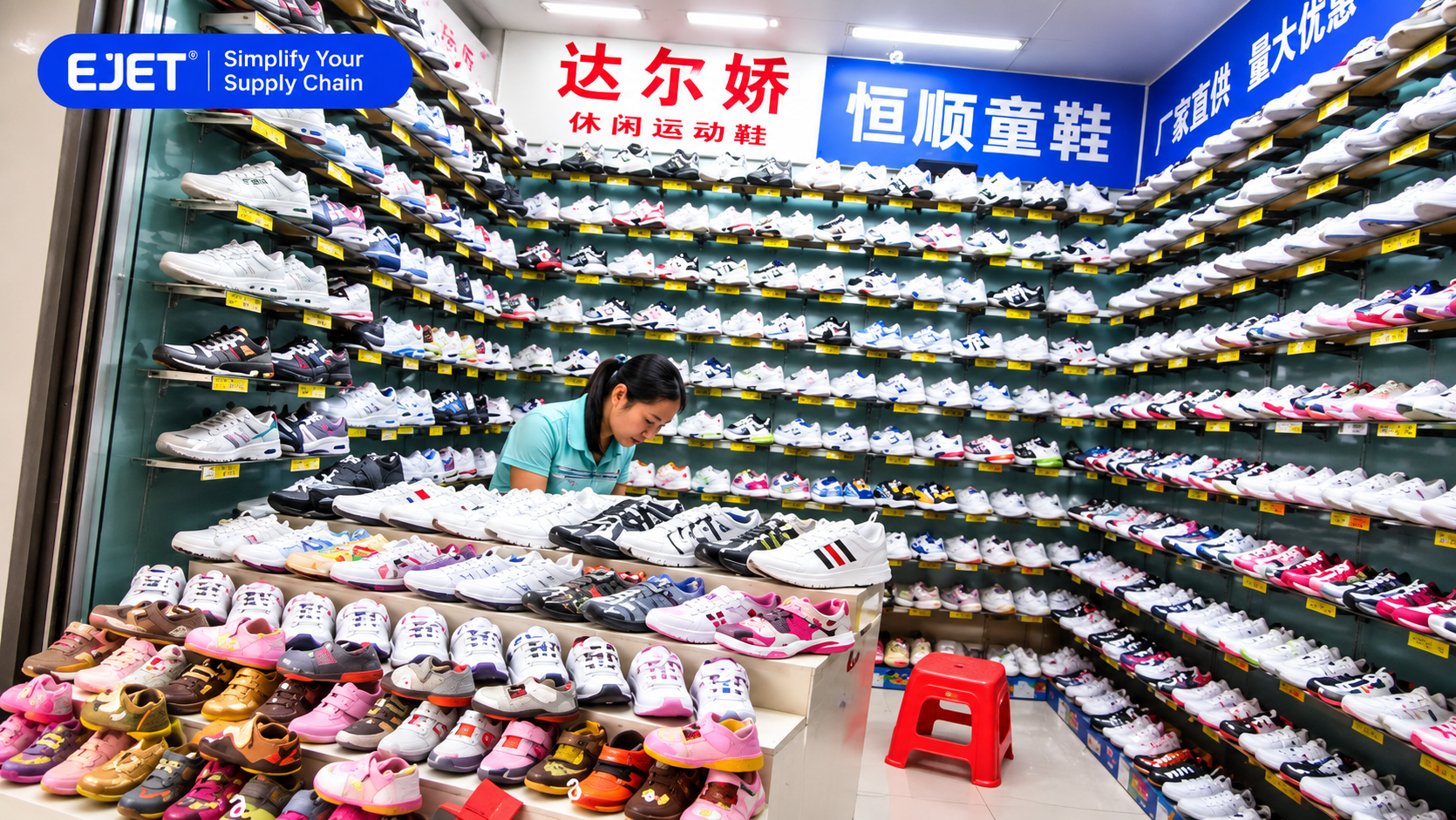
When reviewing China shoes wholesale options, ask each seller to identify its role: manufacturer, trading company, stock wholesaler, or sourcing intermediary. Then request a written explanation of who will produce, inspect, invoice, and ship your order. Do not infer those responsibilities from a storefront name or product catalog.
Use your project needs to guide the conversation:
|
Your priority |
Questions to ask |
|---|---|
|
Existing stock |
Which sizes and colors are physically available, and how will availability be reserved? |
|
Private-label footwear |
What branding changes are included, and which require separate development? |
|
Custom construction |
Who controls patterns, tooling, material selection, and sample revisions? |
|
Mixed styles |
Can the seller consolidate orders, and what minimum applies to each style? |
|
Repeat purchases |
How will materials, sizing, and production specifications remain consistent? |
Do not reject an intermediary automatically. Instead, decide whether its coordination service justifies the quoted cost and whether you can verify the underlying production arrangement.
For a first order, favor a manageable product range over an ambitious catalog. Leave room in your budget for verification and corrections.
How can you verify a footwear supplier?
Verify the supplier by checking its legal identity, production arrangements, sample quality, and willingness to document the transaction. Request evidence that connects the company taking payment with the business accepting responsibility for your order.
For platform purchases, follow the platform’s payment and recordkeeping rules rather than assuming informal messages provide equivalent protection.
Ask for the registered company name, business license, operating address, and details of any subcontracted production. Arrange a live walkthrough or an independent assessment when the order value justifies it. Prepare specific questions about the footwear you intend to buy, rather than accepting a general company presentation.
Use this screening checklist:
- Identity: Reconcile names across the quotation, contract, invoice, and payment instructions.
- Capability: Request examples and samples relevant to your construction and materials.
- Capacity: Ask how your production slot will be scheduled and who approves subcontracting.
- Quality control: Request the proposed inspection process and defect-handling procedure.
- Communication: Check whether technical questions receive clear, consistent written answers.
Pause if payment details change unexpectedly. Verify the change through an independently confirmed contact before sending money. Make unresolved identity discrepancies a stop condition, not something to revisit after paying the deposit.
Make samples and sizing your approval gate
Request samples before approving wholesale shoes for production. Ask the supplier to identify whether each sample represents existing stock, a development version, or the proposed bulk-production specification. Record every difference that still needs correction.
For fit, request measurements rather than relying only on size labels. Specify the measurement method and have the supplier explain its size grading. Test the intended size range where practical, especially the smallest and largest sizes you plan to sell.
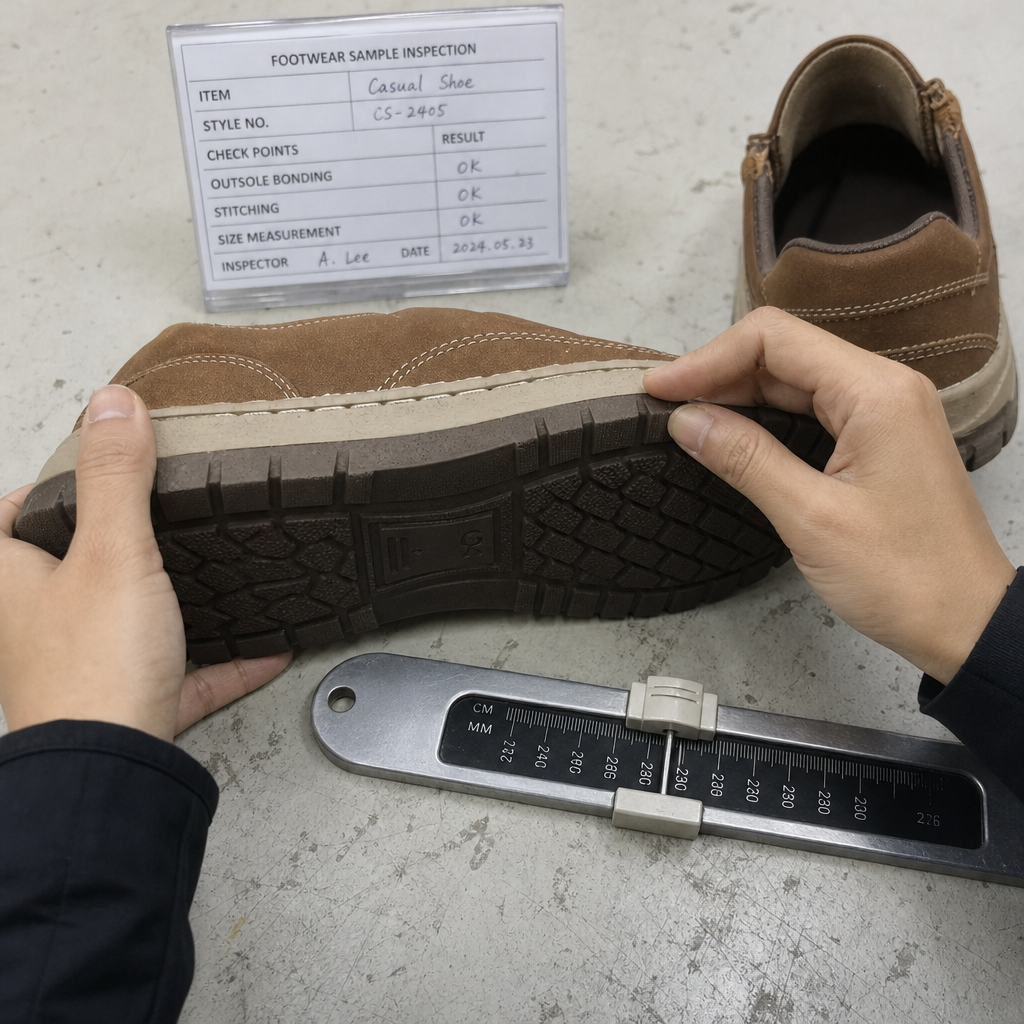
Create a sample review sheet covering:
- Fit: Heel hold, toe space, pressure points, and consistency between the left and right shoe.
- Construction: Stitching, alignment, bonding, fastening, and exposed edges.
- Materials: Match against approved descriptions, swatches, and finishes.
- Appearance: Color consistency, surface marks, logo placement, and cleanliness.
- Packaging: Pair matching, size labels, box strength, and carton identification.
Separate personal impressions from measurable acceptance criteria. “Feels premium” is difficult to enforce; an approved material specification and agreed workmanship examples give both parties a clearer reference.
Retain an approved reference sample and require written approval for substitutions. For claims such as waterproofing or protective performance, arrange appropriate testing before making those claims to customers.
Compare landed cost, not just the quotation
Build your purchasing decision around the cost of receiving sellable inventory, not the supplier’s unit price alone. Use a worksheet that includes products, packaging, development, inspection, freight, insurance, duties, clearance, and delivery. Add a contingency allowance appropriate to your business rather than treating the first estimate as a guaranteed total.
A useful planning formula is:
Estimated landed cost per sellable pair = total acquisition and import costs ÷ expected sellable pairs.
For U.S. imports, obtain a product-specific customs classification review before finalizing the budget. CBP recommends providing detailed information about composition, intended use, origin, and value; importers can also request a binding classification ruling. Do not apply a duty rate from a different shoe simply because both products are sneakers.
When comparing quotations, require the same assumptions:
- Currency, quotation validity, and payment milestones.
- Quantity by style, color, and size.
- Packaging, labeling, tooling, and sample charges.
- Shipping term, named locati0n, and included transport services.
- Inspection arrangements and responsibility for corrective work.
Model a second scenario with slower sales or fewer sellable pairs. If the margin depends on selling every pair immediately at full price, reconsider the order size before negotiating a discount.
Treat branded footwear as a separate sourcing decision
Can you buy wholesale Air Jordan shoes from China?
Proceed only when you can establish authenticity and confirm that the proposed importation and resale are lawful. A supplier’s locati0n, factory photographs, or claim of access to branded production is not sufficient evidence.
U.S. customs rules provide for seizure of merchandise bearing counterfeit marks, so branded footwear needs a separate verification process from ordinary private-label sourcing.
If you search for “air jordan shoes china wholesale” or “wholesale air jordan shoes from china,” use the results as leads to investigate—not proof of a legitimate supply chain. Request traceable invoices and independently verify any claimed authorization with the relevant brand or distributor.
Do not accept descriptions such as “replica,” “unauthorized authentic,” or “same factory” as substitutes for documentation. Set a clear purchasing rule: no order until authenticity, ownership history, and the proposed distribution arrangement have been reviewed.
Genuine goods can also raise import questions beyond authenticity. CBP identifies restrictions involving certain trademarked and gray-market merchandise, so obtain qualified advice when the supply chain or territorial rights are unclear. If the evidence remains incomplete, choose an original private-label product instead.
Put payment and quality expectations in writing
Before paying a production deposit, assemble one agreed order specification. Include materials, measurements, size quantities, colors, packaging, labels, approved samples, completion dates, and inspection requirements. Record how changes must be authorized and what happens if the supplier misses the agreed requirements.
Avoid vague terms such as “good quality” or “standard packaging.” Attach photographs, drawings, measurement instructions, and defect examples where useful. Ask the supplier to acknowledge the final version rather than relying on a chain of partially updated messages.
If you use Alibaba Trade Assurance, review the current terms for your particular order. Alibaba instructs buyers to document product specifications and shipping information, retain platform communications, and use designated payment arrangements; protection should not be treated as an unconditional refund promise.
Arrange inspection while there is still an opportunity to correct problems before dispatch. Require the report to identify the inspected stock and compare findings with the approved specification. Agree in advance on rework, reinspection, replacements, or other remedies rather than negotiating them after a failed inspection.
Plan U.S. compliance and delivery before production
Ask a customs broker to review your product details, proposed documentation, and shipment responsibilities before the order becomes difficult to change. CBP advises new importers to provide a complete merchandise description and seek guidance on classification and other applicable requirements.
Confirm country-of-origin marking during sample approval. U.S. rules generally require imported articles, unless excepted, to identify their country of origin conspicuously, legibly, and as permanently as the article permits. Review the actual footwear and packaging arrangement rather than assuming a shipping-carton label resolves everything.
Children’s footwear requires additional attention. CPSC identifies lead requirements, tracking labels, and Children’s Product Certificates for children’s shoes; its certification guidance explains the importer’s responsibilities and applicable third-party testing basis. Have a qualified laboratory confirm the requirements for your specific product before production.
For delivery, request a written schedule covering production completion, inspection, dispatch, customs clearance, and warehouse receipt. Ask your forwarder to distinguish estimated transit from the full delivery timeline. Confirm who is responsible for import clearance and request the documentation needed for your records.
Never approve false values, inaccurate descriptions, or altered origin information to make shipping appear simpler.
Start with a pilot order and earn the reorder
Make the first purchase a controlled test of the supplier and the product. Define what success means before stock arrives: acceptable inspection results, consistent sizing, complete documentation, and performance against your planned delivery and cost assumptions. Avoid increasing quantities merely to reach an attractive unit-price tier.
After receipt, compare the shipment with the purchase order and retain a record of discrepancies. Track customer feedback by style and size so that fit complaints lead to specific corrections. Separate product defects from fulfillment errors when reviewing results with the supplier.
Before reordering, confirm that the approved materials and specifications remain unchanged. Update the size mix using your own sales evidence, not the original assortment by default.
The strongest shoes wholesale sourcing process is repeatable: define the product, verify the seller, approve evidence, document the deal, and check the result. Use the first order to establish that process before committing more cash to inventory.
Frequently Asked Questions About Sourcing Shoes Wholesale from China
What should I look for in a supplier when sourcing wholesale shoes from China?
It's important to verify the supplier's legal identity, production capabilities, and quality control measures. Always request documentation that connects the company taking payment to the entity responsible for your order.
How do I ensure the quality of the shoes I receive?
Always request samples before placing a full order. Evaluate the samples based on fit, construction, materials, and appearance to ensure they meet your standards.
What are the customs requirements for importing shoes from China to the U.S.?
U.S. Customs and Border Protection (CBP) requires detailed product descriptions, correct classification, and compliance with safety regulations. It's advised to work with a customs broker to navigate these requirements.
Can I sell branded shoes sourced from China legally?
Yes, but you must ensure authenticity and compliance with trademark laws. It's crucial to verify the legitimacy of the supplier and their authorization to sell branded products.
How do I calculate the landed cost of my wholesale shoes?
The landed cost includes all acquisition and import expenses such as the unit price, shipping, duties, and any additional fees. Use a worksheet to break down these costs and ensure accurate budgeting for your wholesale purchase.