
Shipping from China to Canada involves choosing a transport method, preparing accurate documents, and meeting Canadian import requirements.
This guide focuses on commercial shipments, helping you compare freight options, evaluate shipping agents, and plan customs clearance before goods leave the supplier.
Start with your cargo details and delivery deadline, then compare the complete delivered cost—not just the freight rate.
What is the best way to ship from China to Canada?
The best method depends on shipment size, urgency, and the cost of arriving late. Consider express courier for small urgent consignments, air freight for time-sensitive inventory, and ocean freight for larger orders with flexible deadlines. Compare options against your actual delivery requirements rather than choosing by price alone.
Use this shortlist when requesting quotes:
- Small, urgent order: Request a courier quote and confirm customs handling and delivery inclusions.
- Time-sensitive commercial cargo: Compare air freight with courier service using packed dimensions and weight.
- Smaller, nonurgent shipment: Request a less-than-container-load ocean quote.
- Larger replenishment order: Compare shared-container service with a dedicated container, including destination charges.
These are starting points, not fixed shipment thresholds. Ask providers to explain why their proposed service suits your cargo, especially when two options have similar totals.
Sea freight and air freight explained
Sea freight: LCL versus FCL
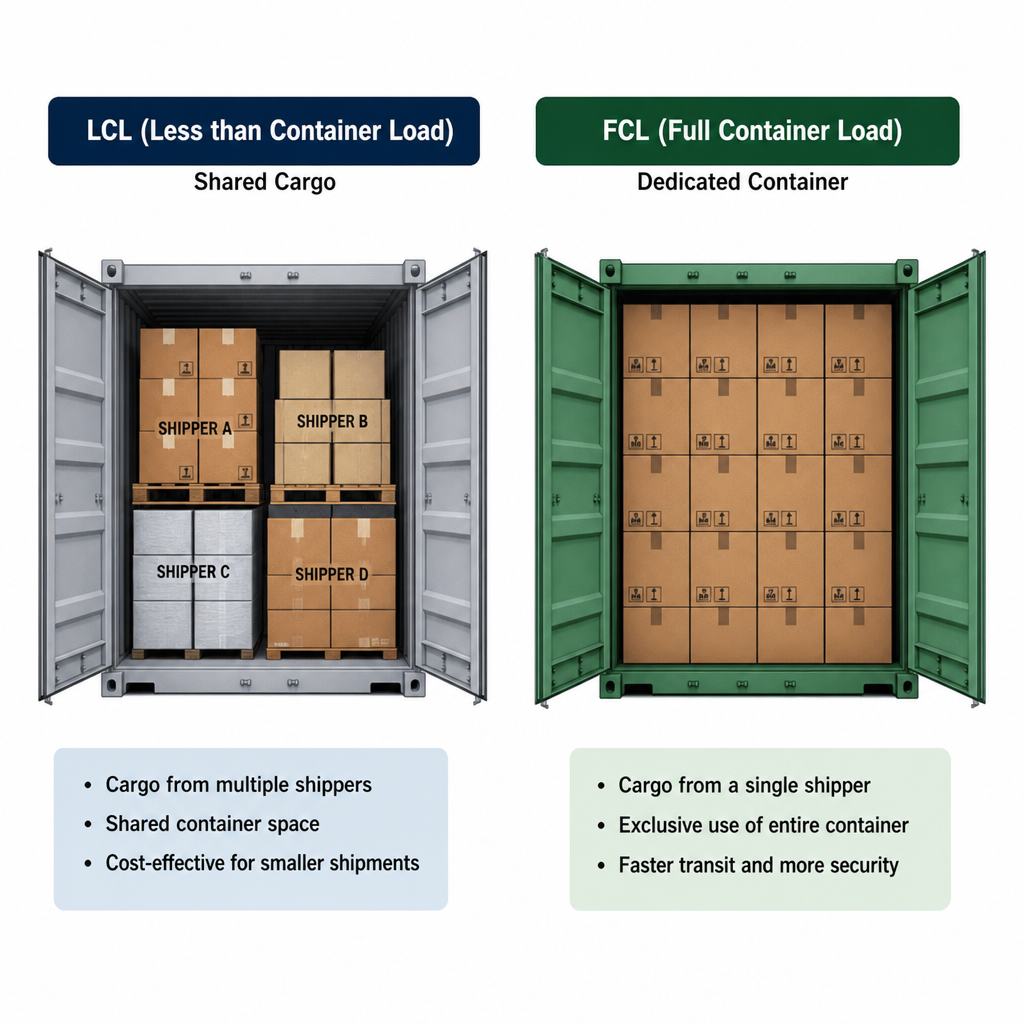
Shipping from China to Canada by sea offers two main arrangements. Less-than-container-load, or LCL, combines your cargo with other shipments; full-container-load, or FCL, reserves a container for your shipment.
LCL suits orders that do not require a dedicated container, while FCL pricing is generally based on the container rather than a volume-based freight charge.
For sea freight from China to Canada, compare the complete LCL and FCL quotes rather than assuming shared space is always cheaper. Ask each provider to identify origin handling, destination handling, unpacking, and delivery charges separately.
Container shipping from China to Canada should also be assessed against your receiving capacity: confirm when your warehouse can accept delivery and how unloading will be arranged.
Air freight and chargeable weight
Air shipping from China to Canada deserves consideration when delivery speed matters more than the lowest transport cost. However, air freight charges may reflect dimensional weight rather than actual weight. Large, lightweight cartons can therefore cost more to transport than their scale weight suggests.
Request a quote using final packed measurements, including pallets where applicable. Ask which dimensional-weight formula and rounding rules apply, because carriers may use different density ratios. Before reducing packaging to save space, check that the revised cartons still protect the goods adequately.
Building a realistic delivery schedule
Treat the international journey as one part of the schedule, not the whole delivery promise. LCL shipments involve consolidation and deconsolidation, while customs examination can add another step before release.
A quoted arrival date therefore needs a clear endpoint: arrival at the port, availability for collection, or delivery to your warehouse.
Ask for a milestone-based plan covering supplier pickup, export departure, Canadian arrival, customs release, and final delivery. Confirm whether the estimate uses calendar or business days and whether it includes inland transport. For a launch or seasonal order, work backward from the required warehouse date and ask the provider where contingency time is needed.
Avoid treating a general online transit estimate as a booking commitment. Request the proposed routing, expected departure, service assumptions, and procedure for notifying you about changes. Keep production completion separate from shipping readiness so an unfinished order does not undermine the transport plan.
How much does shipping from China to Canada cost?
There is no universal shipping price: the total depends on cargo measurements, transport mode, service scope, and import charges. Freight pricing may use chargeable weight, shipment volume, or a per-container charge; Canadian duties and taxes depend on the goods and their customs treatment. Build a landed-cost estimate before approving the order.
Request a written breakdown of:
- Origin services: Supplier collection, export handling, and documentation.
- International transport: Main freight charge and applicable surcharges.
- Destination services: Terminal or warehouse handling, brokerage, and final delivery.
- Government charges: Estimated duties, taxes, and any applicable additional measures.
- Conditional charges: Examination-related handling, storage, waiting time, or other exceptions.
Use this list as a quote template, asking providers to mark each item included, excluded, or payable only if incurred. CBSA notes that importers can be responsible for third-party unloading and reloading fees associated with examinations.
Cheap shipping from China to Canada should mean an economical complete shipment, not merely the lowest advertised freight rate. Compare quotes with identical pickup points, delivery addresses, cargo details, and service terms.
Ask about quote validity, currency, and the assumptions that could change the final invoice.
Canadian customs requirements before departure
Register the importing business
For commercial imports, CBSA requires a CARM Client Portal account, a nine-digit business number, and an import program account. If a customs broker will manage your account, delegate the appropriate authority through CARM.
Discuss payment and release arrangements before shipment rather than waiting until the cargo arrives.
A broker can assist with customs transactions, but hiring one does not remove your responsibility for accurate declarations and duties owed. Review the product information submitted on your behalf and retain the supporting records.
Confirm who will be identified as importer of record.
Classify goods and check restrictions
Before you import from China, establish the Canadian ten-digit tariff classification, country of origin, and value for duty. These determine the applicable customs treatment; a supplier’s product code alone is not a complete Canadian classification.
Check current duties, taxes, and any applicable surtaxes or trade-remedy measures for the specific product.
Also verify whether the goods are restricted, regulated, or subject to permits and labelling requirements. Complete this review before committing to transport, particularly if the product needs another government agency’s approval. Shipping arrangements cannot substitute for admissibility checks.
Prepare consistent documents and packaging
Ask your broker and forwarder for a shipment-specific document checklist. Review the commercial invoice for detailed descriptions, prices, currency, quantities, and sale terms; obtain origin evidence and permits where required. Reconcile these details with the packing list and transport documents before departure.
Check solid-wood pallets and crates as well as the goods themselves. Regulated wood packaging from China must meet Canada’s treatment, debarking, and marking requirements; packaging made entirely from certain processed wood materials is exempt. Ask for clear photographs of required marks before loading.
How do you choose a shipping agent from China to Canada?
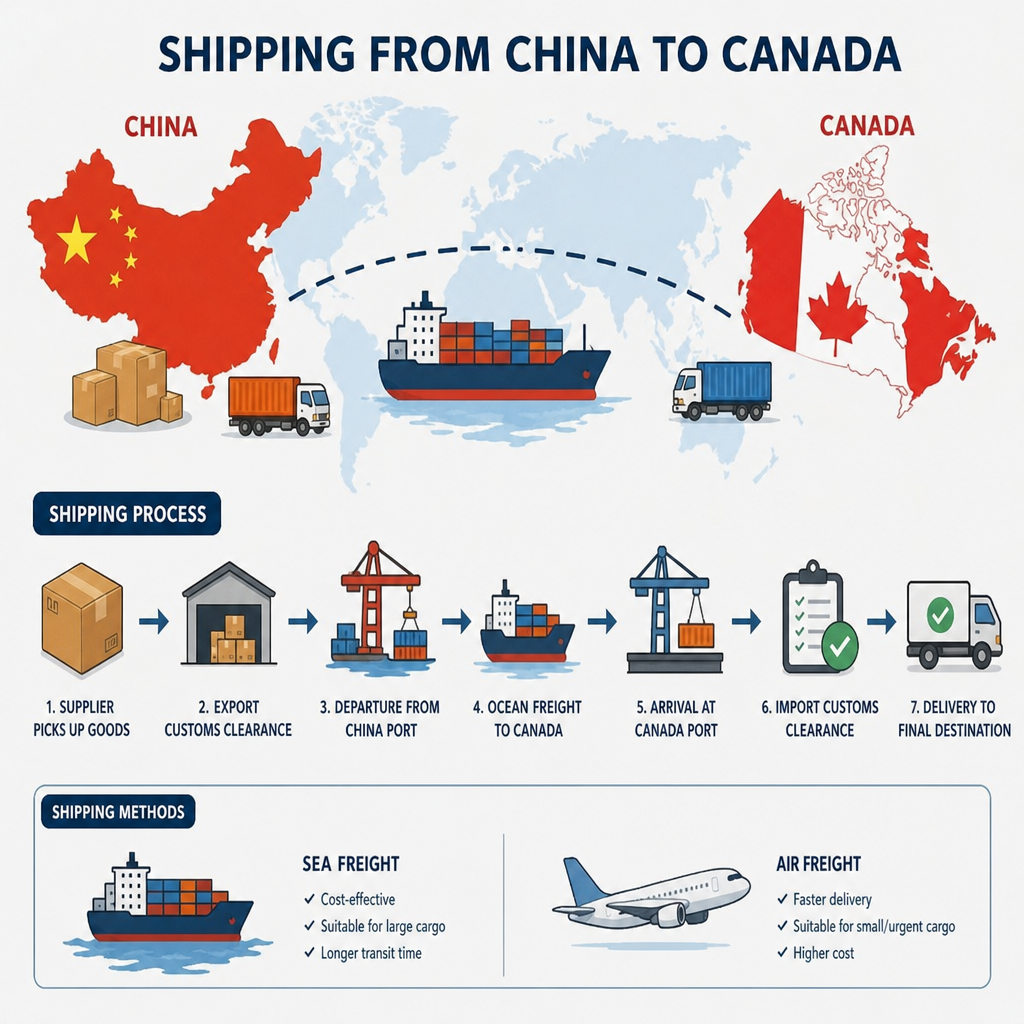
Choose a shipping agent from China to Canada by checking the proposed service scope, destination arrangements, and transparency of charges. Separate transportation coordination from customs brokerage: if the provider offers Canadian clearance, identify the licensed broker involved. You remain responsible for the accuracy and completeness of your import transactions.
When comparing shipping companies from China to Canada, ask:
- Who handles each stage? Identify origin pickup, international transport, brokerage, and Canadian delivery contacts.
- What does the quote exclude? Request destination charges and conditional fees in writing.
- What cargo information is needed? Provide dimensions, weight, product descriptions, and any handling concerns.
- How are problems managed? Ask who communicates delays, damage reports, and claims requirements.
- What insurance is proposed? Review coverage, exclusions, deductibles, and claim deadlines before accepting.
Compare the answers alongside the price. For a first shipment, prioritize a provider that explains responsibilities clearly and supplies an itemized plan you can review with your broker.
Confirm responsibilities before booking
Put the agreed Incoterms® rule and named place in the purchase contract. Under DAP, the buyer generally handles import clearance and duties; under DDP, those obligations fall to the seller.
ICC cautions that practical barriers can prevent sellers from completing import clearance, so confirm the proposed arrangement rather than relying on a “door-to-door” label.
Before authorizing pickup, approve the cargo details, document checklist, customs arrangements, delivery scope, and complete quote. Keep written confirmation of unresolved assumptions and assign someone to close each one. A well-defined booking gives you a clearer basis for managing cost, timing, and accountability.
Frequently Asked Questions About Shipping from China to Canada
What is the most cost-effective method for shipping from China to Canada?
The most cost-effective method depends on the shipment size and urgency. Generally, ocean freight (FCL or LCL) is cheaper for large shipments, while air freight is best for smaller, time-sensitive deliveries.
How can I find a reliable shipping agent from China to Canada?
When choosing a shipping agent, compare their service scope, ask about their experience, check reviews, and ensure they have proper licenses for handling customs clearance in Canada.
What documents are required for shipping goods from China to Canada?
Essential documents typically include a commercial invoice, packing list, bill of lading, and, depending on the product, specific permits or certificates to meet Canadian regulations.
What are the customs duties and taxes for importing goods from China to Canada?
Customs duties and taxes depend on the tariff classification of the goods. Importers should check the Canada Border Services Agency (CBSA) guidelines for applicable duties and taxes based on their specific products.
How long does shipping from China to Canada typically take?
Shipping times vary based on the method: air freight can take a few days to a week, while ocean freight generally takes a few weeks, depending on the route and any customs processing delays.