












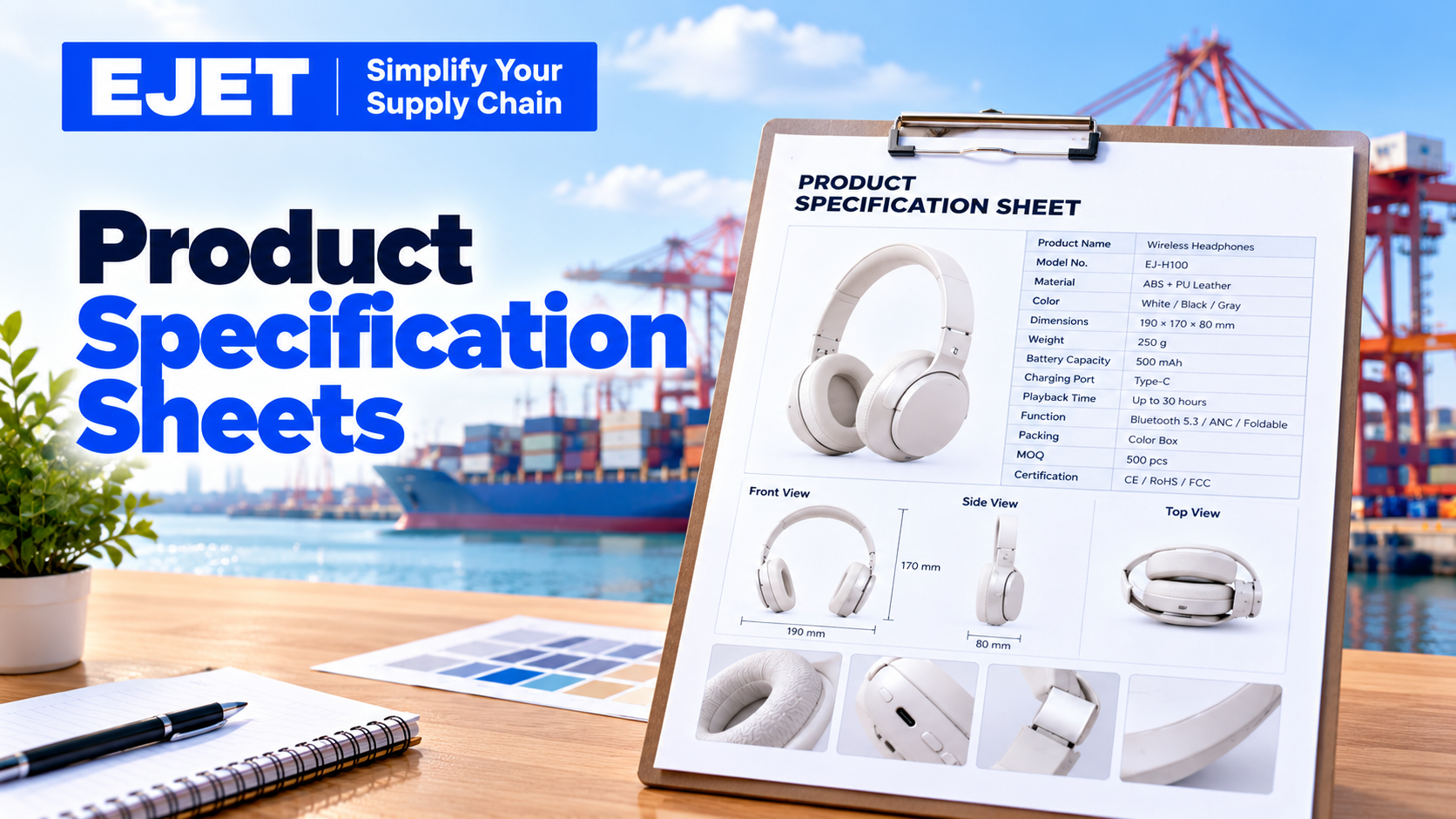
A product spec sheet, also known as a product specification sheet, is an essential document that provides detailed technical information, performance characteristics, materials, dimensions, and functional requirements of a product. It serves as a reliable reference for manufacturers, engineers, product developers, procurement teams, distributors, and customers.
In today's competitive marketplace, accurate and comprehensive product documentation is critical to maintaining quality, improving communication, and ensuring consistent manufacturing standards. A professionally prepared product specification sheet helps organizations communicate product requirements clearly while minimizing costly production errors and misunderstandings.
In this comprehensive guide, we explore the essential components of a product spec sheet, its benefits, industry applications, recommended formatting practices, and practical steps for creating professional product documentation.
What Is a Product Spec Sheet?
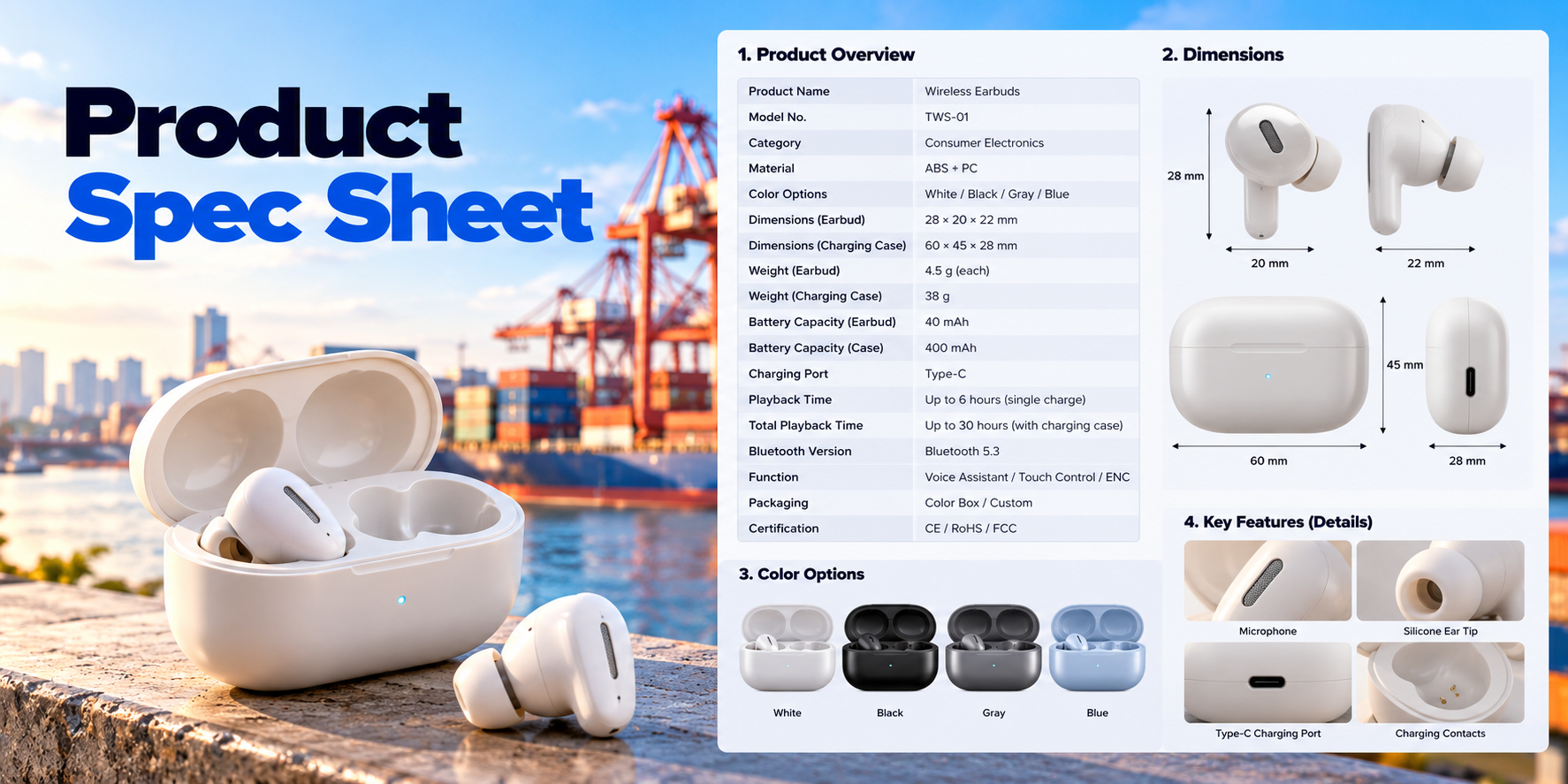
A product spec sheet is a structured document that describes the technical specifications, physical attributes, functional capabilities, and quality requirements of a particular product.
It provides a standardized reference containing the information necessary to understand, manufacture, evaluate, purchase, or maintain the product.
Depending on the industry, a product specification sheet may include:
-
Product identification: Product name, model number, SKU, and manufacturer details.
-
Technical specifications: Dimensions, weight, capacity, operating conditions, and performance ratings.
-
Material specifications: Raw materials, components, finishes, and construction methods.
-
Performance requirements: Functional capabilities, efficiency, durability, and operating limitations.
-
Quality standards: Testing procedures, inspection criteria, and applicable certifications.
-
Packaging specifications: Packaging materials, dimensions, labeling, and shipping requirements.
-
Compliance information: Relevant safety regulations and industry standards.
-
Product images and diagrams: Technical drawings, illustrations, and dimensional references.
A well-structured product specification sheet allows stakeholders to access critical product information quickly and accurately.
Why Product Specification Sheets Are Important
Product specification sheets play a central role in product development, manufacturing, quality assurance, and commercial operations.
1. Improved Product Quality and Consistency
We use detailed product specifications to establish measurable quality requirements and maintain consistent manufacturing standards.
By defining materials, dimensions, tolerances, and performance expectations, organizations can reduce variation between production batches.
A clearly documented specification also provides objective acceptance criteria for quality inspections.
2. Better Communication Between Teams
Product development often involves collaboration between designers, engineers, manufacturers, suppliers, and sales professionals.
A comprehensive product spec sheet creates a shared technical reference, helping every stakeholder understand the same requirements.
This reduces ambiguity and supports faster decision-making throughout the product lifecycle.
3. Reduced Manufacturing Errors
Incomplete or inaccurate product specifications can result in incorrect materials, dimensional discrepancies, assembly problems, and rejected production batches.
Detailed documentation reduces these risks by establishing precise requirements before manufacturing begins.
4. More Efficient Procurement
Procurement professionals rely on product specification sheets to compare suppliers and verify that proposed products meet organizational requirements.
Standardized specifications support transparent purchasing decisions and improve supplier evaluation.
5. Enhanced Customer Confidence
Customers frequently require detailed technical information before purchasing products, particularly in industrial, electronic, mechanical, and commercial markets.
A professional product specification sheet demonstrates transparency and makes it easier for customers to evaluate suitability.
Essential Components of a Professional Product Spec Sheet
An effective specification sheet should be organized into clearly defined sections that present technical information logically.
Product Identification and General Information
The first section should establish the product's identity and provide essential administrative details.
|
Specification |
Description |
|---|---|
|
Product Name |
Official product designation |
|
Model Number |
Unique model identifier |
|
SKU |
Stock keeping unit |
|
Manufacturer |
Company responsible for production |
|
Product Category |
Classification or application |
|
Version Number |
Current specification revision |
|
Release Date |
Date of document publication |
|
Product Description |
Summary of purpose and functionality |
Accurate product identification is especially important when manufacturers produce multiple product variants.
Physical Product Specifications
Physical specifications describe measurable characteristics of the product.
Typical parameters include length, width, height, diameter, thickness, weight, volume, and dimensional tolerances.
For example, a hypothetical electronic enclosure might have the following specifications:
|
Parameter |
Specification |
|
Length |
250 mm |
|
Width |
150 mm |
|
Height |
75 mm |
|
Weight |
1.2 kg |
|
Material |
Aluminum alloy |
|
Surface Finish |
Powder-coated |
|
Color |
Matte black |
|
Dimensional Tolerance |
±0.5 mm |
These values are illustrative and should be replaced with verified measurements for the actual product.
Material and Component Specifications
Material specifications define the substances and components used in product construction.
Depending on the product category, we may document:
-
Material grade and composition.
-
Mechanical properties and strength.
-
Thermal resistance.
-
Corrosion resistance.
-
Surface treatments and coatings.
-
Electrical conductivity or insulation properties.
-
Environmental characteristics.
-
Approved alternative materials.
Where applicable, material requirements should reference recognized technical standards and validated test methods.
Technical Performance Specifications
Performance specifications establish the measurable operating capabilities of a product.
For electrical and electronic products, these may include voltage, current, power consumption, operating frequency, efficiency, and protection ratings.
Mechanical products may require information about load capacity, torque, pressure, rotational speed, and fatigue resistance.
Every performance parameter should include appropriate units and, where necessary, clearly defined test conditions.
How to Create a Product Spec Sheet: Step-by-Step Guide
Creating a reliable product specification sheet requires careful planning, accurate data collection, and systematic validation.
Step 1: Define the Product and Its Intended Application
We begin by identifying the product's purpose, intended users, operating environment, and primary functional requirements.
This information determines which technical parameters must appear in the specification sheet.
For example, industrial machinery requires detailed mechanical and safety information, while consumer electronics typically require electrical ratings, connectivity specifications, and environmental operating limits.
Step 2: Collect Accurate Technical Information
We gather product data from engineering drawings, approved design documents, manufacturer records, material certificates, laboratory reports, and validated testing results.
Information should be verified against authoritative internal sources rather than estimated.
Particular attention should be given to numerical values, measurement units, tolerances, and regulatory claims.
Step 3: Organize Specifications into Logical Categories
A clear document structure improves readability and reduces the time required to locate specific information.
We recommend grouping specifications into sections covering product identification, physical characteristics, materials, performance, operating conditions, compliance, and packaging.
Step 4: Include Technical Drawings and Product Images
Visual documentation can communicate information that is difficult to describe using text alone.
Technical drawings should identify important dimensions, interfaces, connection points, and assembly requirements.
Where applicable, drawings should include scale information, tolerances, revision references, and standardized symbols.
Step 5: Establish Measurable Acceptance Criteria
A specification should distinguish between general descriptions and measurable requirements.
For example, instead of stating that a product must withstand high temperatures, we should specify its permitted operating temperature range and the conditions under which that range applies.
Measurable criteria allow engineers and quality assurance personnel to evaluate compliance objectively.
Step 6: Review and Approve the Document
Before publication, relevant departments should review the specification sheet.
Engineering teams verify technical accuracy, quality teams confirm inspection requirements, and compliance specialists review applicable regulatory statements.
Document approval should be recorded according to the organization's quality management procedures.
Step 7: Maintain Version Control
Product specifications frequently change as designs evolve or manufacturing processes improve.
We recommend maintaining a revision history that records the version number, modification date, description of changes, and responsible approver.
Version control helps prevent obsolete specifications from being used during production or procurement.
Product Spec Sheet Template
The following structure provides a practical starting point for developing a professional specification sheet.
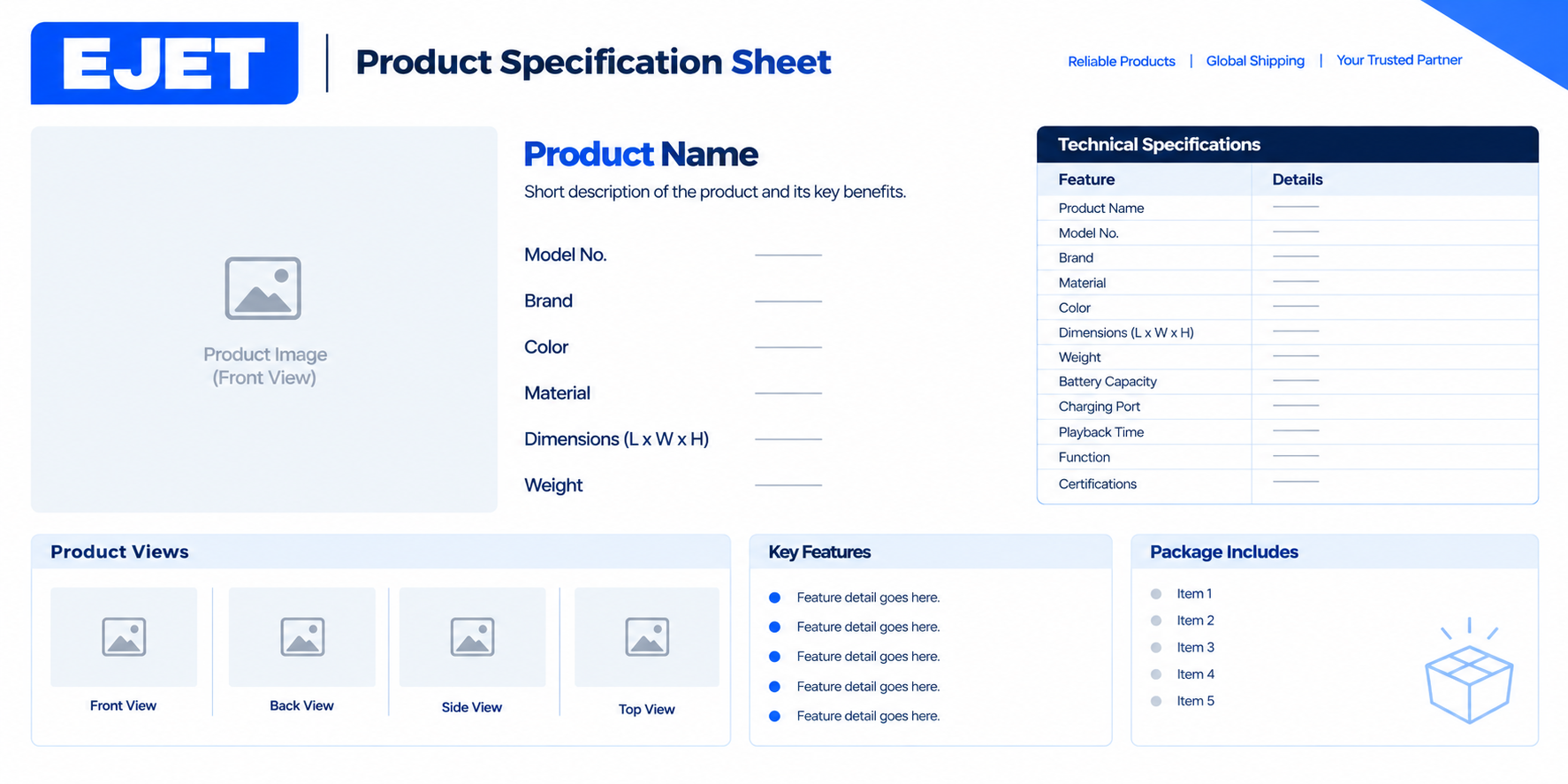
This template can be adapted for manufacturing, electronics, consumer goods, industrial equipment, packaging, and other product categories.
Different Types of Product Specification Sheets
Product specification sheets vary significantly depending on industry requirements.
Manufacturing Product Spec Sheets
Manufacturing specification sheets emphasize dimensions, material grades, tolerances, assembly instructions, surface finishes, and inspection requirements.
They are commonly used to communicate approved product requirements to factories and subcontractors.
Electronics Product Spec Sheets
Electronic product specification sheets typically include:
-
Input and output voltage.
-
Current consumption.
-
Power ratings.
-
Connectivity interfaces.
-
Processor or component specifications.
-
Operating temperature ranges.
-
Electrical protection characteristics.
-
Applicable electromagnetic compatibility requirements.
Accurate electrical specifications are particularly important for product integration and safety assessments.
Food Product Specification Sheets
Food product documentation often includes ingredient lists, nutritional information, allergen declarations, storage conditions, shelf-life requirements, and packaging information.
Regulatory requirements vary by jurisdiction and product category, so the specification should reflect the rules applicable to the intended market.
Textile and Apparel Specification Sheets
Apparel specification sheets describe fabric composition, garment measurements, sizing, stitching methods, color references, trims, labeling, and finishing requirements.
They help manufacturers reproduce approved designs consistently.
Construction Material Specification Sheets
Construction product specifications may include compressive strength, density, fire performance, thermal properties, moisture resistance, installation requirements, and applicable building standards.
These documents support material selection and technical evaluation.
Product Spec Sheet vs. Product Data Sheet
Although the terms are sometimes used interchangeably, a product spec sheet and a product data sheet may serve different purposes.
|
Feature |
Product Spec Sheet |
Product Data Sheet |
|---|---|---|
|
Primary Purpose |
Define detailed product requirements |
Communicate product characteristics |
|
Main Audience |
Engineers, manufacturers, procurement teams |
Customers, technical buyers, distributors |
|
Technical Detail |
Often extensive |
Varies by product |
|
Manufacturing Requirements |
Frequently included |
Not always included |
|
Performance Information |
Defined requirements and limits |
Published capabilities and ratings |
|
Quality Criteria |
May specify acceptance criteria |
Usually focuses on product information |
The distinction depends on organizational practices and industry terminology. In many companies, the same document serves both functions.
Best Practices for Designing an Effective Product Specification Sheet
A professional product spec sheet should balance technical completeness with practical readability.
Use consistent terminology. Standardized parameter names reduce confusion across departments and suppliers.
Specify measurement units. Every numerical measurement should identify its unit, such as millimeters, kilograms, volts, watts, or degrees Celsius.
Separate nominal values from limits. A nominal dimension should not be confused with an allowable minimum or maximum.
Identify test conditions. Performance ratings may change depending on temperature, humidity, load, or operating conditions.
Avoid unsupported claims. Statements about certification, durability, efficiency, or regulatory compliance should be supported by appropriate evidence.
Use structured tables. Tables make technical parameters easier to compare and verify.
Maintain document traceability. Revision identifiers, approval records, and publication dates help users confirm that they are working with the correct specification.
Make digital documents searchable. Clearly labeled sections and selectable text improve accessibility and information retrieval.
Common Product Specification Sheet Mistakes
Several documentation problems can reduce the reliability of product specifications.
One frequent mistake is omitting dimensional tolerances. A dimension without an acceptable variation may be insufficient for manufacturing or inspection.
Another common problem is mixing unverified marketing claims with engineering requirements. Product descriptions should distinguish promotional information from measurable technical characteristics.
Outdated documents also create significant risks. When manufacturing teams rely on superseded specifications, products may be manufactured according to incorrect requirements.
Finally, unclear terminology can cause disagreements between suppliers and buyers. Definitions, reference standards, and acceptance criteria should be sufficiently precise to support consistent interpretation.
Digital Product Specification Sheets and Product Data Management
Modern organizations increasingly maintain product specifications in centralized digital systems rather than relying exclusively on standalone documents.
Product lifecycle management systems, enterprise resource planning platforms, and product information management tools can help coordinate product data across departments.
These systems may support controlled revisions, approval workflows, document permissions, and relationships between products, components, and suppliers.
Digital product documentation also improves the efficiency of distributing updated specifications to authorized stakeholders.
However, digital storage alone does not guarantee accuracy. Effective data governance, ownership, validation, and change control remain essential.
Frequently Asked Questions About Product Spec Sheets
What should a product spec sheet include?
A product spec sheet should include product identification, dimensions, materials, technical performance, operating conditions, quality requirements, and applicable compliance information. Packaging details, technical drawings, and revision history may also be necessary.
How do we write a professional product specification sheet?
We begin by identifying the product's intended purpose, collecting verified technical data, organizing requirements into logical categories, and defining measurable acceptance criteria.
The completed document should undergo technical review and approval before publication.
What is the difference between a product spec sheet and a technical specification?
A product spec sheet is generally a concise, structured presentation of product characteristics and requirements.
A technical specification may be a more extensive document covering design requirements, verification methods, interfaces, and detailed acceptance conditions.
Can we create a product spec sheet in Excel?
Yes. Excel is useful for managing structured specifications, comparing product variants, and maintaining tabular technical information.
Word, Google Docs, and dedicated product management systems are also commonly used.
What is the best format for a product specification sheet?
The best format depends on the intended audience and workflow. PDF is widely used for controlled distribution, while spreadsheet and document formats are convenient for editing and collaboration. Organizations should maintain an authoritative approved version.
How often should product spec sheets be updated?
A product spec sheet should be reviewed whenever relevant product characteristics, materials, manufacturing requirements, testing criteria, or regulatory obligations change. Periodic reviews can also help identify outdated information.
Conclusion: Creating Accurate and Reliable Product Spec Sheets
A comprehensive product spec sheet is a fundamental resource for successful product development, manufacturing, procurement, and quality management.
By documenting verified technical specifications, defining measurable requirements, and maintaining effective revision control, we can improve product consistency, reduce communication errors, and support informed purchasing decisions.
The most effective product specification sheets combine technical accuracy, clear organization, measurable acceptance criteria, and reliable document control.
Whether we are developing industrial equipment, electronic devices, consumer products, or construction materials, these principles provide a dependable foundation for professional product documentation.

_1751507038923.png)