



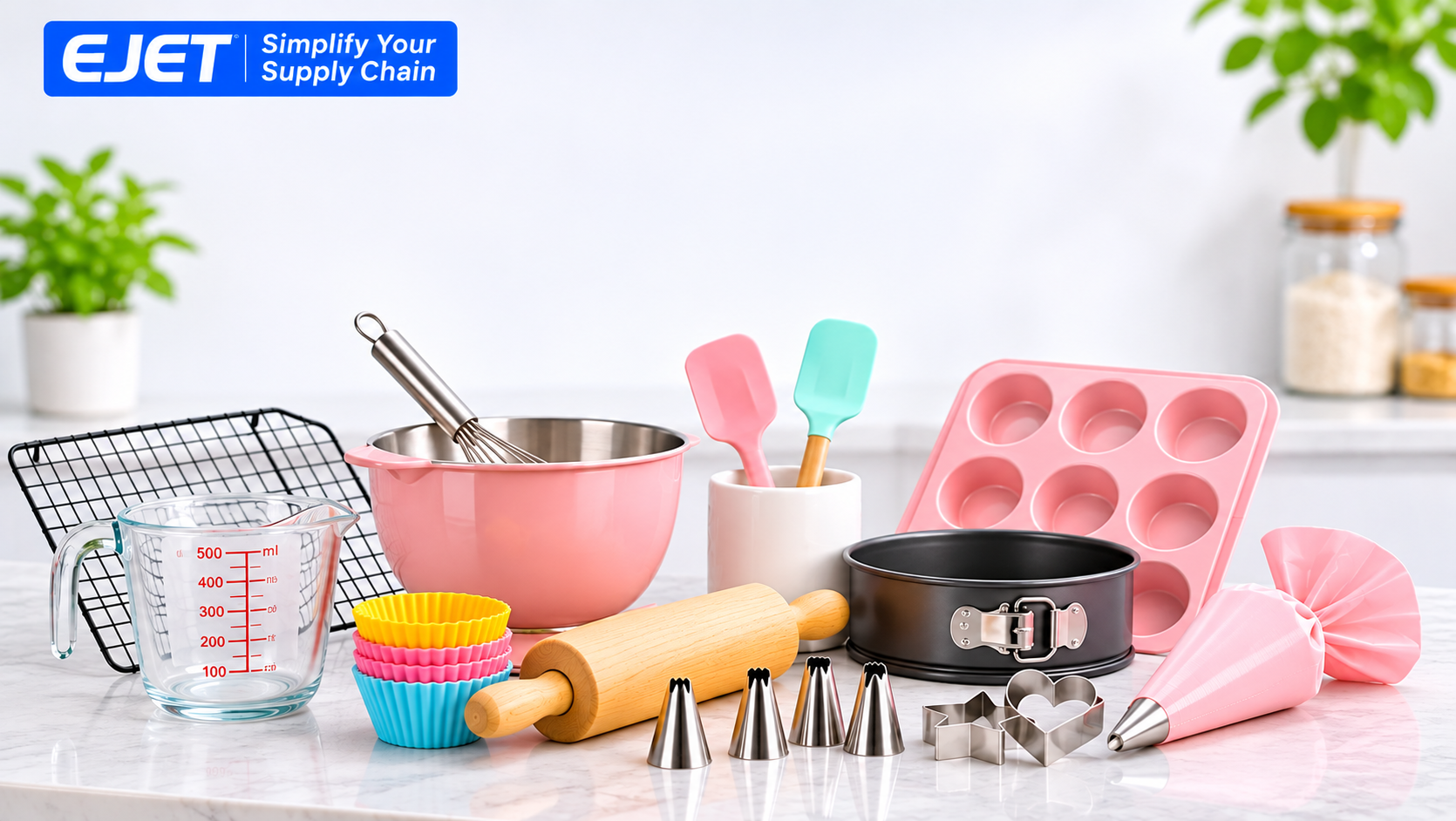
Essential baking tools help you measure ingredients, mix doughs and batters, bake in suitable pans, and cool your creations properly. This guide separates everyday baking essentials from optional upgrades, so you can build a useful collection without filling your kitchen with equipment you rarely touch. Start with the recipes you enjoy, then choose tools that support those tasks.
What baking tools do you actually need to get started?
For basic home baking, start with measuring tools, mixing bowls, a sturdy spoon, a flexible spatula, a whisk, and the pan your recipe requires. Add parchment paper, oven mitts, and a cooling rack to handle the baking and cooling stages. An electric mixer becomes useful when your recipes call for repeated beating, whipping, or creaming.
Treat any list of essential baking tools every baker needs as a starting point, not a requirement to buy everything immediately. A cookie baker and a bread baker will share several basics, but their specialty equipment should differ.
Before shopping, check your existing kitchen tools. You might already own suitable bowls, measuring spoons, and a sturdy mixing spoon. Put your first purchases toward missing functions rather than matching colors or complete accessory sets.
Measuring tools that make recipes easier to repeat
Digital kitchen scale
A digital scale measures ingredients by weight, helping you avoid the variation that can occur when flour is packed differently into measuring cups. It also lets you weigh ingredients directly into a bowl, reducing the number of utensils you need to wash. Choose one with a readable display and a tare function, which resets the reading to zero after you add a container or ingredient.
To use it, place your bowl on the scale, press tare, and add the ingredient to the weight specified in your recipe. Reset before adding the next ingredient when the recipe allows them to share a bowl. Use the recipe’s supplied weights rather than assuming that every ingredient has the same cup-to-gram conversion.
Measuring cups and spoons
Keep measuring spoons even if you prefer weighing ingredients; recipes commonly specify small quantities by volume. Dry measuring cups have rims that allow you to level ingredients, while a liquid measuring cup provides space above its markings and a pouring spout. For a starter collection, choose clearly marked utensils that feel comfortable to hold.
Use these habits when measuring:
- Dry ingredients: Follow the recipe’s filling method and level the cup when directed.
- Liquids: Set the measuring cup on a level surface and read its markings at eye level.
- Small quantities: Use measuring spoons rather than ordinary eating utensils.
Mixing essentials for doughs, batters, and fillings
You do not need a drawer full of mixing implements. Start with tools that perform different jobs: a bowl to contain ingredients, a spoon for stirring, a whisk for blending, and a spatula for scraping and folding. These basics appear throughout baking equipment guidance because they cover so many preparation tasks.
Mixing bowls
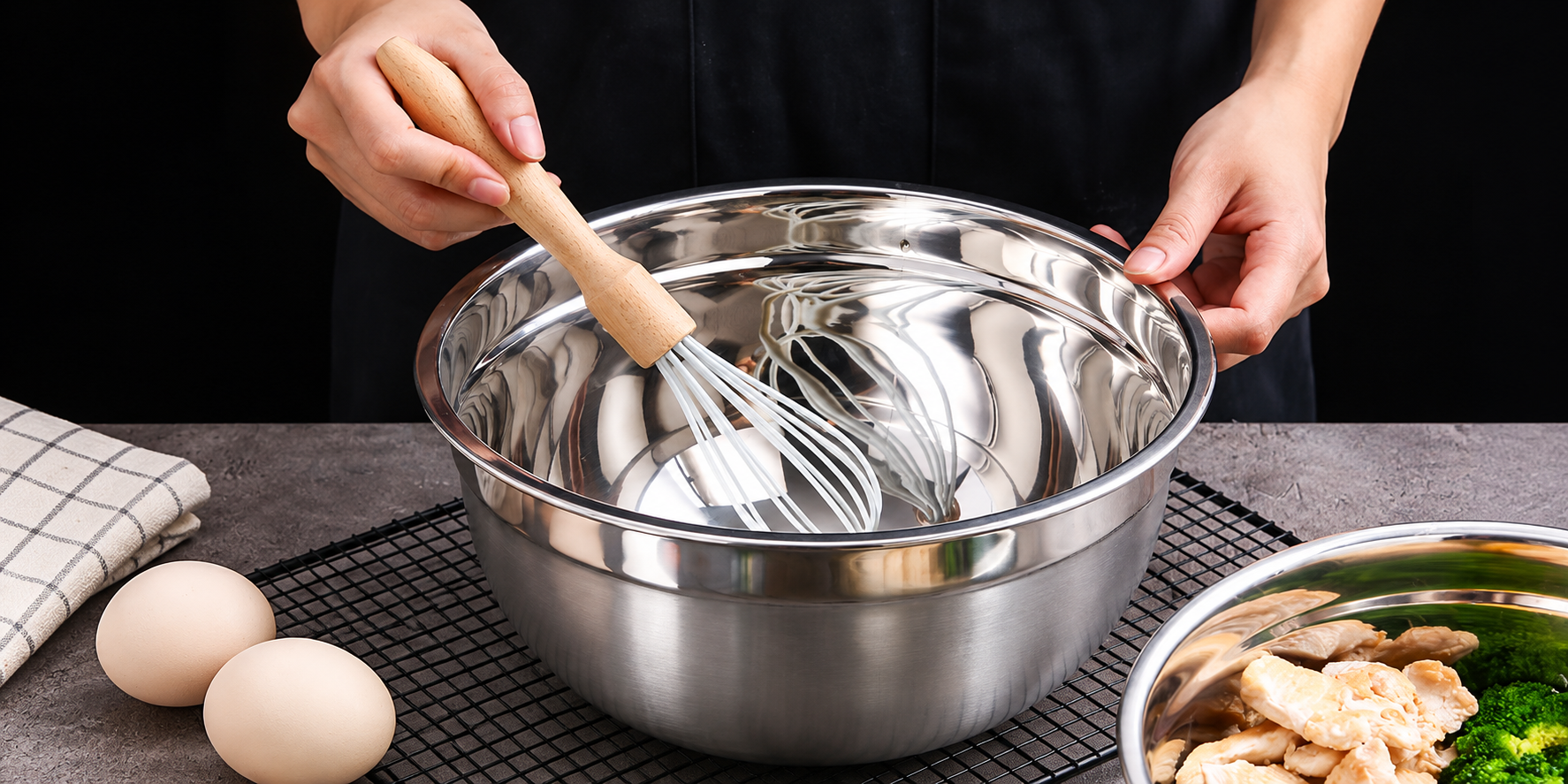
A practical starting point is one large bowl for your main mixture and one smaller bowl for separately prepared ingredients. If you regularly make recipes with several components, add another size later. Nesting bowls are worth considering when cabinet space is limited.
Stainless steel and glass are common options. Choose bowls you can comfortably lift and hold while stirring; a bowl that feels awkward empty will not become easier to manage when filled. Check the manufacturer’s instructions before using any bowl in a microwave or over heat.
Spatula, whisk, and sturdy spoon
A flexible spatula scrapes batter from bowl walls and folds ingredients together. A whisk blends mixtures such as eggs or dry ingredients, while a sturdy spoon handles straightforward stirring. Keep all three within reach rather than expecting one utensil to perform every task equally well.
When choosing these pieces of essential kitchenware, prioritize a comfortable grip and an easily cleaned design. Try holding each tool as you would during mixing. If the handle feels slippery, cramped, or poorly balanced, choose another shape before worrying about appearance.
Baking pans that match your favorite recipes
Pan size, shape, and material affect baking, so start with the pan specified in your recipe. A different pan can change batter depth and how the bake progresses. Measure your existing pans before shopping; two pans that look similar may not have the same dimensions.
Rather than buying a large bakeware set, consider these options according to what you make:
|
Baking pan |
Useful starting point for |
What to check |
|---|---|---|
|
Rimmed baking sheet |
Cookies and free-form rolls |
Fit in your oven and space around the pan |
|
Square or rectangular pan |
Brownies, bars, and sheet cakes |
Exact dimensions specified by the recipe |
|
Round cake pan |
Single-layer or layered cakes |
Diameter, depth, and number of layers |
|
Muffin pan |
Muffins and cupcakes |
Cavity size and recipe yield |
|
Loaf pan |
Sandwich bread and quick breads |
Dimensions, since loaf pans vary |
These are different tools, not interchangeable containers. Buy for a recipe you expect to repeat rather than for every possibility.
Material and finish matter
Aluminum conducts heat well and is commonly used for baking pans. Glass, ceramic, and differently colored metal pans behave differently, so changing materials may require attention to recipe guidance. Do not assume every dish of roughly the same size will produce identical results.
Before purchasing, check that the pan fits your oven with room for air circulation. Also consider where you will store it. A versatile pan you can easily retrieve is a more practical starting point than specialty bakeware buried beneath a stack of rarely used pieces.
Preparation tools that earn their drawer space
Some baking supplies support many recipes, while others become essential only for a particular style of baking. Add these items when their purpose matches something you actually make. That keeps your collection focused without leaving you struggling through a recurring task.
- Parchment paper: Provides a nonstick lining for suitable baking tasks and helps with releasing baked goods. Follow the package’s temperature limits and usage instructions; wax paper is not a substitute for exposed oven baking.
- Rolling pin: Useful for pie dough, cutout cookies, and other doughs that need flattening. Choose a smooth pin that feels balanced in your hands rather than assuming a more elaborate design is better.
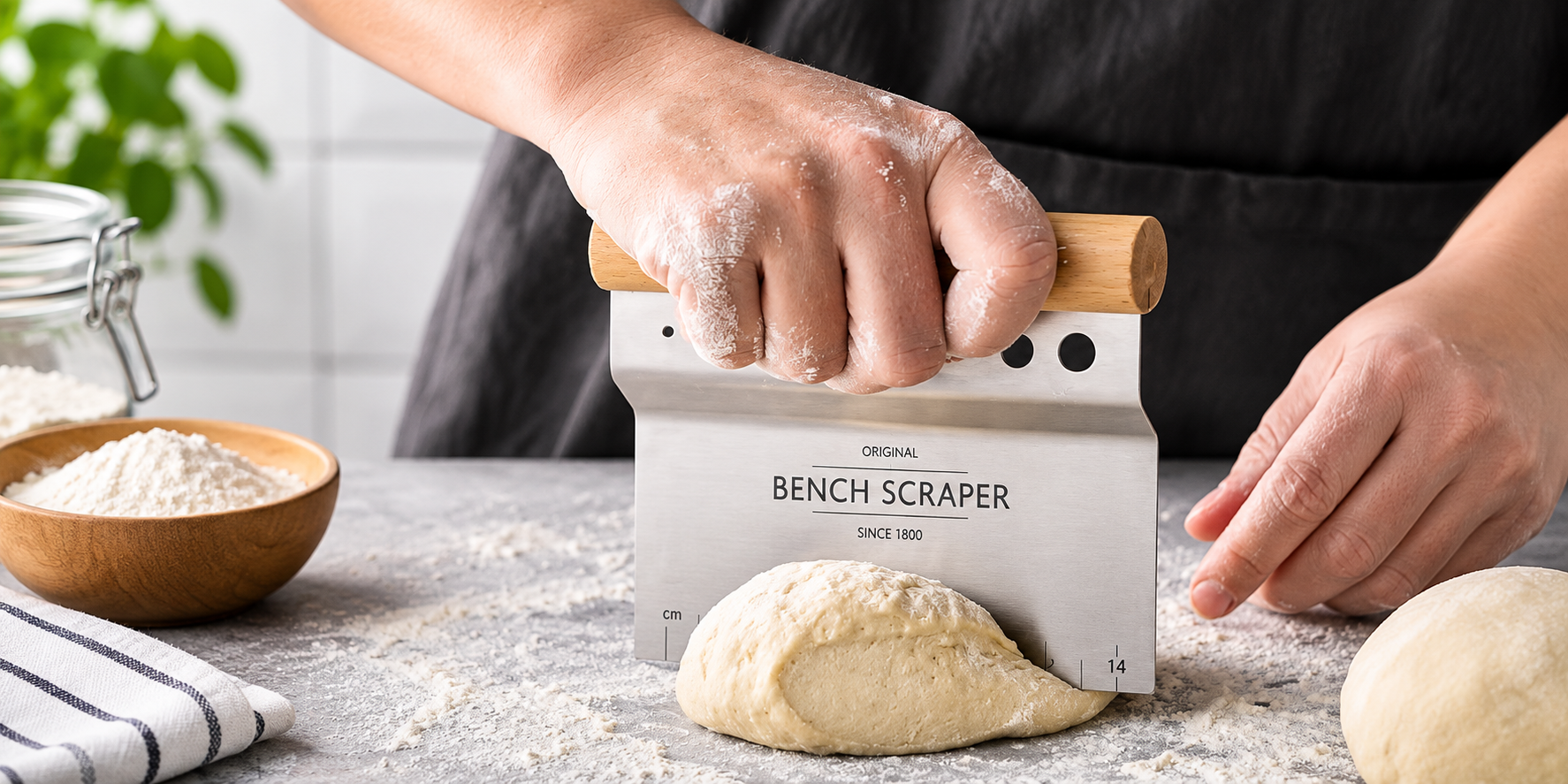
- Bench scraper: Helps divide dough, lift portions from a work surface, and gather up scraps. A flexible bowl scraper serves a related but different purpose, following the bowl’s curves to remove dough.
- Fine-mesh sieve: Useful for sifting dry ingredients or straining mixtures when a recipe requires it. Keep it accessible if those tasks appear frequently in your baking.
- Pastry brush: Applies washes, melted butter, or glazes. Choose a brush you can clean thoroughly, and follow its care instructions.
For example, prioritize a rolling pin if pies are your weekend project. If you mostly bake drop cookies, keep it on your later list and focus first on measuring tools, a suitable sheet pan, and cooling space.
Tools for checking, handling, and cooling your bake
The work does not end when batter enters the oven. Temperature checks, secure handling, and proper cooling each deserve a place in your equipment plan. Baking checklists commonly include thermometers, oven mitts, and cooling racks alongside the preparation tools.
An oven thermometer helps you check the temperature where your pan sits rather than relying only on the oven setting. Position it according to its instructions and allow the oven to heat fully before evaluating the reading. It can be especially useful when you are investigating repeated browning or timing problems.
An instant-read thermometer checks the temperature of ingredients or baked goods when your recipe calls for it. It serves a different purpose from an oven thermometer. Follow recipe-specific targets rather than using one temperature as a universal doneness test.
A wire cooling rack allows air to circulate around cookies after they leave the pan. Follow the recipe’s instructions about when to transfer them, since freshly baked cookies may need time to firm up first. Choose a stable rack with spacing that supports the items you bake.
Include suitable oven mitts in your setup, and decide where hot pans will go before you start. Keep that landing area clear rather than trying to rearrange your counter while holding a tray.
Do you need a stand mixer for home baking?
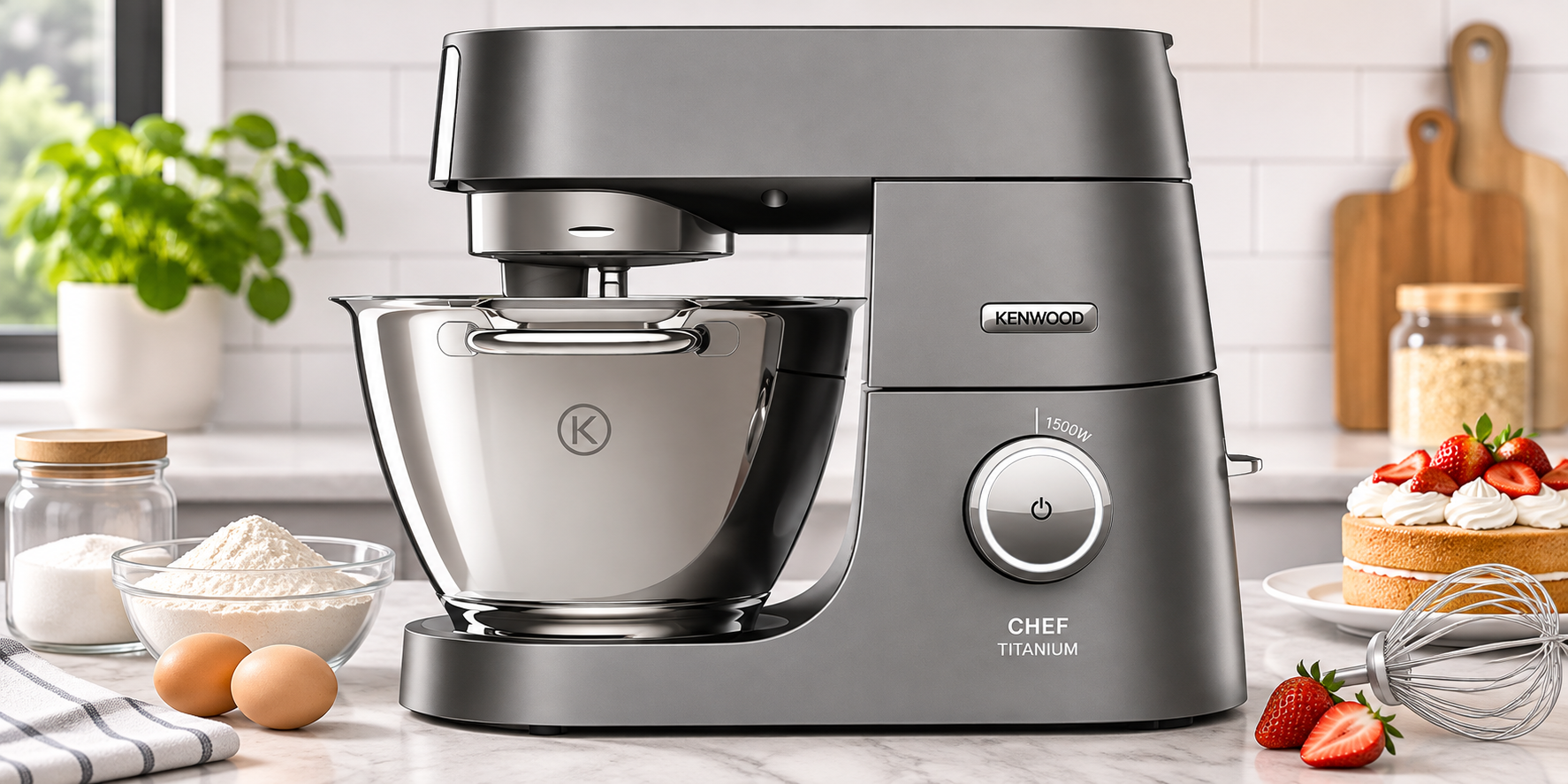
No, a stand mixer is not a universal requirement for home baking. A hand mixer handles many smaller, lighter mixing tasks, while a stand mixer becomes more useful for larger batches, heavier mixtures, and longer mixing times. Choose according to your recipes, available space, and comfort rather than treating it as a beginner’s admission ticket.
If you mainly make occasional cakes and frosting, consider whether a compact hand mixer meets your needs. If you frequently prepare substantial doughs or find prolonged mixing physically difficult, a suitable stand mixer may be a worthwhile upgrade. Check the model’s instructions and capacity before assuming it can handle any dough or batch size.
Borrowing a mixer, where practical, can help you judge whether you like using and cleaning it. Also measure its intended storage locati0n before buying. Baking equipment should fit your routine, not force you to reorganize the kitchen around an appliance you seldom use.
Build your collection without buying unnecessary gadgets
The best next purchase is often the tool that solves a problem you repeatedly encounter. Keep a short note after baking: Did you lack a second bowl, struggle to divide dough, or need another cooling surface? Use those observations to guide purchases instead of buying baking gadgets simply because they look clever.
Try this checklist before adding anything to your basket:
- Choose your next few recipes. List the equipment they actually require, including pan dimensions.
- Check what you own. Separate missing tools from items you merely want to replace.
- Prioritize repeat use. Buy the tool that supports several planned bakes before a single-purpose accessory.
- Check fit and care. Consider oven space, storage, cleaning requirements, and comfortable handling.
- Leave room to learn. Reassess after several baking sessions rather than buying your entire collection at once.
Keep your frequently used baking supplies together so setup becomes straightforward. Store specialty items elsewhere if they crowd the tools you reach for every week. An organized, modest collection can be a more useful workspace than an overflowing drawer.
Start with useful basics and grow from there
Build around accurate measuring, comfortable mixing, recipe-matched pans, and a clear plan for handling and cooling. Then let your favorite recipes reveal which specialty tools deserve a place. You do not need every gadget to enjoy baking; you need a workable setup, the right equipment for the task, and enough space to use it.
Frequently Asked Questions About Essential Baking Tools
What are the most essential baking tools for beginners?
Beginners should start with basic tools such as measuring cups and spoons, mixing bowls, a sturdy spoon, a flexible spatula, a whisk, and the appropriate baking pans for their recipes.
Do I need a stand mixer for baking?
A stand mixer is not essential for everyone. A hand mixer is sufficient for most lighter tasks, while a stand mixer is beneficial for larger batches and heavier mixtures. Choose based on the types of baking you do.
How do I choose the right baking pans?
Select baking pans that match the dimensions specified in your recipes. Consider the material of the pans as different materials can affect baking times and outcomes.
Is a digital kitchen scale necessary for baking?
While not strictly necessary, a digital kitchen scale helps ensure more accurate measurements by weight, which can improve consistency in baking results.
How do I properly care for my baking tools?
Care instructions vary by tool, but general practices include hand-washing non-stick surfaces, avoiding abrasive cleaners, and storing tools in a way that prevents damage. Always refer to specific manufacturer guidelines for optimal care.