








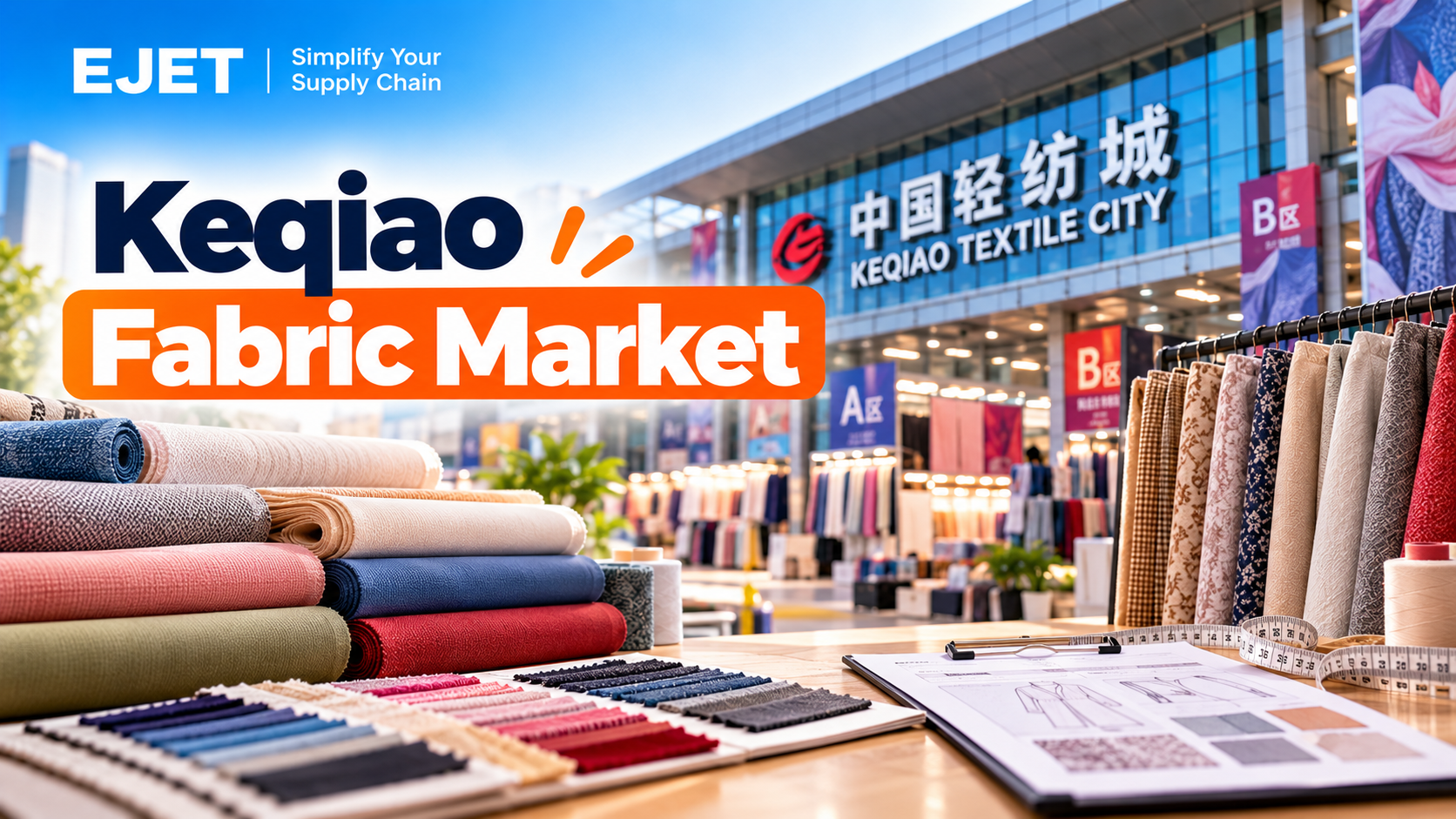
The Keqiao Fabric Market, widely known as China Textile City, is one of the world's largest textile trading centers. Located in Keqiao District, Shaoxing, Zhejiang Province, China, this extensive wholesale marketplace connects fabric manufacturers, textile suppliers, fashion brands, garment factories, and international buyers.
For businesses seeking wholesale fabrics in China, Keqiao offers an extraordinary selection of woven fabrics, knitted textiles, polyester materials, cotton fabrics, silk blends, functional textiles, and specialized apparel materials.
We recognize Keqiao as a strategic sourcing destination because it brings together textile production, wholesale trading, fabric development, finishing services, and international logistics within a concentrated industrial region.
Whether we are sourcing fabrics for clothing production, developing a new fashion collection, purchasing upholstery materials, or establishing long-term manufacturing partnerships, understanding the Keqiao Fabric Market in China helps us make informed purchasing decisions.
In this comprehensive guide, we will explore everything you need to know about Keqiao Fabric Market, from its location and major textile trading areas to the wide variety of wholesale fabrics available.
1. What Is the Keqiao Fabric Market?
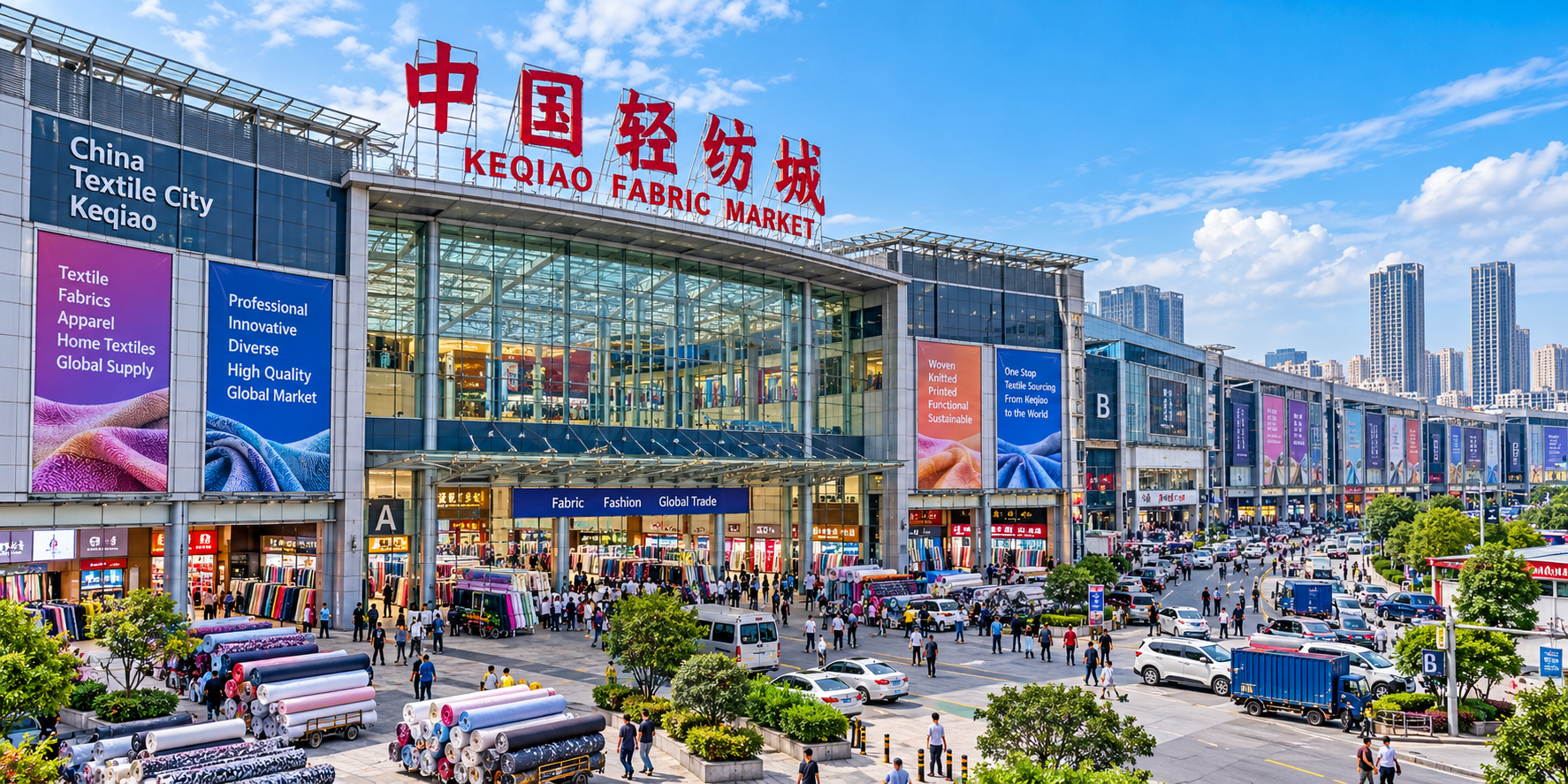
The Keqiao Fabric Market is a large textile wholesale and distribution network within China Textile City, situated in Shaoxing's Keqiao District.
Unlike a conventional retail fabric store, this market operates as a comprehensive textile trading ecosystem. Thousands of businesses participate in textile manufacturing, fabric distribution, product development, dyeing, printing, and international export activities.
The market serves customers ranging from small clothing manufacturers to established international fashion companies.
We can source materials for numerous applications, including:
-
Women's fashion: Dresses, blouses, skirts, and fashionable outerwear.
-
Men's clothing: Shirts, trousers, suits, jackets, and casual apparel.
-
Sportswear: Stretch fabrics, performance knits, and moisture-management textiles.
-
Home textiles: Curtains, upholstery, bedding, and decorative fabrics.
-
Industrial textiles: Functional and technical materials for specialized applications.
-
Children's clothing: Soft cotton fabrics, knitted textiles, and printed materials.
An important advantage of China Textile City is the concentration of textile businesses. Instead of contacting manufacturers across multiple provinces, we can evaluate numerous suppliers and compare materials within the same trading district.
2. Where Is Keqiao Fabric Market Located?
Keqiao Fabric Market is located in Keqiao District, Shaoxing City, Zhejiang Province, eastern China.
Shaoxing belongs to the economically developed Yangtze River Delta region, an important center for textile manufacturing, industrial production, transportation, and international commerce.
Keqiao benefits from its proximity to several major commercial cities.
|
Major city |
Approximate distance to Keqiao |
|---|---|
|
Hangzhou |
50–65 km |
|
Ningbo |
110–140 km |
|
Shanghai |
190–220 km |
|
Yiwu |
120–150 km |
Distances are approximate and depend on the departure point and selected route.
How to Reach Keqiao Fabric Market
From Hangzhou
Hangzhou is one of the most convenient gateways for international textile buyers. We can travel to Keqiao by taxi, private vehicle, or a combination of railway and local transportation.
From Shanghai
International visitors arriving in Shanghai can travel toward Shaoxing by high-speed railway and continue to Keqiao using local transportation. The journey depends on the departure station, train service, and final market destination.
From Ningbo
Ningbo provides another convenient entry point, particularly for buyers combining fabric sourcing with export logistics or supplier visits.
When planning our visit, we should confirm the exact market building and supplier address because China Textile City consists of multiple trading areas rather than a single shopping complex.
3. Types of Fabrics Available at Keqiao Fabric Market
One of the main reasons international buyers visit Keqiao wholesale fabric markets is the exceptional variety of textile materials available.
Polyester Fabrics
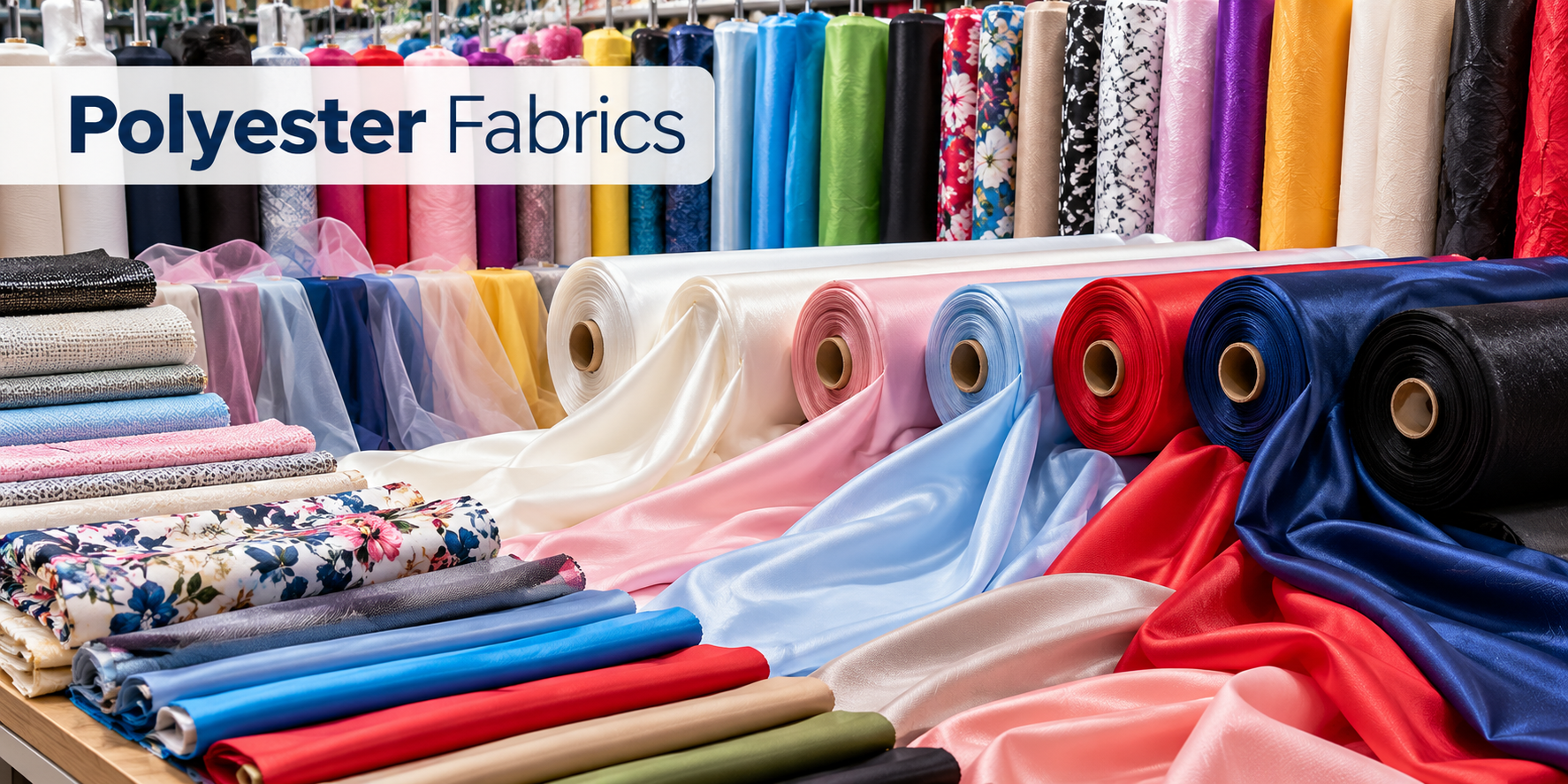
Polyester is among the most commonly traded textile fibers in Keqiao.
We can find numerous polyester constructions suitable for fashion garments, uniforms, linings, home furnishings, and industrial applications.
Popular options include polyester chiffon, satin, taffeta, pongee, peach skin, crepe, and various textured woven materials.
Key advantages of polyester fabrics include:
-
Competitive pricing for large-volume production.
-
Good wrinkle resistance in many constructions.
-
Wide availability of colors and printed designs.
-
Versatility across apparel and home textile applications.
-
Compatibility with numerous finishing treatments.
Fabric characteristics depend on yarn specifications, construction, finishing, and quality grade.
Cotton Fabrics
Cotton remains a preferred material for brands seeking breathable, comfortable, and natural-fiber garments.
Keqiao suppliers offer cotton poplin, twill, canvas, denim, voile, and cotton-blend textiles.
We can select different yarn counts, fabric weights, weaving patterns, and finishing treatments based on the intended garment.
For example, lightweight cotton poplin is suitable for shirts and summer clothing, while heavier cotton twill can be used for trousers, workwear, and jackets.
Knitted Fabrics
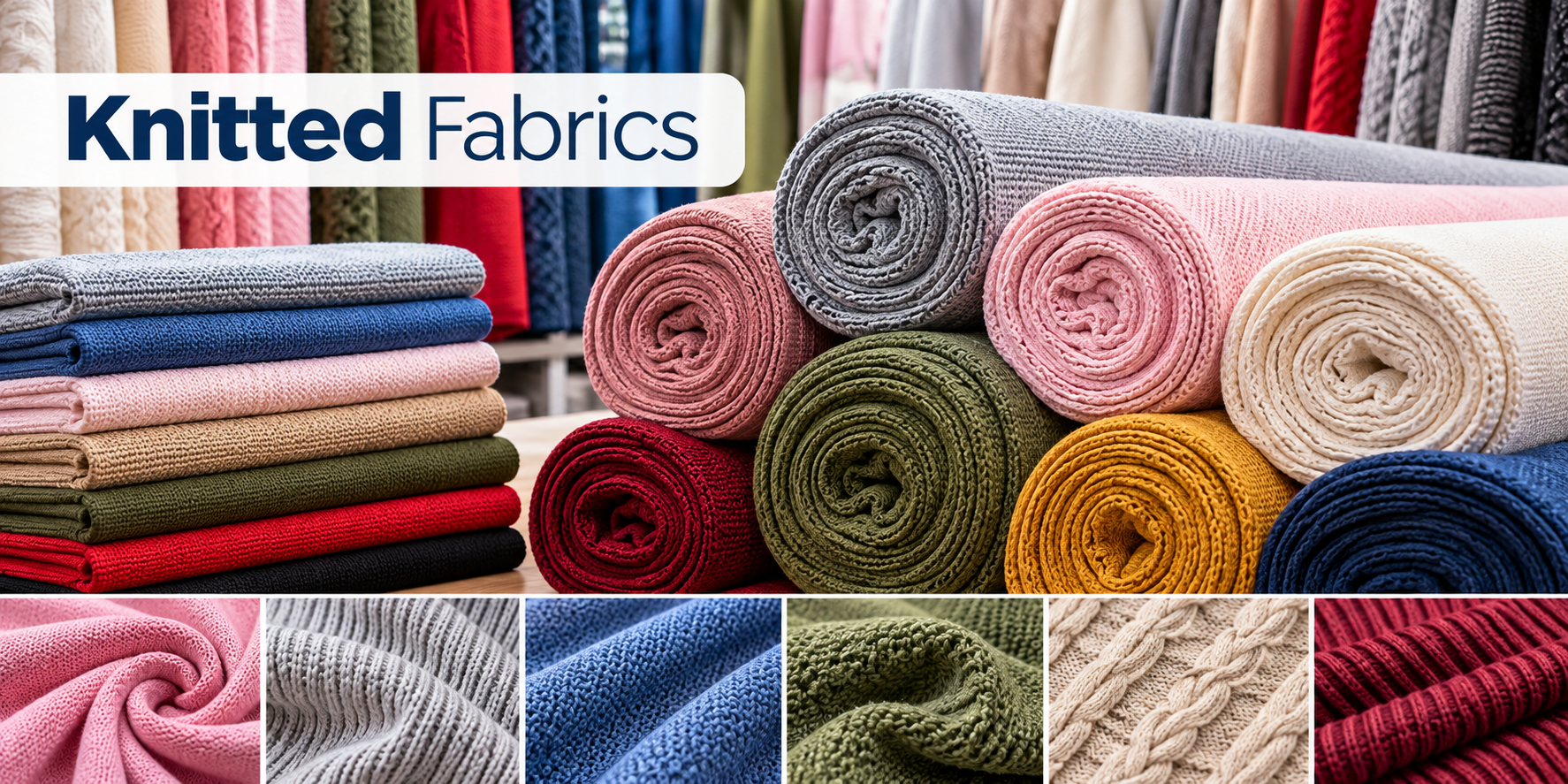
Knitted fabrics are essential for modern apparel production, particularly in casualwear, sportswear, underwear, and athleisure.
At Keqiao, we can explore:
-
Single jersey fabric.
-
Rib-knit fabric.
-
Interlock knit.
-
French terry.
-
Fleece.
-
Polyester-spandex blends.
-
Cotton-spandex jersey.
-
Ponte and double-knit materials.
When sourcing knitted fabrics, we should evaluate GSM (grams per square meter), stretch percentage, recovery, shrinkage, and colorfastness.
These specifications influence garment comfort, appearance, durability, and production performance.
Silk and Silk-Blend Fabrics
Keqiao also offers silk-related products and fabrics designed to provide luxurious drape, softness, and surface appearance.
Depending on the supplier, we may encounter silk satin, silk chiffon, silk crepe, and various silk-blend constructions.
We should distinguish genuine silk from polyester satin or other synthetic alternatives because appearance alone does not establish fiber composition.
Linen and Linen-Blend Fabrics
Linen fabrics are popular for warm-weather clothing, resortwear, relaxed tailoring, and home decoration.
We can source pure linen, cotton-linen blends, and synthetic fabrics developed to resemble natural linen.
When comparing suppliers, we should examine fiber composition, fabric weight, shrinkage, surface texture, and color consistency.
Functional and Technical Textiles
Keqiao's textile supply network also supports specialized materials for sportswear, outdoor apparel, uniforms, and protective applications.
These may include water-repellent fabrics, coated textiles, breathable membranes, UV-protective fabrics, and flame-retardant materials.
Performance claims should always be supported by relevant laboratory test reports, particularly when products must comply with international regulations or customer specifications.
4. Understanding the Different Keqiao Fabric Market Areas
China Textile City is organized across multiple market buildings and trading zones, with product categories and tenant arrangements varying by location.
We should therefore plan our sourcing visit around the type of fabric required.
|
Market area or sourcing category |
Common sourcing focus |
|---|---|
|
Traditional textile trading areas |
General woven fabrics and established wholesale suppliers |
|
North Market areas |
Various apparel and textile wholesale categories |
|
East Market areas |
Textile trading and fabric suppliers |
|
International trade-oriented areas |
Export-focused suppliers and trading companies |
|
Specialized textile showrooms |
Knitted, printed, functional, and fashion fabrics |
Market organization can change over time, and not every building specializes exclusively in one category.
Before visiting, we should request the supplier's building name, floor number, shop number, and Chinese-language address.
This preparation reduces unnecessary travel between market sections.
5. Keqiao Fabric Market Wholesale Prices
One of the most important considerations for international buyers is the price of wholesale fabrics in Keqiao.
Fabric pricing varies according to fiber composition, yarn quality, weight, width, construction, finishing process, order quantity, and current raw material costs.
The following figures are illustrative planning ranges, not verified current supplier quotations.
|
Fabric type |
Illustrative wholesale price per meter |
|---|---|
|
Basic polyester fabric |
US$0.80–$2.50 |
|
Polyester chiffon |
US$1.00–$3.00 |
|
Cotton poplin |
US$1.50–$4.50 |
|
Polyester-spandex knit |
US$2.00–$5.00 |
|
Cotton jersey |
US$2.00–$5.50 |
|
Linen-blend fabric |
US$3.00–$8.00 |
|
Specialty functional fabric |
US$3.00–$12.00+ |
Illustrative estimates only. Actual quotations may fall outside these ranges and should be obtained directly from suppliers.
Factors That Affect Fabric Prices
Fabric composition: Pure natural fibers and specialized blends may cost more than basic synthetic constructions.
Order quantity: Larger orders may qualify for lower unit prices because manufacturers can distribute production setup costs across greater volumes.
Fabric weight: Heavier materials often require more raw material per meter, although construction and fiber type also influence pricing.
Dyeing and printing: Custom colors, complex printing, and specialty finishes can increase production costs.
Quality requirements: Stricter testing, tighter tolerances, and additional inspections can affect the final quotation.
We recommend comparing suppliers using identical specifications rather than comparing prices based only on appearance.
Minimum Order Quantity at Keqiao Fabric Market
The minimum order quantity (MOQ) depends on whether we purchase existing stock, request a repeat order, or commission custom manufacturing.
Ready-Stock Fabrics
Some wholesale suppliers offer fabrics already available in their warehouses.
Ready-stock materials may be purchased in relatively small quantities, including individual rolls, depending on the seller's policy.
This option is useful for small fashion brands, sample development, and initial product testing.
Custom Fabric Production
Custom production generally requires larger quantities because suppliers must arrange yarn sourcing, weaving or knitting, dyeing, finishing, and quality control.
MOQ requirements can be expressed in meters, kilograms, rolls, or quantities per color.
For example, a supplier may accept an overall order quantity but require a separate minimum for each custom color.
We should always clarify whether the quoted MOQ applies to the total order, each fabric design, or each color.
How to Find Reliable Fabric Suppliers in Keqiao
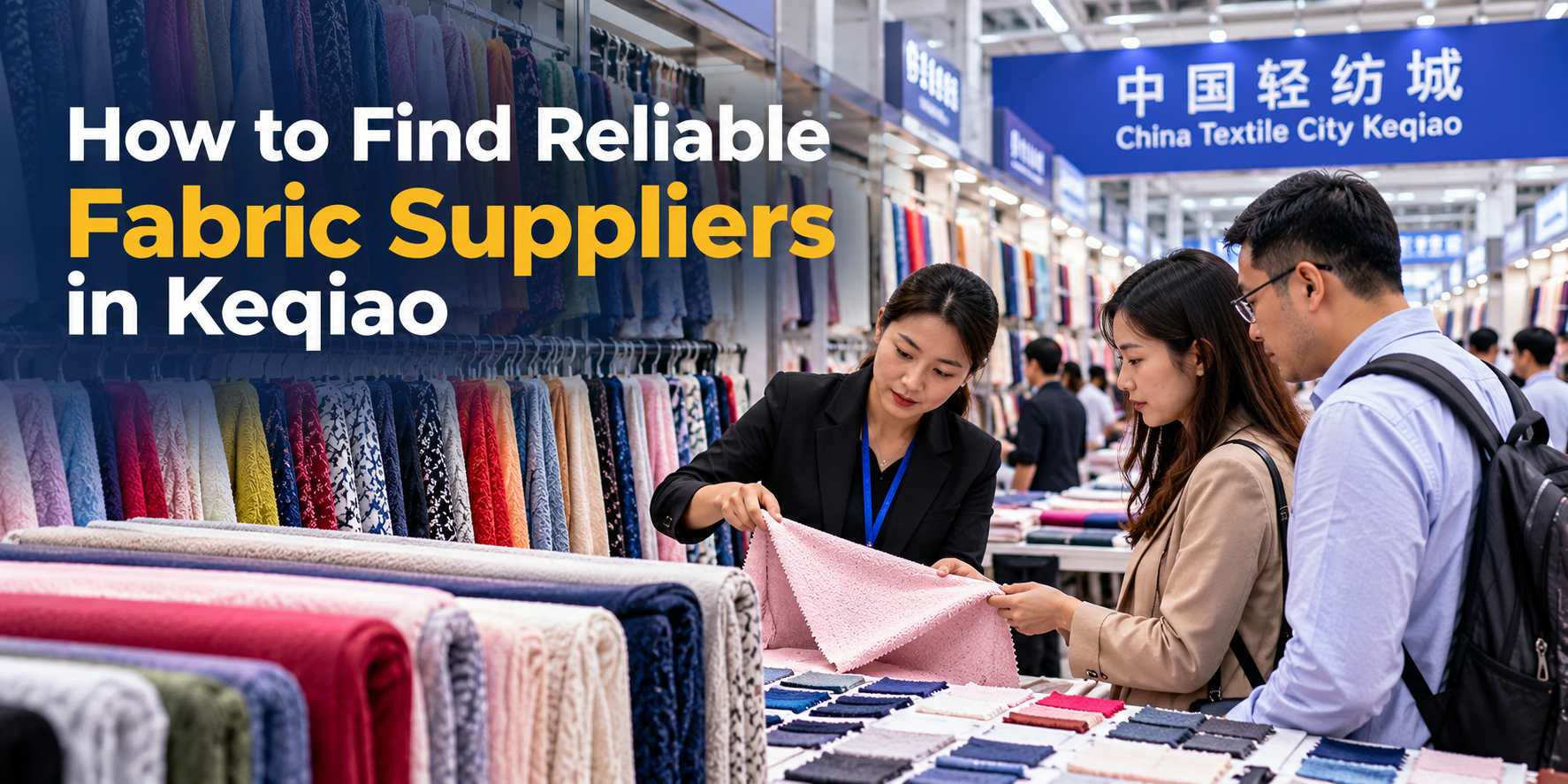
Finding a reliable supplier involves more than selecting an attractive material at a competitive price.
We should evaluate the supplier's production capabilities, communication standards, product consistency, and ability to fulfill international orders.
Step 1: Define Our Fabric Requirements
Before contacting suppliers, we should prepare a technical specification covering:
-
Fiber composition.
-
Fabric construction.
-
GSM or other weight specification.
-
Finished fabric width.
-
Required color or Pantone reference.
-
Stretch and recovery requirements.
-
Shrinkage tolerance.
-
Colorfastness requirements.
-
Estimated purchase quantity.
-
Intended application.
Clear specifications help suppliers provide accurate quotations and suitable samples.
Step 2: Compare Multiple Suppliers
We should obtain quotations from several suppliers offering comparable materials.
Comparisons should consider price, production lead time, MOQ, payment terms, testing capabilities, and shipping arrangements.
Step 3: Request Fabric Samples
Physical samples allow us to evaluate fabric hand feel, drape, thickness, stretch, surface finish, and construction.
We should retain an approved reference sample for comparison against bulk production.
Step 4: Verify Supplier Credentials
Where appropriate, we should request business registration details, company information, and evidence of relevant manufacturing or trading capabilities.
A supplier operating a showroom may be a manufacturer, trading company, distributor, or sourcing intermediary.
Understanding this distinction helps us evaluate pricing and production responsibilities.
Step 5: Confirm Quality Control Procedures
We should establish inspection criteria before placing a bulk order.
Important checks include fabric width, weight, shade consistency, shrinkage, defects, and applicable performance requirements.
Independent inspection services can provide additional assurance for higher-value orders.
Best Time to Visit Keqiao Fabric Market
Keqiao's textile markets generally operate throughout the year, although individual businesses follow their own schedules.
Weekdays are usually practical for business-focused sourcing because suppliers, factories, logistics companies, and commercial service providers are more likely to be operating normally.
We should avoid assuming that every showroom follows the same opening hours.
Chinese Public Holidays
The most important periods to consider include:
Chinese New Year: Many businesses close or operate with reduced staffing around the holiday period.
National Day holiday: Early October can bring temporary closures, travel congestion, and changes to supplier availability.
Other public holidays: Operating hours may vary depending on the market building and individual tenant.
For an efficient visit, we recommend confirming supplier appointments and market schedules before traveling.
How to Negotiate Fabric Prices in Keqiao
Negotiation is an important part of wholesale textile purchasing.
However, successful negotiation requires understanding the supplier's costs and production conditions.
Compare Equivalent Fabric Specifications
We should avoid requesting lower prices without confirming that competing quotations refer to equivalent products.
Two visually similar fabrics may differ substantially in yarn quality, fiber content, weight, dyeing performance, or finishing.
Discuss Volume-Based Pricing
Suppliers may offer more competitive pricing for repeat purchases or larger confirmed quantities.
We can request separate quotations for different order volumes to understand potential cost savings.
Clarify Payment Terms
Payment arrangements vary by supplier.
Some custom orders require a deposit before production and the balance before shipment.
We should confirm payment conditions in writing and verify the beneficiary details before transferring funds.
Negotiate Total Purchasing Value
The lowest unit price does not always produce the lowest total cost.
We should consider packaging, inspection, shipping, customs clearance, defect allowances, and replacement policies.
Shipping Fabrics from Keqiao to International Markets
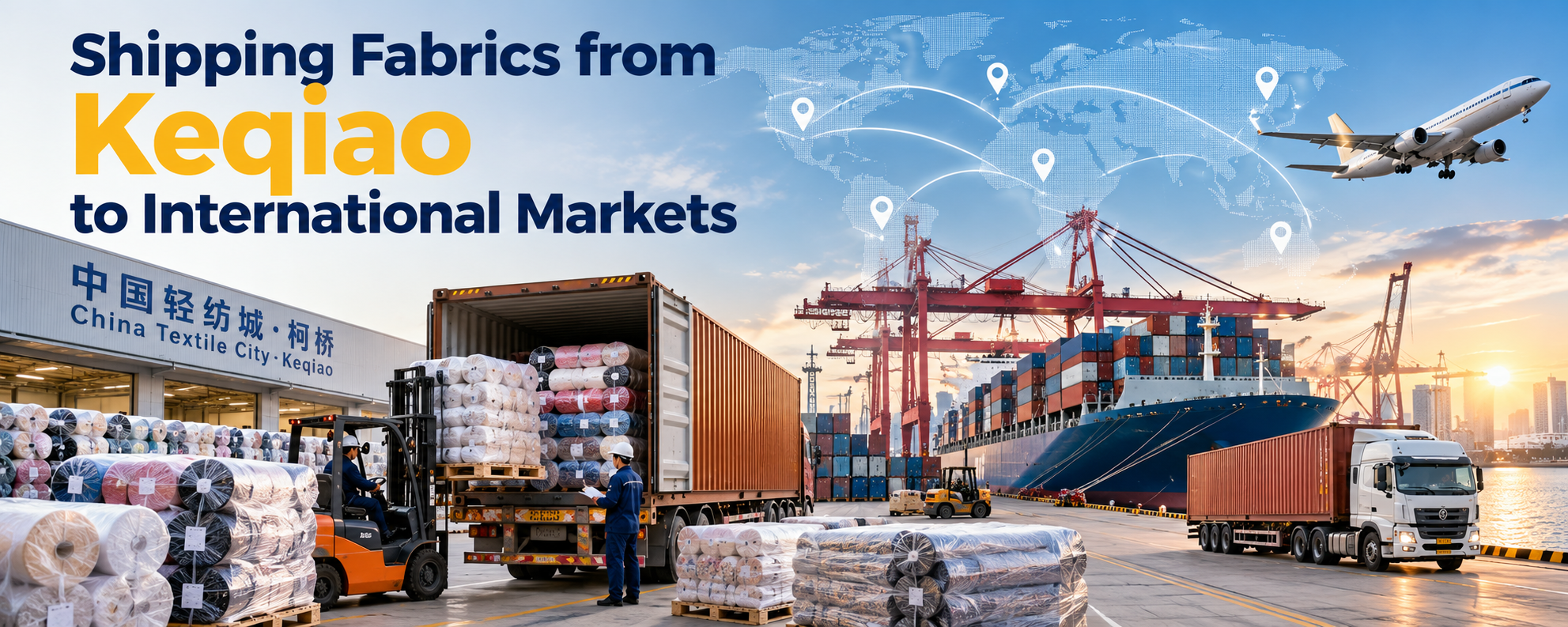
Keqiao's location within Zhejiang Province provides access to established domestic transportation networks and international logistics services.
International buyers can arrange textile shipments through freight forwarders serving major Chinese export gateways, including Ningbo and Shanghai.
Sea Freight
Sea freight is generally suitable for large fabric orders where transportation cost is more important than delivery speed.
Fabric rolls may be shipped as consolidated cargo or in full containers, depending on shipment volume.
Air Freight
Air freight may be appropriate for urgent samples, small high-value shipments, or time-sensitive production requirements.
However, air transport generally involves higher costs than sea freight.
Express Courier
International courier services can be convenient for fabric swatches, laboratory samples, and smaller parcels.
Essential Export Documents
Depending on the destination and shipment terms, documentation may include a commercial invoice, packing list, transport document, and certificate of origin.
Additional compliance documents may be necessary for particular textile categories or importing countries.
We should agree on the relevant Incoterms, such as FOB, CIF, or EXW, before finalizing a purchase.
Quality Control When Buying Fabrics from Keqiao
Quality assurance is essential when sourcing fabrics for commercial garment manufacturing.
Even small inconsistencies in fabric specifications can create problems during cutting, sewing, finishing, or customer use.
Fabric Weight Testing
We should verify that the supplied material meets the agreed GSM specification.
Colorfastness Testing
Colorfastness tests evaluate how well a textile retains color under defined conditions, such as washing, rubbing, or exposure to light.
Shrinkage Testing
Shrinkage performance is particularly important for cotton, linen, knitted fabrics, and garments requiring precise sizing.
Fabric Defect Inspection
Common defects include weaving faults, knitting irregularities, stains, holes, broken yarns, and uneven dyeing.
Chemical Compliance
Textiles intended for regulated markets may require testing against applicable chemical restrictions.
We should determine whether certifications or standards such as OEKO-TEX STANDARD 100, relevant ISO methods, or destination-market regulations apply to our products.
A certification should be verified for its validity and product scope rather than accepted solely on the basis of a supplier's claim.
Keqiao Fabric Market vs. Guangzhou Fabric Market
Both Keqiao and Guangzhou are important destinations for textile sourcing in China, but their commercial ecosystems differ.
|
Comparison |
Keqiao Fabric Market |
Guangzhou Fabric Markets |
|---|---|---|
|
Location |
Shaoxing, Zhejiang |
Guangzhou, Guangdong |
|
Core strength |
Broad textile wholesale and production ecosystem |
Fabric sourcing closely connected to garment manufacturing |
|
Common buyers |
Fabric importers, manufacturers, sourcing companies |
Fashion brands, garment factories, wholesalers |
|
Supplier network |
Strong textile manufacturing and distribution connections |
Strong apparel production and fashion supply-chain connections |
|
Suitable sourcing |
Bulk textiles, woven fabrics, knits, and specialized materials |
Fashion fabrics, apparel development, and garment-related sourcing |
We may prefer Keqiao when developing long-term relationships with textile manufacturers or sourcing large volumes of material.
Guangzhou can be especially convenient when fabric purchasing is combined with garment development and clothing manufacturing.
The better destination depends on the fabric specification, production quantity, supplier capabilities, and overall sourcing strategy.
Common Mistakes to Avoid at Keqiao Fabric Market
International buyers can reduce purchasing risks by avoiding several common sourcing mistakes.
Purchasing without approved samples: A photograph or showroom display may not accurately represent bulk production.
Ignoring fabric width: A lower-priced fabric may provide less usable material if its finished width is narrower.
Failing to confirm composition: Similar-looking fabrics can contain different fibers and blends.
Overlooking shrinkage: Unverified shrinkage performance can lead to garment sizing problems.
Accepting vague quotations: Quotations should clearly identify the fabric specification, quantity, unit, currency, and commercial terms.
Skipping pre-shipment inspection: Problems discovered after international delivery may be more expensive to resolve.
Ignoring import requirements: Customs classification, labeling, tariffs, and textile regulations differ by destination.
We should document all agreed requirements in purchase orders or contracts rather than relying exclusively on verbal discussions.
Frequently Asked Questions About Keqiao Fabric Market

Is Keqiao Fabric Market the largest fabric market in China?
Keqiao's China Textile City is widely recognized as one of the largest textile trading centers in China and globally. It is a major hub for textile wholesale, fabric distribution, and international sourcing.
Can foreigners buy fabrics at Keqiao Fabric Market?
Yes. International buyers regularly source textiles through Keqiao suppliers. Some businesses have export experience and English-speaking sales representatives, although language capabilities vary.
Can we purchase small quantities of fabric?
Some suppliers sell ready-stock fabrics in small quantities or individual rolls. Custom manufacturing generally involves higher minimum order quantities.
Are Keqiao fabric prices cheaper than other markets?
Keqiao can offer competitive wholesale prices because of its extensive supplier network and proximity to textile manufacturing operations. Actual savings depend on specifications, purchase volumes, and supplier quotations.
Can we order custom printed fabrics?
Yes. Many suppliers can arrange custom printing, dyeing, or other finishing services, subject to technical feasibility and minimum production quantities.
Do Keqiao suppliers ship internationally?
Many export-oriented suppliers can arrange international shipments directly or through freight forwarding companies. Shipping responsibilities and costs should be agreed upon before purchase.
How many days should we spend at Keqiao Fabric Market?
For an initial sourcing visit, we can allocate approximately two to three working days to compare suppliers, inspect materials, collect samples, and discuss quotations.
Complex sourcing projects may require additional time for factory visits and product development meetings.
What is the best airport for visiting Keqiao?
Hangzhou Xiaoshan International Airport is a convenient airport for reaching Keqiao. Shanghai airports also provide international connections, although onward travel is generally longer.
Is Keqiao suitable for small clothing brands?
Yes. Small fashion businesses can explore ready-stock fabrics, request samples, and identify suppliers willing to support smaller orders. Minimum quantities and development costs should be confirmed individually.
15. Final Thoughts: Why Keqiao Fabric Market Matters for Global Textile Sourcing
The Keqiao Fabric Market in Shaoxing, China, remains an important destination for businesses seeking wholesale textiles, diverse fabric selections, and access to an extensive manufacturing supply chain.
Its greatest strengths include supplier concentration, product diversity, manufacturing connections, and established international trading activity.
By approaching Keqiao with clear specifications, realistic budgets, reliable quality-control procedures, and well-defined purchasing requirements, we can identify suitable textile suppliers and develop more dependable sourcing relationships.
For clothing manufacturers, fashion designers, fabric importers, textile distributors, and international wholesalers, China Textile City in Keqiao offers a substantial range of opportunities for sourcing fabrics and building long-term commercial partnerships.
Successful purchasing ultimately depends on choosing materials that meet our quality standards, confirming supplier capabilities, and managing every stage of the process from sample approval to final delivery.
_1751507038923.png)