


Litfad is an operating online furniture and lighting retailer, but that does not make it a low-risk place to shop.
Its published company information supports the existence of a business, while independent customer feedback raises concerns about delivery, product condition, and refunds.
The practical answer to “is Litfad legit” is therefore qualified: distinguish a functioning store from a retailer you can confidently trust with an expensive purchase.
Is Litfad a legit company?
Litfad identifies its operator as Baycheer International Limited and publishes a Hong Kong company number and office address. It also provides customer support through email and live chat.
These are meaningful signs of an identifiable retailer, although information published by the seller is not the same as independently verifying its corporate registration or service standards.
The company describes its business as a direct-to-consumer home décor platform working with manufacturers across Asia, primarily China. Its explanation for lower prices is that direct shipping reduces intermediary and warehousing costs.
That is the seller’s account of its business model, not independent proof that an individual product represents good value.
When asking “is Litfad a legit site,” separate three questions:
- Does an identifiable business operate the store? Litfad publishes an operator and contact information.
- Do buyers report receiving orders? Independent reviews include accounts of delivered purchases, including some positive experiences.
- Can you depend on consistent quality and straightforward remedies? The complaint patterns make that a substantially harder conclusion to support.
This assessment draws on published policies and customer-review sources, not a hands-on product test. It does not establish that every order goes wrong or independently determine whether any particular complaint amounts to fraud.
What do Litfad reviews reveal about the buying experience?
The clearest concern in the review evidence is not simply whether products arrive. It is whether the delivered item meets expectations and whether problems are resolved satisfactorily.
Litfad’s Trustpilot profile contains recurring complaints about long waits, damaged goods, missing components, and refund difficulties, alongside positive reports about design, packaging, and successful deliveries.
At the time of this research, the profile displayed a TrustScore of 1.8 out of 5 across more than 12,000 reviews. Ratings change, and reviewers are a self-selected group rather than a representative survey of all customers. Nevertheless, the combination of a low score and repeated descriptions of similar problems warrants caution.
Look beyond the headline rating
For a useful Litfad review, prioritize evidence that matches your intended purchase. A detailed account of assembling a desk is more relevant to a desk buyer than a brief comment about a lampshade. The FTC recommends checking multiple review sources rather than relying on one platform or assuming every review is authentic.
Use these questions to evaluate individual accounts:
- Does the reviewer identify the product, purchase timing, and specific problem?
- Are there photographs showing the delivered item rather than promotional images?
- Does the account explain what customer support offered?
- Is there an update confirming a replacement, refund, or unresolved outcome?
Treat these as evidence filters, not a system for proving authenticity. Detailed reviews can still be misleading, while a genuine buyer may write very little. The FTC cautions that fake reviews can be positive or negative.
Interpret Reddit discussions carefully
Searching “is Litfad legit Reddit” can uncover longer accounts than conventional review platforms provide. For example, an Australian renovation discussion includes allegations of return-shipping obstacles and disputes over refunds. These are user accounts, not independently adjudicated findings, and advice from another country may not fit a US purchase.
Use Reddit to identify questions worth asking the seller, not to establish a guaranteed outcome. If several posts mention return costs, request the return destination and payment responsibility before ordering. For payment disputes, rely on your issuer’s instructions rather than another commenter’s experience.
Why “Litfad scam” requires a careful distinction
“Scam” implies more than disappointing service or a difficult return. The sources reviewed here establish that serious complaints exist, but they do not independently establish that every transaction is fraudulent. A responsible assessment should describe the documented concerns without turning customer allegations into proven findings.
One BBB Scam Tracker submission describes a customer allegedly receiving wired wall lamps after ordering rechargeable ones, followed by disagreement over a refund. BBB explicitly identifies Scam Tracker material as accounts from victims or potential victims. That makes the submission useful as a warning about a reported experience, not a legal determination against Litfad.
The distinction does not mean shoppers should ignore the risk. You do not need proof of intentional fraud to decide that a purchase is unsuitable. A retailer can exist, ship merchandise, and still leave you uncomfortable with the potential cost of resolving a problem.
Instead of debating the label alone, consider your exposure. Would a late delivery disrupt a renovation? Could you tolerate keeping an item that looks different from the listing? Would an unresolved purchase materially affect your budget? Those questions lead to a more useful decision than a simple yes-or-no verdict.
Return terms deserve more attention than the discount
Litfad’s published return policy gives the seller considerable discretion over remedies. It says claims require review and approval, prioritizes measures such as troubleshooting and replacement parts, and describes a full refund as an exception rather than the default. Buyers should not assume that reporting a defect automatically results in their preferred remedy.
The policy also describes possible cancellation charges, deductions for non-quality returns, and restrictions involving assembled, installed, modified, or used products. Unauthorized returns can create further complications. Before paying, request written clarification of which conditions apply to your exact order and keep the response.
There is also inconsistent return messaging to clarify. The storefront advertises a 60-day conditional return, while the About page refers to a 30-day return window for general dissatisfaction. Neither headline should substitute for reading the detailed policy and confirming the applicable deadline.
Ask the seller to confirm:
- Eligibility: Can this particular item be returned for dissatisfaction, and by when?
- Destination: Where would an approved return actually go?
- Costs: Who pays freight, and what deductions could apply?
- Condition: Would opening, assembling, or installing it affect eligibility?
- Remedy: What happens if it arrives damaged, incomplete, or materially different?
Litfad’s listed office address expressly does not accept returns, so do not treat that address as a ready-made return destination.
For US consumers, distinguish store policy from applicable consumer protections. FTC guidance explains that sellers generally must ship within the promised period, or within 30 days if no period is stated. If shipment is delayed, they must offer the choice of accepting the delay or canceling for a full refund. Shipping deadlines and arrival estimates are not interchangeable.
A practical checklist before placing an order
If you are still considering Litfad, make the decision around the exact product and transaction rather than the appeal of the catalog. The FTC recommends comparing descriptions, total costs, seller information, and return terms before buying online. Keep copies of what influenced your decision.
Verify the specifications you cannot compromise on
Ask for written confirmation of dimensions, materials, finish, included components, and assembly requirements. For lighting, clarify whether the item is hardwired or plug-in and what electrical specifications apply. If a listing leaves a critical feature ambiguous, treat that as an unanswered question rather than filling the gap with an assumption.
Think through a concrete use case. A dining table must fit both the room and its access route; a replacement light must suit the intended installation. A visually similar product is not necessarily a practical substitute. Write down your nonnegotiable requirements before contacting support so the answers are easy to compare.
Compare the whole transaction
Use a simple purchase worksheet rather than comparing advertised prices alone:
|
Decision point |
What to record |
|---|---|
|
Product fit |
Confirmed dimensions, materials, and essential features |
|
Delivery |
Processing period, shipping estimate, and your latest acceptable arrival |
|
Final cost |
Checkout total and any disclosed additional charges |
|
Return exposure |
Approved destination, freight responsibility, and possible deductions |
|
Problem resolution |
Contact route, required evidence, and proposed remedy |
A lower price may not justify uncertainty that conflicts with your circumstances. For a deadline-dependent room project, choose reliability over a design you cannot obtain elsewhere. For a discretionary purchase, decide in advance how much inconvenience you are willing to accept.
Preserve payment options and records
The FTC recommends paying by credit card when possible because credit cards provide protections that differ from debit cards and other payment methods. Save the listing, selected options, checkout disclosures, order confirmation, and correspondence. These records can support a complaint or dispute if the transaction goes wrong.
Do not interpret payment protection as a guaranteed refund. The CFPB advises contacting the seller and explains that billing-error notices generally need to reach the card company within 60 days after the charge appears on the statement. Ask your issuer which process and deadline apply to your situation.
If you have already ordered, document problems early
Start by separating a delivery concern from a product complaint. Record what was promised, what has happened, and the outcome you want. The FTC recommends keeping transaction records and contacting the seller when an online purchase goes wrong.
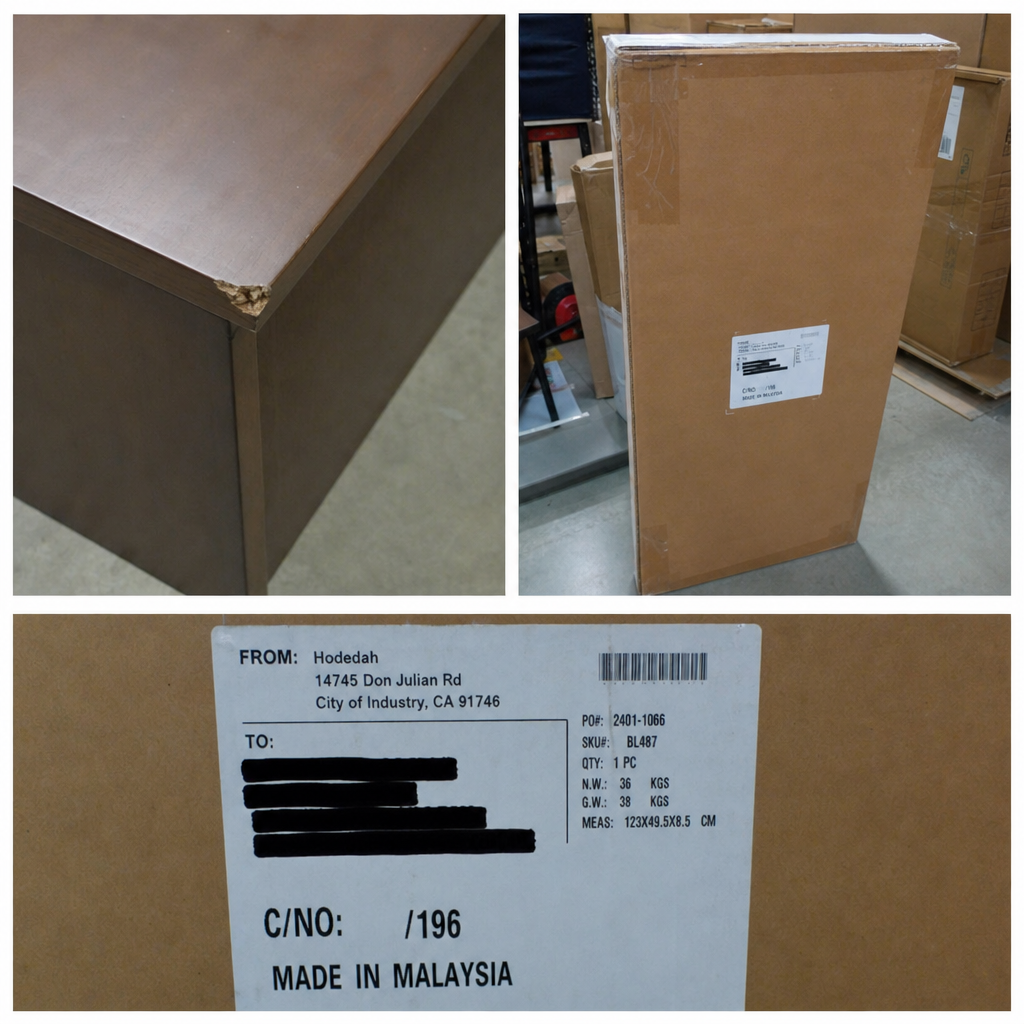
For an item that arrives damaged or differs from the listing, build a clear record before changing its condition:
- Photograph the packaging, shipping labels, item, and affected components.
- Save the product description and identify the specific mismatch or defect.
- Contact support in writing with the order number and concise supporting evidence.
- Request written instructions before returning, repairing, or modifying the item.
- Keep a dated log of replies, proposed remedies, and any promised refund.
Litfad’s policy specifically restricts unauthorized repairs, alterations, and returns, making written instructions especially important. Preserve packaging while the issue is being assessed rather than assuming it will not be needed.
Keep negotiations separate from payment deadlines. A promise that support is investigating does not tell you whether your issuer’s dispute window remains open.
Contact the issuer promptly, describe whether the problem concerns nondelivery or product quality, and ask what evidence and written notice are required; different situations can involve different procedures.
If you suspect deceptive conduct, you can also report the experience to the FTC. Submit a factual chronology with supporting records rather than relying only on the word “scam.” Reporting a problem should not be treated as a substitute for pursuing the seller or payment-provider process.
The bottom line on buying from Litfad
For shoppers asking “is Litfad a legit website,” the evidence supports an operating retailer, not an assurance of a dependable purchase. Published business details coexist with substantial negative feedback and restrictive remedy language. That combination supports caution, particularly when a purchase is expensive, time-sensitive, or difficult to return.
Before ordering, verify the product, obtain clear written return terms, and consider whether the potential savings justify the uncertainty. If an unresolved specification or return question would change your decision, pause the purchase. You do not need to prove a business is fraudulent to decide that its risk is not right for you.