









Negotiating prices and minimum order quantities with Chinese manufacturers means balancing purchase cost, inventory exposure, quality, and supplier economics.
The strongest approach is to define your requirements, compare equivalent quotations, and offer specific trade-offs rather than simply demand a discount. This article explains how to prepare your request, negotiate a manageable first order, and document terms without sacrificing the product you need.
What should you negotiate besides the unit price?
Negotiate the complete order: unit price, minimum order quantity (MOQ), specifications, packaging, tooling charges, payment milestones, production timing, and inspection arrangements. A lower unit price is not necessarily a better deal if it requires more inventory than you can sell or excludes essential costs. Set your priorities before approaching suppliers so you know which concessions are genuinely valuable.
Start by separating three limits:
- Your target: The price and quantity that make the purchase attractive.
- Your acceptable range: The compromise you can fund without weakening your business case.
- Your walk-away point: The cost, inventory commitment, or risk you cannot accept.
For a new product, a smaller first order may matter more than the lowest available unit price. For an established product with predictable demand, pricing across repeat orders may deserve more attention.
Treat supplier negotiation techniques as ways to design a workable transaction, not tricks for winning an argument. Ask what would need to change for the manufacturer to accept your preferred quantity or price. Then assess whether that change preserves your commercial goals.
Build your leverage through RFQ preparation
RFQ preparation—organizing a request for quotation—should happen before serious bargaining. Give shortlisted suppliers the same specification and ask them to identify exceptions explicitly. This creates a practical basis for comparing offers instead of negotiating against numbers that describe different products.
Include the following information:
|
RFQ item |
What to specify |
|---|---|
|
Product |
Drawings, reference images, materials, dimensions, and intended use |
|
Quality |
Measurable tolerances, performance expectations, and unacceptable defects |
|
Quantity |
Initial order volume, quantities per variant, and alternative price tiers |
|
Customization |
Colors, logos, finishes, accessories, and packaging |
|
Delivery |
Destination, required timing, and quotation delivery basis |
|
Commercial terms |
Currency, quotation validity, tooling, samples, and proposed payment milestones |
Ask for separate prices at quantities you could realistically purchase. If you need 300 units, comparisons at 300, 500, and 1,000 units can help reveal the trade-off. Those figures are illustrative, not recommended order sizes.
Before investing heavily in negotiation, investigate the supplier. The International Trade Administration recommends due diligence when selecting international business partners. Use that principle to guide your checks rather than treating a polished quotation as evidence of reliability.
For your shortlist, request the contracting company’s legal identity, manufacturing locati0n, and an explanation of which production activities it handles. Clarify whether you are dealing with a manufacturer, trading company, or another intermediary. Do not automatically reject intermediaries; evaluate their responsibilities and value instead.
Keep one comparison sheet with specifications, exclusions, prices, lead times, and unanswered questions. Mark every quotation that relies on an unapproved material substitution or different packaging. Resolve those differences before using the quote as a negotiation benchmark.
Request a price breakdown that supports decisions
Ask for a useful price breakdown, not necessarily the supplier’s confidential cost ledger. Request separate figures for the finished product, packaging, tooling, customization, testing, and quoted logistics services. Your objective is to identify which changes could reduce cost without changing essential performance.
A practical request is:
Please separate the product price, packaging, tooling, and other one-time charges. Also identify any specification changes that could reduce cost while maintaining our stated performance requirements.
Distinguish recurring charges from one-time charges. If tooling is included in the unit price, ask how subsequent orders will be priced. If you pay separately for tooling, request written agreement on ownership, storage, maintenance, permitted use, and access.
Compare delivery terms carefully. ICC’s Incoterms rules allocate specified transport costs, risks, and customs responsibilities between buyer and seller; quotations using different rules may cover different obligations. Ask each supplier to state the rule, named place, and applicable version rather than writing only “shipping included.”
For containerized or multimodal shipments, discuss the appropriate rule with your freight forwarder instead of automatically requesting FOB. ICC’s checklist identifies FCA as an option for those movements and distinguishes it from FOB for goods delivered onboard a vessel.
Build a landed-cost estimate that includes freight, insurance where applicable, import charges, inspection, and delivery. For U.S. imports, review product-specific requirements with an appropriate specialist: CBP emphasizes that importers must ensure compliance with relevant agency requirements. A supplier’s assurance should not replace that review.
How can you negotiate a lower MOQ without compromising quality?
Negotiate a lower MOQ by identifying what makes the smaller batch difficult, then offering a change that addresses that constraint. Ask whether the minimum applies to the whole order, each product, each color, or custom packaging. MOQ negotiation becomes more productive when you discuss a specific configuration rather than request an unexplained exception.
MOQ means the minimum quantity a supplier accepts, and its economics can involve labor, materials, and production resources. Alibaba’s supplier guidance acknowledges that buyers can ask about flexibility, while emphasizing that the order must still make financial sense for the seller.
Simplify the first production run
Ask whether the factory can quote an existing design, stocked material, standard finish, or simpler packaging. Present these as options for evaluation, not assumptions about what the factory has available. Keep any safety-critical or performance-critical requirement unchanged.
Reducing the number of variants is another option worth pricing. Instead of launching several colors, ask for one core version and request pricing for adding variants later. Confirm whether combining variants actually helps; a shared product family does not automatically mean a shared production minimum.
Make the small order commercially explicit
Request a pilot-order price rather than insisting on the larger-order unit price for a much smaller quantity. Ask the supplier to compare a higher unit price against a separately stated setup charge. This lets you evaluate the total cash commitment under each arrangement.
You can also propose flexible production timing if your launch schedule allows it. Ask whether the supplier can accommodate the order within a compatible production schedule. Do not accept an open-ended delivery promise in exchange for flexibility; agree on a latest completion date.
Separate a pilot from a future commitment
Describe repeat-order potential honestly, with clear conditions. For example: “We are evaluating an initial batch, with repeat orders dependent on product acceptance and sales.” Avoid promising annual purchases you have neither approved nor funded.
If the supplier proposes manufacturing a larger quantity and releasing it in stages, examine the full obligation. Staggered delivery is not the same as a smaller purchase commitment. Clarify ownership, storage charges, payment dates, deterioration risk, and responsibility for unsold stock before considering it.
Use price negotiation tips tied to specific trade-offs
Once quotations are comparable, make a reasoned counteroffer. State the specification, quantity, delivery basis, and commercial change behind your request. “Can you improve the price?” gives the supplier little direction; a conditional proposal creates something concrete to evaluate.
Useful cost negotiation strategies include:
- Quantity-based pricing: Request written tiers for realistic quantities while keeping specifications constant.
- Packaging alternatives: Ask for pricing on simpler packaging, provided it still protects the product and meets your requirements.
- Scheduling flexibility: Offer a wider production window, with an agreed final deadline, and ask whether it changes the quote.
- Repeat-order pricing: Request a separate reorder price that identifies which development charges will not recur.
- Configuration changes: Ask the supplier to price approved alternatives separately rather than silently changing the product.
Use competing quotations as evidence, not threats. Explain where another compliant offer differs, and ask whether the supplier can close the gap. Never invent a competing price or conceal specification differences to force a concession.
If the price falls substantially, request confirmation of what changed. Ask the supplier to reconfirm material, dimensions, finish, packaging, inspection scope, and lead time against the original specification. You want an intentional commercial concession, not an ambiguous revised product.
Finally, compare total expenditure as well as unit cost. A larger order can look attractive per unit while exceeding your inventory budget. Keep the decision anchored to the quantity you can responsibly purchase.
Keep communication precise and respectful
Effective communication strategies start with clear requests and consistent records. Use short sentences, identify products with model numbers or drawing revisions, and separate technical questions from commercial questions. Avoid assumptions about an individual supplier based on nationality; work with the actual company’s capabilities and responses.
Send a numbered message when several issues remain unresolved. Ask the supplier to answer each item directly and highlight anything it cannot meet. If the reply skips an important question, follow up on that question rather than treating silence as agreement.
For example:
Thank you for the revised quotation. Please confirm: 1) the MOQ for one standard color; 2) the price for our pilot quantity; 3) whether the specified material remains unchanged; and 4) the production completion date after sample approval.
For technical details, use annotated drawings, photographs, measurement units, and revision dates. Replace phrases such as “good quality” with an observable requirement. Ask the supplier to restate critical requirements in its quotation so misunderstandings surface before payment.
After a call or video meeting, send a written recap covering agreed changes and open points. Request acknowledgment and update the controlling order documents. If you use a purchasing platform, keep essential terms within the order record; Alibaba specifically advises detailed purchase orders and platform-based communication when using its order-protection process.
Give the supplier room to explain a constraint. A clear refusal with a workable alternative is more useful than an agreeable answer that leaves the requirement unresolved.
Use samples to test the product and the process
Request samples before committing to a full production order, and specify what each sample must demonstrate. Alibaba distinguishes existing factory samples from customized samples and describes sampling as a way to inspect product characteristics and assess the working relationship. Choose the sample type that matches the decision you need to make.
An existing sample can help you assess general construction, but do not assume it proves your customized product. For the final approval stage, request a sample reflecting the agreed materials, dimensions, finish, branding, and packaging wherever relevant. Document any remaining differences before authorizing production.
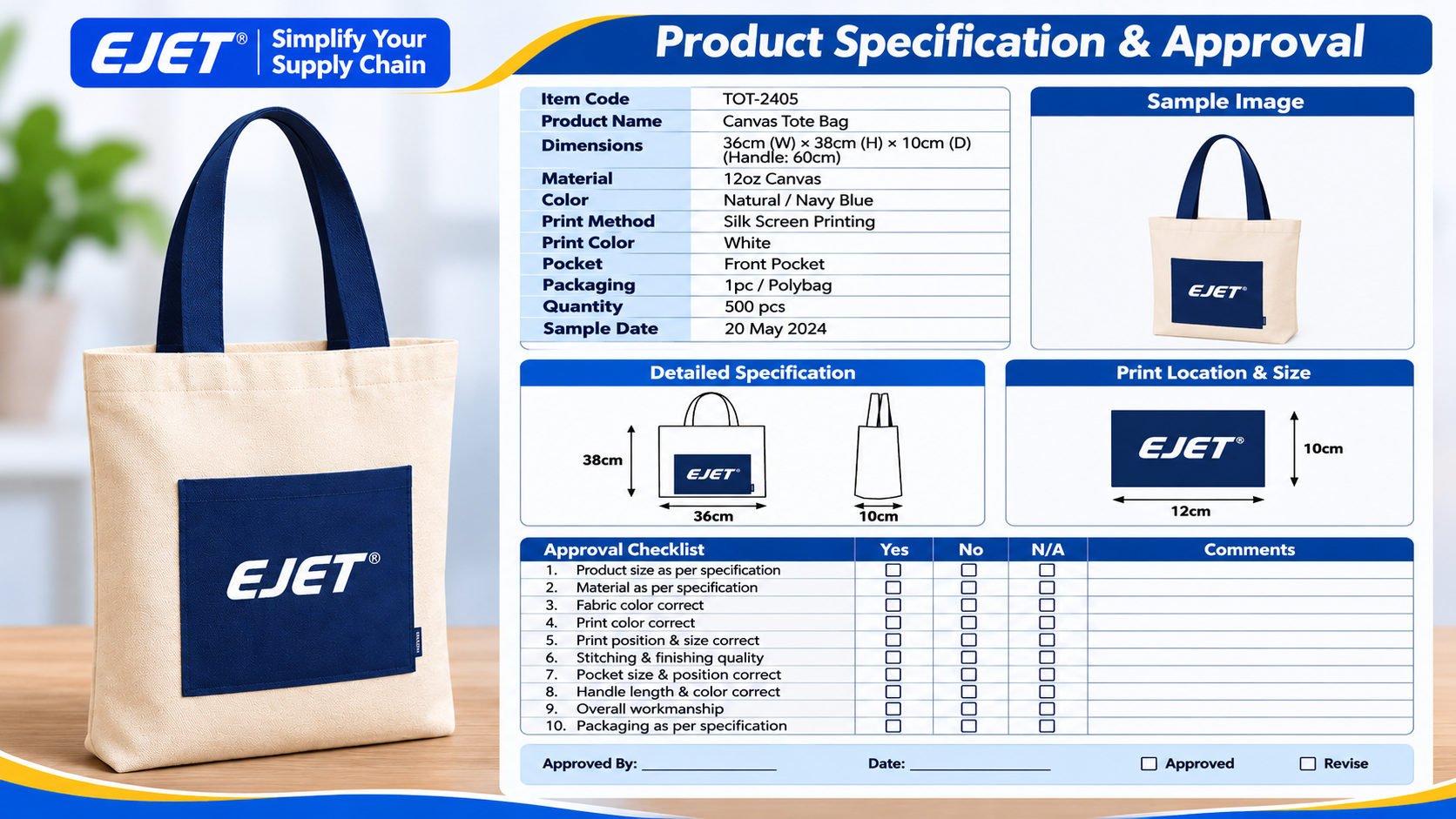
Use a simple approval checklist:
- Compare the sample against the current specification, not your memory of the discussion.
- Record measurements, visible defects, and the results of relevant functional checks.
- Photograph approved details and identify the sample with a date or reference number.
- State unresolved issues and whether another sample is required.
- Keep matching approval records with both parties.
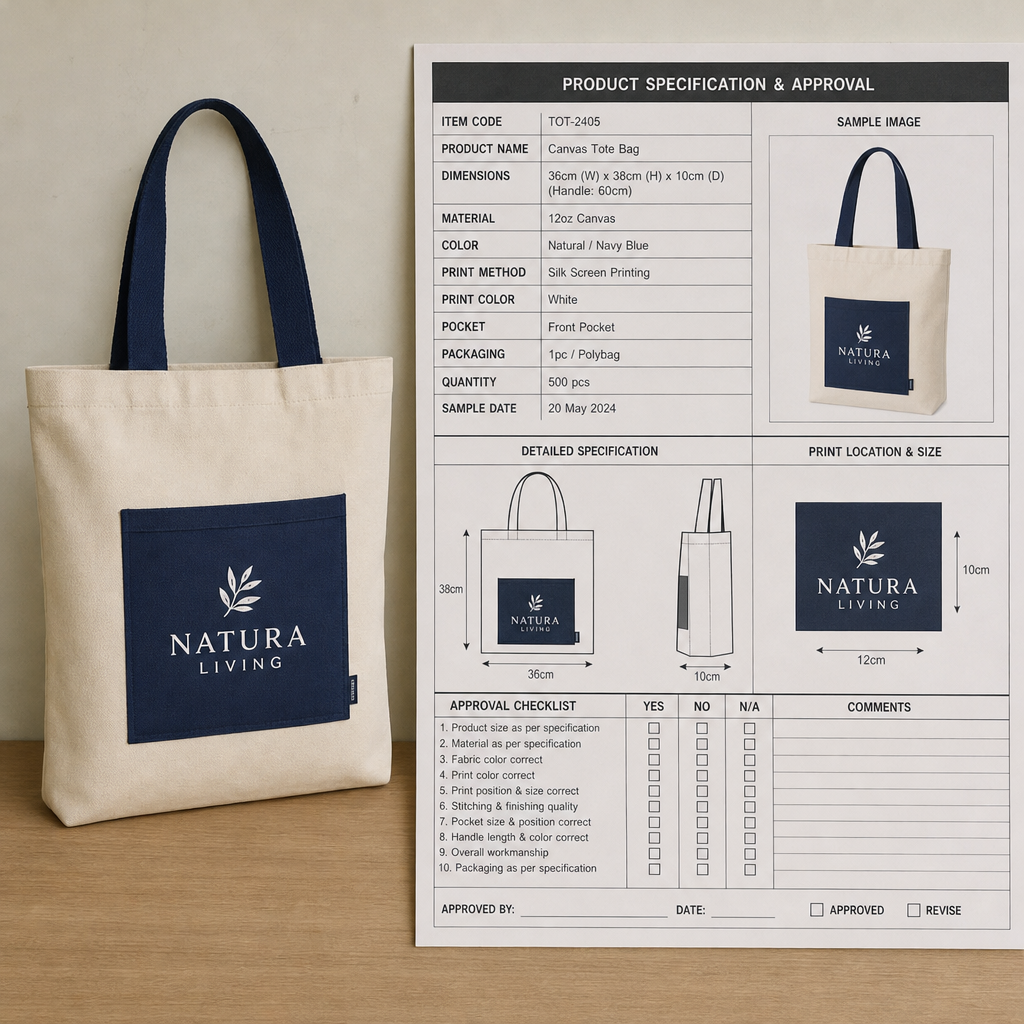
Discuss sample charges, courier costs, revision charges, and any proposed credit against a later order. Get the credit conditions in writing instead of assuming reimbursement.
Also negotiate production inspection arrangements before manufacturing begins. Define the inspection scope, acceptance criteria, access, and response to a failed inspection. Sample approval should establish a reference point, not replace the agreed checks on the production order.
Negotiate payment terms alongside buyer protection
Evaluate payment terms together with the supplier’s reliability, production milestones, and your ability to verify progress. International Trade Administration guidance describes payment methods as a balance of buyer and seller risks: sellers prefer earlier payment, while buyers generally prefer to retain funds until they receive goods. There is no universally best arrangement for every transaction.
Ask what each payment authorizes and what evidence precedes the next payment. For a proposed balance payment, discuss whether it follows completion, document review, or an agreed inspection result. Avoid vague milestones such as “when ready” without defining who confirms readiness.
Do not offer a larger advance solely to obtain a small discount. Compare the saving against the additional amount exposed and the safeguards available. For higher-value or complex transactions, ask your bank and qualified advisers to evaluate suitable payment mechanisms.
If using Alibaba Trade Assurance, confirm eligibility, the protected order terms, the supported payment route, and applicable claim requirements. Alibaba describes protection for eligible orders based on the online agreement and supporting records; it is not a substitute for supplier checks or precise specifications.
Before sending funds, reconcile the beneficiary details with your approved payment instructions. Treat any request to change accounts as a reason to pause and independently verify the change through an established contact. Keep payment confirmations with the order records.
Turn the negotiation into one consistent agreement
Once the commercial package works, consolidate it into a final written order agreement. Do not leave the supplier to reconcile an old quotation, a revised spreadsheet, several messages, and an approved sample with conflicting details. Identify the documents and revisions that govern the order.
Your final review should cover:
- Product and quality: Specifications, approved references, permitted tolerances, and restrictions on substitutions.
- Quantity and price: Quantities per variant, currency, unit prices, total value, and separately charged items.
- Tooling and development: Charges, ownership arrangements, storage responsibilities, and reorder treatment.
- Timing and delivery: Approval deadlines, production milestones, completion date, and delivery terms.
- Payment and verification: Payment triggers, inspection access, required records, and treatment of failed checks.
- Problems and changes: Procedures for defects, shortages, delays, rework, and approving specification changes.
For material commitments, obtain qualified advice on contract wording and dispute arrangements rather than relying on a generic template. The International Trade Administration’s China guidance also recommends legal expertise for relevant intellectual-property matters and due diligence on prospective partners.
Before approval, run one final commercial check: does the revised order still fit your cash budget, launch schedule, and acceptable inventory exposure? A successful negotiation should remain attractive after every charge and obligation is included.
A practical negotiation sequence for a first order
Consider a hypothetical buyer testing a new product. The buyer prefers a small pilot, but the initial quotation specifies a larger MOQ with custom packaging. Rather than immediately asking for both a lower price and a lower minimum, the buyer separates the decisions.
First, the buyer confirms which requirement drives the minimum. Next, they request two comparable options: a smaller batch with standard packaging and a larger batch with the requested custom packaging. Both options retain the same essential product specifications.
The buyer then compares total cash required, expected inventory, sampling charges, inspection costs, and delivery arrangements. If the smaller batch carries a higher unit price but fits the test budget, it may be the more appropriate choice. That conclusion depends on the buyer’s circumstances, not a universal rule that smaller orders are better.
Finally, the buyer asks for reorder pricing and records the conditions for any future reduction. No unapproved purchase promise is needed. The negotiation ends with a specific pilot agreement rather than a vague expectation of future business.
Choose a workable deal, not just a cheaper quote
When sourcing from China, negotiate around a clear specification, a realistic purchase quantity, and an acceptable total commitment. Prepare a consistent RFQ, understand the supplier’s constraints, and exchange concessions deliberately. Protect essential quality requirements, verify samples, and put the final terms in one coherent record.
The best result is a product you can sell, an order you can fund, and an agreement both parties understand—not simply the lowest number in a quotation.
Frequently Asked Questions About Negotiating Prices and MOQs with Chinese Manufacturers
What is the importance of RFQ preparation in negotiations?
RFQ preparation is crucial as it ensures that all suppliers have the same specifications to work from, allowing for fair comparisons of their quotations. It helps avoid misunderstandings and sets a clear standard for negotiations.
How can I effectively negotiate a lower MOQ?
To negotiate a lower MOQ, understand the supplier's constraints around production costs and resources. Offer alternatives such as accepting standard packaging or a more extended production timeline, which can help make a smaller order more viable for the supplier.
What factors should I include in a price breakdown request?
When asking for a price breakdown, request separate figures for the finished product, packaging, tooling, customization, and testing. This detailed breakdown helps identify areas where costs can be reduced without compromising product quality.
How can I ensure quality when negotiating lower prices?
To maintain quality while negotiating lower prices, clearly communicate your quality requirements and ask for samples before committing to an order. Document any quality expectations and ensure they are included in the final agreement.
What role do payment terms play in international negotiations?
Payment terms are critical in international negotiations as they balance risk between the buyer and supplier. Discuss terms that protect both parties' interests and clarify what each payment authorizes. This helps build trust and ensures that both parties feel secure throughout the transaction.