Importing towels from China involves defining your product, verifying suppliers, approving samples, calculating landed costs, and arranging compliant shipping.
This article explains how to import towels from China with practical checkpoints for finished towels and wholesale fabric. The customs and labeling guidance focuses on U.S. buyers; confirm destination-specific requirements if you sell elsewhere.
What do you need before importing towels from China?
Before importing towels from China, prepare a written product specification, an order budget, a supplier verification plan, and a destination-market compliance checklist. Decide whether you need finished towels ready for resale or fabric for cutting and sewing. Use that decision to shape every quotation request.
Start with the customer’s actual use. For a hotel order, specify the intended laundering conditions and evaluate samples accordingly. For a retail collection, include packaging, color consistency, and presentation requirements alongside performance checks.
Send each prospective supplier the same specification:
- Product: Bath towel, hand towel, washcloth, beach towel, or fabric roll.
- Composition: Required fibers and percentages, supported by testing.
- Construction: Terry, waffle, or another agreed structure.
- Dimensions: Finished measurements or usable fabric width, with tolerances.
- Performance: Agreed absorbency, shrinkage, colorfastness, and appearance criteria.
- Finishing: Hems, borders, embroidery, labels, and packaging.
Ask suppliers to identify any requirement they cannot meet rather than quietly substituting an alternative.
Choose finished towels or wholesale towel fabric
For finished towels, request quotations by individual item or clearly defined set. Confirm exactly what each quoted unit includes: a bath towel alone is not comparable to a packaged towel bundle. Specify whether labeling, embroidery, and individual wrapping belong in the price.
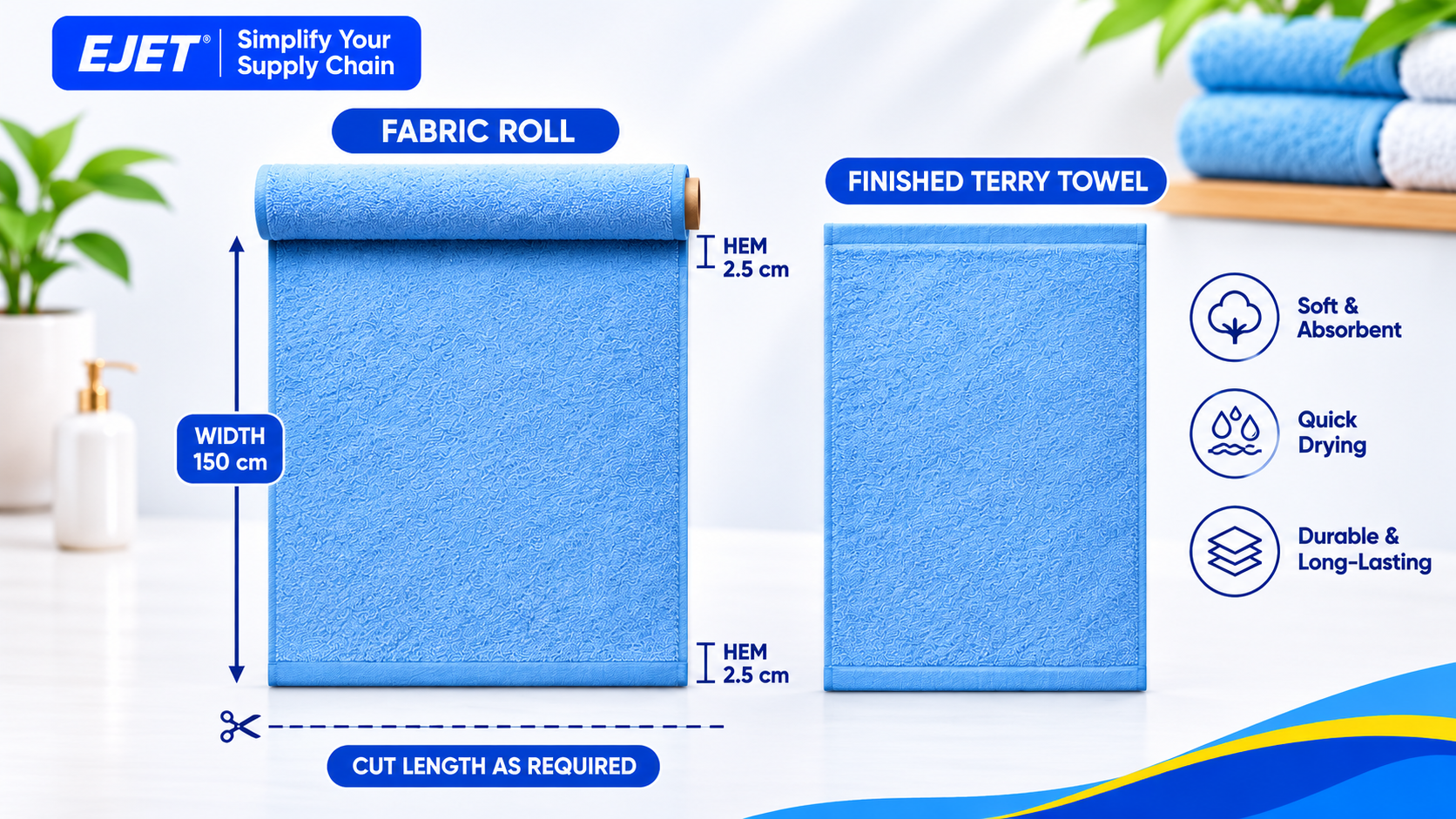
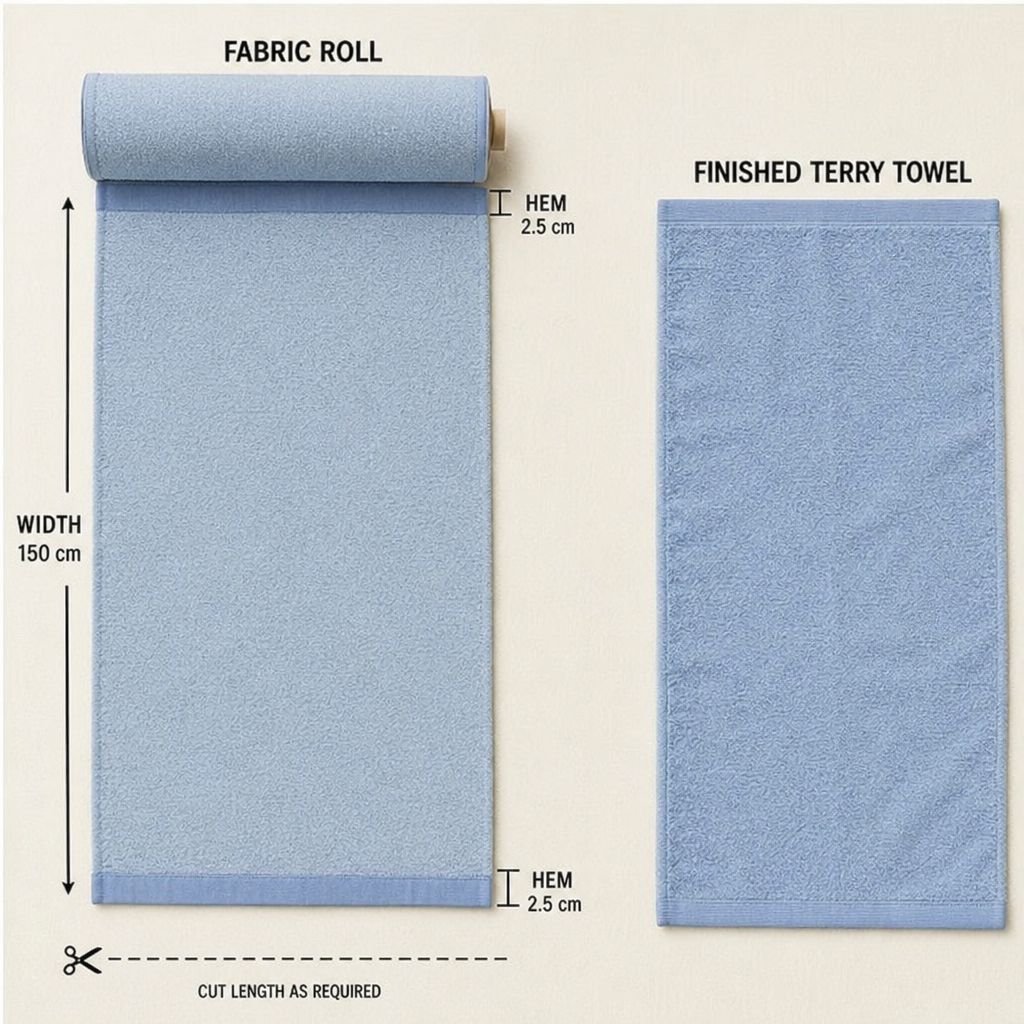
For towel fabric wholesale orders, request roll length, usable width, fabric weight, finishing condition, and the permitted number of defects. Ask how shortages, joins, and damaged sections will be recorded. Include cutting, sewing, and production waste in your buying plan rather than comparing fabric prices directly with finished-towel prices.
If you need towel fabric by the yard, confirm whether the supplier quotes in yards, meters, kilograms, or rolls. Require both parties to use one agreed measurement basis on the purchase order. Request a cutting layout before estimating how many finished pieces your fabric purchase will produce.
Verify suppliers before discussing a large order
Build a shortlist, then investigate the businesses behind the quotations. The International Trade Administration recommends evaluating potential foreign partners and continuing due diligence as business relationships develop. Treat verification as an ongoing purchasing task, not a box checked before the first deposit.
Ask each supplier for its legal business name, registration details, factory address, and the identity of the company receiving payment. Request an explanation of who manufactures, invoices, and exports your order. Investigate inconsistencies before transferring money.
Use a live production walkthrough or an independent site assessment when your order warrants it. Ask to see the processes relevant to your specification, not just a showroom of attractive samples. If production is subcontracted, request the subcontractor’s details and include that facility in your review.
When you buy towels from China, prioritize suppliers willing to document specifications, disclose production arrangements, and explain corrective action. Make those requirements part of your supplier scorecard.
How can you check towel quality before shipment?
Check towel quality by approving a reference sample, testing agreed performance characteristics, and inspecting bulk production against the written specification. Keep sample approval and shipment approval separate: require evidence that the actual order meets your standards before authorizing dispatch.
Towel testing can cover absorbency, shrinkage, strength, and colorfastness. Select tests and acceptance limits that match the intended use, and agree on them before production begins. A textile laboratory can help translate your performance expectations into appropriate methods.
Use a staged approval process:
- Review initial samples: Compare dimensions, texture, stitching, borders, and presentation against your specification.
- Run laundering trials: Use the intended washing and drying conditions, recording dimensional change, lint, color transfer, and appearance.
- Approve a reference sample: Date it, identify the specification revision, and retain matching copies where practical.
- Inspect the shipment: Check randomly selected units, carton quantities, labels, packaging, and agreed defect limits.
For large or unfamiliar orders, consider an inspection during production as well as before shipment. Specify how rejected goods will be corrected and whether reinspection is required. Do not leave the remedy for failed inspection until after a problem appears.
Confirm U.S. labeling and supply-chain requirements
For covered textile products, FTC rules generally require fiber content, country of origin, and the identity of the manufacturer or another responsible business. A qualifying Registered Identification Number can substitute for the business name; obtaining an RN is not itself mandatory. Review the label artwork before ordering bulk labels.
Check composition claims carefully. If towel loops and the ground fabric contain different fibers, the label must account for both rather than describing only the loops. Ask for composition evidence that matches the complete product and its proposed labeling.
Do not assume every textile requires the same care label. The FTC Care Labeling Rule covers textile wearing apparel and certain piece goods; confirm its application to your particular product rather than automatically applying clothing requirements to household towels.
For cotton products, request supply-chain records early. CBP’s UFLPA guidance describes documentation tracing cotton from its origin through finished production, including the entities involved. Have your broker or trade adviser review the evidence before committing to a shipment; a supplier’s general assurance should not replace that review.
Calculate landed cost before accepting the quote
Build your purchasing comparison around the total cost of receiving saleable goods, not the supplier’s unit price alone. Create a worksheet for each quotation and use the same assumptions throughout. Separate confirmed charges from estimates so you can see where uncertainty remains.
Include these budget lines:
- Goods, customization, labels, and packaging.
- Samples, laboratory testing, and inspections.
- Origin handling, international freight, and insurance.
- Customs brokerage, applicable duties, taxes, and entry-related charges.
- Destination handling, delivery, and receiving costs.
- An allowance for defects, delays, or unexpected charges.
For an internal planning figure, divide your estimated total by the number of saleable towels you expect to receive. For fabric, calculate the cost of usable material and then add conversion costs. Keep this budgeting calculation separate from the customs valuation your broker prepares.
Have your broker confirm the correct tariff classification and applicable duties using the current Harmonized Tariff Schedule and relevant customs guidance. The USITC cautions that abbreviated product descriptions are not sufficient for classification. Avoid applying a generic tariff percentage to every towel or fabric order.
Put payment and delivery terms in writing
Your purchase order should identify the product specification, quantity, price, approval milestones, production deadline, inspection arrangements, and remedies for nonconforming goods. Include packaging and labeling artwork references so the supplier knows which versions govern the order. Obtain written acceptance before production starts.
Negotiate a payment structure that reflects your exposure and inspection plan. Where feasible, connect payment milestones to documented progress and satisfactory inspection. Independently verify any requested change in bank details before sending funds.
State the agreed Incoterms rule, named place or port, and version. These rules allocate delivery responsibilities and clarify when delivery occurs, so a quotation needs more detail than “shipping included.” Ask your forwarder to explain the obligations attached to the proposed term before acceptance.
Arrange shipping and review documents early
Request transport options against your required arrival date, shipment dimensions, weight, and delivery address. Compare complete quotations, including destination charges and final delivery. Build your schedule backward from receipt, allowing time for inspection, corrections, document preparation, and customs clearance.
Ask your broker and forwarder to review draft commercial invoices, packing lists, and transport information before dispatch. Confirm descriptions, quantities, values, origin information, and importer details across the document set.
For ocean shipments, establish who will handle the required advance Importer Security Filing. CBP emphasizes that the importer remains responsible for entry accuracy and applicable charges even when using a broker.
Start small, then improve the next order
Make the first order manageable enough to evaluate receiving, product performance, and customer response before scaling. Record defects, washing results, delivery issues, and the final landed cost. Use those findings to revise your specification and supplier scorecard.
The strongest importing process connects every decision: customer needs shape the specification, evidence supports supplier approval, and verified costs guide purchasing. Begin with a clear brief and a controlled trial order, then expand only when the results justify it.
Frequently Asked Questions About Importing Towels from China
What are the key steps to import towels from China?
Importing towels involves several key steps, including defining your product specifications, verifying suppliers, approving samples, calculating landed costs, and arranging compliant shipping based on the destination's requirements.
How can I verify the reliability of a supplier in China?
You should ask suppliers for their legal business name, registration details, and factory address. Conduct thorough background checks and consider live production walkthroughs or independent site assessments to ensure the supplier’s credibility.
What should I include in my product specifications when ordering towels?
Your product specifications should detail aspects like product type (e.g., bath towels, hand towels), composition, construction type, dimensions, performance criteria, and finishing details such as hems and labels.
What are the typical landed costs when importing towels?
Landed costs encompass several factors, including the product price, customization, shipping, insurance, customs duties, and any applicable taxes. Always calculate these costs to understand the total expenditure before placing orders.
What labeling requirements must I meet when importing towels to the U.S.?
In the U.S., labeling requirements for towels include disclosing fiber content, country of origin, and manufacturer identity. Ensure compliance with the FTC rules and review label artwork prior to production.