













In 2015, former Mengniu executive Wang Jiacheng led a 16-member team to Indonesia, embarking on a journey to reshape the Southeast Asian ice cream market.
This team carried the "Mengniu DNA"—strategized by founder Niu Gensheng, operated by Mengniu veterans like Sun Xianhong, and comprised of core members with an average of 20+ years in the FMCG industry.
Their vision was simple: to fully utilize China's idle ice cream production capacity year-round and break the industry’s seasonal sales cycle of booming summers and stagnant winters.
Upon arriving in Jakarta, the team squeezed into a 15-square-meter basement, shared beds, and used dining tables as desks. To penetrate the market, they carried 20kg foam boxes through the streets, selling ice cream in broken Bahasa Indonesia, often laughed at by locals for their pronunciation.
Despite their hard work, the initial results were disappointing—Chinese-imported ice cream was overpriced and didn’t match local tastes, with sales covering less than one-tenth of costs in six months.
This failure taught the team a crucial lesson: “In Southeast Asia, Chinese experience is not a pass—it’s a puzzle to be solved.”

Aice Headquarters
The ‘Encircling Cities from the Countryside’ Strategy
In 2016, Aice launched a "rural revolution" strategy: the team moved out of Jakarta apartments and into villages on Java Island, celebrating Ramadan and festivals with local residents.
They discovered that 85% of Indonesians rarely purchased ice cream due to income limitations, yet children’s craving for sweets was overwhelming. A seven-year-old girl tasting ice cream for the first time said:
"It's so delicious, it makes me want to cry."
This moment reshaped Aice’s mission: "Making ice cream enjoyment accessible to more people." The company then implemented two major strategies:
Extreme Cost-Effectiveness – Pricing each ice cream at 2,000 Indonesian Rupiah (approximately $0.14) with only a 15% profit margin, relying on economies of scale for profitability. When the first mango-flavored ice cream was launched, consumers even doubted whether such an affordable product was of good quality.
Supply Chain Transformation – Establishing the highest-yielding ice cream factory in Jakarta, leveraging Chinese ice cream manufacturing techniques to optimize production, cutting per-unit costs by 40%. The team even sacrificed personal comfort to save costs, living in a cramped 200-square-meter space for five years.
Cultural integration was equally critical. Aice removed alcohol ingredients, obtained 338 halal certifications, avoided religiously sensitive symbols on packaging, and even oriented cattle water troughs in their factories toward Mecca.
_1742981504978.jpg)
Aice won the title of Best Halal Emerging Brand in the 2017 Halal Awards
This "revolutionary innovation" approach made Aice the first ice cream brand in Indonesia to receive national laboratory certification and participate in industry standard-setting.
However, the key to Aice’s true market penetration in Indonesia was localizing the supply chain.
Aice built three factories in Indonesia, solving cross-border logistics challenges and enhancing product responsiveness while maintaining cost control.
To counter Unilever's dominance in modern retail channels, Aice adopted a bold and unconventional distribution strategy: targeting independent small stores and vendors in rural areas and providing over 100 cities with free ice cream freezers.
This strategy not only secured numerous retail endpoints and unlocked previously untapped market demand but also established a solid local distribution network.
For small shop owners, free ice cream freezers eliminated a significant financial barrier, enabling Aice to establish thousands of new sales points while fostering deep trust with local retailers.
As Aice’s freezers spread across Indonesia, its ice cream products rapidly gained market dominance, covering tens of thousands of households and driving consumer trial and repeat purchases.
This innovative distribution model significantly increased Aice’s market share, allowing it to compete against global giants with a differentiated strategy, laying a strong foundation for long-term brand success.
By 2024, Aice’s extensive “ant army” network had reached 280,000 retail points, securing a 34% market share, pushing Unilever to the brink.
Using consumer data from these retail endpoints, Aice continuously refined its product formulas, optimizing sweetness and flavors to align with local preferences. The brand introduced bestsellers such as mango, dairy, and chocolate-based ice creams.
Among these, the mochi ice cream series became Aice’s flagship product, winning over Indonesian consumers with its highly localized flavors and distinctive packaging, achieving remarkable repurchase rates and customer loyalty.
With word-of-mouth spreading organically, Aice further solidified its competitive edge in the Indonesian market.
_1742981564027.jpg)
Aice product categories
Localization: The Key to Winning Indonesia
Aice’s CEO, Wang Jiacheng, once stated in an interview that Aice’s expansion into Southeast Asia was not a desperate move due to market saturation in China, but a proactive globalization strategy:
"China has the capability, Southeast Asia has the demand, and our team has the expertise."
Aice was not chasing short-term gains but aiming for deep market penetration—to truly become an integral part of Indonesian life.
While its differentiated market positioning and deep localization unlocked Indonesia’s market potential, Aice’s long-term success hinged on consumer trust.
With a user-centric approach, Aice developed a sustainable growth model through strong product quality and diversified marketing strategies, step by step expanding its brand influence and ultimately winning consumer loyalty.
Aice’s most ingenious marketing move was positioning itself as a market creator while actively taking on social responsibilities.
During the 2020 pandemic, when mask prices surged 10x, Aice built a mask factory in just 45 days, donating 67 million masks and mobilizing 100,000 village leaders for pandemic prevention campaigns. This effort earned Aice a permanent place in Indonesia’s National Museum.
These tangible efforts solidified goodwill among Indonesian consumers and the government, earning Aice the “Top Corporate Social Responsibility Enterprise” award for three consecutive years. With endorsements from the government, retailers, and consumers, Aice built an authentic brand reputation.
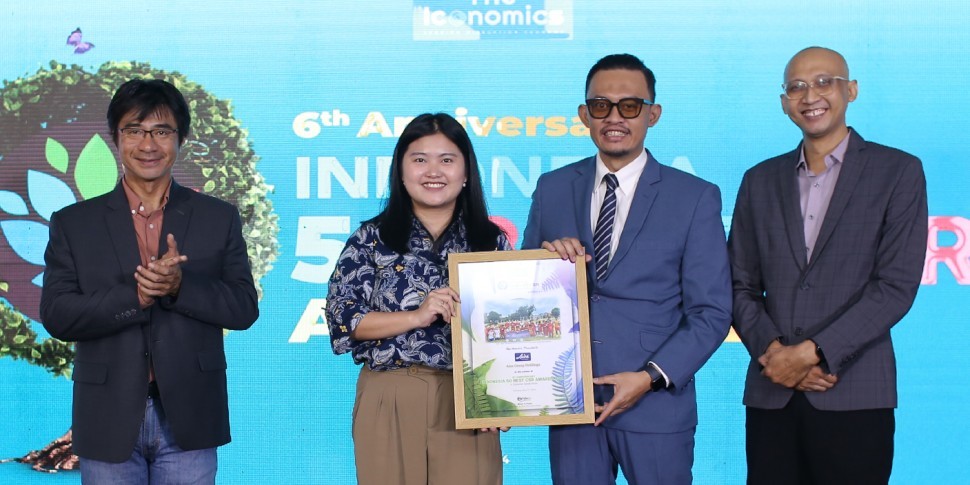
Aice won the Best Corporate Social Responsibility Award in the Indonesian Consumer Goods Industry
Beyond corporate social responsibility, Aice leveraged global sports marketing to enhance its brand's emotional value.
Partnered with Lionel Messi, Kylian Mbappé, and other sports stars.
Launched online sports campaigns such as #Aice Starlympic, linking ice cream consumption with sportsmanship and community engagement.
Became the exclusive ice cream sponsor for the 2018 Jakarta Asian Games and 2022 Qatar World Cup, using global sports events to boost brand influence worldwide.

_1742981665959.jpg)
Messi and Mbappe became official ambassadors of Aice; Aice became a global partner of the 2024 Olympic Games
In 2021, Mengniu fully acquired Aice, accelerating its global expansion. Aice has since entered Pakistan, Brazil, and Tanzania, with a target to reach 30 countries and $6 billion in revenue by 2026.
Aice’s success is no accident—it reveals three fundamental principles for Chinese consumer brands going global:
Infrastructure as a Competitive Advantage – Revolutionizing distribution channels to overcome cold chain logistics challenges, reducing costs by 60% and achieving market price leadership.
Compliance as a Market Barrier – Securing 338 halal certifications, building an unbreachable competitive moat.
Supply Chain Excellence – Controlling the entire value chain, from durian tree saplings to end-consumer freezers.
Yet, the deeper insight lies in redefining commercial values.
When Wang Jiacheng saw children in rural villages sharing a single ice cream, he realized:
"Low prices are not the goal; they are a vehicle for inclusive economic empowerment."
This mission-driven approach transformed Aice from a price disruptor into a cultural bridge, so much so that Indonesia’s foreign embassies now publicly endorse it, calling Aice a “national icon.”
Aice’s story is rewriting the rules of global competition: in the 35°C heat along the equator, business with a human touch can transcend all borders.
As Wang Jiacheng puts it:
"We are not here to replace Häagen-Dazs. We want every street vendor along the equator to become a vital link in the inclusive economy."
All images sourced from Aice.

_1751507038923.png)