A factory audit in China evaluates whether a supplier has the facilities, processes, and quality controls to manufacture your product before you commit to an order.
It gives importers evidence for supplier approval, highlights weaknesses requiring correction, and helps distinguish production capability from sales promises.
The strongest audits examine the specific site and product—not just a showroom or certificates.
What should a factory audit in China check before ordering?
A pre-order factory audit should assess the manufacturing site, production capacity, equipment, quality systems, material controls, workforce capability, and relevant working conditions.
Its scope should reflect your product, specifications, and delivery expectations rather than rely entirely on a generic checklist. Intertek’s factory evaluation framework includes facilities, machinery, management systems, quality control, and production flow before order placement.
Start by giving the auditor a clear brief. Include your product specification, expected quantity, proposed delivery schedule, approved sample details, and concerns raised during supplier discussions. Ask the auditor to separate verified observations from supplier statements and unavailable evidence.
Use this checklist to organize the assignment:
|
Audit area |
Evidence to request |
Decision it supports |
|---|---|---|
|
Supplier identity |
Registration details, site address, contracting entity |
Whether the business relationship is clear |
|
Manufacturing capability |
Relevant machinery, process demonstration, operator skills |
Whether the site can make your product |
|
Available capacity |
Production schedules, output records, staffing |
Whether the proposed lead time is credible |
|
Quality controls |
Inspection records, work instructions, measuring equipment |
Whether defects can be detected and controlled |
|
Materials and outsourcing |
Input specifications, supplier controls, subcontractor list |
Whether production changes are controlled |
|
Working conditions |
Applicable social audit evidence and corrective actions |
Whether sourcing expectations are addressed |
Treat this as a briefing tool, not an automatic pass/fail scorecard. Define which findings would block approval before the visit, so an attractive quotation does not override unresolved risks.
Confirm who will actually manufacture your order
Ask for the supplier’s registered company name, business registration details, manufacturing address, and the entity issuing the quotation. Compare these with the proposed contract and payment instructions. Where names differ, request a documented explanation rather than assuming either fraud or an acceptable arrangement.
Make production-site identity an explicit audit requirement. Ask the auditor to record signage, the site visited, and which processes were observed there. If a sales company manages production elsewhere, identify the actual manufacturer and establish who controls quality decisions.
Intertek’s supplier management program specifically examines whether suppliers correctly manage the factories manufacturing buyers’ orders, alongside product experience and delivery capability.
Use that distinction when evaluating a trading company. Your approval criteria should address visibility, accountability, and access to production—not simply whether the supplier calls itself a factory. Require notification before the approved production site changes.
Test capacity against your actual order
Manufacturing audits assess production capacities, facilities, machinery condition, and workflow. Those checks help evaluate capability, but your audit brief should connect them to the quantity and schedule you intend to order. (
Ask the auditor to challenge the proposed production plan:
- Which lines and machines would handle your product?
- What output records support the quoted production rate?
- How much capacity is already committed to other customers?
- Which operations depend on specialist workers or outside processors?
- What allowance exists for changeovers, maintenance, rejected units, and rework?
Request a capacity explanation built around the slowest relevant operation. For example, do not accept assembly output as the only evidence if a separate coating, printing, or curing step must finish first. Ask management to explain how each stage fits the promised schedule.
If your exact product is not running during the visit, have the auditor record that limitation. Request comparable production evidence and consider a pilot run before committing to full volume.
Check whether quality controls work in practice
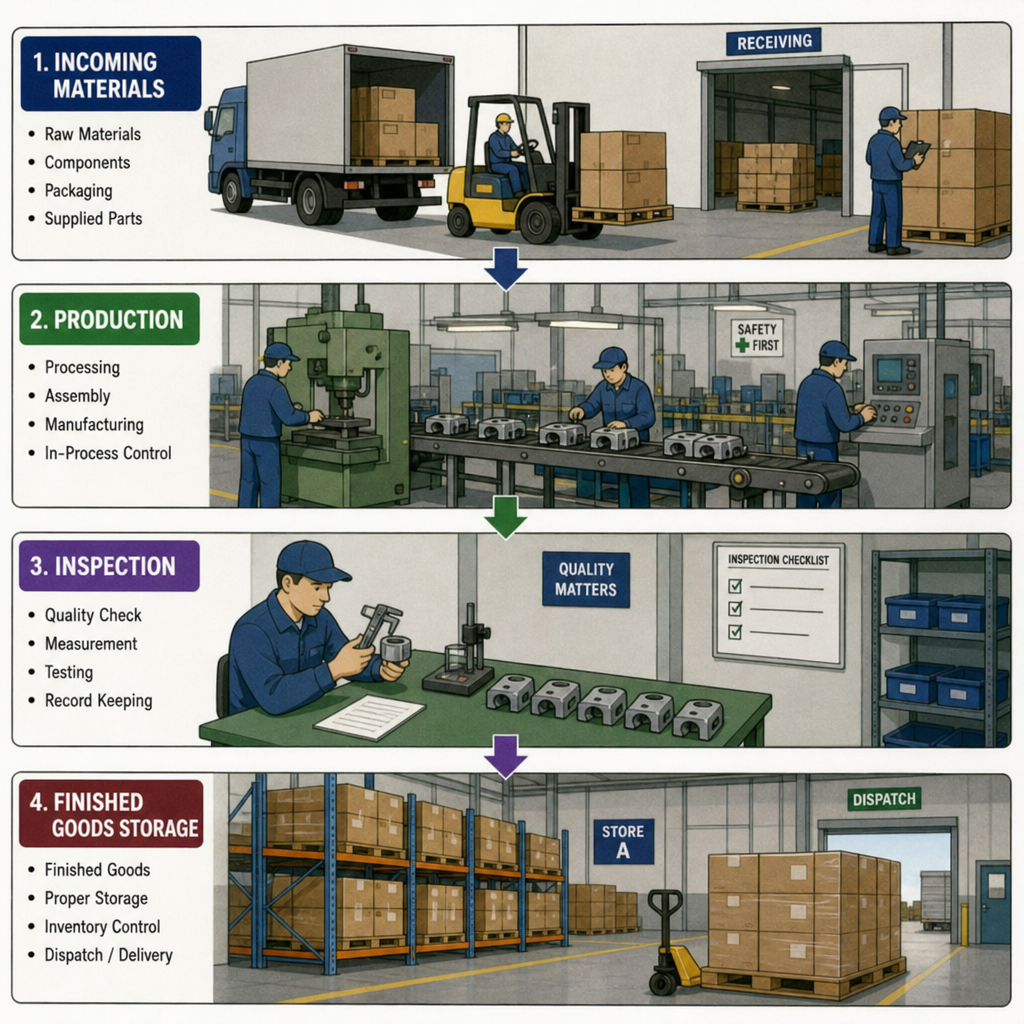
Intertek’s factory audit scope includes quality control, manufacturing processes, procurement, raw material management, work instructions, and finished-product management. Your assignment should ask how these controls operate on the production floor, not merely whether procedures exist.
Choose a recent production batch and request a walkthrough of its records. Ask who approved incoming materials, which checks occurred during manufacturing, and who authorized final release. Have the auditor note gaps between the written procedure and the evidence available.
Follow a defect through the system
Ask staff to demonstrate what happens when an item fails inspection. Request evidence of identification, segregation, rework authorization, and reinspection. Then ask how management investigates a recurring defect and checks whether its corrective action worked.
Include measurement controls in this exercise. Ask which instruments assess your critical dimensions or performance characteristics, whether suitable equipment is available, and how its condition is verified. Intertek’s published quality-system requirements address measuring equipment, records, nonconforming products, and corrective action.
For the next step, turn your product requirements into measurable acceptance criteria. Replace descriptions such as “premium finish” with an approved visual standard, defined tolerances, or an agreed test method that inspectors can use consistently.
Make materials and subcontracting visible
Include procurement, raw material controls, and outsourced processes in the supplier audit. These areas deserve attention alongside on-site manufacturing because supplier qualification also covers product control, process control, testing, and personnel competency.
Request a process map showing what happens at the audited site and what happens elsewhere. For every outsourced operation, ask who performs it, which specification they receive, and how returned work is accepted. Make undisclosed outsourcing an issue to resolve before approval.
Use a traceability exercise: select a finished carton or batch and ask the factory to connect it with production and material records. Record where the trail stops. If the system cannot support the traceability your business needs, define an improvement requirement rather than accepting a verbal assurance.
For custom orders, document ownership and identification of molds, artwork, patterns, and other tooling. Specify who may authorize material substitutions or process changes, and require written approval before those changes reach production.
Does a BSCI audit prove the factory can make your product?
No. An amfori BSCI audit assesses social compliance against its Code of Conduct; it does not establish manufacturing capability or approve your product quality. BSCI is not a certification scheme, and its audit focus includes working conditions and workers’ rights rather than verification of your order’s specifications.
Request the relevant audit information for the actual production site, including its date, findings, rating, and corrective-action status. Do not make your decision from a logo or an isolated cover page. Amfori explains that ratings reflect auditor responses across performance areas, with particular weight attached to crucial worker-protection questions.
For a company-specific example, Canenco B.V.’s website describes product testing and factory audits as part of its manufacturing approach and states that Canenco is a BSCI member. That public statement is useful context when researching Canenco, BSCI audits, and supplier manufacturing in China; it is not evidence of a particular supplier site’s audit result.
Keep social compliance and technical approval as separate decisions. Ask for evidence appropriate to each, and involve a qualified social-audit provider when your sourcing policy requires that assessment. Define any further product testing separately rather than treating a social audit as an all-purpose approval.
Adapt the checklist to the product: trampoline socks
A China trampoline socks factory audit checklist should translate the product specification into process checks. Intertek’s supplier qualification approach uses product-specific modules, including garments, rather than assuming one manufacturing checklist suits every category.
For trampoline socks, brief the auditor to examine how the supplier would control the following requirements:
Yarn and construction: Compare specified materials, knitting construction, and elasticity with production instructions and available records.
Sizing and fit: Request measurement points, tolerances, and a method for separating sizes throughout production and packing.
Grip application: Ask how the factory controls the specified grip material, pattern placement, application, and curing process.
Seams and finishing: Define the inspection criteria for open seams, loose threads, inconsistent finishing, and other agreed defects.
Performance verification: Agree how grip durability, washing performance, and relevant material properties will be evaluated.
Packaging accuracy: Check controls for size labels, pair matching, artwork versions, and carton assortment.
Treat these as proposed audit instructions, not a universal technical standard. Have a qualified testing provider help select suitable methods and acceptance criteria for your product and intended use. Do not claim that an audit alone proves slip resistance or supports an unrestricted safety claim.
What is the difference between an audit and a product inspection?
A factory audit evaluates the supplier’s capabilities, facilities, and systems; a product inspection evaluates goods against specifications and quality requirements. They answer different questions, and importers may use both before approving a shipment. A supplier assessment does not replace checking the order produced.
When commissioning factory inspection in China, spell out the deliverable. Ask whether the assignment evaluates the facility, checks production units, witnesses tests, or combines defined activities. Do not rely on the service name to communicate your expectations.
Build your plan around decision points:
- Before ordering: Establish the factory’s suitability and resolve approval-blocking findings.
- Before bulk production: Approve specifications, samples, materials, and manufacturing instructions.
- During production: Consider checks where early findings would allow meaningful correction.
- Before shipment: Inspect finished goods against agreed criteria and review required test evidence.
Intertek’s supplier quality management program distinguishes factory review, product compliance work, and during-production verification. Use that separation when allocating responsibilities and requesting quotations. (intertek.com)
Turn findings into an ordering decision
Request a report that distinguishes observations, supporting evidence, unavailable information, and recommended actions. Ask for photographs where permitted, references to sampled records, and a clear statement of the visit’s limitations. Avoid an approval based solely on an overall percentage.
Require each corrective action to identify the problem, responsible person, deadline, and evidence needed for closure. On-site review and corrective-action planning are established parts of supplier quality management; make follow-up responsibilities explicit in your assignment.
Set your own decision rules before reviewing the result:
- Approve: Required capabilities are evidenced, with no unresolved approval-blocking findings.
- Approve conditionally: Defined improvements must be verified before a specified purchasing or production milestone.
- Hold: Important evidence or access remains unavailable.
- Reject: The findings conflict with your minimum sourcing requirements.
Where a supplier promises improvements, choose verification proportionate to the issue. Updated paperwork may address a documentation gap; a changed production process may justify another visit or witnessed trial. Record who can authorize release after closure.
Order on evidence, not reassurance
Before placing an order, connect the supplier’s identity, manufacturing plan, quality controls, and corrective actions to your actual product requirements. Keep social compliance, product testing, and shipment inspection within their defined scopes.
The practical outcome of a China factory audit should be a documented decision: what is acceptable, what must change, and what evidence you need before proceeding.
Frequently Asked Questions About Factory Audits in China
What is a factory audit, and why is it important?
A factory audit is a thorough evaluation of a supplier's manufacturing capabilities, quality control processes, and overall operational practices. It is crucial for importers as it helps verify that the supplier can meet production standards and fulfills contractual agreements.
What should I check during a factory audit in China?
Important aspects to assess include manufacturing capabilities, production capacity, quality control systems, workforce conditions, and compliance with material sourcing and subcontracting regulations. A tailored checklist can help organize these checks based on your product specifications.
How do I choose the right auditor for my factory audit?
Look for auditors with experience in your specific industry and product type. Check their certifications, track record, and customer reviews. It's also beneficial if the auditor has a good understanding of local regulations and cultural nuances.
Can a BSCI audit guarantee product quality?
No, a BSCI audit focuses mainly on social compliance and working conditions within the factory. It does not verify that the factory can meet your specific product quality standards or that manufacturing processes are adequately controlled.
What steps should I take after receiving the audit report?
Review the report thoroughly to understand the findings. Define any corrective actions needed and set timelines for verification. Your decision should be based on whether the audit confirms that the supplier can meet your requirements, addressing any unresolved issues before placing an order.