


Source china wholesale clothing with a clearer brief, a more useful supplier shortlist, and a practical plan for checking samples before committing to inventory.
This sourcing framework helps boutique owners, online retailers, and emerging labels turn product ideas into comparable supplier inquiries.
Use the checklists and ready-to-copy brief below to define your requirements, evaluate responses, and move toward a first order with fewer unanswered questions.
Start with your sourcing brief. Compare suppliers against the same requirements before discussing a bulk order.
What should you prepare before contacting clothing suppliers in China?
Before contacting clothing suppliers in China, prepare a written brief covering your product category, intended customer, fabric requirements, size range, order quantities, customization needs, destination market, and delivery priorities. Include reference images or measurements where available, and distinguish essential requirements from preferences. This gives each supplier the same starting point and makes their answers easier to compare.
You do not need a finished collection to begin. You do need enough clarity to explain what you want to sell and what would make a proposed product unsuitable. A reference photograph, for example, should be accompanied by notes about the features you want rather than an assumption that every visible detail is included.
Your first inquiry should establish:
- Product fit: The garment category, intended use, and customer you are buying for.
- Commercial fit: Your proposed quantity, target purchasing budget, and realistic retail position.
- Technical fit: Fabric composition, construction details, measurements, and required customization.
- Operational fit: Sampling expectations, destination, packaging, and required arrival window.
- Decision criteria: The evidence you need before approving a sample or placing an order.
Keep unknown details visible. Writing “fabric weight to be confirmed after sampling” is more useful than guessing a specification and treating it as approved. For a first collection, a narrower, well-defined inquiry is a better starting point than a request for an entire catalog.
A practical starting point for retailers and growing brands
Use this framework when you are ready to make a purchasing decision, not simply collect product images. It is designed around the decisions that sit between finding an appealing style and approving inventory for your store. The objective is a manageable shortlist supported by clear answers, not the longest possible contact list.
Different business models need different starting points:
- Independent boutiques: Prioritize a coherent assortment, an appropriate size mix, and quantities you can reasonably merchandise.
- Online retailers: Define the measurements, product information, photography permissions, and packaging details needed for your listings.
- Emerging private labels: Establish which design elements are yours, what must be developed, and who approves each sample revision.
- Established buying teams: Document repeat-order expectations, inspection requirements, and any consistency issues you are trying to resolve.
Picture a boutique planning a small capsule collection. The buying decision is not simply whether a supplier has attractive dresses. It is whether those dresses meet the store’s fit expectations, work together as an assortment, and leave enough budget for the rest of the launch.
Apply the same discipline if your starting search is cheap fashion from China. Define “affordable” through your business model: a suitable garment, an acceptable landed cost, and a quantity you can support. Keep price important without allowing it to become the only question in the conversation.
Choose a sourcing route that matches your product
Organize potential partners by the role you need them to perform. Instead of treating every search result as interchangeable, ask whether you need available inventory, custom garment production, fabric development, or coordination across several sellers. Confirm the actual scope with each business before assuming that its name or listing category tells the whole story.
Use these working categories when planning your outreach:
|
Your starting need |
Supplier route to investigate |
Details to confirm |
|---|---|---|
|
Existing styles for a retail assortment |
Stock wholesalers or distributors |
Available quantities, size packs, repeat availability, and export arrangements |
|
An original garment or modified design |
Clothing manufacturers |
Development scope, sampling, fabric sourcing, production minimums, and subcontracting |
|
Fabric for an approved collection |
Textile suppliers |
Composition, weight, usable width, color approval, testing, and material minimums |
|
Purchases involving several businesses |
Trading companies or sourcing support |
Included tasks, charges, supplier disclosure, inspection responsibility, and payment flow |
When approaching wholesale clothing manufacturers in China, describe the work you expect them to perform. Specify whether you already have a technical pack, need help developing a pattern, or want to adapt an existing style. Ask which activities would be handled internally and which would involve another business.
For wholesale clothing distributors in China, focus your questions on the inventory being offered. Request confirmation of the exact styles, colors, sizes, and quantities available for your proposed order. Establish whether future purchases would be made from continuing stock or would require a new production arrangement.
If your main requirement is material rather than finished clothing, approach china textile suppliers with a fabric brief. Keep that inquiry separate from garment assembly until responsibilities are clear. Your shortlist should reflect the work required, not just a broad match to the word “fashion.”
Approach Guangzhou sourcing with a defined buying plan
For buyers researching Guangzhou, China, wholesale clothing opportunities, begin with the same written requirements you would use online. Set an agenda for comparing products and collecting evidence rather than relying on memory after a day of meetings. If you plan to attend a trade event, check the organizer’s current product categories, access requirements, and schedule before making arrangements.
The Canton Fair’s official Phase 3 exhibition map includes men’s and women’s clothing, kids’ wear, sports and casual wear, underwear, fashion accessories, and textile raw materials and fabrics. Use the official category information to decide whether the event aligns with your sourcing priorities.
Prepare a buying record that captures:
- The business name, contact person, and locati0n associated with each discussion.
- Style references and photographs taken with permission, linked to written product notes.
- Quoted quantities, size breakdowns, customization options, and exclusions.
- Sample arrangements, follow-up questions, and the evidence still needed.
- The person responsible for issuing the quotation and handling the proposed order.
Apply this record when visiting wholesale clothing stores in China or meeting exhibitors. Leave each conversation with enough detail to follow up precisely. “The black jacket from yesterday” is not a usable reference for approving an order.
Treat a visit as one stage of evaluation. Bring the same sample, costing, and documentation questions back into the process before committing. An engaging meeting should lead to clearer purchasing information, not replace it.
Define the garment before comparing quotations
Give suppliers something more precise than a style name and an image. Your garment brief should explain what matters to the customer wearing it and translate those expectations into details that can be reviewed. Where you need supplier input, request it explicitly rather than allowing an unspoken assumption to become part of the quote.
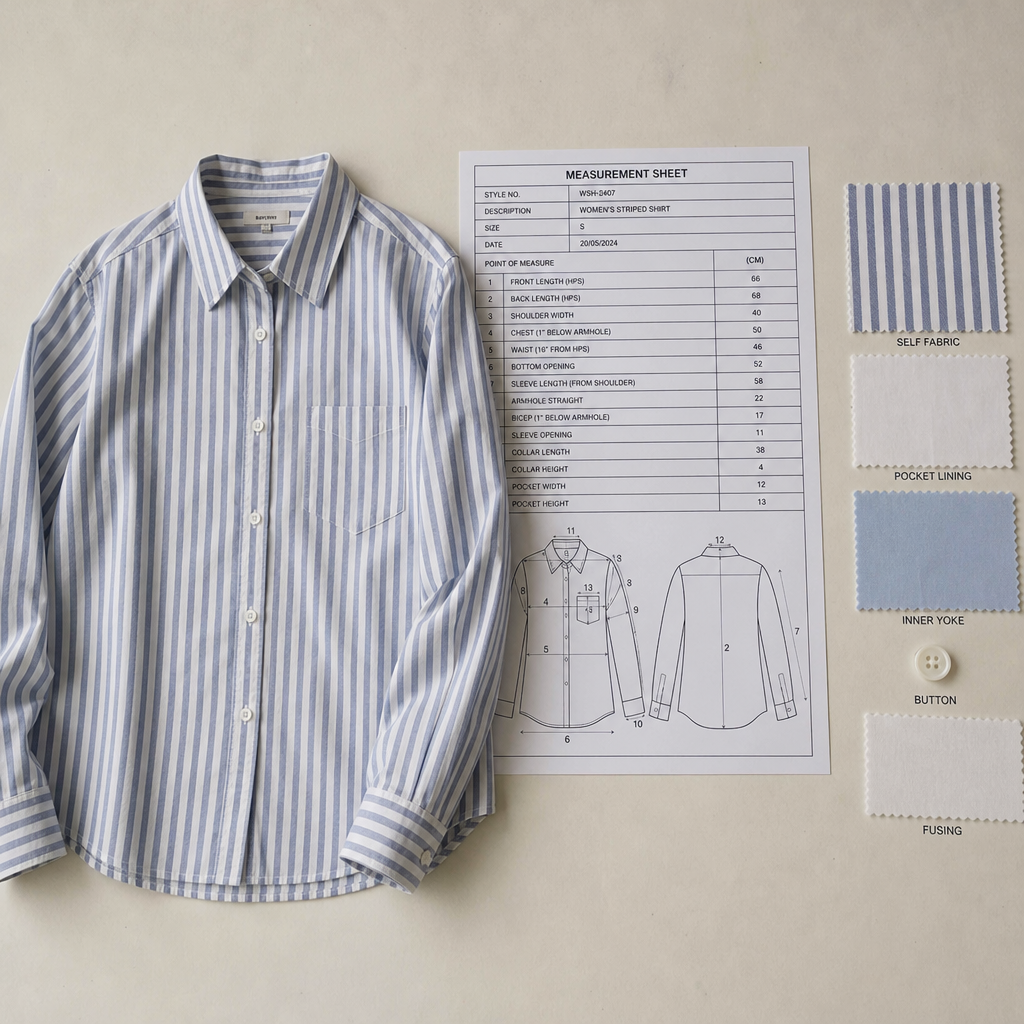
For example, an inquiry for a relaxed cotton T-shirt should address the intended silhouette, fabric composition, neckline, sleeve shape, measurements, and finishing. State whether the reference image illustrates the fit, the color, or both. Ask the supplier to identify any proposed changes before preparing the sample.
Build your specification around these elements:
- Fabric: Requested composition, desired feel, opacity, stretch, and weight where known.
- Construction: Seam details, closures, lining, pockets, trims, and finishing requirements.
- Fit: Measurement points, size chart, intended silhouette, and tolerances to be agreed.
- Appearance: Color references, print placement, embroidery, and other visible details.
- Presentation: Labels, hangtags, folding, individual packaging, and carton identification.
- Approval: The sample version and written specifications that would govern production.
For fashion from China wholesale, keep the commercial and technical conversations connected. If a quotation changes after you specify a heavier fabric or an additional pocket, ask for the revised specification alongside the revised price. You need to know what is being purchased, not just what it costs.
Avoid requesting “premium quality” without defining what you will assess. Replace broad descriptions with reviewable requirements and an approval process. If you are unsure how to specify a feature, flag it for discussion and use sampling to resolve the uncertainty.
Build a shortlist supported by evidence
A useful china clothing wholesale suppliers list is a working decision document, not simply a collection of names. Add a business only when you can explain why it may suit your product and what remains unconfirmed. Keep the original inquiry, the supplier’s response, and supporting documents together so that another team member can understand the decision.
For each potential partner, request business identification, a description of its role, relevant product examples, and a written response to your brief. Ask for clarification when the business named on a quotation differs from the party requesting payment. Resolve the relationship before proceeding rather than treating a verbal explanation as sufficient.
If you use Alibaba.com, its Verified Supplier program provides third-party assessment information covering areas such as company profile, production capabilities, and process controls. Review the report itself and its scope rather than stopping at the badge. Use that information as one input alongside your product-specific checks.
Record the same decision fields for each shortlisted supplier:
- Relevant capability: Evidence connected to your garment category and requested work.
- Quotation completeness: A clear description of the product, quantity, inclusions, and exclusions.
- Sampling readiness: The proposed sample process, charges, revisions, and approval requirements.
- Communication: Direct answers, identified uncertainties, and written confirmation of changes.
- Open risks: Missing documents, unexplained inconsistencies, or requirements not yet accepted.
When comparing chinese clothing suppliers, separate “promising” from “approved.” A business may be worth sampling without being ready for a production order. Give each supplier a next action, such as providing a revised quotation or explaining its production arrangement, so your shortlist keeps moving toward a decision.
Use samples to resolve uncertainty before scaling
Make sampling a defined approval stage. Before paying for a sample, confirm what it is intended to demonstrate, which specifications it will follow, and whether any materials or details will differ from the proposed bulk product. Keep those differences in the record so that you do not approve one thing while expecting another.
Review the sample against your brief rather than against memory or product photography. Measure it using your agreed measurement points, examine the construction, and assess the intended fit. If you plan a wear or wash assessment, document the method and observations, while recognizing that an informal review does not replace applicable laboratory testing.
A practical sample review should cover:
- Product identity: Confirm the style reference, sample version, fabric description, and color.
- Measurements: Record actual dimensions alongside the requested dimensions and proposed tolerances.
- Construction: Check seams, hems, closures, attachment points, and visible finishing.
- Wearability: Assess movement, coverage, comfort, and the intended silhouette on an appropriate fit model.
- Care expectations: Identify questions that require substantiation or suitable testing before label approval.
- Presentation: Review label placement, packaging, and any information intended for the customer.
Send consolidated feedback. Annotated photographs and a single revision list give the next sample a clearer purpose than scattered messages. Identify which points prevent approval and which are optional improvements.
For a private-label order, approve the relevant garment and branding details together before authorizing production. Keep the accepted sample reference and final specification accessible to both parties. If anything changes afterward, request written confirmation of the change and decide whether another approval is needed.
Move to a bulk discussion only when the sample has answered the questions that matter to your store.
Compare the full purchasing cost
Keep the unit price visible, but build your decision around the complete proposed purchase. Create a costing sheet that distinguishes confirmed charges from estimates and unresolved items. Use the same destination, product specification, quantity, and delivery assumptions when comparing quotations.
Your planning sheet should ask about:
- Garments: Unit prices, order quantities, and charges associated with the selected size or color mix.
- Development: Samples, revisions, artwork, patterns, or other work quoted separately.
- Customization: Labels, printing, embroidery, packaging, and setup charges where applicable.
- Quality checks: Any agreed inspection or testing work and the party paying for it.
- Transport: Collection, freight, insurance, destination handling, and final delivery as relevant to the quotation.
- Import costs: Duties, taxes, customs services, and other applicable charges to confirm for the shipment.
For U.S. imports, CBP explains that duties, taxes, and fees can depend on factors including the entry and transportation arrangements. Confirm the applicable treatment for your goods rather than carrying an old estimate into a new purchase.
Consider a hypothetical comparison: one supplier quotes only the garment, while another includes labeling and packaging. Do not declare the first offer cheaper until you have priced the missing items. Likewise, do not assume the second offer includes freight or import charges unless the quotation says so.
When searching for cheap clothes from China, use the search result to begin a costing conversation, not finish one. Decide whether the complete order supports your planned selling price and purchasing budget. Keep an explicit allowance for unresolved costs instead of presenting an incomplete estimate as a confirmed margin.
Agree quantities, timing, and payment in writing
Before discussing a larger commitment, ask how the supplier applies minimum quantities to your proposed assortment. Request the breakdown by style, color, size, fabric, and customization where relevant. A total quantity alone does not tell you whether your preferred assortment is accepted.
For bulk clothing China inquiries, present your intended order matrix rather than asking only for the lowest minimum. Show the styles and size proportions you want to purchase, then ask the supplier to identify any restrictions or price changes. If the required commitment exceeds your budget, reduce the assortment or revisit the product plan before negotiating against an unsuitable order structure.
Document the proposed sequence from sample approval through production, inspection, dispatch, and delivery. Ask which events start each quoted lead time and which decisions are still required from you. Distinguish a production completion target from the date inventory needs to be available for sale.
Keep these commercial points together:
- The accepted quantity and product specification.
- The quotation currency and any stated validity period.
- Payment milestones and the conditions attached to each payment.
- The inspection and acceptance process agreed by the parties.
- The response expected if a material issue is identified.
- The delivery arrangement, named locati0n, and included charges.
ICC explains that Incoterms rules allocate specified obligations, costs, and risks between buyer and seller. Where you use one, identify the selected rule, named place or port, and applicable version clearly in the contract. Keep payment terms and product acceptance requirements explicit as well.
Plan destination requirements before approving labels
Build a destination-market review into the sourcing process before approving packaging or production. For a U.S. order, identify the product category and intended wearer, then establish which labeling, safety, documentation, and import requirements apply. Seek appropriate professional advice where your team cannot confirm the requirements independently.
FTC guidance explains that most covered textile products require disclosures including fiber content, country of origin, and the identity of the manufacturer or another responsible business. Review the requirements and applicable exceptions for your product before signing off on label artwork.
Care instructions require their own review. The FTC’s Care Labeling Rule guidance explains that instructions and warnings must have a reasonable basis supported by reliable evidence. Do not approve a care statement merely because it appears on a supplier’s existing garment.
Prepare the compliance discussion with:
- A clear product description, intended use, wearer, and destination market.
- The proposed fiber composition and supporting material information.
- Draft origin, business identity, and care-label information for review.
- Relevant test documentation, with the product and scope identified.
- Shipping and commercial documents requested by your customs professional.
- Questions about materials, production locations, and supply-chain documentation.
CBP also identifies flammability requirements among the considerations for imported textiles and apparel. Confirm the applicable product-specific obligations rather than assuming a general apparel sample review is sufficient.
Keep compliance questions separate from ordinary appearance checks. A garment can look suitable for your assortment while still needing documentation, testing, or labeling changes before sale.
Move from first inquiry to a controlled first order
Use clear decision points so that enthusiasm for a product does not move the purchase ahead of the evidence. Each stage should end with a record of what has been accepted and what remains open. Assign responsibility within your team for approving commercial terms, product details, and destination requirements.
Follow this sequence:
- Complete the brief. Define the garment, intended customer, quantity, destination, budget, and approval requirements. Mark unknowns instead of filling them with assumptions.
- Send comparable inquiries. Give shortlisted suppliers the same core information and request itemized responses. Ask each to identify deviations from the brief.
- Review the responses. Resolve missing specifications, unclear business roles, and unexplained charges before deciding which samples to request.
- Evaluate samples. Record measurements and feedback, resolve revisions, and identify the approved version. Complete any separately required testing or review.
- Confirm the order. Bring the product specification, quantities, payment conditions, inspection arrangements, and delivery responsibilities into the written agreement.
- Review the outcome. Check received inventory against the agreed requirements and document the result before discussing a repeat purchase.
For example, an online retailer might begin with one approved silhouette rather than several loosely defined styles. That first purchase can then be assessed against the retailer’s own criteria for fit, presentation, receiving condition, and customer response. Treat any later expansion as a new purchasing decision supported by what you learned.
Keep a record of problems and corrections as carefully as approvals. If a supplier proposes a substitute fabric, a different trim, or an altered delivery arrangement, pause and assess the change. Do not let an informal message quietly replace an agreed requirement.
Copy this brief for your next supplier inquiry
Use the template below to turn your sourcing priorities into a message suppliers can answer. Replace each bracketed field with your actual requirements and delete anything irrelevant. If a detail is undecided, say what information or recommendation you need.
Subject: Wholesale clothing inquiry — [product category] for [destination market]
We are sourcing [garment category] for [customer and sales channel]. Please confirm whether you can supply the requirements below, identify any differences from our request, and provide an itemized quotation.
- Product: [Style description, reference images, and intended use.]
- Fabric: [Composition, weight if known, desired feel, and any undecided details.]
- Construction: [Fit, measurements, closures, pockets, lining, and finishing.]
- Assortment: [Styles, colors, size range, quantities, and proposed size breakdown.]
- Branding: [Labels, printing, embroidery, hangtags, and packaging requirements.]
- Samples: [Sample requested, details to assess, and approval expectations.]
- Destination: [Country and delivery locati0n, with required arrival window.]
- Budget: [Target purchasing range and what it is intended to include.]
- Documentation: [Information required for product and destination-market review.]
Please also explain your business’s role in supplying this order, which work you would perform directly, and whether any work would be subcontracted. Confirm minimum quantities, sample charges, revision arrangements, proposed production timing, payment conditions, and the delivery basis used in your quotation.
Please list exclusions and assumptions separately. Do not substitute materials, measurements, branding details, or packaging without identifying the proposed change for approval.
Use responses to this brief to narrow your wholesale china clothing suppliers shortlist. Follow up on unanswered points before comparing final prices. The most useful reply is one that explains exactly what the supplier proposes to deliver and what you must decide next.
Start with a clearer sourcing decision
Your next step does not need to be a large inventory commitment. Complete the brief, choose suppliers whose proposed role matches your needs, and request answers you can compare. Move forward when the product, commercial terms, and outstanding responsibilities are clear enough to support a decision.
Keep three priorities in view:
- Define before comparing: Make the garment and assortment requirements explicit.
- Check before committing: Use documents, samples, and appropriate reviews to resolve uncertainty.
- Record before scaling: Preserve approvals and assess the first order before expanding it.
The goal is not to contact every business in the china wholesale clothing market. It is to identify a workable purchasing arrangement for the collection you actually intend to sell.
Complete your sourcing brief above and send it to your shortlist. Ask for a product-specific response before discussing a bulk commitment.
Frequently Asked Questions About China Wholesale Clothing Market
What should I include in my sourcing brief when contacting clothing suppliers in China?
Your sourcing brief should cover product category, intended customer, fabric requirements, size range, order quantities, customization needs, destination market, and delivery priorities. Reference images or measurements can also be included to provide clarity.
How do I evaluate potential clothing suppliers in China?
Evaluate suppliers based on their responses to your brief, focusing on their product fit, commercial fit, technical fit, operational fit, and their decision criteria. It's important to request detailed quotations and confirm any discrepancies before proceeding.
What types of suppliers should I consider for my clothing business?
You can categorize potential partners into stock wholesalers, clothing manufacturers, textile suppliers, and trading companies based on your needs for existing styles, original designs, fabrics, or managing orders from multiple sources.
How can I ensure the quality of samples from suppliers?
It's essential to define what the sample is intended to demonstrate, such as style, fabric, or fit. Review the sample against your original brief and provide consolidated feedback to the supplier, asking for specific amendments as necessary.
What are the key considerations when calculating the total cost of a bulk order?
Consider unit prices, development costs (like samples or artwork), customization charges, quality checks, transport fees, and any import costs such as duties and taxes to get a comprehensive understanding of the full purchasing cost.